Archive for the ‘Uncategorized’ Category

Chard and smoked salmon quiche

4 October 2021

I was writing about sloes, and then, this weekend, I made this quiche, sort of at the last minute. It is so good that I wanted to commit it to memory.

Quiches have come and gone in my kitchen over time, but they have always occupied a space of special affection because it was what I made the very first time I invited friends over for dinner. I must have been 15 or 16 and I can guess who was invited, though I don’t remember for certain, but I do know that I made one leek and one salmon quiche, both recipes transmitted from the mother of a friend.

This weekend, we had neighbours over for brunch. I say ‘neighbours’ because they were not yet friends, in fact I had never met them. Thomas parks his motorcycle next to his at the end of our road, and they have been chatting for years. We decided to finally meet for brunch, which is more casual than lunch, and better suited to her pregnancy than apéro. But what do you cook for people whom you don’t know? I usually have my friends in mind when deciding what to make, it’s where the inspiration sparks. The idea this time had to stem from elsewhere, it came barely a couple of hours before they arrived.

Just like that very first dinner so many years ago — when in doubt, make quiche.

Chard and smoked salmon quiche

1 pie pastry (or store bought)
4 shallots
1 large bunch of chard (rainbow or green)
Olive oil
200g smoked salmon
4 eggs
200g crème fraîche
Squeeze of lemon
Salt and freshly ground pepper
Gruyère or other hard cheese (optional)

Preheat the oven to 175C (350F) and generously butter a pie dish.

Peel and finely dice the shallots.

Prepare the chard: trim and discard the ends; slice off the stems, wash them, and cut into 1cm (1/3 inch) chunks; cut the leaves into 5cm (2-inch) strips, wash thoroughly in cold water, drain well or spin dry in a salad spinner.

Heat a large frying pan with a generous drizzle of olive oil. Add and shallots and chard stems and fry over medium to low heat, stirring regularly, until the shallots become translucid. Add the chard leaves, reduce the heat, if possible cover with a lid. Cook gently until the leaves are wilted, no longer.

Meanwhile:

Cut the smoked salmon into strips.

In a medium bowl, crack the eggs and beat well with a fork. Add the crème fraîche and beat some more. Add a generous squeeze of lemon, a pinch of salt, and generous grind of black pepper.

When the chard has wilted, transfer it from the pan to the egg/cream mixture.

Add a little olive oil to the pan, fry the salmon very briefly (one or two minutes) over high heat, so it takes on a golden tinge but doesn’t really need to be cooked through. Transfer the salmon to the egg/chard mixture with another squeeze of lemon and mix well to combine everything.

Roll out the pastry and transfer it to the buttered pie dish. Poke holes into the pastry with a fork. Carefully pour the filling into the pie, and smooth over with a spatula. Sprinkle some grated cheese over the filling if desired.

Slide the quiche into the oven and bake for 40 to 45 minutes until it becomes puffy and golden brown.

Can be served warm or cold, with just a big green salad, or alongside other dishes for lunch, or brunch, or a picnic!

Student food | Tuna salad

27 September 2021

It was Leo’s idea. ‘Maman, please can you tell me how to make this, I feel it could be a good thing for me to make at ‘Uni.”

Just like that — with a couple of continents, a few siblings, and about 18 years in between — our first child has left the house, and of all of them (including the five-year-old), he is the one I least trust to know how to fry an egg. It’s a bit of a running joke in the house but it’s a bit true! Though I know he can fry an egg. Anyway, he will need to feed himself, hopefully, occasionally, from something other than granola.

So here is a first recipe for you, Leo, for this year. We miss you already.

Tuna salad
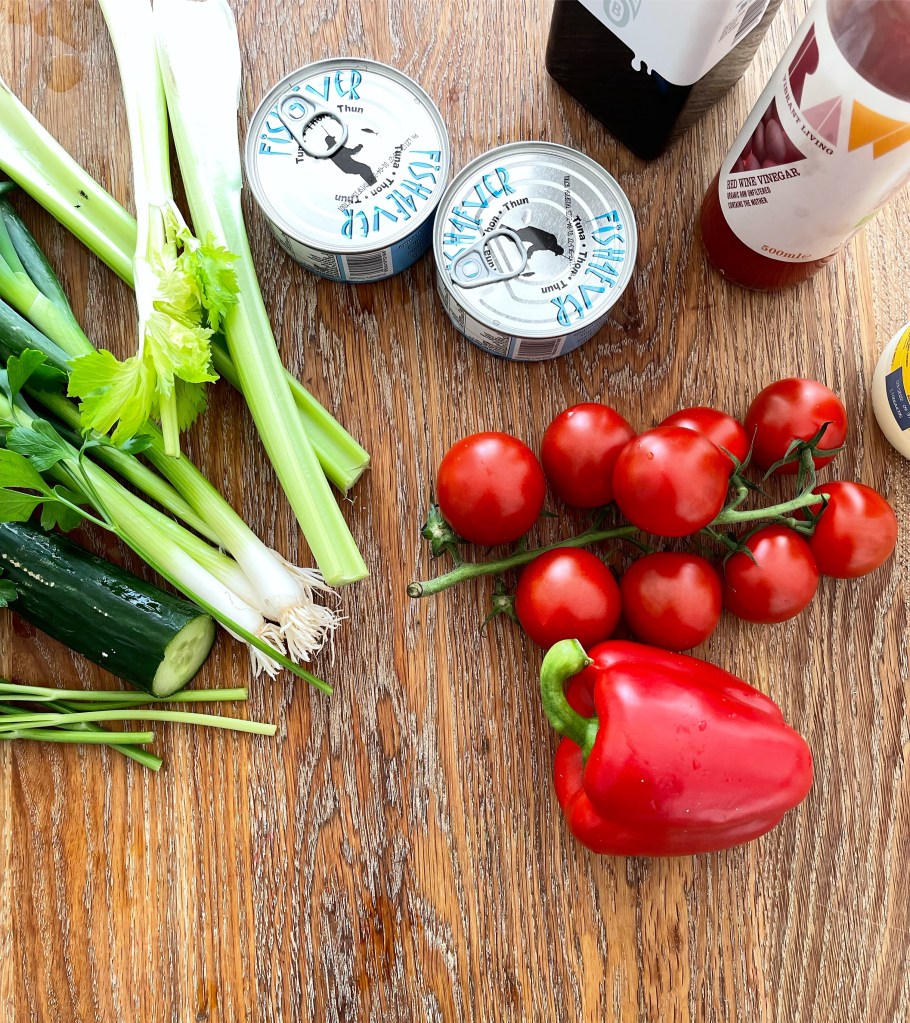
Here are some steps to make a tuna salad. It goes from the most basic, with things that should always be stocked in the kitchen, to a more elaborate dish with lots of green and red and onions and (potentially?) herbs.

1 — Basic essential ingredients

About 320g (2 small tins) of tuna packed in water — try to choose sustainably fished tuna (for example look out for the sign from the Marine Stewardship Council on the tins)
2 tablespoons mayonnaise
1 tablespoon olive oil
1 tablespoon vinegar
Salt

Drain the tins of tuna of as much water as possible by opening them 4/5th of the way, using the lid to retain the tuna while the liquid drains out on the side (without letting any/too much tuna slide out with it).

Scrape the tuna into a bowl.

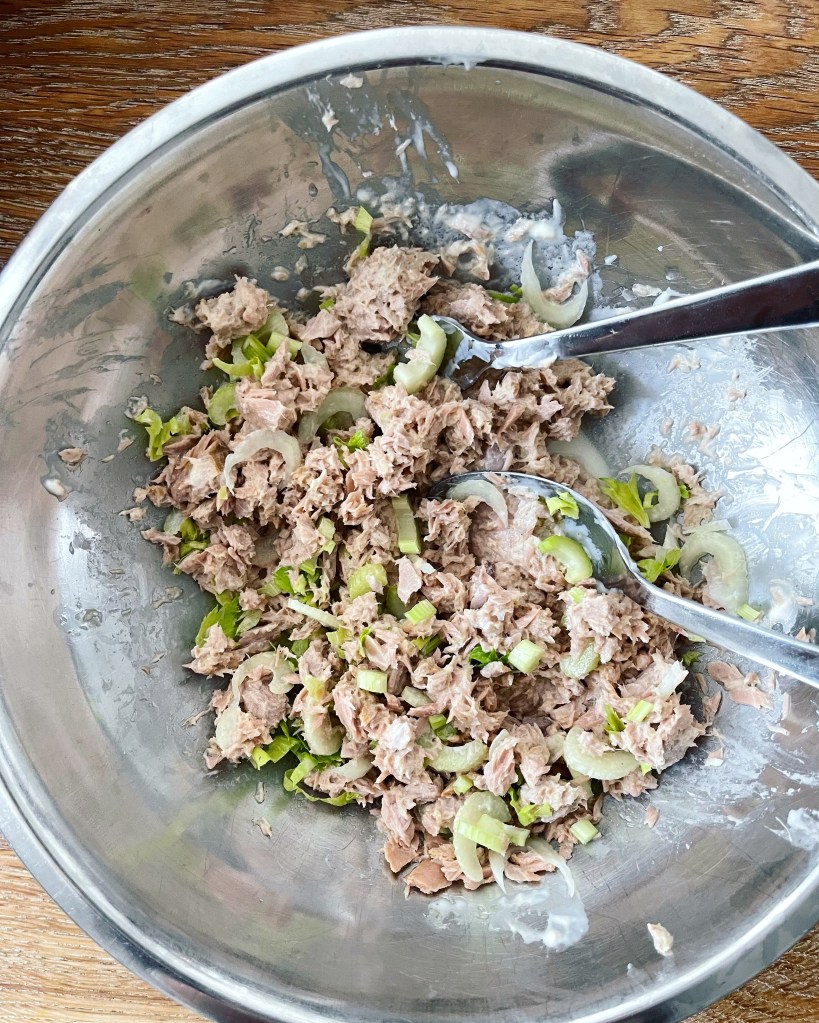
Add the mayonnaise, olive oil, vinegar, and a pinch of salt to the tuna. Mix well with a fork.

That makes the most basic tuna salad. You can stop here and eat it like that.

2 — You can also add any (or all) of the following:

Green things: celery, cucumber, spring onions, fennel, parsley (who am I kidding?)
Red things: tomatoes, red peppers

Wash the vegetables in cold water. Cut off the ends (of the cucumber, celery, spring onions, fennel) or remove the core (tomatoes, red peppers).

Cut and slice the vegetables into very thin and small pieces. Chop the parsley.

Add the vegetables to the tuna. Mix again. Taste and add a bit more mayonnaise or vinegar depending on what is missing.

That’s it! To be eaten with bread or directly out of the bowl.

The tuna salad can be kept (covered) in the fridge for a day, maximum two.

Cookbooks | Bitter Honey by Letitia Clark

20 September 2021

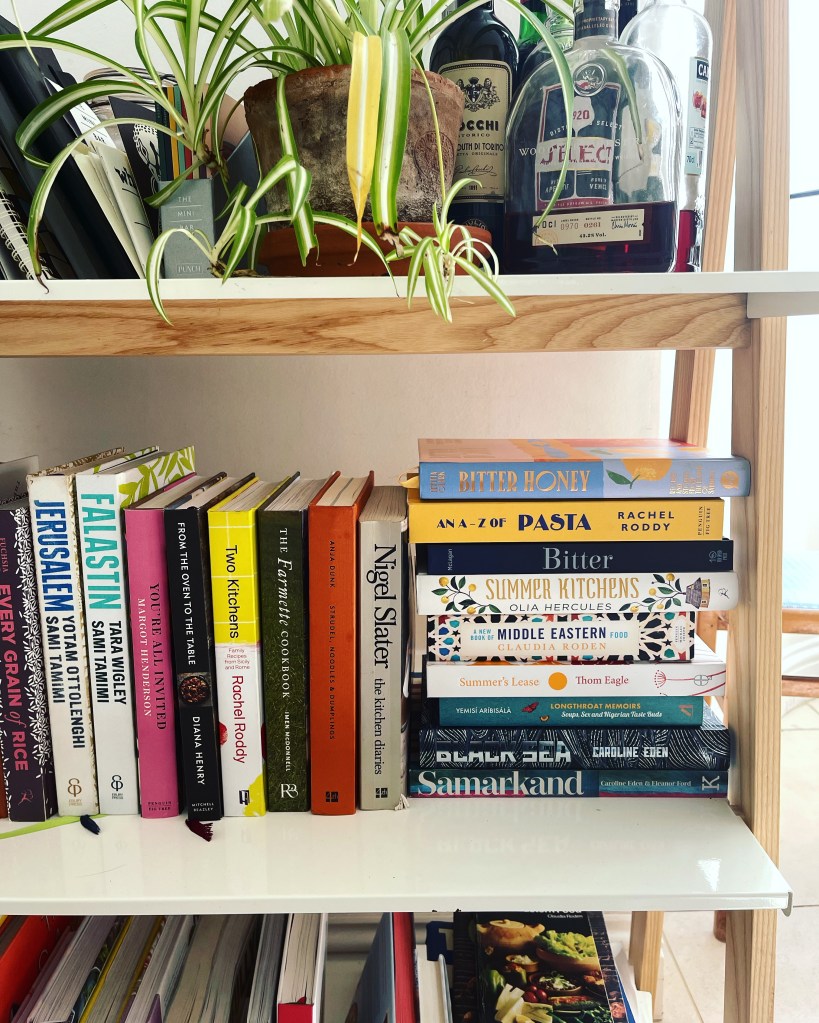
For many years I bought cookbooks compulsively. Then, for a while, I stopped buying them almost entirely. Recently I have been tempted again and have a growing pile, still embarrassingly untouched, sitting, a bit reproachingly, on the bookshelf.

This book, though, was a birthday gift, and I recently managed to spend an afternoon in its company.

Over the summer, I spent a few weeks in Brittany. It was lovely of course, changing horizon and seeing family and friends again, but this time I did miss the heat. So, after the relentless spring downpours in London, and coming home now from a warm-ish, never-far-from-an-extra-layer August, I still yearned for sunshine. I decided it could best — or only (!) — be conjured through the plate. So I pulled out this book; I spent a couple of hours leafing through it, basking in the warmth, marking recipes.

Bitter Honey | Recipes and Stories from the Island of Sardinia is written by Letitia Clark, who has worked in such London restaurants as Spring, The Dock Kitchen, Morito, Moro (…) until she moved to Sardinia in 2017. The book at once captures Clark’s discovery and soon intimate acquaintance with the island, and of course her love of its food. Leafing through the recipes and thematic spreads — ‘foraging,’ ‘pasta,’ ‘the art of frying’ … — it instantly transposes to the arid heat of the Mediterranean, the intensifying song of cicadas.

I sometimes think that one very good recipe can be enough to justify buying a cookbook; this one has at the very least two: pork cooked in milk and bottarga pâté (recipe below).

Taking advantage of the more ephemeral summer crops, I’ve also tried the aubergine and ricotta salata antipasto and the figs, ricotta, thyme, and honey crostini, and have flagged quite a few more that promise to remain excellent company as the season shifts, notably the malloreddus (pasta) with sausage ragù.

This book is more than vicarious travel, it is dotted with recipes that are destined to become firmly ensconced in our kitchen.

Bottarga pâté from Bitter Honey by Letitia Clark

If (unlike me) you’re not that excited by this recipe, I can assure you it is incredible, and a unanimous hit. Preferably served with an apéro, perhaps some vin d’orange or Seville-orange—infused gin tonic!

80g bottarga, whole or grated
80g tinned tuna, drained
8 anchovy fillets
200g unsalted butter, softened at room temperature
Pinch of cayenne or chili powder
Squeeze of lemon juice
Toasted bread to serve

In a mixer, blend the bottarga, tuna, and achovies until completely smooth (this will take a few minutes). Add the butter and continue blending until achieving a smooth creamy pâté. Place in the refrigerator for at least an hour, and take out a little before serving so the pâté has had time to soften again slightly.

Serve alongside warm toasts with a pinch of cayenne pepper (or chili) and squeeze of lemon juice.

Far breton aux pruneaux (Breton far with prunes)

16 September 2021

For years, kouign amann was the obsession. We found a best one and wept a little when the bakery closed, looked farther afield, suffered disappointments, had a hand at making our own. Finally, it was time to move on. Not away completely but a balletic sidestep, to another one of the three most common Breton cakes: far. (The third is gâteau breton, a drier, crumbly, cookie-type-of-cake, which I am sure shall have its time with us one day, too. But for now — far.)

The term ‘far‘ comes from the latin word for grain, meal, or grits (far, farina, farro). In fact, breton far was initially a type of savory gruel or porridge served with meat. Over time it has sweetend and become more akin to a dense flan, preferably (but not necessarily) studded with sweet prunes, or caramelized apples.

I prefer far with prunes, but why prunes in Brittany, which is not a plum growing region? Theories trace their introduction to Brittany from its coasts and harbours, as prunes were a valued commodity among sailors during long sea voyages. So prunes seeped through Brittany from the sea, and ended up in the typically regional far aux pruneaux (far with prunes).

I’ve spent some time comparing and testing recipes before arriving at my ideal far, which has a silky, slightly lighter custard than some of the more traditional versions. It is very soft and yielding, just on the cusp of barely holding together when a slice is picked up by hand. I’ve also added a tinge of buckwheat, how could I resist?

Far breton aux pruneaux (Breton far with prunes)

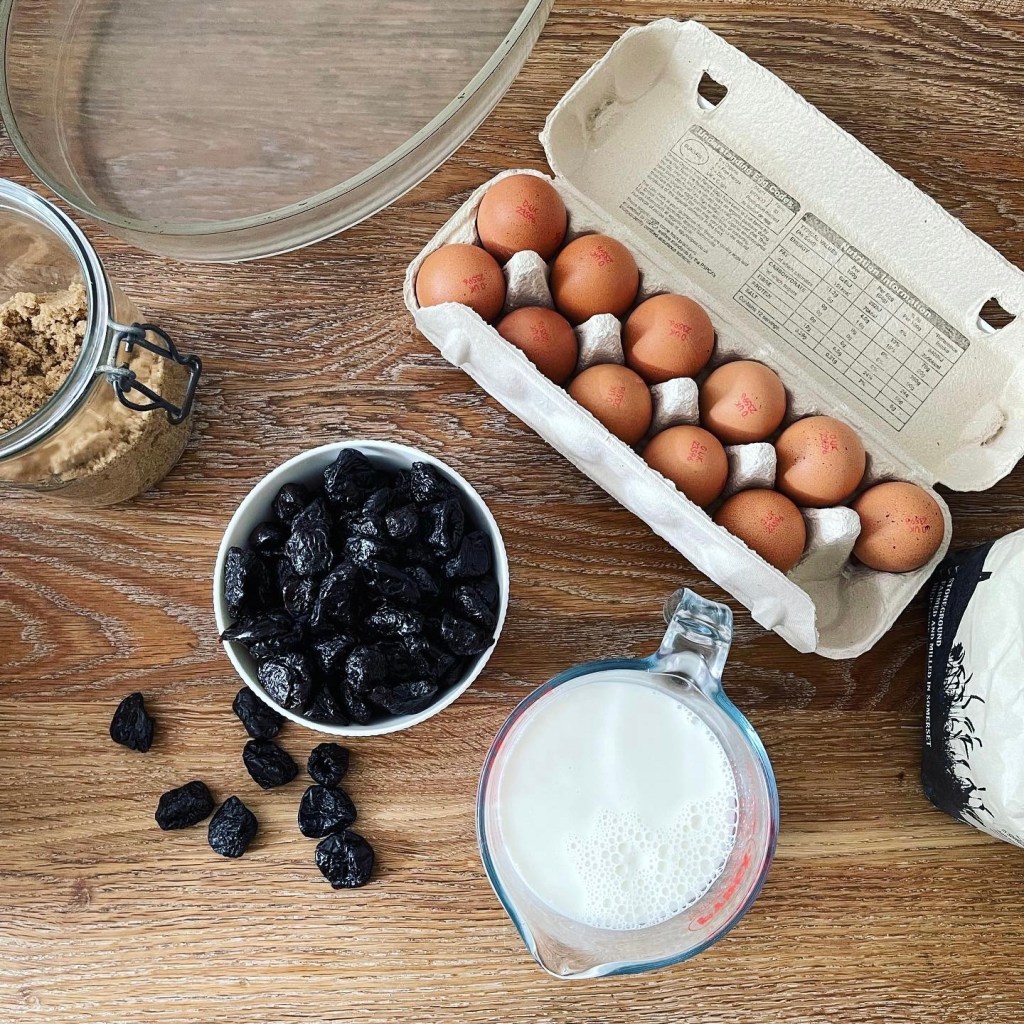
130g white flour (either spelt or wheat)
20g (1 Tbsp) buckwheat flour
130g sugar
Large pinch of salt
5 eggs
20g butter, melted
750ml milk
1 tsp vanilla extract
400g pitted prunes
Optional: 1 Tbsp flavoursome alcohol (slivovitz, armagnac, calvados, …)

Preheat the oven to 175C (350F). Butter a deep, solid (not springform) pan (I use a casserole-type dish I use an oval casserole-type dish 33cm / 13 inches long).)

In a large mixing bowl, stir together the flours, sugar, and salt.

Add the eggs, one at a time, mixing well to incorporate each until the batter is silky smooth.

Mix in the melted butter, milk, and vanilla extract (and alcohol if using). The batter will be very liquid.

** The batter can be refrigerated at this point, anywhere from a couple of hours to overnight.**

Pour the batter into the buttered dish and scatter the prunes evenly. Carefully (as the batter is liquid) slide into the oven. Bake for 45 minutes to an hour, until the far is set all the way (the centre shouldn’t be wobbly).

Let cool completely before eating.

Far can be kept (in the regfrigerator) for 2 to 3 days.

Simplest (four-ingredient) almond cake

6 September 2021

I wish I could wax poetic for hours about this cake, but that isn’t really my style, and the cake fulfills such a basic role in my life that basic is probably how best to write about it.

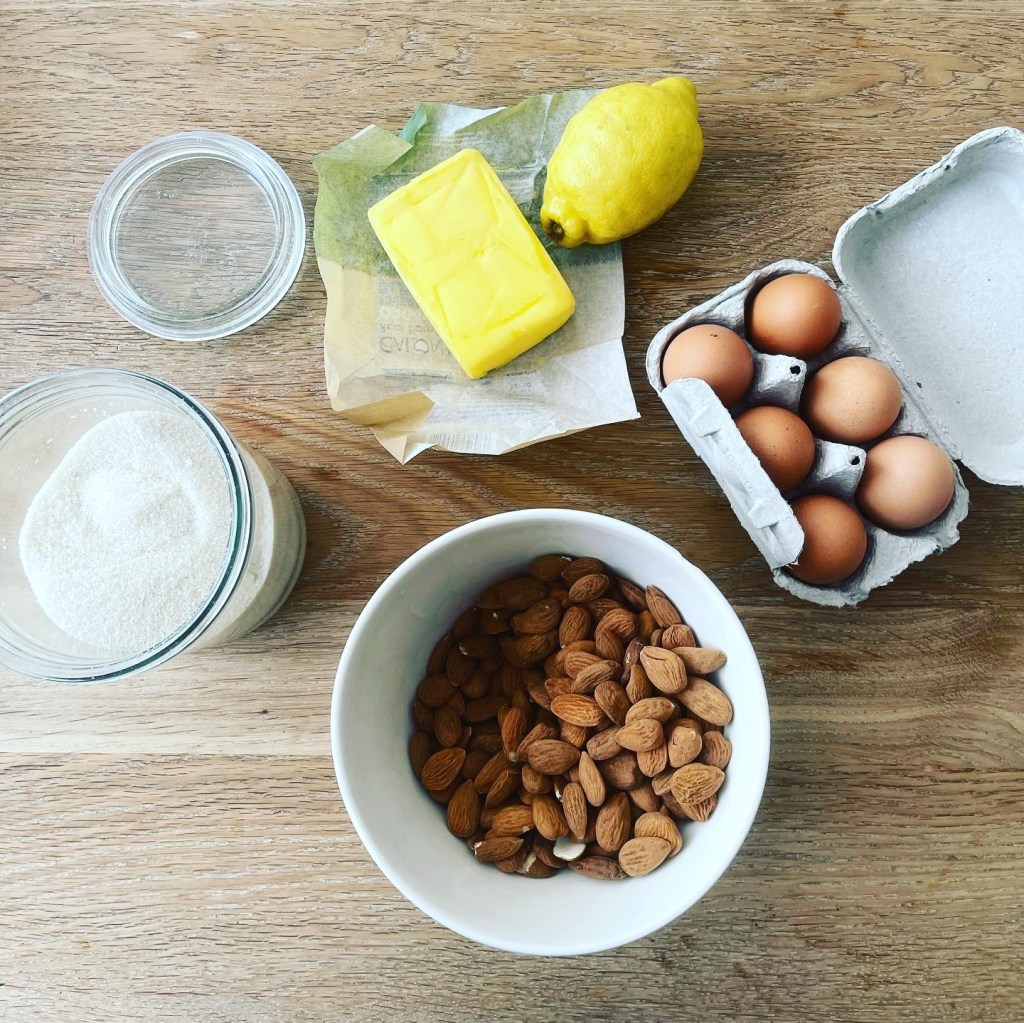
It features just four ingredients (lemon zest optional), comes together practically instantly, and not only does it keep for days but even improves with time. So it can be made ahead, and, as Imen McDonell suggests, always be on hand.

The recipe is from Imen’s The Farmette Cookbook. She calls it Claire’s Frangipane and has a lovely story to accompany the recipe, which like most others in the book is alluringly personal, one that transports straight into a chair pulled up to the kitchen table of her fabulous friend Claire. But, as I don’t know Claire, to me the cake has just become the simplest almond cake.

I’ve made this cake more than any other in the past few years and always serve it with either a rhubarb compote or stewed gooseberries, because, though delicious on its own, the cake truly transforms when accompanied by something luscious and puckeringly tart. At this time of year I might stew some early apples (unsweetened), or perhaps plums with cardamom?

Simplest almond cake recipe from Imen McDonnell’s Farmette Cookbook
The recipe given here is double the original — I often double recipes for cakes, especially ones that keep so well and improve with time.

275g sugar (slightly reduced from the original)
300g butter (softened at room temperature)
4 eggs
300g almond flour or freshly ground almonds (I like both blanched or whole)
Zest from one lemon (optional)

Preheat the oven to 175C (350F). Line a 23cm (9-inch) cake tin with parchment paper and butter the bottom and sides.

In a large mixing bowl (or stand mixer), beat the sugar and butter vigorously, for a long while, about 5 minutes.

Add the eggs one at a time, so each is assimilated before adding the next. Add the lemon zest if using.

Blend in the ground almonds until completely combined.

Pour the batter into the prepared cake tin and bake for 45 to 50 minutes (it could take a bit longer), until a knife or skewer comes out clean, and the cake feels firm to a light touch.

Dust with sugar and let cool completely before serving.

Serve with rhubarb, gooseberry, or another tart fruit compote, and optionally and quite decadently with a spoonful of crème fraîche too.

Can be stored at room temperature for a day and in the refrigerator after that.