Archive for the ‘Uncategorized’ Category

Autumn soups

9 November 2020

Occasionally (or, possibly, fairly often), I binge-buy vegetables. Last Wednesday was such a day. Whatever the reason — (ir)rational distractedness? — I apparently ordered, from our London supplier of local British produce Farm Direct, carrots, cauliflowers, broccoli, leeks, turnips, kohlrabi, pumpkin, celery stalks and root, onions, peppers… I may be forgetting something? — Mushrooms!

I rarely buy food with the intention of a specific recipe. Usually, especially with produce, it’s what looks good and is available, and since the season has changed there was exaggerated enthusiasm about all the new things. Which doesn’t solve the problem of what I will be doing with all of this, but an easy guess would be: soup!

Here are a few autumnal soups that I like going back to, over the years.

Creamy spiced lentil soup

A soup in shades of green

Spicy lentil and red kuri squash soup

Parsnip and butternut squash soup with sage

Soba noodle soup with meatballs and bok choy

Cream of cauliflower soup with salmon roe

Five-ingredient pumpkin leek soup

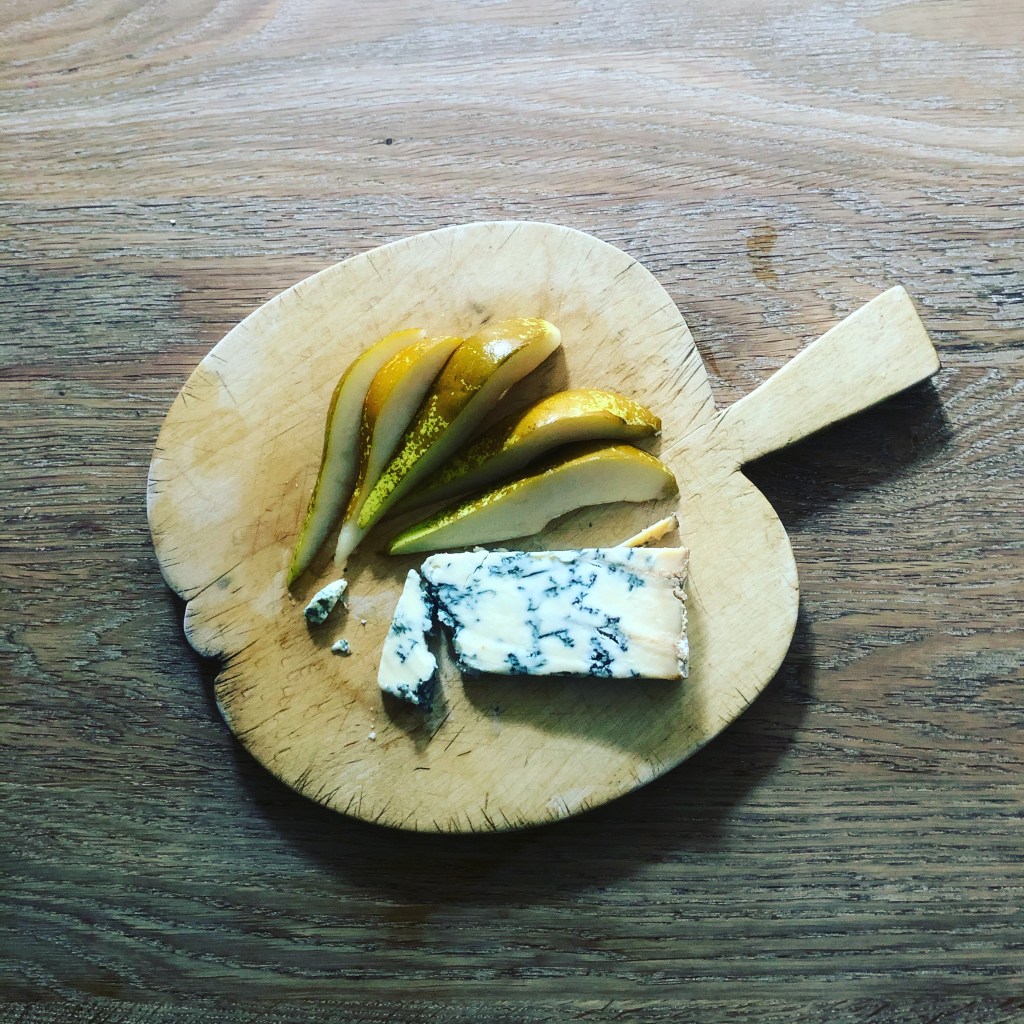
Pear and Stilton elevenses

23 October 2020

October 23. Cycling through the park speckled golden with leaves and sunlight this morning is a memory for today. Autumn at its most perfect. And already the sky is overcast, dulled and dreary, a few drops even. In London the weather changes five times a day, it’s about catching the rays.

This snack, which may just as well lengthen the sun or brighten a rainy morning, is my favourite thing in autumn.

Pear and Stilton elevenses

A perfectly ripe pear, peeled or not
Stilton

‘Save the plums’ jam

6 October 2020

October 6th. Reliably, like every year in early October, there is a bowl full of old plums in my kitchen. They are already at varying degrees of bruised, shrivelled, and slightly alcoholic. They’ve been there for a week. I don’t think it’s intentional, but always during the last shimmer of plum season I buy lots, and only ever manage to save them in the nick of time, with jam.

I cut up the plums yesterday, mixed them with just under half their weight in sugar, added the juice of one lemon, and let them macerate overnight in the fridge, stirring once or twice as the sugar tends to slide to the bottom.

Now to figure out whether to add anything. I usually turn to ginger or bay leaf with plums, but today I am wondering — cardamom?

Save the plums’ jam

1kg plums
850g light brown sugar
Juice from 1 lemon
Optional: 6 pounded cardamom pods / one or two bay leaves / finely cut ginger

Wash and pit the plums. In a bowl, mix together the plums, sugar, lemon juice, and the spices or herbs if using. Cover and leave to macerate overnight in the fridge. Stir once or twice as the sugar will sink to the bottom.

The next day, transfer the mixture to a heavy-bottomed saucepan, bring to a boil, and cook at a lively simmer for about 15 minutes, stirring regularly.

Meanwhile, in another pan half-filled with water, bring to a boil and sterilize 3 or 4 jars for 5 minutes.

Once the simmer slows down and the jam is ready, scoop the jam into the jars and close the lid immediately.

[ => To check that the jam is setting, place a spoonful in a saucepan in the fridge for a few minutes and check that the liquid is starting to run thick.]

Wait a few weeks, if possible, before using.

Earlier ‘save-the-plums’ jam ventures:

Greengage plum jam with lemon and bay leaf
Damson and Victoria plum jam with lemon and ginger
Plum jam with candied ginger

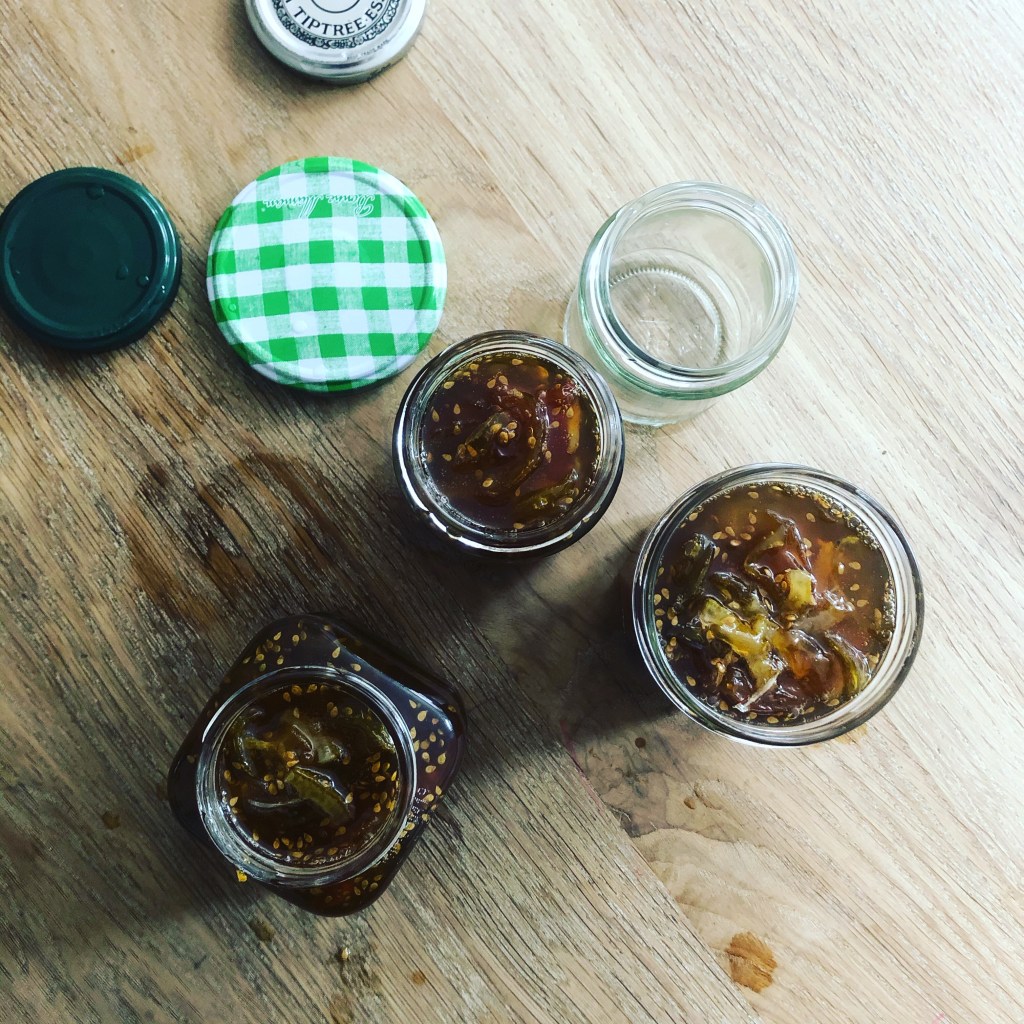
Green tomato jam

1 October 2020

First of October. Grey skies. The earth damp from yesterday’s showers, scattered, then persistent. Today the air is mild, the nebulous cover a moderating blanket. The weather turned ten days ago, right on cue at the equinox.

Transitional moments are a catalyst for cooking inspiration. Holding on to the waning season, devising some last ways with the summer produce, while simultaneously grasping the novelty of autumn.

And few things embody this transition quite like green tomatoes, straddling the divide.

I remember just one person in my childhood who made green tomato jam, my father’s godmother Lily (from her I also have my favourite recipe for clafoutis, and an early fixation on quince in the form of cotignac). I never got Lily’s green tomato jam recipe, but the memory remains, and this method works very well.

Green tomato jam based on a recipe by Christine Ferber
The recipe takes three days, which sounds complicated, but in fact the process is broken down into three brief, manageable slots that fit easily into each the day.

1 kg green tomatoes
850g sugar
2 lemons
Optional: a pinch chilli flakes or a vanilla bean

Day 1: Wash and thinly slice the tomatoes. Add the sugar, the juice from one lemon, and the other lemon very thinly sliced by first cutting into quarters or sixths and then crosswise. If using, add the chilli flakes or vanilla bean cut lengthwise. Stir to combine and leave to macerate overnight at room temperature.

Day 2: Bring the tomato/sugar/lemon mixture to a boil and simmer for 10 minutes, skimming away any scum that may form. Let cool and place in the refrigerator overnight.

Day 3: Bring the jam to a lively simmer once again for 10 minutes. Meanwhile, sterilize a few jars in boiling water (this quantity yields just 3 to 4 jars), fill with hot jam, and seal immediately.

See also Green Tomato Chutney

Notes from the kitchen | Ottolenghi’s spinach baked potatoes

28 February 2020

Trust me to unearth those recipes by Yotam Ottolenghi (there are one or two) that require fewer than 15 ingredients and a mere handful of steps.

In London, certainly, Ottolenghi needs no introduction, but for those, elsewhere, who may be unfamiliar, he is an Isreali-born London-based chef, restaurant-owner, and ridiculously prolific recipe writer, with regular columns in The Guardian and The New York Times, and an head-spinning array of cookbooks. To unjustly reduce his influence and fame to a running joke, his dishes often include enormous ingredient lists, many of which are specialty items not typically found in mainstream supermarkets (though now, thanks to his success, ever more so). This satirical piece in The New Yorker is an oblique — so spot-on! — insight into his recipes.

I spotted one of the less complicated ideas in his book Simple (!!), written with Tara Wigley, skipped a step, took a short-cut, and though we ate much later than planned, it was worth it!

Spinach baked potatoes adapted from Simple by Yotam Ottolenghi with Tara Wigley and Esme Howarth

Serves 6 with leftovers

6 large baking potatoes
400g spinach (I used frozen leaf spinach but fresh would be even better)
50g butter
200g sour cream or crème fraîche
180g grated sharp cheese (Gruyère, cheddar, the original recipe suggests Gorgonzola in which case use a bit less…)
2 bunches spring onions (the recipe suggests walnuts for crunch, I preferred a sharper contrast)
Salt and black pepper

Preheat the oven to 220°C (420°F).

Wash and lightly scrub the potatoes to remove any soil but without breaking the skin. Prepare a baking tray with parchment paper, stab the potatoes a few times with a fork, place on the parchment and into the oven for 1 hour or just over, until the potatoes are soft through when stabbed with a small knife.

Meanwhile, cook the spinach: —If using fresh spinach, wash the leaves thoroughly of any grit, remove the rough stalks, and cut into strips. In a medium saucepan, bring 2 to 3 cm (1 inch) of salted water to boil. Once boiling, add the spinach for just 20 to 30 seconds until wilted and strain in a colander, squeezing out as much water as possible. —If using frozen spinach leaves, place in a medium saucepan with one or two tablespoons of water over low heat until completely thawed and just warmed through — no more.

Wash and finely slice the spring onions.

Once cooked through, take the potatoes out of the oven and slice lengthwise. Scoop out the flesh with a spoon into a medium bowl. Carefully set aside the potato skin shells. Roughly mash the potato flesh, mix in the butter, cream, and most of the cheese (keep a bit to sprinkle on top). Add the spinach, season carefully with salt, depending on the saltiness of the cheese, and a generous grind of black pepper. Mix well.

Scoop the mash back into the potato skins, place back onto the baking tray with parchment paper, sprinkle with spring onions and a bit of cheese.

Bake in the oven until browned on top, about 15 minutes.

***

This could be an entire meal, with just a winter salad of endive and radicchio. It can also be a luscious side for simply grilled salmon steaks.