Posts Tagged ‘baking’

Basic | Sweet pie crust

10 May 2011

This pie crust is ideally light and flaky. It works very well for practically any fruit tarte, except — mildly ironically in this context — the walnut tarte for which I made it on Saturday. For that singular tarte, unlike others I usually make in that it is fairly rich, this pie crust is a bit too sweet and buttery. For every other tarte (or even pumpkin pie), it is excellent. It is the galette dough recipe from Chez Panisse Café Cookbook.

There are endless minute variations on pie crust recipes, some of which involve the size of the pieces of butter or the temperature of the ingredients. These do make a difference, and I think another crucial aspect is how the dough is treated. It should always be barely handled – delicately with the fingertips and never the palm of the hand. I think of it as the opposite of kneading.

***

From Chez Panisse Café Cookbook

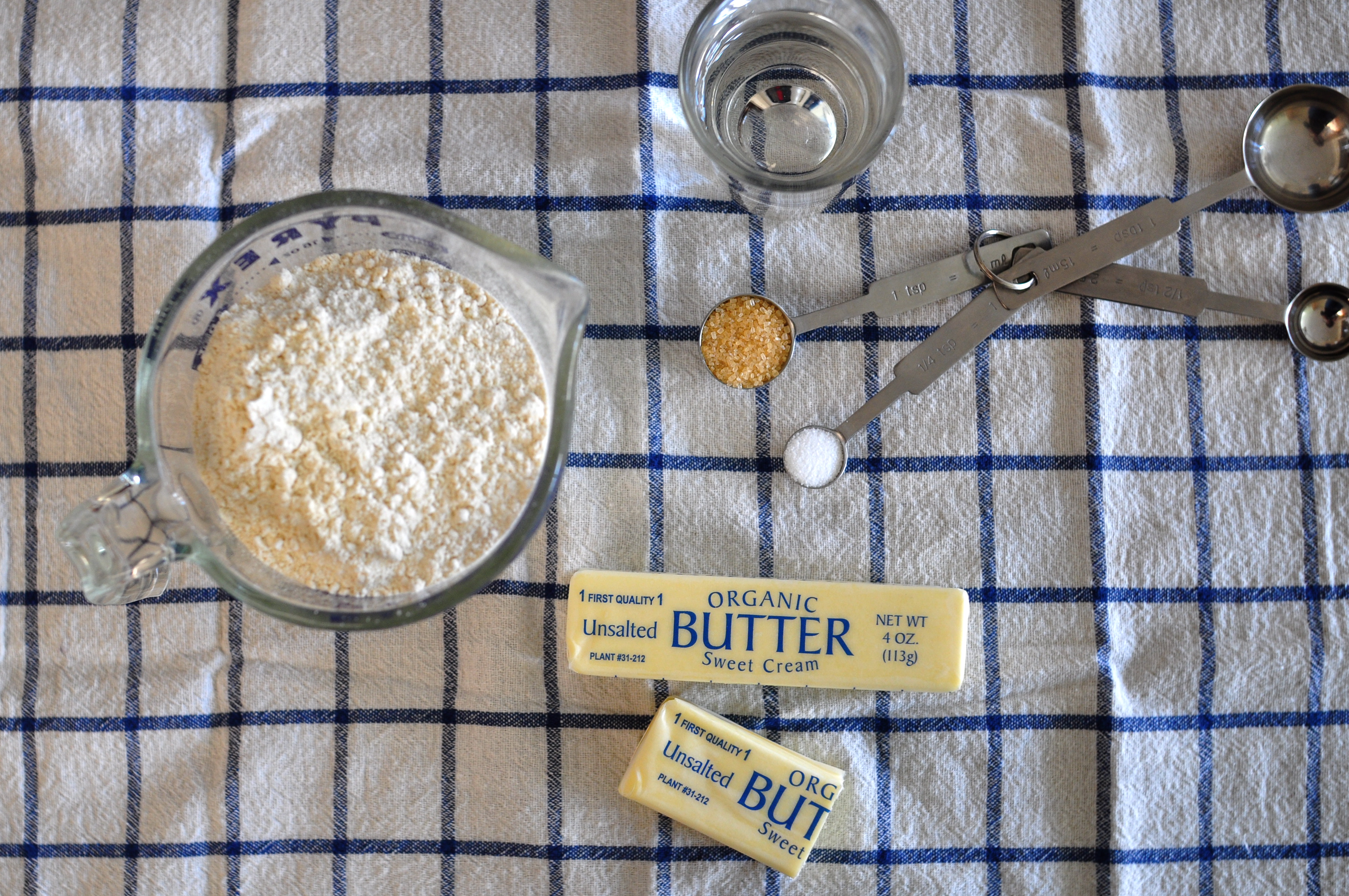
3/4 cups (170g) unsalted butter

2 cups (200g) flour

1 tsp sugar

1/4 tsp salt
Place a small glass of water in the freezer.

Cut the butter into 1/2-inch (1 cm) pieces.

In a large bowl mix the flour, sugar, and salt.

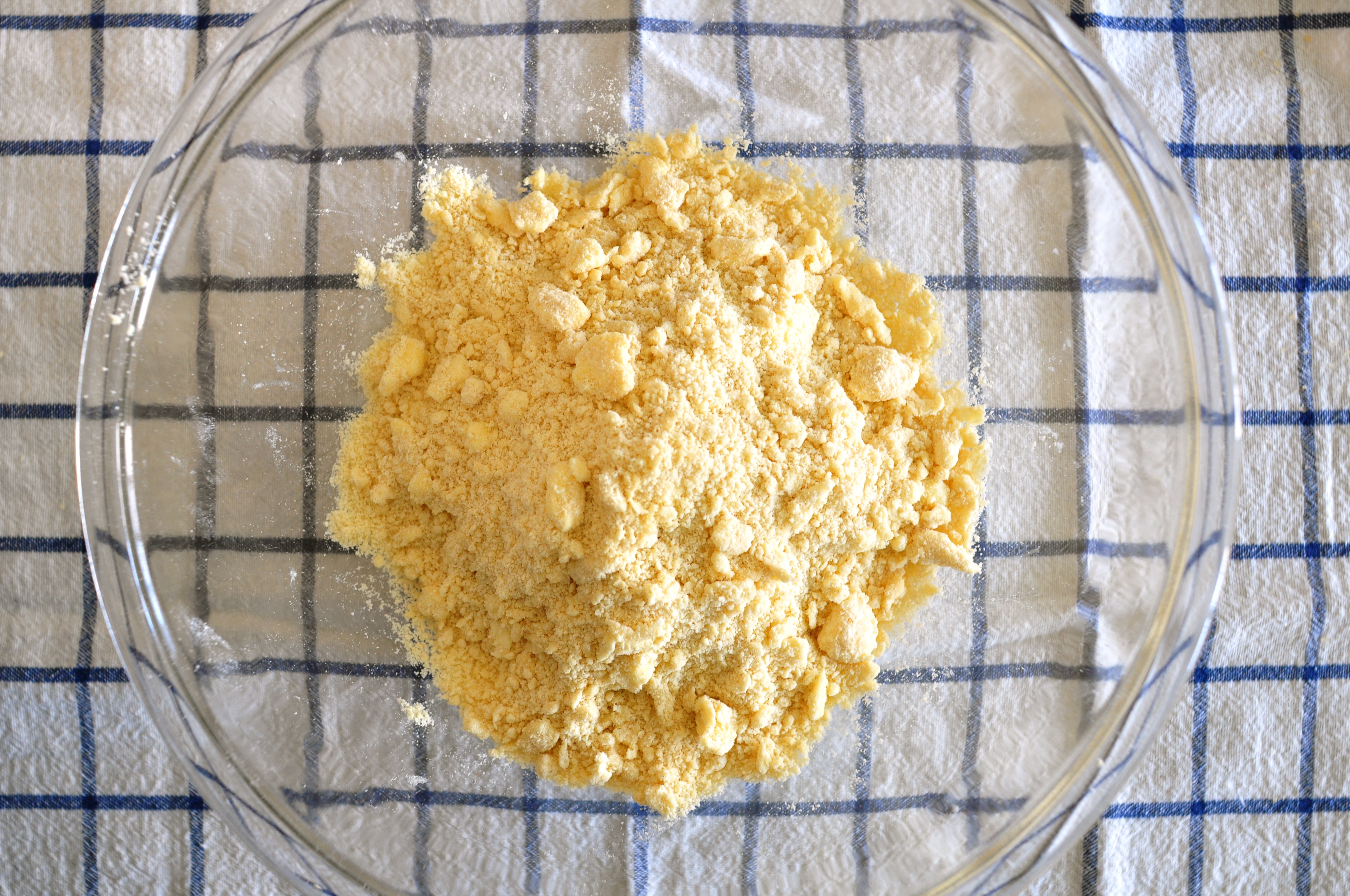
Gently work half of the butter into the flour mixture with fingertips until dough has the texture of coarse oatmeal. Add the rest of the butter and work it into the dough quickly, stopping as soon as the largest pieces of butter are the size of lima beans.

Add the ice cold water, a few drops at a time, carefully bringing the dough together into a ball. Stop adding water as soon as the dough adheres, but some flour is left in the ball (the dough should not be sticky).

Flatten the ball of dough, cover in plastic wrap, and refrigerate for at least an hour and up to 1 day.

Remove dough from refrigerator and allow about 15 minutes for it to soften with the ambient heat and become easy to handle.

Generously butter the pie pan.

Lightly dust a clean, flat surface with flour and roll out the dough into a circle until it is 1/8 inch (1/3 cm) thin.**This dough is very buttery, so to prevent it from sticking to the the floured surface I turn it at the beginning then regularly lift it, all the while adding a little flour on either side and on the rolling pin.**

To transfer the dough to the pie pan, gently fold it in half once, then fold it in half again, and carefully place the folded dough in the pie pan, positioning the angle in the center. Unfold, press gently onto the pan and sides, and cut off excess dough from the edges. Slip the pie crust in the refrigerator for at least 1/2 hour before using.

Poppy seed and almond cake

4 April 2011

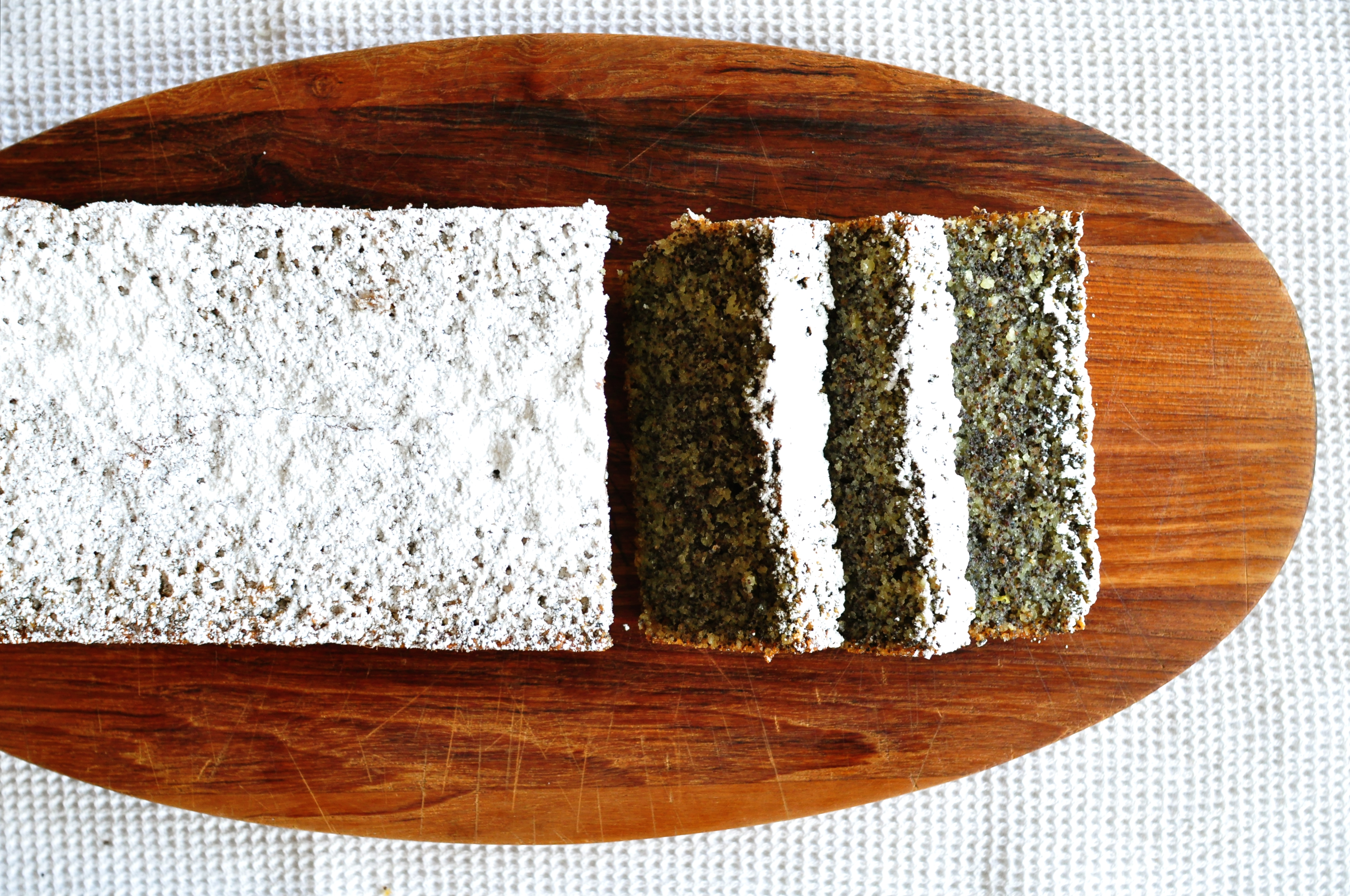
I wanted to write about this cake, which I made, in close succession, once for Louise’s first birthday, again to take these pictures, and another time in between.

It is fiendishly good. It also seems to be the object of a small controversy.

I found this cake on Lottie + Doof and it looked perfectly irresistible. But one small thing irked me about the recipe; the fact that it contains almond extract but no almonds, which feels like cheating, just a little bit. So I thought about adding almonds. I was slightly worried about the fluffiness factor so alluringly portrayed, so, standing there, in front of my ingredients, I pondered – a good five minutes – whether I should substitute some of the flour with ground almonds, or not. I decided yes. And barely half a minute later, I read the blog author’s response to a comment on his poppy seed cake post: “My recommendation would be to try the original before adding almond meal. The texture is what makes this so special, and the meal will change that.” I very nearly threw away my mix of almonds and flour. But I didn’t.

My cake, though undoubtedly much denser than the original, was also completely delicious.

The second time I made the cake I used no flour at all. Thomas insists it is the better version. I (respectfully) disagree. Without flour it is too grainy and buttery. This observation should of course be a hint that the initial version is in fact truly the best. Possibly. But I like dense cakes. Plus, the recipe without almonds can already be found in at least two places. I stand by this one.

***

Slightly adapted from Food and Wine via Lottie and Doof

3/4 cup (200 g) poppy seeds

2/3 cup (100 g) blanched almonds

14 Tbsps (200 g) unsalted butter

1 cup (200 g) sugar

4 eggs

3/4 cup (100 g) flour

2 tsps baking powder

1/4 tsp salt

1 tsp vanilla extract

1 tsp almond extract

Zest from 1/3 lemon*

Powdered (confectioners) sugar for dusting

***

Bring 1/2 cup (filtered) water to boil in a small saucepan, remove from heat, stir in the poppy seeds, cover, and let stand for 1 hour.

In a food processor, pulse grind the poppy seeds until lightly crushed. Remove poppy seeds and set aside. Pulse chop the almonds until finely ground.

Preheat oven to 350°F (175°C). Line a 10 x 5″ (25 x 13 cm) baking pan with parchment paper and butter the paper generously.

In a small bowl, mix the flour, almonds, baking powder, and salt.

In a large bowl, beat the (softened) butter and sugar until light and fluffy. Add the poppy seeds until well combined. Then add the eggs, one at a time, beating well to incorporate each time. Add the vanilla extract, almond extract, and lemon zest. Then gently stir in the almond/flour mixture until just combined. Pour the batter into the prepared pan.

Bake for 40 to 45 minutes, until a skewer or toothpick inserted in the center of the cake comes out clean.

Let the cake cool completely. Dust with powdered sugar through a fine mesh sieve before serving.

*The lemon zest should be just enough to make the flavors pop without giving a lemony taste.

Stollen

9 December 2010

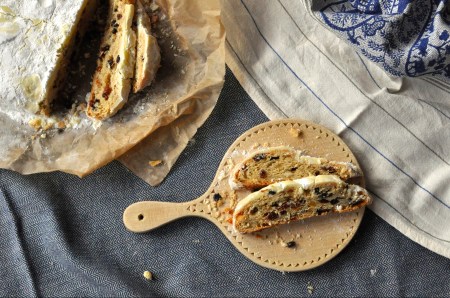
When my grandmother sent me her Stollen recipe twelve years ago she included an old German newspaper clipping titled “On the proper way of handling Stollen.” It prescribed:

◊ According to strict Saxon rule*, Stollen should not be cut open before Christmas eve – 24 December. Modern practice is somewhat lenient, however, and it is now acceptable to start eating Stollen on the first of advent (four Sundays before Christmas).

Stollen should never be eaten with a knife and fork – not even a dessert fork. It should be savored by breaking off little pieces with your fingers.

◊ The best beverage to accompany Stollen is a good cup of coffee, possibly tea, but never wine or champagne, for which Stollen would be too sweet.

◊  Stollen should be cellar-cool when eaten, presented on a simple wooden board, and cut with a sharp, unserrated knife.

Historic documents mention that “Man’s character can be determined by the way he eats Stollen.” …

***

Like many Christmas cakes and cookies, Stollen can be made a few weeks in advance.
Makes 2 large Stollen

8 cups (1 kg) flour

4 oz (100 g) fresh yeast

2 cups and 4 Tbsp (500 g) butter

1/2 cup (100 g) and 1 Tbsp sugar

1 cup (250 ml) milk

3/4 cup (100 g) candied orange and lemon peel

2 Tbsp rum

1-2 drops bitter almond oil (or 1 tsp almond extract)

Zest from 1 lemon

1 tsp salt

1 tsp vanilla extract

1 1/2 cups (125 g) slivered almonds

2 cups (300 g) golden raisins

1 cup (200 g) currants (Black Corinth raisins)

For the sugar crust:

1 cup 2 Tbsps (250 g) butter

Plenty of confectioners’ sugar

***

Place a large bowl with the flour in a warm spot until the flour feels warm to the touch.

Crumble the yeast with 1 Tbsp sugar; stir and watch as the mixture becomes liquid.

Melt the butter on a small flame, remove from the heat, and add the cold milk.

Chop the candied citrus peel and sprinkle with the rum and almond extract.

Shape a well in the flour. Pour the remaining 1/2 cup (100g) of sugar, lemon zest, salt, and vanilla extract into the well, add the milk/butter mixture and the prepared yeast. With a large wooden spoon, mix the wet ingredients into the flour using circular movements. Once the dough starts to detach itself from the sides of the bowl, beat with the wooden spoon for 10 minutes.

Knead the almonds, raisins, currants, and candied citrus into the dough. Shape into a ball, cover with a slightly damp cloth, find a warm spot in the house and let rise until the dough has approximately doubled in size, 2 to 3 hours depending on the room temperature.

Divide the dough in 2 and roll out each half into an oval approximately 1 inch (2.5 cm) thick. Fold each oval in half lengthwise, place on a buttered parchment paper on a baking sheet and let rise again for 45 minutes to 1 hour.

Preheat the oven to 300°F (150°C).

Bake the Stollen for 45 to 50 minutes, or until the outside begins to harden but before it starts to brown. Remove from the oven and immediately prepare the sugar crust.

In a small saucepan, melt the butter over medium heat. With a food brush, cover the Stollen with a layer of melted butter. Using a small sieve, sprinkle generously with confectioners’ sugar. Repeat this process 2 or 3 times to form the crust. Wrap immediately.

To store the Stollen, wrap in parchment paper then tightly seal with aluminum foil and keep in a cool dry place. Never wrap Stollen in plastic. A large tin box would be ideal.

*Stollen is originally from Central Germany and famously from Dresden, Saxony

*

Related posts

Christmas cookies | Almond and currant (Corinth raisin) cookies

Christmas cookies | Swiss Anisseed Chrabeli