Archive for February, 2015

Slow-cooked pork belly with star anise, cinnamon, ginger and cloves

12 February 2015

IMG_8474

Imagine unctuously slow-cooked pork belly infused with the intoxicating aromas of star anise, cloves, cinnamon, ginger, chilli, and coriander. It doesn’t get much better than this.

The recipe is a brilliant one by Skye Gyngell, to which — if I may — I did make one substantial improvement: crackling.

The initial method slices the gently simmered pork and browns each individual rib in a pan. I found this impractical. I’d much rather be clinking glasses with friends than browning meat in the kitchen. Also, dare I serve pork belly with no crackling? So I improvised a little and shot two inconveniences with one rather practical idea: rather than searing the meat, why not slide it into the oven for a second low and slow roasting. Boom!

Pork belly with star anise, ginger, cinnamon and cloves
Adapted from A Year In My Kitchen by Skye Gyngell. The process is a lengthy one but hardly requires any hands on work. Plan with a minimum of 4 hours before serving time.

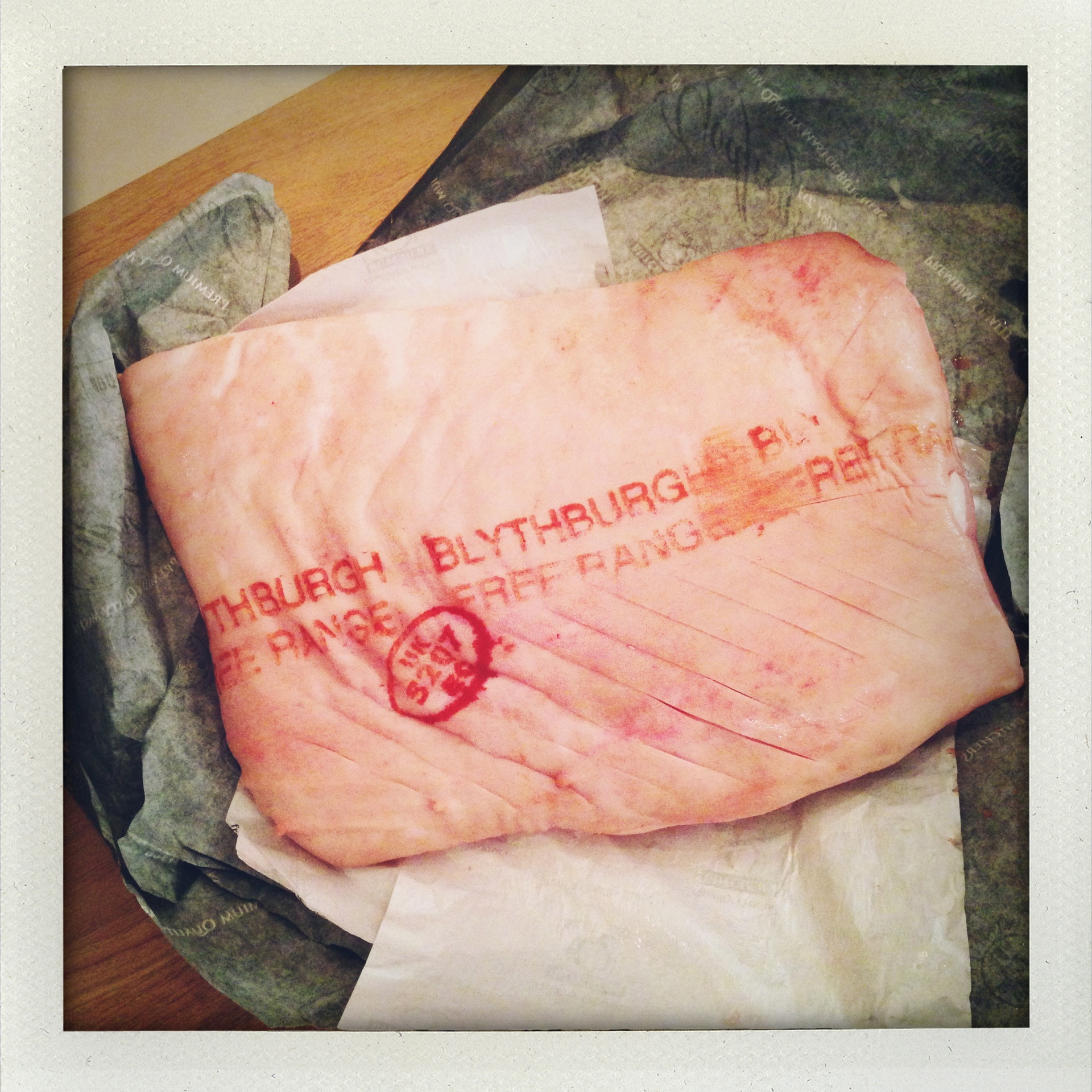
2 kg piece of best quality pork belly

2 cinnamon sticks

3 star anise

1 tsp cloves

1 red chilli

4 cm (1 1/2 inch) piece fresh ginger root

6 garlic cloves

2 Tbsps coriander stems (and roots if available)

100 ml (1/2 cup) tamari soy sauce

75 ml (1/3 cup) maple syrup

Sea salt and black pepper

Place the pork belly in a pot large enough for it to lie horizontally quite snugly. Add cold water to cover. Bring to the boil, then immediately remove from the heat, drain the water, and rinse out the pot.

Return the pork belly to the clean pot (skin side up), cover again with cold water, and add the cinnamon, star anise, cloves, chilli, peeled and roughly sliced ginger, peeled garlic cloves, and roughly chopped coriander stems (and roots). Bring to the boil then turn the heat down to very low, and let the pork simmer gently for about 1 1/2 hours.

With a pare of tongs carefully take the meat out of the pan and place it onto an ovenproof dish. Season with salt and pepper. Reserve the liquid which will be made into an incredible sauce (see below).

**The meat can rest a while or be refrigerated overnight at this point. Preferably take it out of the refrigerator about an hour before using again.**

Approximately 2 hours before planning to serve, place the pork belly in a 300°F (150°C) oven and roast for 1 1/2 hours. Check after one hour; if the skin isn’t crispy enough, increase the temperature to 375°F (190°C) for the last 20 to 30 minutes. Take the pork out of the oven and let rest for at least 20 minutes.

Meanwhile, to make the sauce, add the tamari and maple syrup to the fragrant cooking water, turn the heat back on to high, and let it boil away for a good half hour until the liquid has reduced by about half to become a dark and rich sauce. When it has acquired to the desired consistency, remove from the heat and strain out the spices, pouring the sauce into a smaller saucepan ready to be easily reheated later.

Serve the pork belly with the thoroughly reheated, piping hot sauce.

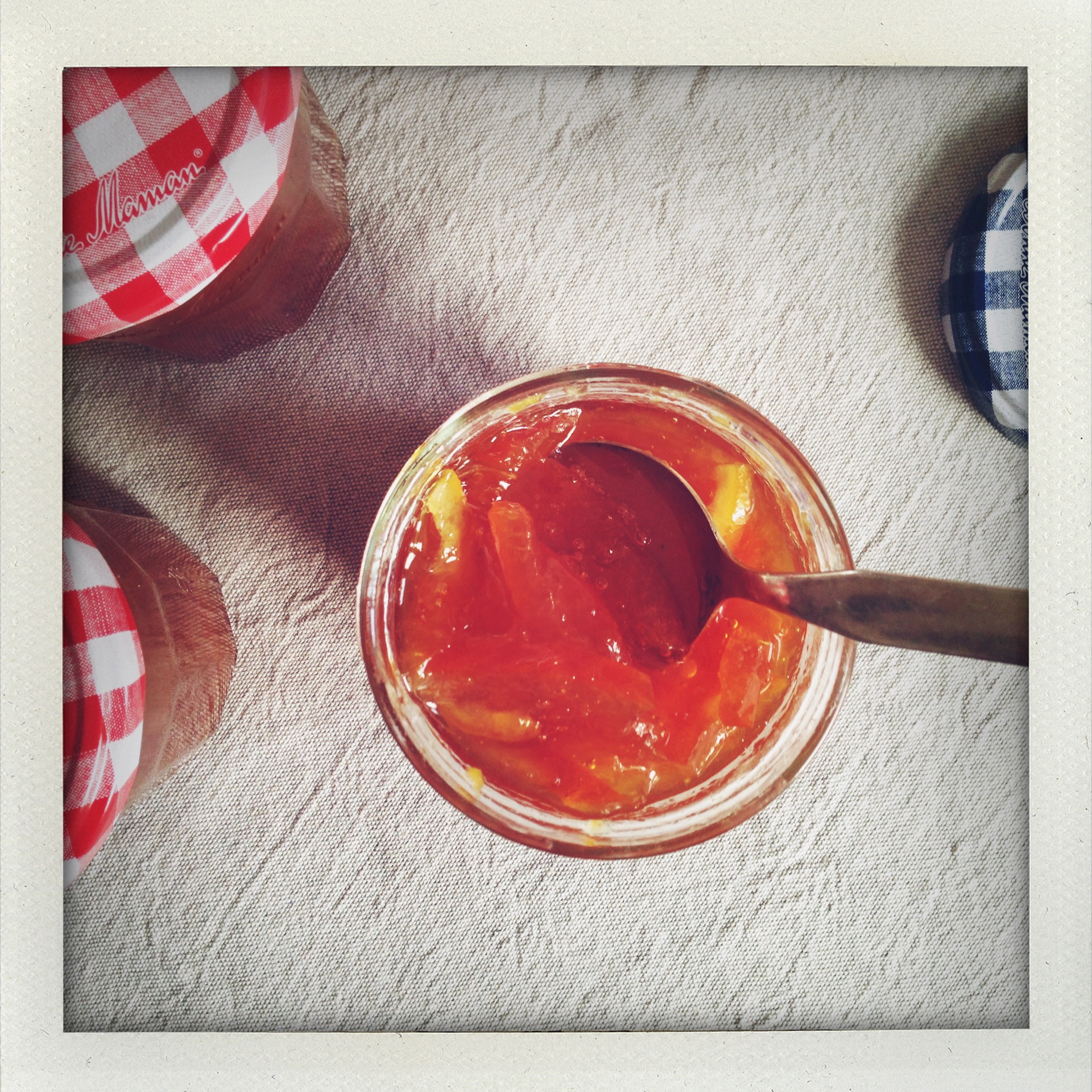
Seville orange marmalade

3 February 2015

IMG_8931

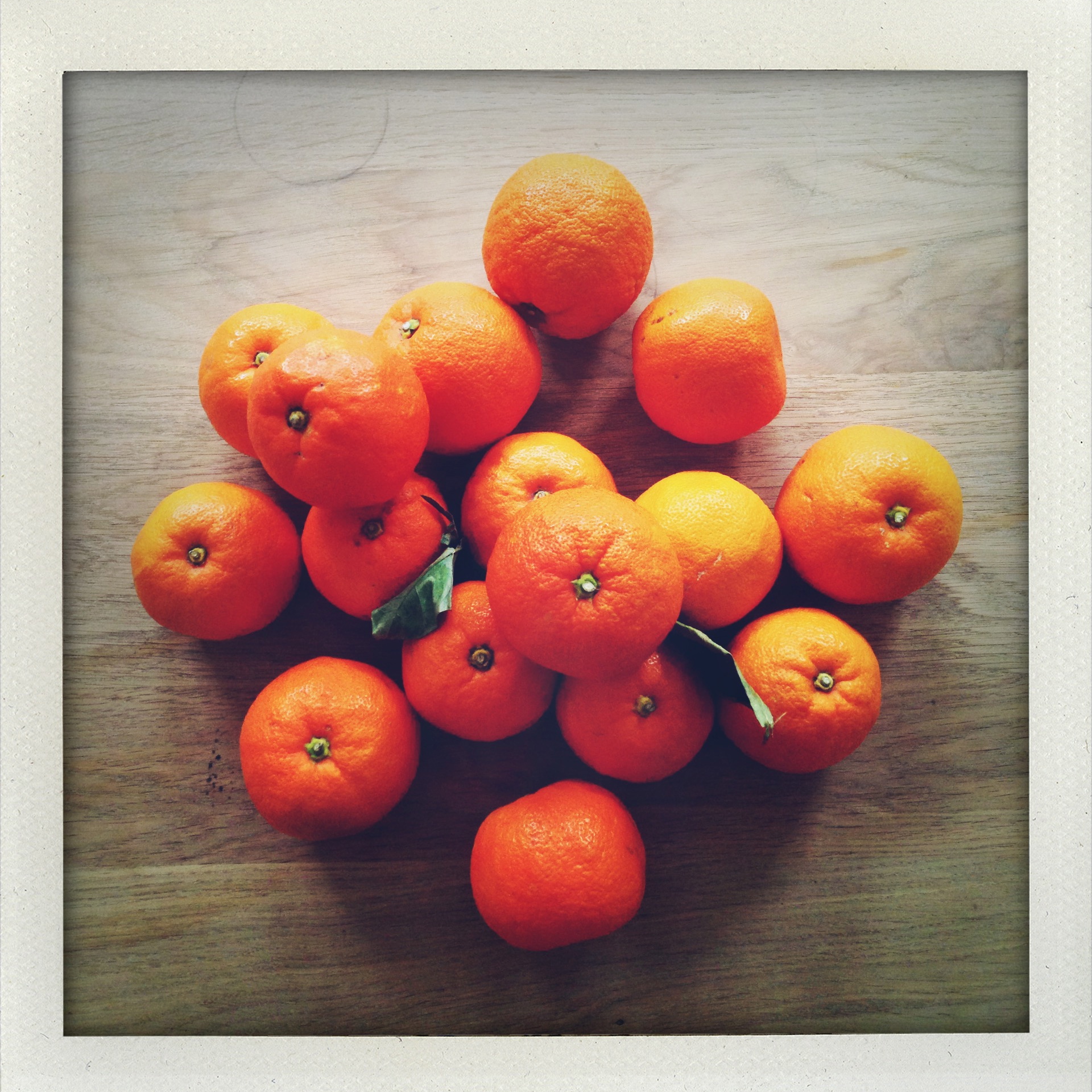
I didn’t really think it through. I entered the shop and ordered two kilos of Seville oranges. An impulse buy, as one might pick up a pair of gloves while waiting in the checkout line — though one with momentous consequences.

Is it the Paddington effect? Was I surreptitiously inspired by photos of glowing jars posted online by a friend? Did I unwittingly yearn for a stockpile to appease the marmalade-devouring members of the family? Am I becoming British?

Whichever the cause, the effect was me trudging home with a big bag of bitter oranges. So I went in search of a recipe.

I first turned to the usual suspect: the jam fairy Christine Ferber. But Ferber uses a significant amount of granny smith apples in her bitter orange marmalade. Her recipes often call for apples, used to extract a pectin rich jelly that later helps to shorten the cooking time thus allowing for a more vibrant fruit taste. Apples in marmalade? Tut tut, my budding speckles of Britishness balked at the idea. I had to look elsewhere.

IMG_8946

So on to Nigel Slater, whose piece in The Guardian a few years ago could be considered essential reading for anyone about to embark on a marmalade adventure. Slater beautifully captures the fastidious joy of making marmalade, all the while slyly cautioning those who might derive anything less than pure pleasure from the unwieldy process to stay away. Marmalade making must be relished, or not at all.

IMG_8962

It became quickly clear that there are as many marmalade recipes as there are makers of marmalade. I read a number of methods, chose one which seemed to suit me best, as much in the actual process as the expected outcome, and adapted it slightly.

The recipe is an adaptation from one in the River Café Cookbook Green, with a couple of tweaks and updates in January 2021.

There are no quantities because the amount of sugar is calculated in proportion to the weight of cooked fruit.

Seville oranges

Caster sugar

1 small untreated lemon per kg of oranges

Scrub the oranges and let them soak for 12 to 48 hours in cold water. Drain and rinse. [This step helps temper the bitterness. It can be skipped, the oranges may then take a little longer to soften while simmering.]

Place the oranges in a large heavy-bottomed saucepan, cover with cold water, and slowly bring to a boil. Reduce the heat, cover the saucepan with a lid slightly askew and simmer the oranges for 3 to 4 hours until they are completely soft. Turn the oranges occasionally (they float and only part of each orange remains submerged at any one time). Be careful that the liquid doesn’t evaporate completely. Add water as necessary. There should remain liquid up to about half of the depth of the oranges at the end.

Let the softened oranges cool enough to handle and set the saucepan with the cooking liquid aside.

Cut each orange in half, take out all the seeds and any rough fibers, then very thinly slice the rind together with the pulp.

Return the seeds and discarded bits to the liquid, bring to a boil and simmer for 10 minutes. Strain the liquid through a fine-mesh sieve, squeezing out every last bit, and return to the pot.

Weigh the skin and pulp and measure an equal part of sugar. Return everything to the saucepan with the liquid. Wash the lemon(s), cut it in half, then slice as thinly as possible into half moons. Add those to the saucepan too.

Turn the heat back on and bring the fruit, liquid, and sugar mixture to a boil, stirring occasionally to mix well and prevent from sticking. Boil for about 30 minutes, until the jam is set (to test, spoon a small amount of jam liquid into a small bowl and place in the refrigerator: if a skin forms, the jam is setting.)

Let the jam cool slightly before spooning into sterilized jars.