Archive for December, 2020

Tahini date banana smoothie

29 December 2020

It is the end of year parenthesis. The time, finally, when it is ok to not cook.

The feeling usually nags on Christmas morning. Usually, so much has happened since the 31st of October — Halloween, Thanksgiving, three birthdays in the mix with one on the 23rd of December (!), each, usually, a celebration here with friends, children, family, dinner, parties, … By the 25th, Christmas lunch is the one meal I never really want to cook. (Of course, we always do.) The moment I look forward to is the parenthesis, the in-between time, when the imperatives have receded and all that is left is a nondescript sluggish present of films, puzzles, games, a walk, or forgetting to go out altogether. Having a smoothie for lunch.

This year the listlessness is different. Every period since March has been a parenthesis. The first ‘lockdown,’ hunkered down patiently until everything, it was said, would get back to normal; Summer, a breath, a change of place, but restricted still, different — another parenthesis. Back to London, back to school, this time we are expecting it, we know things will soon change again. This endless succession of unusual times, slipping from one parenthesis to the next, is what we have become accustomed to. We know not to settle, however uncomfortably, into any status quo. Nonetheless the recent sudden shutdown a few days before Christmas, at the outset of winter, feels particularly disheartening. — I know this, too, will be just another parenthesis.

Or at what point does this become the main text? There is a potent urge to resist it. For now, in the gap, I’ve made myself a smoothie for lunch.
Banana date tahini smoothie
Inspired by a smoothie from The Good Egg in Soho during the minute-and-a-half in December when it was possible to go to an exhibition and have lunch in a restaurant.

Makes two large or three medium smoothies

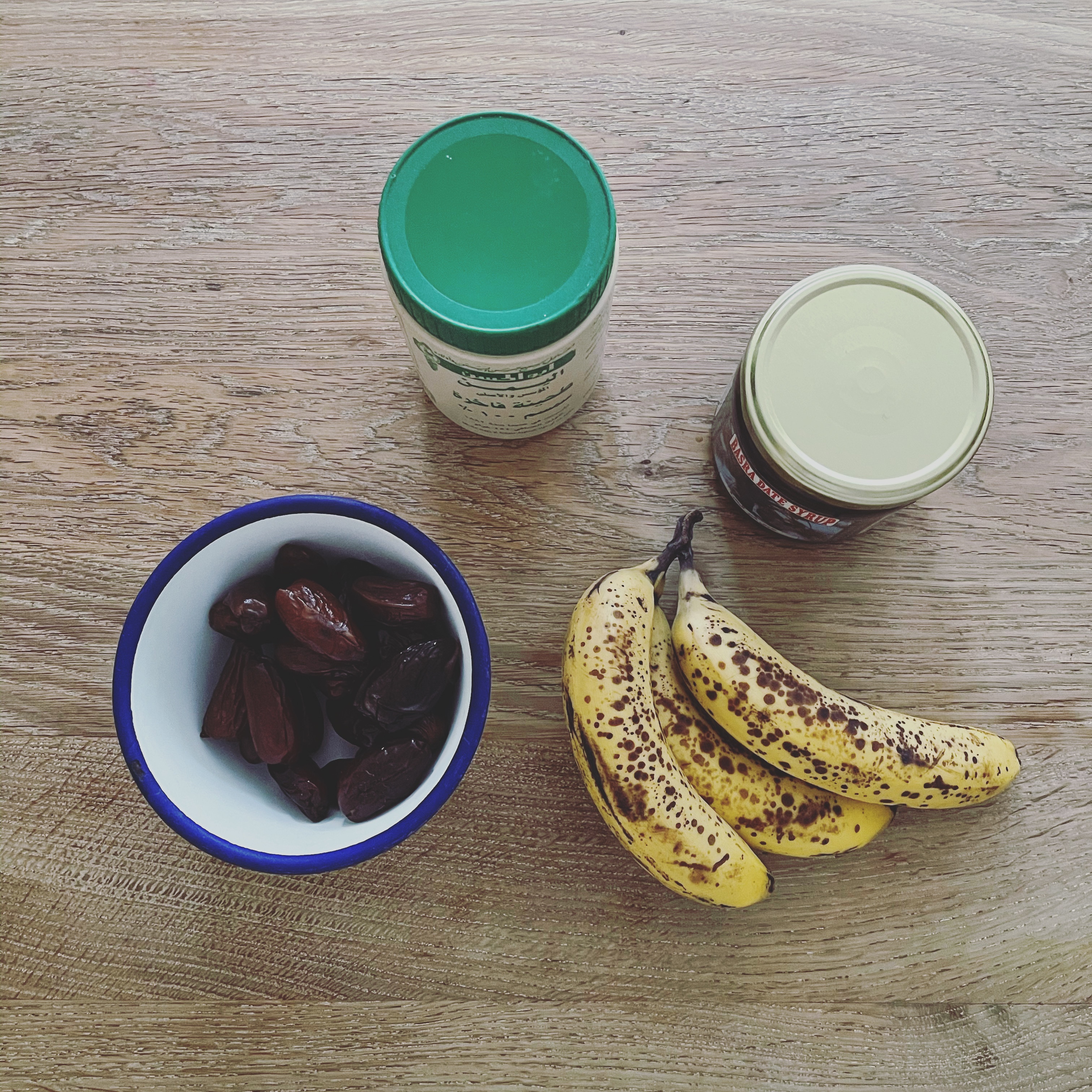
3 small or 2 large ripe bananas
4 dates
4 Tbsps (100ml or 1/4 cup) light tahini
Juice from 1/2 lemon (more according to taste)
3 Tbsps yogurt
4 ice cubes (optional)
150ml (1/2 cup) milk (oat, almond, or cow)
Drizzle of date syrup (optional)

Cut the bananas and dates roughly into chunks and place in a blender or food processor. Add the tahini, lemon juice, yogurt, and ice cubes (omit the ice if you prefer a very thick smoothie). Start blending and add the milk in gradually. Blend until completely smooth. Taste and add lemon juice as needed.

Serve in a large glass with a drizzle of date syrup if you happen to have some.

Christmas cookies | Basler Brünsli

13 December 2020

Happy third Sunday of advent! I am, as usual, far behind in Christmas preparations, not least because I intend (yes, still in the present tense, ahem) to make my own advent’s wreath, and because I’ve been baking batches upon batches of these little brown cookies in search of an ideal recipe.

Thankfully, the quest for the prefect Brünsli has been much more successful than the house decorating, and I’ve arrived at a version which in a blind tasting was unanimously voted the best by the family.

It is a collation of three different recipes, one from Saveur, one from the bible Classic German Baking, and, poignantly, my friend’s alsatian family recipe handed down through generations, peppered with comments and advice. There they are called ‘Bruns (de Bâle).’

Brünsli or Bruns mean ‘brownie,’ which refers to the colour of the cookies, imparted by the chocolate, and has no connection whatsoever to brownies.

According to the website Patrimoine Culinaire Suisse, historical references to ‘Brünsli’ date back to at least 1725, where they are mentioned in the account of dishes served at a banquet in Winterthur, and while Brünsli are now ubiquitous throughout Switzerland, a significant number of sources throughout the nineteenth and early twentieth century link them expressly to the city of Basel.

The basic components of Brünsli are egg whites, sugar, chocolate, and nuts — nowadays essentially almonds, but historically also hazelnuts or walnuts. They are naturally gluten- and dairy-free. Some just have cinnamon and I like them with a hefty note of cloves too.

Basler Brünsli
Incidentally gluten- and dairy-free

Makes about 4 dozen cookies

250g (9 oz.) whole blanched almonds
250g (1 1/3 cup) sugar, plus more for rolling
125g (4.4 oz.) 70% chocolate, chopped
tsp ground cinnamon
½ tsp ground cloves
2 Tbsps Kirsch
2 egg whites

Grind the almonds together with the sugar in a food processor until the almonds are finely ground. Add the (pre-chopped) chocolate and pulse until it is finely ground too. Transfer this almond/sugar/chocolate to a large bowl and stir in the cinnamon, cloves, and Kirsch, mixing well with a wooden spoon.

Beat the egg whites until stiff, then incorporate gently but thoroughly so that the entire dough becomes wet and comes together as one mass. Roughly shape the dough into a flat oval, cover with parchment paper, and transfer to the fridge for at least two hours (and up to one day).

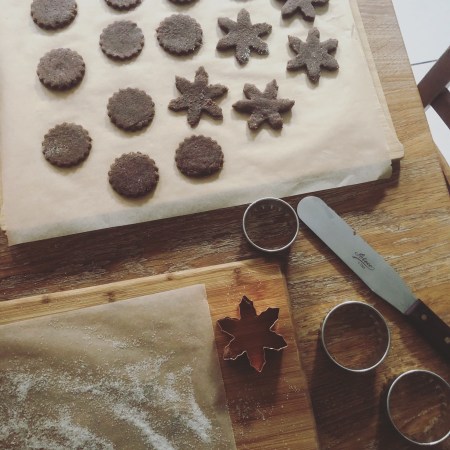
To roll out the dough, sprinkle the workspace generously with sugar, transfer the dough onto the sugar, sprinkle it with a little more sugar and lay a piece of parchment paper over the dough. Roll out the dough through the parchment to about 1/2 cm (1/4 inch) thickness. Cut out the cookies with shaped cutters; transfer them to parchment-paper—lined baking sheets, spacing the cookies 1 cm (1/2 inch) apart (the cookies don’t expand much when baking). Re-roll the scraps and repeat.

Let the cookies dry for 3 hours.

When ready to bake, heat the oven to 150°C (300°F). Bake until the cookies are slightly puffed, just 12 to 14 minutes (the cookies will feel soft; the outside hardens when they cool and the inside should stay chewy). Let cool completely and store in tin boxes lined with parchment paper. The cookies get better after a couple of days and keep well for a few weeks.

Any-which-way broth

10 December 2020

Rather than a recipe this is a reminder, a reminder that broth needs no recipe. In winter I make broth as frequently as possible, and every variation depends on the circumstances.

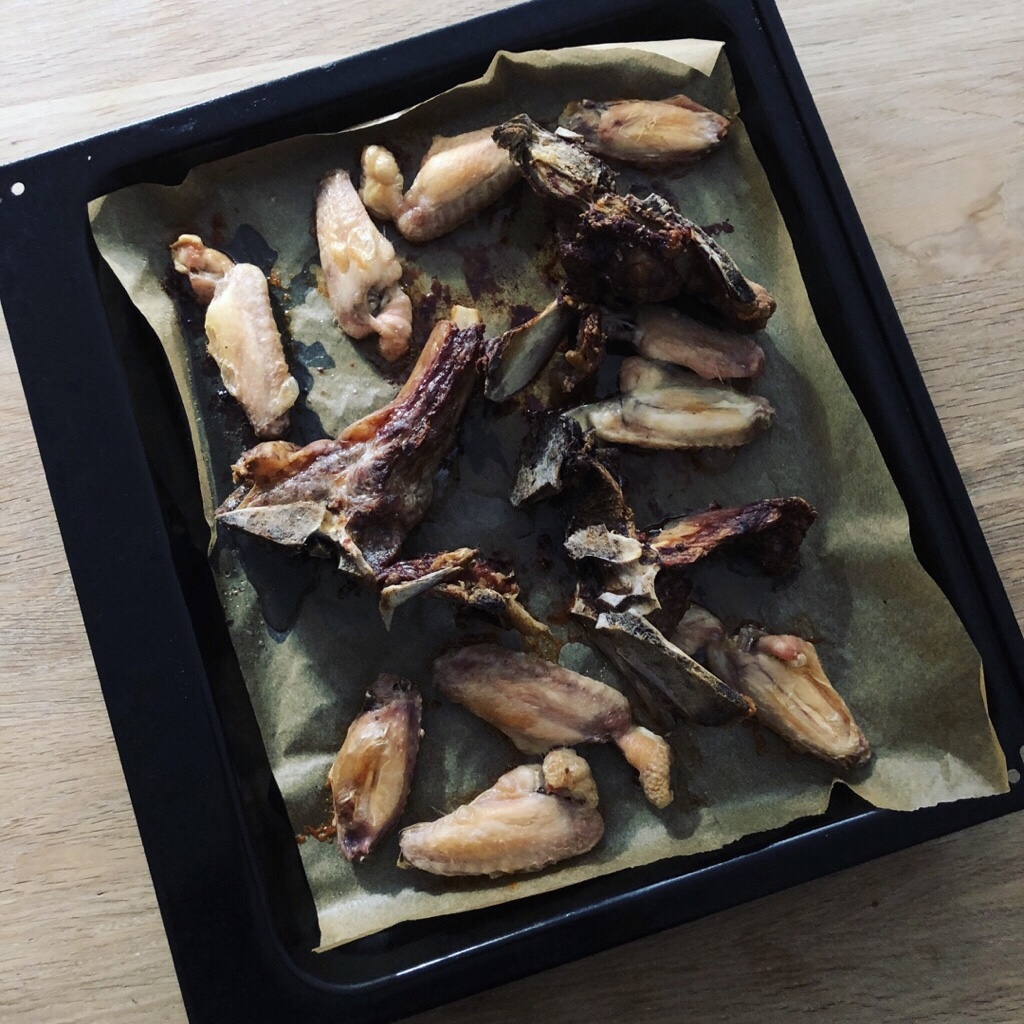
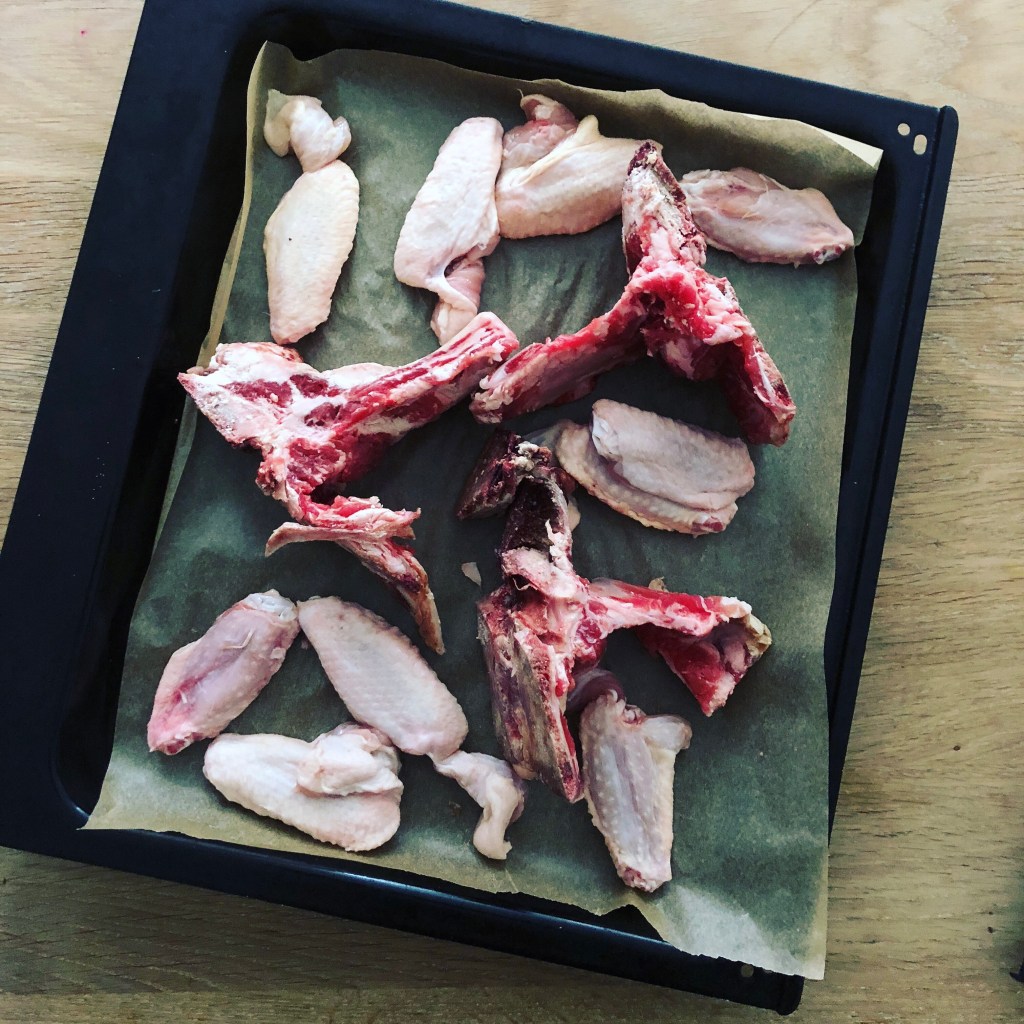
Sometimes, I plan ahead and buy beef bones and chicken carcasses at the butcher’s. If there is time, or if I intend to make pho, I might grill the bones in the oven first, with some halved onions and pieces of ginger.

I might add bay leaves or garlic cloves, celery stalks and peppercorns; always some acidity.

Sometimes, all it takes are some leftover chicken bones, from a whole chicken or just legs, covered with water and a few glugs of vinegar.

In most cases I let the broth cook for hours, sometimes days — I turn it off overnight and light the flame again in the morning, the pot often still warm. The length of time I let it cook has usually more to do with my availability to strain and store it, before which the broth needs a few hours to cool completely.

Once broth is in the house, any combination of vegetables becomes soup in one fell swoop and our favourite winter dinner: soup with bread and any combination cheeses, ham, saucisson, smoked mackerel, pickled herring, … — our winter version of Abendbrot. Occasionally there is purpose, as for pho or ramen, and the broth becomes the star. It can, at times, be an excuse for risotto. But often broth is just an intention, a promise, an investment. Hopefully, I never open a freezer empty of broth.

No recipe broth

Bones — chicken and/or beef. They can be raw, roasted specially, or leftover from another meal (leftover bones keep in the fridge no longer than 2 days, but can be stored in the freezer in a ziplock bag until needed).

Acidity — cider or red wine vinegar, or lemon juice, a large glug equivalent to a few of tablespoons

Aromatics — black peppercorns (a small handful), bay leaves, onions (skin on), unpeeled garlic, slices of ginger or fresh turmeric root, celery stalks, …

Salt — I usually salt the broth later when I want to use it, but salt can be added before cooking.

Place the bones in a large pot. Cover with cold water. Add acidity and aromatics as inspired. Bring to a boil and then simmer very gently for at least 2 hours and up to a couple of days, checking on the water level regularly and adding water as needed (the water does evaporate fairly quickly). I usually turn the broth off overnight or when I need to leave the house, and turn it on again when I can.

When ready, strain the bones and aromatics through a fine-mesh sieve and harvest the broth in a bowl. Let it cool completely before storing in the fridge (no longer than 2 days) or in the freezer.