Archive for October, 2021

This is Halloween … Aren’t you scared?

30 October 2021

This is Halloween, this is Halloween,
Pumpkins scream in the dead of night …
This is Halloween, red and black, slimey green
Aren’t you scared? …

I can’t think of Halloween without this song from The Nightmare Before Christmas dancing in my head. It is high up among our favourite Halloween films.

We were going to be away and miss it altogether this year, but an unexpected change of plans means that, instead, it is going to be a full weekend of Halloween (Hallowe’en!).

And so here are a few ideas — to make, to eat, to watch, to read…
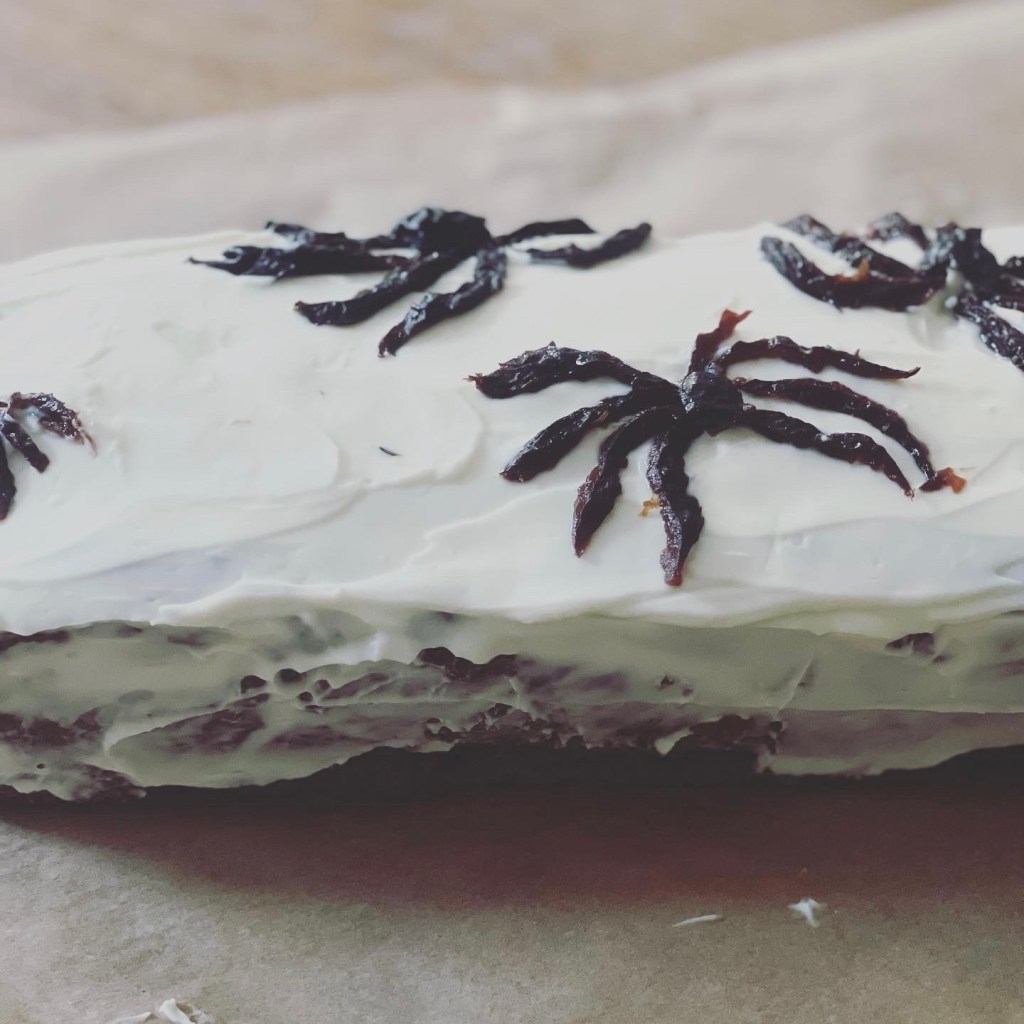
I first made a prune spider nine years ago for this carrot cake. (Apparently, then, I didn’t take a photo?) I’ve upped the ante this year with a full attacking cluster (above). Carrot cake always whiffs of Halloween for me, but any cake would be great (the one here is a quince cake!), as long as there is icing.

I love these naturally dyed cookies of the deepest charcoal black. They could be made into any shape of course: bats, cats, rats, hats, …

As you will know by now, when it comes to decorating I prefer simplicity and minimalism (happy to call it indolence), and this RIP chocolate cake was so easy! Using Nigella’s quick almond and olive oil chocolate cake: two cakes baked in loaf tins, one cut in half and positioned around the other in the sign of a cross, some icing sugar sprinkled over a RIP paper cut-out. Voilà!

A few other great ideas from elsewhere:

Mummy sausage plait — can’t wait to make these
Ssslithering sssalad — very clever
Monster feet — so cool!

And there are more films to watch. Our list of indispensables also include It’s the Great Pumpkin, Charlie Brown, and The Book of Life, Coco and Spirited Away.

I’ve just discovered the Children’s book club Instagram account showcasing illustrated books, apparently largely from the 1970s (though not only). It currently has a whole flight of books featuring witches!

But first, there are costumes to make(/unearth).

Wishing everyone a ghostly, ghoulish, ghastly Halloween!

Latest Letter from N&Q | October

26 October 2021

The latest Letter from Nettle & Quince — eating in October — is now out!

It’s a lot about quinces. But pears and medlars, too. About the pause of October and the start of the festive season, a nod to Hallowe’en and a link to my favourite spooky edible creation — sausage mummies!

You can find it HERE.

You can also sign up for future newsletters here.

Happy reading!

A nice way with chard — sweet and sour

18 October 2021

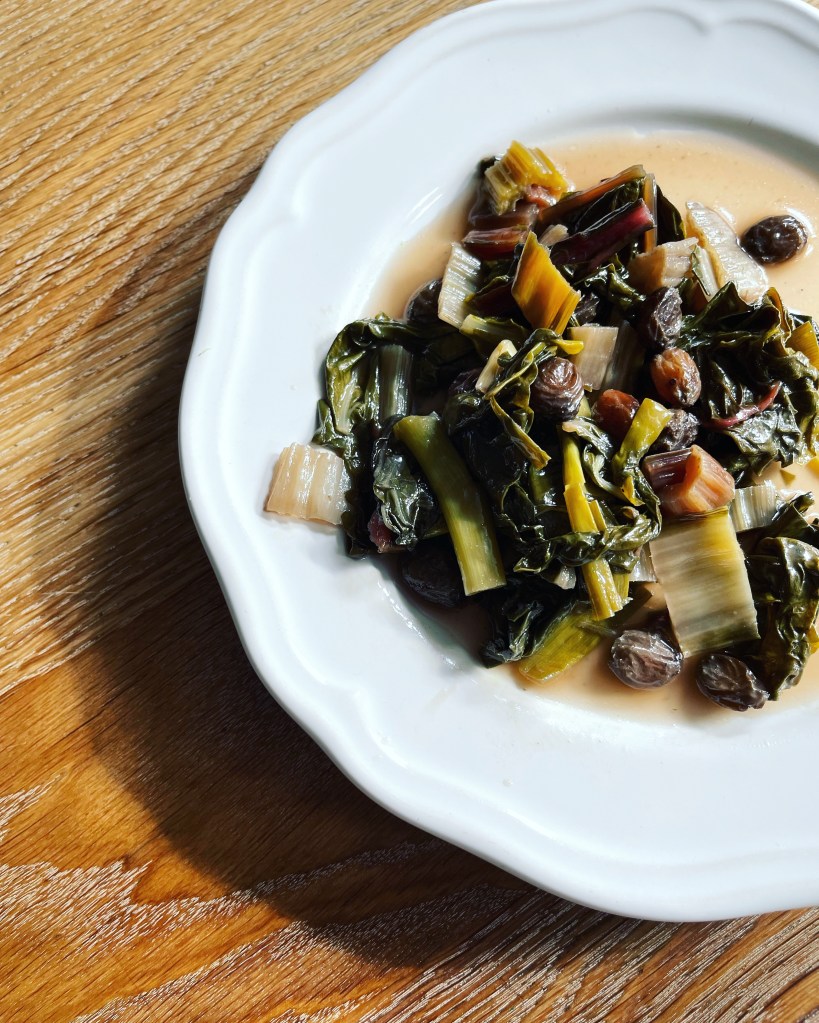
A caponata-inspired, quick chard dish to tackle the enormous amount of vegetables that have, again, accumulated in my fridge.

On Wednesday I had a brief moment of panic when I opened the refrigerator. Vegetables crammed in each drawer, wedged on every shelf, and a few days coming up ahead with no time to cook.

Thomas and I put on some music and proceeded to wash, peel, cut through most of it: onions, kilos of leeks and courgettes, a whole bunch of celery, mizuna, spring onions, chard. The simplest battle plan, in such cases, is usually soup, and that is where I was headed. But there was barely enough room in my big pot, I needed to find another idea for the chard.

My thoughts wandered towards caponata, sweet and sour, pared down to the minimalist treatment: raisins and vinegar. I had a bunch of spring onions too… I’ve become a bit fixated on sautéed vegetables with spring onions.

The soup was good — speckled green on green, herby and blended smooth (always a great cause of debate in this house, as there are those in favour of blending, and those vociferously against!).

While the chard, practically an afterthought, turned out really great!

A nice way with chard recipe

One large bunch of chard, about 400g
Two bunches (about 12) spring onions
Olive oil
A handfull of sultanas (I’m quite partial to sultanas but raisins would be fine)
2 Tbsps red wine vinegar
1 Tbsp sweeter white wine vinegar, such as moscatel (or use cider vinegar)
Flaky sea salt and freshly ground black pepper

Trim the stalks of chard off the leaves, then cut off and discard the dried very end bits. Wash the stalks, cut them into 1cm (1/2 inch) pieces.

Cut the chard leaves into strips, roughly 5 cm (2 inches) wide. Wash them well — this might require two passes in cold water, as chard can be gritty.

Trim off the roots and any damaged leaves from the spring onions. With the flat of a large knife, squash the onions along their length. Cut the flattened onions into 5cm (2 inch) pieces.

Heat a couple of tablespoons of olive oil in a large skillet/frying pan. When hot, add the spring onions. Leave them on medium heat, without stirring, until they begin to turn brown — just when they start sticking to the pan. Now stir, add the chard stalks, lower the heat and cover the skillet with a lid (my skillet doesn’t have its own lid so I use one from another big pot, even if it doesn’t cover the pan completely). Cook gently for 7 to 10 minutes, until the stalks become slightly translucent.

Toss in the sultanas and the vinegars and cook for 2 to 3 minutes uncovered.

Now add the chard leaves, salt, and pepper, cover once more with a lid, and cook, still over low heat, mixing through occasionally, for 10 to 15 minutes. The chard (both stalks and leaves) should have softened completely.

Cool, then refrigerate, and ideally let come to room temperature before serving. This keeps in the fridge for a few days.

Prunelle = sloe liqueur = sloe gin

10 October 2021

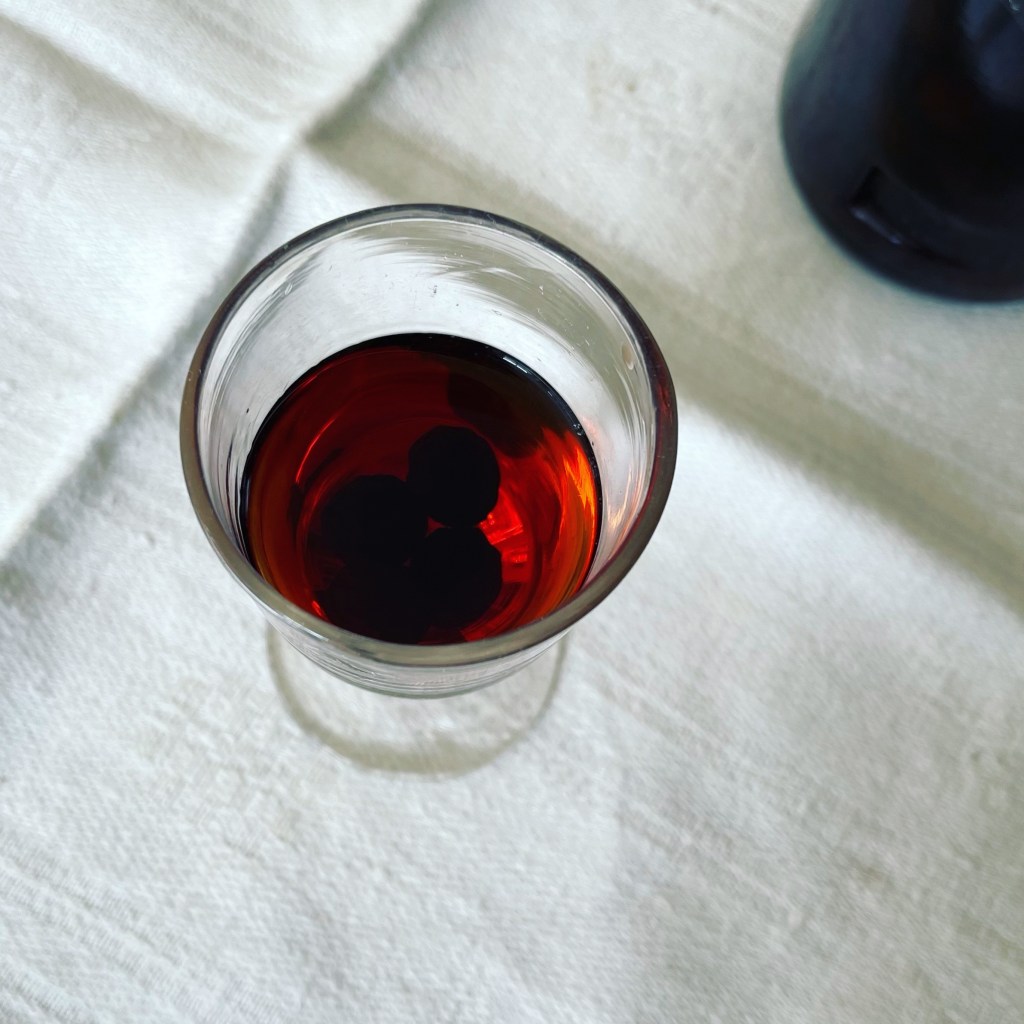
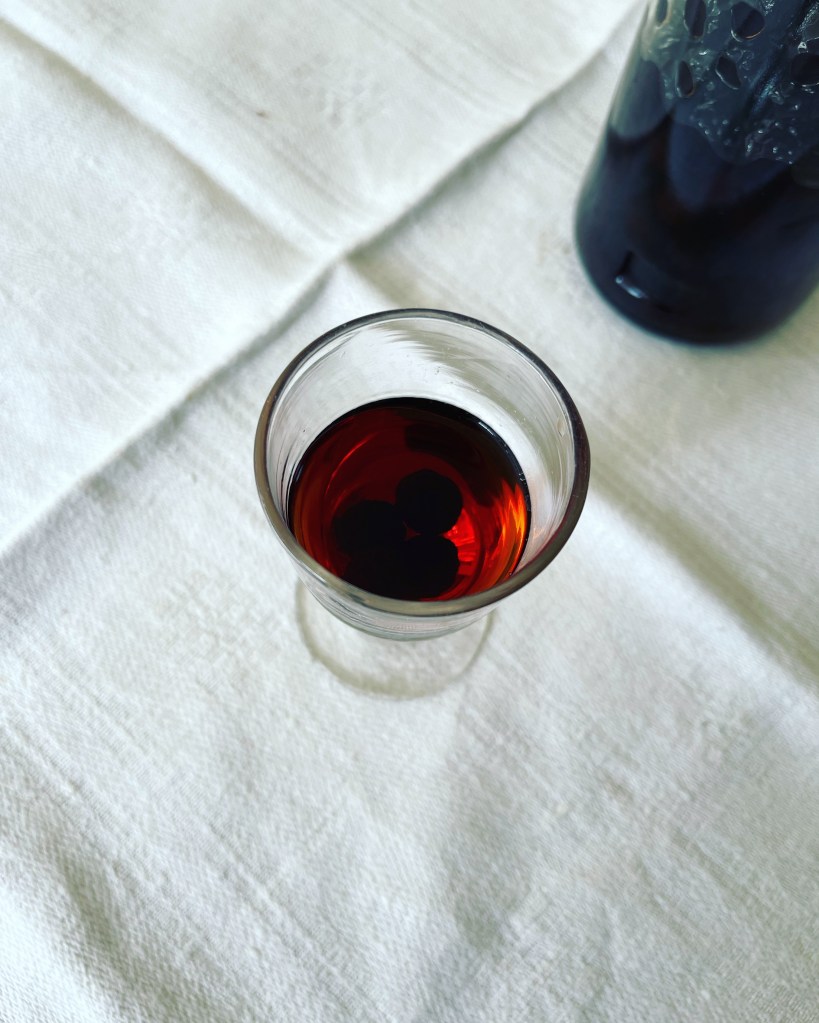
It took me some time to realise that ‘sloe gin’ is in fact ‘prunelle.’ For a long while, I imagined a dry gin gently infused with sloes, not the sweet liqueur digestif that the French simply call ‘prunelle,’ leaving out the ‘liqueur de’.

In France, this is the common way to name most fruit alcohols — brandy or liqueur. Toward the end of a protracted meal, spirits are retrieved from hidden cabinets. ‘De la poire, de la framboise’ (pear, raspberry) … the definite article denotes not a fruit but a bottle of. Indefinite ‘une‘ poire is a fruit. De ‘la‘ poire is the eau de vie, the brandy. The same is true of prunelle (sloe). De la prunelle is the sweet liqueur made from alcohol steeped with sugar and sloes. In France, the spirit used is a generic clear fruit alcohol destined for preserving, sold in supermarkets. In England, as I now understand, it is usually gin. The process is the same.

Sloes are the fruit of blackthorn (prunus spinosa), a tree that is ubiquitous in most of the UK, and last spring, in riotous frothy clouds of white petals, blackthorn was blooming everywhere. It was impossible not to notice. This boded well for the sloe harvest. Unfortunately this year I haven’t manage to pick any (yet) so I bought a bag. It’s less fun, but guarantees that we will have at least one bottle of prunelle for the winter.

I started making sloe liqueur fairly recently. Previously, I had relied on my friend. She never arrived anywhere without a bottle (or two or three) of her mother’s production. It was time to take up the mantle. So, a few years ago, flush from a generous harvest foraged around parks and hedgerows, I tested a number of recipes. Not so surprisingly, I’ve settled for one that is much less sweet. I think it’s perfect.

Prunelle = sloe liqueur recipe
Some recipes suggest waiting for the first frost before picking sloes, or freezing the fruit for 24 hours in order to mimic this. I have tried it and found no difference in taste.

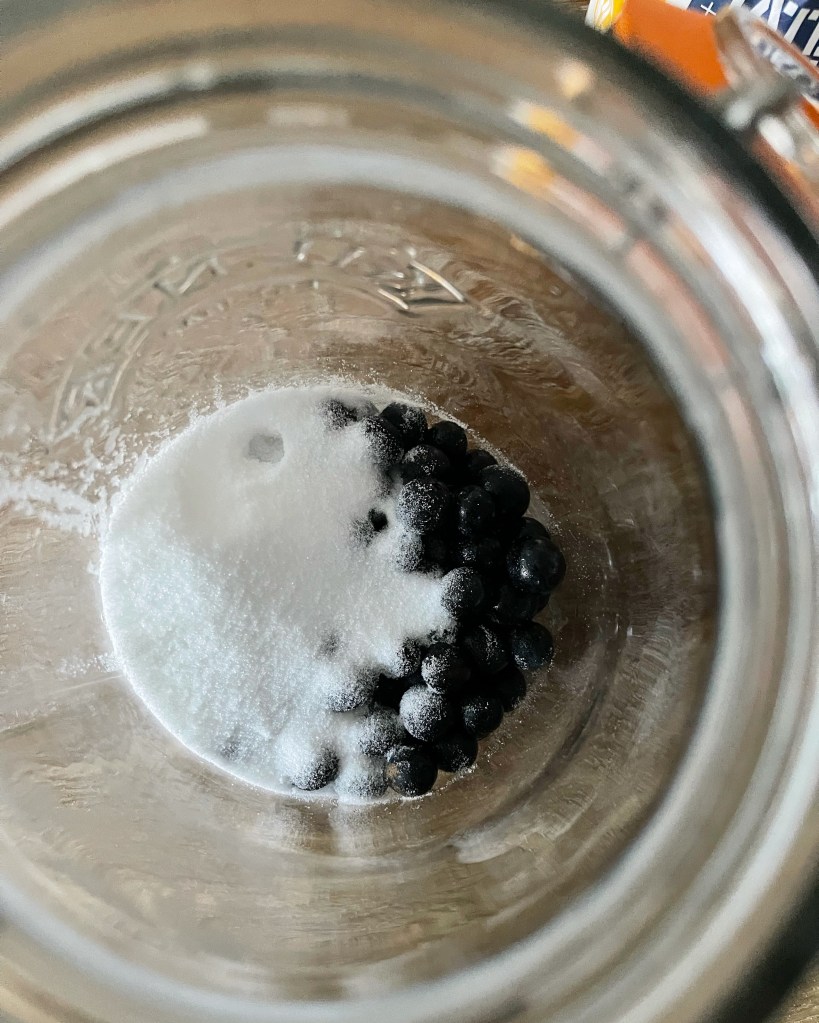
300g sloes
100g sugar (can be increased to 150g sugar for something much sweeter)
450ml clear fruit alcohol, gin, or vodka

Remove any leaves and twigs attached and rinse the sloes in cold water.

Place the sloes in a well washed (or preferably sterilised) bottle or jar that can hold at least 750ml. Add the sugar and the alcohol. Mix thoroughly.

Invert the bottle occasionally in the first week or so to make sure the sugar hasn’t settled at the bottom. Wait a couple of months before serving.

Chard and smoked salmon quiche

4 October 2021

I was writing about sloes, and then, this weekend, I made this quiche, sort of at the last minute. It is so good that I wanted to commit it to memory.

Quiches have come and gone in my kitchen over time, but they have always occupied a space of special affection because it was what I made the very first time I invited friends over for dinner. I must have been 15 or 16 and I can guess who was invited, though I don’t remember for certain, but I do know that I made one leek and one salmon quiche, both recipes transmitted from the mother of a friend.

This weekend, we had neighbours over for brunch. I say ‘neighbours’ because they were not yet friends, in fact I had never met them. Thomas parks his motorcycle next to his at the end of our road, and they have been chatting for years. We decided to finally meet for brunch, which is more casual than lunch, and better suited to her pregnancy than apéro. But what do you cook for people whom you don’t know? I usually have my friends in mind when deciding what to make, it’s where the inspiration sparks. The idea this time had to stem from elsewhere, it came barely a couple of hours before they arrived.

Just like that very first dinner so many years ago — when in doubt, make quiche.

Chard and smoked salmon quiche

1 pie pastry (or store bought)
4 shallots
1 large bunch of chard (rainbow or green)
Olive oil
200g smoked salmon
4 eggs
200g crème fraîche
Squeeze of lemon
Salt and freshly ground pepper
Gruyère or other hard cheese (optional)

Preheat the oven to 175C (350F) and generously butter a pie dish.

Peel and finely dice the shallots.

Prepare the chard: trim and discard the ends; slice off the stems, wash them, and cut into 1cm (1/3 inch) chunks; cut the leaves into 5cm (2-inch) strips, wash thoroughly in cold water, drain well or spin dry in a salad spinner.

Heat a large frying pan with a generous drizzle of olive oil. Add and shallots and chard stems and fry over medium to low heat, stirring regularly, until the shallots become translucid. Add the chard leaves, reduce the heat, if possible cover with a lid. Cook gently until the leaves are wilted, no longer.

Meanwhile:

Cut the smoked salmon into strips.

In a medium bowl, crack the eggs and beat well with a fork. Add the crème fraîche and beat some more. Add a generous squeeze of lemon, a pinch of salt, and generous grind of black pepper.

When the chard has wilted, transfer it from the pan to the egg/cream mixture.

Add a little olive oil to the pan, fry the salmon very briefly (one or two minutes) over high heat, so it takes on a golden tinge but doesn’t really need to be cooked through. Transfer the salmon to the egg/chard mixture with another squeeze of lemon and mix well to combine everything.

Roll out the pastry and transfer it to the buttered pie dish. Poke holes into the pastry with a fork. Carefully pour the filling into the pie, and smooth over with a spatula. Sprinkle some grated cheese over the filling if desired.

Slide the quiche into the oven and bake for 40 to 45 minutes until it becomes puffy and golden brown.

Can be served warm or cold, with just a big green salad, or alongside other dishes for lunch, or brunch, or a picnic!