Archive for the ‘Basic’ Category

Cuban bread

20 March 2012

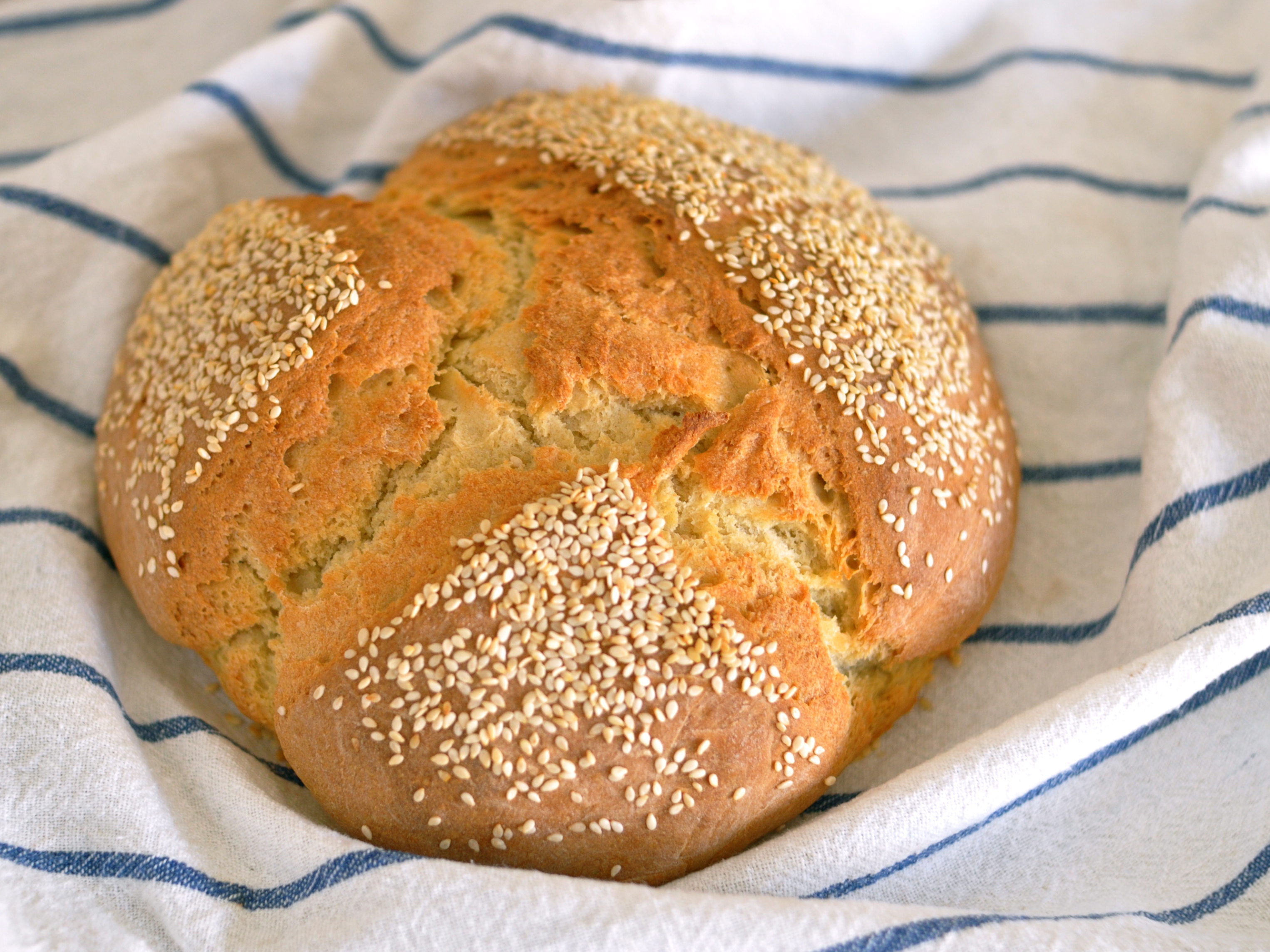
In his New Complete Book of Breads, Bernard Clayton doesn’t elaborate on this bread’s name; he does, however, call it “… a beginner’s dream.” And adds “Often I have used it in baking classes to demonstrate the ease with which good bread can be made.”

He might also have pointed out that this handsome bread is just the right measure of dense and chewy on the inside, with a soft but assertive crust on the outside, and that the rising time is only 15 minutes, which means the bread can be made from start to finish within an hour and a half, which is pretty great if — like me — you leave bread making to the last minute.

I first made it last September, realizing there was no bread in the house a bare ninety minutes before guests were to arrive for brunch. The name had also caught my eye and indeed it complemented well the baked eggs with cherry tomatoes, basil, and dash of balsamic vinegar I was serving that day.

Back then I hoped this sudden baking impulse would set the tone of a home-baked-bread–filled year, and perhaps even lead to realizing the sourdough fantasy I’ve been chasing.

Well, there hasn’t been much bread baking in the interim, let alone a sourdough adventure. Not a single loaf, in fact, until I baked this same Cuban bread for brunch again recently. It was well complemented, this time, by fried eggs with sautéed leeks and mushrooms atop grilled polenta (or that was the intention — the reality wasn’t quite so neat, but delicious nonetheless).

Happy spring!
***

From Bernard Clayton’s New Complete Book of Breads

5 to 6 cups white flour

2 packages yeast

1 Tbsp salt

2 Tbsps sugar

2 cups hot water (120°-130°F or 50°-55°C)

Sesame or poppy seeds (optional)

*

Prepare a baking sheet lined with parchment paper.

Place 4 cups of flour in a large bowl, add the yeast, salt, and sugar, and stir until they are well blended.

Pour in the hot water (using a thermometer is best here because if the water is too hot the yeast won’t work its magic, but, in the absence of such a device, a very unscientific gauge for right temperature is to place the little finger into the water and slowly count to ten. The water should feel quite hot at the end but below burning).

Beat with 100 strong strokes, or for 3 minutes with the flat beater of a hand mixer.

Gradually work in the remaining flour, half a cup at a time, until the dough is no longer too sticky and can be shaped into a ball. Kneed the dough for 8 minutes by hand on a floured work surface or in a hand mixer with a dough hook until it feels smooth, elastic, and “alive.”

Shape into a ball in a greased bowl and let the dough rise in a warm place until it has doubled in size, about 15 minutes.

Punch down the dough, separate it into two equal parts, and shape each into a smooth round. Place onto the parchmented baking sheet and cut an X on each loaf using a sharp knife. Brush with water and sprinkle with sesame or poppy seeds if desired.

Place the baking sheet with the loaves in the middle of a cold oven and place a large pan with hot water on a grate below, and heat oven to 400°F (200°C). **The bread will continue to rise in the oven as it is heating.**

Bake for about 50 minutes, until the bread is a deep golden brown. To check for doneness, knock on the bottom crusts; the loaves should sound hollow.

Let cool before slicing.

*

Related posts

Basic | Sweet pie crust

Banana cake

Stollen

Figs, walnuts, and chocolate

9 March 2012

Always an arm’s reach and no cooking away from an excellent dessert, and most delicious when the figs are broken open and stuffed with walnut halves.

It’s what we had at home most nights when I was a teenager. Every evening dinner included a main course, a salad, perhaps cheese, and, invariably, yogurt — plain, with a generous spoonful (or two) of jam or honey. And when one (or two) yogurt(s) left us with a feeling of not enough, we grabbed the nutcracker, the figs, and procrastinated with dessert before getting back to our homework.

*

Related posts

Figs with mascarpone

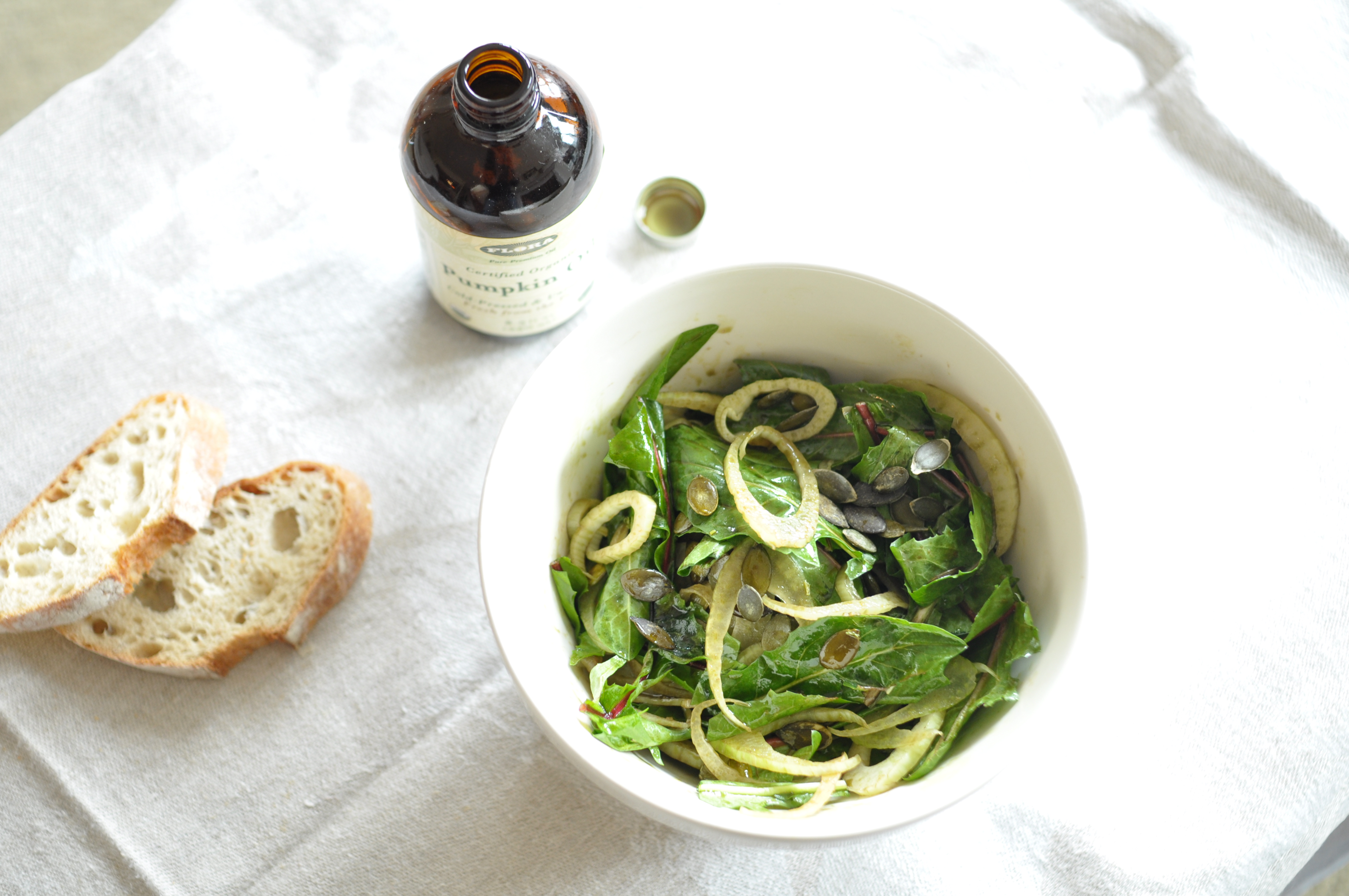
Dandelion, fennel, and pumpkin seed salad with pumpkin seed oil

18 February 2012

I was craving something green.

***

Pumpkin seed oil is quite common in Germany and Austria. Here in New York I have found it in health food stores, in the refrigerated section.

I rarely prepare salad dressing on the side; I usually just sprinkle the oil and lemon juice or vinegar directly onto the greens. It’s faster. The traditional ratio for salad dressing is three parts oil for one part vinegar but I prefer a little more pep.

1 bunch dandelion leaves

1 fennel bulb

1 Tbsp pumpkin seed oil

2 Tbsps olive oil

1 Tbsp Balsamic vinegar

1 Tbsp Lemon juice

Flaky sea salt

Freshly ground black pepper

A small handful of raw pumpkin seeds

*

Cut off the lower part of the dandelion stems, wash the leaves and spin or pat dry with a clean kitchen towel. Tear or chop the larger leaves in half.

Cut off the stems and remove the coarse outer layer of the fennel bulb. Thinly slice it crosswise to obtain rings.

Place the dandelion leaves and fennel rings in a bowl. Sprinkle with the pumpkin seed and olive oils, the vinegar, the lemon juice, and toss well to dress the greens. Season with salt and pepper, and the pumpkin seeds, and toss one last time.

*

Related posts

Endive salad with apples, walnuts, and comté

Lentil and fennel salad with lemon and parsley

Parsnip and butternut squash soup with sage

Apple sauce with lemon, cinnamon, and ginger

25 October 2011

Fall has come with crisp air and deepening sunshine, piles of fallen leaves to jump into and carpets of prickly chestnuts to tread onto, scarves without gloves and short skirts with leather boots, and apples, and apple sauce.

Apple sauce should be made with the newest, crispest apples of early fall as a celebratory leap away from summer; but also with the last, gnarly, bruised, and slightly soft apples of spring in patient anticipation of the summer’s first strawberries; and all winter long through grey skies and rainy days, snow storms and frigid winds.

Because making apple sauce is as easy as cutting apples into pieces and letting them cook for a little while, with a film of water at the bottom to prevent burning. But there are countless possible variations. Sugar or no sugar. Chunky or smooth. Spices? Even butter, for some. This is how I often make apple sauce, though by no means the only way.

***

This makes an intensely fragrant, chunky apple sauce. For a smoother texture the cooked apples can be run through a food mill. The spices and amount of sugar can also be adapted according to taste. I prefer fresh ginger and whole cinnamon because it imparts a more subtle taste, but ground spices would be fine, too.

About 10 small apples

Rind and juice of 1 lemon

1-inch (2.5 cm) piece ginger

1 thin cinnamon stick (or a half)

2 or 3 Tbsps brown sugar

***

Peel, core, and cut the apples into quarters and place in a heavy-bottomed saucepan.

Peel the rind of the lemon into a long ribbon, carefully avoiding too much pith, juice the lemon, and add both the rind and the juice to the apples.

Peel the ginger, cut it into thin slices, and add to the apples. Also add the cinnamon stick and the sugar.

Toss the apples. Pour in 2 or three tablespoons of water, just enough to coat the bottom of the pot.

Cook, covered, over medium to low heat for 20 to 30 minutes, until the apples have softened.

*

Related posts

At the market | Quinces

Oatmeal raisin walnut cookies

Banana cake


Basic | Sweet pie crust

10 May 2011

This pie crust is ideally light and flaky. It works very well for practically any fruit tarte, except — mildly ironically in this context — the walnut tarte for which I made it on Saturday. For that singular tarte, unlike others I usually make in that it is fairly rich, this pie crust is a bit too sweet and buttery. For every other tarte (or even pumpkin pie), it is excellent. It is the galette dough recipe from Chez Panisse Café Cookbook.

There are endless minute variations on pie crust recipes, some of which involve the size of the pieces of butter or the temperature of the ingredients. These do make a difference, and I think another crucial aspect is how the dough is treated. It should always be barely handled – delicately with the fingertips and never the palm of the hand. I think of it as the opposite of kneading.

***

From Chez Panisse Café Cookbook

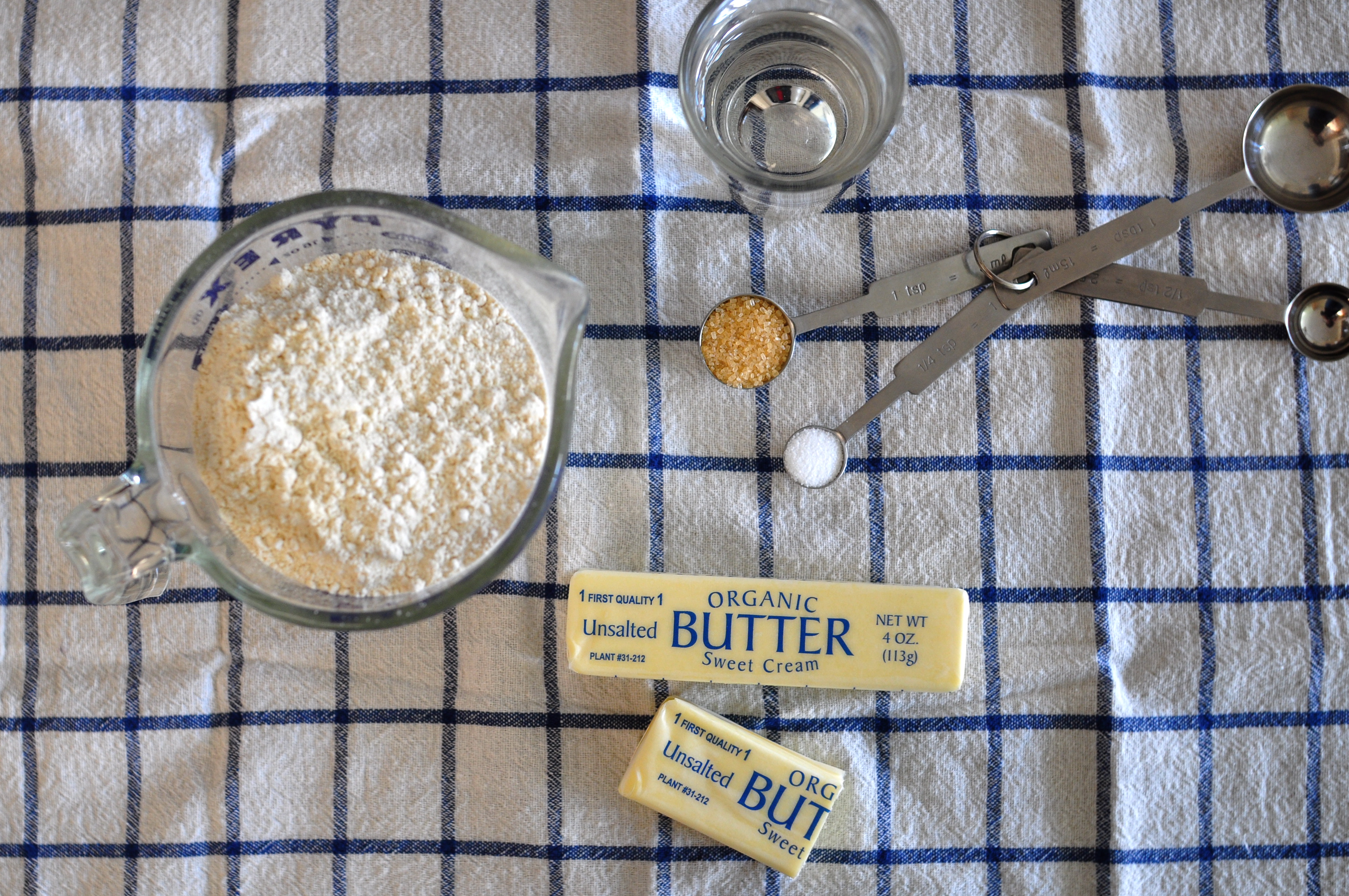
3/4 cups (170g) unsalted butter

2 cups (200g) flour

1 tsp sugar

1/4 tsp salt

Place a small glass of water in the freezer.

Cut the butter into 1/2-inch (1 cm) pieces.

In a large bowl mix the flour, sugar, and salt.

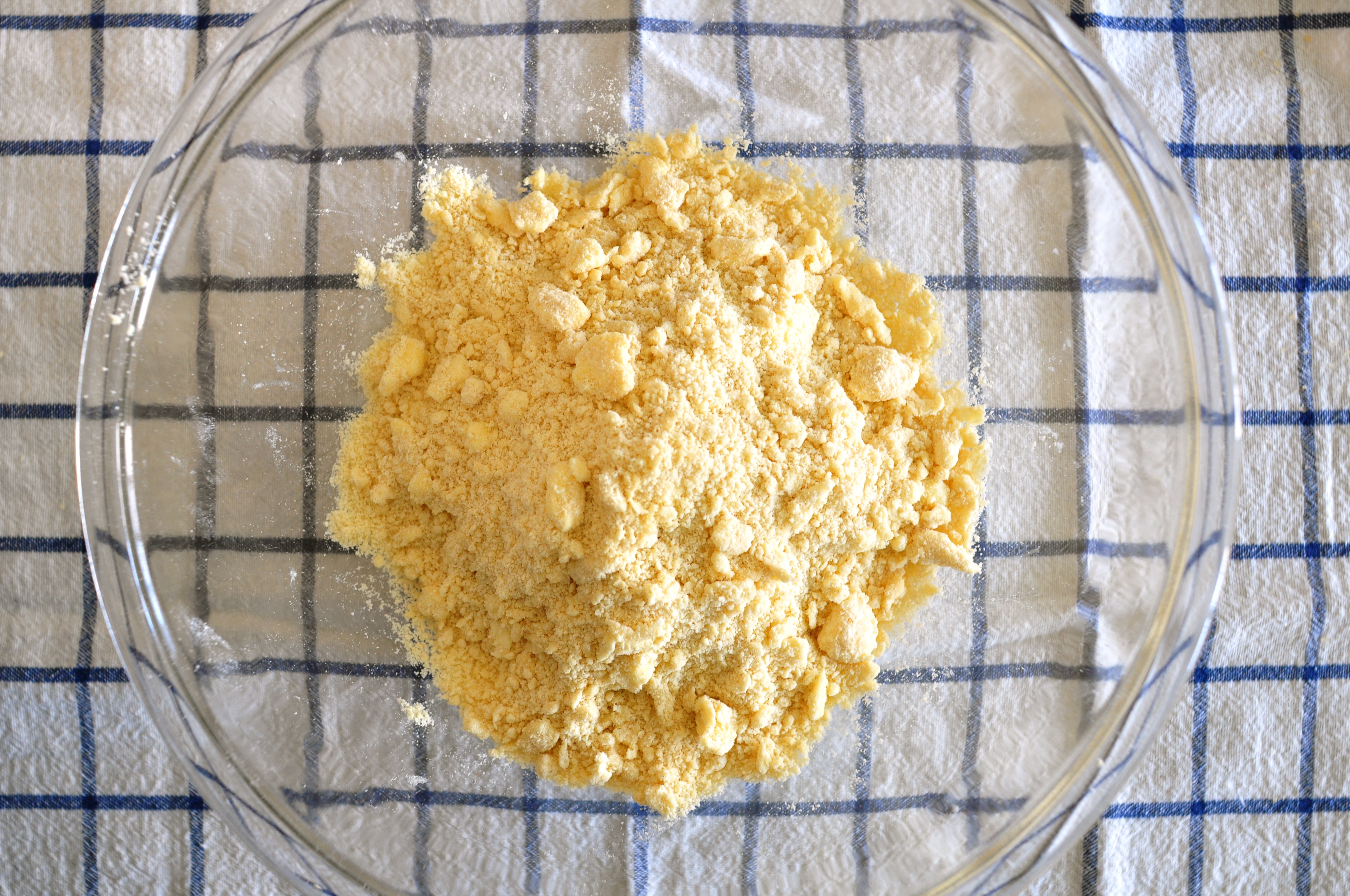
Gently work half of the butter into the flour mixture with fingertips until dough has the texture of coarse oatmeal. Add the rest of the butter and work it into the dough quickly, stopping as soon as the largest pieces of butter are the size of lima beans.

Add the ice cold water, a few drops at a time, carefully bringing the dough together into a ball. Stop adding water as soon as the dough adheres, but some flour is left in the ball (the dough should not be sticky).

Flatten the ball of dough, cover in plastic wrap, and refrigerate for at least an hour and up to 1 day.

Remove dough from refrigerator and allow about 15 minutes for it to soften with the ambient heat and become easy to handle.

Generously butter the pie pan.

Lightly dust a clean, flat surface with flour and roll out the dough into a circle until it is 1/8 inch (1/3 cm) thin.**This dough is very buttery, so to prevent it from sticking to the the floured surface I turn it at the beginning then regularly lift it, all the while adding a little flour on either side and on the rolling pin.**

To transfer the dough to the pie pan, gently fold it in half once, then fold it in half again, and carefully place the folded dough in the pie pan, positioning the angle in the center. Unfold, press gently onto the pan and sides, and cut off excess dough from the edges. Slip the pie crust in the refrigerator for at least 1/2 hour before using.