Archive for the ‘Dessert’ Category

Quince fruit pastes (pâtes de fruit)

27 November 2013

DSC_0875

The truth of the matter is, rather than preparing for a blasphemously belated Thanksgiving on Saturday, for which most of my family is crossing the channel, I have been roasting quinces and simmering chutney.

Last week, friends unexpectedly brought me a big bag of quinces from their garden in the Cotswolds (I hear it is more of an orchard). I was quite excited and may possibly have briefly jumped up and down at the sight. It was a very busy week, and I was away this weekend — the quinces were becoming impatient. Quinces do hold out for a while but I wasn’t willing to tempt fate for too long, so last night I made chutney. As a first test improvised from a few recipes it is quite good, but I am not entirely happy enough to report the results here — yet. In any event, Thomas managed to save the last of the quinces from their chutney fate, begging that I make quince paste, too.

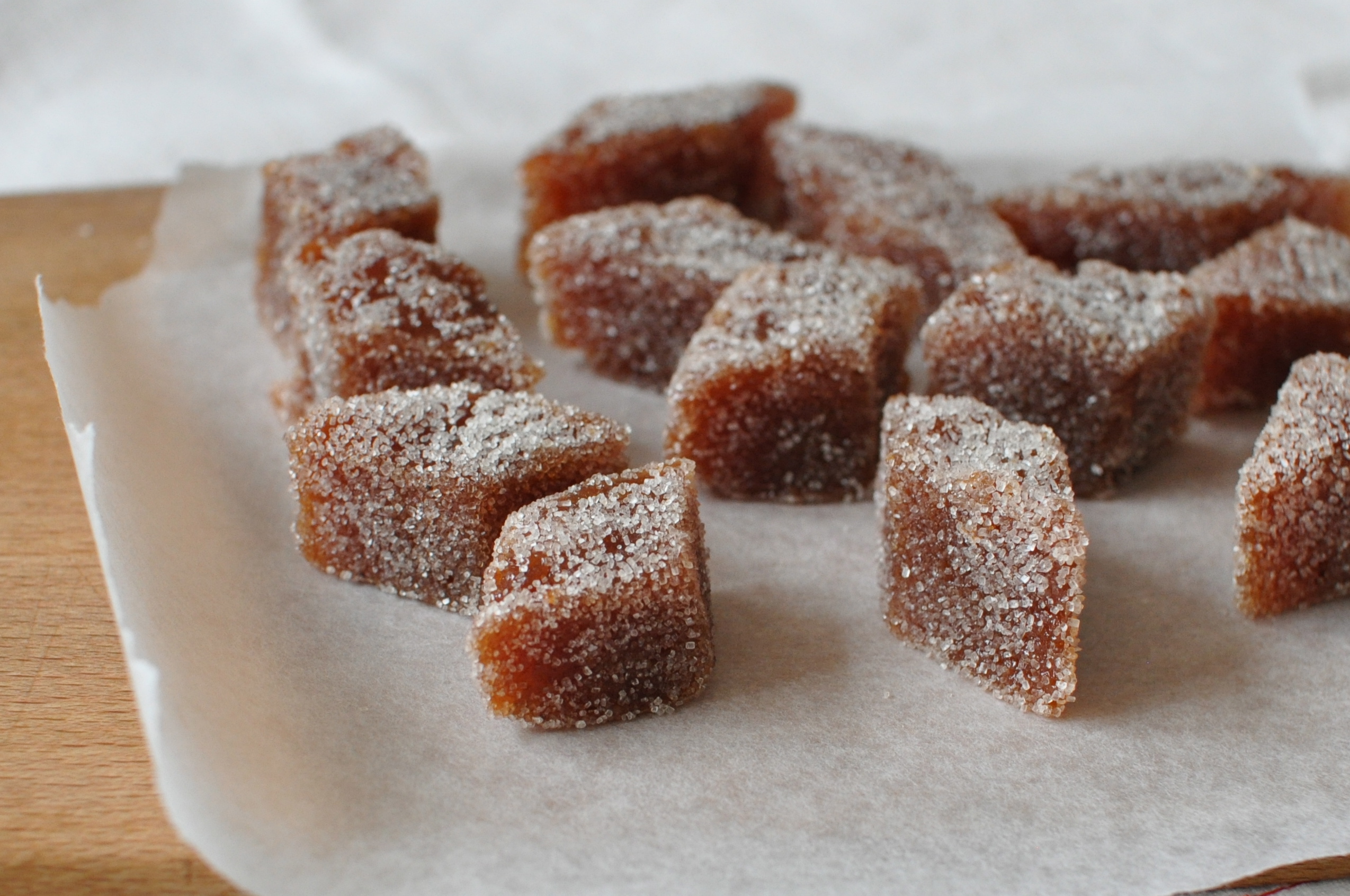
What he doesn’t know is that in the course of the morning, half of the membrillo has been transmogrified into my absolute favorite sweet: pâtes de fruit.

The preparation is the same up to the point of cutting the paste into dice or rectangles and coating them with sugar.
DSC_0889

Quince cheese recipe adapted from the River Café Cookbook (Blue)

Quinces

Sugar

Lemon

Preheat oven to 300ºF (150ºC).

Rub the fuzz from the quinces and wash well under cold water. Cut the quinces in half and place them face down in an ovenproof dish. Cover with aluminum foil and bake until the quinces feel quite soft when poked with a knife (probably 1 1/2 to 2 hours).

While the quinces are still warm, pass them through the fine mesh of a vegetable mill. (To insure a very pure paste, first remove the quinces’ core).

(The quince purée can at this point be refrigerated overnight.)

Weigh the purée, place in a saucepan, and add an equal amount of sugar and one tablespoons of lemon juice per 100g of quince.

Cook over very low heat, stirring constantly, until the paste has darkened and begins to fall off the sides. This will take a good long while, 1 1/2 to 2 hours, so take a book, newspaper, or magazine close to the stove but DO NOT leave. (I happen to know that left unattended, the paste will burn very quickly. In which case transfer quickly to another saucepan and continue cooking.)

Once the paste has reached a dark, heavy consistency, spread on a plate to cool. Once cool, cut into the desired shapes and roll in some sugar. The pastes should keep for a few weeks in an airtight container in the refrigerator.

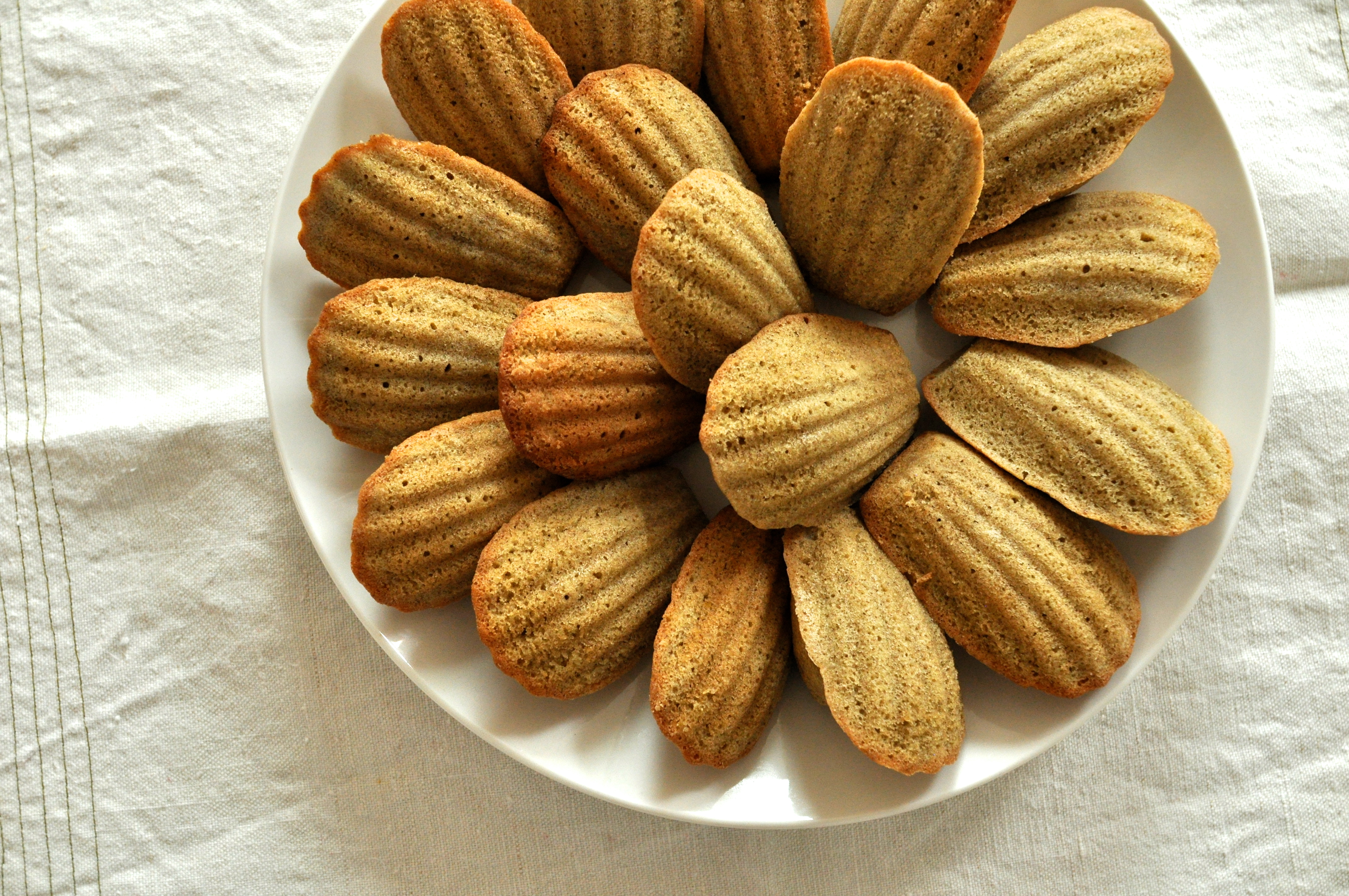
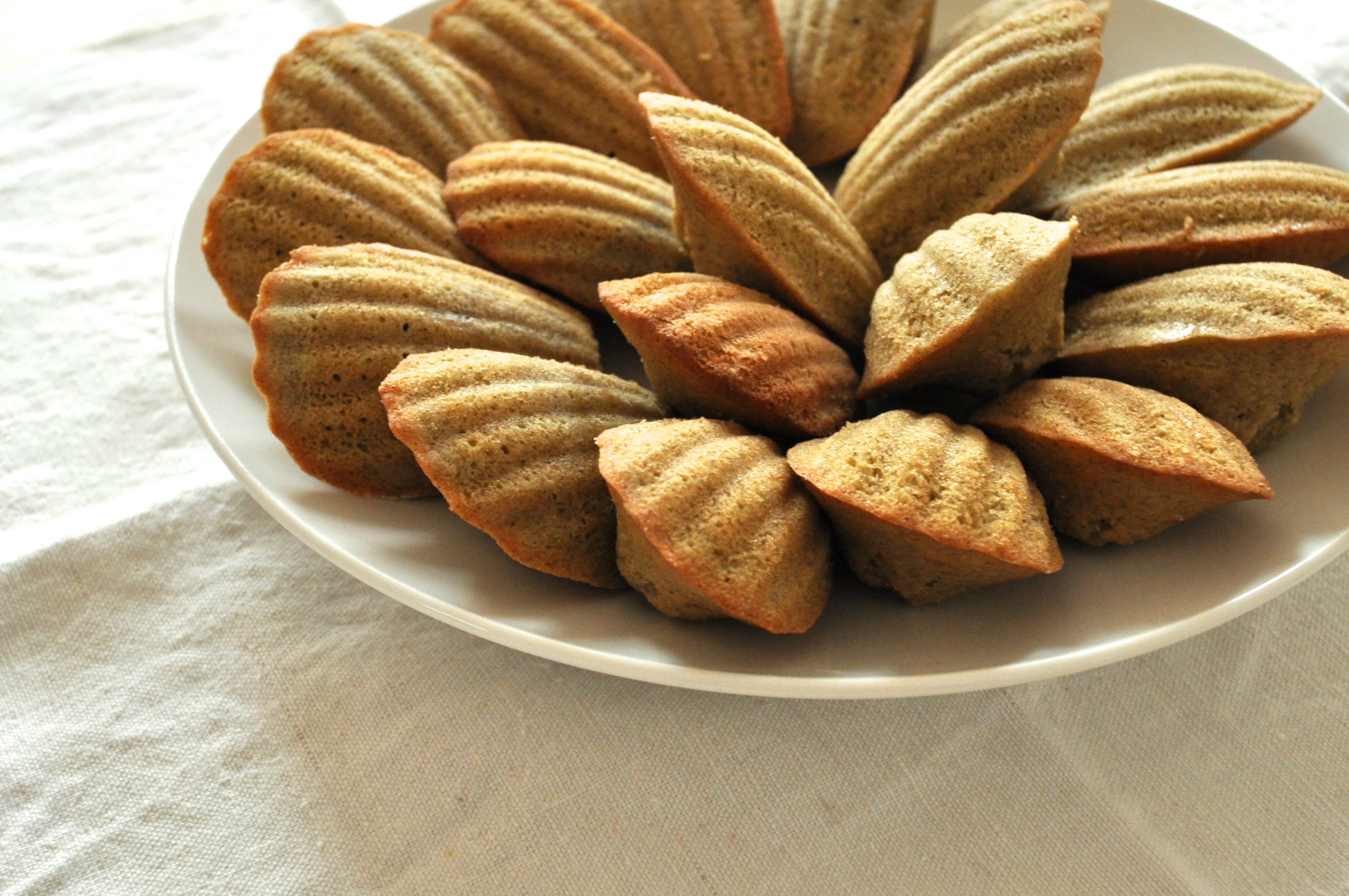
Almond and lemon madeleines with a touch of buckwheat

24 October 2013

DSC_0522

Moving is like a big gust of wind, it shakes things up and clears the air. I’ve always loved that feeling. Thomas likes to tell how I warned him, when I met him, that I didn’t mean to stay in Berlin forever, I was planning to move around. Indeed just a few weeks after our wedding we left for New York. And we got stuck. It happens, apparently.

For many years Berlin remained the city to which we would undoubtedly return. But gradually, imperceptibly, the feeling dissipated, and New York became home. A bit by default, perhaps, though in time it was hard to envisage any other. It happens, evidently.

As our lives became ever more settled, known, easy, the itch for change was more efficiently tempered by the comfort of friends and habit. It required a bit of a leap, or a gentle nudge. The opportunity had to be seized.

Moving is liberating. Liberating from the grip of a pounding, neurotic, fabulous city constantly vying for attention. I always thought the most fascinating thing about New York is its versatility, a place where anyone can find a place and live life singularly. What I didn’t realize was how much the city, with its endless offerings and possibilities, plays a role. New York isn’t just the setting, it is a main character. It’s what makes it so hard to leave, like breaking off a relationship. And New York is the jealous type.

So I made madeleines. I had no Proustian connection but they’ve found a place right where the happy look ahead chases a little heartache. They are not traditional and exactly how I like them.

DSC_0524

From David Lebovitz‘ classic lemon madeleines with just a few substitutions. Makes about 24 madeleines.

Note: Plan ahead as the dough must rest at least one hour. I did use baking powder though there is none in traditional madeleine recipes. Next time I might try without. Resting the dough is crucial for the little humps to form, particularly if the baking powder is omitted.

120 g butter plus a little more (about a tablespoon) for the molds

3 large eggs

130g sugar

Generous pinch of salt

100 g white flour

30 g buckwheat flour

1 tsp baking powder (optional)

45 g almond flour

Zest from 1 lemon

Melt the butter and set aside to cool to room temperature.

Brush the madeleine molds with melted butter, sprinkle a little flour, and tap off excess. Place the dusted molds in the refrigerator.

In a large mixing bowl, whisk the eggs, sugar, and salt for a good 5 minutes until very frothy.

Sift together the white flour, buckwheat flour, and baking powder (if using) into the batter and fold gently with a spatula or wooden spoon. Add the almond flour. Do not overmix.

Add the lemon zest to the cooled butter. Add the butter to the batter a few spoonfuls at a time, folding carefully, Stop as soon as all the butter is incorporated.

Cover the bowl and refrigerate for at least 1 hour and up to 2 days.

When ready to bake the madeleines, preheat the oven to 425° F (120° C) and place the rack in the top third of the oven.

Drop little spoonfuls of batter into each mold, just enough to fill each to 3/4. The batter will be hardened from the refrigerator, so it won’t fill the mold immediately (no need to try to spread it).

Bake for 8 to 9 minutes just until the madeleines start to turn golden. Remove from the oven, let cool a little before removing the madeleines from the molds.

They are best eaten very quickly, but will keep in a glass or metal container for one to two days.

Stewed dried fruit

13 April 2013

DSC_0299

My intention was to make Louisa’s cake, which I’ve craved since I first saw it two years ago. And since I had no ricotta at home I thought making my own, as I’ve also been wanting to do for a long time, would be the perfect, lazy Saturday morning, we’ve-been-away-and-I-haven’t-cooked-in-a-week sort of project. So I set forth, resolutely and with a tinge of excitement, salting and boiling cream and milk, when I realized there was no cheesecloth at home, either.

Perhaps it was the slow pace induced by a gorgeously sunny, cold week by the sea, cycling, walking, eating, and generally just being, but I was completely stumped. Not for a moment; for many minutes, an hour maybe. Just standing there in the kitchen, wondering what in the world I might do with two liters of salty milk, and what dessert might be on a post-vacation weekend. The invitation was a last minute thing, too.

I thought about the stewed fruits, something I used to make often, in winter especially, but rarely do anymore, for no particular reason. We usually have dried fruit around the house, and though a bit short on prunes to my taste, there was a good enough mix for my purpose.

A few hours had gone by, the morning behind us, and the milk still on the stovetop, so I decided to make a very dense, creamy yogurt to go with the fruit, as I’d done before.

All went quite well from then on. I added bay leaf to my usual recipe, and was very pleased with the result. Of course, the yogurt was nowhere near being set in time for dinner, but I had some commercial greek yogurt handy, too.

My salty yogurt is still sitting in the fridge. I’ve been thinking of making cheese, but for that I’d need some cloth.

*

This dessert is very good and extremely easy. Adapted from Jüdische Küche by Elizabeth Wolf-Cohen.

200-250 g (1 1/2 cups) dried figs

200-250 g (1 1/2 cups) dried apricots, preferably unsulphured

200-250 g (1 1/2 cups) prunes

100-150 g raisins

(Also dried apples, pears, unsweetened dried pineapples, as desired, adjusting the quantities to have enough syrup to cover all the fruit)

2 lemons

4 Tbsps honey

6 or 7 cloves

1 or 2 cinnamon sticks (depending on their size)

About 20 peppercorns

1 bay leaf
*

Make a syrup with 2 l (8 cups) water, the rind and juice from the lemons, the honey, cloves, cinnamon, peppercorns, and bay leaf. Bring to a boil and simmer for 5 minutes.

Add the figs (and pears if using) and simmer for 10 minutes.

Add the apricots (and apples and pineapple if using) and simmer for another 10 minutes.

Finally, add the prunes and raisins and simmer for a final 10 minutes (total stewing time 30 minutes).

Let the fruit cool in the liquid then refrigerate for a few hours at least before serving with thick yogurt or crème fraîche. (Remove peppercorns, cloves, and bay leaf before serving, or warn your guests.)

Really good brownies

25 January 2013

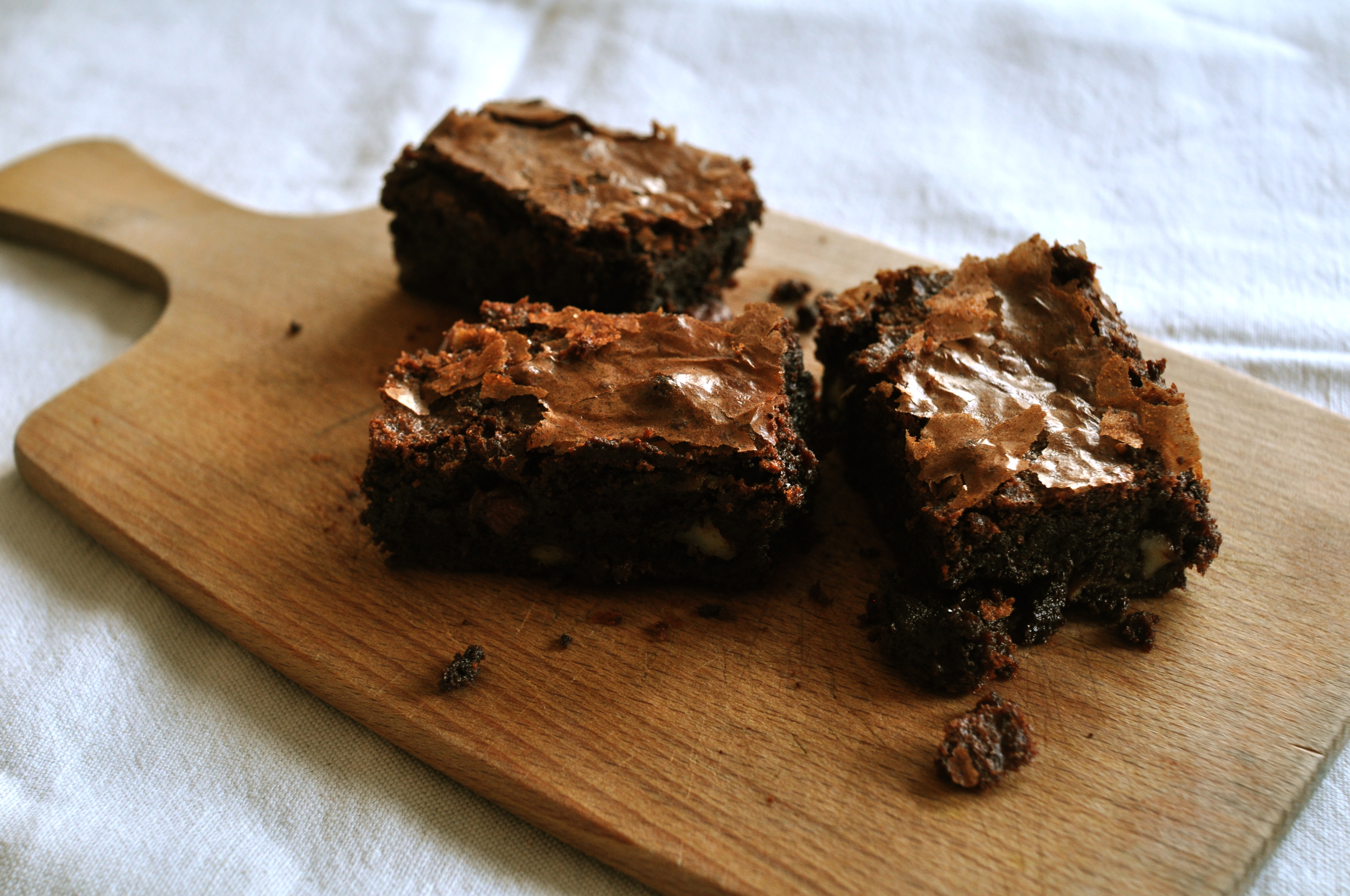
DSC_0610

Nigel Slater’s brownie recipe is, in his words, “just a 24-carat brownie, as dense and fudgy as Glastonbury Festival mud.” Who could resist? I, for one, couldn’t. Though I rarely make chocolate dessert — a whole year might go by — and never choose the chocolate option on a restaurant menu.

It’s not, as I sometimes explain for simplicity’s sake, because I don’t like it much. The truth is that, in matters of chocolate, I am embarrassingly picky. While most fruity cakes, tarts, and crumbles make me happy, chocolate doesn’t often hit the mark. It’s not as simple as dark or milk, cake or mousse, it’s a subtle dance in proportions: the shade, the butter, the nuts; it’s entirely subjective. For me, the perfect chocolate confection lies somewhere between a pecan blondie and a sombre, flour-less, nutty chocolate cake.

Which swept me right into the lap of this deep dark, spot-on fudgy brownie. It could be the only chocolate dessert I make all year.

DSC_0545

Very slightly adapted from Nigel Slater’s The Kitchen Diaries

I substituted “60 g of finest-quality cocoa powder” with an equal amount of additional regular chocolate (and so reduced the sugar very slightly). I also added pecans, of course.

1 1/2 cups (275 g) sugar

1 cup and 2 Tbsps (250 g) butter (more to butter the pan)

11 ounces (310 g) dark chocolate (70%)

3 eggs plus 1 yolk

1/2 cup (60 g) flour

1/2 tsp baking powder

Pinch of salt

1 cup pecans or walnuts, roughly chopped (optional)

Take the butter out of the refrigerator to soften at room temperature.

Preheat oven to 350°F (180°C). Line a baking tin, approximately 9″ (23 cm) square, with parchment paper. Butter the paper and the sides of the pan.

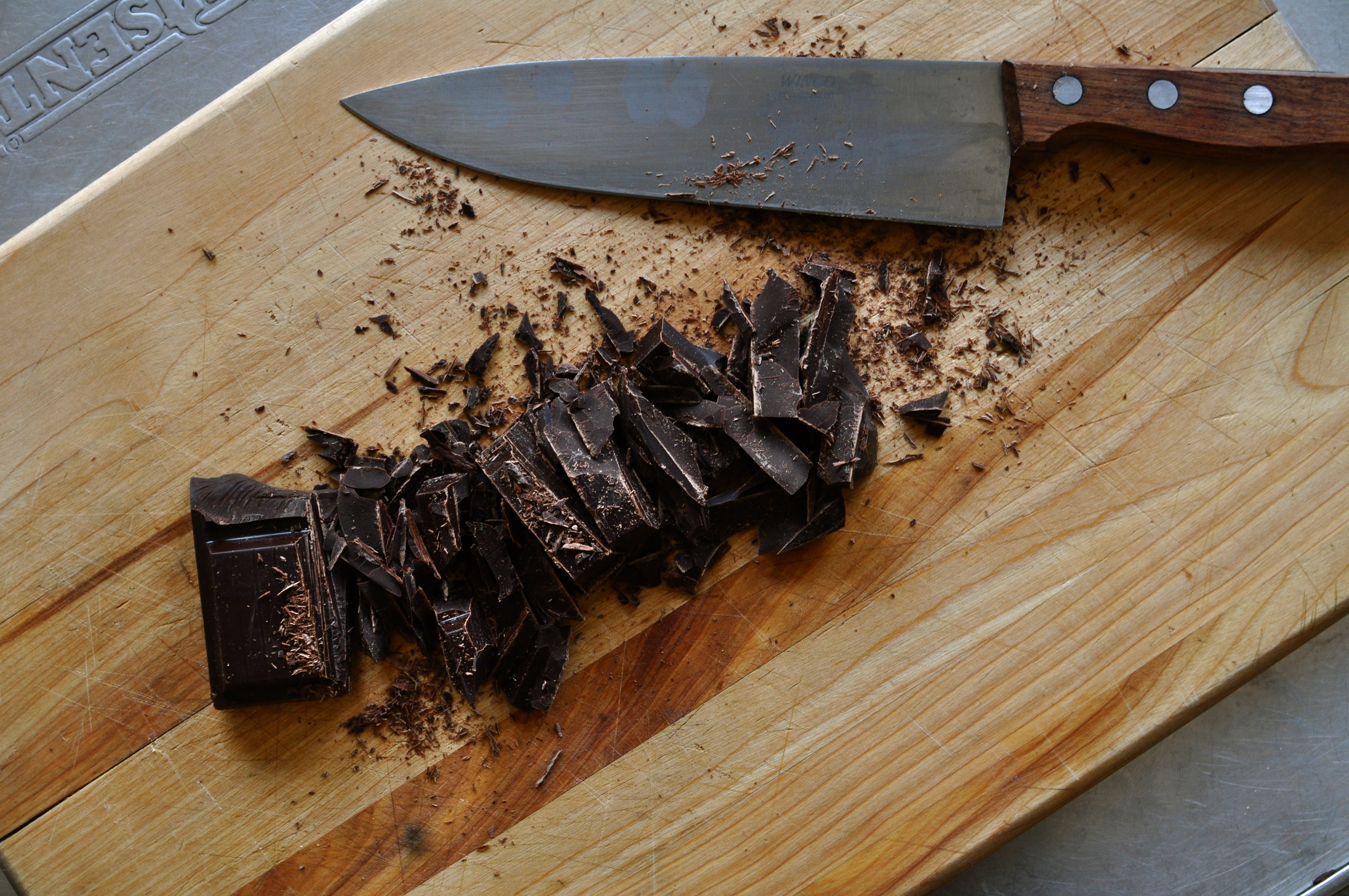
Prepare a pan of simmering water. Break the chocolate into pieces and set aside about 2 ounces (50 g). Melt the chocolate (except the 2 ounces) in a bowl sitting atop, but not in, the simmering water. Once melted, remove the chocolate from the heat and set aside to cool. Chop the remaining 2 ounces of chocolate into chip size pieces.

In a large bowl, beat the sugar and softened butter thoroughly, until very light and creamy.

Break the eggs into a small bowl and whisk briefly with a spoon. Add the eggs to the sugar/butter mixture, little by little, stirring thoroughly in between.

Add the melted and the chopped chocolate.

Mix in the flour sifted together with the baking powder and a pinch of salt. Do not overstir, stop as soon as all the flour has disappeared.

Finally fold in the pecans, carefully with as few large strokes as possible.

Scrape the batter into the prepared baking tin, smooth the top, and slide into the oven to bake for approximately 30. Test for doneness with the point of a sharp knife that should come out wet but without raw batter attached. Return to the oven for a few minutes if necessary until done. **The brownies will continue to solidify a bit once they are out of the oven, careful not to overcook!**

Let cool for at least an hour before cutting.

*

Related posts

Cake with pear and toasted hazelnuts

Orange almond cake

A carrot cake for Halloween

9 November 2012

I felt so organized, I had it all planned out. I would not only make the cake but photograph it and publish it here on Halloween. My plans were thwarted by a storm which, uncharacteristically among New York weather forecasts, turned out to be stronger and much more damaging than anyone expected. Taking the warnings lightly at first we didn’t stock up on food, water, or candles. We didn’t try to locate our missing flashlight.

Subways stopped running on Sunday evening; on Monday schools and offices were closed. Homebound by this citywide shutdown, we huddled and played games all morning. The hurricane was on its way, barely perceptible but for the blustery weather, and we were waiting. Suddenly we felt we must go out. Now was the moment, while there was still time.

The impulse was to go toward the water, see the swollen river, perch on benches to watch the eerily high Hudson. It seems frivolous now. The city was already deserted. The empty park, the windswept streets. We decided perhaps we should make provisions, after all, and my thoughts were, stubbornly, on the Halloween cake.

Some stores that had been open were closing, sending us and a few forlorn tourists on their way. We finally found one, ransacked of chicken and ice cream but with plenty of carrots and walnuts. I forgot to look for candles. We stopped at a pharmacy, they were sold out. I bought two different sizes of batteries hoping one might fit the flashlight, if I could find it.

That night the hurricane came with howling winds and crashing trees, but in our corner of town the power didn’t go out, the lights barely flickered. The next morning I even made the cake. Then the news started getting worse. Those without power were soon without water. Stories of houses burned to the ground, scenes of complete devastation.

So we started checking up on friends, offering food, hot showers, and power outlets. And friends came. And it was Halloween. And though all was dark downtown and broken elsewhere we went trick or treating in Harlem, with neighbors. I even finished the cake, with icing and evil-looking spiders. Just in time.

The news kept getting worse. Within a few days some areas recovered electricity, water, and heat; others did not. Many have lost much more. We were unnaturally lucky, so close and so unscathed. My mind hasn’t been on cooking. Feeding friends and family, yes, but not cooking.

***

Carrot Cake

For the past three years I’ve made carrot cake for Halloween, adorned with what I think are pretty cool, mean-looking, edible prune and cranberry spiders. I’m not exactly sure how I got hung up on that particular type of cake but in my mind it presented itself as the natural choice. I was inspired by a few recipes to achieve this one, which comes quite close to my ideal version of a carrot cake. Dense but moist, not too sweet, with nuts.

1 cup (225 g) butter (and a little extra to butter the pan)

1 1/4 cup (200 g) brown sugar

4 eggs

1/2 (150 ml) cup buttermilk

1 tsp vanilla extract

1/4 cup (75 ml) honey

2 cups (250 g) flour, half white half whole wheat

2 tsps baking powder

1 tsp baking soda

2 tsps salt

2 cups (250 g) finely grated carrots

1 1/2 cups chopped walnuts

1/2 (100 g) cup raisins

1 cup (250 ml) apple sauce

Take the butter out of the refrigerator to soften at room temperature for about 15-20 min.

Preheat the oven to 350°F (175°C) and line the bottom of an 11-inch (28 cm) round cake pan with parchment paper. Butter the paper and the sides of the pan.

In a large bowl, beat the softened butter with the sugar until the mixture becomes light colored and fluffy. Add the eggs, one at a time, whisking well to combine. Add the buttermilk, vanilla extract, and honey, mixing well.

In another bowl, mix together the flours, baking powder, baking soda, and salt.

Add the flour to the sugar/butter/egg mixture, stirring just enough so the flour disappears.

Gently add the carrots, walnuts, raisins, and apple sauce.

Bake in the oven for 1 hour to 1 hour 15 min. The cake is done when a knife inserted in the center of the cake comes out clean.

*

Icing

8 Tbsps (110 g) unsalted butter

6 oz. (170 g) cream cheese

1 lb (500 g) mascarpone

1 1/2 cups (150 g) icing sugar

Zest and juice from 1 lemon

At room temperature, let the butter become very soft. In a medium bowl, beat it well with a spatula.

In a small bowl, beat the cream cheese well before mixing it with the butter. Once the cream cheese is incorporated with the butter, beat the mascarpone well before adding it to the butter and cream cheese.

Sift the icing sugar before mixing it into the butter/cream cheese/mascarpone mix.

Finish by stirring in the lemon zest and juice.

Refrigerate the icing about 1/2 hour before spreading it onto the cake.

*

Spiders

1 prune and 1 large sweetened cranberry per spider

Cut the prune into thin slivers lengthwise to create eight spider legs. Place the cranberry on the cake so as to make the body of the spider. Arrange the ‘legs’ around it.