Archive for the ‘Dessert’ Category

Rhubarb raspberry crostata

21 July 2012

I wasn’t going to make this, I admit. I saw the crostata on Lottie + Doof when it was published a few weeks ago and somehow dismissed it, as I might have snubbed a recipe that combines rhubarb and strawberries. In my mind rhubarb is not enhanced by berries of any sort. (Rosemary as a gentle herbal boost, on the other hand, is a different story.)

But I arrived in Brittany in the midst of what everyone claimed to be the worst summer (summer?) in recent memory. I’d already enjoyed a generous dose of sun and heat in New York, so I didn’t mind much, and the terrible weather had brought with it a few perks: still plenty of rhubarb at the market and lots of raspberries in the garden, bravely defying the odds on overgrown bushes left to fend for themselves all year long. (Also elders still in bloom! But more on that later.)

I bought rhubarb, as I always do; eyed the raspberries calling out for prompt picking; and remembered that a friend had recently raved about this crostata. The decision seemed to make itself.

As it turned out, I loved everything about the recipe. The crust is great. The technique of bending it back over the pie so simple and clever. And, well, the combination of rhubarb and raspberry really is well inspired, after all. (I did add a sprig of rosemary to infuse the filling as it was cooking, it was irresistible. Otherwise everything remains pretty much the same.)

The great thing here is that the crust and rolling technique can be used with all kinds of fruit. I imagine peach slices tossed with a little sugar and a few sprigs of thyme simply placed on the crust (uncooked) before baking would be excellent, too.

Recipe by Karen DeMasco in Bon Appétit via Lottie + Doof

For the  crust

1 cup (125 g) white flour

1/2 cup (75 g) whole wheat flour

1 Tbsp sugar

1/2 tsp sea salt

3/4 (170g) cup butter

1 large egg

1 Tbsp whole milk

Keep the butter well chilled.

In a large bowl, combine the flours, sugar, and salt.

Cut the cold butter into cubes, add to the flour mixture, and combine until the dough has the texture of coarse oatmeal.

In a small bowl, whisk the egg and milk to combine well. Add the egg/milk to the flour/butter mixture, and work the dough just enough so that it can be gathered into a ball. If you need a little more moisture (I did), add some water, a few drops at a time, until the dough can be shaped.

Flatten the ball and place in the refrigerator, covered snugly with parchment paper, to rest for at least 1 1/2 hours and up to 2 days.

*

For the filling

1/4 cup (30 g) cornstarch

4 cups (about 500 g) rhubarb

1 pint raspberries

2/3 cup (135 g) sugar

1 sprig rosemary

In a small bowl, dissolve the cornstarch in 3 Tbsps water and set aside.

Wash, peel as necessary, and cut the rhubarb into 1/2 inch (1 cm) pieces. Never wash raspberries but check through them to remove leaves or any damaged berries.

Combine the rhubarb, raspberries, rosemary, and sugar in a large heavy saucepan and cook over medium heat, stirring regularly, until the sugar dissolves and the juices are released, about 4 to 5 minutes. Stir in the diluted cornstarch and bring to a boil, then transfer to a bowl and chill until cool, about 30 minutes. **The rhubarb will not be soft, the slices still intact; it will cook through later as the crostata bakes in the oven.**

*

The crostata

Flour for rolling the dough

1 egg and 1 tsp milk for the egg wash

A little brown sugar for sprinkling on the edges of the crostata

Remove dough from refrigerator and allow about 15 minutes for it to soften with the ambient heat and become easy to handle (but not too much or the dough becomes sticky and difficult to roll).

Preheat oven to 400°F (200°C).

Roll out the dough onto a large piece of floured parchment paper to about 12″ (30 cm), taking good care that it doesn’t stick and adding flour if necessary.

Beat one egg with a tsp milk and brush the crust with the egg wash (this helps seal the crust so the juices from the fruit don’t make it soggy).

Remove the sprig rosemary from the cooled filling and scoop the filling carefully onto the crust, spreading it evenly from the center outward leaving a 2″ (5 cm) border. Gently fold the edges of the dough back over the filling.

Brush the borders with the egg wash and sprinkle with sugar. Slide the parchment paper with the crostata onto a baking sheet, then into the oven and bake until the crust is golden and the filling bubbly, about 45 minutes.

Let the crostata cool. Serve with crème fraîche or whipped cream.

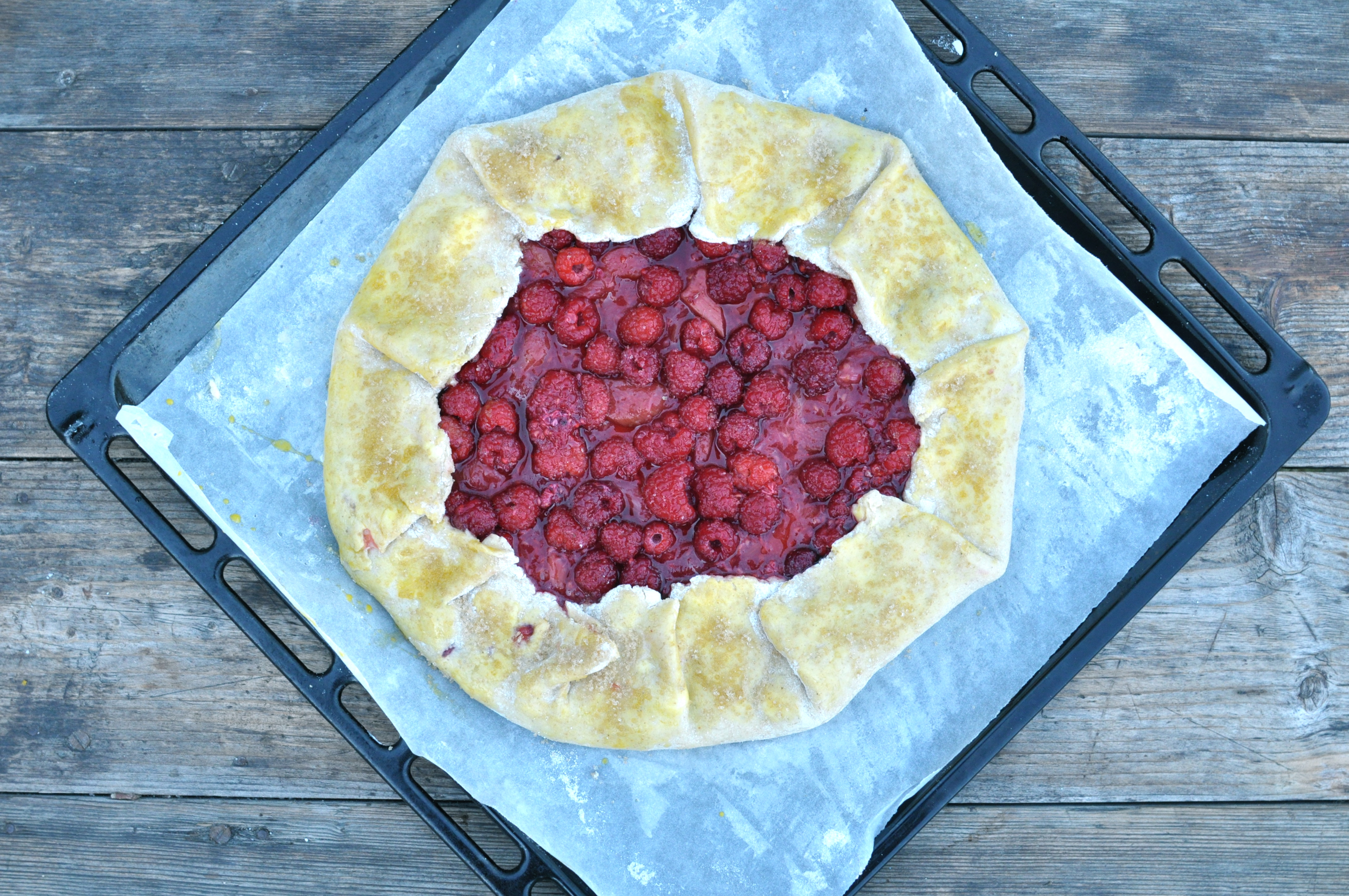
PS: Photos are of the uncooked crostata and here I added a few fresh raspberries just before baking. This is not reflected in the recipe.

Quick lemon and lime tart

2 May 2012

In my world, lemon pie is a little like roast chicken; having been introduced to the utterly convincing very elaborate version, I had forgotten how quick and easy it can also be.

The herbs-stuffed-under-the-skin-of-the-chicken version of lemon pie is that of the River Café Cookbook Blue. It requires 6 whole eggs plus 9 yolks and half an eternity of patient stirring over a very low fire. It is the mother, grandmother, fairy godmother, and evil aunt of all lemon pies. It should be made at least once in a lifetime.

But if you don’t have 15 eggs or an entire day to spare, there is this recipe, which asks for nothing more than to whisk all the reasonably proportioned ingredients together, pour them into a pre-cooked tart shell, and bake.

This is the child prodigy of lemon pies. Effortless. Very tart, with an unconventional twist of lime. Addictive.

***

Recipe slightly adapted from The Naked Chef by Jamie Oliver

1 unbaked sweet pie crust

Egg-wash (1 egg and a little milk)

Zest from 2 limes

3/4 cup (200 ml) fresh lime juice (4 to 5 limes)

Zest from 2 lemons

3/4 cup (200 ml) fresh lemon juice (3 to 4 lemons)

1 1/2 cups (300 g) sugar

8 large eggs

1 1/2 cups (350 ml) heavy cream

*

Preheat oven to 350°F (175°C).

With a fork, mix 1 egg with a little milk and egg-wash the uncooked pie crust before baking blind.

Bake the pie crust blind for 10 to 12 minutes minutes. **When baking blind either poke a bunch of small wholes into the crust with a fork, or use dried beans or ceramic baking weights on the crust to prevent it from rising.**

Remove the blind-baked crust from the oven and set aside while making the filling.

Grate the limes and lemons for their zest. Squeeze the limes to obtain 3/4 cup juice and the lemons to obtain 3/4 cup lemon juice.

In a large bowl, whisk together the sugar and eggs until the yolks are completely broken up and the mixture becomes very smooth.

Stir in the heavy cream, then the lime and lemon juice.

Place the blind-baked pie crust back onto the oven rack then pour in the filling (this avoids spillage, as the pie will be filled up to the rim).

Bake the tart for 35 to 40 minutes until it is barely starting to turn golden and still a little wobbly in the middle. It will set as it cools.

Let cool completely before serving.

Fresh strawberries or raspberries would be a great complement to this pie, but just a little unsweetened home-whipped cream goes really well too.

*

Related posts

Walnut tarte with Chartreuse

Roast chicken with lemon and fennel seeds

Basic | Sweet pie crust

Figs, walnuts, and chocolate

9 March 2012

Always an arm’s reach and no cooking away from an excellent dessert, and most delicious when the figs are broken open and stuffed with walnut halves.

It’s what we had at home most nights when I was a teenager. Every evening dinner included a main course, a salad, perhaps cheese, and, invariably, yogurt — plain, with a generous spoonful (or two) of jam or honey. And when one (or two) yogurt(s) left us with a feeling of not enough, we grabbed the nutcracker, the figs, and procrastinated with dessert before getting back to our homework.

*

Related posts

Figs with mascarpone

Walnut tarte with Chartreuse

24 February 2012

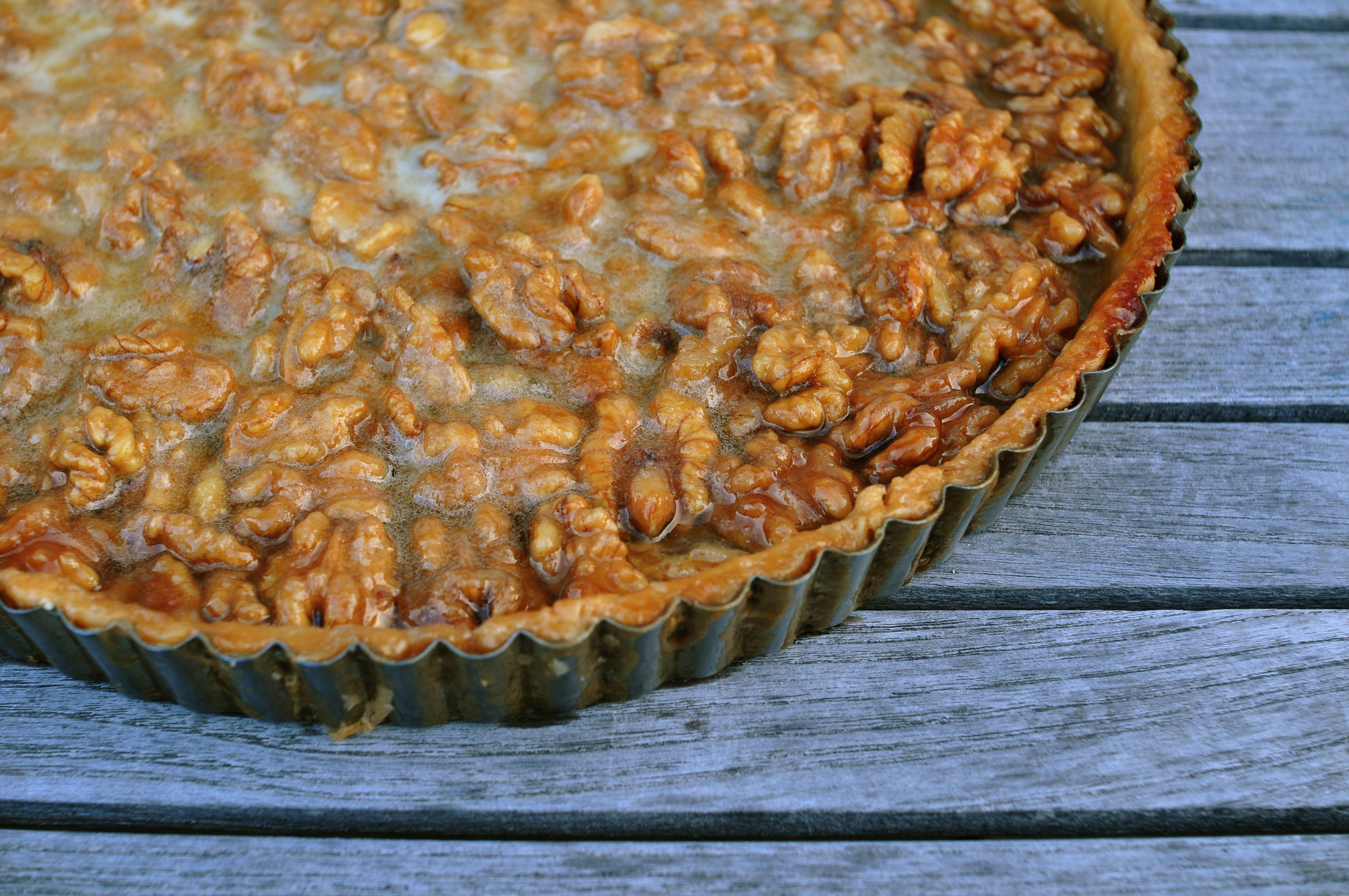
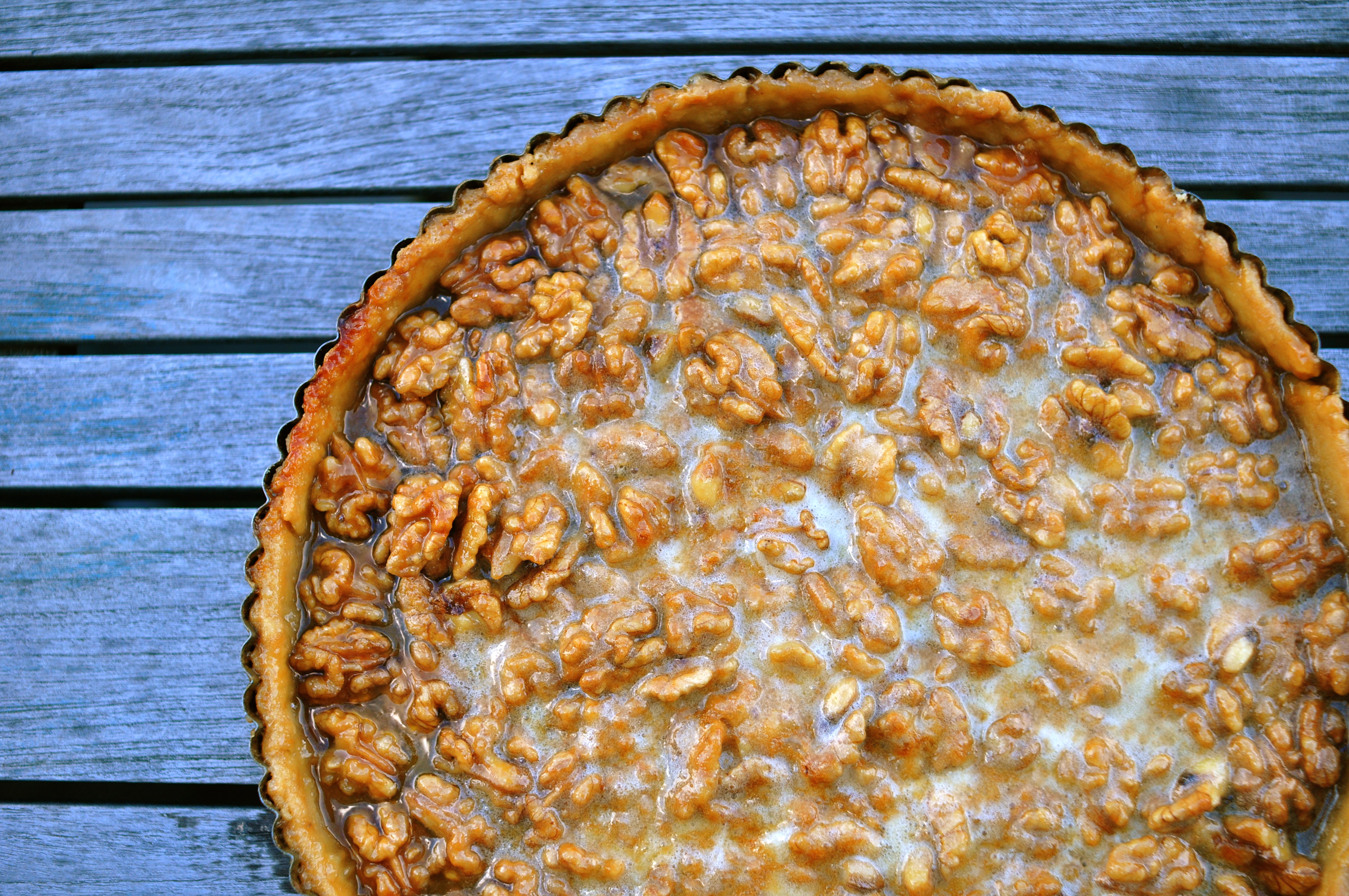
Some years ago I developed an interest in cocktails. It was triggered by an arcane email correspondence about absinth and Sazeracs leading up to our yearly skiing vacation in Haute Savoie, and quite quickly developed into a somewhat obsessive search for the perfect Sazerac in New York, at a time when few bartenders here knew what a Sazerac is, let alone how to make a good one.

My interest in Sazeracs grew into a more general curiosity for all things cocktail — mixer’s alcohols, bitters, techniques for making larger ice cubes — which happily coincided with the beginning of the cocktail trend in the city. Had I been writing then, cocktails would have featured prominently.

These days I drink mostly wine, except when my cocktail-fiend friend and then fellow-bar-stalker comes over for dinner, a bottle of gin or good rye in tow; I don’t have cocktail recipes jotted down on every second page of my little black notebook; and my cocktail bar recommendations would probably have a taste of five years ago. But I do still own a ludicrous number of partially full liquor bottles.

I will have to find creative ways of using Luxardo and Lillet, in the meantime, this tarte is a good excuse to tackle the Chartreuse.

***

This recipe is part of my “Schindler book” collection. Judging by its position in the book, which I copied in chronological order, I found it when I was about twenty. Unfortunately I can’t remember its exact origin, though I’m pretty sure I wrote it down after a vacation in France in the Vercors close to Grenoble, the region of walnuts and Chartreuse.

Unsweetened pie crust

250 g flour

125 g butter plus a little more to butter the pan

The filling

3/4 cup (200 g) crème fraîche

1 cup (200 g) sugar

2 generous cups (200 g) shelled walnuts

1 1/2 liquid ounces Chartreuse

*

The pie crust

Prepare the pie crust at least 1 hour in advance, as it needs to rest.

Place the flour in a large bowl, cut the cold butter into 1-inch pieces and work it with the fingertips into the flour, to obtain the consistency of coarse breadcrumbs. Add drops of cold water, little by little, until the dough sticks and can be shaped into a ball.

Cover the ball of dough with a damp cloth and place in the refrigerator for at least an hour, and up to one day.

Take the dough out of the refrigerator 10 to 15 minutes beforehand so it has time to soften at room temperature.

Preheat oven to 375°F (190°C) and generously butter a 12 inch (30 cm) pie pan.

To roll out the dough, lightly dust a clean, flat surface with flour and roll out the dough into a circle until it is 1/4 inch (1/2 cm) thin.**To prevent the dough from sticking to the the floured surface, turn it at the beginning then lift it regularly, all the while adding a little flour on either side and on the rolling pin.**

To transfer the dough to the pie pan, gently fold it in half once, then fold it in half again, and carefully place the folded dough in the buttered pie pan, positioning the angle in the center. Unfold, pressing gently onto the pan and sides, and cut off excess dough from the edges.

Bake the pie crust blind for 15 minutes. **When baking blind either poke a bunch of small wholes into the crust with a fork, or use dried beans or ceramic baking weights on the crust to prevent it from rising.**

*

The tarte

Increase the oven temperature to 400°F (200°C).

In a large bowl mix the crème fraîche and sugar, add the walnuts and the Chartreuse. Pour the mixture into the blind-baked crust.

Place the tarte in the oven on a larger baking sheet or aluminum foil, as the filling is likely to bubble over. Bake for 20 minutes.

Let the pie cool before eating. It becomes sticky and brittle, reminiscent of baklava. Mmmm!

*

Related posts

Quince and apple tarte

Best award-winning pumpkin pie

Basic | Sweet pie crust


Orange almond cake

28 January 2012

It’s a tantalizing cake. It has taunted me since Malou posted the recipe in a comment last April; the season of oranges had passed.

As winter came again the cake was on my mind. I meant to bake it for a skiing weekend; then didn’t. This week, finally, I did.

It is a cake for snowy days. When the light is low, the trees are bare, and the cold air breathtaking. The cake, by contrast, is light, spongy, melting. The sunny flavor of oranges with more than a hint of bitter from the pith.

It’s surprising, addictive, and leaves you wondering how the score might be played a dozen other, slightly different ways.

I love it. With tea.

***

With many thanks to Malou for the recipe

Update: I have since discovered that this is a famous Claudia Roden recipe !

2 large untreated oranges

6 large eggs

1 1/4 cups (250 g) sugar

2 generous cups (250 g) ground almonds

2 tsps baking powder

Candied orange slices for decoration (optional):

1 untreated orange

1 cup (200 g) sugar

*

Place 2 oranges in a small saucepan, cover with water, and simmer slowly for 2 hours, adding water if necessary.

Remove the oranges from the water and let cool. Cut the oranges in half, then each half again in two. Remove pips if necessary. Purée the oranges in a food processor. (The orange purée can be made a day in advance.)

Preheat the oven to 350°F (175°C) and line a 9 inch (24 cm) baking tin with parchment paper that should be buttered generously.

In a large bowl, mix the eggs and sugar until light and fluffy. Add the orange purée, the ground almonds, and the baking powder, and mix well until thoroughly combined.

Pour the batter into the tin, slide into to oven, and bake for 1 hour, until a knife or skewer inserted in the middle of the cake comes out clean.

For the candied orange slices:

In a small saucepan, make a sugar syrup with 1 cup sugar and 1 cup water. Bring to a simmer and cook for about 5 minutes.

Slice the orange as thinly as possible. Add the slices to the syrup, and cook for about 10 to 15 minutes. Remove the slices carefully one by one, and place them on a rack or parchment paper to dry for about half an hour. Return the orange slices to the syrup, and simmer for another 5 to 10 minutes. Let the slices dry for at least 1/2 hour. Reduce the syrup until it thickens and reserve.

When ready to serve, place a few orange slices on top and drizzle with a little syrup. **The cake gets even better after a day or two, so it should ideally be made in advance.**

Note: The candied orange was not in the original recipe, but I thought they looked nice and added a little something. However, the cake being very soft it is difficult to cut through the candied orange on top of the cake, so it is best cut on the side as the cake is served.

*

Related posts

Poppy seed and almond cake

Cake with pear and toasted hazelnuts