Archive for the ‘Easy’ Category

Stewed dried fruit

13 April 2013

DSC_0299

My intention was to make Louisa’s cake, which I’ve craved since I first saw it two years ago. And since I had no ricotta at home I thought making my own, as I’ve also been wanting to do for a long time, would be the perfect, lazy Saturday morning, we’ve-been-away-and-I-haven’t-cooked-in-a-week sort of project. So I set forth, resolutely and with a tinge of excitement, salting and boiling cream and milk, when I realized there was no cheesecloth at home, either.

Perhaps it was the slow pace induced by a gorgeously sunny, cold week by the sea, cycling, walking, eating, and generally just being, but I was completely stumped. Not for a moment; for many minutes, an hour maybe. Just standing there in the kitchen, wondering what in the world I might do with two liters of salty milk, and what dessert might be on a post-vacation weekend. The invitation was a last minute thing, too.

I thought about the stewed fruits, something I used to make often, in winter especially, but rarely do anymore, for no particular reason. We usually have dried fruit around the house, and though a bit short on prunes to my taste, there was a good enough mix for my purpose.

A few hours had gone by, the morning behind us, and the milk still on the stovetop, so I decided to make a very dense, creamy yogurt to go with the fruit, as I’d done before.

All went quite well from then on. I added bay leaf to my usual recipe, and was very pleased with the result. Of course, the yogurt was nowhere near being set in time for dinner, but I had some commercial greek yogurt handy, too.

My salty yogurt is still sitting in the fridge. I’ve been thinking of making cheese, but for that I’d need some cloth.

*

This dessert is very good and extremely easy. Adapted from Jüdische Küche by Elizabeth Wolf-Cohen.

200-250 g (1 1/2 cups) dried figs

200-250 g (1 1/2 cups) dried apricots, preferably unsulphured

200-250 g (1 1/2 cups) prunes

100-150 g raisins

(Also dried apples, pears, unsweetened dried pineapples, as desired, adjusting the quantities to have enough syrup to cover all the fruit)

2 lemons

4 Tbsps honey

6 or 7 cloves

1 or 2 cinnamon sticks (depending on their size)

About 20 peppercorns

1 bay leaf
*

Make a syrup with 2 l (8 cups) water, the rind and juice from the lemons, the honey, cloves, cinnamon, peppercorns, and bay leaf. Bring to a boil and simmer for 5 minutes.

Add the figs (and pears if using) and simmer for 10 minutes.

Add the apricots (and apples and pineapple if using) and simmer for another 10 minutes.

Finally, add the prunes and raisins and simmer for a final 10 minutes (total stewing time 30 minutes).

Let the fruit cool in the liquid then refrigerate for a few hours at least before serving with thick yogurt or crème fraîche. (Remove peppercorns, cloves, and bay leaf before serving, or warn your guests.)

Winter cabbage slaw with miso ginger dressing

1 February 2013

DSC_0681

Where has January gone? It disappeared in a few flurries of snow that sprinkled the city white and pretty and were swept away in a wink. It was devoured by raclettes and tagines, spicy lentil soups, and the best chocolate brownies.

And so, suddenly, hello February. Today you are my favorite month. After a couple of unnaturally warm days the cold is back, which is as it should be.

DSC_0716

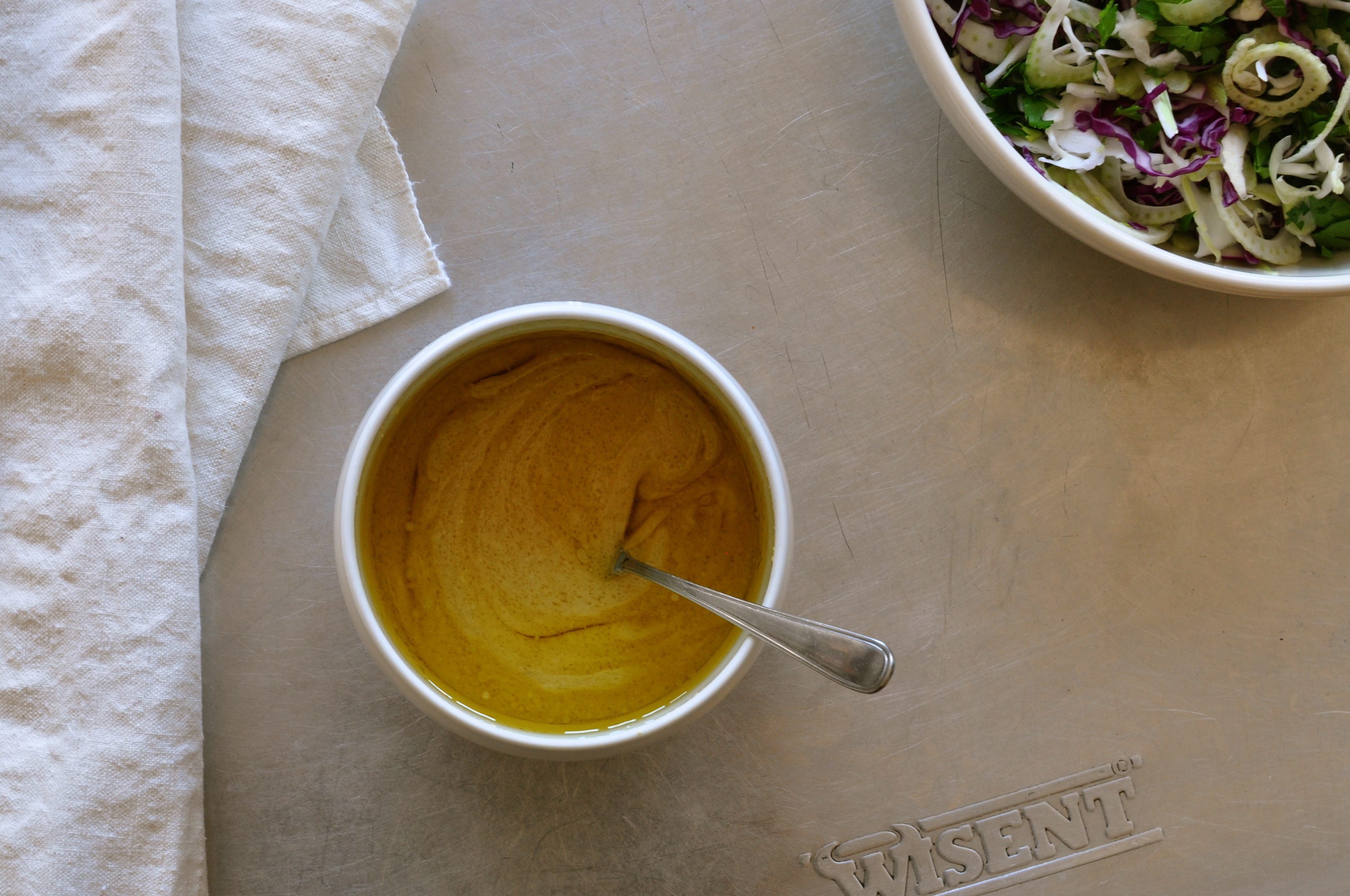
It seems I wouldn’t make a very good Texan, because I prefer slaw without mayonnaise, This isn’t to say that I don’t like slaw with mayonnaise, I love coleslaw in general, even the limp overdressed versions of average diners. But, given the choice, I prefer a citrus-y, Asian-inflected variant. This miso ginger dressing is adapted from the beautiful blog 101 Cookbooks. I added fresh grated ginger, lime juice, and reduced the sweetness for something more assertive.

Winter slaw

1/2 small red cabbage

1/2 small white cabbage

1 fennel bulb

2 or 3 celery stalks

Fresh parsley leaves

Slice all the vegetables very thinly, using a food processor, a mandolin, or a very sharp knife.

Miso ginger dressing

A 1/2 thumb-sized piece of fresh ginger, grated

2 Tbsps white miso paste

1/2 tsp strong Dijon mustard

1 Tbsp mild runny honey

Juice from 1 lime

1/4 (60 ml) cup rice vinegar

1/3 (100 ml) cup olive oil

Mix together the grated ginger, miso paste, mustard, and honey until they are all well combined into a smooth paste.

Add the lime juice and rice vinegar, stir well, and finally the olive oil.

DSC_0676

Related posts

Endive salad with apples, walnuts, and comté

Dandelion, fennel, and pumpkin seed salad with pumpkin seed oil

Savory oat, leek, and pecorino scones with za’atar

17 December 2012

DSC_0061

English purists wouldn’t accept these as ‘scones.’ Scones are plain, eaten at tea time, with strawwwberry jam and clotted cream. I’ll worry about that in a few months. I’m still firmly implanted stateside and not above studding scones with currants (ha!), dried cranberries and apricots, almonds, gruyère, walnuts, or even caraway.

I could have named these differently, of course, but they are scones because I made them using a scone recipe. From England. It’s a recipe I copied when I lived there many years ago, when I was ten or so. It’s the second oldest recipe I collected, just after that of the banana cake.

These scones were a happy accident. Leo had a performance at school last week, which was to be followed by a potluck breakfast. As often — or always — happens, at first I wasn’t sure what to bring, then decided I’d pick up something easy like juice since Thomas was in London and I alone with the children all week; later I realized too many parents were already planning to bring juice. So for once, just this once, I wouldn’t bring anything. It’s OK to do that once. Of course the night before, filled with guilt, I felt I absolutely had to bake something, and must make do with whatever was in the house.

So these scones happened. I tasted one just a few minutes out of the oven, with butter melting from the warmth. It was really good. And better still with a little citrus jam — er, ‘marmalade.’ Cold, the next morning, the scones were not quite the hit. It seems people prefer sweets in the morning.

I would insist that these scones, which are very quick to prepare, should be made just before breakfast (or brunch) and eaten immediately, warm, or, if later, toasted.

*

Makes about 16 scones

I used za’atar to add zest and depth of flavor, but I realize it’s not necessarily a house staple (I just happened to have some) and could be substituted with chopped fresh thyme (lemon thyme even better! — is that not helpful?).

1 1/2 cups butter
3 cups flour
1 cup rolled oats
6 tsps baking powder
2 tsps za’atar
1 cup milk
2 eggs
1 cup coarsely grated pecorino
1 long or 2 small leeks
Zest from 1 lemon

Preheat oven to 375°F. Line a baking sheet with parchment and butter generously.

In a small saucepan, melt the butter over low heat. Set aside.

In a large bowl, mix together the flour, oats, baking powder, 1/2 teaspoon salt, and za’atar.

In a medium bowl, whisk the eggs and add the milk and melted butter. Combine this with the oat/flour mixture until all the flour is absorbed.

To clean the leek remove the coarse outer leaves, rinse thoroughly under running water, opening up the inner leaves slightly to make sure no sand remains. Slice the leek very thinly.

Add the leek, ground pecorino, and lemon zest to the dough. Stir to combine well.

With a large soup spoon, scoop out balls of dough and place them on the baking sheet.

Bake for 22 minutes. The outside should be starting to turn golden and feel slightly resistant to the touch but not firm (it will become harder as it cools).

Serve quickly, while still warm, with delicious butter and orange marmalade…

(These scones are really very delicious when warm, so they should be eaten immediately, or toasted or reheated in the oven later.)

Fettucini with immediate tomato sauce

4 October 2012

The last of the summer’s ripe tomatoes may be a little soft, a little blemished, they may not warrant much attention as heads will be turned by the arrival of bright yellow squash and orange pumpkins. What these tomatoes want is this sauce exactly. It is so quick, so easy that it will barely distract from the anticipation of slow roasts and apple pies. It is so good that those blemished tomatoes may soon be missed, as the creeping cold leaves heaps of unripened green tomatoes in its wake, with no better prospect but to be transfigured into chutney.

The sauce sort of made itself one night, and I was taken aback by how easy it was to create such a good sauce in so little time. I’d always supposed that good tomato sauce needs to simmer gently and reduce patiently. On that evening there was no time and, temptingly, in the kitchen, some good fettucini and a few roma tomatoes.

All I did was cut the tomatoes lengthwise in sixths, slice a few garlic cloves, heat some olive oil in a large skillet, throw in the garlic for barely a minute, add the tomatoes, and wait until most of the juice had evaporated and the tomatoes hinged on golden and in some places brown. It took perhaps 10 minutes, just about the time to boil the pasta.

***

For two

5 ripe tomatoes

2 cloves garlic

Good olive oil

Sea salt and freshly ground black pepper

200 g good fettucini

Really good olive oil

Parmigiano-reggiano

Few basil leaves

*

Bring a large pot of heavily salted water to boil for the pasta.

Cut tomatoes in half lengthwise then in half in thirds. Peel and thinly slice the garlic.

Carefully slide in the fettucini. Cook in a heavy boil.

Heat a generous amount of olive oil in a large heavy skillet. **The skillet should be large enough so the tomatoes are in one layer only.** Cook the garlic for barely a minute over medium to high heat, until translucent, then add the tomatoes. Season generously with salt and pepper. Cook the tomatoes over high heat until a lot of the juice has evaporated and they start turning brown.

Start checking the pasta regularly after about 8 minutes (by carefully taking one out and eating it). Drain quickly in a colander as soon as the pasta is just al dente (or to desired consistency) and return immediately to the pot used for boiling the pasta (one could use another pot but it’s much simpler this way). **It is important not to overdrain the pasta. If it is too dry it will become sticky.** Quickly drizzle generously with good olive oil so the pasta doesn’t stick.

Transfer the pasta to individual bowls. Spoon over the tomatoes, add a drizzle of very good olive oil, tear up a few leaves of basil on each bowl, and grate some parmigiano to finish.

Quick pickles

29 September 2012

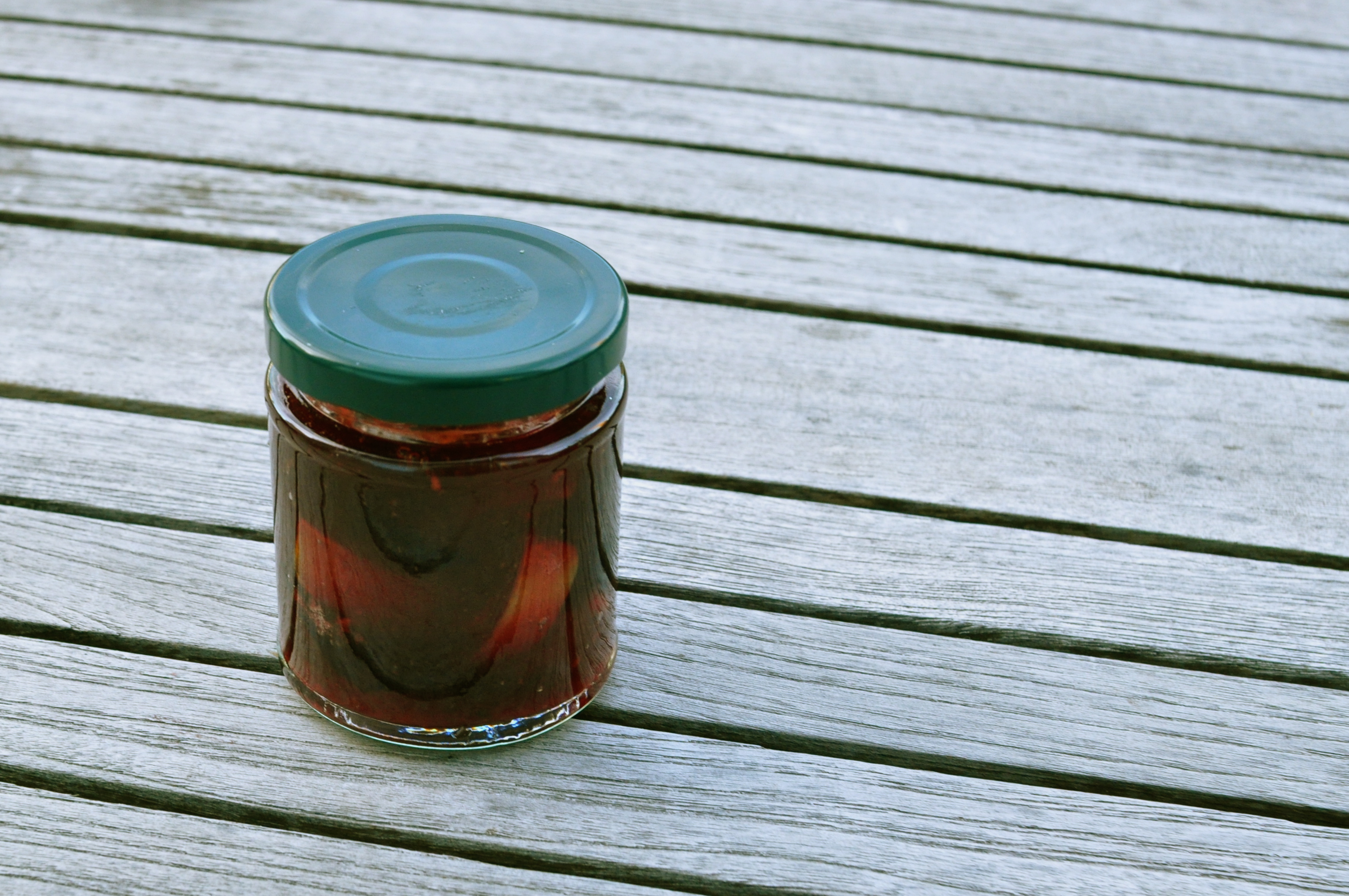
The bounty of fall, the joy of coming home after a summer away; it’s the time of year when I am overrun by the desire to cook, pickle, and can, buy way too many fruits and vegetables at the market, and usually only barely manage to rescue them, in extremis, days and sometimes weeks later, and turn them into whatever easy preserve I come across that day. Despite my determination, every year, to squirrel away a veritable pantry of homemade goods for the winter, my canning endeavors are completely haphazard. This year for example I made a few versions of this jam every time there were too many excess plums on the brink. I made a quart of tomato sauce with a few extra pounds of overripe tomatoes. I studded a cake with practically fermenting concord grapes.

But one recipe I was determined to make, the instant I saw it, was Kitchen Culinaire’s peach and lavender jam. At one market on Tuesday I found peaches from upstate New York which evolved from rock hard to mealy soft without a whiff of peach in between. On Saturday I went to look for the seller of West Virgina peaches at the Mount Morris Park market that inexplicably and without a word moved blocks away to the corner of Lenox and 122nd. This producer sells hands down the best peaches I’ve ever eaten in New York, and I wish I’d known of the market’s move sooner in the season. This Saturday I went and bought many many many pounds of peaches, heaved them home, and didn’t make any jam. When, after years of peach frustration, one finally finds fruit that is all that a peach used to be, so long ago, the only thing to do is to eat it just so.

For days we ate peaches, with nothing more than a little Greek yogurt and light drizzle of honey. But I was on a mission, I had to make this jam, so I rescued the last three sweet juicy pounds and proceeded to infuse the lavender, cut the fruit, weigh the sugar, and set the jam to simmer. It smelled incredible, so fragrant and delicate, like a summer in Provence. And then I overcooked it. Beginner’s mistake, bad planning, distracted multi-tasker, I had to stop the cooking to pick up Balthasar from school, when I started it again I was giving Louise a bath and suddenly the jam wasn’t golden brown anymore but deep brown with sparkly foam, the scent of lavender entirely replaced by peach caramel…

Today I rushed out to buy peaches and make jam immediately; there were none, the farmer’s market replaced by a small flea. And so, even with the very best intentions, this year I didn’t manage the one jam that I had set out to do. And despite my best intentions, this post will not be about peach lavender jam.

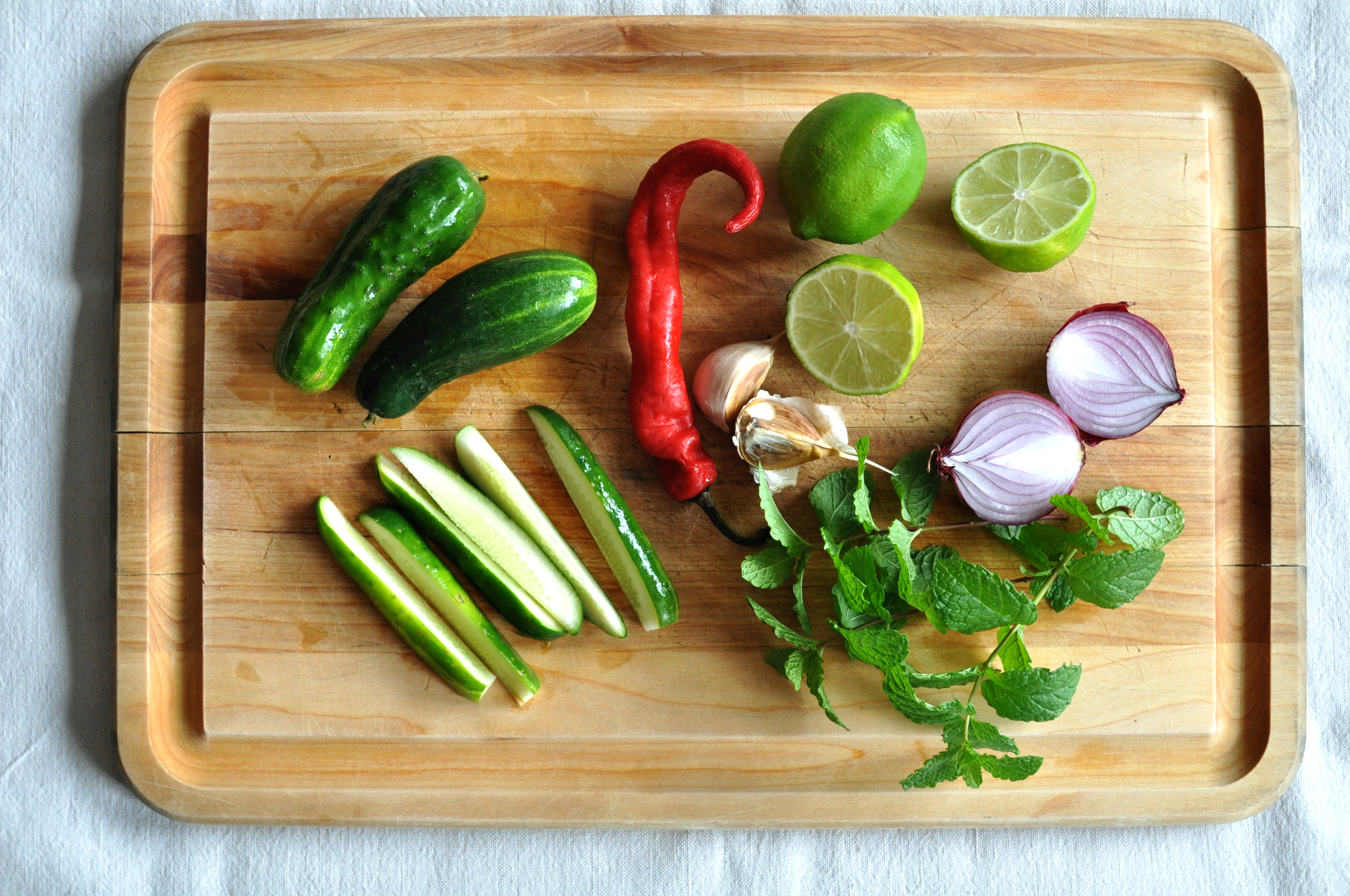
It’s about pickles. It happened by chance. I saw kirby cucumbers at the market, bought some with no plan in mind; days later when it was high time to use them, I went to this great resource for all things in jars, found this recipe, made it. It’s great.

***

Slightly adapted from Asian-Inspired Quick Pickles by Food in Jars. One-pint Mason jars are the perfect height for these pickles. Makes 2 one-pint jars.

2 one-pint Mason jars
4 or 5 kirby (small pickling) cucumbers
1 chili pepper
1/2 small red onion or 3-4 scallions
2 garlic cloves
4 small sprigs fresh mint
4 small sprigs fresh coriander
1 cup rice wine vinegar
Juice from 2 limes
2 Tbsps sugar
1/2 teaspoon salt

*

Cut each cucumber into six spears. Cut the chili pepper in two lengthwise. Thinly slice the onion (or peel the scallions, cut then into kirby-length pieces, and slice them lengthwise) and garlic cloves. Wash the mint and coriander.

Dividing the ingredients equally between the two jars, pack the cucumber spears and slide in the chili pepper, onion (or scallions), garlic, mint and coriander.

In a small bowl, stir together the rice wine vinegar, lime juice, sugar, and salt. Pour the liquid over the cucumbers, close tightly, and carefully invert the jars to combine all the flavors.

Let the pickles sit in the refrigerator for at least 24 hours before eating.