Archive for the ‘Fall’ Category

Finger food | Carrots

8 February 2011

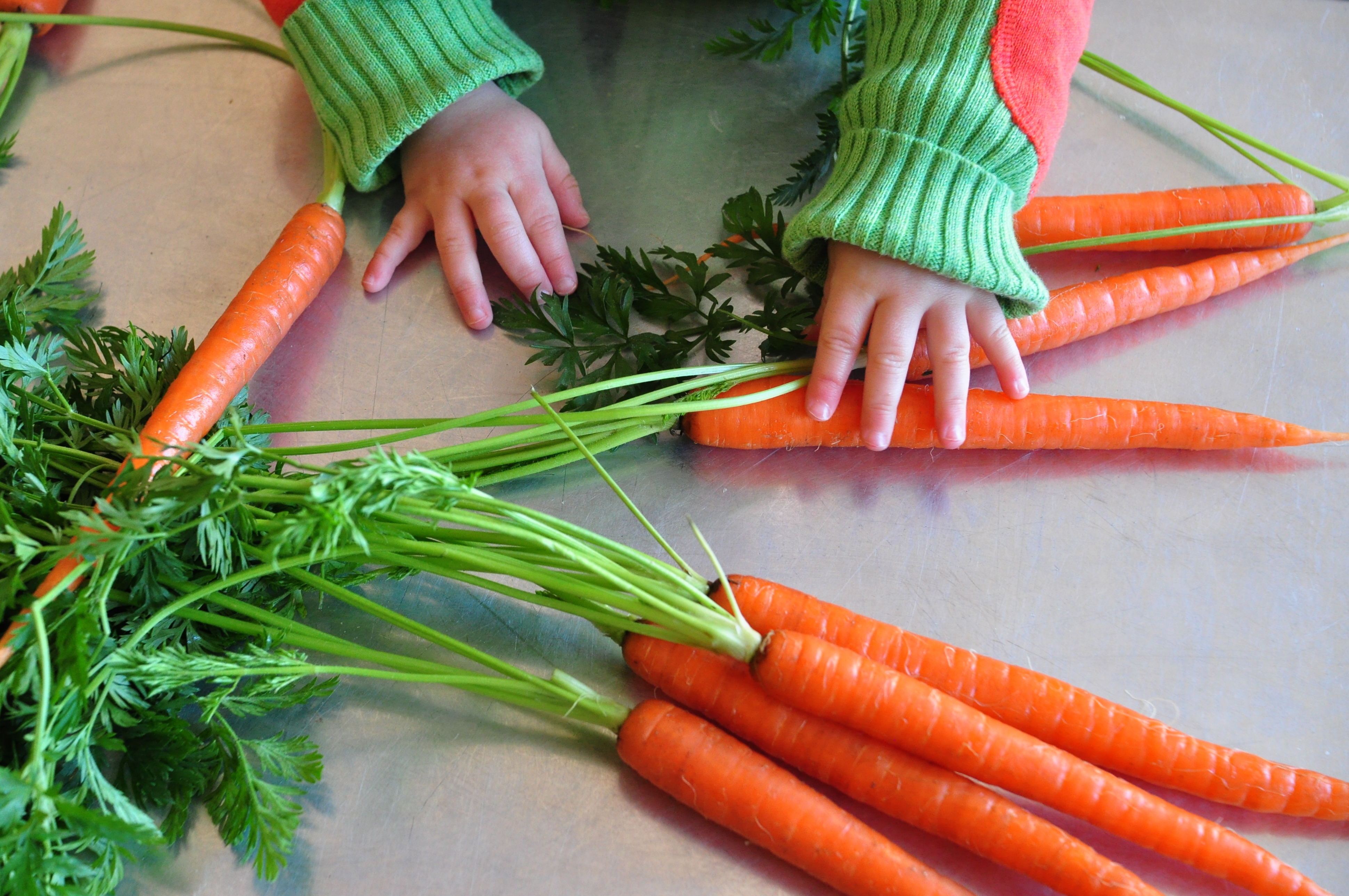
Before I knew it, Louise started refusing food; she seals her lips and turns her head to the side. I know this happens to children, they evolve from being adorable unfussy eaters to about 18 months, when you start wondering whether you should send your toddler to bed without dinner.

But Louise is not even 1; it’s much too early for her to become picky. Until I realized it’s not the taste she is rejecting, it’s the delivery. So I let her pick at her own dinner and make a giant mess – and it works. She eats with her fingers meals she’s shunned from a spoon.

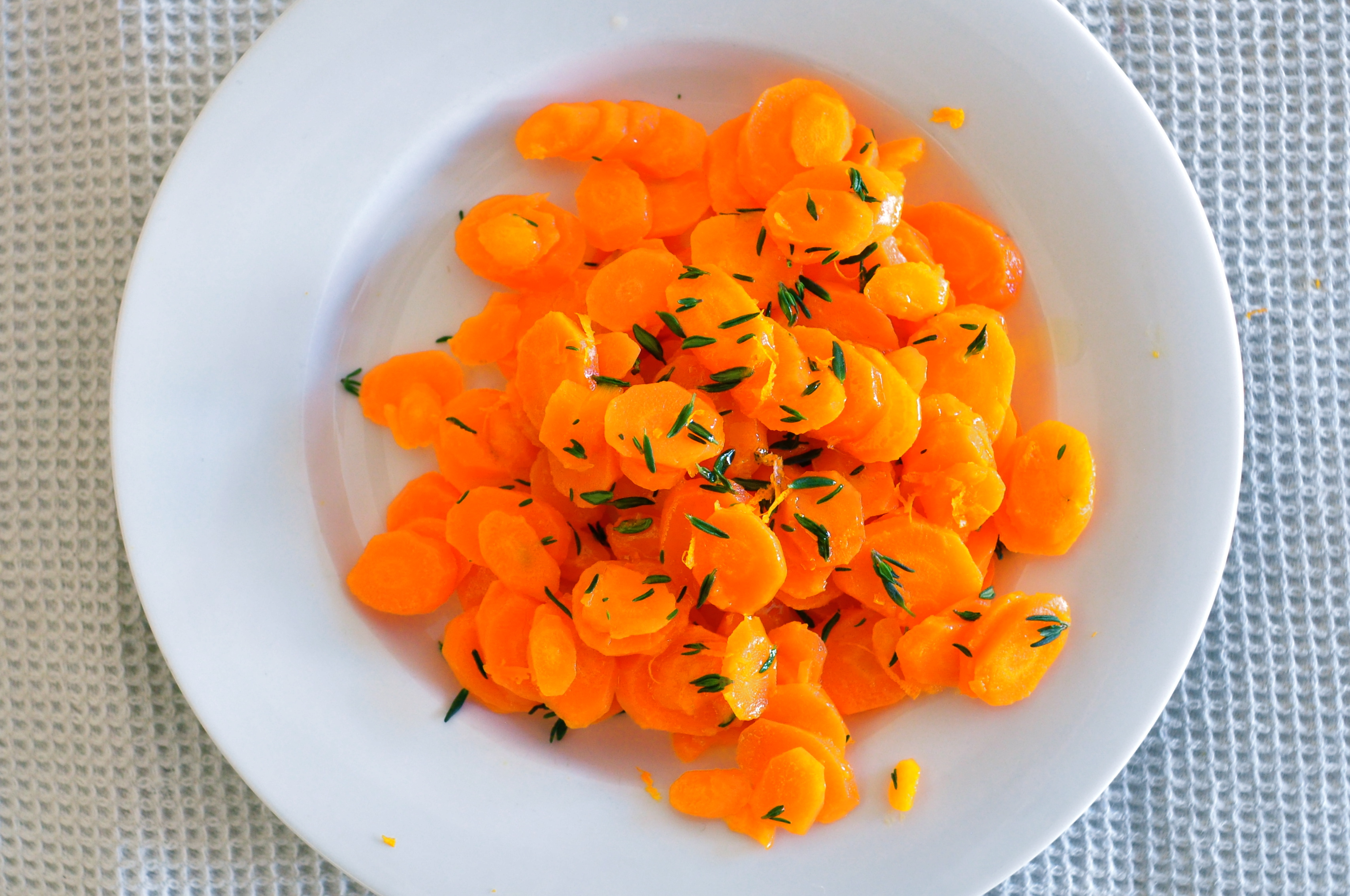
These carrots passed the finger-food test brilliantly.

***

6-8 carrots

1/2 untreated orange

Fresh thyme

***

Bring a small amount of water to the boil.

Peel and slice the carrots fairly thinly at an angle to create larger slices.

Cook the carrots in boiling water (covered) for about 10-12 minutes, until soft. Drain water and return the carrots to the pan. Grate orange zest and squeeze the juice over the carrots. Cook for another minute or so until the carrots have absorbed the juice. Sprinkle with fresh thyme.

Serve in slices, coarsely mashed up with a fork, or puréed in a food processor.

Crêpes!

3 February 2011

Photo updated 2 February 2023

It feels wrong to write “crêpes” without an exclamation mark.

Because when you have grown up in France, crêpes invariably elicit a tingling sensation of irrepressible excitement. Crêpes were the rare summer treat sold in the van by the beach after a long hot hazy day. They were, on occasion, devoured at a boisterous restaurant with sticky tables and wooden benches. And, sometimes, crêpes were made at home. And, most probably, one of those times was February 2nd.

Today is La Chandeleur (Candlemas), which is technically a Christian festival that celebrates the presentation of Jesus at the Temple –piggybacked, like often, on an older mid-winter festival of light — but to most French men, women, and children, it is just “Crêpes Day” (Crêpes”!” Day). Every year we celebrate La Chandeleur, and if for me the thrill of crêpes may have abated somewhat, my children need those memories, too.

Usually February comes so fast that I end up haphazardly making a batch from a random recipe found online, or a very distant recollection of 12 eggs, 1 kilo flour, 1 liter milk, and some beer.

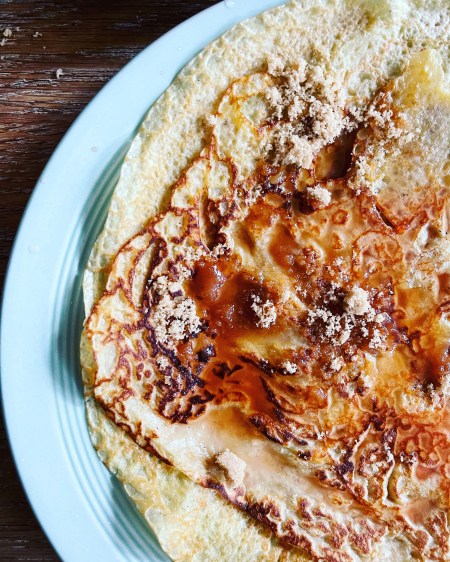
Until yesterday. I was asked to make a heap of crêpes for school, so I thought I would put the task to good use and test a few recipes. The best flour/egg/milk ratio I found was the Crêpes de Jeanne-Marie from La Bonne cuisine de Madame E. Saint-Ange. They are tasty enough to be eaten plain, though everyone knows that the real purpose of crêpes is the garnish: lemon and sugar, blueberry jam, walnuts and honey, banana chocolate, orange marmalade, apples and caramel, flambée with Grand Marnier…
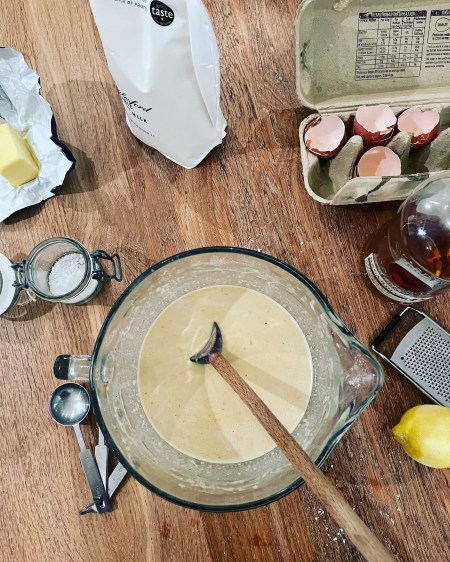
Photo updated 2 February 2023

Recipe inspired by Les crêpes de Jeanne-Marie from La Bonne cuisine de Madame E. Saint-Ange

4 Tbsps (55 g) butter

2 cups (250 g) flour

2 Tbsp sugar

1 tsp salt

6 eggs

1 3/4  cups (400 ml) milk

1 tsp pure vanilla extract

2 Tbsps rum

Zest from 1 lemon

Butter or clarified butter = ghee* or coconut oil for cooking

***

Melt the butter and remove from the heat.

In a large bowl, mix the flour with the sugar and salt and make a well in the mixture. Add the eggs, one at a time, stirring them into the flour with circular movements. Pour in the milk little by little, whisking continuously to obtain a smooth batter. Add melted butter, vanilla, rum, lemon zest, and stir well.

Cover and place in the refrigerator for at least 1 hour and up to 2 days.

When ready to make the crêpes, remove the batter from the refrigerator. The batter should be nice and runny, and at this stage will probably require a little more liquid. Add water, a couple of tablespoons at a time, until the perfect consistency is achieved. **The best way to check the consistency is to make one crêpe and decide whether it is thin enough. Most people agree that the first crêpe never turns out perfectly anyway – the pan isn’t hot enough – so it can easily be sacrificed as a test.**

To cook the crêpes: Heat a non-stick skillet until it is piping hot (a drop of batter poured onto the pan should sizzle) then lower the heat to medium. Grease the skillet with a paper towel dabbed with butter (or clarified butter or coconut oil – there should only be a faint layer of fat in the pan). Holding the skillet in one hand, pour a ladle of batter with the other, turning the skillet quickly in a round motion to cover the base with a thin and even layer of batter (if there is too much batter, pour it back into the bowl, if there isn’t enough, quickly add a little). As soon as the surface of the crêpe is dry (barely a minute or two depending on the heat), lift it with a spatula and turn it around (or flip the crêpe by tossing it, if you feel so inclined). Barely another minute and the crêpe is ready. Repeat, stirring the batter lightly with the ladle from the bottom up between each crêpe.

The best way to keep crêpes warm is to place them on a plate over a pan of simmering water, covered with another large plate or lid. They will not dry out that way.

Garnish with the filling of choice — classic sugar and lemon, or jam, chocolate, apple sauce, etc. — then roll or fold the crêpes to eat!

*Madame E. Saint-Ange suggests using clarified butter, which is a great idea since without the milk solids, the butter doesn’t burn as quickly. To clarify butter, melt  in a small saucepan and continue to cook until the milk solids have risen to the surface and attached at the bottom. Skim off top layer and pour the clear butter without the solids into a clean bowl. Keeps well covered in the refrigerator.

Cake with pear and toasted hazelnuts

21 January 2011

Or how a simple cake became slightly more complicated but also much tastier.

It all started last Friday when I decided to bake a simple cake, a classic french Quatre Quart (Four Quarters) which goes something like this: 1) weigh eggs: 2, 3, 4, or more, depending on the desired size of the cake; 2) prepare the same weight in butter, sugar, and flour; 3) mix; 4) bake. It is a practical cake, easy to make anywhere (with a scale). Some recipes call for baking powder, but to me Quatre Quart is a dense cake; when I want something lighter, more akin to Pound Cake, I make Gâteau au Yaourt (Yogurt Cake), another simple formula cake that will find its way into these pages soon enough.

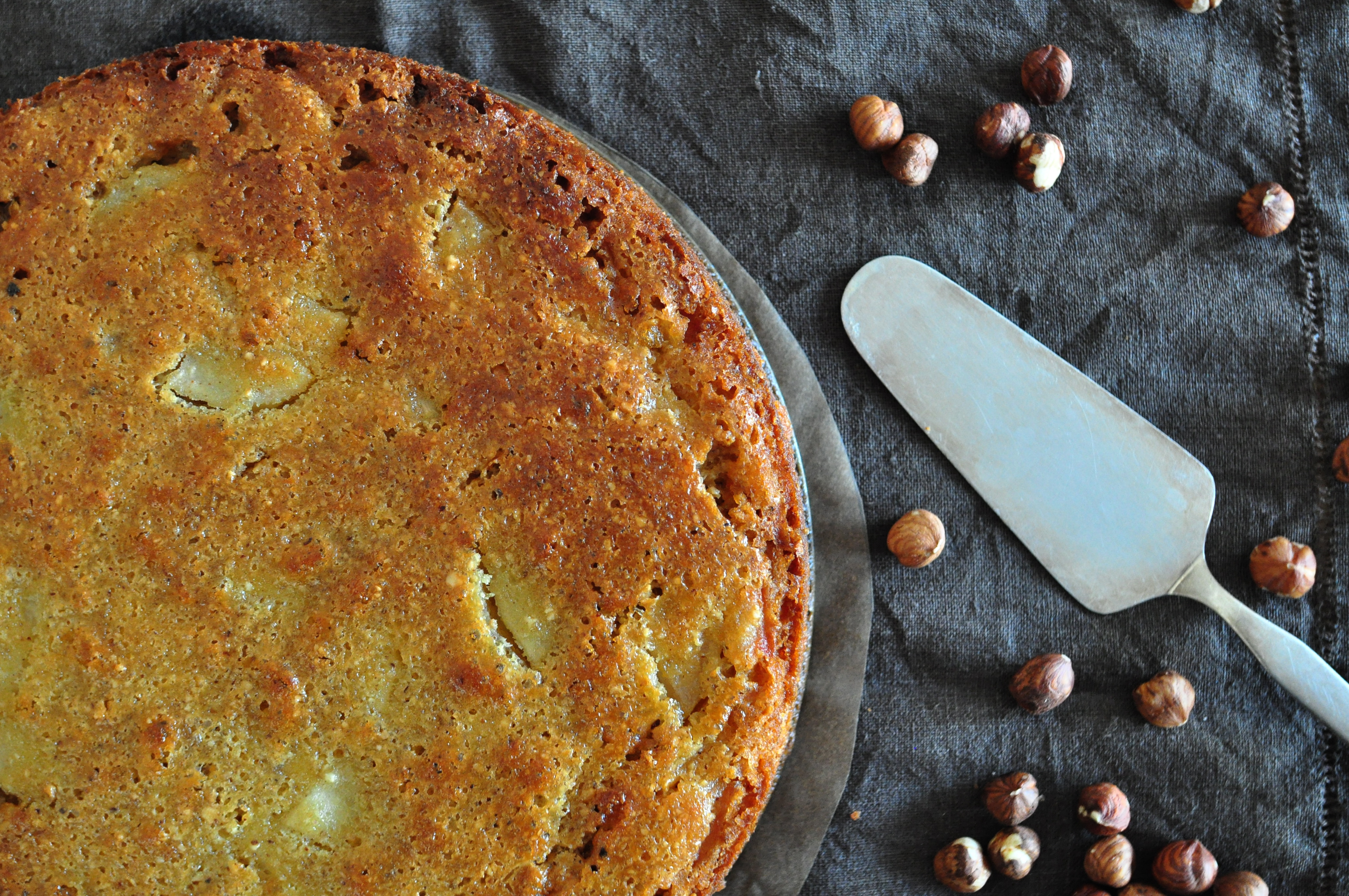
Truthfully, I never just make Quatre Quart – it’s not that exciting as is. But it is a good base for baking improvisation. So I lower the amount of sugar, as a matter of habit; I always add fruit; and I often substitute ground nuts for part of the flour. Last Friday I used pears and hazelnuts and went a bit hard on the sugar. That Very Simple Pear and Hazelnut Cake was easily improved with a hint more sugar and some lemon zest, a second version that I made on Tuesday. It was much better though slightly undercooked (a mere technicality) and I was starting to write down the recipe when I thought “toasted hazelnuts.” The added step makes the cake a bit less simple, but well worth it, and no one here complained about having to eat the same cake three times in one week.

So here it is, Simple Cake with Pear and Hazelnuts – Take 3.

***

1 cup (125 g) hazelnuts

1 1/4 cups (250 g) butter

1 cup (200 g) sugar

4 eggs

1 lemon

1 1/4 cup (125 g) flour

1 tsp salt

5 pears*

*

Preheat oven to 425°F (220°C).

In a roasting tray, toast hazelnuts for about 12 minutes until they begin to darken. As soon as they are cool enough to handle, roughly remove the skins by rubbing the hazelnuts between your hands. Place in a food processor and pulse-chop into a fine flour.

Lower oven temperature to 350°F (180°C).

Cut butter into small pieces and place in a large bowl to soften at room temperature.

Using a wooden spoon, cream the butter with the sugar until smooth. Thoroughly beat in the eggs, one at a time (the dough will be lumpy at this stage), add lemon zest, flour, salt, hazelnuts, and mix well.

Peel, core, and cut pears, first into quarters and then into thin slices about 1/8 inch (3 mm). Squeeze lemon juice over the pieces of pear, toss, and gently combine into the batter.

Generously butter a 10 inch (25 cm) springform pan. Pour batter inside and smooth surface with a large spoon or spatula.

Place pan over a large piece of aluminum foil in the oven for 1 good hour (10 to 15 minutes longer if the pears are very juicy). **Most springform pans leak, the aluminum prevents drops to fall in the oven and burn.** Test with a knife that should come out clean.

As soon as the cake is out of the oven, use a knife to release the cake from the sides of the pan.

*I wanted the cake to have lots of pear, but someone pointed out that 5 pears could create too much juice and make the cake soggy. So if the pears are large, or if they are very ripe and juicy, you may want to use fewer. Another option is to toss the pear pieces very lightly with flour before folding into the cake, this will help absorb some of the juice.

Roast chicken with lemon and fennel seeds

6 January 2011

Some years ago I discovered that a chicken could be seasoned under the skin with salt, pepper, butter, and herbs. It makes for excellent roast chicken, and I decided it would be the only way to go in the future. But it is also a bit finicky, and somehow roasting a chicken became an unwieldy affair in my mind.

Until recently, when I came across good chickens from Epicurean Farms. They are fairly small, very tasty, and usually sold whole. So I started roasting again and rediscovered that it is actually probably the easiest way to cook these animals, especially if you are not chopping herbs and delicately stuffing them under the skin. Now roasting a chicken seems effortless like an afterthought; it can be done for lunch or dinner, or after dinner – at anytime, really, since it is excellent cold, especially with green tomato chutney.

Chickens can be stuffed with any combination of herbs, garlic, or onion on hand and I usually add a lemon, slashed so it releases its juices. This version with fennel seeds was a staple in our house when I was growing up.

***

1 whole chicken

Sea salt

Freshly ground black pepper

2 Tbsp fennel seeds

1 small lemon

2 small garlic cloves

Butter

***

Preheat oven to 425°F (220°C).

Pat the chicken dry with a paper towel. If you remember to do it in advance, let the chicken sit uncovered in the refrigerator for a few hours so the skin dries out before roasting.

Season the cavity of the chicken with salt, pepper, and fennel seeds.

Poke the lemon with a fork multiple times on all sides and stuff it into the chicken with the whole, skin-on garlic cloves. Truss or just bind the legs together with kitchen string. Massage the chicken all over with softened butter and season the outside again with salt and pepper.

Place the chicken on a roasting pan and into the oven for 10 minutes at 425°F (220°C) then lower to 375° (190°C) and roast for 40-50 minutes, depending on the size of the bird (large chickens may need to cook even longer — pull away one thigh and if the flesh at the joint is still translucent pink, cook a little longer).

Let rest 10-15 minutes before carving. Squeeze the lemon over the pieces of chicken before serving.

***

Related posts

Braised chicken legs with cherry tomatoes

Happy New Year! (Lentil soup with cumin)

4 January 2011

It’s not that I haven’t been cooking – or eating – since early December, but somehow all the feasting and visits from friends and family got in the way of writing. It was a productive period nonetheless, culinarily speaking, in which I unexpectedly improved a foie gras recipe and expanded my cookie baking horizon, all of which should make for a profuse Christmas season next year, if I am better organized.

But it’s 2011, and since I just learned that lentils are a New Year’s tradition in some regions of France and Italy – the way black-eyed peas and collard greens are here in the South – and because I will grab any excuse to make this soup, here it is at last, the deliciously simple lentil soup with cumin from Moro: The Cookbook, somewhat rewritten but barely altered.

***

From Moro: The Cookbook by Sam and Sam Clark

2 cups (400g) lentils (green, red, or yellow)

3 medium onions

6 garlic cloves

Olive oil

3 heap tsps cumin seeds

Sea salt

Freshly ground back pepper

Lemon, plain yogurt, and Harissa to serve (optional)

*

To wash the lentils, cover with cold water and drain in a fine mesh sieve.

Finely slice onions and garlic.

Heat enough olive oil to cover the base of a large heavy-bottom saucepan, add the onions and brown over medium heat, stirring occasionally (about 10 minutes). Meanwhile roughly grind the cumin seeds in a mortar. Once the onions are nicely golden, add the garlic and cumin and stir. Then add the lentils and stir to mix with the onion/cumin mix.

Cover the lentils with 4 times their volume of cold water (8 cups or 2 l), place lid on the pan, and let simmer gently until lentils are soft, about 40 minutes, checking occasionally to add water if necessary. (There should be some excess water in the pot otherwise it will be a purée rather than a soup, but not too much because the soup should be nice and thick.)

Season with salt and pepper and blend until smooth.

Squeeze some lemon and add a spoonful of good plain tart yogurt or some Harissa if desired.

*

Related posts

Baby food | le

Lentils