Archive for the ‘Seasonal’ Category

Spaghetti with ramp pesto, walnuts, and parmigiano

29 May 2012

Coming home from a few lovely days in the country /
The heavy air washes away the weekend breeze /
There’s not much in the kitchen /
Some ramp pesto squirreled away in the freezer /
A few walnuts cracked /
Spaghetti and parmigiano always in the house /
Rosé /
Home. It doesn’t take much.

***

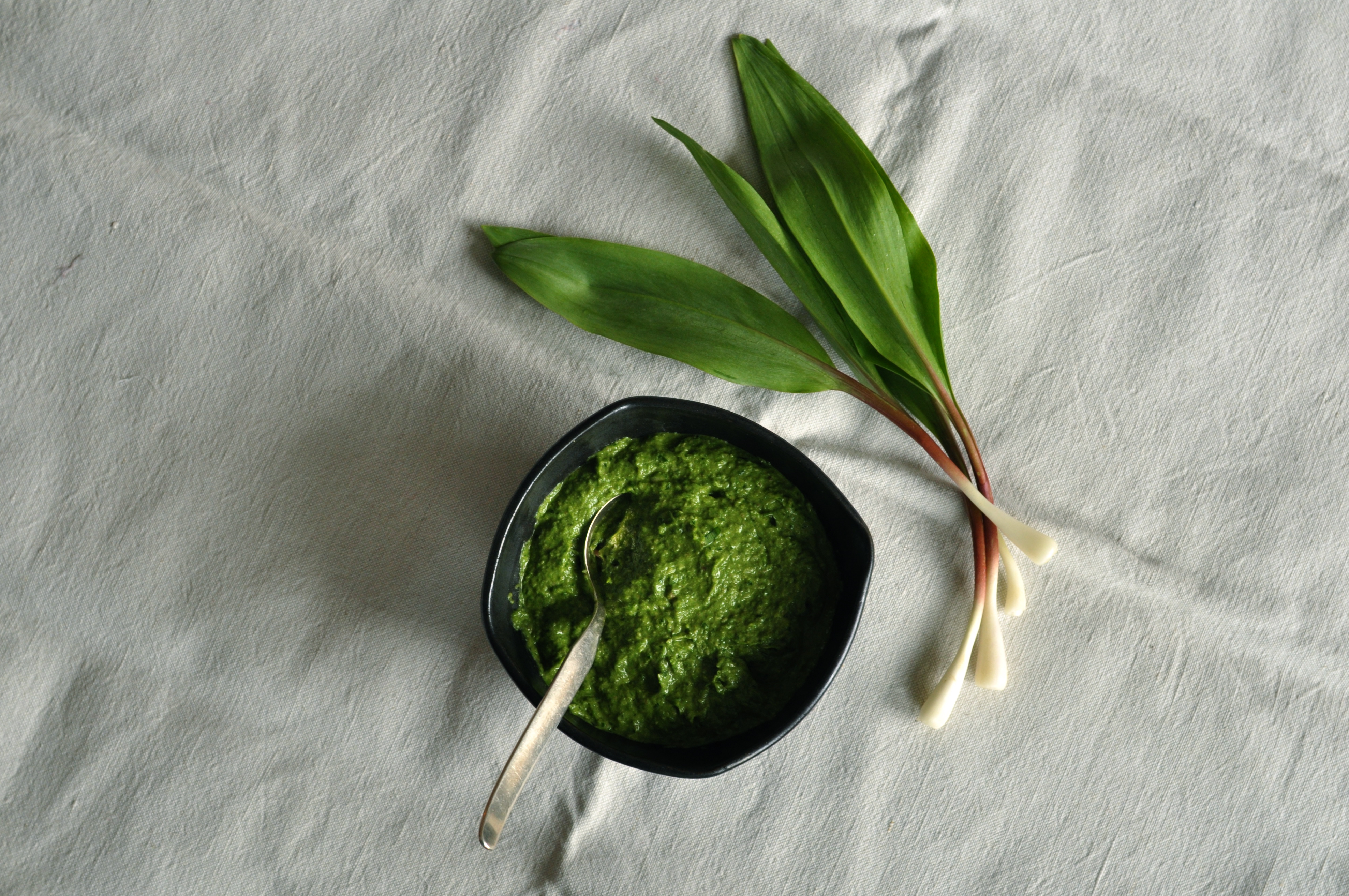
I was lucky enough to have ramp pesto left in the freezer, but this works perfectly well with traditional basil or any other pesto. I always buy fresh pesto (in the refrigerated section) rather than the jarred long-conservation kind, and store it in the freezer so there is always pesto in the house.

Spaghetti, 100g per person

Ramp pesto, one generous tablespoon per person

Walnuts

Wedge of parmigiano (not grated)

*

Bring a large pot of well salted water to boil. Coarse sea salt works well for this; the water should be as salty as sea water.

In a small saucepan, gently heat the ramp pesto until it is warm but not hot.

Crack the walnuts.

Using a vegetable peeler, cut the parmigiano into thin shavings .

Once the water boils, carefully slide in the spaghetti. Cook in a heavy boil. Start checking the pasta regularly after about 8 minutes (by carefully taking one out and eating it). Drain quickly in a colander as soon as the pasta is just al dente (or to desired consistency) and return immediately to the pot used for boiling the pasta (one could use another pot but it’s much simpler this way). **It is important not to overdrain the pasta. If it is too dry it will become sticky.** Quickly drizzle generously with good olive oil so the pasta doesn’t stick.

Stir in the pesto and combine well. Plate the pasta, add the walnuts and parmigiano on each plate individually. Eat.

*

Related posts

At the market | Ramps (ramp pesto)

Spaghetti with cherry tomatoes, mozarella, and basil

Chive blossom vinegar

22 May 2012

DSC_1301

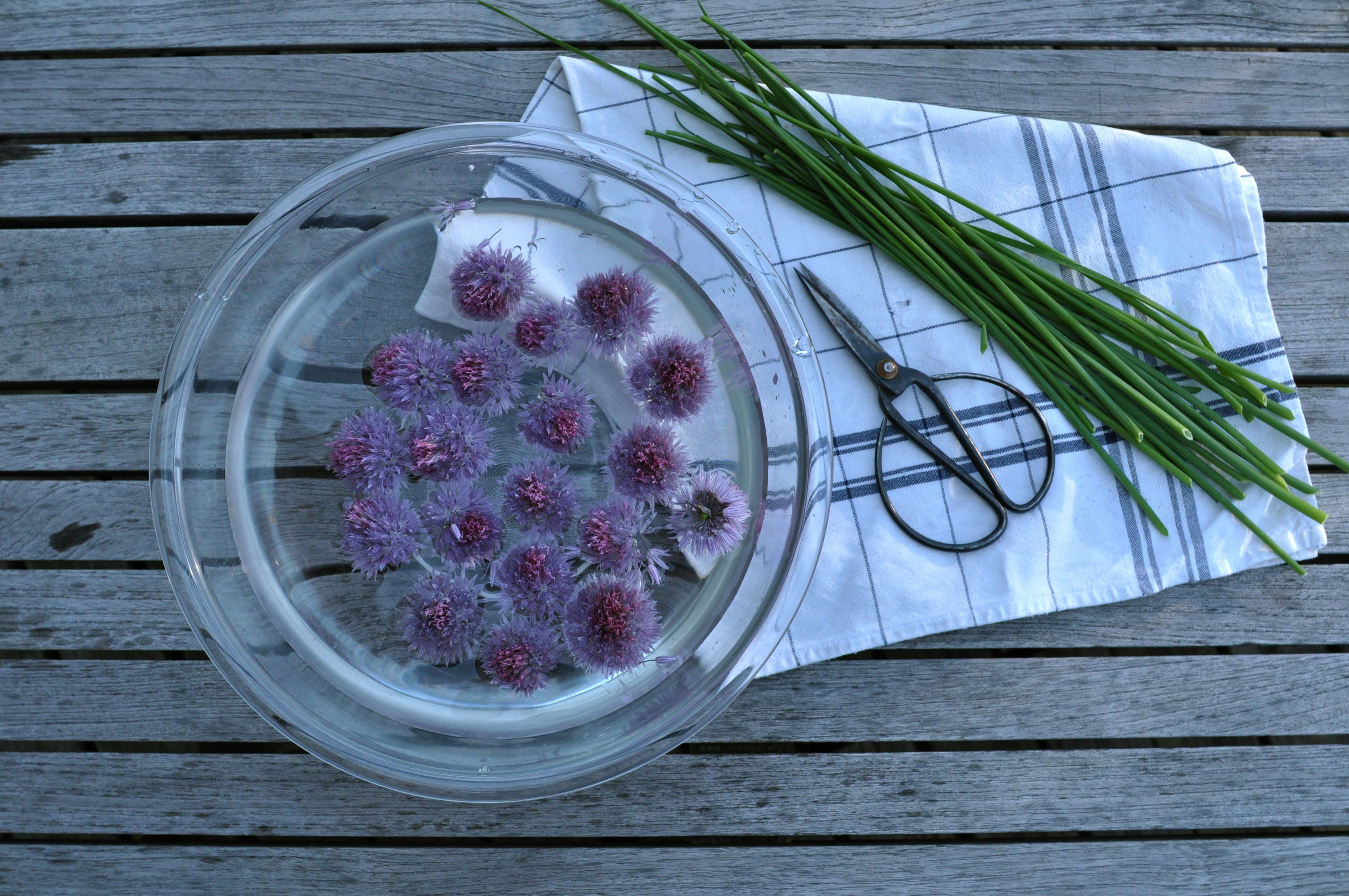
It is barely a recipe. Just cut ripe chive blossoms off their stems. Wash them in a bowl of cold water. Spin or lightly squeeze them dry. Fill a jar with the blossoms, about halfway full. Add good white wine vinegar to the top. Within a day or two, the lavender-colored blossoms will have tainted the vinegar raspberry pink. After two weeks, strain the blossoms and pour the vinegar into a bottle for easy use.

I am certain it will be a stunning addition to salad dressings, but that remains a surprise for me, too. In the meantime, the color is justification enough.

I had never flavored oils or vinegars, but I stumbled onto this excellent idea by Food in Jars via Lottie + Doof the other day. It was propitious as my balcony was all abloom with light red roses and these purple chive blossoms. It looked so pretty I couldn’t bring myself to cut them. So I waited as long as I could, until the faintest sign of wilting, before chopping all the blossoms — I’m sure the vinegar won’t mind them past their prime. It is barely a recipe, and such a great idea!

Quick lemon and lime tart

2 May 2012

In my world, lemon pie is a little like roast chicken; having been introduced to the utterly convincing very elaborate version, I had forgotten how quick and easy it can also be.

The herbs-stuffed-under-the-skin-of-the-chicken version of lemon pie is that of the River Café Cookbook Blue. It requires 6 whole eggs plus 9 yolks and half an eternity of patient stirring over a very low fire. It is the mother, grandmother, fairy godmother, and evil aunt of all lemon pies. It should be made at least once in a lifetime.

But if you don’t have 15 eggs or an entire day to spare, there is this recipe, which asks for nothing more than to whisk all the reasonably proportioned ingredients together, pour them into a pre-cooked tart shell, and bake.

This is the child prodigy of lemon pies. Effortless. Very tart, with an unconventional twist of lime. Addictive.

***

Recipe slightly adapted from The Naked Chef by Jamie Oliver

1 unbaked sweet pie crust

Egg-wash (1 egg and a little milk)

Zest from 2 limes

3/4 cup (200 ml) fresh lime juice (4 to 5 limes)

Zest from 2 lemons

3/4 cup (200 ml) fresh lemon juice (3 to 4 lemons)

1 1/2 cups (300 g) sugar

8 large eggs

1 1/2 cups (350 ml) heavy cream

*

Preheat oven to 350°F (175°C).

With a fork, mix 1 egg with a little milk and egg-wash the uncooked pie crust before baking blind.

Bake the pie crust blind for 10 to 12 minutes minutes. **When baking blind either poke a bunch of small wholes into the crust with a fork, or use dried beans or ceramic baking weights on the crust to prevent it from rising.**

Remove the blind-baked crust from the oven and set aside while making the filling.

Grate the limes and lemons for their zest. Squeeze the limes to obtain 3/4 cup juice and the lemons to obtain 3/4 cup lemon juice.

In a large bowl, whisk together the sugar and eggs until the yolks are completely broken up and the mixture becomes very smooth.

Stir in the heavy cream, then the lime and lemon juice.

Place the blind-baked pie crust back onto the oven rack then pour in the filling (this avoids spillage, as the pie will be filled up to the rim).

Bake the tart for 35 to 40 minutes until it is barely starting to turn golden and still a little wobbly in the middle. It will set as it cools.

Let cool completely before serving.

Fresh strawberries or raspberries would be a great complement to this pie, but just a little unsweetened home-whipped cream goes really well too.

*

Related posts

Walnut tarte with Chartreuse

Roast chicken with lemon and fennel seeds

Basic | Sweet pie crust

At the market | Ramps (Ramp pesto)

26 April 2012


I get excited about strawberries in June, quinces in October, and clementines at Christmas. So naturally, some years ago when I discovered ramps, the very first greens to appear at farmer’s markets here in spring, I talked about them a lot. Few of my family and friends in Europe knew ramps, and I somewhat precipitously made the connection with ‘ail des ours‘ in French and ‘bärlauch‘ in German. For years I’ve been talking about ramps, you know, ail des ours, bärlauch.

Well, Wikipedia has just informed me that I was wrong. Ramps are Allium tricoccum, and they are native to America, while the French and German (and English) ‘bear garlic’ is Allium ursinum. They are closely related but not the same thing. So the ramps we foraged in Haute Savoie last spring were not actually ramps, which explains why they felt different. If my memory serves me well the leaves were a little harsher, the taste a little coarser. In any case, that answers the question of their origin: ramps are Northern American. They are foraged and it is commonly assumed that, like wild mushrooms, they cannot be cultivated, but this appears to be a myth.

Ramps are sometimes called ransom (the common name of the European allium), but also wild leek, wood leek, or wild garlic, which gives a good idea of their taste, unmistakably in the onion/garlic family.

I’ve baked ramps with potatoes into very good and very pretty gratins; for Easter I tossed a potato salad with ramp pesto; just yesterday I made a ramp risotto with rosé wine that wasn’t half bad; ramps can also be woven into egg nests for breakfast; they can even be pickled. The pleasures are many, but the season is short — take advantage!

***

Ramp pesto

I started out with saenyc’s Wild Ramp Pesto on Food52. I found that raw ramps made the pesto too garlicky, while blanching them all made it too mellow, so I added a few raw ramps to give the pesto just the right kick. I also reduced the amount of walnuts and parmigiano and added parsley for a more vibrant taste.

1 bunch (about 28 to 30) ramps

2-3 sprigs parsley

5 whole walnuts

1/3 cup (20 g) freshly grated parmigiano reggiano

1/3 cup (100 ml) good extra virgin olive oil

2 tsps lemon juice

Good pinch sea salt

3-4 grinds black pepper

*

Bring a pot of salted water to boil. Prepare another bowl with ice water.

Trim off the roots of the ramps, rub off any loose skins around the bulbs, and wash the ramps in cold water. Wash the parsley and cut off most of the stems.

Set aside 2 to 3 of the smaller, more tender ramps, and chop them coarsely. Blanch all the others in boiling water for 2 to 3 minutes. Drain and immediately transfer the blanched ramps to the ice water. Take them out and squeeze them to remove excess water.

In a blender or food processor, purée the ramps (blanched and raw), the parsley, walnuts, and parmiggiano, pouring in a steady drizzle of olive oil. Blend thoroughly to form a paste. Add the lemon juice, salt, and pepper. Blend again, taste, and adjust seasoning.

Use as you would any other pesto: with pasta, potato salad, smeared on bruschetta and topped with fresh goat cheese, etc…

Note: As is, this pesto will keep just one or two days. To increase its longevity, add some olive oil and/or freeze.

*

Related posts

Spaghetti with ramp pesto, walnuts, and parmigiano

At the market | Rhubarb (Rhubarb compote)

Mimosa (deviled) eggs

29 March 2012

The trees are blooming in New York; it’s showstopping. Forsythias, exuberant magnolias, Callery pears like downy street clouds, vaporous cherry blossoms. And yet.

It isn’t time! I am still anticipating winter; the snow, the stews, the spiked hot chocolates by the fire. I have a notebook full for recipes longing for freezing temperatures: braised short ribs, slow-cooked duck, a quick spicy lentil soup if you’ve come home late from the cold. I see they will have to wait.

The year is creeping ahead, chives and tarragon have pierced my balcony beds, and so, submitting to nature’s infectious enthusiasm, I have embraced spring — but not, I admit, without a pinch of regret for a winter that wasn’t really.

***

6 eggs

About 10 stalks chives

About 3 stalks tarragon

5 or 6 leaves parsley

3 tsps mayonnaise

2 tsps red wine vinegar

Sea salt

Freshly ground black pepper

Smoked Spanish paprika

*

Fill a small saucepan (just about large enough to fit the eggs) with water. Bring to a boil. Add the eggs to the water one at a time, carefully, with a large spoon so they don’t hit the bottom and crack. Boil gently for 12 minutes. (I decided not to adopt the method Michel Roux uses in his book Eggs, which starts the eggs in cold water. However I have taken note of his advice to make sure the water boils gently, in order to avoid rubbery whites.)

Meanwhile, chop the herbs very very finely.

Once the eggs are cooked, strain the boiling water and add lots of cold water so they cool quickly.

Peel the eggs. Slice each in half lengthwise, carefully scoop out the yolks, and place them in a plate or shallow bowl.

Mash the egg yolks thoroughly with the mayonnaise, vinegar, finely chopped herbs, a pinch of salt, and a grind of black pepper.

With a small spoon, scoop the yolks back into the egg whites as neatly as possible.

At the very last minute, sprinkle a pinch of paprika on each egg.

*

Related posts

Pork rillettes

Chicken liver terrine

Marinated olives

Roasted almonds with Spanish paprika