Archive for the ‘Seasonal’ Category

At the market | Celeriac aka celery root (recipe: Céleri rémoulade, French celeriac salad)

19 November 2010

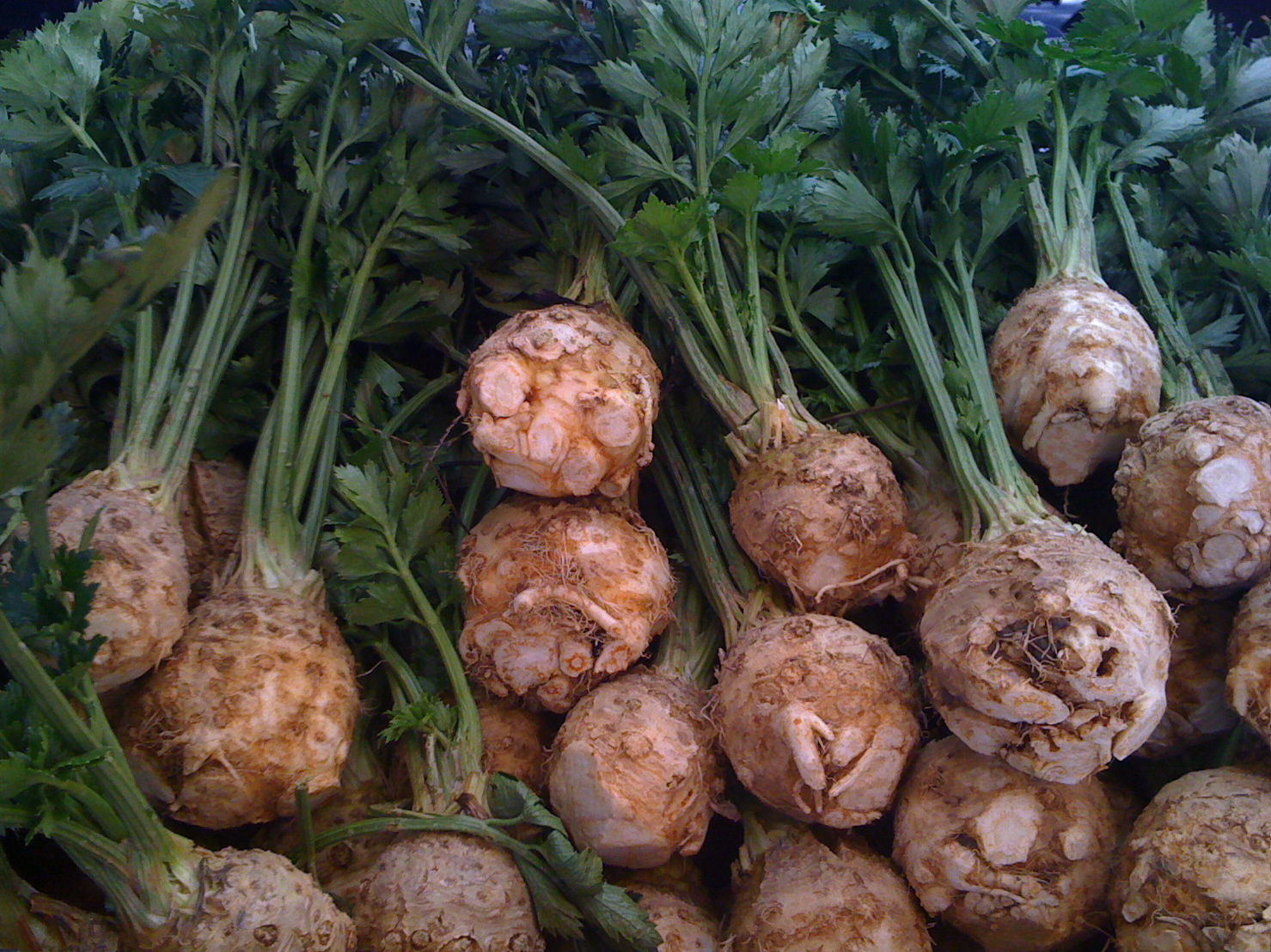
Celeriac is one of my favorite vegetables. It’s at the market in the fall and I get very excited by the prospect of eating it. I usually make a purée together with potatoes and a bright green mix of fresh parsley and olive oil; This “green celeriac mash” is part of my traditional Thanksgiving menu, and, if all goes well, I will post the recipe in a few days. In the meantime, below is another great recipe that’s perfect for the freshest market-bought celeriac: Céleri rémoulade, a typical French celeriac salad.

But here first is some information about this excellent vegetable which seems to be less well known in the United States.

Celeriac, also known as celery root, is different from celery, though they are related. They evolved from the same wild plant, apium graveolens, which is common in Europe and temperate parts of Asia. Wild celery has tough stalks and a very strong flavor, and historically the stalks were used solely for medicinal purposes and as a condiment, though the small root came to be considered a delicacy in Europe and the Arab world. In the early seventeenth century, a milder, edible variety of stalk celery was cultivated, and botanists also began developing a plant with a larger root – celeriac.

It’s important to pick out celeriac carefully, because the interior can be pithy and hollow, which makes for a bad surprise and can be very frustrating. (That’s why it’s a good idea to always buy a little more celeriac than one think one needs, just in case; that, and because a good half inch of the vegetable comes off when it is peeled.) So celeriac should feel heavy; if the stalks are attached they should not be wilted; and the root should be very fragrant.
(Photo update from January 2021)

Céleri rémoulade (Celeriac salad)

NOTE: Predictably, there are as many versions of this recipe as there are cookbooks. The variations in the dressing range from a mustard mayonnaise to a mustard cream sauce with no oil at all. I have tried the different versions and I must admit that, to my surprise, the recipes that mix mayonnaise and cream are the best. (I was certainly very skeptical at first, despite the fact that these versions appear in some of my most trusted references – Alice Waters and Thomas Keller). The recipe below follows the proportions prescribed in Chez Panisse Vegetables.

***
2 small heads very fresh celeriac

Juice of 1 lemon

Maldon sea salt and freshly ground black pepper

3 Tbsp strong Dijon mustard

1/2 cup mayonnaise, preferably homemade

2 Tbsp heavy cream

Parsley (optional)

***

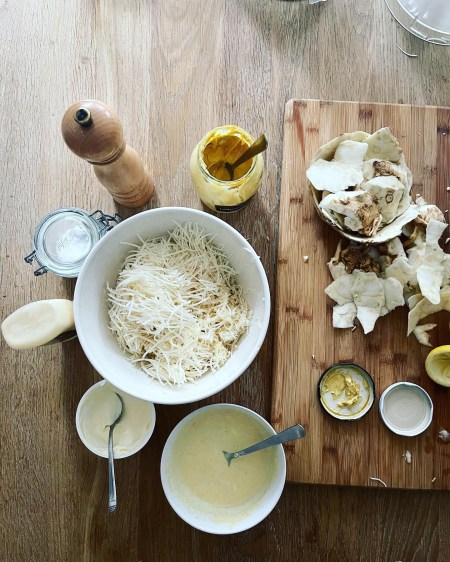
To prepare the dressing, mix the lemon juice with the salt and pepper, then stir in the mustard, mayonnaise, and finally the cream.

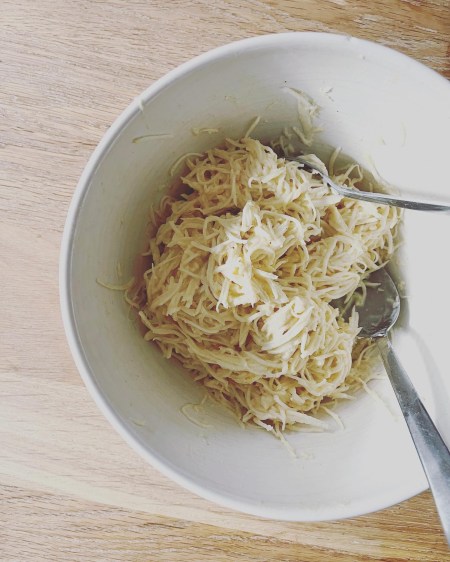
Peel the celeriac by removing a generous amount of the tough, knobby outer layer. Finely grate the root and immediately toss with a few tablespoons of dressing at a time, making sure not to overdress or the salad will become soggy. **Celeriac oxidizes quickly so it really must be dressed immediately.** Taste and correct the seasoning for salt, pepper, and lemon juice.

Most recipes suggest to cover and refrigerate the salad for anywhere from 15 minutes to half a day. I also like to eat it immediately, when the celeriac is still crunchy.

Roughly chop the parsley and sprinkle it over salad just before serving.
(Photo update from January 2021)

***

Related post

Mashed celeriac

Simply kale salad

8 November 2010

Now is the time to eat kale salad, when the first bites of frost have rendered the leaves mild and sweet. As winter settles in kale will become more flavorful but also tougher – perfect for soups. Since I first ate kale salad a few years ago, I’ve been looking out for perfect tender kale to recreate it at home but always seemed to miss the season. I’ve finally caught the right time and decided to make a salad that best respects the essence of raw kale.

Since this salad is all about the kale, it’s not worth making unless the leaves are perfect. I prefer to use a less curly but rather crinkly variety, such as lacinato or rainbow lacinato kale. The leaves should be visibly tender – the best test is to break off a tiny piece and taste it right then and there at the market.

***

Sweet and tender, first-frost-bitten lacinato or rainbow lacinato kale leaves

Best olive oil

Lemon

Maldon (or other flaky) sea salt

Freshly ground black pepper

Parmigiano reggiano cheese*

***

Wash kale in cold water and spin or pat dry. Remove tougher part of the stem (fold leaf in half and cut off its thick “spine”). Cut leaves into tagliatelle-thin strips and place them in a bowl. Dress the kale with a generous dash of olive oil, freshly-squeezed lemon juice, a pinch or two of salt and freshly ground pepper. Toss well to coat the kale and let sit for 15 to 20 minutes. Place dressed salad on plate and grate parmigiano on top just before serving.

* I made this salad with parmigiano because I always have some at home, however I think it would be just as good (perhaps better, even) with pecorino or coarsely grated ricotta salata.

Quince paste

3 November 2010

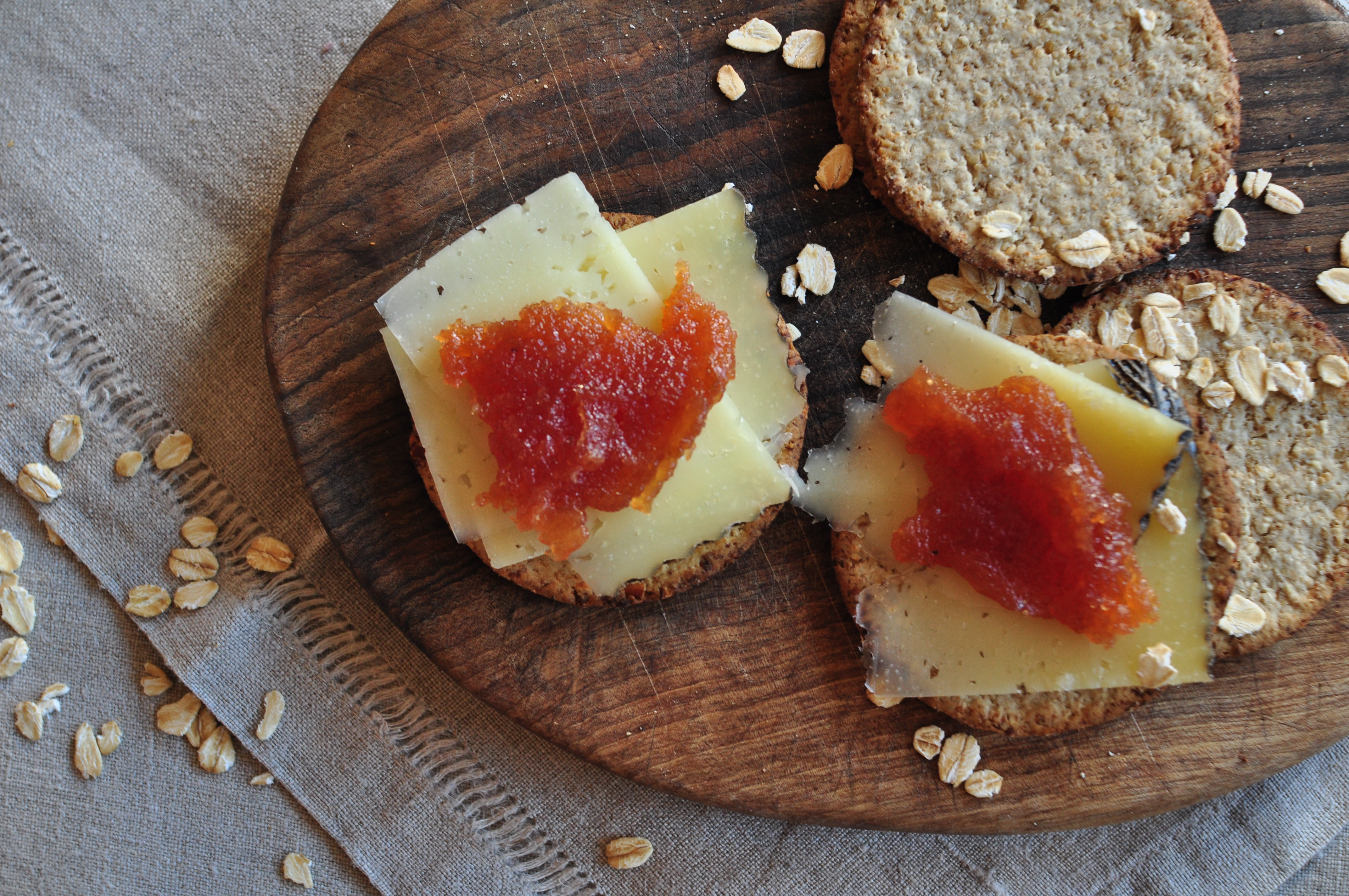
Quince paste, also known as membrillo in Spain or cotognata in Italy, is a thick, sweet fruit paste that pairs perfectly with Manchego and other types of hard sheep’s milk cheeses. It keeps for a while though it never lasts long. I eat it off the tip of a knife when the children aren’t looking. It’s irresistible.

I use the fruit cooked to make quince jelly for this recipe, but the quinces could also be baked, covered, in a low oven (300°F or 150°C) for about 1 1/2 hours.

***

Stewed quinces (without the juice) or baked quinces (hard cores removed)

Sugar

Lemon juice

***

Purée the quinces with a vegetable mill (the skins and seeds will be retained by the mill).

Weigh the purée and add the same amount of sugar in a heavy-bottomed saucepan. Add the juice from half a lemon per 2 lb (1 kg) of fruit. Mix, bring to a lively boil, and stir constantly (otherwise the quince will burn very quickly) until the mass darkens and thickens. Depending on the amount of purée, it may take more than an hour.

Pour onto a large flat plate or shallow container and let set. Quince paste keeps for months in the refrigerator.

Quince jelly

3 November 2010

I made quince jelly last year for the first time. It’s not that I don’t sincerely love quince, it’s because I don’t like making jelly very much. To make jelly the fruit is cooked in water, and only the clear juice is used. An awful lot of pulp is wasted in the process. Of course it can be used as a purée to eat with yogurt, but it does not last, and there is only so much quince purée a family can eat in a couple of days. For this reason I don’t make jelly, generally. But last year as quinces appeared at the market I simply couldn’t resist. Having made the jelly (a few pounds of quinces rendered three very small jars), I had a lot of quince pulp on my hands, and dismayed at the idea that it might go to waste, I suddenly thought about membrillo, the Spanish quince paste that pairs so perfectly with Manchego and other hard sheep’s milk cheeses. As it happens, all that is required for quince paste is fruit pulp and sugar.

So making quince jelly has become a perfect excuse to make quince paste (or the other way around?), and I think no recipe for one should ever be published without the other.

***

Quinces

Water

Sugar

***

Making jelly is a fairly long process, but it can be broken up into 2 stages if you don’t have a big uninterrupted chunk of time.

Wash quinces thoroughly to remove fuzzy coat. Cut quinces into quarters or eighths, depending on the size of the fruit so all the pieces have approximately the same size. Place quince pieces in a large, heavy-bottomed saucepan and add just enough water so it reaches the top layer of quinces but does not cover the fruit. Bring to a boil and simmer gently until the fruit becomes soft, stirring occasionally to submerge the fruit on top so it gets a chance to cook through. Poke around to check that all the pieces have softened (quinces will cook through at a different rate depending on how ripe they are – it could take up to 1 1/2 hours). Once all the quince is very soft, remove from heat.

**You can take a break at this point. Leave the quinces in the water, let cool and place in refrigerator once cool for up to 24 hours. If you refrigerate the cooked fruit, you will have to reheat it slightly to release the liquid before starting the next stage.**

Strain the juice through a fine mesh sieve and then through a cheesecloth to remove any impurities. Don’t mash the fruit or squeeze the cheesecloth too much or the jelly will become murky. Reserve fruit pulp for paste (refrigerate unless using immediately).

Measure the juice as you pour it into a (smaller) heavy-bottomed saucepan. For every cup (250 ml) of juice, add 2/3 cup (150 g) sugar. Bring to a boil and simmer, skimming off any foam that forms on the surface. After about 20-30 minutes, check regularly whether the juice has “gelled.” To do this take out a small spoonful and let it cool. Once cold, the juice should have thickened in the spoon, and when you try to pour it the drip is not liquid but heavy, as though it was sticking to the spoon.

Sterilize jars in boiling water for 5 to 10 minutes. As soon as the juice has “gelled,” remove from heat and pour immediately into sterilized jars and close tightly. Keeps unopened for up to a year; once opened should be stored in the refrigerator.

Quince and apple tarte

18 October 2010

Having found quinces at the market last week I decided to organize dinner around the fruit. As planned, I prepared lamb and quince tagine and an apple and quince dessert, though rather than the crumble I initially had in mind I made pie, or rather a French version of pie: tarte. I improvised both dishes from a variety of recipes. The tagine looked beautiful and tasted very good, but it could still be improved and I would like to refine the recipe before posting it here. The tarte, on the other hand, was entirely delicious.

***

Puff pastry*

Juice from 1 lemon

3 medium quinces

4 Tbsp mild-tasting liquid honey

3/4 cup (150 g) brown sugar

1/2 vanilla bean

3 medium apples

1 cup (100 g) ground almonds (or almond flour)

***

If using frozen puff pastry, remove from freezer and set out to thaw.

Prepare a medium saucepan with 4 cups (1 liter) cold water and juice from 1/2 lemon. Peel, core, and cut quinces in slim slices. As you cut the quince, put the slices in the lemon water (quince oxidizes very quickly – placing it in water prevents it from turning black).

Bring the lemon water with quince slices to a light boil and simmer gently for about 10 minutes, until the fruit just starts getting soft (they should still be easy to handle; they will continue cooking later.) With a skimmer, remove quince slices and set aside.

Add the honey, 1/2 cup (100 g) of the sugar, and the vanilla bean to the quince poaching water, increase heat and let the syrup boil and reduce for 45 to 50 minutes.

In the meantime, preheat oven to 375°F (190°C).

Thinly slice apples to the same size as the quince slices. (As you set the apple slices aside, sprinkle them with a little lemon juice to prevent them from turning brown.)

In a small bowl, mix the ground almonds with the last 1/4 cup (50 g) sugar.

Prepare baking sheet (or pie pan) lined with parchment paper. Butter the parchment paper and roll out pie crust. Sprinkle almond/sugar mixture evenly on crust, then place apple and quince slices, alternatingly. Using a spoon or pastry brush, coat the fruit with some of the thickened syrup.

Bake in oven for 45 to 50 minutes, until fruit is starting to color, taking care that the crust does not become too dark.

Before the tarte cools, glaze the fruit with more syrup. (There should be some left over, it will continue to thicken and can be used on toast like quince jelly).

* I have never made puff pastry. It is terribly time-intensive and I have often heard that it is one of the rare things that are not necessarily better home made, unless by an experienced pastry chef. Dufour frozen puff pastry is a very good brand available here in New York.