Archive for the ‘Seasonal’ Category

A tian of rainbow chard, zucchini, tomatoes, mozarella

1 October 2014

IMG_6275

For a while I forgot about tian.

Despite childhood summers spent in the hills outside Aix-en-Provence, tians came into my life quite by happenstance in my early twenties, during a holiday with university friends. Someone made tian, and it was the best gratin I had ever tasted.

A tian is a shallow, ovenproof earthenware vessel from Provence, which has given its name to the gratin-style dishes cooked in them. That initial auspicious tian was probably not very traditional, with its dubious slices of very un-Provençal mozzarella. But in this case I am happy to forgo authenticity, because the mozzarella is what makes it so special.

It is the recipe I had been recreating since: vertically arranged slices of zucchini, eggplant, tomatoes, interlaced with mozzarella and Mediterranean herbs. Flavors meld into a heavenly mess akin to creamy gratinéed ratatouille.

For years I forgot about tians, but then the other day, finding these late-summer vegetables in my kitchen and, more crucially, a few balls of mozzarella, a tian propitiously came to mind. Dare I say that this adapted version is even better than the ‘original’?

Tian recipe
Regarding quantities: there should be a similar proportion of each vegetable and plenty of mazzarella, but the dish is unfussy and very adaptable. The important thing is that the vegetables squeeze snugly into the dish.

Rainbow chard

Zucchini

Tomatoes

Mozzarella (I prefer buffalo mozzarella which is extra creamy)

Garlic clove

Olive oil

Sea salt and freshly ground black pepper

Fresh basil and/or thyme

Parmigiano

Preheat the oven to 375ºF (190ºC).

Prepare the vegetables:

Wash the chard leaves, trim and discard only the end of the stems, then cut the leaves (with stems) into approximately 1/2 inch (1 cm) ribbons.

Wash, trim ends, (optionally partially peel), and slice the courgettes into disks approximately 1/4 inch (1/2 cm) thick.

Wash and slice the tomatoes, also into 1/4 inch (1/2 cm) disks.

Slice  or tear the mozzarella into pieces of a similar size.

Rub the ovenproof dish all over with the garlic clove to impart a subtle aroma. Drizzle a little olive oil all over the bottom of the dish.

Arrange the vegetables and mozzarella in a nice, regular, vertical pattern inside the dish. It’s a bit finicky with the chard but well worth it!

Wash and pick the herbs, chop the basil.

Season the tian with salt, pepper, and herbs, and sprinkle with plenty of freshly grated parmiggiano.

Pop into the oven for a good 35 to 45 minutes, until the dish is beautifully golden and bubbly. Mmmm.

The best (roasted) leeks

23 September 2014

IMG_4132

Leeks are in season again. After a long bountiful summer of tomatoes, zucchini, artichoke, beans and tomatoes, more tomatoes — fall vegetables are back at the markets and it’s the time to start roasting.

This is not only my favorite way to prepare leeks, it’s one of my favorite ways to prepare vegetables, period, and leeks are incredibly versatile and always a hit.

They are a stellar companion alongside simply grilled fish and lentils. Or together with braised carrots and a roast chicken. I make them with a good steak and very crispy roasted potatoes. The possibilities are endless.

Roasted leeks
This method is inspired by the wood-roasted vegetables from The River Cafe Cookbook Two (yellow). It is not exactly a recipe, and can be adapted to other vegetables and modified using different vinegars (apple cider, sherry) or perhaps lemon juice, and an array of herbs (rosemary, sage, marjoram, chillies…) depending on the mood. It is especially important to use very good quality ingredients.

Leeks

Balsamic vinegar

Red wine vinegar

Garlic cloves

Olive oil

Fresh thyme

Salt and freshly ground black pepper

Preheat the oven to 375ºF (190ºC).

To clean the leeks, trim the roots at one end and darker leaves at the other, peel off the tough outer leaves, keeping only the tender green and white hearts, and thoroughly wash of any grit. Cut the stalks into 2-inch (5cm) pieces, then halve each of these lengthwise.

In a large bowl, create a dressing of sorts with the vinegars, crushed garlic, olive oil, and picked thyme leaves. As in a vinaigrette, the proportions should be approximately two thirds olive oil, one third vinegar(s). In this case I would do half balsamic/half red wine.

Toss the leeks in the dressing until well coated. Season generously with salt and pepper. Place the leeks in an oven-proof dish large enough to fit them in one layer. Slide the dish into the oven and roast for a good hour. Every 20 minutes approximately, gently toss the leeks. The leeks should be well caramelized and meltingly tender. Don’t hesitate to leave them in the oven a little longer than you think.

Wild food | Two recipes for a blackberry bounty

19 September 2014

IMG_5791

Purple smiles and ‘bloody’ hands.

One two three four — how many more? — gleeful children, laden arms outstretched, offering, loaded, big bowls of bouncing blackberries. The kitchen crowded with their relentless harvest.

It has been an exceptional summer for wild fruit. Not only in Brittany; British hedgerows are weighted with fruit.

And so we pick and pick. And now?

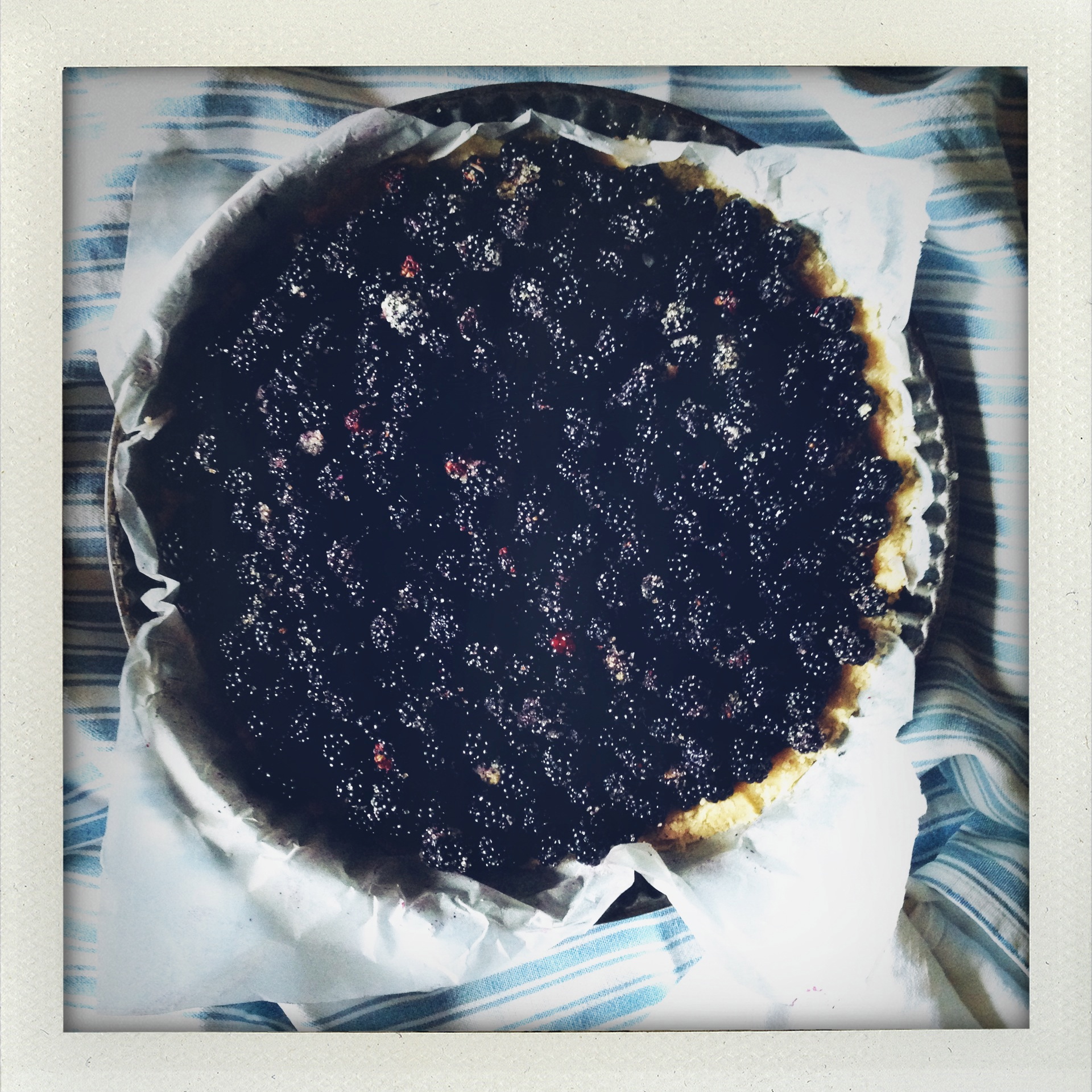
Blackberry pies, of course, and cakes brimming with blackberries.

IMG_5794

And these to capture summer’s flavor, puckery sweet, for more wintry days.

IMG_6364

Crème de mûre (Blackberry liqueur)
Makes about 3 bottles

1.2 kg just-picked blackberries

1 bottle pinot noir

800 g sugar

1 bottle eau de vie (fruit brandy)

Gently wash the blackberries over running water.

In a bowl, preferably high and deep, coarsely crush the berries with a pestle or masher. Pour the wine over the berries, cover tightly, and and let steep for 48 hours.

Pour the berries into a large saucepan. Add the sugar. Bring to a boil and cook over medium heat for a good 20 to 30 minutes.

Strain the juice through a fine mesh sieve.

Measure the volume and add the eau de vie at a ratio of 1/3 eau de vie to 2/3 blackberry juice.

Using a funnel, pour the liqueur into (clean) bottles, seal tightly, and store in a cool dark place. Let the liqueur sit for at least a month before using for the flavors to develop beautifully.

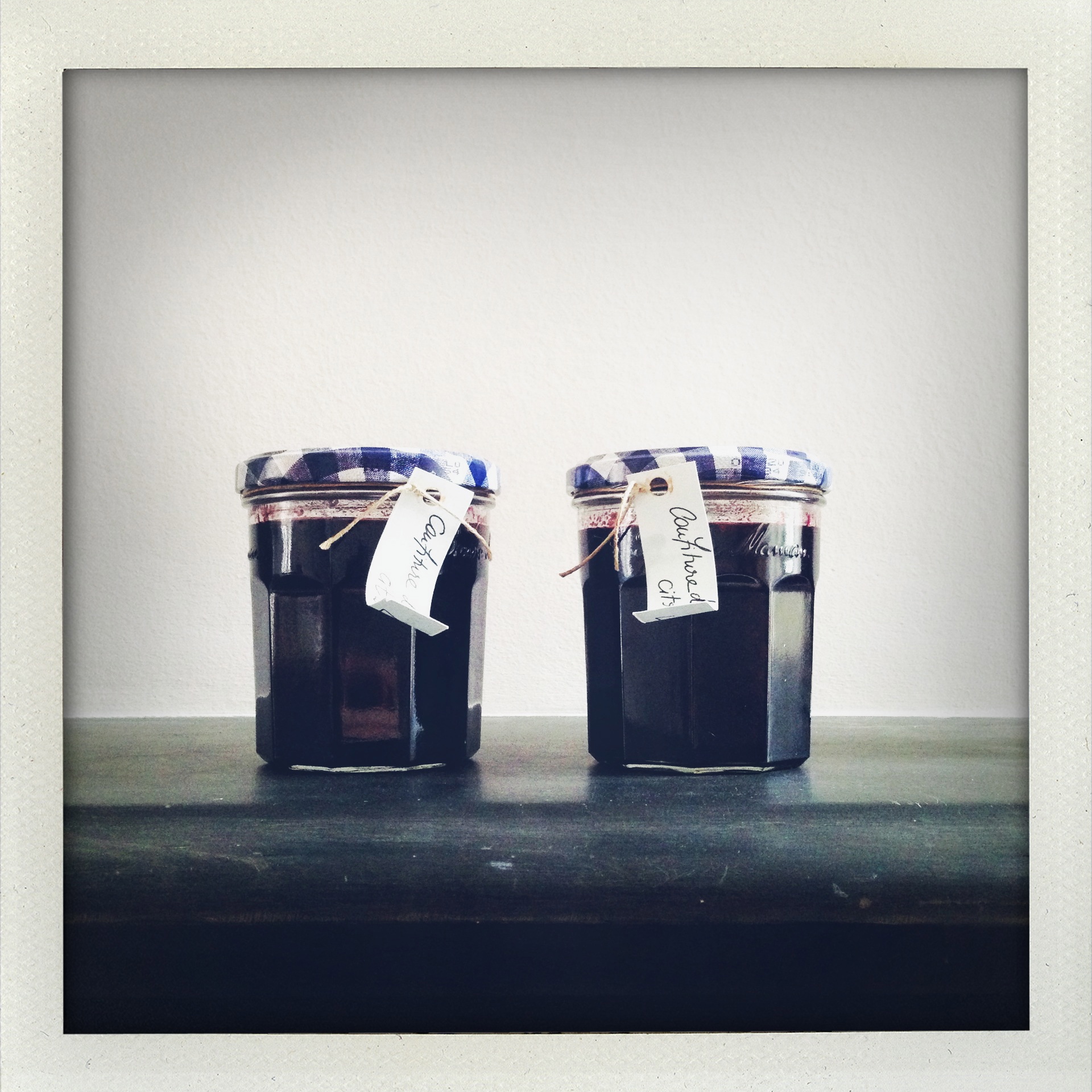
IMG_6361

Blackberry and lemon jam

1.6 kg just-picked blackberries plus 400 g

1.4 kg sugar

3 untreated lemons

Gently wash the blackberries under running water.

Using a small, sharp knife, cut a long ribbon of zest from one of the lemons.

In a large heavy saucepan, mix 1.6 kg of blackberries with the sugar, ribbon of zest and juice from one lemon. Let sit for a few hours or overnight, as convenient.

Later (or the next day), add the other two, very thinly sliced lemons. Bring the fruit/sugar mixture to a boil over medium heat and let the jam bubble away for about 20 to 30 minutes. The boiling bubbles will become less vivacious as the temperature rises to the point where the jam will set. As the boil becomes more leisurely, the jam ready to set, add the remaining 400 g of blackberries. Cook for another 10 minutes.

Sterilize the jars in boiling water for 5 minutes, transfer the hot jam into the jars, seal tightly, and store for a few weeks at least before opening!

Related posts

Plum jam with candied ginger

Rhubarb rosemary jam

Rhubarb rosemary syrup

Chive blossom vinegar

Super simple summer salads | Green beans and tomato salad with a mustard dressing

16 August 2014

photo(31)

Most of our summer lunches are leftovers complemented by pâtés, cheeses, bread, and salads. This French classic is one of my favorite. It is also a particularly good companion for grilled pork chops or slow roasted lamb shoulders.

Green beans

Very good tomatoes (preferably heirloom)

Small red onions (fresh if possible)

Fresh mint

Fresh basil

1 Tbsp strong mustard

2 Tbsps red wine vinegar

Pinch sea salt and freshly ground black pepper

6 Tbsps olive oil

Dash balsamic vinegar

Trim and wash the green beans.

In a large saucepan, bring salted water to boil and cook the beans for 5 to 10 minutes depending on how al dente and crunchy you like them. Plunge the beans in ice water so they stop cooking and retain their color. Let cool completely (they can be kept for a few hours before using).

Wash and cut the tomatoes into wedges of approximately the same size.

Peel and slice the onions crosswise as thinly as possible.

Wash and chop the mint and basil.

Prepare the dressing in a jam jar: first mix the mustard, vinegar, salt and pepper. Shake well. Add the olive oil, shake well again. Add the balsamic vinegar, shake again. **This makes a generous quantity of dressing. Use only just enough to coat the beans – they shouldn’t be drenched in the sauce. Keep the rest of the dressing for another salad.**

Dress the beans lightly, toss, and arrange on a plate. Add the tomatoes, onions, and herbs. Toss again gently, and serve.

Related posts

Avocado, cherry tomato, and cucumber salad with red pepper and parsley

Apricots roasted in verbena honey syrup

9 July 2014

I am completely in love with this dessert.

For years I have in vain chased the apricots of my childhood; intensely ripe, cooked by the provençal sun to a sweet compote in every bite. Nothing comes close, and so year after year I have spurned apricots on every shelf, sighed in resignation.

While I don’t expect to resuscitate these childhood memories here in London, I have found a recipe to reconcile my love of apricots.

The original is one for apricots with vanilla and chamomile. I was excited, when I received it from a friend through the unlikely channel of an email recipe exchange, as I had just planted lots of chamomile seeds. But not one of the seeds has grown; a few months later and I don’t have the slightest shadow of a chamomile flower. However I do own a small lemon verbena plant.

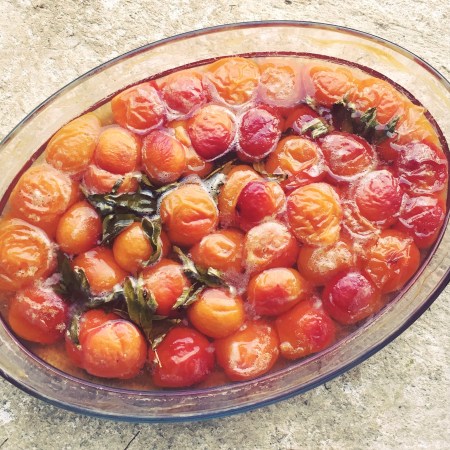
photo(27)

Apricots roasted in verbena honey syrup, adapted from a recipe by Allison Parker

12 apricots
1 cup (200 g) sugar
1 cup water
3 small twigs fresh lemon verbena
3 Tbsps mild liquid honey (borage honey worked beautifully)

Preheat oven to 350°F (175°C)

Wash the apricots, slice them in half, remove the pits.

In a small saucepan, bring the sugar and water to a boil, stirring occasionally to dissolve the sugar. Reduce the heat, add the verbena and honey, and simmer gently for about 10 minutes.

Pour the syrup into a pan which will fit all the apricots in one layer. Place the apricots in the syrup, cut side down, and spoon a little syrup over each hump of fruit.

Roast in the oven (rack in the upper third, so the apricots get blushed from the heat) for about 10 minutes. Turn the apricots over, baste with syrup, and roast for another 5 to 10 minutes, until soft.

Let cool and serve at room temperature, with a big dollop of clotted cream, crème fraîche, or thick yogurt.

DSC_0106