Archive for the ‘Summer’ Category

Plum jam with candied ginger

26 September 2011

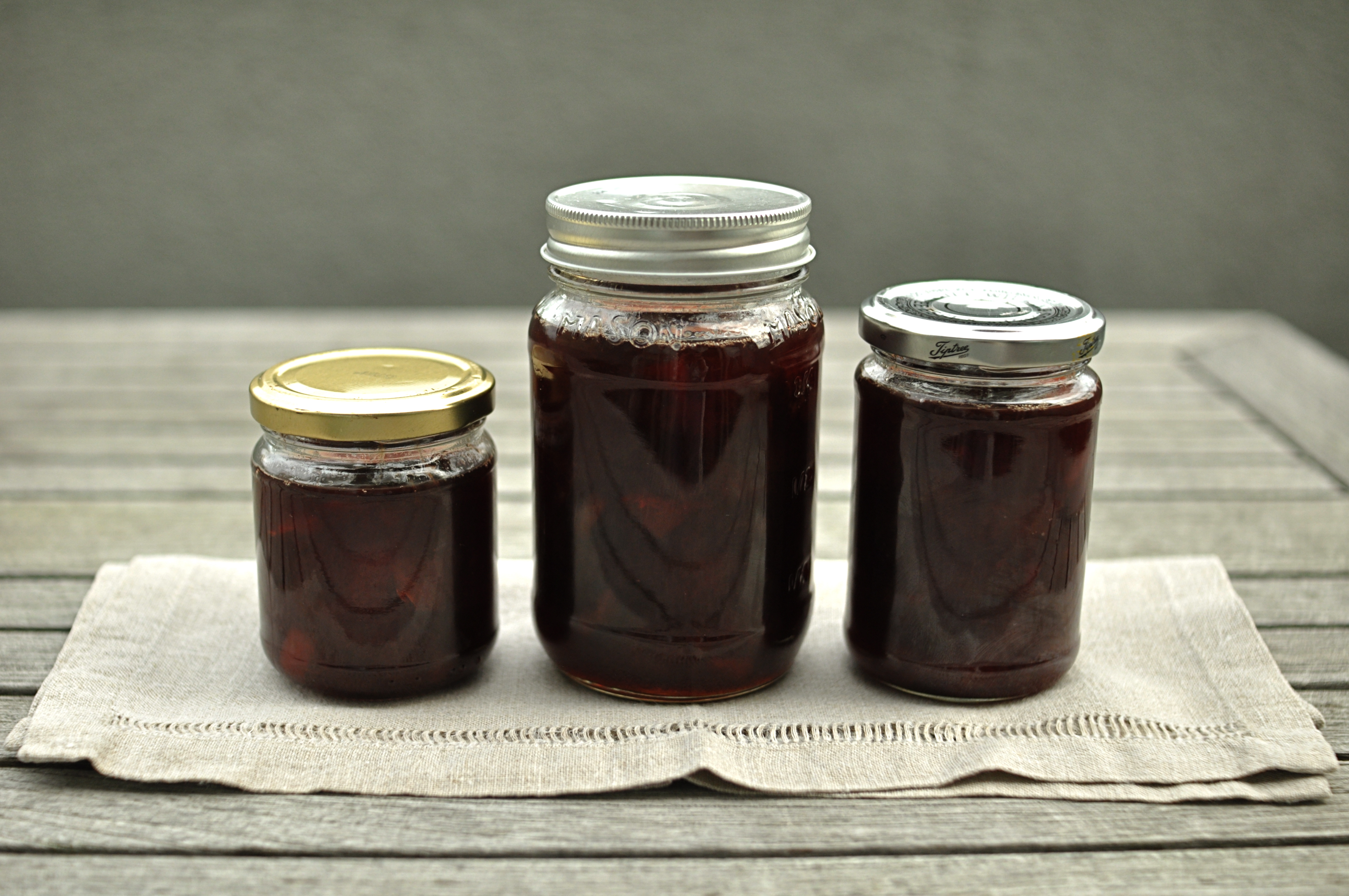
I bought dodgy plums at the market on Wednesday; they looked good but were suspiciously soft to the touch. And although at Union Square market, even questionable plums are rarely at a discount, I got them anyway hoping it would force me to make jam. It protects the plums from rapacious children, and me from making tarte. It worked.

The plums sat undisturbed on the kitchen counter for a couple of days as I pondered how I might jazz up the plum jam. With a dash of alcohol perhaps, or some spice.

Then I read Oui Chef Steve’s Plum and Ginger jam and my attention wandered over to a permanent squatter of the second right hand shelf in my kitchen – candied ginger. The decision seemed to make itself.

I am told I will have to keep the jars for at least a few weeks before opening, since jam benefits from a little aging, but just from licking the spoon I think I can say – it tastes pretty great.

***

2 lbs (900 g) plums

2 3/4 cups (550g) sugar

Juice of 1/2 lemon

About 15 pieces of candied ginger

***

Wash plums, cut them in half and again into quarters. Take out the pits but reserve and count them, as they will be cooked with the jam then removed. (The French like to leave pits in jams and cakes as they believe it enhances the flavor – we can’t help it).

In a heavy saucepan, mix the plums as well as the pits, sugar, and lemon juice and slowly bring to a boil.

Cook over medium heat.

Add the candied ginger cut into small slices after 15 minutes.

After about 20-30 minutes, check whether the juice has “gelled.” To do this take out a small spoonful and let it cool. Once cold, the juice should have thickened in the spoon, and when you try to pour it the drip is not liquid but heavy, as though it was sticking to the spoon. Cook longer if necessary and check again.

Meanwhile, sterilize jars in boiling water for 5 to 10 minutes.

As soon as the jam has “gelled,” remove from the heat and scoop out the pits (if you have counted them you will know exactly how many need to be fished out). Then pour into sterilized jars and close tightly.

Resist opening the jars immediately, wait at least a few weeks.

The jam keeps well; once opened it should be stored in the refrigerator.

*

Related posts

Quince jelly

Plum cake


Avocado, cherry tomato, and cucumber salad with red pepper and parsley

21 September 2011

Last week, fall swept over the city with a single large gust. The temperature dropped about 10 degrees (Fahrenheit) in one afternoon and everyone rushed home – or wished they had – to change into coats and boots for the evening.

But, unlike New York summers that don’t give spring a chance and usually arrive overnight, in New York fall flirts with summer for weeks before finally settling in sometime before Thanksgiving.

So, on this rather grey morning but with full confidence in many more beautiful Indian summer days, here is a great salad that’s crunchy and fresh but also lush with avocado. It takes five minutes to prepare and goes well with a quick lunch – grilled fish, seared steak – or any-way eggs for brunch.

***

2 small seedless cucumbers

1 red pepper

About 12 cherry tomatoes

A small handful flat-leaved parsley

1 avocado

Juice from 1/2 lemon

2 Tbsps very good olive oil

Flaky sea salt

Pinch cayenne pepper

***

Wash the cucumbers, cut them in half lengthways then into 1/2 inch (1 cm) slices and place in salad bowl.

Wash and cut the red pepper in half. Remove the seeds, then cut into 1 inch (2 cm) strips and again into 1/2 inch (1 cm) pieces and place into the salad bowl.

Wash and cut the tomatoes in half, add them to the bowl.

Wash the parsley, pick the leaves from the stems, and coarsely chop the leaves into the bowl.

Slice the avocado in half lengthwise; open it up and remove the stone. With a small sharp knife, cut the flesh of the avocado into 1/2 inch (1 cm) dice, stopping before the skin, then, with a large spoon, scoop out the flesh into the salad.

Dress the salad with the lemon juice, olive oil, salt, and cayenne pepper. Toss, check seasoning, adjust, and serve.

*

Related posts

Lentil and fennel salad with lemon and parsley

At the market in Brittany | Artichokes

21 August 2011

I don’t know how better to describe a field of artichokes than as a shimmering sea of silver green plants growing dinosaur eggs – they are at once beautiful and funny.

Because somehow it’s hard to take an artichoke entirely seriously. The legendary French comedian Coluche famously derided artichokes as “the only dish that, when you finish eating it, there’s more on your plate than when you started.”

When we eat an artichoke, we eat the bud of a domesticated thistle, cynara scolymus, which comes from the Mediterranean and dislikes frost. It is therefore ideally suited to the mild maritime climate of Brittany, where it is never terribly cold and – have I mentioned this before? – rarely particularly hot.

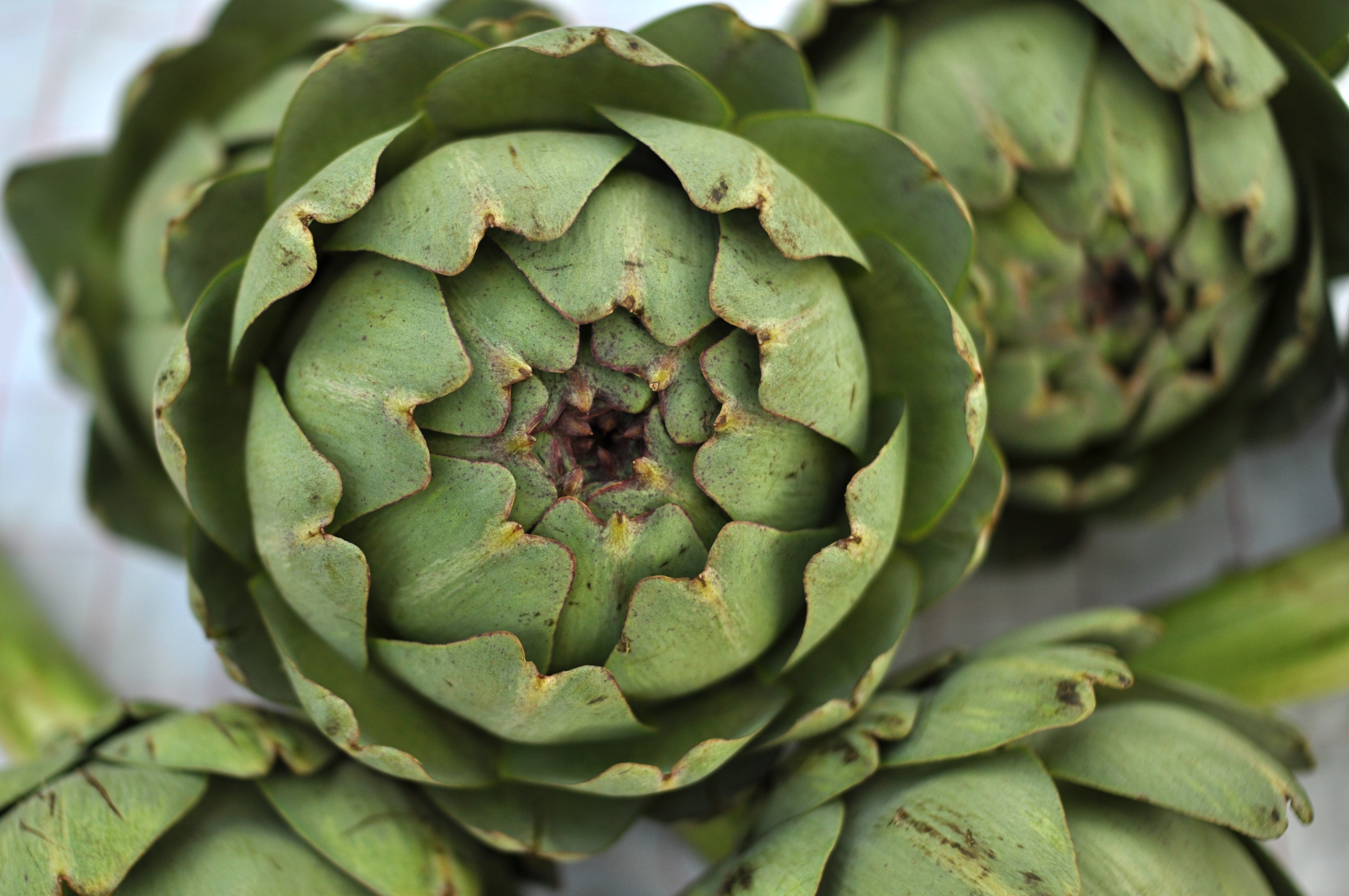
While the artichoke bud is still very small, the whole head is edible. Later, as pictured above and described below, it is still a bud but only the fleshy part of the leaves and the heart can be eaten.

To eat a globe artichoke you pluck a leaf, scrape the flesh gently but firmly with the bottom front teeth, discard the leaf, and repeat, working your way toward the tender heart. The very soft central leaves can practically be eaten whole, then onto the choke – the inedible part called “hay” in French, to describe its prickly quality. The choke must be removed carefully to reveal the heart, which most consider the prized part of the artichoke, though most children find eating the leaves much more fun.

***

Steamed globe artichokes with butter lemon sauce

Traditionally artichoke leaves are often dipped in a simple vinaigrette or a hollandaise sauce, but in my opinion this simple butter lemon sauce far surpasses both.

1 artichoke per person

2 Tbsps butter per artichoke

1/2 lemon per artichoke

Sea salt and freshly ground black pepper

***

In a pot large enough to hold all the artichokes, bring 1 to 2 inches (3 to 5 cm) of water to boil.

Just before using, cut the stems flush off the artichoke. **If this is done in advance, rub some lemon on the bottom so the artichoke doesn’t oxidize.**

Place the artichokes in the pot. **It is also possible to use a steamer, but not necessary. The bottom artichokes will touch the water slightly but the result is the same.**

Steam the artichokes for about 40-45 minutes. The artichokes are cooked when an outer leaf peels off easily and a knife slides into the heart (bottom part) of the artichoke.

For the sauce, melt the butter in a small saucepan, squeeze in the lemon juice, season with salt and pepper, and stir well. Taste and adjust with more lemon juice if desired.

To serve, place one artichoke on each plate with the sauce in a little pot on the side, and a large bowl on the table for the discarded leaves.

*

Related posts

Mussels with shallots and white wine

In Brittany | Kouign Amann from Au Four St Melaine bakery in Morlaix

At the market | Rhubarb [Compote recipe]

At the market | Quinces


In Brittany | Home baked potato fries

8 August 2011

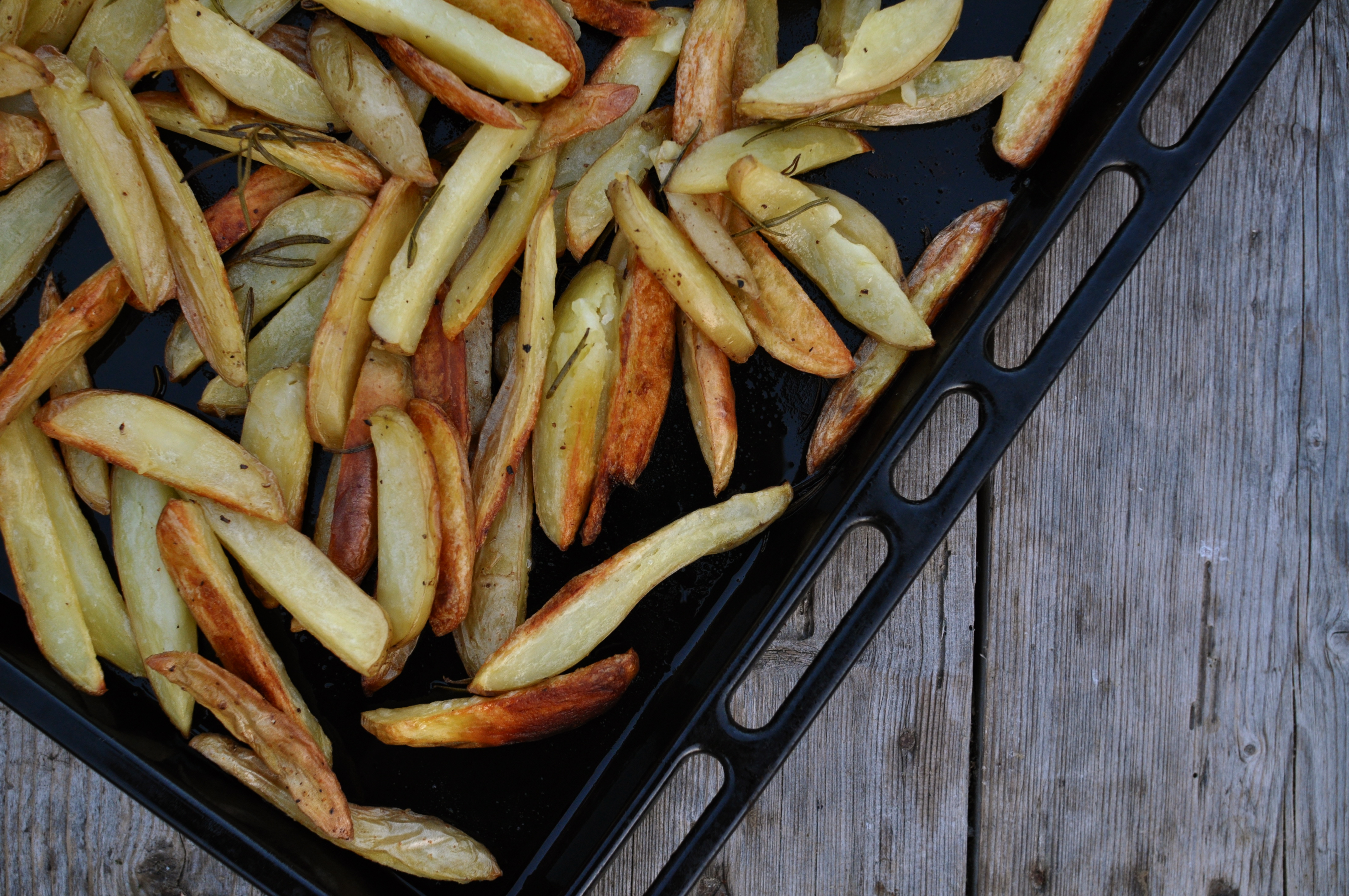
Although we are in Brittany and I don’t believe fries are the traditional Breton accompaniment for mussels, it seems this famous Belgian pairing has anchored itself so steadfastly in our subconscious that anytime I (we) think of mussels, I (we) think fries. So when we prepared mussels the other day, the other half of the meal seemed obvious.

It was the first time I made really good home-baked fries and I think it was thanks to a tip from my sister who suggested starting them low and slow so they would cook through without burning or drying out.

They were great.

***

Potatoes

Good olive oil

Flaky sea salt

Freshly ground black pepper

Rosemary

*

Preheat oven to 300F (150C).

Cut the potatoes in half lengthways, place each half cut side down, and slice into 1/2 inch (1 cm) pieces. Wash the potato pieces in cold water and pat thoroughly dry with a (clean) kitchen towel.

Place the potatoes on a large shallow oven pan. Drizzle generously with olive oil, season with salt, pepper, and sprigs of rosemary. Toss so all the pieces of potato are dressed with the olive oil.

Put in the low oven and cook for about 20 to 25 minutes. When the potatoes seem cooked through, increase the oven temperature to 425F (220C) and bake for another 10 to 15 minutes until gold and crisp.

Check for salt seasoning, adjust, and serve hot.

*

Related posts

In Brittany | Mussels with shallots and white wine

At the market in Brittany | Artichokes

Rhubarb ice cream

28 June 2011

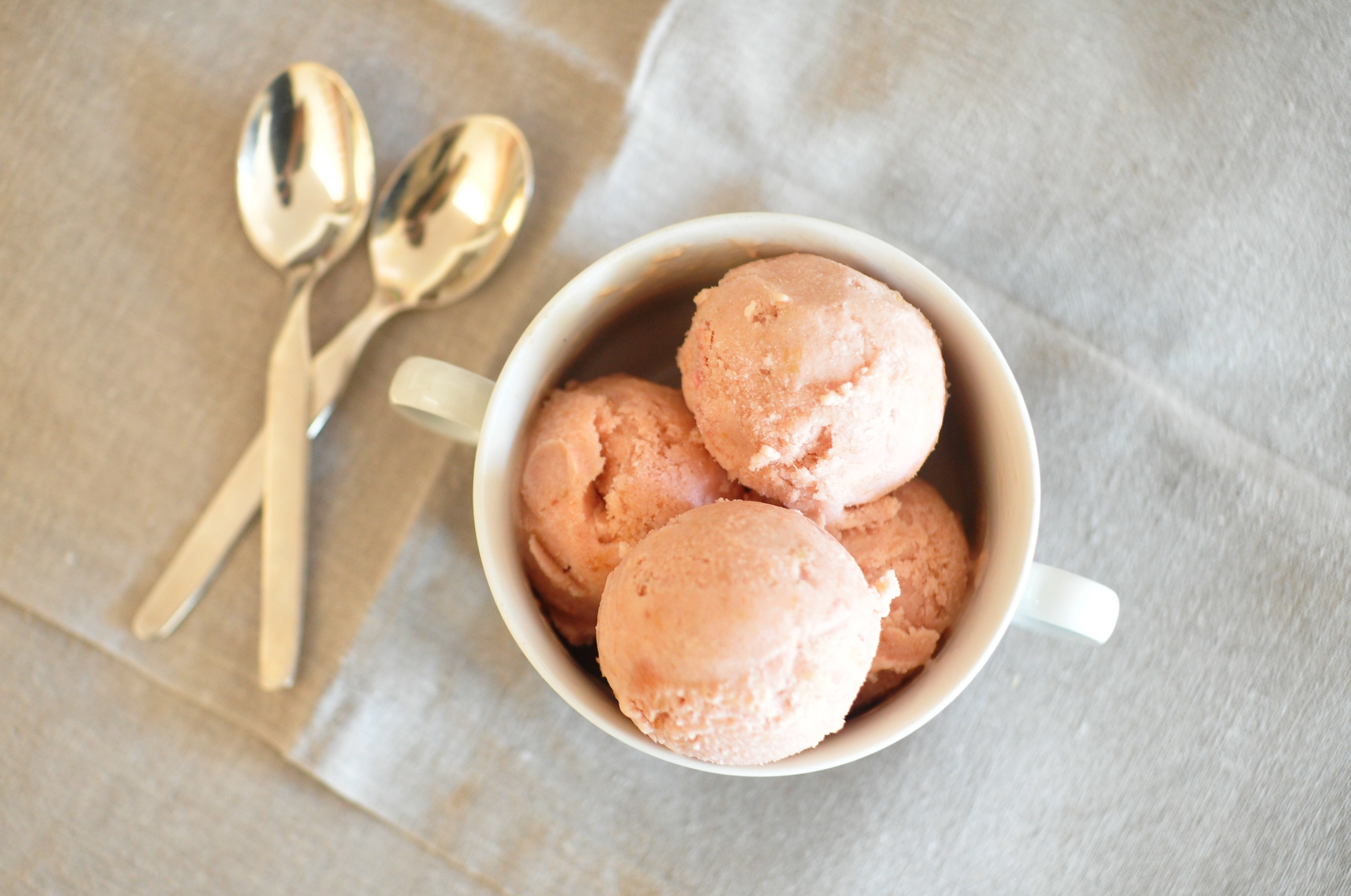
In the midst of baking my third or fourth batch of busy-day cupcakes I became fixated with the idea of rhubarb ice cream. It must have been triggered by a surfeit of sugar and vanilla – I craved something cool and tart.

I made this ice cream in the easiest possible way. It is simply rhubarb compote mixed with heavy cream, churned into ice cream.

It is (was) incredibly good.

***

This recipe requires an ice cream maker of some kind. It makes a little over a pint of ice cream.

3 1/2 cups (400 g) rhubarb measured once cut into 1 inch (2.5 cm) pieces

1/2 cup (100 g sugar) for the compote plus 1 or 2 Tbsps

1/2 cup (150 ml) heavy cream

1 Tbsp rosé wine

***

Make a rhubarb compote with the rhubarb and sugar.

Let the compote cool down then chill in the refrigerator for at least 3 to 4 hours or overnight.

Mix the compote with the heavy cream, rosé, and add one or two tablespoons of sugar to taste.

Churn in an ice cream maker and keep in the freezer until ready to eat.

*

Related posts

At the market | Rhubarb [Rhubarb compote]

*

Follow @nettleandquince on twitter