Cake with pear and toasted hazelnuts

21 January 2011

Or how a simple cake became slightly more complicated but also much tastier.

It all started last Friday when I decided to bake a simple cake, a classic french Quatre Quart (Four Quarters) which goes something like this: 1) weigh eggs: 2, 3, 4, or more, depending on the desired size of the cake; 2) prepare the same weight in butter, sugar, and flour; 3) mix; 4) bake. It is a practical cake, easy to make anywhere (with a scale). Some recipes call for baking powder, but to me Quatre Quart is a dense cake; when I want something lighter, more akin to Pound Cake, I make Gâteau au Yaourt (Yogurt Cake), another simple formula cake that will find its way into these pages soon enough.

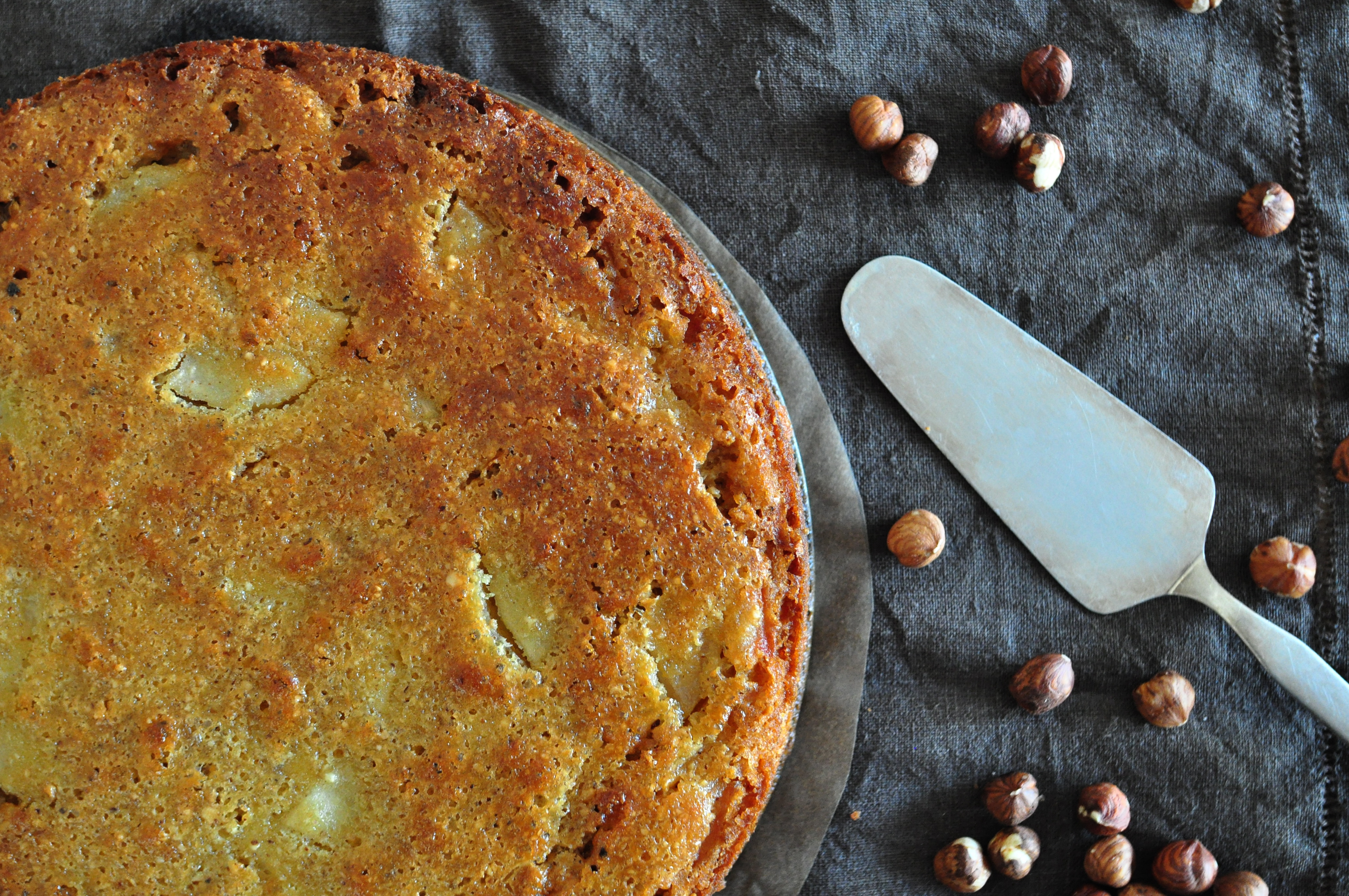
Truthfully, I never just make Quatre Quart – it’s not that exciting as is. But it is a good base for baking improvisation. So I lower the amount of sugar, as a matter of habit; I always add fruit; and I often substitute ground nuts for part of the flour. Last Friday I used pears and hazelnuts and went a bit hard on the sugar. That Very Simple Pear and Hazelnut Cake was easily improved with a hint more sugar and some lemon zest, a second version that I made on Tuesday. It was much better though slightly undercooked (a mere technicality) and I was starting to write down the recipe when I thought “toasted hazelnuts.” The added step makes the cake a bit less simple, but well worth it, and no one here complained about having to eat the same cake three times in one week.

So here it is, Simple Cake with Pear and Hazelnuts – Take 3.

***

1 cup (125 g) hazelnuts

1 1/4 cups (250 g) butter

1 cup (200 g) sugar

4 eggs

1 lemon

1 1/4 cup (125 g) flour

1 tsp salt

5 pears*

*

Preheat oven to 425°F (220°C).

In a roasting tray, toast hazelnuts for about 12 minutes until they begin to darken. As soon as they are cool enough to handle, roughly remove the skins by rubbing the hazelnuts between your hands. Place in a food processor and pulse-chop into a fine flour.

Lower oven temperature to 350°F (180°C).

Cut butter into small pieces and place in a large bowl to soften at room temperature.

Using a wooden spoon, cream the butter with the sugar until smooth. Thoroughly beat in the eggs, one at a time (the dough will be lumpy at this stage), add lemon zest, flour, salt, hazelnuts, and mix well.

Peel, core, and cut pears, first into quarters and then into thin slices about 1/8 inch (3 mm). Squeeze lemon juice over the pieces of pear, toss, and gently combine into the batter.

Generously butter a 10 inch (25 cm) springform pan. Pour batter inside and smooth surface with a large spoon or spatula.

Place pan over a large piece of aluminum foil in the oven for 1 good hour (10 to 15 minutes longer if the pears are very juicy). **Most springform pans leak, the aluminum prevents drops to fall in the oven and burn.** Test with a knife that should come out clean.

As soon as the cake is out of the oven, use a knife to release the cake from the sides of the pan.

*I wanted the cake to have lots of pear, but someone pointed out that 5 pears could create too much juice and make the cake soggy. So if the pears are large, or if they are very ripe and juicy, you may want to use fewer. Another option is to toss the pear pieces very lightly with flour before folding into the cake, this will help absorb some of the juice.

Roast chicken with lemon and fennel seeds

6 January 2011

Some years ago I discovered that a chicken could be seasoned under the skin with salt, pepper, butter, and herbs. It makes for excellent roast chicken, and I decided it would be the only way to go in the future. But it is also a bit finicky, and somehow roasting a chicken became an unwieldy affair in my mind.

Until recently, when I came across good chickens from Epicurean Farms. They are fairly small, very tasty, and usually sold whole. So I started roasting again and rediscovered that it is actually probably the easiest way to cook these animals, especially if you are not chopping herbs and delicately stuffing them under the skin. Now roasting a chicken seems effortless like an afterthought; it can be done for lunch or dinner, or after dinner – at anytime, really, since it is excellent cold, especially with green tomato chutney.

Chickens can be stuffed with any combination of herbs, garlic, or onion on hand and I usually add a lemon, slashed so it releases its juices. This version with fennel seeds was a staple in our house when I was growing up.

***

1 whole chicken

Sea salt

Freshly ground black pepper

2 Tbsp fennel seeds

1 small lemon

2 small garlic cloves

Butter

***

Preheat oven to 425°F (220°C).

Pat the chicken dry with a paper towel. If you remember to do it in advance, let the chicken sit uncovered in the refrigerator for a few hours so the skin dries out before roasting.

Season the cavity of the chicken with salt, pepper, and fennel seeds.

Poke the lemon with a fork multiple times on all sides and stuff it into the chicken with the whole, skin-on garlic cloves. Truss or just bind the legs together with kitchen string. Massage the chicken all over with softened butter and season the outside again with salt and pepper.

Place the chicken on a roasting pan and into the oven for 10 minutes at 425°F (220°C) then lower to 375° (190°C) and roast for 40-50 minutes, depending on the size of the bird (large chickens may need to cook even longer — pull away one thigh and if the flesh at the joint is still translucent pink, cook a little longer).

Let rest 10-15 minutes before carving. Squeeze the lemon over the pieces of chicken before serving.

***

Related posts

Braised chicken legs with cherry tomatoes

Happy New Year! (Lentil soup with cumin)

4 January 2011

It’s not that I haven’t been cooking – or eating – since early December, but somehow all the feasting and visits from friends and family got in the way of writing. It was a productive period nonetheless, culinarily speaking, in which I unexpectedly improved a foie gras recipe and expanded my cookie baking horizon, all of which should make for a profuse Christmas season next year, if I am better organized.

But it’s 2011, and since I just learned that lentils are a New Year’s tradition in some regions of France and Italy – the way black-eyed peas and collard greens are here in the South – and because I will grab any excuse to make this soup, here it is at last, the deliciously simple lentil soup with cumin from Moro: The Cookbook, somewhat rewritten but barely altered.

***

From Moro: The Cookbook by Sam and Sam Clark

2 cups (400g) lentils (green, red, or yellow)

3 medium onions

6 garlic cloves

Olive oil

3 heap tsps cumin seeds

Sea salt

Freshly ground back pepper

Lemon, plain yogurt, and Harissa to serve (optional)

*

To wash the lentils, cover with cold water and drain in a fine mesh sieve.

Finely slice onions and garlic.

Heat enough olive oil to cover the base of a large heavy-bottom saucepan, add the onions and brown over medium heat, stirring occasionally (about 10 minutes). Meanwhile roughly grind the cumin seeds in a mortar. Once the onions are nicely golden, add the garlic and cumin and stir. Then add the lentils and stir to mix with the onion/cumin mix.

Cover the lentils with 4 times their volume of cold water (8 cups or 2 l), place lid on the pan, and let simmer gently until lentils are soft, about 40 minutes, checking occasionally to add water if necessary. (There should be some excess water in the pot otherwise it will be a purée rather than a soup, but not too much because the soup should be nice and thick.)

Season with salt and pepper and blend until smooth.

Squeeze some lemon and add a spoonful of good plain tart yogurt or some Harissa if desired.

*

Related posts

Baby food | le

Lentils

Stollen

9 December 2010

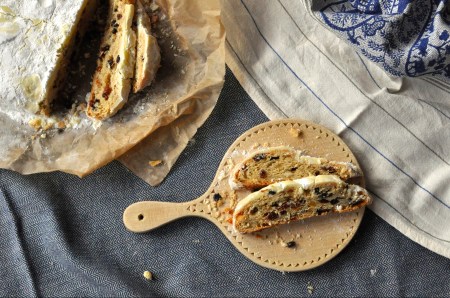
When my grandmother sent me her Stollen recipe twelve years ago she included an old German newspaper clipping titled “On the proper way of handling Stollen.” It prescribed:

◊ According to strict Saxon rule*, Stollen should not be cut open before Christmas eve – 24 December. Modern practice is somewhat lenient, however, and it is now acceptable to start eating Stollen on the first of advent (four Sundays before Christmas).

Stollen should never be eaten with a knife and fork – not even a dessert fork. It should be savored by breaking off little pieces with your fingers.

◊ The best beverage to accompany Stollen is a good cup of coffee, possibly tea, but never wine or champagne, for which Stollen would be too sweet.

◊  Stollen should be cellar-cool when eaten, presented on a simple wooden board, and cut with a sharp, unserrated knife.

Historic documents mention that “Man’s character can be determined by the way he eats Stollen.” …

***

Like many Christmas cakes and cookies, Stollen can be made a few weeks in advance.
Makes 2 large Stollen

8 cups (1 kg) flour

4 oz (100 g) fresh yeast

2 cups and 4 Tbsp (500 g) butter

1/2 cup (100 g) and 1 Tbsp sugar

1 cup (250 ml) milk

3/4 cup (100 g) candied orange and lemon peel

2 Tbsp rum

1-2 drops bitter almond oil (or 1 tsp almond extract)

Zest from 1 lemon

1 tsp salt

1 tsp vanilla extract

1 1/2 cups (125 g) slivered almonds

2 cups (300 g) golden raisins

1 cup (200 g) currants (Black Corinth raisins)

For the sugar crust:

1 cup 2 Tbsps (250 g) butter

Plenty of confectioners’ sugar

***

Place a large bowl with the flour in a warm spot until the flour feels warm to the touch.

Crumble the yeast with 1 Tbsp sugar; stir and watch as the mixture becomes liquid.

Melt the butter on a small flame, remove from the heat, and add the cold milk.

Chop the candied citrus peel and sprinkle with the rum and almond extract.

Shape a well in the flour. Pour the remaining 1/2 cup (100g) of sugar, lemon zest, salt, and vanilla extract into the well, add the milk/butter mixture and the prepared yeast. With a large wooden spoon, mix the wet ingredients into the flour using circular movements. Once the dough starts to detach itself from the sides of the bowl, beat with the wooden spoon for 10 minutes.

Knead the almonds, raisins, currants, and candied citrus into the dough. Shape into a ball, cover with a slightly damp cloth, find a warm spot in the house and let rise until the dough has approximately doubled in size, 2 to 3 hours depending on the room temperature.

Divide the dough in 2 and roll out each half into an oval approximately 1 inch (2.5 cm) thick. Fold each oval in half lengthwise, place on a buttered parchment paper on a baking sheet and let rise again for 45 minutes to 1 hour.

Preheat the oven to 300°F (150°C).

Bake the Stollen for 45 to 50 minutes, or until the outside begins to harden but before it starts to brown. Remove from the oven and immediately prepare the sugar crust.

In a small saucepan, melt the butter over medium heat. With a food brush, cover the Stollen with a layer of melted butter. Using a small sieve, sprinkle generously with confectioners’ sugar. Repeat this process 2 or 3 times to form the crust. Wrap immediately.

To store the Stollen, wrap in parchment paper then tightly seal with aluminum foil and keep in a cool dry place. Never wrap Stollen in plastic. A large tin box would be ideal.

*Stollen is originally from Central Germany and famously from Dresden, Saxony

*

Related posts

Christmas cookies | Almond and currant (Corinth raisin) cookies

Christmas cookies | Swiss Anisseed Chrabeli

Pumpkin leek soup

3 December 2010

I like soups that don’t require the use of broth. I’m not very good at keeping a constant supply of homemade broth in the freezer, and I’d rather not use the store bought variety if I can help it, so any soup that is delicious just by virtue of the vegetables included deserves closer attention.

This pumpkin leek soup is adapted from a recipe by French chef Paul Bocuse featured in a German-language cookbook my grandmother passed on to me quite a while ago. A lot about the cookbook, which is from 1985, seems dated — the style, photographs, clunky dishes, desserts just a bit too sweet. But there are a few gems, including this pumpkin soup. It has just five ingredients (and no broth!).

***

3.5 lbs (1.5 kg) pumpkin or squash [to yield approximately 8 cups (1 kg) once seeded, peeled, and cut into cubes]

8 medium leeks [to yield approximately 4 cups (400g) once peeled and sliced]

2 medium potatoes [to yield approximately 1 1/2 cups (200g)]

3 Tbsp butter

1 cup (250 ml) milk

Water

Sea salt

Freshly ground black pepper

Crème fraîche (optional)

***

Cut off leeks’ dark green outer leaves and wash under running water to remove dirt. Cut into 1/2 inch (1 cm) slices and wash again in cold water to eliminate the remaining grit. Remove skin and seeds from squash and cut into 1 inch (2.5 cm) cubes. Peel potatoes and cut into 1/2 inch (1 cm) cubes.

Melt butter in a heavy-bottomed saucepan, add leeks, and let sweat for about 4-5 minutes. Add potatoes and squash, milk, and enough water to reach the top layer of vegetables without covering completely. Season with salt and pepper and let simmer partly covered for 30 to 40 minutes, or until the vegetables are soft.

Check and adjust seasoning, and serve with crème fraîche if desired. Like most soups, wait until tomorrow and it will taste even better.