Archive for the ‘Children’ Category

Any-day yogurt cake aka my last-minute birthday lifesaver

23 June 2015

photo(30)

The no-hassle, mindlessly easy, infinitely versatile, all-season, all-occasion cake that will also save a thousand birthdays.

I’ve mentioned before that I don’t have the heart of a baker. I rarely follow recipes precisely, I am exasperated when a cake I’ve made many times suddenly doesn’t work because the butter or the continent or the ambient humidity has changed. I like the idea of baking, however. I like cakes. And I like to think I can make a cake for my children’s birthdays, at the very least.

So I gravitate towards simple recipes such as this one or this one. And yogurt cake.

Yogurt cake is a classic in France; it is the cake most French children first learn to make. While French home cooks use scales, not volume measurements such as cups, this cake is an exception: the unit of measurement is a pot of yogurt, the one whose contents are emptied precisely for the cake.

Because my family is not classically French, I discovered yogurt cake a bit later, in my twenties. It is brilliantly easy, and very clever, and can be easily spruced up for a special occasion.

Here first is the simple original recipe, though I rarely make it as is. The variations are just as easy.

Yogurt Cake, classic French recipe

The measurement used is one empty pot of yogurt (empty once the yogurt has been used for the cake!). In Anglo-Saxon countries where yogurts are not as ubiquitously sold in the same standard-size pots I use a measure of 100ml.

Note: 1 ‘pot’ = 100ml see explanation above
1 pot of plain unsweetened yogurt
1 pot of oil or melted butter
2 pots sugar
3 pots flour
2 eggs
1 tsp baking powder
Lemon zest

Mix all the ingredients together and bake in a medium oven for 35 to 40 minutes.

*

Yogurt Cake, adapted recipe

I have doubled the quantities, reduced the amount of sugar, substituted part of the flour with ground almonds, and added raspberries which are conveniently in season for my boys’ birthdays.

2 pots (200 ml) of plain unsweetened yogurt
1 pot (100ml) melted butter
1 pot (100ml) olive oil
3 pots (300 ml) brown sugar
3 pots (300 ml) flour
3 pots (300 ml) almond flour
4 eggs
2 tsps baking powder
Zest from 2 lemons
Fresh raspberries

Preheat the oven to 350°F (175°C).

Line a 10-inch (26cm) baking tin with parchment paper and butter generously.

Mix all the ingredients together except the raspberries to obtain a smooth batter. Add the raspberries and incorporate gently in order not to squash the berries. Pour the batter into the baking tin, slide into the oven, and bake for 50 min to an hour, until the cake is set and a knife inserted in the middle comes out clean.

Remove from the oven and let cool. Sprinkle with icing sugar and a handful of raspberries for decoration.

*

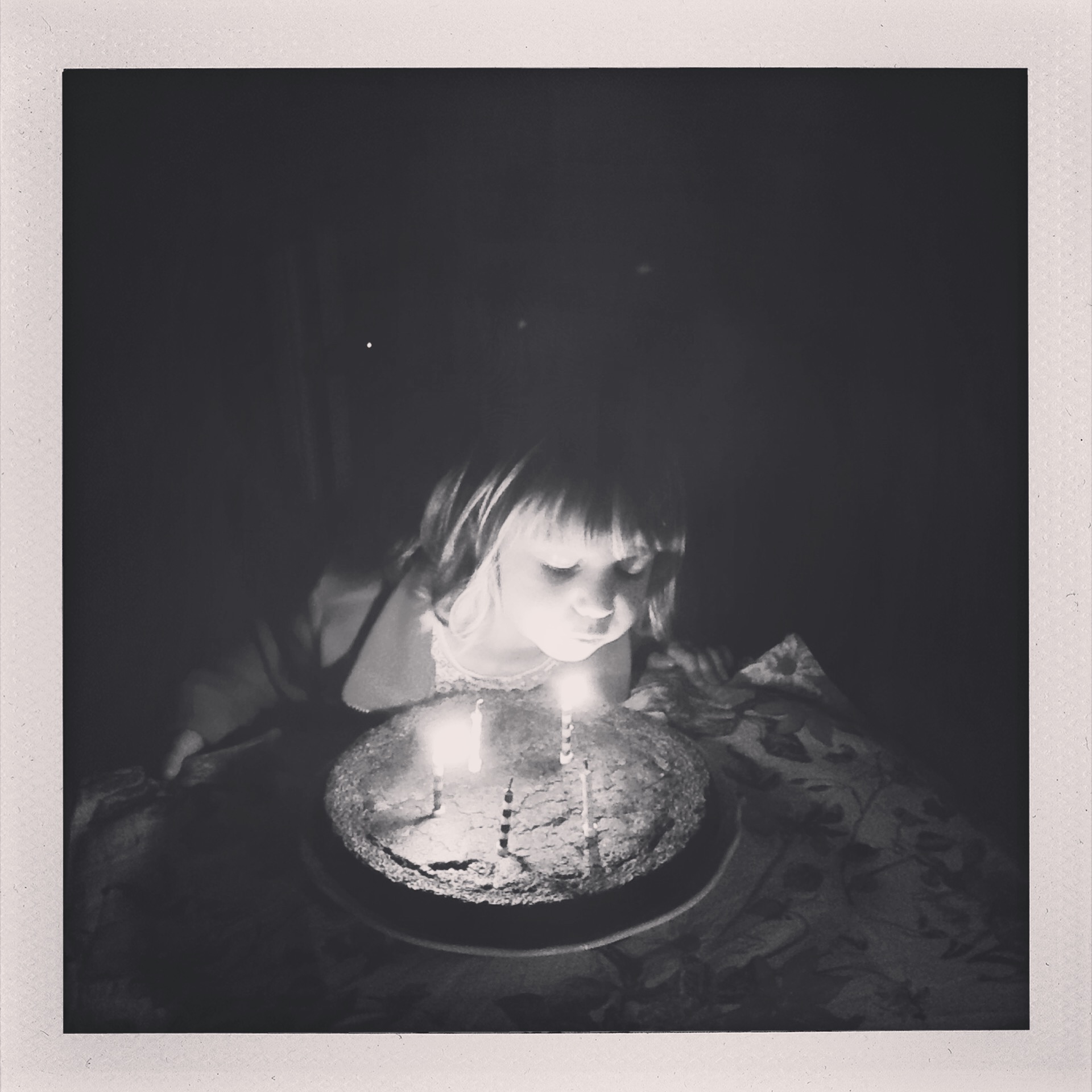
Festive birthday cake (pictured above)

Make the above recipe without nuts — use 6 pots of flour (and no almond flour)
NOTE: I don’t use almond flour for this version because it renders the cake incredibly moist and crumbly, which would make it difficult to cut through

Once the cake is baked and cooled, cut it in half carefully crosswise. Smear raspberry jam on the bottom half of the cake and place the top half back on top.

Make a lemony mascarpone icing and decorate with fresh raspberries and a generous sprinkling of popping candy!

Two chocolate cakes

17 April 2015

IMG_9462

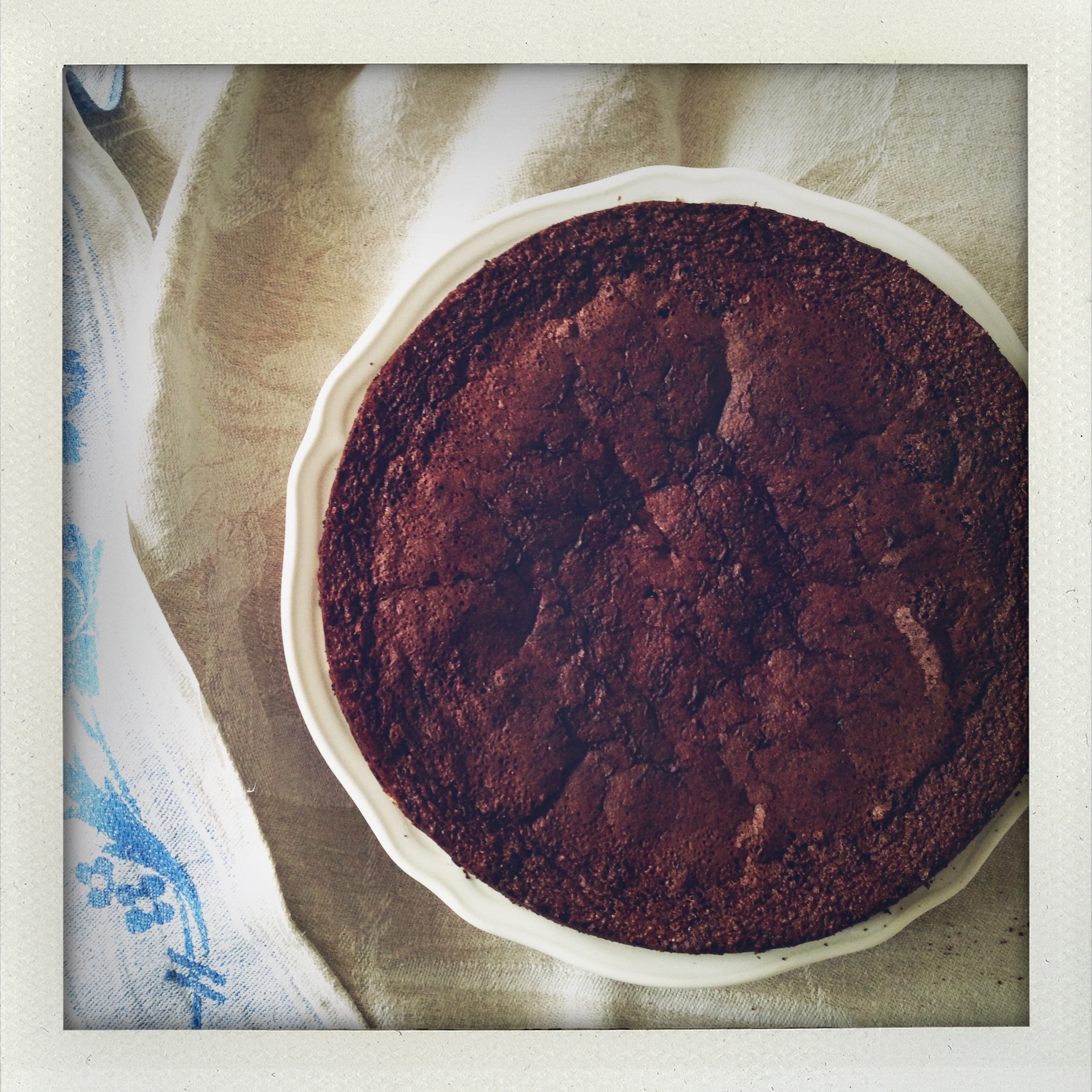
I only just recently happened upon these two chocolate cakes, and already they are indispensable.

Until now I had little need for chocolate cake. I rarely make it, because I rarely crave it; when, about once a year, I do long for a chocolate dessert, I bake these really good brownies. For years my children didn’t care much for chocolate cake. Until Louise.

In this decidedly un-chocolatey family, Louise loves chocolate — worse things happen. And so for this little one’s birthday I needed a chocolate cake recipe. I found two.

One is an intense though surprisingly light dessert; the faultless chocolate touch at the end of a lingering meal. The other is cakey and moist but not too crumbly; slices hold together well in clumsy little hands. It could be stacked into layers with cream or cherry jam. A flawless tea-time cake.

IMG_9490

The flourless, almond olive-oil chocolate cake, which I discovered via the same friend who pointed me toward the revelatory date cookies (food-obsessed friends are the best kind), beat all expectations. It is light and predictably nutty, perfectly moist with a bare hint of olive. Also ridiculously easy to make. The recipe, by Nigella Lawson, also happens to be wheat and dairy free, which bears mentioning. The recipe is here, as I have not altered it one bit.

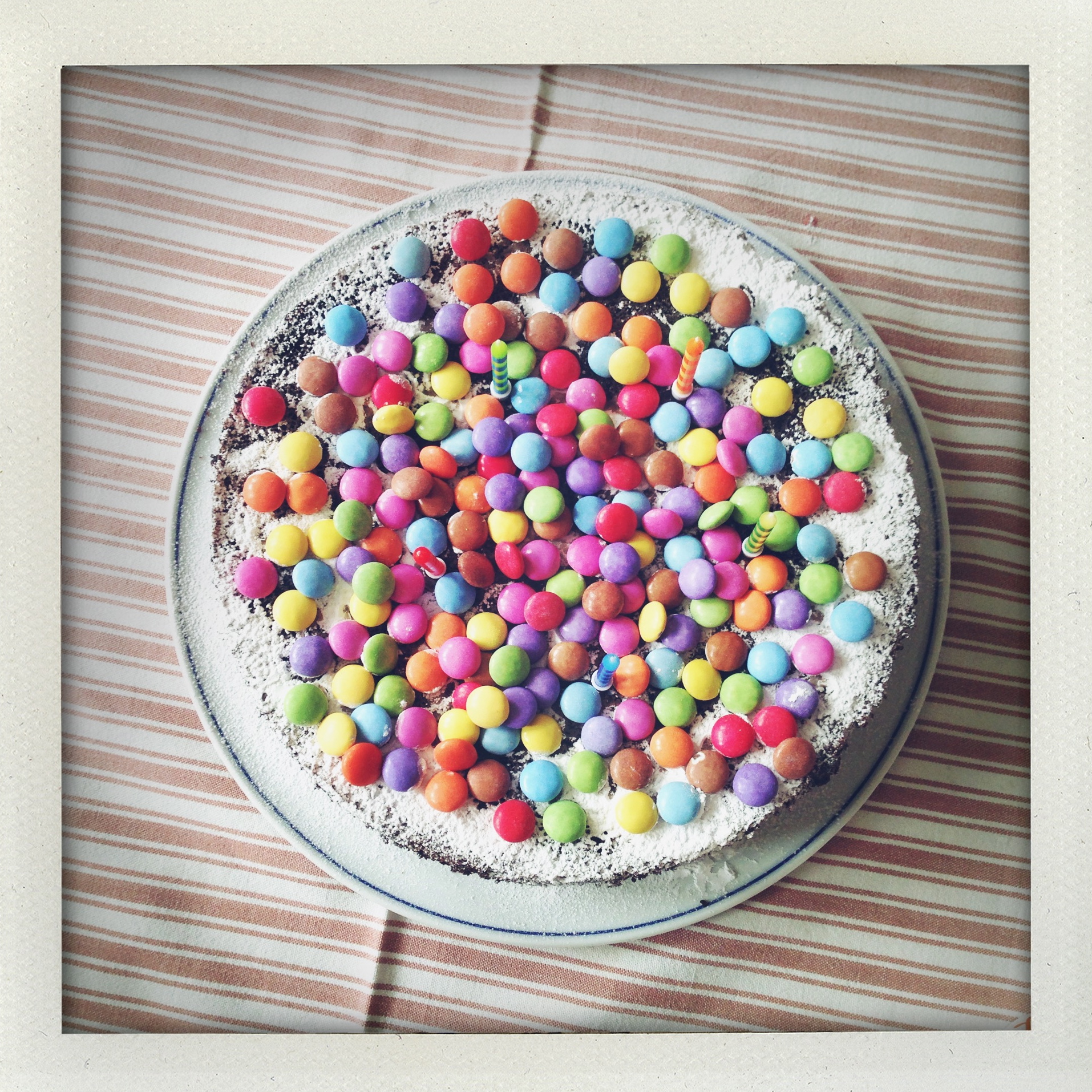
I found the second cake in a cookbook from which, until now, I had never actually cooked: Alice Waters’ The Art of Simple Food. It is the perfect party cake. Pointedly described as ‘moist and versatile,’ and which ‘can be made in any format from cupcakes to a multitiered wedding cake.’ I had intended an extra chocolatey frosting, but time ran out so it was just a dusting of icing sugar and plenty of smarties.

IMG_9558

Chocolate cake for a party by Alice Waters The Art of Simple Food

115 g (4 ounces) unsweetened (or very dark) chocolate

2 cups flour

2 tsps baking soda

1/2 tsp salt

6 Tbsps (unsweetened) cocoa powder

115 g (8 Tbsps) butter plus more to butter the pan

2 1/2 cups brown sugar

2 tsps vanilla extract

3 eggs

120 ml (1/2 cup) buttermilk

300 ml (1 1/4 cup) boiling water

Preheat the oven to 170°C (350°F) and take the butter, eggs, and buttermilk out of the refrigerator to soften and bring to room temperature.

Line the bottom of the cake pan with parchment paper. Butter both the pan and the paper, and dust the paper with flour or cocoa powder, shaking out any excess.

Heat some water in a large frying pan/skillet. Roughly chop up the chocolate, place it in a heat proof bowl, and slowly melt it over the water bath (bain marie), stirring occasionally, until just melted and smooth. Remove from the heat.

In a medium bowl, sift together the flour, baking soda, salt, and cocoa powder. Set aside.

In a large bowl (or stand mixer), beat the butter until creamy. Add the sugar and vanilla extract and continue beating until light and fluffy. Whisk in the eggs one at a time and stir until fully incorporated.

Stir in the melted chocolate. Add half of the dry ingredients and combine. Stir in the buttermilk. Then add the other half of the dry ingredients.

Finally, gradually pour in the boiling water, until just combined.

Pour the batter into the prepared bake tin, slide carefully into the preheated oven as the batter will be fairly liquid, and bake for about 45 min, until a knife of skewer inserted in the middle comes out clean with just a  crumb or two attached.

Allow the cake to cool completely before turning it out of the tin. (The cake keeps well. If not using immediately, leave in the tin and cover tightly with aluminum paper.)

Flapjacks, and I don’t mean pancakes

27 March 2014

DSC_0674

To me, flapjacks have always been flapjacks.

According to the Oxford Companion to Food, flapjacks are ‘thick, chewy biscuits made from rolled oats, sugar, butter, and golden syrup baked in a flat tin.’ Thank you. Because it took me close to 14 years to understand that, in the US, flapjacks are also griddle cakes, which are akin to pancakes. I don’t blame myself too much as The Joy of Cooking, or the ‘pancake book‘ as it is known in our house, happily deems these interchangeable.

Having spent a few years in England as a child, my first encounter with a flapjack was a flapjack, so when I read about Imen‘s Fine Fettle Flapjacks, I knew exactly what she was talking about. I also immediately construed their magical ability to make the day a little better.

I’ve made the flapjacks Imen’s way first, because the recipe is compelling. Then I tinkered with it a little, because it can’t be helped.

In search of Sriracha sauce one day I walked into a small shop with a myriad specialty products and, without a plan in mind, bought a big bag of barberries and a jar of date syrup (of course, no Sriracha). For the flapjacks I substituted date syrup for some of the honey, which Imen used rather than golden syrup. I also added coconut. The date and coconut transport the flapjacks to a slightly warmer place. I liked it.

Which nonetheless begs the questions: if there is no golden syrup, are these even still flapjacks?

Adapted from Imen McDonell’s Fine Fettle Flapjacks

250 g (1 cup) butter

2 small ripe bananas

4 Tbsps honey

1 tsp cinnamon

4 Tbsps date syrup

350g (3 1/2 cups) porridge oats (which are finer than rolled oats)

115 g (1 cup) millet flakes

100 g (1/2 cup) chia seeds

100 g (1 cup) coconut flakes

Pinch of sea salt

Preheat oven to 350°F (180°C). Butter a rectangular 9 x 13-inch (23 x 33 cm) baking tin and line the bottom with parchment paper.

Mash the bananas; then place the bananas, butter, honey, and cinnamon in a medium saucepan, and heat slowly, stirring carefully until the butter has melted. Remove from heat and stir in the date syrup.

In a large bowl, mix the oats, millet flakes, chia seeds, and coconut flakes, with a pinch of salt.

Pour the butter/honey/date syrup over the oat mixture and stir with a large wooden spoon until the oats are well covered and nicely sticky.

Scoop the mixture into the prepared tin and pat it well to achieve a flat, even surface. Sprinkle a couple of handfuls of millet flakes over the top and slide into the oven.

Bake the flapjacks for about 25 minutes, or until nicely brown. The flapjacks should still be soft to the touch as they will harden as they cool.

Cut into squares while still warm, but leave the flapjacks in the tin until completely cool if you can (otherwise they will crumble).

Almond and lemon madeleines with a touch of buckwheat

24 October 2013

DSC_0522

Moving is like a big gust of wind, it shakes things up and clears the air. I’ve always loved that feeling. Thomas likes to tell how I warned him, when I met him, that I didn’t mean to stay in Berlin forever, I was planning to move around. Indeed just a few weeks after our wedding we left for New York. And we got stuck. It happens, apparently.

For many years Berlin remained the city to which we would undoubtedly return. But gradually, imperceptibly, the feeling dissipated, and New York became home. A bit by default, perhaps, though in time it was hard to envisage any other. It happens, evidently.

As our lives became ever more settled, known, easy, the itch for change was more efficiently tempered by the comfort of friends and habit. It required a bit of a leap, or a gentle nudge. The opportunity had to be seized.

Moving is liberating. Liberating from the grip of a pounding, neurotic, fabulous city constantly vying for attention. I always thought the most fascinating thing about New York is its versatility, a place where anyone can find a place and live life singularly. What I didn’t realize was how much the city, with its endless offerings and possibilities, plays a role. New York isn’t just the setting, it is a main character. It’s what makes it so hard to leave, like breaking off a relationship. And New York is the jealous type.

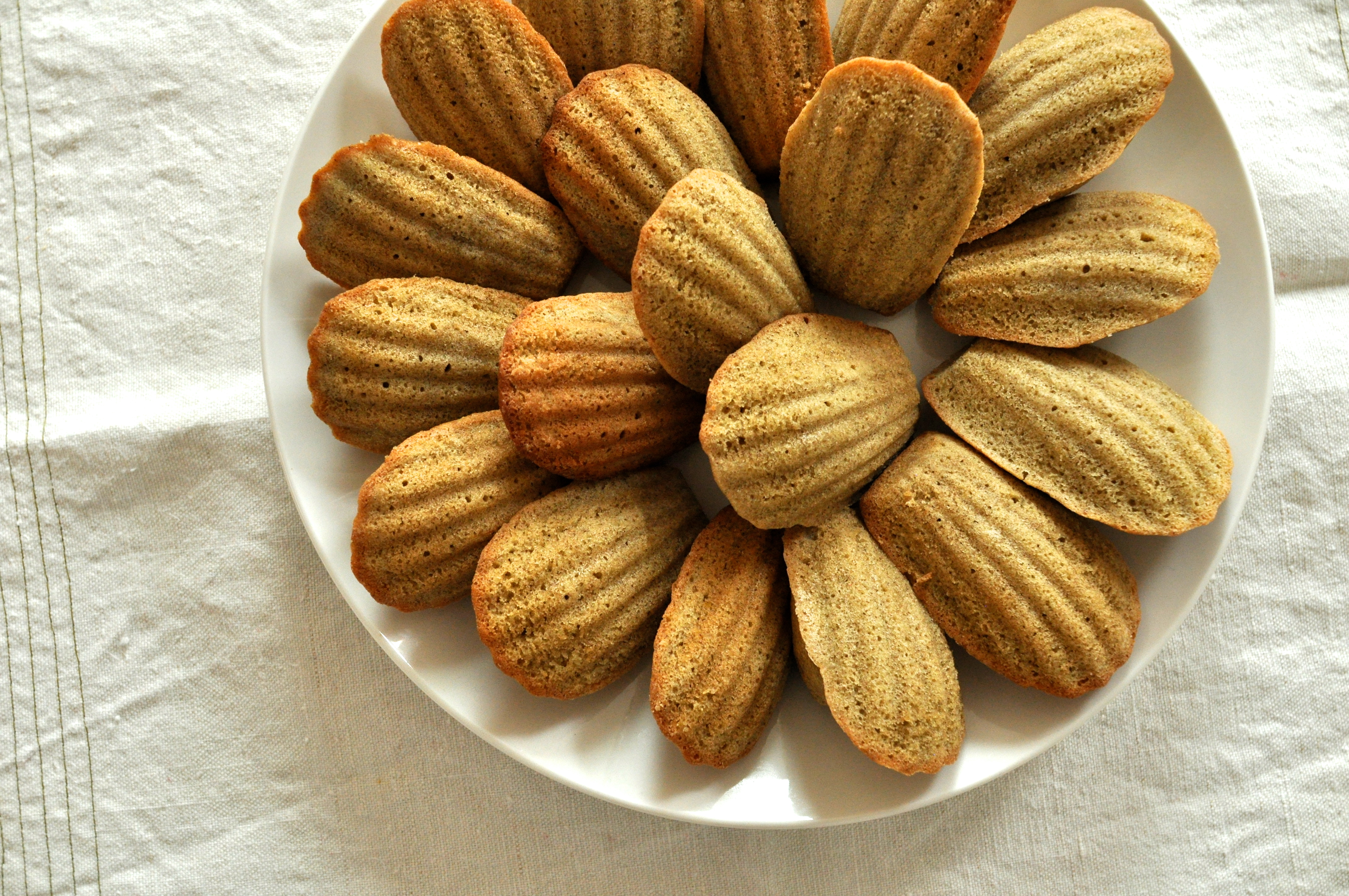
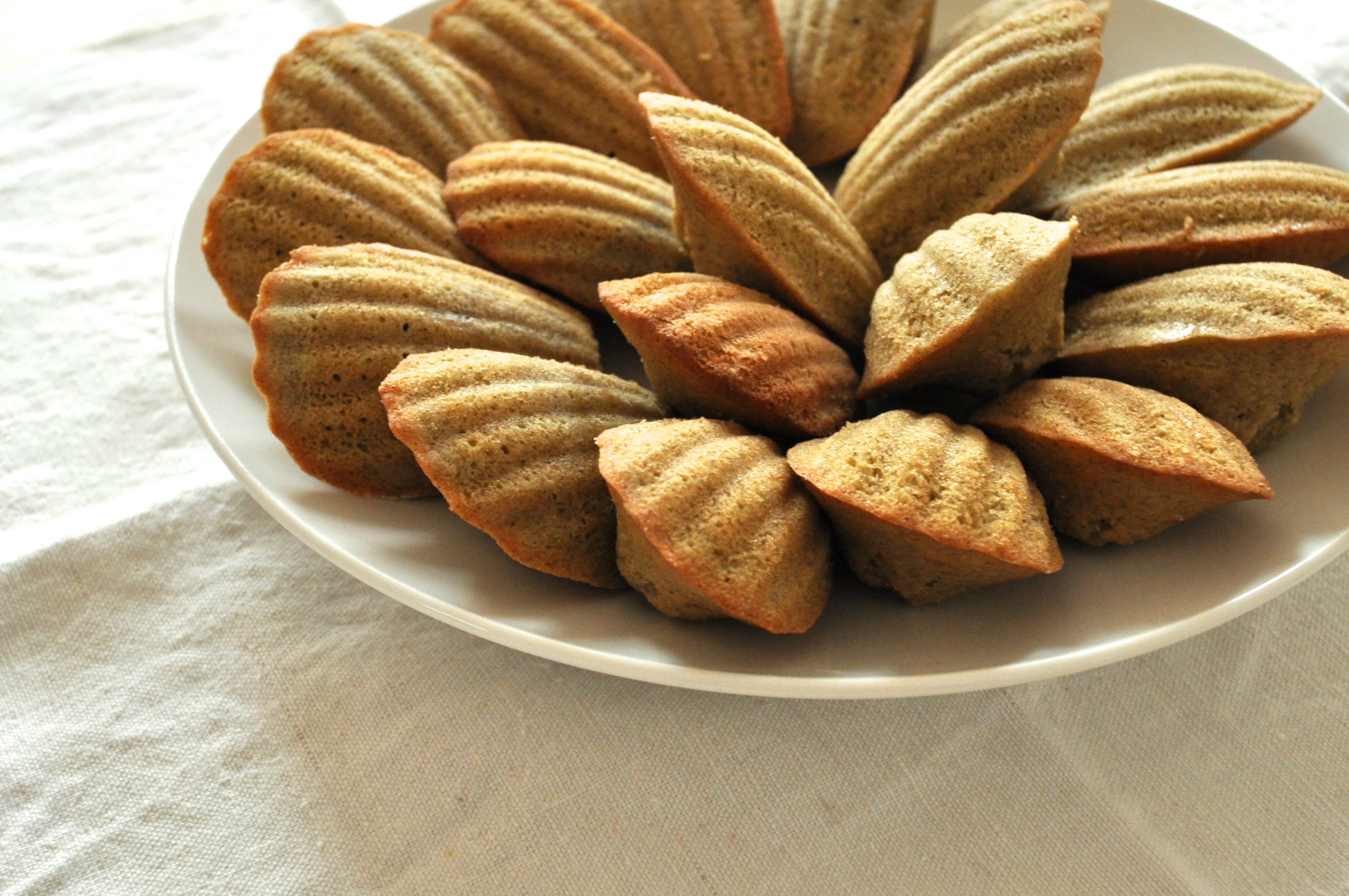
So I made madeleines. I had no Proustian connection but they’ve found a place right where the happy look ahead chases a little heartache. They are not traditional and exactly how I like them.

DSC_0524

From David Lebovitz‘ classic lemon madeleines with just a few substitutions. Makes about 24 madeleines.

Note: Plan ahead as the dough must rest at least one hour. I did use baking powder though there is none in traditional madeleine recipes. Next time I might try without. Resting the dough is crucial for the little humps to form, particularly if the baking powder is omitted.

120 g butter plus a little more (about a tablespoon) for the molds

3 large eggs

130g sugar

Generous pinch of salt

100 g white flour

30 g buckwheat flour

1 tsp baking powder (optional)

45 g almond flour

Zest from 1 lemon

Melt the butter and set aside to cool to room temperature.

Brush the madeleine molds with melted butter, sprinkle a little flour, and tap off excess. Place the dusted molds in the refrigerator.

In a large mixing bowl, whisk the eggs, sugar, and salt for a good 5 minutes until very frothy.

Sift together the white flour, buckwheat flour, and baking powder (if using) into the batter and fold gently with a spatula or wooden spoon. Add the almond flour. Do not overmix.

Add the lemon zest to the cooled butter. Add the butter to the batter a few spoonfuls at a time, folding carefully, Stop as soon as all the butter is incorporated.

Cover the bowl and refrigerate for at least 1 hour and up to 2 days.

When ready to bake the madeleines, preheat the oven to 425° F (120° C) and place the rack in the top third of the oven.

Drop little spoonfuls of batter into each mold, just enough to fill each to 3/4. The batter will be hardened from the refrigerator, so it won’t fill the mold immediately (no need to try to spread it).

Bake for 8 to 9 minutes just until the madeleines start to turn golden. Remove from the oven, let cool a little before removing the madeleines from the molds.

They are best eaten very quickly, but will keep in a glass or metal container for one to two days.

Children’s dinner | The ‘I wish it was cauliflower’ (but it’s not quite the season!) zucchini gratin

20 September 2012

Every morning I make lunch for Leo and Balthasar to take to school. When this began I thought I would use the opportunity to be terribly creative; in fact it has become the least inspired aspect of my cooking life. One day I make sandwiches, one day pasta. I alternate. I know the boys will eat this. The problem with school lunches is that I am not there, at the end of the table, frowning, admonishing, and — yes — forcing them to finish their grilled mackerel and ratatouille.

The children eat many things, and, if I may, I don’t think it’s because ‘we’ve been lucky’ but because I’ve made it an excruciating. daily. struggle. But not at school. At first I was just happy that they finished their meal; now I’ve become stuck in this pasta/sandwich routine. I am mindful of what goes into the lunchbox, of course, my mother‘s ever knowledgeable advice always chiming in my ears. But I leave the really good food, the fun food, and the mealtime fights for the evenings.

It seems to have payed off. Leo and Balthasar can be coaxed into eating practically anything; Louise, who is 2, is still in a tug of war. Some things need a bit more prodding, and, unhelpfully, it happens that onetime hits suddenly misfire. But there is some predictability. Naturally oftentimes I have little more patience than to throw some frozen peas into boiling water, serve that with a sunnyside egg, and call it dinner; but I know that practically anything that is diligently prepared, well seasoned, and cooked to the standards of something I would serve guests will be polished off.

Gratin for example. Actually, I don’t think I’ve ever made gratin for guests. But nonetheless, gratin is a great example.

It started out with cauliflower. Winter is not the most propitious season to get children excited about vegetables, and at some point I had to find new ways to prepare cauliflower. I personally like cauliflower best raw, but one day I decided it was time to tackle gratin. I say ‘tackle’ because I was intimidated by béchamel sauce. Many years ago on a skiing holiday I volunteered to make béchamel sauce. It was for lasagna, I think. I knew the basic ingredients and felt confident that, by virtue of being French, I was the person best qualified for the job. All I managed to do was create a giant, ever expanding monster of butter, flour, and milk, which probably wasn’t even any good. As it happened, I had to suffer some lessons in béchamel making from Thomas, who made copious fun of me. This was a very long time ago.

I’ve since gained some confidence in the kitchen, so a while ago I decided to tackle béchamel again to make cauliflower gratin, which, come to think of it, is now probably my favorite way of eating cauliflower.

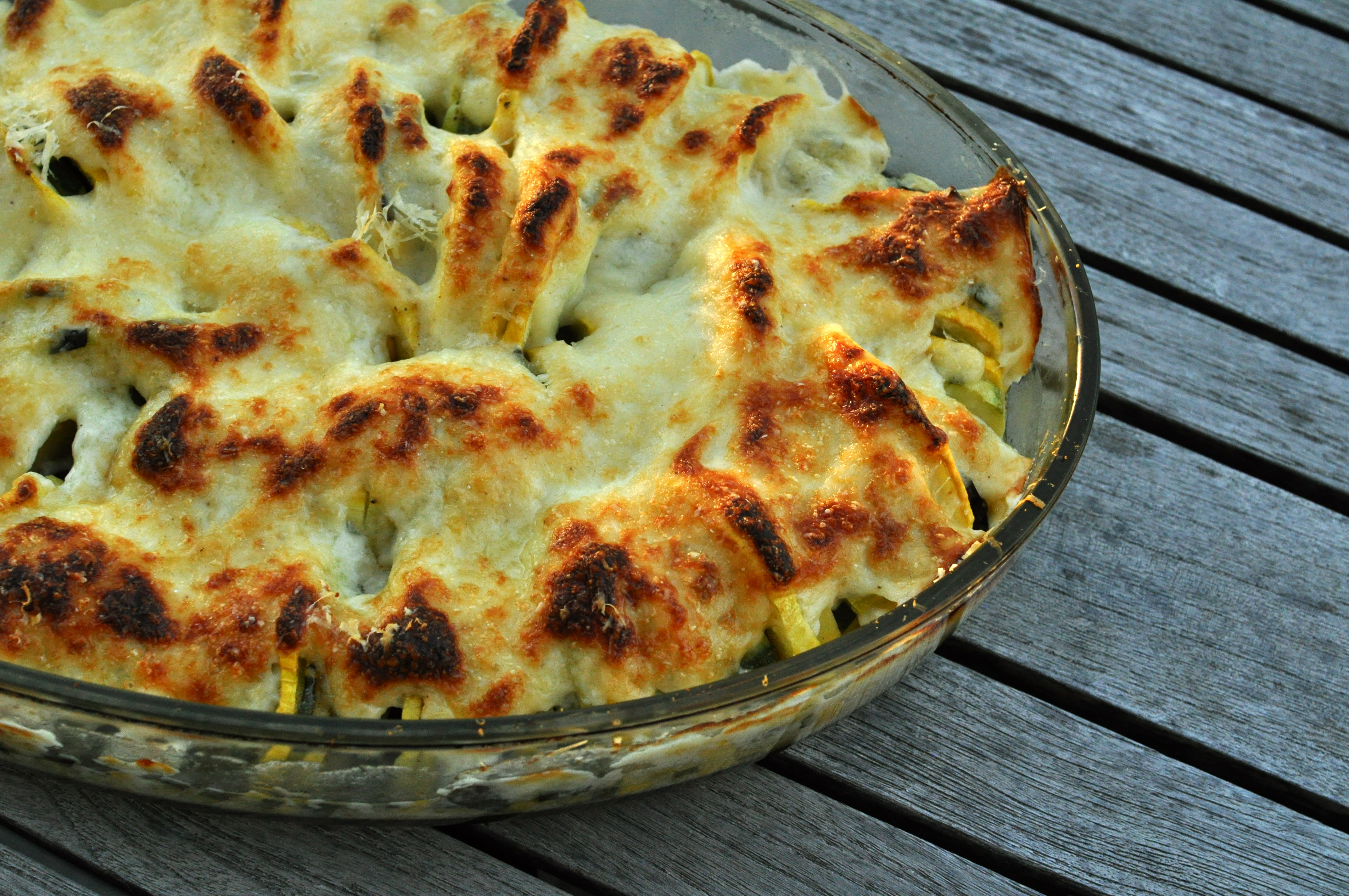
The punchline, of course, is that children love gratin. They also love anything that’s been simmered or stewed with onions, garlic, herbs, spices. They love ratatouille (they do!), they also love risotto (but weeknight dinners rarely enjoy the leisure of 45 minutes of undivided attention). So when I made this squash and zucchini gratin the other day, despite slight initial dismay that it wasn’t cauliflower, the children ate heartily, and asked for more.

***

Gratin is easy to make once the béchamel demon has been tamed. Ideally I’d make simple broiled or pan fried fish with this gratin, since fish and zucchini go so well together. On this particular day I was unprepared and just had some leftover rice, fried to crispiness in olive oil. That was good too.

Quantities are for a 9 x 13 inches (23 x 33 cm) oval dish.

6 medium-sized zucchini and/or yellow squash

Lots of basil leaves

Sea salt

Freshly ground black pepper

Good olive oil

About 3 1/2 cups (850 ml) béchamel sauce (this deserves its very own post and will be up soon, but in the meantime look here)

Freshly grated parmesan

*

Preheat oven to 375°F (190°C)

Wash and thinly slice the zucchini crosswise (into disks) approximately 1/4 inch (1/2 cm) thick. Wash the basil leaves.

Place the zucchini slices upright in the dish. Intersperse a basil leaf every 4 or 5 slices. Sprinkle with salt and pepper and pour a very thin drizzle of olive oil over the zucchini.

Pour the béchamel sauce evenly over the zucchini and grate lots of parmesan on top.

Bake the gratin for about 45 minutes, until nicely brown and bubbling. (Placing the rack in the upper half of the oven will help the gratin get a good color.)

*

Related posts

Children’s dinner | Cowboy food

Children’s dinner | Fake rabbit in the vegetable garden