Archive for the ‘Dessert’ Category

Christmas cookies | Swiss aniseed Chräbeli

21 December 2011

While I don’t shy away from de-veining a foie gras or beating the heavy dough of the yearly Stollen for 10 solid minutes, the idea of forming sticky wet dough into dozens of tiny elaborately shaped cookies never particularly appealed to me. I used to find cookies too fiddly.

But time passes, I change, and how else to have lots of homemade cookies at Christmas time? So last year I embraced cookies, and I must admit I’m enjoying making them — a lot.

There is a strong Christmas cookie making tradition in Germany, where my grandmother came from, and Switzerland, where my grandparents lived and where we spent every Christmas until I was 9. So the cookies I crave at Christmas are Lebkuchen and Zimtsterne, Linzer and Chräbeli.

Chräbeli are scented with anis. They have a very specific shape that reminds me of a branch, though the Swiss refer to them as ‘feet.’

***

Makes about 40 cookies. Translated and very slightly adapted from La Mia Cucina, with thanks to Jennifer for pointing me in its direction.

2 large eggs

1 1/2 cups (200 g) powdered sugar

2.5 flat Tbsps aniseeds

1 tsp Kirsch

1/4 lemon zest

1 pinch salt

2 cups (250 g) flour

***

With a whisk, beat the eggs and powdered sugar for a good 10 minutes.

Optionally, heat a small pan, remove from heat, and add the aniseeds just to warm them up.

Combine the aniseeds, Kirsch, and lemon zest with the egg/sugar mixture.

Add the flour little by little. Once all the flour has disappeared, cover the bowl and let rest in the refrigerator for 1 hour. **The dough must be sticky but not runny. If it doesn’t hold together in a loosely shaped ball in the bowl, add just enough flour before setting to rest.**

Prepare a cookie sheet with buttered parchment paper.

Divide the still slightly sticky dough into 2 parts, and form into a thick roll; divide each of these into 4 pieces, and roll each piece into an even, long stick about 1/2 inch (1 cm) in diameter. Form each of the four sticks into 4 cookies and place them onto the buttered parchment paper. To form the cookies: cut the stick into 4 pieces 1 3/4 in (4 cm) long, then with a clean, sharp knife, cut 3 angled incisions halfway into the cookie to form the ‘branches,’ then bend slightly into a half-moon shape.

Let the cookies rest for at least 10 hours (and up to 24h) in a cool place with an even temperature and no draft.

When ready to bake, preheat the oven to 325°F (160°C).

Bake the cookies for 12 to 15 minutes, until the top is slightly hard to the touch, but not yet turning brown. **Do not open the oven for the first 10 minutes.**

Store the cookies in a tin in a cool place for up to a few weeks.

*

Related posts

Stollen

Christmas cookies | Almond and currant (Corinth raisin) cookies

Best award-winning pumpkin pie and the many desserts of Thanksgiving

2 December 2011

I’ve come to realize that I am not a person of habit, I seem incapable of a routine (though I have tried). I am, however, stubborn about traditions.

Every year, on December 1st, I hang an advent calendar over the fireplace for my children — twenty-four hand-sewn little bags filled with chocolates and small toys; it’s just the beginning of the Christmas celebration. On the eve of December 6th, I lay out cookies and milk, salt and a carrot for St Nicholas and his donkey; on the 24th, we feast on foie gras and unwrap presents while nibbling cookies and clementines. In February, I make crêpes for La Chandeleur. In spring, I dye eggs for Easter. I cherish these rituals; they shaped my childhood and I wish to perpetuate these memories. And of course, traditions are always good excuse for a party.

And so every year, on the fourth Thursday in November, we invite friends for Thanksgiving, and there is turkey and cranberry sauce.

This year we were twelve adults and at least as many children, seated around a single long table. I made the same meal as last year, with a different soup to start. And, like last year, each guest brought a dessert. In the past, the timid offering of one pumpkin pie, one pecan pie, and perhaps an apple crumble were usually picked at somewhat wearily, but pulling out a huge spread of desserts (after a small digestive pause) has the unfailing ability to revive the party.

My deepest thanks to everyone for the apple pie, the pecan pies, Mamyvonne’s chocolate cake, tiramisus, profiteroles, pavlovas and more sweet bites, as well as Thomas’s (as he won’t tire of telling anyone willing to listen) “award-winning” pumpkin pie (the award in question being a company bake off — but still).

It was a merry dinner, which, rekindled by an unreasonable amount of desserts, extended with dancing late into the evening.

Two days after Thanksgiving we drove out to Montauk for the day. It brought back memories of another Thanksgiving trip to the beach, some ten years ago. Back then there was leftover pumpkin pie eaten from the hood of the car in a deserted gas station on the way to Cape Cod; an unusual bed and breakfast in Provincetown, memorable in unexpected ways; long walks on the deep yellow sand where seals lolled in the low November sunlight; silly shortcuts through the icy water and tears of pain from thawing feet; two days of glorious weather and the drive back to New York in the pouring rain.

This year in Montauk, the children found smooth stones and carried huge glistening rocks for hours. A fisherman teetered on a rock swept over by rippling waves. We followed a path through the thorny brush that withered away into damp reeds. It was so warm we might have jumped into the sea.

Different years, new friends, interwoven memories.

(photo added November 2020)

Best Award-winning Pumpkin Pie

The story behind this overemphatically named pumpkin pie goes like this: my mother used to make it for Thanksgiving. When she handed me the recipe, she titled it “Best Pumpkin Pie,” and I’d be hard-pressed to disagree. Some years ago the pumpkin pie became Thomas’ Thanksgiving prerogative. One year, he entered it in his company’s bake-off and won first prize — unanimously, he claims. It is the best pumpkin pie I’ve ever tasted. It isn’t cloyingly sweet or overspiced. It has a clear crisp lemony taste that is completely delicious.

1 unbaked sweet pie crust

A little over 1 lb (500 g) of dense, flavorful pumpkin or squash such as hubbard, kabocha, butternut or a mixture of two different kinds, which must yield a little under 1 lb (425 g) of pumpkin purée

3 eggs, lightly beaten

1 cup (200 g) sugar

1/2 tsp salt

1 heap tsp ground cinnamon

1/4 tsp ground cloves

1/2 tsp nutmeg

1/2 tsp ground ginger

Juice and rind of 1 lemon

1 cup (250 ml) heavy cream

***

Prepare the pie crust, roll it out into the pan, and keep it in the refrigerator while making the batter.

To make the pumpkin purée: remove the skin and seeds from the pumpkin (or squash), cut the flesh into large wedges, and steam for about 20 minutes until soft. Blend or press through a food mill to obtain a thick, smooth purée.

Preheat the oven to 425°F (220°C).

Combine the eggs, sugar, salt, spices, lemon zest and juice and beat well. Stir in the pumpkin purée. Add the cream and beat well.

Pour the batter into the pie crust and slip into the hot oven. Bake for 10 minutes, then reduce the heat to 350°F (175°C) and bake for 40 to 45 minutes. The pie is ready when a knife inserted in its center comes out clean.

*

Related recipes

Thanksgiving (Cranberry sauce)

Pumpkin leek soup

Quince and apple tarte

Apple sauce with lemon, cinnamon, and ginger

25 October 2011

Fall has come with crisp air and deepening sunshine, piles of fallen leaves to jump into and carpets of prickly chestnuts to tread onto, scarves without gloves and short skirts with leather boots, and apples, and apple sauce.

Apple sauce should be made with the newest, crispest apples of early fall as a celebratory leap away from summer; but also with the last, gnarly, bruised, and slightly soft apples of spring in patient anticipation of the summer’s first strawberries; and all winter long through grey skies and rainy days, snow storms and frigid winds.

Because making apple sauce is as easy as cutting apples into pieces and letting them cook for a little while, with a film of water at the bottom to prevent burning. But there are countless possible variations. Sugar or no sugar. Chunky or smooth. Spices? Even butter, for some. This is how I often make apple sauce, though by no means the only way.

***

This makes an intensely fragrant, chunky apple sauce. For a smoother texture the cooked apples can be run through a food mill. The spices and amount of sugar can also be adapted according to taste. I prefer fresh ginger and whole cinnamon because it imparts a more subtle taste, but ground spices would be fine, too.

About 10 small apples

Rind and juice of 1 lemon

1-inch (2.5 cm) piece ginger

1 thin cinnamon stick (or a half)

2 or 3 Tbsps brown sugar

***

Peel, core, and cut the apples into quarters and place in a heavy-bottomed saucepan.

Peel the rind of the lemon into a long ribbon, carefully avoiding too much pith, juice the lemon, and add both the rind and the juice to the apples.

Peel the ginger, cut it into thin slices, and add to the apples. Also add the cinnamon stick and the sugar.

Toss the apples. Pour in 2 or three tablespoons of water, just enough to coat the bottom of the pot.

Cook, covered, over medium to low heat for 20 to 30 minutes, until the apples have softened.

*

Related posts

At the market | Quinces

Oatmeal raisin walnut cookies

Banana cake


Plum cake

10 October 2011

Geese are heading South over Manhattan this morning.

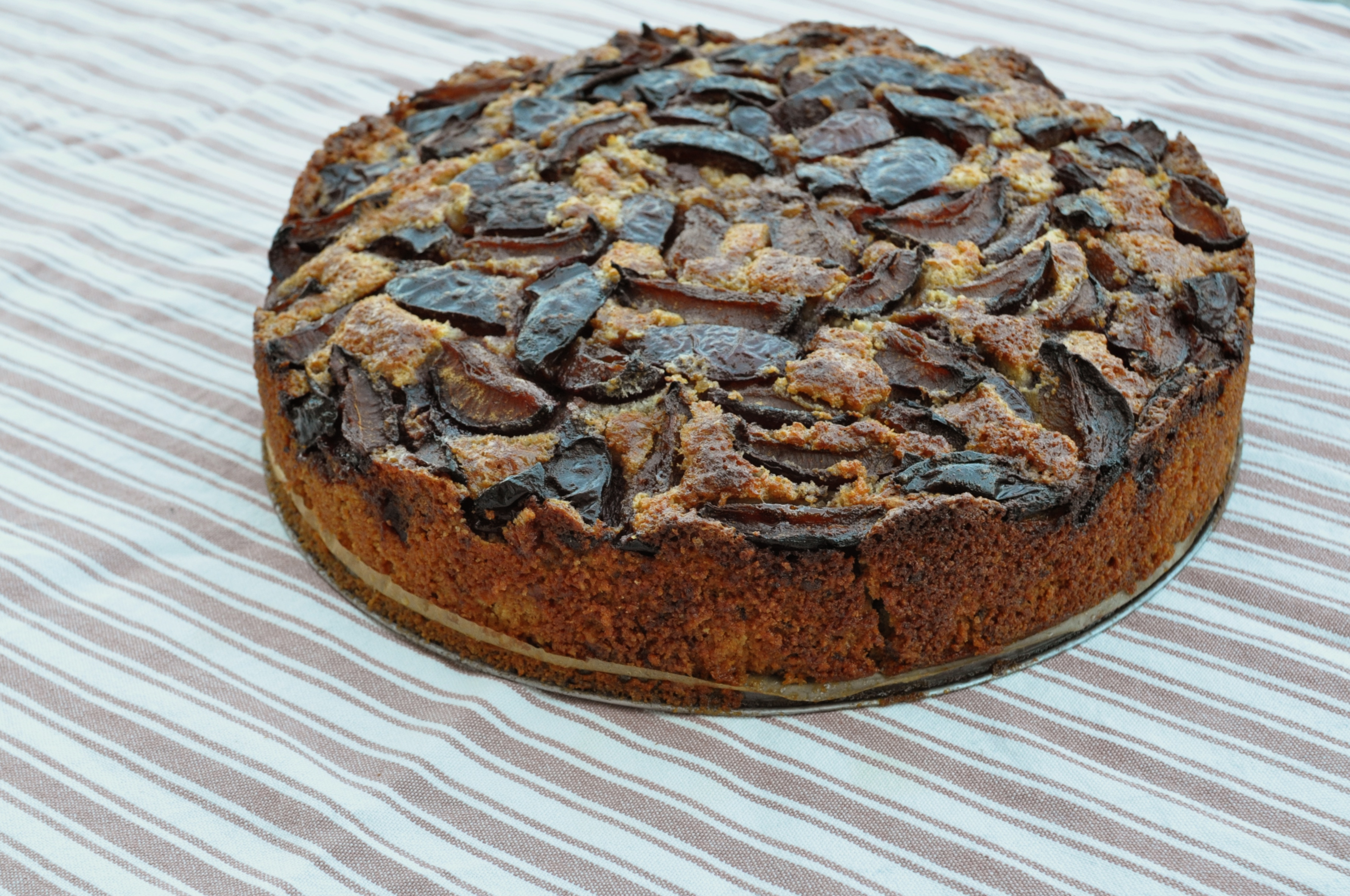
So briefly, before it’s too late, before the plums are all gone, here is Nigel Slater‘s “Wonderfully moist, fresh plum cake.” It is exactly that, at the very least.

It is autumnal and luscious. With a crunch from the chopped walnuts and a hint of spice, which I couldn’t resist adding to the recipe.

***

Recipe very slightly adapted from Nigel Slater’s The Kitchen Diaries

I have doubled the recipe and I doubt anyone would mind. However if it is just for one or two, the recipe can easily be halved. The cooking time would then be 40 – 45 minutes at an oven temperature of 350°F (180°C).

32 plums

1 1/2 cups (300 g) butter

1 1/2 cups (300 g) sugar

6 eggs

1 1/4 cups (150 g) flour

3 tsps baking powder

2 cups (200 g) ground almonds (1 1/2 cups whole almonds yields 2 cups once ground)

1 cup (100 g) walnuts

Zest from 1 lemon

2 Tbsps muscovado (dark brown) sugar

2 tsps powdered ginger

***

Preheat oven to 375°F (200°C).

Line the base of a cake tin 10 1/2 inch (27 cm) in diameter with parchment paper. Butter the paper and the sides of the tin.

Wash the plums, halve them, remove the stones, and cut each half again in two. Set aside.

In a large mixing bowl, beat the butter and sugar thoroughly until light and fluffy.

In a small bowl, break the eggs and beat them slightly with a fork. Then add them little by little to the butter/sugar mixture.

Sift the flour together with the baking powder and fold in gently with a spatula or wooden spoon. Gently add the lemon zest and ground almonds.

Roughly chop the walnuts and add them too.

Sprinkle the muscovado sugar and ginger onto the plums and toss carefully, preferably with bare hands in order not to squash the plums.

Scrape the batter into the cake tin and place the plums on top, pushing them into the batter ever so slightly (they will sink in more as the cake cooks).

Bake the cake for about 1 hour 15 minutes. Check for doneness by inserting a knife or skewer into the cake, which should come out clean. But also gently move the cake tin. If the center jiggles it needs a little more time.

Let the cake cool a little before removing from the tin.

*

Related posts

Cake with pear and toasted hazelnuts

Orange almond cake

Plum jam with candied ginger

In Brittany | Kouign Amann from Au Four St Melaine bakery in Morlaix

15 September 2011

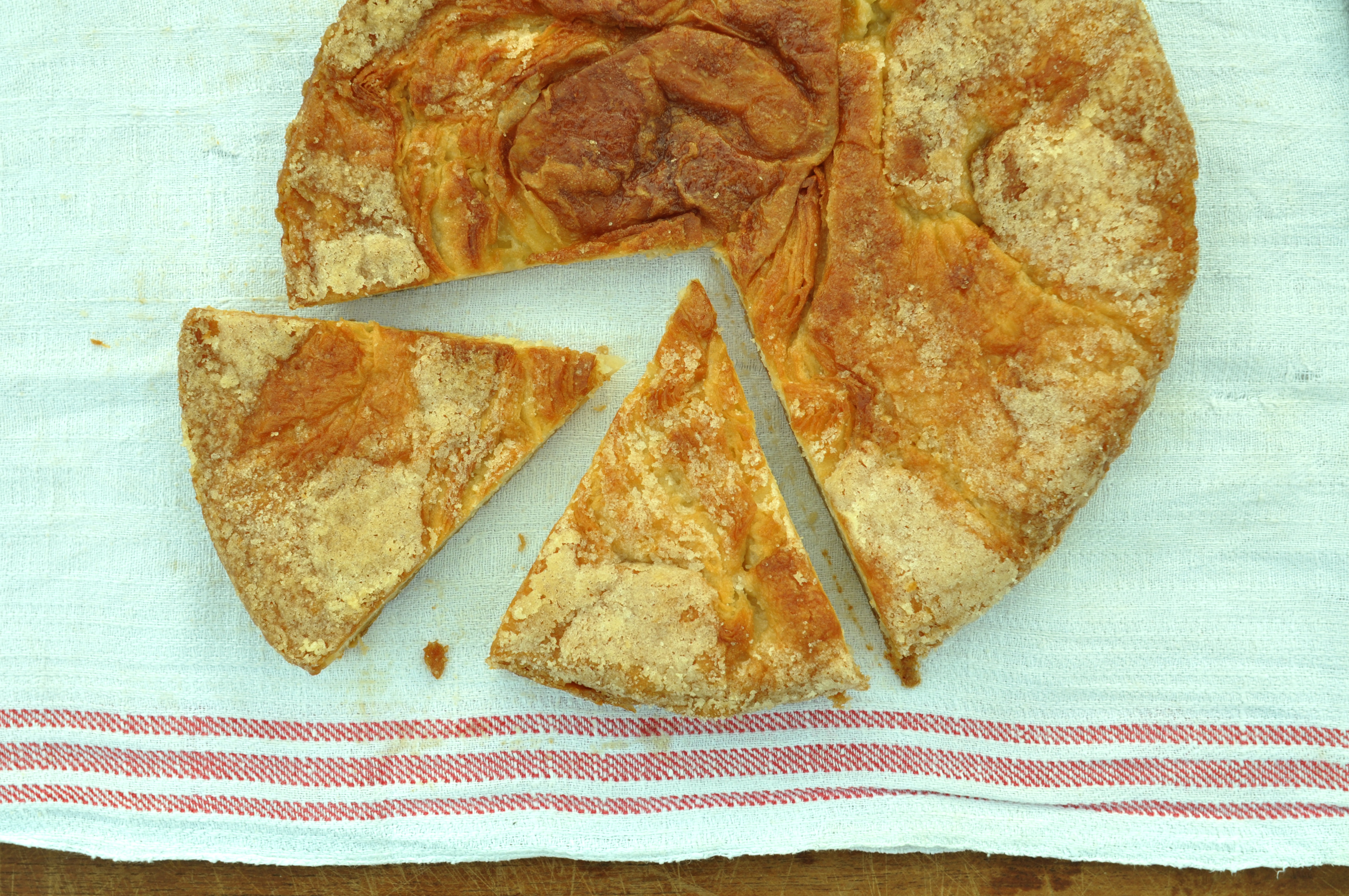
It looks fairly harmless; it’s hiding it’s game. After a few summers in Brittany we’ve discovered what has to be the best Kouign Amann. Period.

Kouign Amann is a traditional Breton… cake? bread? voluptuous addiction? The most common version is a bread batter folded many times over with butter and sugar to create a dense, caramelized, buttery puff pastry of sorts. According to renowned Breton chef Jacques Thorel, original Kouign Amann was made with leftover bread dough simply mixed with butter and sugar. The technique of folding the dough repeatedly came later, invented by a baker who knew about puff pastry.

I haven’t attempted to make Kouign Amann – yet. Currently our summers in Brittany are occupied more by heavy construction work than creative cooking. But we look for every excuse to drive the 25-odd minutes to Morlaix, to a small boulangerie hidden on a steep side street, framed by the towering viaduct that contributes to the town’s unique character.

The Kouign Amann from Au Four St Melaine doesn’t look as good as it tastes. It’s no shining, copper disk oozing with butter and sugar. It looks somewhat staid. But, once heated (for about 10 minutes, in a medium oven), it caramelizes on the surface while loosening up inside and becomes a seriously dangerous temptation.

You’ll see. If ever you are in Morlaix.

UPDATE SUMMER 2012: Au Four St Melaine has closed. Tragic. We have not yet found an adequate replacement.

Au Four St Melaine

1 Venelle Four Saint Melaine
29600 Morlaix
France

*

Related posts

Mussels with shallots and white wine

At the market in Brittany | Artichokes