Archive for the ‘Thanksgiving’ Category

Best award-winning pumpkin pie and the many desserts of Thanksgiving

2 December 2011

I’ve come to realize that I am not a person of habit, I seem incapable of a routine (though I have tried). I am, however, stubborn about traditions.

Every year, on December 1st, I hang an advent calendar over the fireplace for my children — twenty-four hand-sewn little bags filled with chocolates and small toys; it’s just the beginning of the Christmas celebration. On the eve of December 6th, I lay out cookies and milk, salt and a carrot for St Nicholas and his donkey; on the 24th, we feast on foie gras and unwrap presents while nibbling cookies and clementines. In February, I make crêpes for La Chandeleur. In spring, I dye eggs for Easter. I cherish these rituals; they shaped my childhood and I wish to perpetuate these memories. And of course, traditions are always good excuse for a party.

And so every year, on the fourth Thursday in November, we invite friends for Thanksgiving, and there is turkey and cranberry sauce.

This year we were twelve adults and at least as many children, seated around a single long table. I made the same meal as last year, with a different soup to start. And, like last year, each guest brought a dessert. In the past, the timid offering of one pumpkin pie, one pecan pie, and perhaps an apple crumble were usually picked at somewhat wearily, but pulling out a huge spread of desserts (after a small digestive pause) has the unfailing ability to revive the party.

My deepest thanks to everyone for the apple pie, the pecan pies, Mamyvonne’s chocolate cake, tiramisus, profiteroles, pavlovas and more sweet bites, as well as Thomas’s (as he won’t tire of telling anyone willing to listen) “award-winning” pumpkin pie (the award in question being a company bake off — but still).

It was a merry dinner, which, rekindled by an unreasonable amount of desserts, extended with dancing late into the evening.

Two days after Thanksgiving we drove out to Montauk for the day. It brought back memories of another Thanksgiving trip to the beach, some ten years ago. Back then there was leftover pumpkin pie eaten from the hood of the car in a deserted gas station on the way to Cape Cod; an unusual bed and breakfast in Provincetown, memorable in unexpected ways; long walks on the deep yellow sand where seals lolled in the low November sunlight; silly shortcuts through the icy water and tears of pain from thawing feet; two days of glorious weather and the drive back to New York in the pouring rain.

This year in Montauk, the children found smooth stones and carried huge glistening rocks for hours. A fisherman teetered on a rock swept over by rippling waves. We followed a path through the thorny brush that withered away into damp reeds. It was so warm we might have jumped into the sea.

Different years, new friends, interwoven memories.

(photo added November 2020)

Best Award-winning Pumpkin Pie

The story behind this overemphatically named pumpkin pie goes like this: my mother used to make it for Thanksgiving. When she handed me the recipe, she titled it “Best Pumpkin Pie,” and I’d be hard-pressed to disagree. Some years ago the pumpkin pie became Thomas’ Thanksgiving prerogative. One year, he entered it in his company’s bake-off and won first prize — unanimously, he claims. It is the best pumpkin pie I’ve ever tasted. It isn’t cloyingly sweet or overspiced. It has a clear crisp lemony taste that is completely delicious.

1 unbaked sweet pie crust

A little over 1 lb (500 g) of dense, flavorful pumpkin or squash such as hubbard, kabocha, butternut or a mixture of two different kinds, which must yield a little under 1 lb (425 g) of pumpkin purée

3 eggs, lightly beaten

1 cup (200 g) sugar

1/2 tsp salt

1 heap tsp ground cinnamon

1/4 tsp ground cloves

1/2 tsp nutmeg

1/2 tsp ground ginger

Juice and rind of 1 lemon

1 cup (250 ml) heavy cream

***

Prepare the pie crust, roll it out into the pan, and keep it in the refrigerator while making the batter.

To make the pumpkin purée: remove the skin and seeds from the pumpkin (or squash), cut the flesh into large wedges, and steam for about 20 minutes until soft. Blend or press through a food mill to obtain a thick, smooth purée.

Preheat the oven to 425°F (220°C).

Combine the eggs, sugar, salt, spices, lemon zest and juice and beat well. Stir in the pumpkin purée. Add the cream and beat well.

Pour the batter into the pie crust and slip into the hot oven. Bake for 10 minutes, then reduce the heat to 350°F (175°C) and bake for 40 to 45 minutes. The pie is ready when a knife inserted in its center comes out clean.

*

Related recipes

Thanksgiving (Cranberry sauce)

Pumpkin leek soup

Quince and apple tarte

Celeriac mash with parsley

21 November 2011

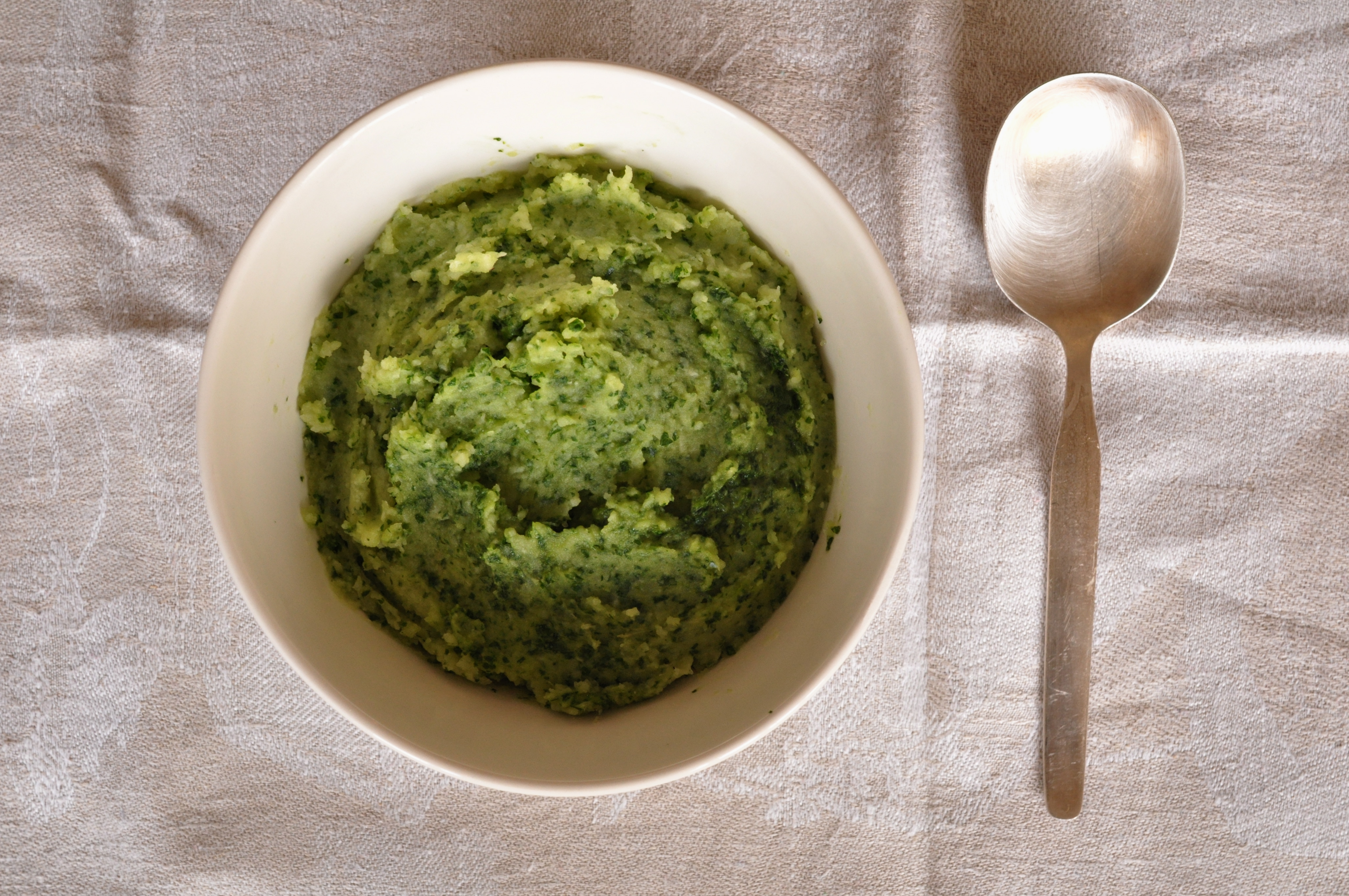
Mashed celeriac is the ultimate Thanksgiving side dish because it is so perfect with turkey and cranberry sauce and marries well with many other flavors.

It is also an excellent complement to fish, game, or duck, and works well with lamb tagine or calf’s liver. It is brilliant because it’s so similar to mashed potatoes but more subtle. It’s comforting but also fresh and vibrant. I have to restrain myself from making it too often.

***

The quantity can easily be adapted, with proportions of about 60% – 40% celeriac to potatoes in favor of the celeriac (a lot of celeriac needs to be removed in the peeling process, so it’s always a good idea to buy a bit more than you think you need).

4 Tbsps Coarse sea salt

4 small heads celeriac (about the size of an orange)

3 medium Yukon Gold potatoes

2 large bunches flat-leaved parsley

Good olive oil

4 Tbsps good butter

Sea salt and freshly ground black pepper

Freshly grated nutmeg

***

Bring two large pots of water to a boil each with 2 Tbsps of coarse sea salt.

Peel the celeriac and the potatoes and cut them into large chunks, all about the same size so they take the same amount of time to cook.

Place each vegetable in a separate pot of boiling water and cook until soft. **The celeriac and potatoes must be cooked separately because they don’t take the same amount of time to cook through (the celeriac takes longer) and it’s important not to overcook the potatoes; if they start falling apart the consistency of the mash will be watery.** The cooking time depends on the size of the pieces of vegetable and how crowded they are in the boiling water, but I usually start checking the potatoes by poking them with a sharp knife after about 12 minutes, the celeriac after about 20 minutes. They are ready when the knife goes in with no resistance.

Meanwhile, wash the parsley and trim off the thickest part of the stems.

In a blender, purée the parsley with 4 tablespoons of olive oil and 2 tablespoons of water.

Once the roots are cooked, mash them with a potato masher or through a food mill (never in a food processor as the blade cutting through the potato starch makes the potatoes gummy). Mix in the butter, a good slosh of olive oil, and season with salt, pepper, and freshly grated nutmeg. Taste and adjust.

Reheat the mash over very low heat and at the very last minute just before serving add the parsley purée. Stir well until it is uniformly green. **The parsley must be added at the very last minute;  if heated the parsley will turn brown and loose its vibrant flavor.**

*

Related posts

Sautéed hen of the woods and king trumpet mushrooms

Simply kale salad

At the market | Celeriac aka celery root (Rémoulade salad)

Cream of cauliflower soup with salmon roe

17 November 2011

The problem was, I couldn’t remember exactly how I had made this soup. I knew there was no milk or cream and no broth — no adulterating ingredient to distract from the delicate taste of the cauliflower. I looked in a dozen cookbooks most likely to have given me inspiration, but every recipe I found had milk, or cream. I was hesitant about the base: just onions and cauliflower, was that really it?

Then fortuitously, on 27 October, Mary Gorman-McAdams wrote her weekly column on TheKitchn about pairing wine with soup. In her column she mentions this very cauliflower soup, and solved my conundrum — the base is leeks, not onions.

This is a very simple soup; the salmon roe makes it sing. We served it with Chablis. Thanks, Mary.

***

Serves 6

4 leeks

8 Tbsps butter

2 small heads cauliflower

Sea salt

Freshly ground white pepper

A pinch of freshly grated nutmeg

6 small spoonfuls of salmon roe

***

Remove and discard the leeks’ tough outer leaves, then cut the leeks into thin slices. Wash well in cold water to remove any grit, and drain.

In a soup pot, melt 4 tablespoons of butter. Add the sliced leeks. Season with sea salt. Cook the leeks until soft being careful that they don’t begin to brown.

Meanwhile, cut the cauliflower into florets and wash in cold water. Add to leeks. Add 4 tablespoons of butter cut into small pieces. Let the butter fall through cauliflower and melt. Add just enough water to cover the cauliflower, and cook until the cauliflower is soft. About 20-25 minutes. **Overcooking gives the  cauliflower a strong cabbagy smell, so it is essential not to overcook it, but the cauliflower has to be soft enough to blend into a smooth soup without any hard gritty bits. As soon as a knife cuts through the stem of the cauliflower florets easily, it is ready.**

As soon as the cauliflower is cooked, remove from heat. Blend in batches (it is important not to fill the blender or food processor — it shouldn’t be filled more than up to about a third). Blend thoroughly until the soup is silky smooth. Leave out some of the liquid to be able to adjust the density of the soup.

Taste and adjust the seasoning with salt, pepper, and a restrained pinch of nutmeg.

Garnish with a spoonful of salmon roe added at the very last minute.

*

Related posts

Pumpkin leek soup

Lentil soup with cumin

Basic | Sweet pie crust

10 May 2011

This pie crust is ideally light and flaky. It works very well for practically any fruit tarte, except — mildly ironically in this context — the walnut tarte for which I made it on Saturday. For that singular tarte, unlike others I usually make in that it is fairly rich, this pie crust is a bit too sweet and buttery. For every other tarte (or even pumpkin pie), it is excellent. It is the galette dough recipe from Chez Panisse Café Cookbook.

There are endless minute variations on pie crust recipes, some of which involve the size of the pieces of butter or the temperature of the ingredients. These do make a difference, and I think another crucial aspect is how the dough is treated. It should always be barely handled – delicately with the fingertips and never the palm of the hand. I think of it as the opposite of kneading.

***

From Chez Panisse Café Cookbook

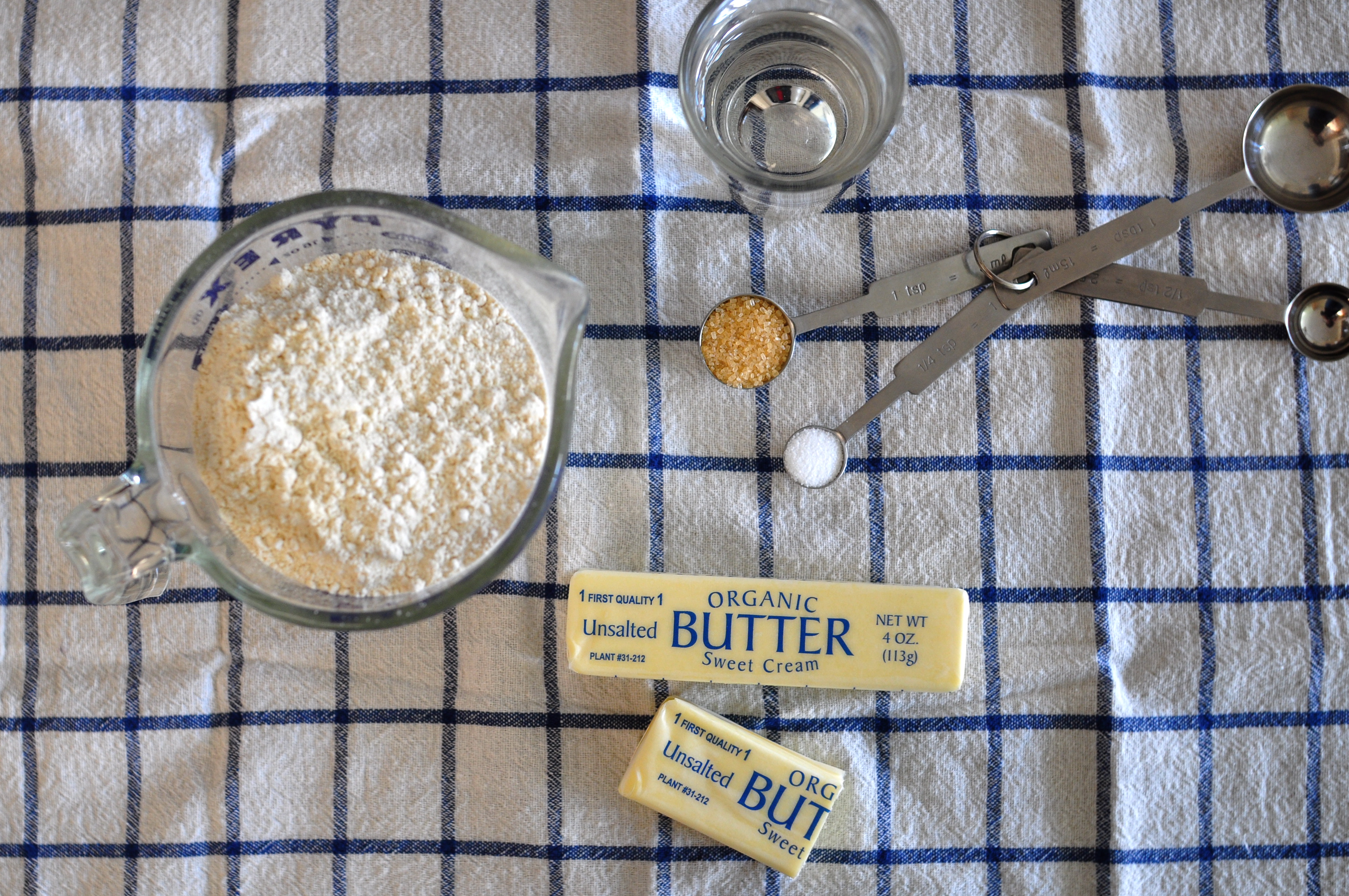
3/4 cups (170g) unsalted butter

2 cups (200g) flour

1 tsp sugar

1/4 tsp salt

Place a small glass of water in the freezer.

Cut the butter into 1/2-inch (1 cm) pieces.

In a large bowl mix the flour, sugar, and salt.

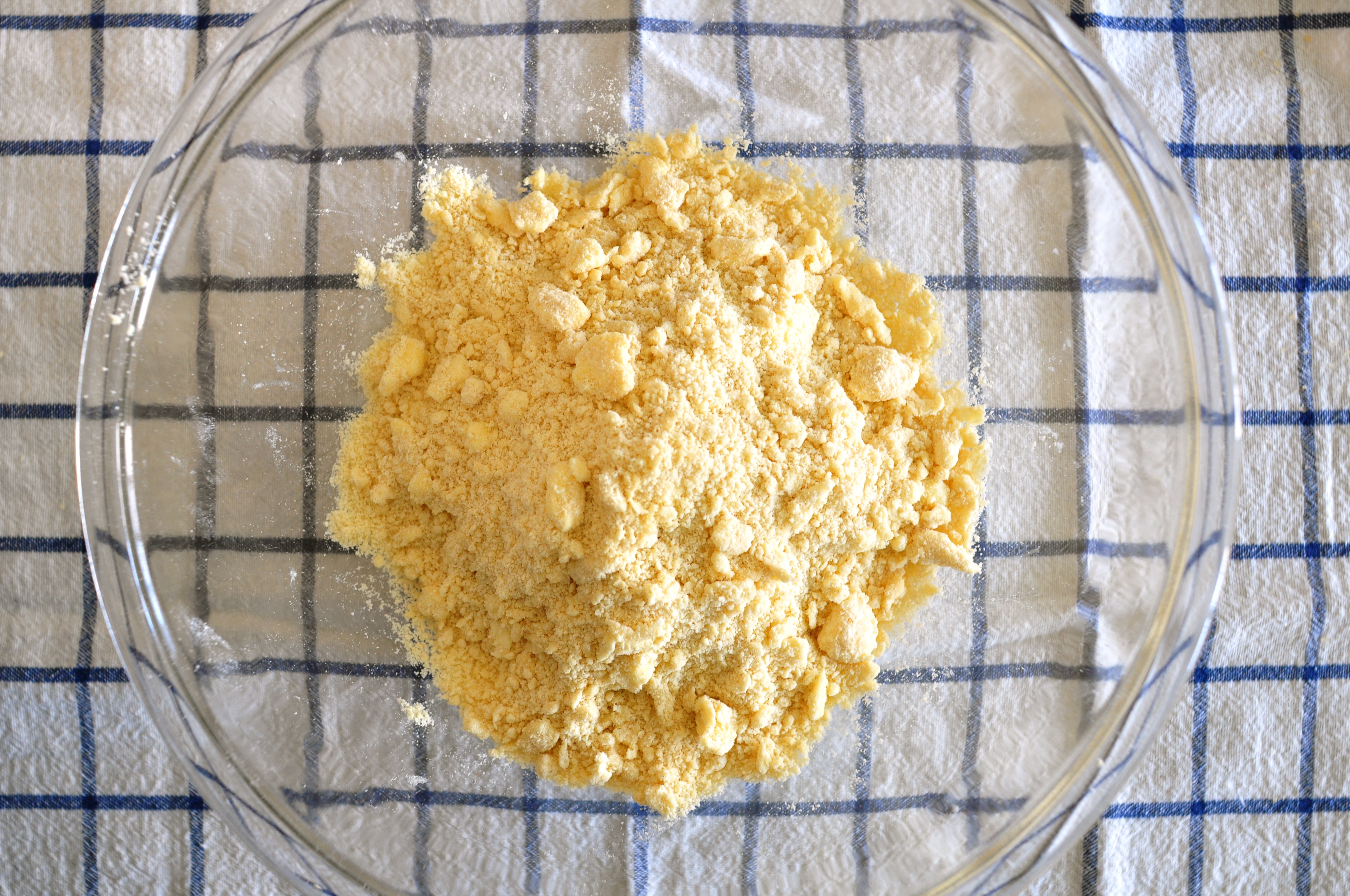
Gently work half of the butter into the flour mixture with fingertips until dough has the texture of coarse oatmeal. Add the rest of the butter and work it into the dough quickly, stopping as soon as the largest pieces of butter are the size of lima beans.

Add the ice cold water, a few drops at a time, carefully bringing the dough together into a ball. Stop adding water as soon as the dough adheres, but some flour is left in the ball (the dough should not be sticky).

Flatten the ball of dough, cover in plastic wrap, and refrigerate for at least an hour and up to 1 day.

Remove dough from refrigerator and allow about 15 minutes for it to soften with the ambient heat and become easy to handle.

Generously butter the pie pan.

Lightly dust a clean, flat surface with flour and roll out the dough into a circle until it is 1/8 inch (1/3 cm) thin.**This dough is very buttery, so to prevent it from sticking to the the floured surface I turn it at the beginning then regularly lift it, all the while adding a little flour on either side and on the rolling pin.**

To transfer the dough to the pie pan, gently fold it in half once, then fold it in half again, and carefully place the folded dough in the pie pan, positioning the angle in the center. Unfold, press gently onto the pan and sides, and cut off excess dough from the edges. Slip the pie crust in the refrigerator for at least 1/2 hour before using.

Endive salad with apples, walnuts, and comté

27 January 2011

Salads are one of the reasons I look forward to winter. Endive salads in particular, because they are from my childhood, but all the other crisp, bitter, cold-weather greens, reds, and yellows: dandelion, escarole, frisée, radicchio…

In a month or so I may be looking forward to fresh peas and longing for tomatoes, but right now I am excited by the falling snow and this crunchy endive salad. It’s ready in 5 minutes and made a perfect lunch yesterday.

***

4 endives (should be tightly compact, white and pale yellow, without a hint of green)

1 red apple

1/2 lemon

About 8 walnuts

Comté (also Guyère or a hard sheep-milk cheese from the Pyrénées)

5 Tbsps good olive oil

1 1/2 Tbsps apple cider vinegar

Maldon sea salt

Freshly ground black pepper

***

Cut off endive stub and remove one outer layer of leaves. Rinse quickly under running water, shake dry, and slice crosswise into 1/2 inch (1 cm) pieces. Wash apple, cut into quarters, core, and slice quarters thinly crosswise. Immediately toss the endive and apple with the juice from 1/2 a lemon, as they oxidize quickly.

Shell the walnuts and break them into pieces. Cut the cheese into strips about 1 in (2.5 cm) long and 1/3 inch (1 cm) wide. There should be about as much cheese as there are walnuts.

Mix the walnuts and cheese with the endive and apple. Season with the olive oil, vinegar, salt, and pepper and toss well.