Archive for the ‘Homemade and preserves’ Category

Candied orange and lemon peel

8 December 2012

DSC_1007

For years I’ve wanted to do this. Every time, as I gather all the ingredients to make Stollen in early December, I think I really should make candied citrus peel myself. But caught in the rush I end up scrambling and scouring stores desperately to find an acceptable option — usually just barely.

So I’m quite excited. It’s not as if I’d suddenly been graced with lots more time, rather to the contrary, but I guess that’s how it works.

It does take time — a few hours. Peeling, cutting, staying close to the boil. Repeating. It’s time-consuming. But simple. It’s meditative. And worth it.

DSC_0935

Orange peel

I candied the peel to use in Stollen, but there is plenty left over, which can be eaten as is, rolled in sugar, or dipped in dark melted chocolate to make orangettes. Mmmm.

5 oranges

3 cups (600 g) sugar

1 1/2 cups (350 ml) water (more for the first step)

To peel the oranges, trim off a ‘cap’ at either end so the orange sits in a stable position. Cut pieces of peel, equal to approximately a sixth of the fruit, from top to the bottom, including the pith and a bit of fruit. (The flesh can be used elsewhere for example in a fruit salad.) Slice the pieces of peel into strips 1/2 to 1-inch (1 to 2 cm) wide.
Place the peel in a smallish saucepan, cover with water, bring to a simmer and boil for a couple of minutes. Drain, discarding the water. Cover the peel with fresh water and repeat this three times (4 boils altogether).

Rinse the saucepan. Pour the sugar and 1 1/2 cups (350 ml) water, bring to a boil, then add the peel. Simmer, partially covered, for about an hour, removing scum if it occurs, until the peel is soft and translucent on the sides. (The pith should be translucent too.)

Place the pieces of peel on a rack or baking sheet covered with parchment paper and let dry for 24 to 36 hours.

Keep the syrup in the fridge and mix with sparkling water for a refreshing drink, or drizzled over plain yogurt.

DSC_0949

Lemon peel
(Same technique but the quantities are halved, and lemon peel can also be dipped in dark chocolate to make ‘lemonettes’!)

5 lemons

1 1/2 cups (300 g) sugar

3/4 cup (200 ml) water (more for the first step)

To peel the lemons, trim off a ‘cap’ at either end so the orange sits in a stable position. Cut pieces of peel, equal to approximately a sixth of the fruit, from top to the bottom, including the pith and a bit of fruit. (The flesh can be used elsewhere for example in a fruit salad.) Slice the pieces of peel into strips 1/2 to 1-inch (1 to 2 cm) wide.

Place the peel in a smallish saucepan, cover with water, bring to a simmer and boil for a couple of minutes. Drain, discarding the water. Cover the peel with fresh water and repeat this three times (4 boils altogether).

Rinse the saucepan. Pour the sugar and 3/4 cup (200 ml) water, bring to a boil, then add the peel. Simmer, partially covered, for about an hour, removing scum if it occurs, until the peel is soft and translucent on the sides. (The pith should not be white anymore, completely translucent.)

Place the peels on a rack or baking sheet covered with parchment paper and let dry for 24 to 36 hours.

Keep the syrup in the fridge and mix with sparkling water for a refreshing drink, or drizzled over plain yogurt.

*

Related posts

Stollen

Quick pickles

29 September 2012

The bounty of fall, the joy of coming home after a summer away; it’s the time of year when I am overrun by the desire to cook, pickle, and can, buy way too many fruits and vegetables at the market, and usually only barely manage to rescue them, in extremis, days and sometimes weeks later, and turn them into whatever easy preserve I come across that day. Despite my determination, every year, to squirrel away a veritable pantry of homemade goods for the winter, my canning endeavors are completely haphazard. This year for example I made a few versions of this jam every time there were too many excess plums on the brink. I made a quart of tomato sauce with a few extra pounds of overripe tomatoes. I studded a cake with practically fermenting concord grapes.

But one recipe I was determined to make, the instant I saw it, was Kitchen Culinaire’s peach and lavender jam. At one market on Tuesday I found peaches from upstate New York which evolved from rock hard to mealy soft without a whiff of peach in between. On Saturday I went to look for the seller of West Virgina peaches at the Mount Morris Park market that inexplicably and without a word moved blocks away to the corner of Lenox and 122nd. This producer sells hands down the best peaches I’ve ever eaten in New York, and I wish I’d known of the market’s move sooner in the season. This Saturday I went and bought many many many pounds of peaches, heaved them home, and didn’t make any jam. When, after years of peach frustration, one finally finds fruit that is all that a peach used to be, so long ago, the only thing to do is to eat it just so.

For days we ate peaches, with nothing more than a little Greek yogurt and light drizzle of honey. But I was on a mission, I had to make this jam, so I rescued the last three sweet juicy pounds and proceeded to infuse the lavender, cut the fruit, weigh the sugar, and set the jam to simmer. It smelled incredible, so fragrant and delicate, like a summer in Provence. And then I overcooked it. Beginner’s mistake, bad planning, distracted multi-tasker, I had to stop the cooking to pick up Balthasar from school, when I started it again I was giving Louise a bath and suddenly the jam wasn’t golden brown anymore but deep brown with sparkly foam, the scent of lavender entirely replaced by peach caramel…

Today I rushed out to buy peaches and make jam immediately; there were none, the farmer’s market replaced by a small flea. And so, even with the very best intentions, this year I didn’t manage the one jam that I had set out to do. And despite my best intentions, this post will not be about peach lavender jam.

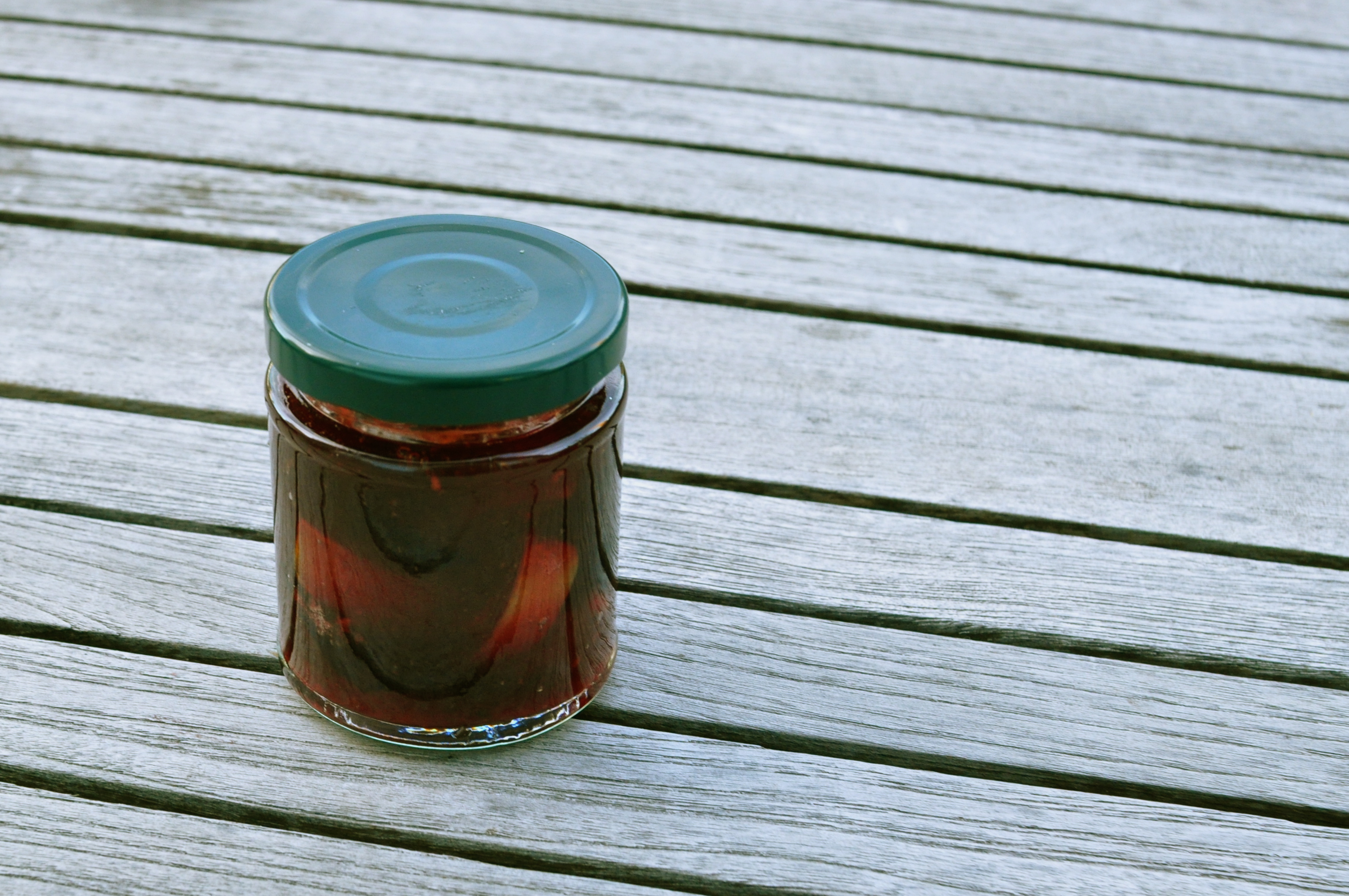
It’s about pickles. It happened by chance. I saw kirby cucumbers at the market, bought some with no plan in mind; days later when it was high time to use them, I went to this great resource for all things in jars, found this recipe, made it. It’s great.

***

Slightly adapted from Asian-Inspired Quick Pickles by Food in Jars. One-pint Mason jars are the perfect height for these pickles. Makes 2 one-pint jars.

2 one-pint Mason jars
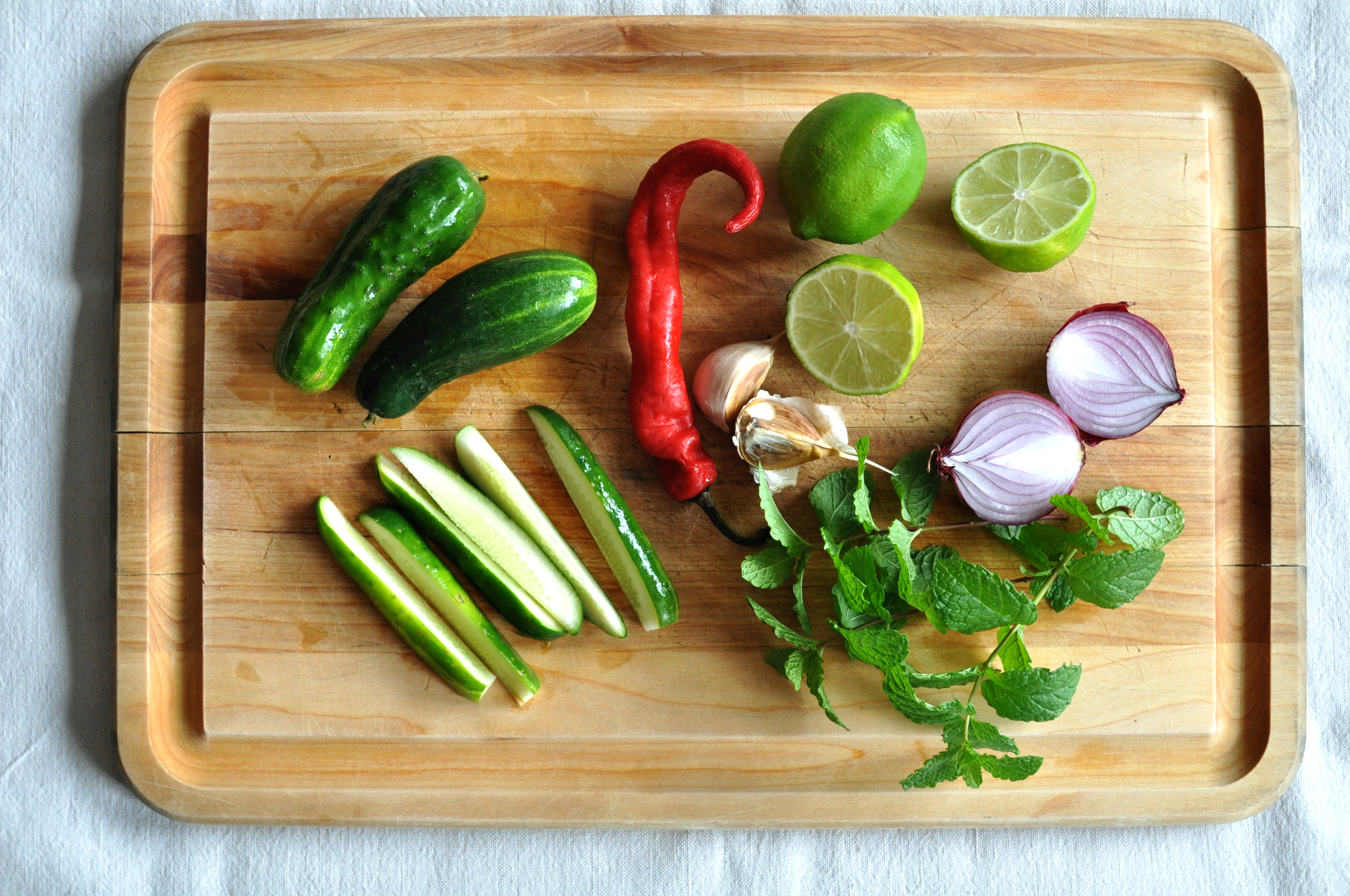
4 or 5 kirby (small pickling) cucumbers
1 chili pepper
1/2 small red onion or 3-4 scallions
2 garlic cloves
4 small sprigs fresh mint
4 small sprigs fresh coriander
1 cup rice wine vinegar
Juice from 2 limes
2 Tbsps sugar
1/2 teaspoon salt

*

Cut each cucumber into six spears. Cut the chili pepper in two lengthwise. Thinly slice the onion (or peel the scallions, cut then into kirby-length pieces, and slice them lengthwise) and garlic cloves. Wash the mint and coriander.

Dividing the ingredients equally between the two jars, pack the cucumber spears and slide in the chili pepper, onion (or scallions), garlic, mint and coriander.

In a small bowl, stir together the rice wine vinegar, lime juice, sugar, and salt. Pour the liquid over the cucumbers, close tightly, and carefully invert the jars to combine all the flavors.

Let the pickles sit in the refrigerator for at least 24 hours before eating.

Rhubarb rosemary syrup and a gin drink

21 June 2012

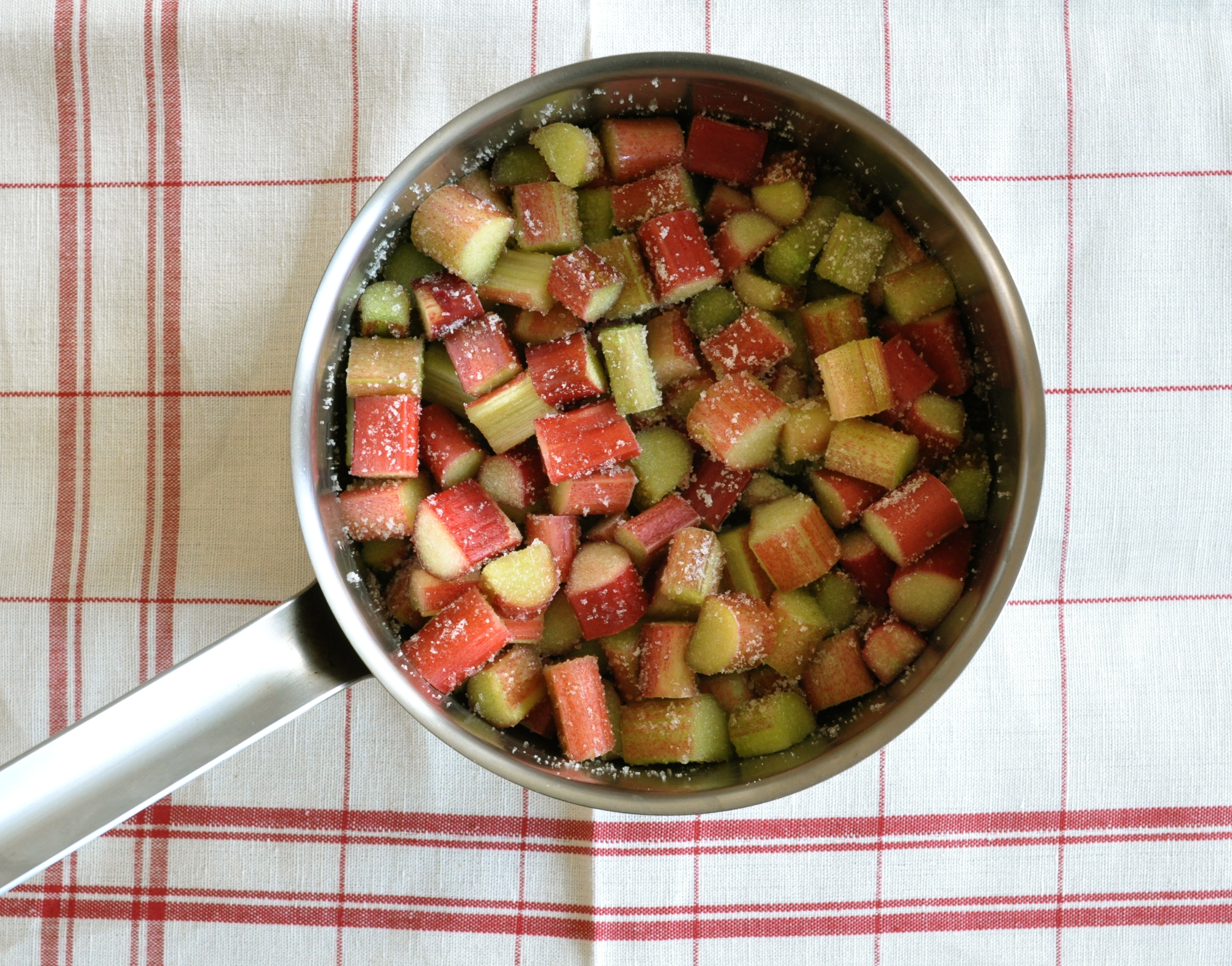
The rhubarb rosemary syrup is barely an adaptation of 101 Cookbooks‘ rhubarb rosewater syrup. It is the same recipe, but instead of adding rosewater once the syrup had cooled, I added a sprig of rosemary while it was still warm. I am entirely pleased with the result. I had seen the pairing of rhubarb and rosemary mentioned in a few places, and I love how it brings out rhubarb’s herbaceous edge.

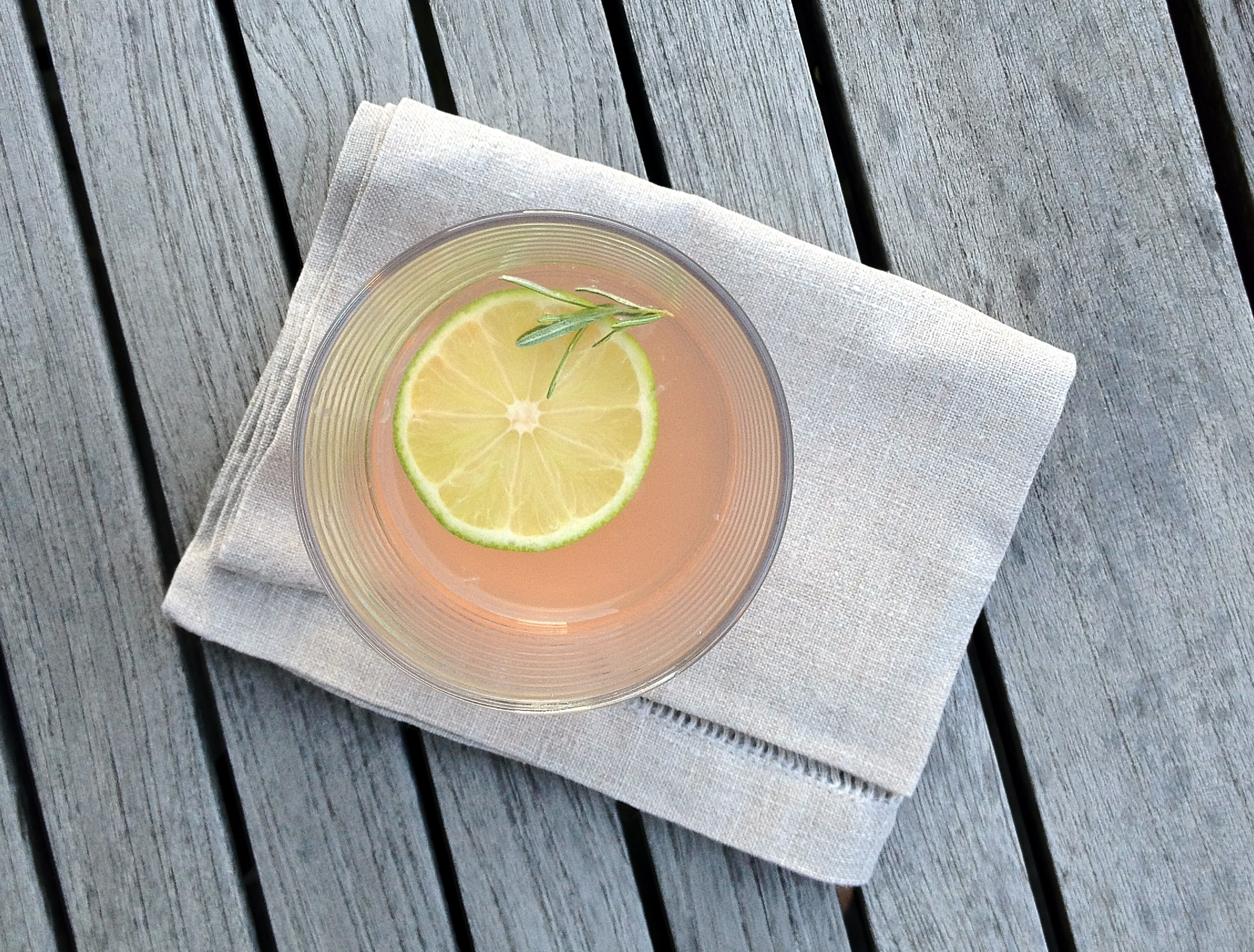
Typically I’ve simply been using a tablespoon of this syrup with sparkling water, a good squeeze of lime, and a few ice cubes. But somewhat uncharacteristically the other day I made a drink. It was a warm evening and I wanted something light and refreshing. Here’s how I made it, on a whim.

2 tsps rhubarb rosemary syrup (recipe from 101 Cookbooks, I just substituted rosewater with a sprig of rosemary)

2 ounces gin

1 ounce rosé

A dash of sparkling water

A squeeze of lime (to taste) and one slice

A sprig of rosemary

The slice of lime and sprig of rosemary ‘garnish’ are important to add a little more edge against the sweetness of the syrup and wine. I added a few ice cubes but took them out fairly quickly as they were melting too fast and I didn’t want them to water down the drink too much (using one larger ice cube would do the trick).

Cheers!

*

Related posts

At the market | Rhubarb

Rhubarb ice cream

Chive blossom vinegar

22 May 2012

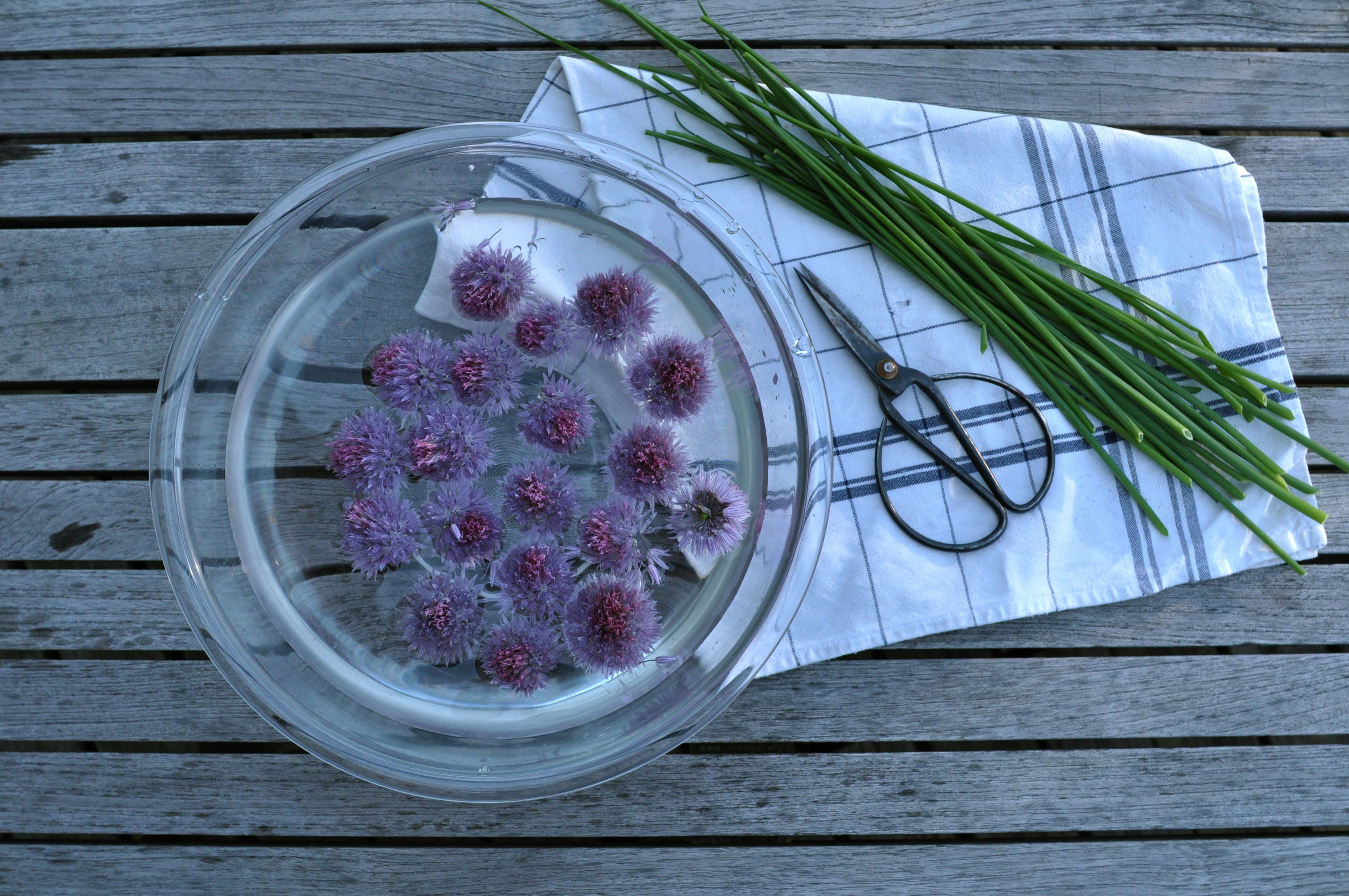
DSC_1301

It is barely a recipe. Just cut ripe chive blossoms off their stems. Wash them in a bowl of cold water. Spin or lightly squeeze them dry. Fill a jar with the blossoms, about halfway full. Add good white wine vinegar to the top. Within a day or two, the lavender-colored blossoms will have tainted the vinegar raspberry pink. After two weeks, strain the blossoms and pour the vinegar into a bottle for easy use.

I am certain it will be a stunning addition to salad dressings, but that remains a surprise for me, too. In the meantime, the color is justification enough.

I had never flavored oils or vinegars, but I stumbled onto this excellent idea by Food in Jars via Lottie + Doof the other day. It was propitious as my balcony was all abloom with light red roses and these purple chive blossoms. It looked so pretty I couldn’t bring myself to cut them. So I waited as long as I could, until the faintest sign of wilting, before chopping all the blossoms — I’m sure the vinegar won’t mind them past their prime. It is barely a recipe, and such a great idea!

At the market | Ramps (Ramp pesto)

26 April 2012


I get excited about strawberries in June, quinces in October, and clementines at Christmas. So naturally, some years ago when I discovered ramps, the very first greens to appear at farmer’s markets here in spring, I talked about them a lot. Few of my family and friends in Europe knew ramps, and I somewhat precipitously made the connection with ‘ail des ours‘ in French and ‘bärlauch‘ in German. For years I’ve been talking about ramps, you know, ail des ours, bärlauch.

Well, Wikipedia has just informed me that I was wrong. Ramps are Allium tricoccum, and they are native to America, while the French and German (and English) ‘bear garlic’ is Allium ursinum. They are closely related but not the same thing. So the ramps we foraged in Haute Savoie last spring were not actually ramps, which explains why they felt different. If my memory serves me well the leaves were a little harsher, the taste a little coarser. In any case, that answers the question of their origin: ramps are Northern American. They are foraged and it is commonly assumed that, like wild mushrooms, they cannot be cultivated, but this appears to be a myth.

Ramps are sometimes called ransom (the common name of the European allium), but also wild leek, wood leek, or wild garlic, which gives a good idea of their taste, unmistakably in the onion/garlic family.

I’ve baked ramps with potatoes into very good and very pretty gratins; for Easter I tossed a potato salad with ramp pesto; just yesterday I made a ramp risotto with rosé wine that wasn’t half bad; ramps can also be woven into egg nests for breakfast; they can even be pickled. The pleasures are many, but the season is short — take advantage!

***

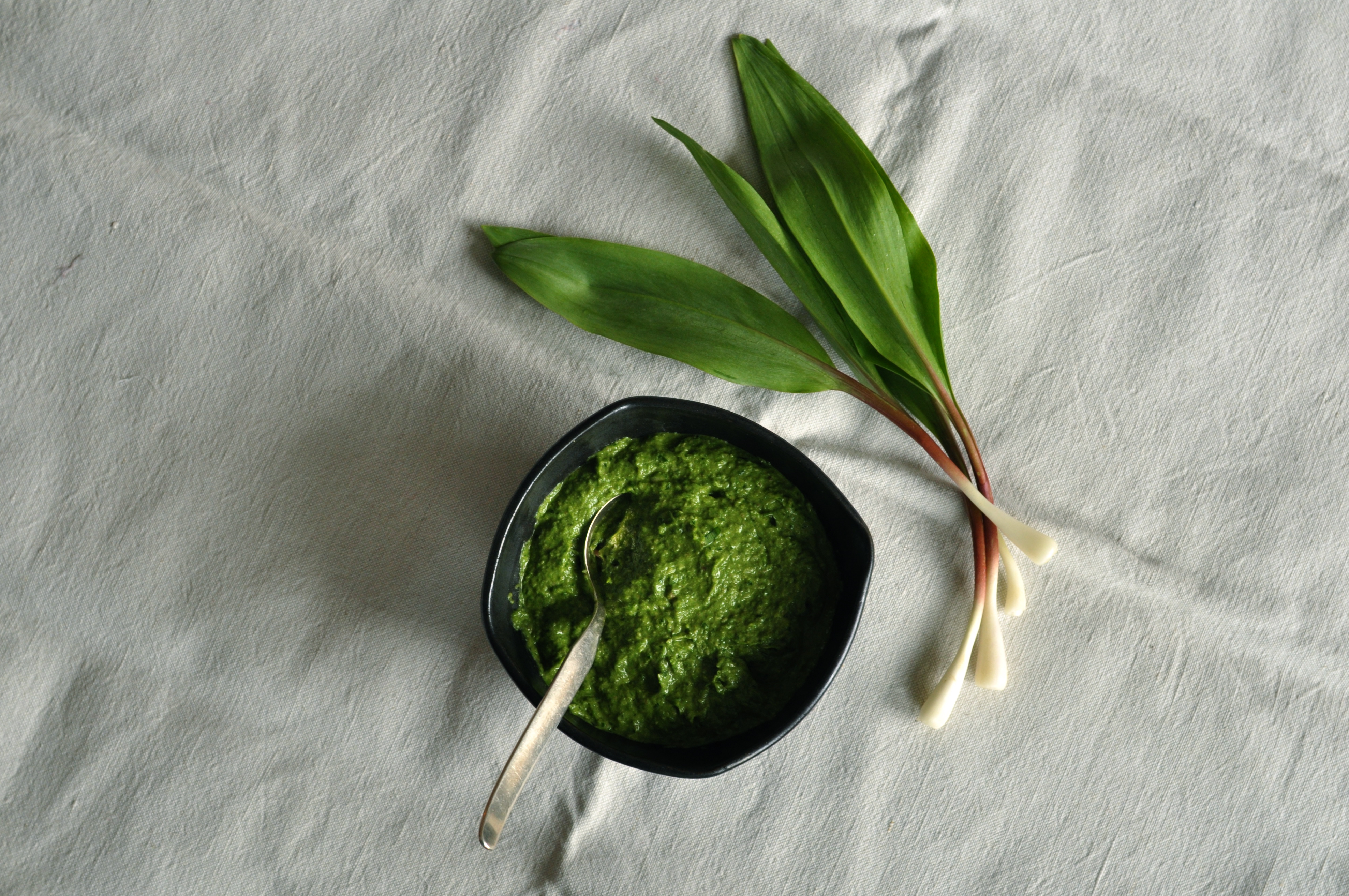
Ramp pesto

I started out with saenyc’s Wild Ramp Pesto on Food52. I found that raw ramps made the pesto too garlicky, while blanching them all made it too mellow, so I added a few raw ramps to give the pesto just the right kick. I also reduced the amount of walnuts and parmigiano and added parsley for a more vibrant taste.

1 bunch (about 28 to 30) ramps

2-3 sprigs parsley

5 whole walnuts

1/3 cup (20 g) freshly grated parmigiano reggiano

1/3 cup (100 ml) good extra virgin olive oil

2 tsps lemon juice

Good pinch sea salt

3-4 grinds black pepper

*

Bring a pot of salted water to boil. Prepare another bowl with ice water.

Trim off the roots of the ramps, rub off any loose skins around the bulbs, and wash the ramps in cold water. Wash the parsley and cut off most of the stems.

Set aside 2 to 3 of the smaller, more tender ramps, and chop them coarsely. Blanch all the others in boiling water for 2 to 3 minutes. Drain and immediately transfer the blanched ramps to the ice water. Take them out and squeeze them to remove excess water.

In a blender or food processor, purée the ramps (blanched and raw), the parsley, walnuts, and parmiggiano, pouring in a steady drizzle of olive oil. Blend thoroughly to form a paste. Add the lemon juice, salt, and pepper. Blend again, taste, and adjust seasoning.

Use as you would any other pesto: with pasta, potato salad, smeared on bruschetta and topped with fresh goat cheese, etc…

Note: As is, this pesto will keep just one or two days. To increase its longevity, add some olive oil and/or freeze.

*

Related posts

Spaghetti with ramp pesto, walnuts, and parmigiano

At the market | Rhubarb (Rhubarb compote)