Archive for the ‘Homemade and preserves’ Category

Cuban bread

20 March 2012

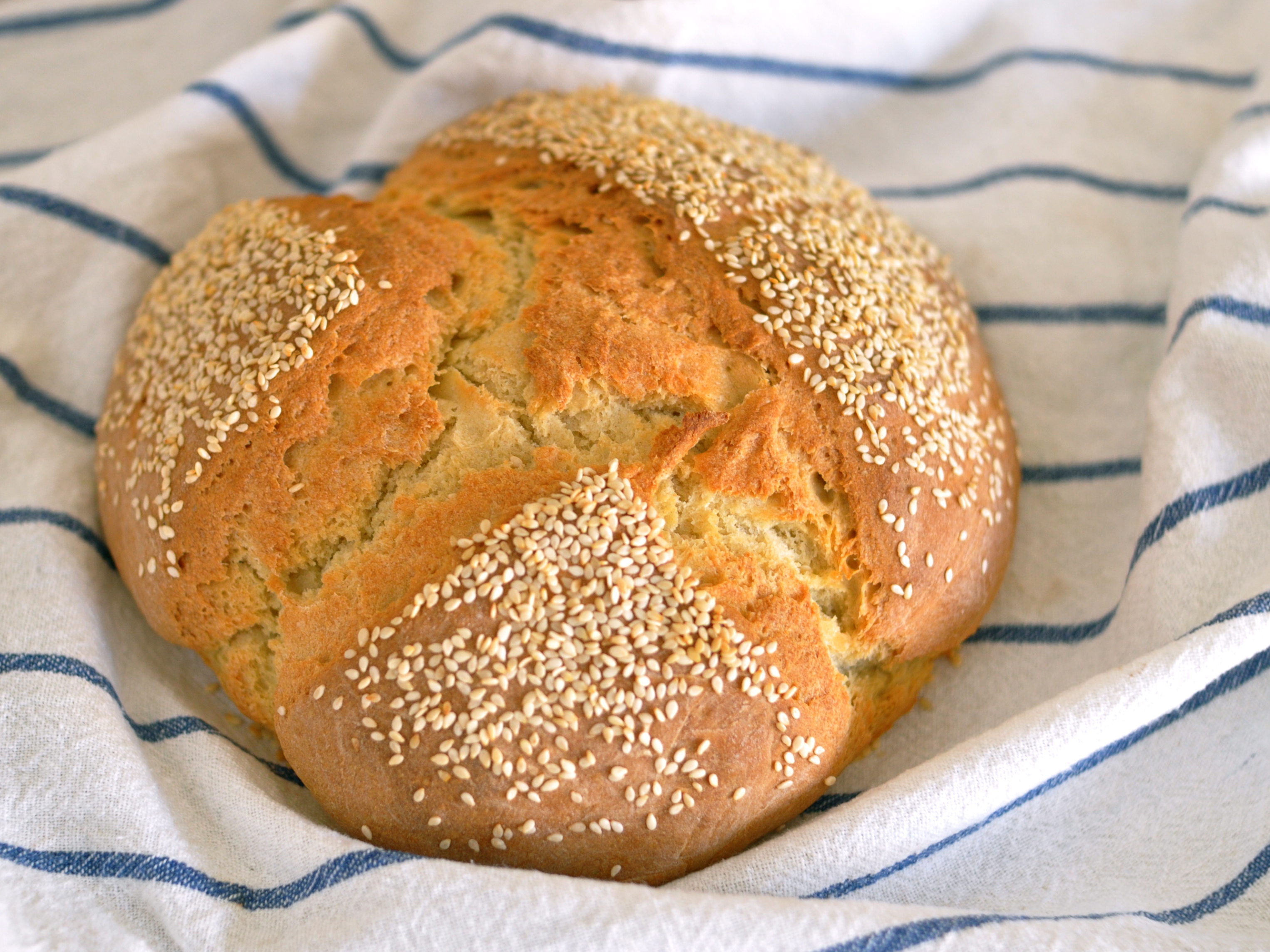
In his New Complete Book of Breads, Bernard Clayton doesn’t elaborate on this bread’s name; he does, however, call it “… a beginner’s dream.” And adds “Often I have used it in baking classes to demonstrate the ease with which good bread can be made.”

He might also have pointed out that this handsome bread is just the right measure of dense and chewy on the inside, with a soft but assertive crust on the outside, and that the rising time is only 15 minutes, which means the bread can be made from start to finish within an hour and a half, which is pretty great if — like me — you leave bread making to the last minute.

I first made it last September, realizing there was no bread in the house a bare ninety minutes before guests were to arrive for brunch. The name had also caught my eye and indeed it complemented well the baked eggs with cherry tomatoes, basil, and dash of balsamic vinegar I was serving that day.

Back then I hoped this sudden baking impulse would set the tone of a home-baked-bread–filled year, and perhaps even lead to realizing the sourdough fantasy I’ve been chasing.

Well, there hasn’t been much bread baking in the interim, let alone a sourdough adventure. Not a single loaf, in fact, until I baked this same Cuban bread for brunch again recently. It was well complemented, this time, by fried eggs with sautéed leeks and mushrooms atop grilled polenta (or that was the intention — the reality wasn’t quite so neat, but delicious nonetheless).

Happy spring!
***

From Bernard Clayton’s New Complete Book of Breads

5 to 6 cups white flour

2 packages yeast

1 Tbsp salt

2 Tbsps sugar

2 cups hot water (120°-130°F or 50°-55°C)

Sesame or poppy seeds (optional)

*

Prepare a baking sheet lined with parchment paper.

Place 4 cups of flour in a large bowl, add the yeast, salt, and sugar, and stir until they are well blended.

Pour in the hot water (using a thermometer is best here because if the water is too hot the yeast won’t work its magic, but, in the absence of such a device, a very unscientific gauge for right temperature is to place the little finger into the water and slowly count to ten. The water should feel quite hot at the end but below burning).

Beat with 100 strong strokes, or for 3 minutes with the flat beater of a hand mixer.

Gradually work in the remaining flour, half a cup at a time, until the dough is no longer too sticky and can be shaped into a ball. Kneed the dough for 8 minutes by hand on a floured work surface or in a hand mixer with a dough hook until it feels smooth, elastic, and “alive.”

Shape into a ball in a greased bowl and let the dough rise in a warm place until it has doubled in size, about 15 minutes.

Punch down the dough, separate it into two equal parts, and shape each into a smooth round. Place onto the parchmented baking sheet and cut an X on each loaf using a sharp knife. Brush with water and sprinkle with sesame or poppy seeds if desired.

Place the baking sheet with the loaves in the middle of a cold oven and place a large pan with hot water on a grate below, and heat oven to 400°F (200°C). **The bread will continue to rise in the oven as it is heating.**

Bake for about 50 minutes, until the bread is a deep golden brown. To check for doneness, knock on the bottom crusts; the loaves should sound hollow.

Let cool before slicing.

*

Related posts

Basic | Sweet pie crust

Banana cake

Stollen

Apple sauce with lemon, cinnamon, and ginger

25 October 2011

Fall has come with crisp air and deepening sunshine, piles of fallen leaves to jump into and carpets of prickly chestnuts to tread onto, scarves without gloves and short skirts with leather boots, and apples, and apple sauce.

Apple sauce should be made with the newest, crispest apples of early fall as a celebratory leap away from summer; but also with the last, gnarly, bruised, and slightly soft apples of spring in patient anticipation of the summer’s first strawberries; and all winter long through grey skies and rainy days, snow storms and frigid winds.

Because making apple sauce is as easy as cutting apples into pieces and letting them cook for a little while, with a film of water at the bottom to prevent burning. But there are countless possible variations. Sugar or no sugar. Chunky or smooth. Spices? Even butter, for some. This is how I often make apple sauce, though by no means the only way.

***

This makes an intensely fragrant, chunky apple sauce. For a smoother texture the cooked apples can be run through a food mill. The spices and amount of sugar can also be adapted according to taste. I prefer fresh ginger and whole cinnamon because it imparts a more subtle taste, but ground spices would be fine, too.

About 10 small apples

Rind and juice of 1 lemon

1-inch (2.5 cm) piece ginger

1 thin cinnamon stick (or a half)

2 or 3 Tbsps brown sugar

***

Peel, core, and cut the apples into quarters and place in a heavy-bottomed saucepan.

Peel the rind of the lemon into a long ribbon, carefully avoiding too much pith, juice the lemon, and add both the rind and the juice to the apples.

Peel the ginger, cut it into thin slices, and add to the apples. Also add the cinnamon stick and the sugar.

Toss the apples. Pour in 2 or three tablespoons of water, just enough to coat the bottom of the pot.

Cook, covered, over medium to low heat for 20 to 30 minutes, until the apples have softened.

*

Related posts

At the market | Quinces

Oatmeal raisin walnut cookies

Banana cake


Pork rillettes

20 October 2011

I’ve been in the mood recently to serve a somewhat more elaborate apéritif, tapas style, when we invite friends over for dinner. It’s convivial and frees up last minute cooking time since I then usually skip the first course.

A typical apéritif includes marinated olives. Cherry tomatoes, radishes, or daikon radish depending on the season. Cashews or almonds, which I’ve just learned to dress up by roasting them with some spice. For something more substantial, I’ve often made salmon rillettes or chicken liver terrine. But as I was delving into Moro The Cookbook, I found this Spanish pork rillettes recipe.

French rillettes don’t usually include overt aromatics. They taste like pure, unadulterated pork, in fat. They are delicious. This recipe uses pimentón (Spanish paprika), fennel, and sherry alongside garlic and bay. It’s different from the rillettes I knew; it certainly is no worse.

***

I reduced the amount of pimentón for a more subtle flavor and added a note about the leftover pork fat, but otherwise the recipe is that of Moro the Cookbook.

2 lbs (1 kg) boneless pork belly

1/2 lb (225 g) pork back fat

6 garlic cloves

1 heaped tsp fennel seeds

1/2 tsp whole black peppercorns

3 bay leaves

1 tsp sweet smoked Spanish paprika (pimentón)

2/3 cup (150 ml) fino sherry

Sea salt and black pepper

***

Preheat oven the 275°F (140°C).

First trim the rind from the pork belly, then cut the meat and fat into roughly 2 x 1 1/2 inch (5 x 3 cm).

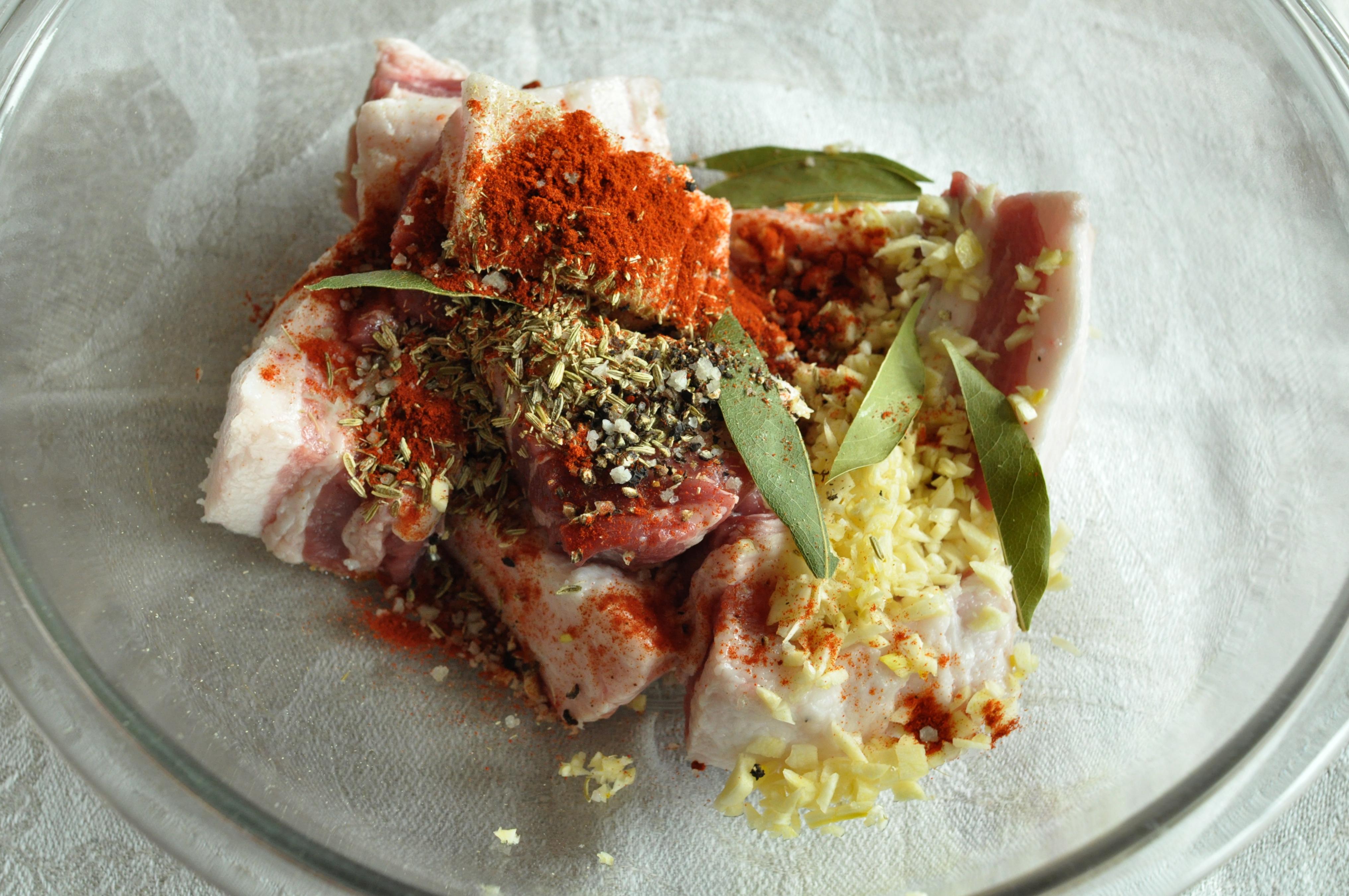
Prepare the aromatics by roughly chopping the garlic cloves; in a mortar, lightly crush the fennel seeds and peppercorns; halve the bay leaves.

Place the pork and fat in a large mixing bowl and add the garlic, fennel seeds, peppercorns, bay leaves, paprika, sherry, and a good pinch of salt, and toss well with your hands to combine. Transfer to a 2 quart  (2 liter) earthenware terrine or heavy cast-iron pot, seal tightly with foil so no steam can escape, and place in the oven for at least 4 hours, until the meat is very soft and can be shredded easily.

Remove from the oven and strain the meat in a sieve, pressing with a spatula or spoon to release the juice.

Put the liquid aside to cool, then in the refrigerator until the fat rises to the top and solidifies.

Once the meat has cooled enough to handle, shred between your fingers. **This is best done when the meat is warm rather than cold, as it will become more difficult to shred.** Set aside any pieces of fat that have not melted away (see note).

When the fat on top of the juice had somewhat solidified, spoon it off and set aside. Add all the juice and 2 tablespoons of fat to the shredded meat. Mix well, season with salt and pepper, and put the meat back into the terrine or other earthenware or glass jar. Pack the meat gently and seal with a layer of fat about 1/4 inch (1/2 cm) thick.

Keep in the refrigerator for at least a couple of hours before serving, and up to 2 weeks if well sealed with fat.

Note: You could discard the leftover fat, but it seemed a shame to do so, so I placed it in a small skillet over very low heat, letting it melt further. I then strained the fat and kept it in the refrigerator, to be used on bread instead of butter. The pieces of fat that remained solid, brown and caramelized, we ate — just like that.

*

Related posts

Cookbooks | Moro The Cookbook (Roasted almonds with Spanish paprika)

Chicken liver terrine

Plum jam with candied ginger

26 September 2011

I bought dodgy plums at the market on Wednesday; they looked good but were suspiciously soft to the touch. And although at Union Square market, even questionable plums are rarely at a discount, I got them anyway hoping it would force me to make jam. It protects the plums from rapacious children, and me from making tarte. It worked.

The plums sat undisturbed on the kitchen counter for a couple of days as I pondered how I might jazz up the plum jam. With a dash of alcohol perhaps, or some spice.

Then I read Oui Chef Steve’s Plum and Ginger jam and my attention wandered over to a permanent squatter of the second right hand shelf in my kitchen – candied ginger. The decision seemed to make itself.

I am told I will have to keep the jars for at least a few weeks before opening, since jam benefits from a little aging, but just from licking the spoon I think I can say – it tastes pretty great.

***

2 lbs (900 g) plums

2 3/4 cups (550g) sugar

Juice of 1/2 lemon

About 15 pieces of candied ginger

***

Wash plums, cut them in half and again into quarters. Take out the pits but reserve and count them, as they will be cooked with the jam then removed. (The French like to leave pits in jams and cakes as they believe it enhances the flavor – we can’t help it).

In a heavy saucepan, mix the plums as well as the pits, sugar, and lemon juice and slowly bring to a boil.

Cook over medium heat.

Add the candied ginger cut into small slices after 15 minutes.

After about 20-30 minutes, check whether the juice has “gelled.” To do this take out a small spoonful and let it cool. Once cold, the juice should have thickened in the spoon, and when you try to pour it the drip is not liquid but heavy, as though it was sticking to the spoon. Cook longer if necessary and check again.

Meanwhile, sterilize jars in boiling water for 5 to 10 minutes.

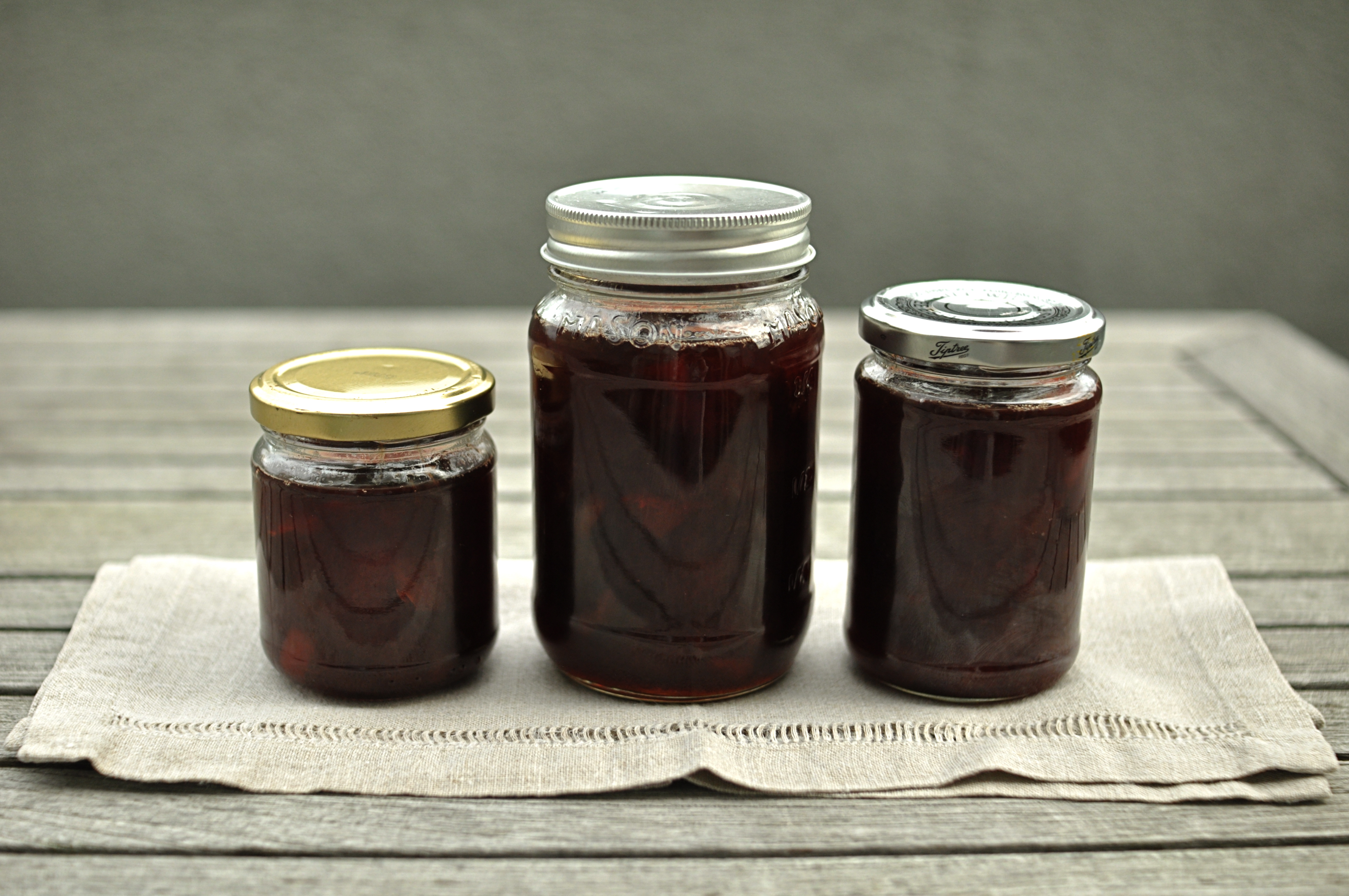
As soon as the jam has “gelled,” remove from the heat and scoop out the pits (if you have counted them you will know exactly how many need to be fished out). Then pour into sterilized jars and close tightly.

Resist opening the jars immediately, wait at least a few weeks.

The jam keeps well; once opened it should be stored in the refrigerator.

*

Related posts

Quince jelly

Plum cake


Rhubarb ice cream

28 June 2011

In the midst of baking my third or fourth batch of busy-day cupcakes I became fixated with the idea of rhubarb ice cream. It must have been triggered by a surfeit of sugar and vanilla – I craved something cool and tart.

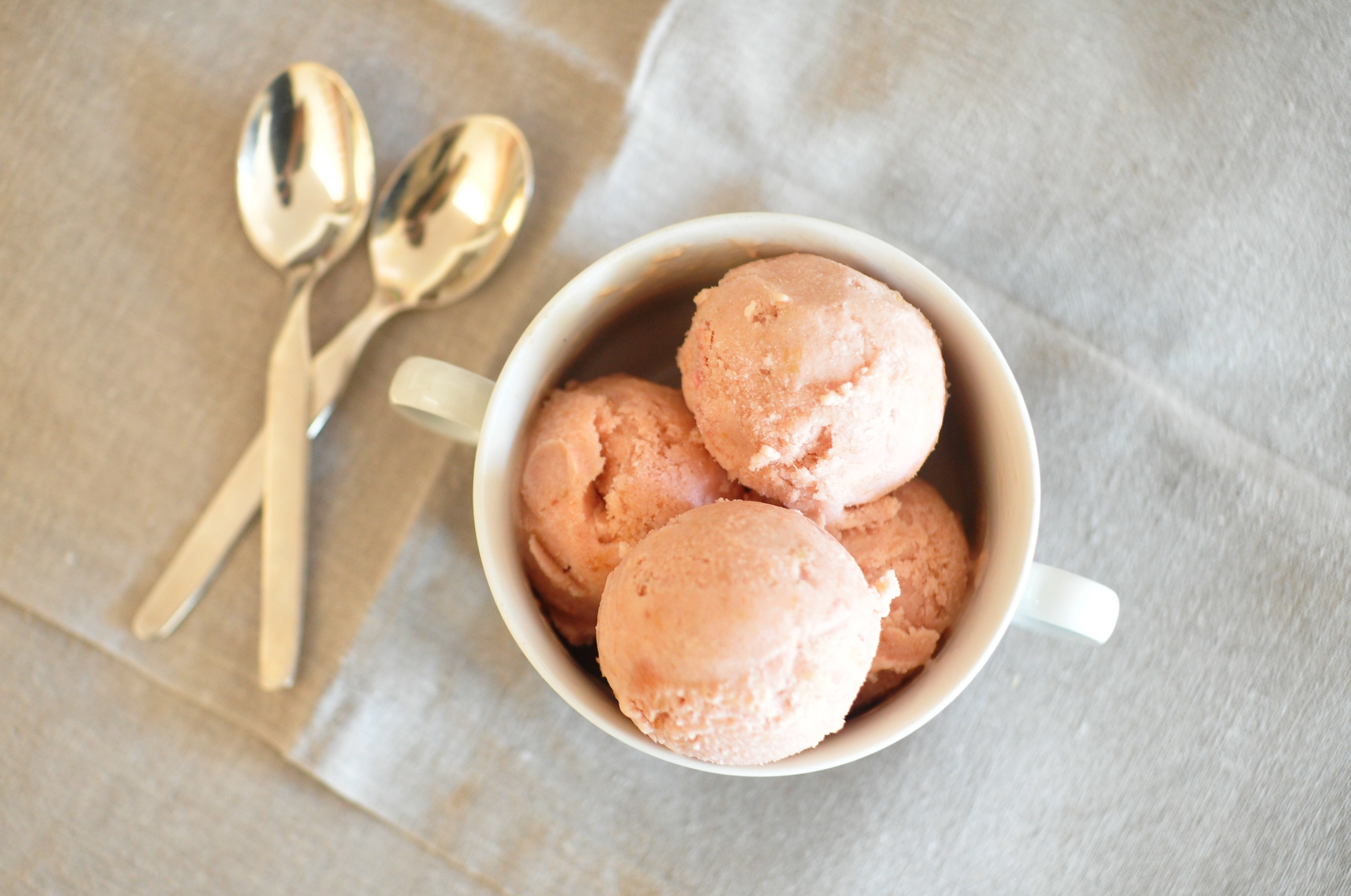
I made this ice cream in the easiest possible way. It is simply rhubarb compote mixed with heavy cream, churned into ice cream.

It is (was) incredibly good.

***

This recipe requires an ice cream maker of some kind. It makes a little over a pint of ice cream.

3 1/2 cups (400 g) rhubarb measured once cut into 1 inch (2.5 cm) pieces

1/2 cup (100 g sugar) for the compote plus 1 or 2 Tbsps

1/2 cup (150 ml) heavy cream

1 Tbsp rosé wine

***

Make a rhubarb compote with the rhubarb and sugar.

Let the compote cool down then chill in the refrigerator for at least 3 to 4 hours or overnight.

Mix the compote with the heavy cream, rosé, and add one or two tablespoons of sugar to taste.

Churn in an ice cream maker and keep in the freezer until ready to eat.

*

Related posts

At the market | Rhubarb [Rhubarb compote]

*

Follow @nettleandquince on twitter