Archive for the ‘Summer’ Category

Rhubarb raspberry crostata

21 July 2012

I wasn’t going to make this, I admit. I saw the crostata on Lottie + Doof when it was published a few weeks ago and somehow dismissed it, as I might have snubbed a recipe that combines rhubarb and strawberries. In my mind rhubarb is not enhanced by berries of any sort. (Rosemary as a gentle herbal boost, on the other hand, is a different story.)

But I arrived in Brittany in the midst of what everyone claimed to be the worst summer (summer?) in recent memory. I’d already enjoyed a generous dose of sun and heat in New York, so I didn’t mind much, and the terrible weather had brought with it a few perks: still plenty of rhubarb at the market and lots of raspberries in the garden, bravely defying the odds on overgrown bushes left to fend for themselves all year long. (Also elders still in bloom! But more on that later.)

I bought rhubarb, as I always do; eyed the raspberries calling out for prompt picking; and remembered that a friend had recently raved about this crostata. The decision seemed to make itself.

As it turned out, I loved everything about the recipe. The crust is great. The technique of bending it back over the pie so simple and clever. And, well, the combination of rhubarb and raspberry really is well inspired, after all. (I did add a sprig of rosemary to infuse the filling as it was cooking, it was irresistible. Otherwise everything remains pretty much the same.)

The great thing here is that the crust and rolling technique can be used with all kinds of fruit. I imagine peach slices tossed with a little sugar and a few sprigs of thyme simply placed on the crust (uncooked) before baking would be excellent, too.

Recipe by Karen DeMasco in Bon Appétit via Lottie + Doof

For the  crust

1 cup (125 g) white flour

1/2 cup (75 g) whole wheat flour

1 Tbsp sugar

1/2 tsp sea salt

3/4 (170g) cup butter

1 large egg

1 Tbsp whole milk

Keep the butter well chilled.

In a large bowl, combine the flours, sugar, and salt.

Cut the cold butter into cubes, add to the flour mixture, and combine until the dough has the texture of coarse oatmeal.

In a small bowl, whisk the egg and milk to combine well. Add the egg/milk to the flour/butter mixture, and work the dough just enough so that it can be gathered into a ball. If you need a little more moisture (I did), add some water, a few drops at a time, until the dough can be shaped.

Flatten the ball and place in the refrigerator, covered snugly with parchment paper, to rest for at least 1 1/2 hours and up to 2 days.

*

For the filling

1/4 cup (30 g) cornstarch

4 cups (about 500 g) rhubarb

1 pint raspberries

2/3 cup (135 g) sugar

1 sprig rosemary

In a small bowl, dissolve the cornstarch in 3 Tbsps water and set aside.

Wash, peel as necessary, and cut the rhubarb into 1/2 inch (1 cm) pieces. Never wash raspberries but check through them to remove leaves or any damaged berries.

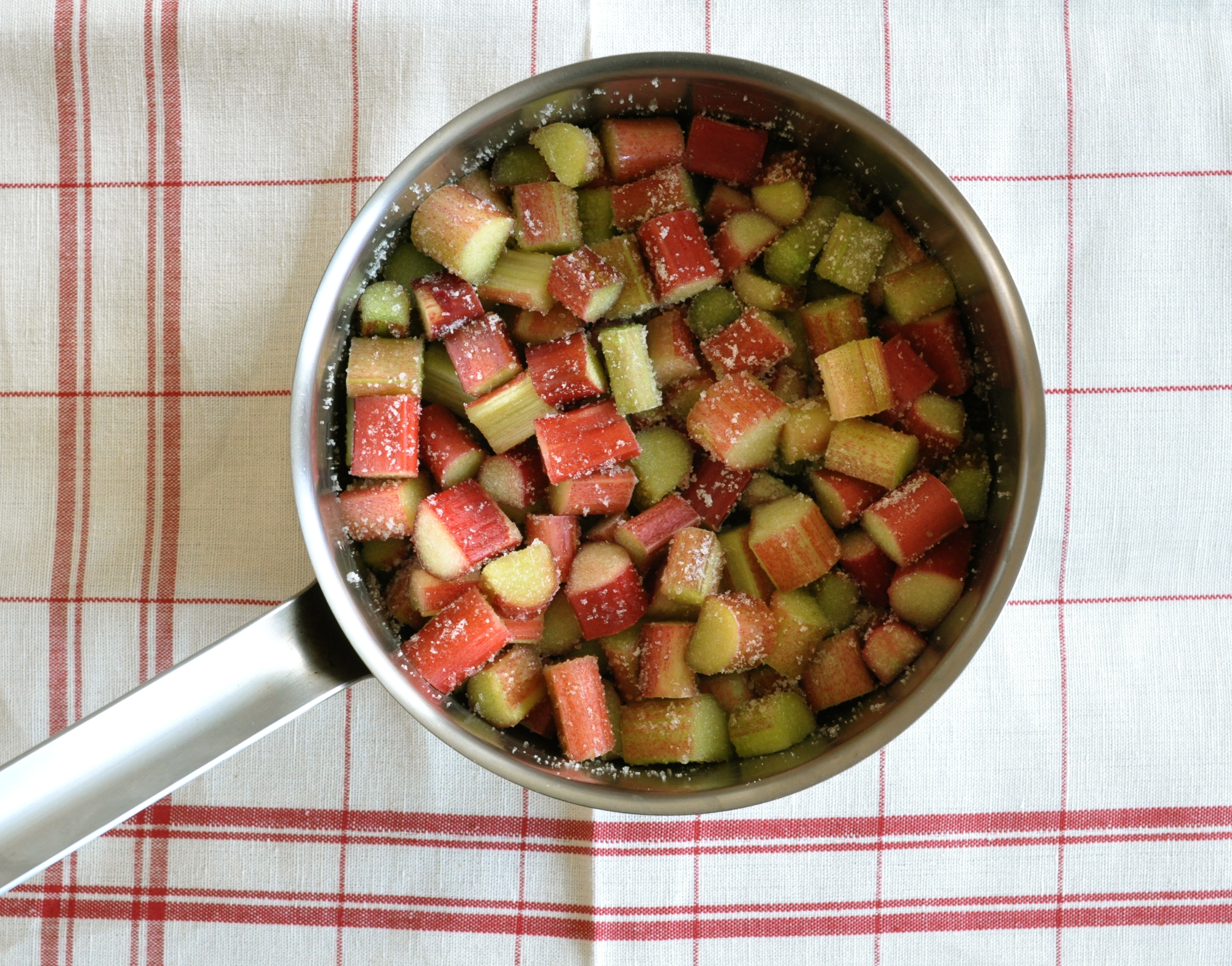
Combine the rhubarb, raspberries, rosemary, and sugar in a large heavy saucepan and cook over medium heat, stirring regularly, until the sugar dissolves and the juices are released, about 4 to 5 minutes. Stir in the diluted cornstarch and bring to a boil, then transfer to a bowl and chill until cool, about 30 minutes. **The rhubarb will not be soft, the slices still intact; it will cook through later as the crostata bakes in the oven.**

*

The crostata

Flour for rolling the dough

1 egg and 1 tsp milk for the egg wash

A little brown sugar for sprinkling on the edges of the crostata

Remove dough from refrigerator and allow about 15 minutes for it to soften with the ambient heat and become easy to handle (but not too much or the dough becomes sticky and difficult to roll).

Preheat oven to 400°F (200°C).

Roll out the dough onto a large piece of floured parchment paper to about 12″ (30 cm), taking good care that it doesn’t stick and adding flour if necessary.

Beat one egg with a tsp milk and brush the crust with the egg wash (this helps seal the crust so the juices from the fruit don’t make it soggy).

Remove the sprig rosemary from the cooled filling and scoop the filling carefully onto the crust, spreading it evenly from the center outward leaving a 2″ (5 cm) border. Gently fold the edges of the dough back over the filling.

Brush the borders with the egg wash and sprinkle with sugar. Slide the parchment paper with the crostata onto a baking sheet, then into the oven and bake until the crust is golden and the filling bubbly, about 45 minutes.

Let the crostata cool. Serve with crème fraîche or whipped cream.

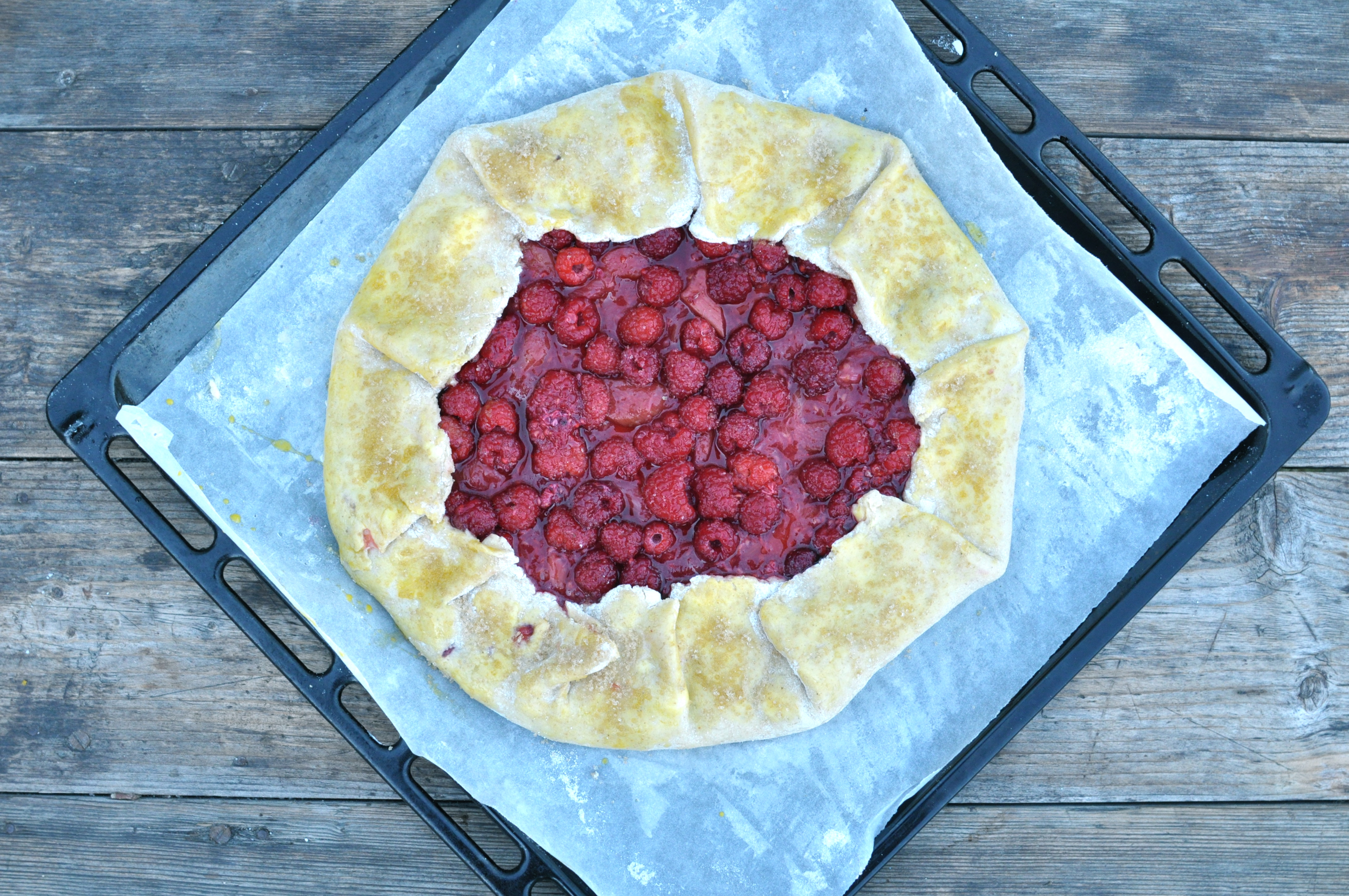
PS: Photos are of the uncooked crostata and here I added a few fresh raspberries just before baking. This is not reflected in the recipe.

Rhubarb rosemary syrup and a gin drink

21 June 2012

The rhubarb rosemary syrup is barely an adaptation of 101 Cookbooks‘ rhubarb rosewater syrup. It is the same recipe, but instead of adding rosewater once the syrup had cooled, I added a sprig of rosemary while it was still warm. I am entirely pleased with the result. I had seen the pairing of rhubarb and rosemary mentioned in a few places, and I love how it brings out rhubarb’s herbaceous edge.

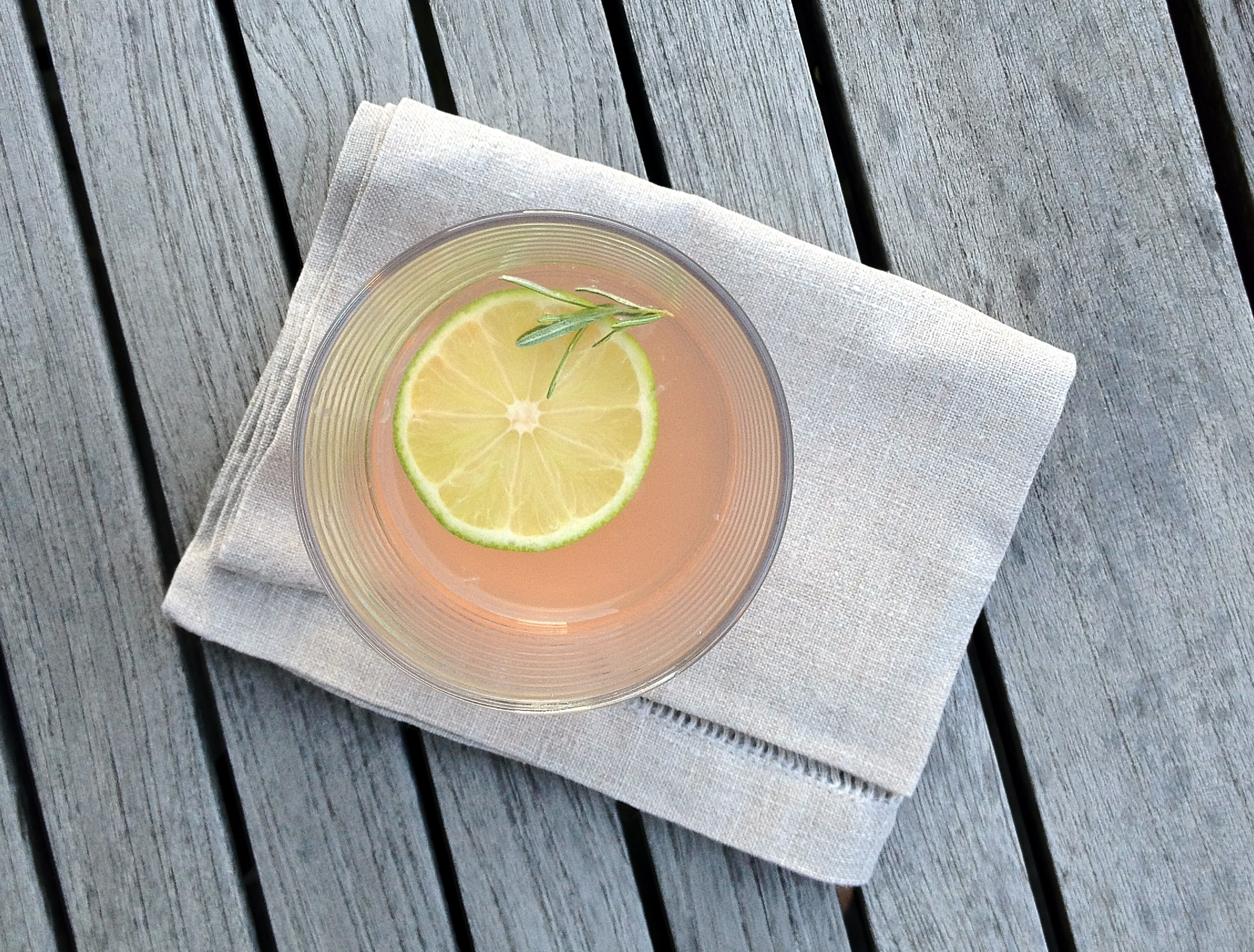
Typically I’ve simply been using a tablespoon of this syrup with sparkling water, a good squeeze of lime, and a few ice cubes. But somewhat uncharacteristically the other day I made a drink. It was a warm evening and I wanted something light and refreshing. Here’s how I made it, on a whim.

2 tsps rhubarb rosemary syrup (recipe from 101 Cookbooks, I just substituted rosewater with a sprig of rosemary)

2 ounces gin

1 ounce rosé

A dash of sparkling water

A squeeze of lime (to taste) and one slice

A sprig of rosemary

The slice of lime and sprig of rosemary ‘garnish’ are important to add a little more edge against the sweetness of the syrup and wine. I added a few ice cubes but took them out fairly quickly as they were melting too fast and I didn’t want them to water down the drink too much (using one larger ice cube would do the trick).

Cheers!

*

Related posts

At the market | Rhubarb

Rhubarb ice cream

Spelt buckwheat buttermilk pancakes

5 June 2012

I expect everyone has an opinion about pancakes.

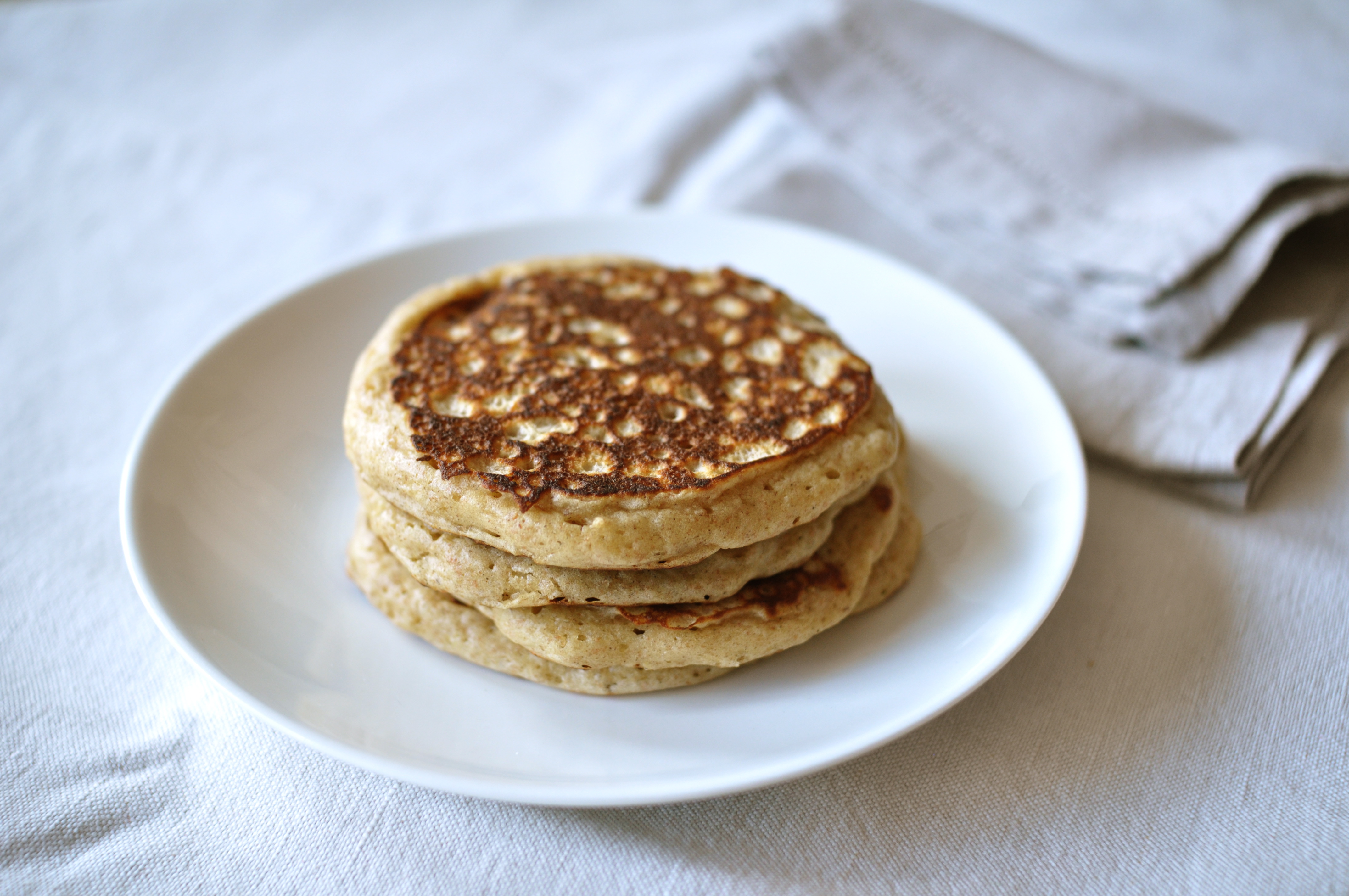
Pancakes must be light and fluffy, of course, but they must have character. I don’t make plain white flour/milk pancakes, if I can help it. Every Sunday (right, every Sunday *on which I make pancakes*), I experiment. Spelt, oat, whole wheat, buckwheat; buttermilk, yogurt, kefir, ricotta; orange and thyme; fruit, nuts, coconut; … . Some improvisations are better than others.

This recipe strikes just the right balance. There isn’t much buckwheat and that’s how it should be. Just a little heft, tempered by the tang of cultured milk.

***

I used white and whole spelt flours though regular wheat flours would also work. The key here is a small proportion of whole grain and a little buckwheat.

4 Tbsps butter

1 1/2 cups (175 g) white spelt flour

1/2 cup (75 g) whole spelt flour

2 heap Tbsps buckwheat flour

2 Tbsps sugar

1 tsp salt

2 tsps baking powder

1 tsp baking soda

2 eggs

2 1/2 cups (600 ml) cultured buttermilk

Coconut oil for the pan (I use coconut oil to cook pancakes. It works perfectly because it doesn’t burn.)

*

Melt the butter and let cool to room temperature.

Into a large bowl, sift the flours together with the sugar, salt, baking powder, and baking soda.

In another, smaller bowl, beat the eggs well with the fork before adding just 2 cups (500ml) of the buttermilk and finally the melted butter. (Add the rest of the buttermilk only if the batter is too thick.)

Pour the wet ingredients into the flour mixture, and mix swiftly, just enough to combine completely (a few bumps are nothing to worry about, it is important not to overstir the batter).

Grease griddle (non-stick pan) and place over high heat. Once the griddle is hot, pour little puddles of batter (the size is entirely up to you, but keep in mind that they will expand quite a bit), reduce heat to medium, and stay close, checking constantly until you start noticing bubbles popping up. Turn over the pancakes with a wide spatula and, within barely a minute, the pancake is ready. To make more pancakes, repeat process, adding a little oil every time to make sure they don’t stick.

The pancakes can be kept in a covered pan in a 250°F (120°C) oven for a little while if you want to make all the pancakes first and serve them at once.

*

Related posts

Orange thyme pancakes

Crepes

Banana cake

Cuban bread

Mimosa (deviled) eggs

29 March 2012

The trees are blooming in New York; it’s showstopping. Forsythias, exuberant magnolias, Callery pears like downy street clouds, vaporous cherry blossoms. And yet.

It isn’t time! I am still anticipating winter; the snow, the stews, the spiked hot chocolates by the fire. I have a notebook full for recipes longing for freezing temperatures: braised short ribs, slow-cooked duck, a quick spicy lentil soup if you’ve come home late from the cold. I see they will have to wait.

The year is creeping ahead, chives and tarragon have pierced my balcony beds, and so, submitting to nature’s infectious enthusiasm, I have embraced spring — but not, I admit, without a pinch of regret for a winter that wasn’t really.

***

6 eggs

About 10 stalks chives

About 3 stalks tarragon

5 or 6 leaves parsley

3 tsps mayonnaise

2 tsps red wine vinegar

Sea salt

Freshly ground black pepper

Smoked Spanish paprika

*

Fill a small saucepan (just about large enough to fit the eggs) with water. Bring to a boil. Add the eggs to the water one at a time, carefully, with a large spoon so they don’t hit the bottom and crack. Boil gently for 12 minutes. (I decided not to adopt the method Michel Roux uses in his book Eggs, which starts the eggs in cold water. However I have taken note of his advice to make sure the water boils gently, in order to avoid rubbery whites.)

Meanwhile, chop the herbs very very finely.

Once the eggs are cooked, strain the boiling water and add lots of cold water so they cool quickly.

Peel the eggs. Slice each in half lengthwise, carefully scoop out the yolks, and place them in a plate or shallow bowl.

Mash the egg yolks thoroughly with the mayonnaise, vinegar, finely chopped herbs, a pinch of salt, and a grind of black pepper.

With a small spoon, scoop the yolks back into the egg whites as neatly as possible.

At the very last minute, sprinkle a pinch of paprika on each egg.

*

Related posts

Pork rillettes

Chicken liver terrine

Marinated olives

Roasted almonds with Spanish paprika

Cuban bread

20 March 2012

In his New Complete Book of Breads, Bernard Clayton doesn’t elaborate on this bread’s name; he does, however, call it “… a beginner’s dream.” And adds “Often I have used it in baking classes to demonstrate the ease with which good bread can be made.”

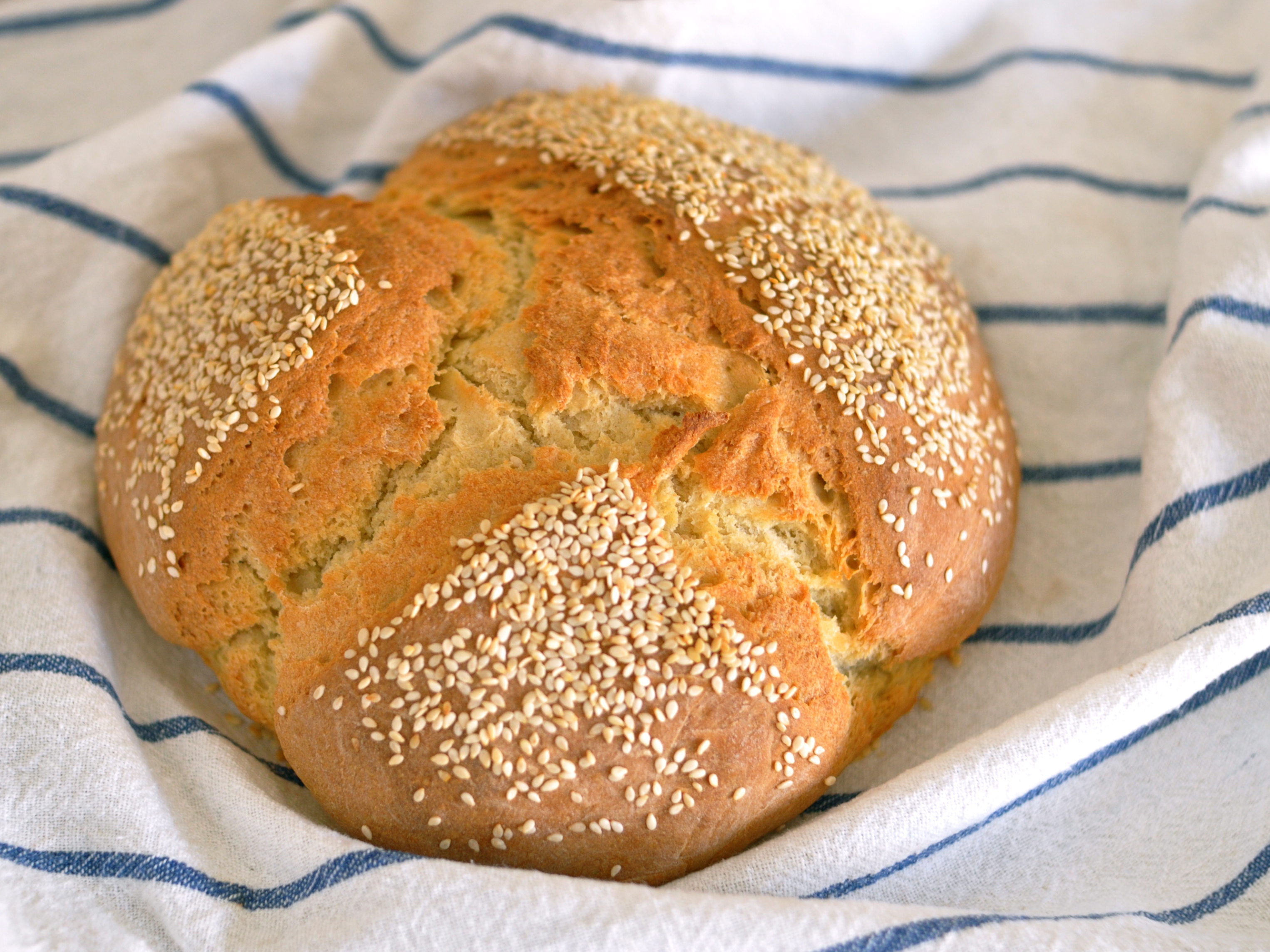
He might also have pointed out that this handsome bread is just the right measure of dense and chewy on the inside, with a soft but assertive crust on the outside, and that the rising time is only 15 minutes, which means the bread can be made from start to finish within an hour and a half, which is pretty great if — like me — you leave bread making to the last minute.

I first made it last September, realizing there was no bread in the house a bare ninety minutes before guests were to arrive for brunch. The name had also caught my eye and indeed it complemented well the baked eggs with cherry tomatoes, basil, and dash of balsamic vinegar I was serving that day.

Back then I hoped this sudden baking impulse would set the tone of a home-baked-bread–filled year, and perhaps even lead to realizing the sourdough fantasy I’ve been chasing.

Well, there hasn’t been much bread baking in the interim, let alone a sourdough adventure. Not a single loaf, in fact, until I baked this same Cuban bread for brunch again recently. It was well complemented, this time, by fried eggs with sautéed leeks and mushrooms atop grilled polenta (or that was the intention — the reality wasn’t quite so neat, but delicious nonetheless).

Happy spring!

***

From Bernard Clayton’s New Complete Book of Breads

5 to 6 cups white flour

2 packages yeast

1 Tbsp salt

2 Tbsps sugar

2 cups hot water (120°-130°F or 50°-55°C)

Sesame or poppy seeds (optional)

*

Prepare a baking sheet lined with parchment paper.

Place 4 cups of flour in a large bowl, add the yeast, salt, and sugar, and stir until they are well blended.

Pour in the hot water (using a thermometer is best here because if the water is too hot the yeast won’t work its magic, but, in the absence of such a device, a very unscientific gauge for right temperature is to place the little finger into the water and slowly count to ten. The water should feel quite hot at the end but below burning).

Beat with 100 strong strokes, or for 3 minutes with the flat beater of a hand mixer.

Gradually work in the remaining flour, half a cup at a time, until the dough is no longer too sticky and can be shaped into a ball. Kneed the dough for 8 minutes by hand on a floured work surface or in a hand mixer with a dough hook until it feels smooth, elastic, and “alive.”

Shape into a ball in a greased bowl and let the dough rise in a warm place until it has doubled in size, about 15 minutes.

Punch down the dough, separate it into two equal parts, and shape each into a smooth round. Place onto the parchmented baking sheet and cut an X on each loaf using a sharp knife. Brush with water and sprinkle with sesame or poppy seeds if desired.

Place the baking sheet with the loaves in the middle of a cold oven and place a large pan with hot water on a grate below, and heat oven to 400°F (200°C). **The bread will continue to rise in the oven as it is heating.**

Bake for about 50 minutes, until the bread is a deep golden brown. To check for doneness, knock on the bottom crusts; the loaves should sound hollow.

Let cool before slicing.

*

Related posts

Basic | Sweet pie crust

Banana cake

Stollen