Archive for the ‘Year-round’ Category

Children’s dinner | Cowboy food

6 July 2011

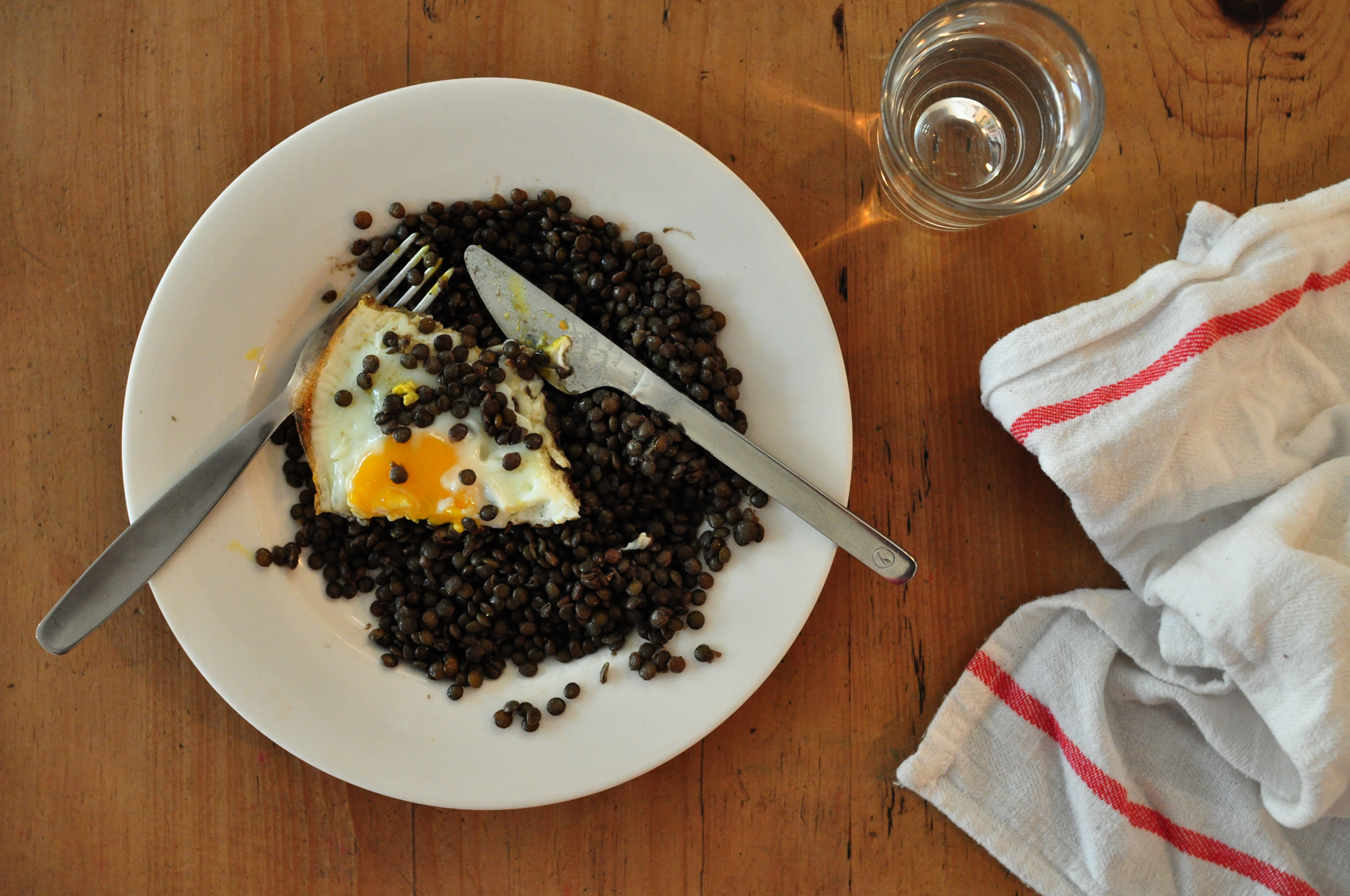
I take no credit for this meal, which is Thomas’s creation. He makes lentils with a fried egg and calls it “cowboy food,” because apparently cowboys ate beans and eggs; so naturally, lentils and eggs… In any case it’s a great meal, a brilliant name, and I have fallen for it, too.

I have decided to write about the easy, quick, weeknight dinners I prepare for my children, and it seemed fitting to start with “cowboy food,” which is an uncontested favorite. The other day as Balthasar asked what I was preparing and I replied “something with egg” (I hadn’t yet made up my mind), completely unprompted – and somewhat surprisingly as we haven’t had lentils for a while – he cheerfully exclaimed “cowboy food!”

I had mentioned cowboy food before in connection with a two-step lentil recipe. This is the quick version of lentils – the whole meal takes only about 35 minutes to prepare, and most of that is the lentils simmering away by themselves.

***

Two cups make a lot of lentils, but it’s always great to have lentil leftovers. They can easily be reheated, or made into a salad.

2 cups green lentils (preferably Castelluccio or du Puy)

1 small onion

Some vegetables: for example 1/2 bulb fennel, one or two stalks celery, a carrot

A few sprigs of flat-leaved parsley

2 bay leaves

Sea salt and freshly ground black pepper

Very good olive oil and a squeeze of lemon juice to serve

1 egg per person

***

The lentils

Pick through the lentils to look for small stone intruders that must be discarded. To wash the lentils, cover with cold water and drain in a fine mesh sieve.

Peel and cut into large chunks the onion and the vegetables.

Place lentils into a large saucepan with 4 cups (double the volume) water. Add the vegetable chunks, the parsley, and the bay leaves, bring to a boil and let simmer, covered, for about 25 minutes. Remove from heat when the lentils are done to your liking – I like them al dente, with a bit of bite.

Discard the sprigs of parsley, bay leaves, and vegetable chunks. Season the lentils with salt, pepper, good olive oil and a squeeze of lemon juice. Taste and adjust.

The eggs

**It’s better to cook the eggs once the lentils are ready, because while the lentils are just as delicious warm, the egg should be eaten straight off the pan.**

Heat a little olive oil in a frying pan. Once hot, crack the eggs into the pan. Season with salt and pepper. Fry until the white is set but the yellow still runny. Serve over the lentils.

*

Related posts

Lentils

Finger food | Leek and manchego frittata

Lentil and fennel salad with parsley


Busy-day cupcakes

22 June 2011

I’ve made this recipe so often in the past month it’s not even funny.

I was looking for a simple vanilla cake for a friend’s sixth birthday and remembered reading about this cake when I first came across a mean-sounding poppy seed cake on Lottie + Doof. The busy-day cake caught my eye because of the name, and because it came from Edna Lewis, a Southern cook whom I know through the lovely cookbooks she has written. I own one, The Taste of Country Cooking, which I read as I would a collection of short stories. Each recipe recalls a memory, a way of life, a moment in time.

The book is organized by seasons and menus. There were many lovely excerpts to choose from, but I liked this one because of a personal memory – the first time I had shad roe in Portland, Maine. The menu is called A Spring Breakfast When the Shad Were Running. The introduction begins: “Because shad was practically the only fish we ever ate and spring was the only time it was ever seen, we were always much too excited to wait for dinner, so we’d cook it for breakfast whenever it was caught…”

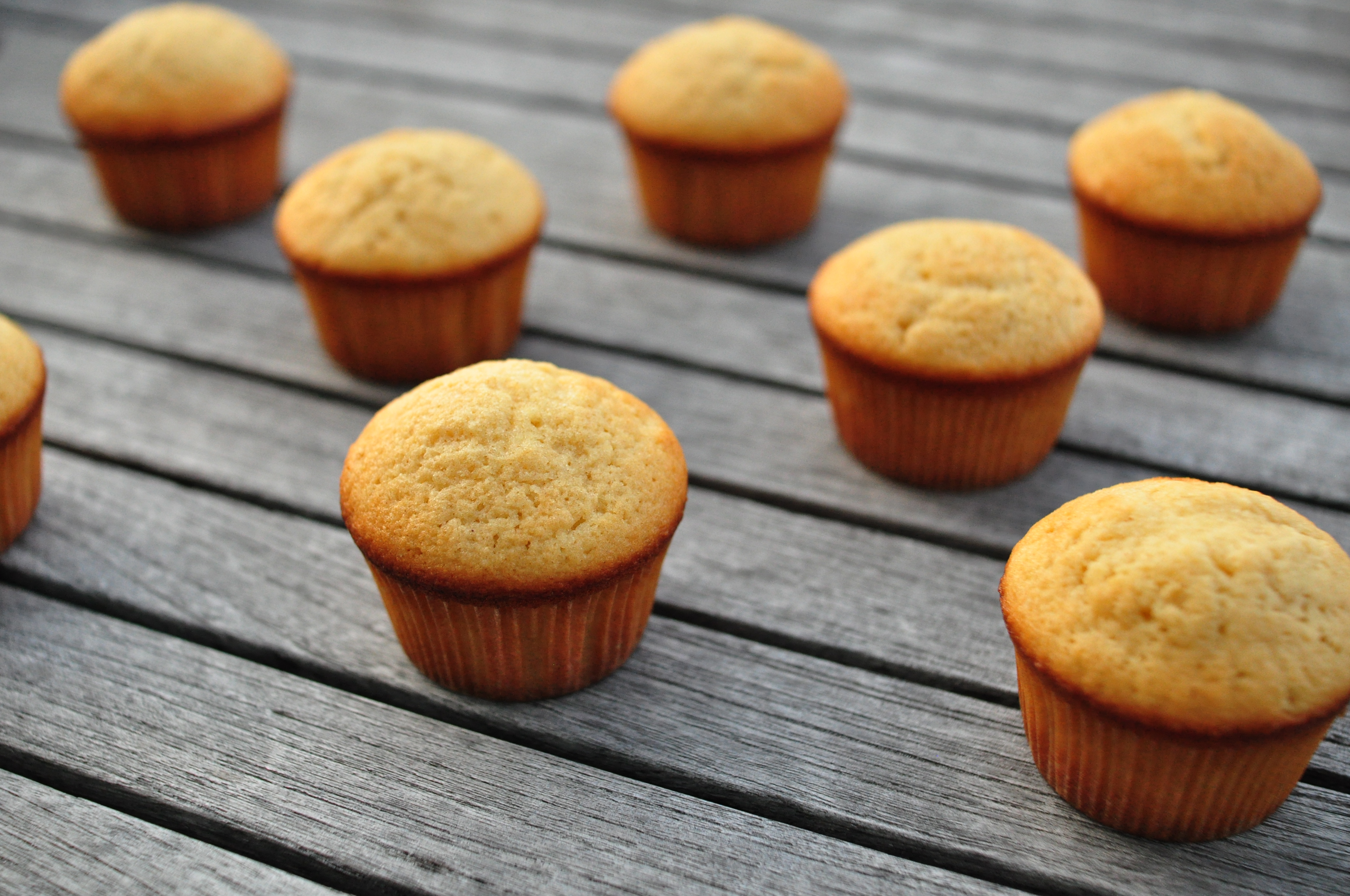
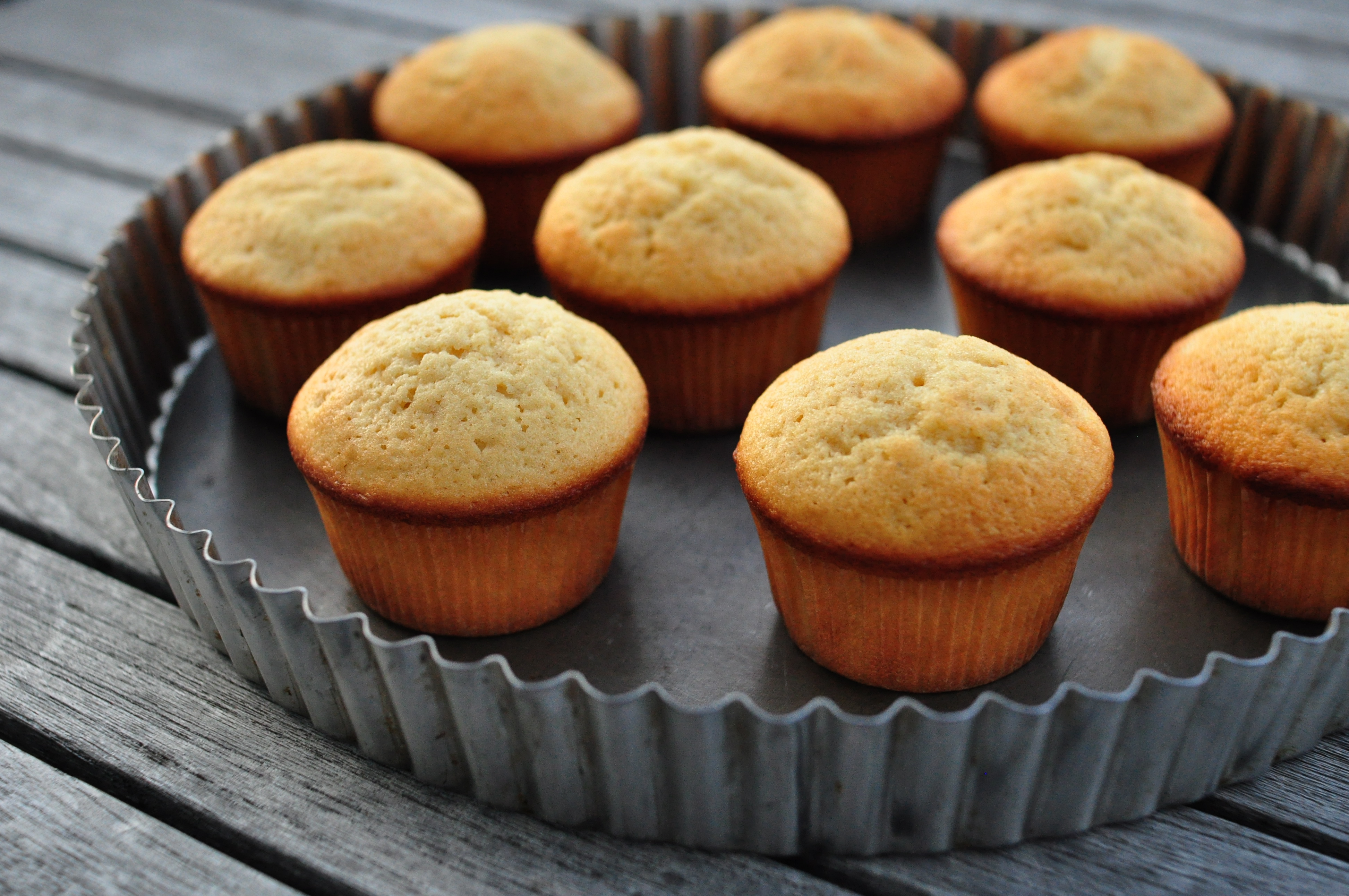
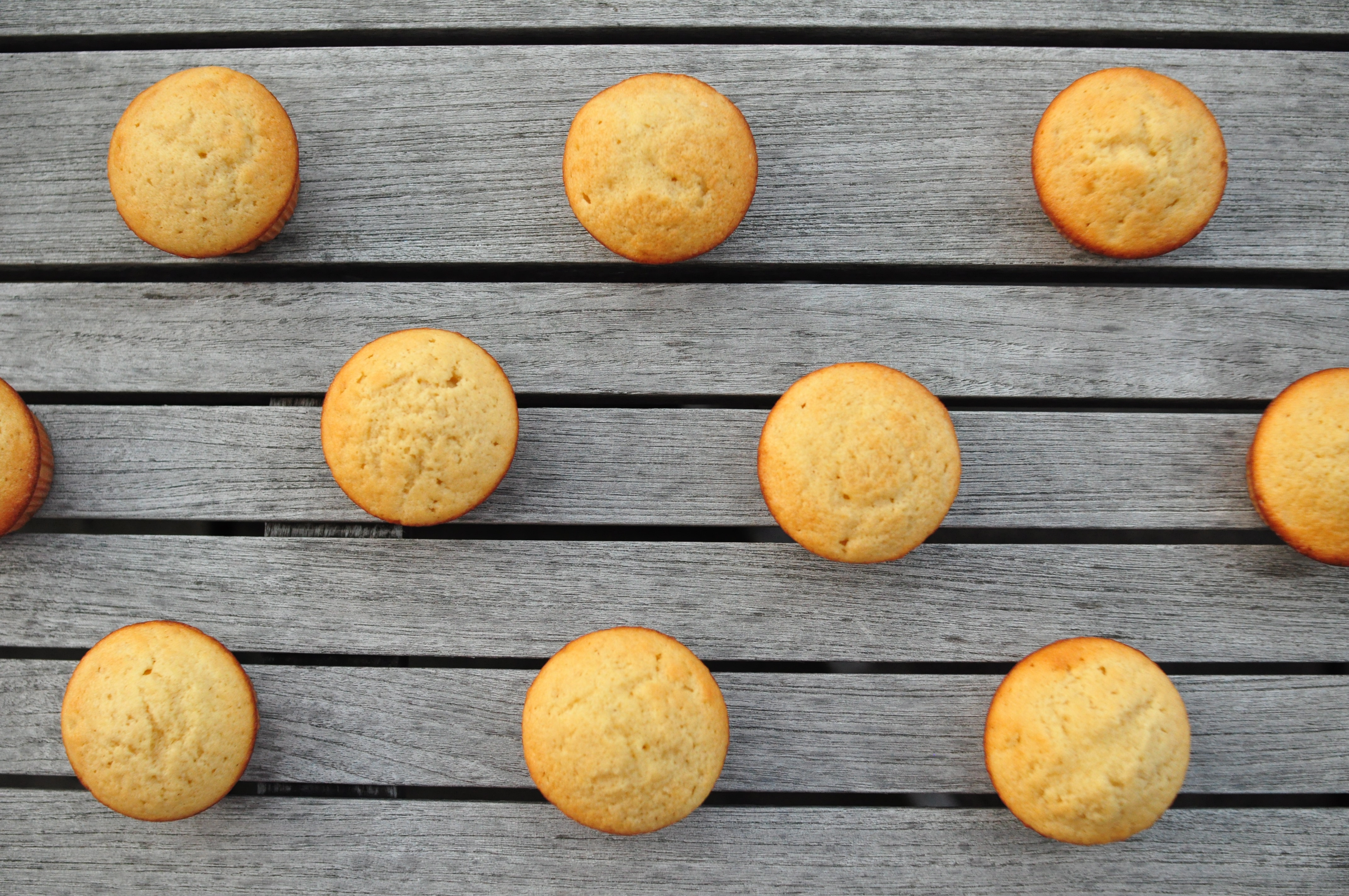
A “busy-day cake” sounded just like Edna Lewis. It is very easy to make and delicious – light and moist, simply scented with vanilla and nutmeg. And it lends itself very well to cupcakes.

Both Leo and Balthasar were born in June, so I made these cupcakes twice, for each of their birthdays. And one more time because a fierce summer storm hit New York and postponed the party. I’ve lost count – it was a lot of baking and (cup)cakes in one month. I have promised to bake a marble cake for a picnic on Saturday but at this point all I really want to do is roast chicken and make rhubarb ice cream.

***

Barely adapted from the Busy-Day Cake on Lottie + Doof. The recipe is doubled and makes about twenty-eight 2 1/2 inch (6.35 cm) cupcakes.

1 cup (225 g) unsalted butter, at room temperature

2 cups (400 g) sugar

6 eggs

4 cups (400 g) flour

1 cup (250 ml) buttermilk*

1/2 tsp fine sea salt

3 tsps pure vanilla extract

4 tsps baking powder

1/2 tsp freshly grated nutmeg

*

Preheat the oven to 375°F (190°C).

With a wooden spoon beat the butter and sugar thoroughly, until light and fluffy. Add the eggs one at a time, stirring to incorporate each one before adding the next. Then add, alternately, about a third of the flour, half of the buttermilk, another third of flour, the second half of the buttermilk, and the last part flour, stirring to combine the ingredient every time. Finally add the salt, vanilla extract, baking powder, and nutmeg.

Scoop a large spoonful of batter into each cupcake cup (the batter should barely reach the top of the cup – it will rise.).

Bake for 14 to 16 minutes, until the batter is just set and as soon as a toothpick comes out clean.

* An easy substitute for buttermilk is to stir 1 Tbsp lemon juice into 1 cup of milk and let sit for 5 minutes

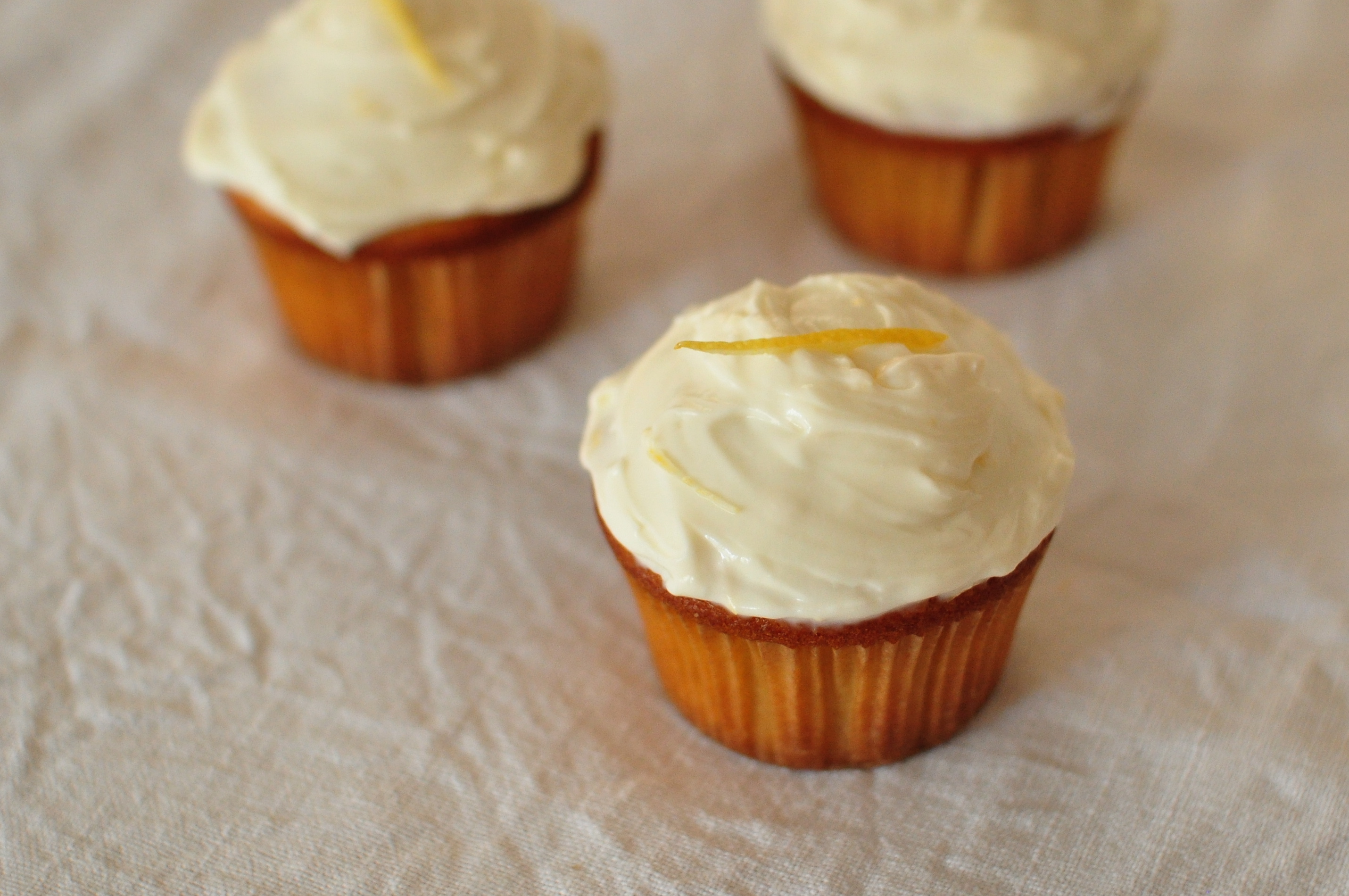
I made mascarpone lemon icing for the cupcakes:

2 cups (500 g) mascarpone

1/2 cup (40 g) icing (confectioner’s) sugar

1 or 2 untreated lemons, depending on the yield of your grater

Mix the mascarpone with the icing sugar, grate one lemon and blend the zest into the mascarpone. Taste, add some zest if you want a stronger lemon flavor. Ice the cupcakes just before serving and add a thin strip of lemon rind or a raspberry for decoration.

*

Related posts

Poppy seed and almond cake

Oatmeal raisin walnut cookies

Banana cake

Orange almond cake


Trout in a paper package (“en papillote”)

3 June 2011

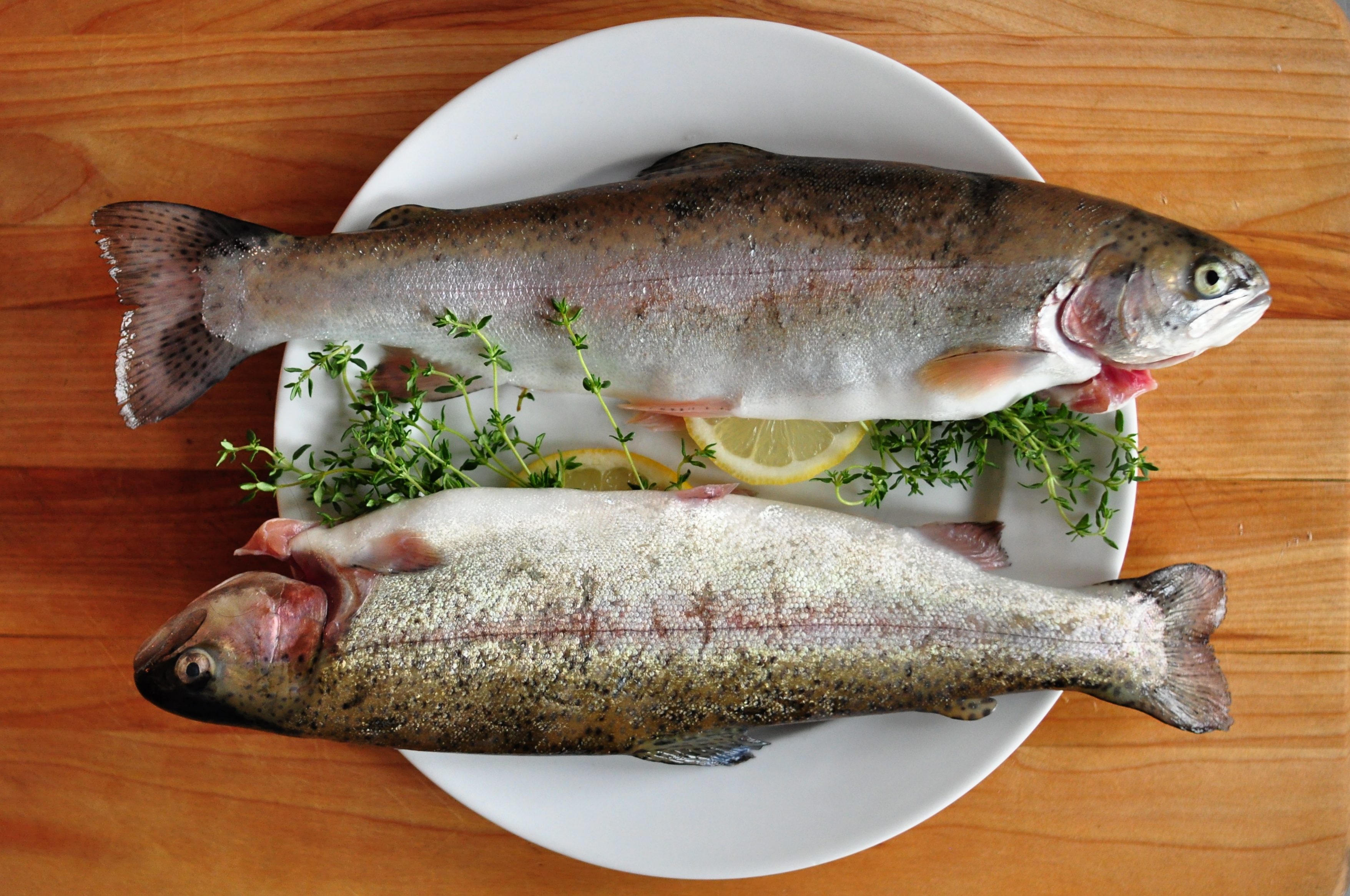
A trout so fresh* it is practically still winking at you when you cook it /
Courteously seasoned with salt and pepper, lemon and thyme /
Wrapped tightly in a parchment paper package /
Cooked gently, not a minute too long /
With small boiled potatoes tossed in very good butter.

***

Quantities per trout, one small trout per person

Trout, scaled and gutted

Maldon or other flaky sea salt

Freshly ground black pepper

2 slices untreated lemon

2 sprigs fresh thyme

Parchment paper

*

Preheat oven to 375°F (190°C).

Season the trout cavity with salt and pepper. Place in it two slices of lemon and two sprigs of fresh thyme.

Place the trout at the center of a piece of parchment paper large enough to be wrapped comfortably around the fish, i.e about 8 inches larger than the fish on either side, and about 4 inches longer than the fish at each end. Pull up the sides of the parchment paper around the trout and fold it over itself tightly three times, then fold the ends over under the fish. This should create small airtight packages.

Place in an ovenproof dish and slide into the oven. The cooking time depends on the size of the trout, but it will be fast, probably about 12 to 15 minutes. The best measure is to open one package and check the trout – sooner rather than later.

*Available on Wednesdays at Union Square Greenmarket in New York, from Beaverkill Trout Hatchery, a little stall close to 16th Street


Oatmeal raisin walnut cookies

25 May 2011

I’m in a baking state of mind, and a bit perplexed by it.

As much as I love to cook, I don’t bake very often. Except when I want to make dessert for dinner with friends, and even then I usually manage to devise a non-baked sweet. But these days I’ve been baking walnut tarts and banana cakes, and, most surprisingly, the other day at 10 pm I felt compelled to try to recreate my childhood memory of a seriously addictive chewy almond macaroon. (It was an improvisation and not an entirely terrible first attempt. To be continued.)

This weekend I baked oatmeal raisin walnut cookies, for no particular reason.

The recipe is very slightly adapted from the Once Upon a Tart… cookbook. It has less sugar, fewer raisins, and leaves out the cinnamon. I wanted something subtle and understated.

When I first tasted one, straight out of the oven, I was worried it lacked something: some spice perhaps, or some sugar — why am I always compelled to tinker with recipes? But the next day I felt vindicated. They were exactly as I wanted. These cookies don’t wow into submission at first bite; they seduce stealthily, enticing, unwittingly, to reach for another, and another, and another…

Resist the temptation to eat the cookies straight off the rack. Wait a few hours and they will be exactly what you were hoping for.

***

Slightly adapted from the Once Upon a Tart… cookbook

1 cup (225 g) butter
1 1/4 cup (250 g) sugar
2 eggs
1/3 cup (100 ml) liquid honey
1 1/2 cups (175 g) flour
4 cups (400 g) rolled oats
1/2 tsp salt
1 1/2 cups (175 g) coarsely chopped walnuts
1 cup (125 g) raisins

***

Preheat oven to 400°F (200°C).

Take the butter out of the refrigerator to soften.

In a large bowl, beat the softened butter and sugar with a wooden spoon until light and fluffy. **It’s important here to beat the ingredients thoroughly, for 5 to 10 minutes.** Add the eggs, one at a time, beating with a whisk to combine well. Add the honey and mix.

In a separate bowl, mix together the flour, the oats, and the salt.

Combine  the butter/sugar/egg/honey mixture with the flour/oats/salt. Mix until the flour has disappeared.

Stir in the walnuts and raisins.

Line a baking sheet with parchment paper. Butter the paper. With a large spoon or ice cream scoop, transfer small balls of dough to the baking sheet, flatten and shape them with your fingers, making sure to leave about 1 in (2.5 cm) between each cookie.

In the oven for 12-15 minutes, until the cookies start turning brown at the edge. The cookies will still feel soft to the touch but will harden as they cool.  [12-13 minutes works for 2 in (5 cm) cookies. Adjust time according to the size of the cookies.]

Wait until tomorrow. Store in a cookie jar or other airtight container.

*

Related posts

Banana cake

Busy-day cupcakes

Basic | Sweet pie crust

10 May 2011

This pie crust is ideally light and flaky. It works very well for practically any fruit tarte, except — mildly ironically in this context — the walnut tarte for which I made it on Saturday. For that singular tarte, unlike others I usually make in that it is fairly rich, this pie crust is a bit too sweet and buttery. For every other tarte (or even pumpkin pie), it is excellent. It is the galette dough recipe from Chez Panisse Café Cookbook.

There are endless minute variations on pie crust recipes, some of which involve the size of the pieces of butter or the temperature of the ingredients. These do make a difference, and I think another crucial aspect is how the dough is treated. It should always be barely handled – delicately with the fingertips and never the palm of the hand. I think of it as the opposite of kneading.

***

From Chez Panisse Café Cookbook

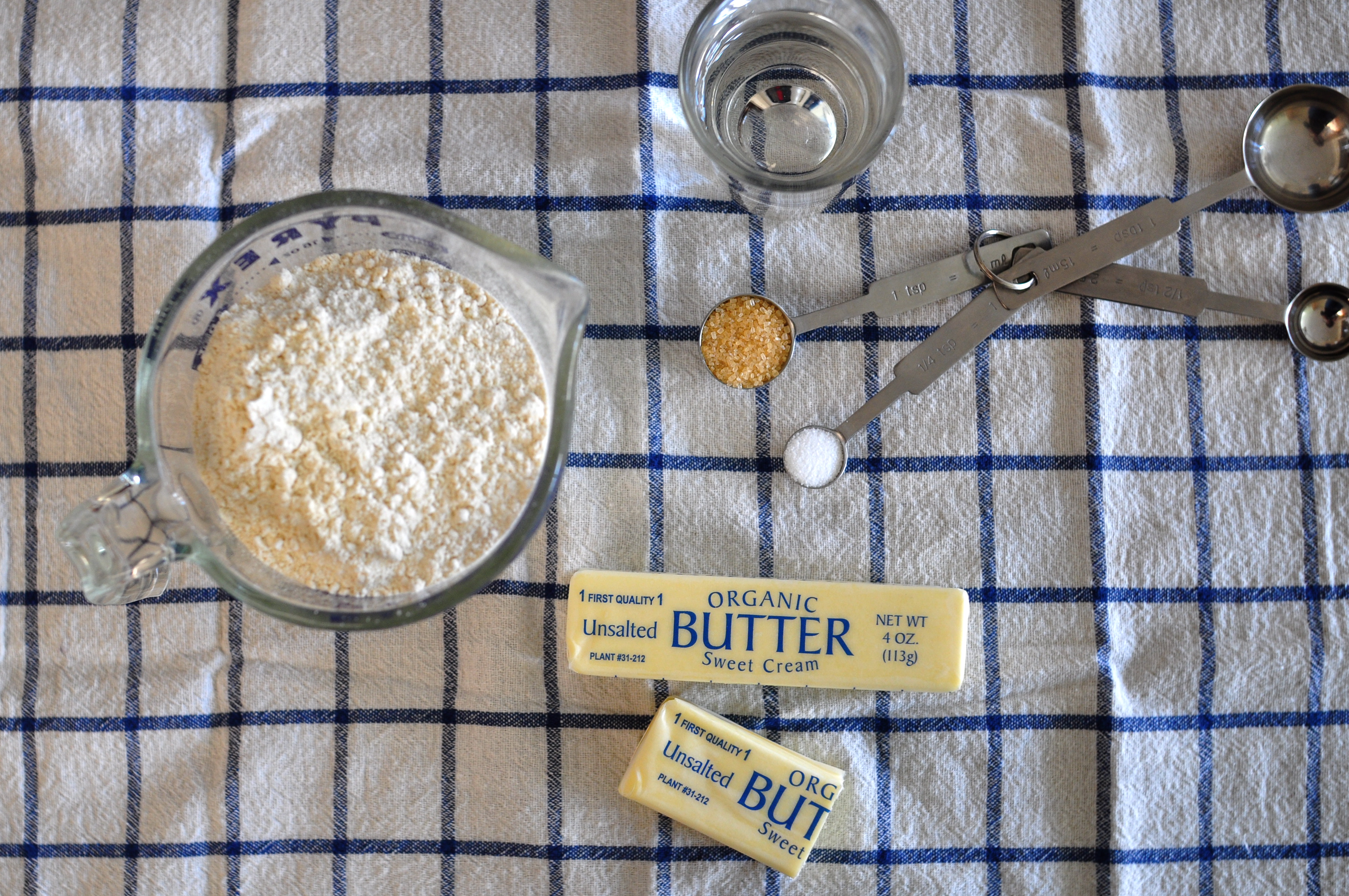
3/4 cups (170g) unsalted butter

2 cups (200g) flour

1 tsp sugar

1/4 tsp salt

Place a small glass of water in the freezer.

Cut the butter into 1/2-inch (1 cm) pieces.

In a large bowl mix the flour, sugar, and salt.

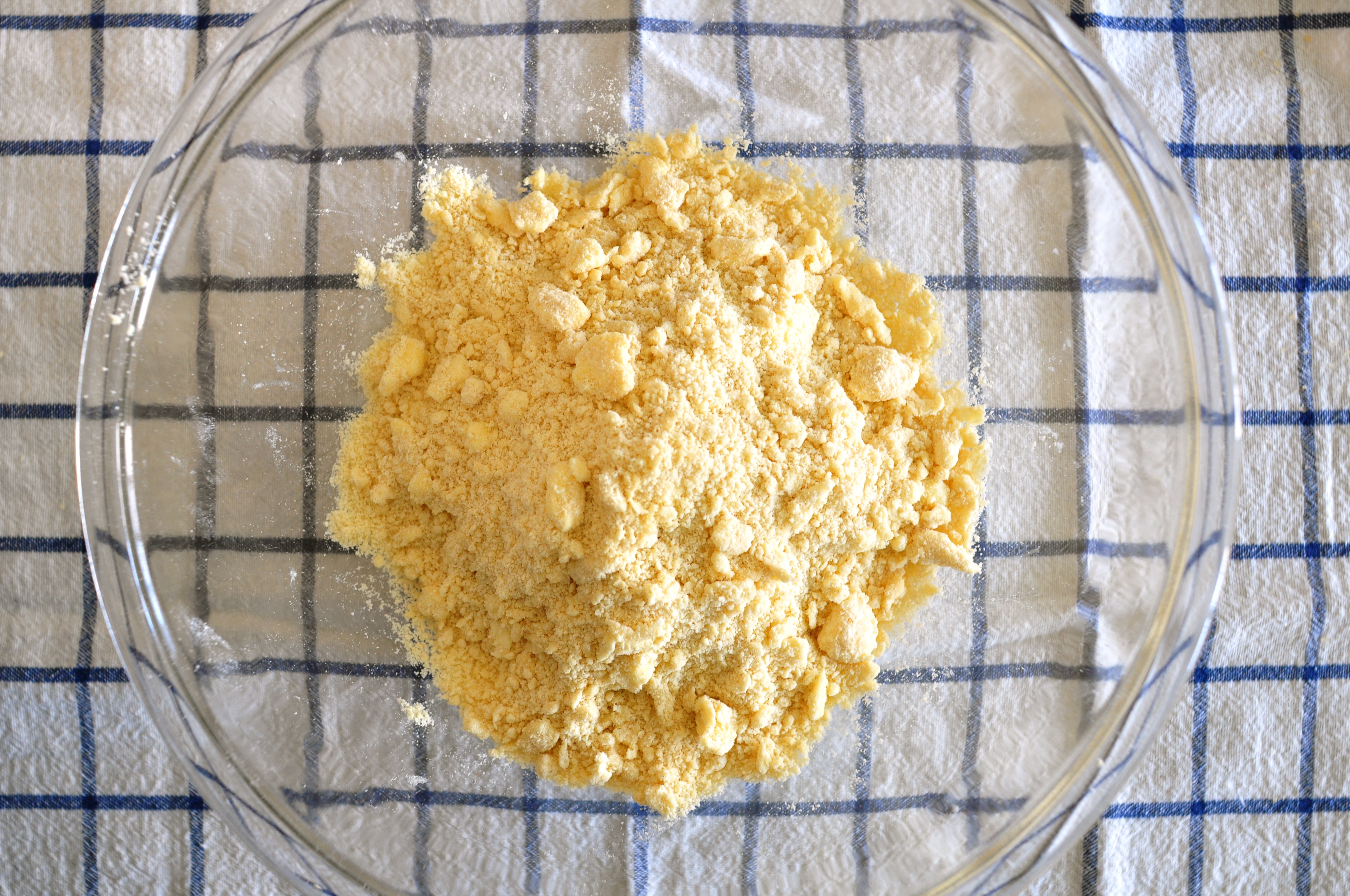
Gently work half of the butter into the flour mixture with fingertips until dough has the texture of coarse oatmeal. Add the rest of the butter and work it into the dough quickly, stopping as soon as the largest pieces of butter are the size of lima beans.

Add the ice cold water, a few drops at a time, carefully bringing the dough together into a ball. Stop adding water as soon as the dough adheres, but some flour is left in the ball (the dough should not be sticky).

Flatten the ball of dough, cover in plastic wrap, and refrigerate for at least an hour and up to 1 day.

Remove dough from refrigerator and allow about 15 minutes for it to soften with the ambient heat and become easy to handle.

Generously butter the pie pan.

Lightly dust a clean, flat surface with flour and roll out the dough into a circle until it is 1/8 inch (1/3 cm) thin.**This dough is very buttery, so to prevent it from sticking to the the floured surface I turn it at the beginning then regularly lift it, all the while adding a little flour on either side and on the rolling pin.**

To transfer the dough to the pie pan, gently fold it in half once, then fold it in half again, and carefully place the folded dough in the pie pan, positioning the angle in the center. Unfold, press gently onto the pan and sides, and cut off excess dough from the edges. Slip the pie crust in the refrigerator for at least 1/2 hour before using.