Posts Tagged ‘Christmas’

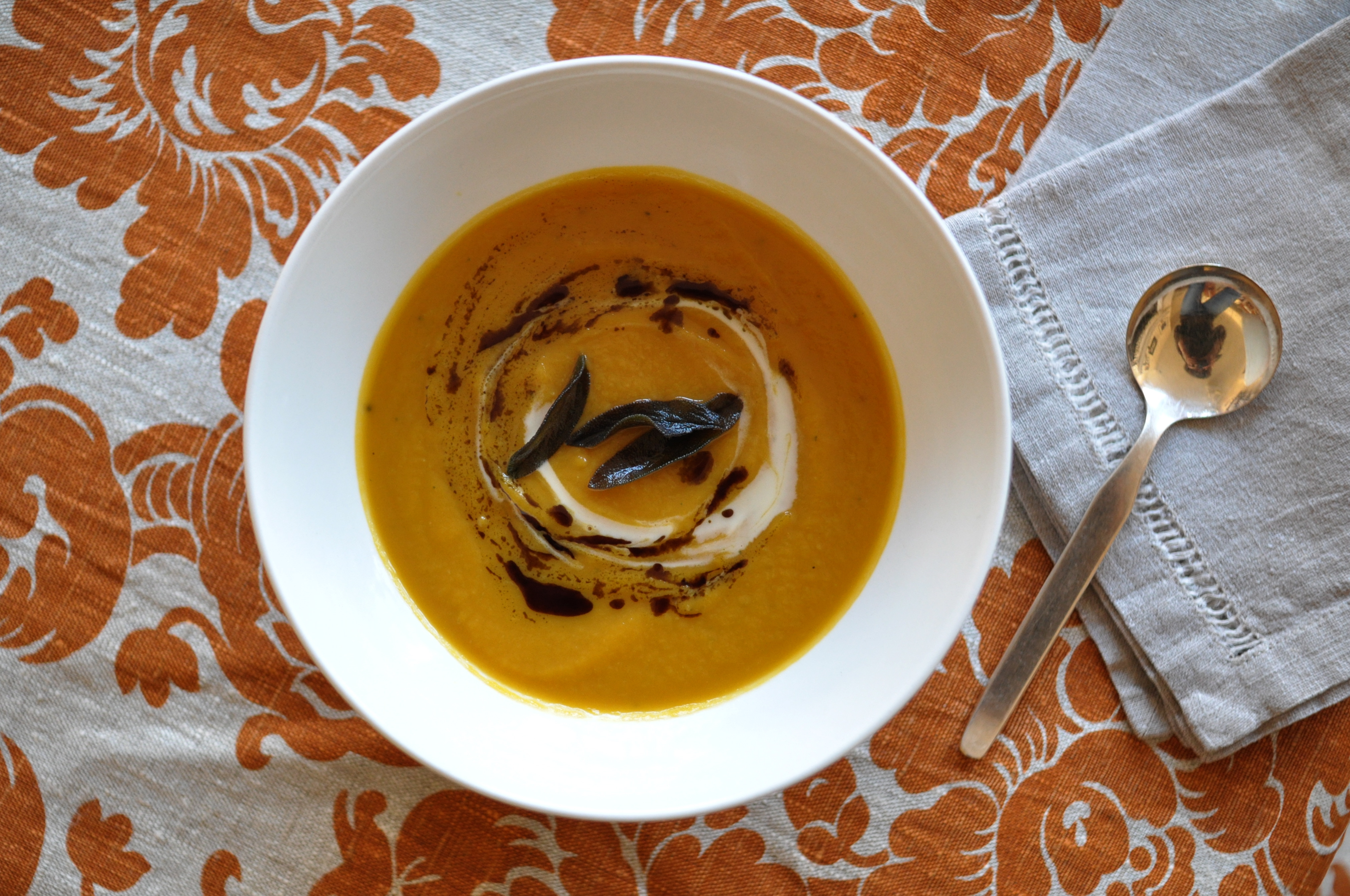
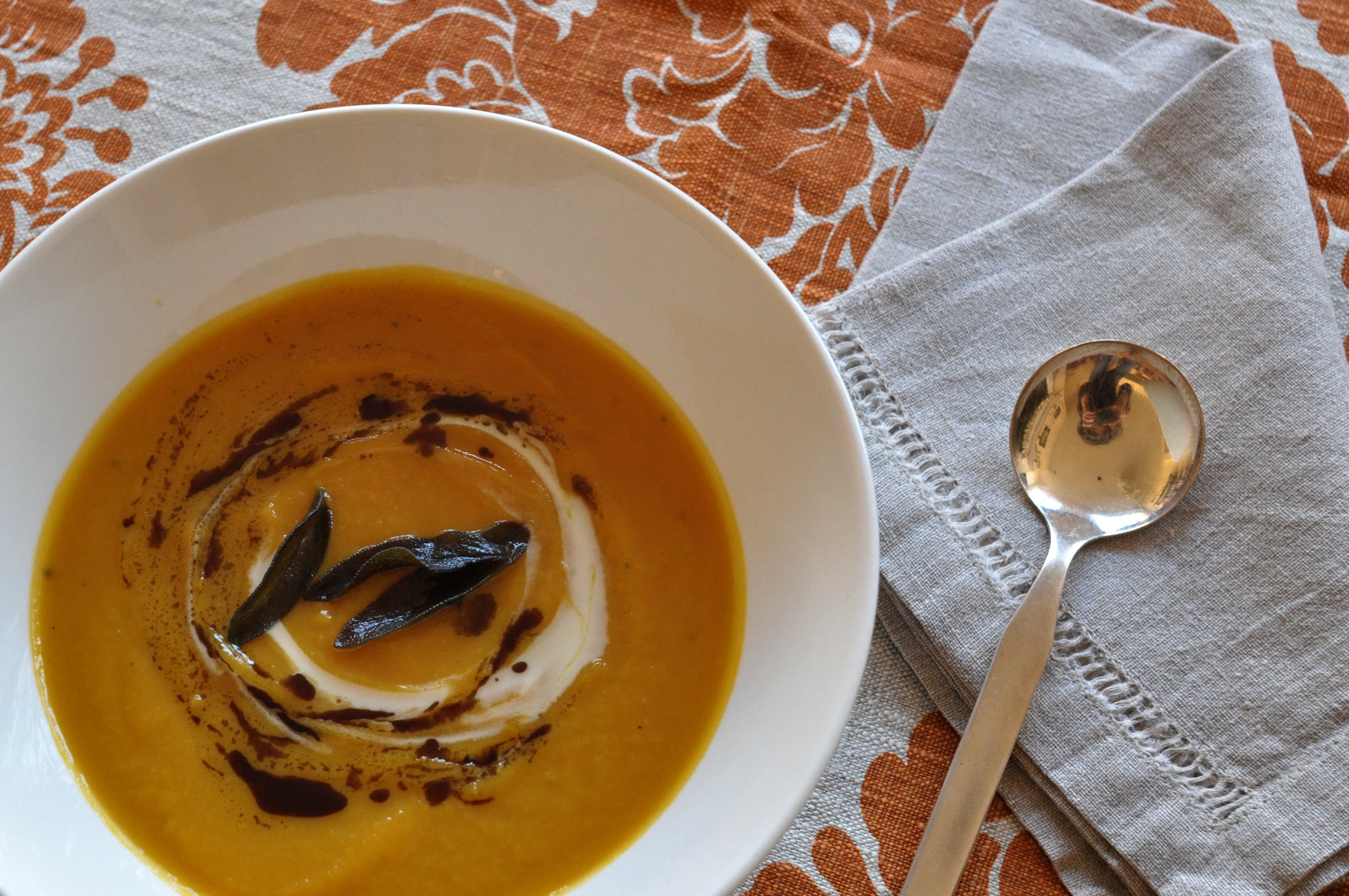
Parsnip and butternut squash soup with sage

14 December 2011

It’s about how easy it is to make soup, or rather — and I may be the one here most surprised at reading this — how easy it is to make soup with broth, when no broth is around.

I’ve mentioned before how I like soups that don’t require the use of broth, and I have already surreptitiously written about at least four soups that don’t require any broth because — at the risk of repeating myself — I’d rather not use store-bought broth if I can help it, and chicken broth doesn’t usually last long in this house. But somehow I had disregarded vegetable broth.

This soup has taught me that I can make great vegetable broth at a moment’s notice, pretty much simultaneously to making the soup.

All the broth requires is a few vegetables roughly chopped into chunks, thrown into a large pot, and generously covered with water. This takes no time at all. Then as the broth simmers away happily on its own, there is plenty of time to to pour a glass of wine, peel and chop the vegetables destined for the soup, and sweat them in some oil for a little while. By the time the broth needs to be poured in, it is ready.
***

The broth

The vegetables and quantities below are indications. I used rutabaga for the first time in this broth and loved the depth of flavor, but it’s by no need obligatory.

4 celery ribs

2 medium carrots

2 medium onions

1 medium rutabaga

Olive oil

Few sprigs parsley

2 bay leaves

3 quarts (3 liters) water

Trim the celery stalks and wash off the dirt; trim and wash the carrots. Cut the vegetables roughly into 1/2 inch (1 cm) pieces. Wash and trim the rutabaga and cut into pieces approximately the same size. Peel the onions and cut each half in three.

In a large saucepan, heat the oil, add the vegetables, and cook over medium heat until they begin to soften, about 5 to 10 minutes.

Add the parsley and bay leaves, cover with 3 quarts (3 liters) water, and bring to a boil. Reduce the heat and simmer for about 40 minutes, skimming off the foam as it rises.

Drain the broth through a fine mesh sieve before using.

*

The soup

The soup should be very creamy, though it contains no cream (in fact it’s vegan unless using crème fraîche as garnish). The key is to blend it thoroughly (a good 4 to 5 minutes) until it becomes perfectly smooth and velvety.

It is liberally adapted from the pumpkin, butternut squash, and parsnip soup in The New Low-Country Cooking by Marvin Woods.

2 medium onions

2 carrots

3 leeks

6 parsnips

1/2 butternut squash

Olive oil

2 quarts (2 liters) vegetable broth (recipe above)

Small handful fresh sage leaves

Sea salt, freshly ground black pepper

Freshly grated nutmeg

Crème fraîche, pumpkin seed oil, and more sage leaves to garnish (either one of these or all three – optional)

*

Peel, wash, and coarsely chop the onions, carrots, leeks, parsnips, and the butternut squash.

In a large soup pot, heat enough olive oil to cover the bottom of the pot. Add the onions and cook until they softens, stirring occasionally – about 10 minutes. Then add the leeks and the carrots. Cook, stirring occasionally, about 10 minutes longer. Add the parsnips for another 5 minutes, then the butternut squash.

Add enough hot vegetable broth to cover the vegetables by a good inch. Once the soup simmers, cook for about 30 to 40 minutes, until all the vegetables are soft.

Finely chop the sage leaves.

In batches, scoop the vegetables and most of the broth as well as the sage into a food processor or blender (fill it up to only about 2/3 and hold the lid down tightly, or the steam released will make it pop up). **Do not pour in all the broth with the vegetables, keep some to adjust the consistency of the soup once everything is blended.**

Season with salt, pepper, and a little freshly grated nutmeg.

Serve garnished with crème fraîche and pumpkin seed oil, and a few sage leaves fried for 1 or 2 minutes in a little olive oil.

*

Related posts

Pumpkin leek soup

Cream of cauliflower soup with salmon roe

Happy New Year (Lentil soup with cumin)

The many dessert of Thanksgiving (Best award-winning pumpkin pie)

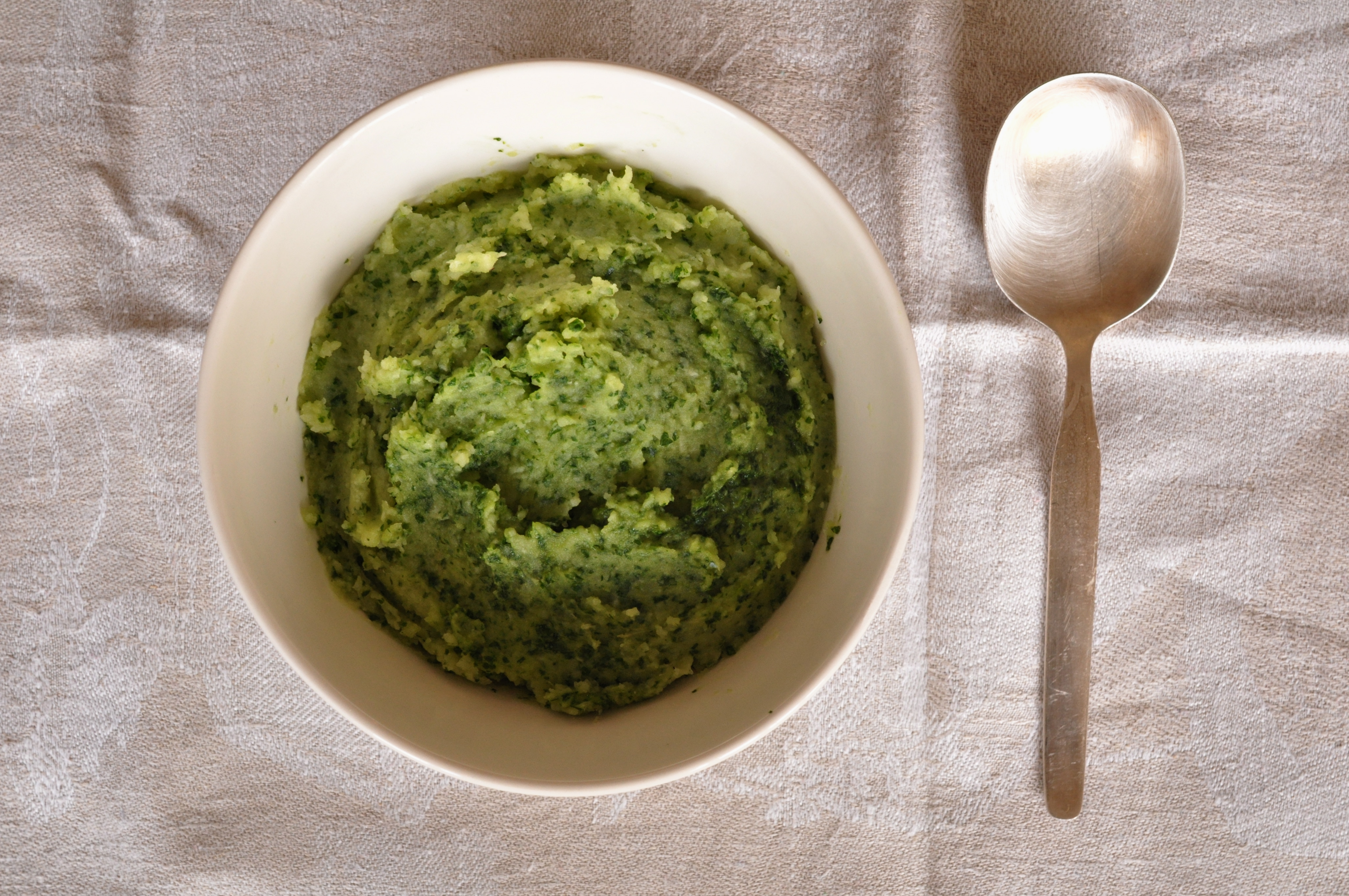
Celeriac mash with parsley

21 November 2011

Mashed celeriac is the ultimate Thanksgiving side dish because it is so perfect with turkey and cranberry sauce and marries well with many other flavors.

It is also an excellent complement to fish, game, or duck, and works well with lamb tagine or calf’s liver. It is brilliant because it’s so similar to mashed potatoes but more subtle. It’s comforting but also fresh and vibrant. I have to restrain myself from making it too often.

***

The quantity can easily be adapted, with proportions of about 60% – 40% celeriac to potatoes in favor of the celeriac (a lot of celeriac needs to be removed in the peeling process, so it’s always a good idea to buy a bit more than you think you need).

4 Tbsps Coarse sea salt

4 small heads celeriac (about the size of an orange)

3 medium Yukon Gold potatoes

2 large bunches flat-leaved parsley

Good olive oil

4 Tbsps good butter

Sea salt and freshly ground black pepper

Freshly grated nutmeg

***

Bring two large pots of water to a boil each with 2 Tbsps of coarse sea salt.

Peel the celeriac and the potatoes and cut them into large chunks, all about the same size so they take the same amount of time to cook.

Place each vegetable in a separate pot of boiling water and cook until soft. **The celeriac and potatoes must be cooked separately because they don’t take the same amount of time to cook through (the celeriac takes longer) and it’s important not to overcook the potatoes; if they start falling apart the consistency of the mash will be watery.** The cooking time depends on the size of the pieces of vegetable and how crowded they are in the boiling water, but I usually start checking the potatoes by poking them with a sharp knife after about 12 minutes, the celeriac after about 20 minutes. They are ready when the knife goes in with no resistance.

Meanwhile, wash the parsley and trim off the thickest part of the stems.

In a blender, purée the parsley with 4 tablespoons of olive oil and 2 tablespoons of water.

Once the roots are cooked, mash them with a potato masher or through a food mill (never in a food processor as the blade cutting through the potato starch makes the potatoes gummy). Mix in the butter, a good slosh of olive oil, and season with salt, pepper, and freshly grated nutmeg. Taste and adjust.

Reheat the mash over very low heat and at the very last minute just before serving add the parsley purée. Stir well until it is uniformly green. **The parsley must be added at the very last minute;  if heated the parsley will turn brown and loose its vibrant flavor.**

*

Related posts

Sautéed hen of the woods and king trumpet mushrooms

Simply kale salad

At the market | Celeriac aka celery root (Rémoulade salad)

Cream of cauliflower soup with salmon roe

17 November 2011

The problem was, I couldn’t remember exactly how I had made this soup. I knew there was no milk or cream and no broth — no adulterating ingredient to distract from the delicate taste of the cauliflower. I looked in a dozen cookbooks most likely to have given me inspiration, but every recipe I found had milk, or cream. I was hesitant about the base: just onions and cauliflower, was that really it?

Then fortuitously, on 27 October, Mary Gorman-McAdams wrote her weekly column on TheKitchn about pairing wine with soup. In her column she mentions this very cauliflower soup, and solved my conundrum — the base is leeks, not onions.

This is a very simple soup; the salmon roe makes it sing. We served it with Chablis. Thanks, Mary.

***

Serves 6

4 leeks

8 Tbsps butter

2 small heads cauliflower

Sea salt

Freshly ground white pepper

A pinch of freshly grated nutmeg

6 small spoonfuls of salmon roe

***

Remove and discard the leeks’ tough outer leaves, then cut the leeks into thin slices. Wash well in cold water to remove any grit, and drain.

In a soup pot, melt 4 tablespoons of butter. Add the sliced leeks. Season with sea salt. Cook the leeks until soft being careful that they don’t begin to brown.

Meanwhile, cut the cauliflower into florets and wash in cold water. Add to leeks. Add 4 tablespoons of butter cut into small pieces. Let the butter fall through cauliflower and melt. Add just enough water to cover the cauliflower, and cook until the cauliflower is soft. About 20-25 minutes. **Overcooking gives the  cauliflower a strong cabbagy smell, so it is essential not to overcook it, but the cauliflower has to be soft enough to blend into a smooth soup without any hard gritty bits. As soon as a knife cuts through the stem of the cauliflower florets easily, it is ready.**

As soon as the cauliflower is cooked, remove from heat. Blend in batches (it is important not to fill the blender or food processor — it shouldn’t be filled more than up to about a third). Blend thoroughly until the soup is silky smooth. Leave out some of the liquid to be able to adjust the density of the soup.

Taste and adjust the seasoning with salt, pepper, and a restrained pinch of nutmeg.

Garnish with a spoonful of salmon roe added at the very last minute.

*

Related posts

Pumpkin leek soup

Lentil soup with cumin

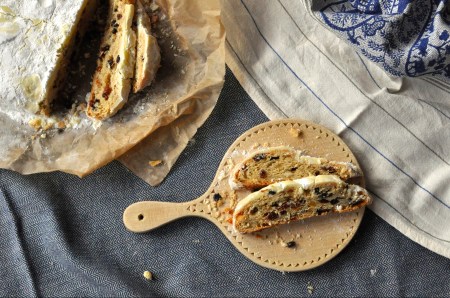
Stollen

9 December 2010

When my grandmother sent me her Stollen recipe twelve years ago she included an old German newspaper clipping titled “On the proper way of handling Stollen.” It prescribed:

◊ According to strict Saxon rule*, Stollen should not be cut open before Christmas eve – 24 December. Modern practice is somewhat lenient, however, and it is now acceptable to start eating Stollen on the first of advent (four Sundays before Christmas).

Stollen should never be eaten with a knife and fork – not even a dessert fork. It should be savored by breaking off little pieces with your fingers.

◊ The best beverage to accompany Stollen is a good cup of coffee, possibly tea, but never wine or champagne, for which Stollen would be too sweet.

◊  Stollen should be cellar-cool when eaten, presented on a simple wooden board, and cut with a sharp, unserrated knife.

Historic documents mention that “Man’s character can be determined by the way he eats Stollen.” …

***

Like many Christmas cakes and cookies, Stollen can be made a few weeks in advance.
Makes 2 large Stollen

8 cups (1 kg) flour

4 oz (100 g) fresh yeast

2 cups and 4 Tbsp (500 g) butter

1/2 cup (100 g) and 1 Tbsp sugar

1 cup (250 ml) milk

3/4 cup (100 g) candied orange and lemon peel

2 Tbsp rum

1-2 drops bitter almond oil (or 1 tsp almond extract)

Zest from 1 lemon

1 tsp salt

1 tsp vanilla extract

1 1/2 cups (125 g) slivered almonds

2 cups (300 g) golden raisins

1 cup (200 g) currants (Black Corinth raisins)

For the sugar crust:

1 cup 2 Tbsps (250 g) butter

Plenty of confectioners’ sugar

***

Place a large bowl with the flour in a warm spot until the flour feels warm to the touch.

Crumble the yeast with 1 Tbsp sugar; stir and watch as the mixture becomes liquid.

Melt the butter on a small flame, remove from the heat, and add the cold milk.

Chop the candied citrus peel and sprinkle with the rum and almond extract.

Shape a well in the flour. Pour the remaining 1/2 cup (100g) of sugar, lemon zest, salt, and vanilla extract into the well, add the milk/butter mixture and the prepared yeast. With a large wooden spoon, mix the wet ingredients into the flour using circular movements. Once the dough starts to detach itself from the sides of the bowl, beat with the wooden spoon for 10 minutes.

Knead the almonds, raisins, currants, and candied citrus into the dough. Shape into a ball, cover with a slightly damp cloth, find a warm spot in the house and let rise until the dough has approximately doubled in size, 2 to 3 hours depending on the room temperature.

Divide the dough in 2 and roll out each half into an oval approximately 1 inch (2.5 cm) thick. Fold each oval in half lengthwise, place on a buttered parchment paper on a baking sheet and let rise again for 45 minutes to 1 hour.

Preheat the oven to 300°F (150°C).

Bake the Stollen for 45 to 50 minutes, or until the outside begins to harden but before it starts to brown. Remove from the oven and immediately prepare the sugar crust.

In a small saucepan, melt the butter over medium heat. With a food brush, cover the Stollen with a layer of melted butter. Using a small sieve, sprinkle generously with confectioners’ sugar. Repeat this process 2 or 3 times to form the crust. Wrap immediately.

To store the Stollen, wrap in parchment paper then tightly seal with aluminum foil and keep in a cool dry place. Never wrap Stollen in plastic. A large tin box would be ideal.

*Stollen is originally from Central Germany and famously from Dresden, Saxony

*

Related posts

Christmas cookies | Almond and currant (Corinth raisin) cookies

Christmas cookies | Swiss Anisseed Chrabeli

Pumpkin leek soup

3 December 2010

I like soups that don’t require the use of broth. I’m not very good at keeping a constant supply of homemade broth in the freezer, and I’d rather not use the store bought variety if I can help it, so any soup that is delicious just by virtue of the vegetables included deserves closer attention.

This pumpkin leek soup is adapted from a recipe by French chef Paul Bocuse featured in a German-language cookbook my grandmother passed on to me quite a while ago. A lot about the cookbook, which is from 1985, seems dated — the style, photographs, clunky dishes, desserts just a bit too sweet. But there are a few gems, including this pumpkin soup. It has just five ingredients (and no broth!).

***

3.5 lbs (1.5 kg) pumpkin or squash [to yield approximately 8 cups (1 kg) once seeded, peeled, and cut into cubes]

8 medium leeks [to yield approximately 4 cups (400g) once peeled and sliced]

2 medium potatoes [to yield approximately 1 1/2 cups (200g)]

3 Tbsp butter

1 cup (250 ml) milk

Water

Sea salt

Freshly ground black pepper

Crème fraîche (optional)

***

Cut off leeks’ dark green outer leaves and wash under running water to remove dirt. Cut into 1/2 inch (1 cm) slices and wash again in cold water to eliminate the remaining grit. Remove skin and seeds from squash and cut into 1 inch (2.5 cm) cubes. Peel potatoes and cut into 1/2 inch (1 cm) cubes.

Melt butter in a heavy-bottomed saucepan, add leeks, and let sweat for about 4-5 minutes. Add potatoes and squash, milk, and enough water to reach the top layer of vegetables without covering completely. Season with salt and pepper and let simmer partly covered for 30 to 40 minutes, or until the vegetables are soft.

Check and adjust seasoning, and serve with crème fraîche if desired. Like most soups, wait until tomorrow and it will taste even better.