Posts Tagged ‘recipe’

In Brittany | Mussels with shallots and white wine

25 July 2011

I am in France spending a large part of the summer with my family at my sister’s beautiful, old, and very run down farmhouse in northern Brittany.

While New York was smouldering under the heat last week everyone in France complained about the cold, and here, too, temperatures have hovered around 18°C (65°F) and it rains more often than not. But no one complains. Northern Brittany is known for blustery weather and beautiful coastlines, and we’ve been enjoying both.

Food-wise, beyond crêpes and savory buckwheat galettes – Brittany’s most famous culinary exports – the region has fresh fish and seafood in abundance, is famous for artichokes and pink onions, breeds pigs, and bakes far and kouign amann for dessert. This of course being just a cursory list. We’ve been enjoying all of that, too.

But first, mussels.

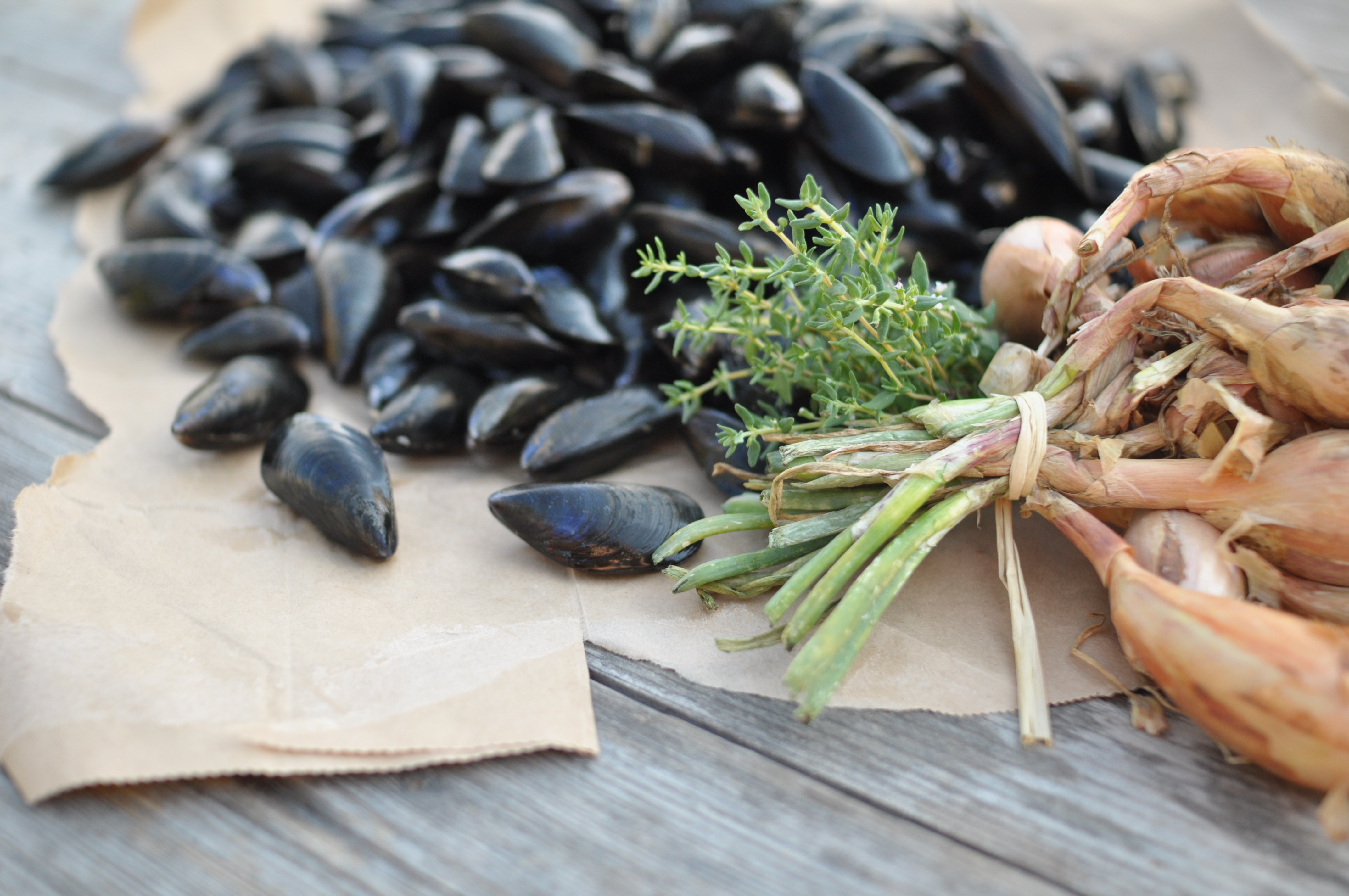
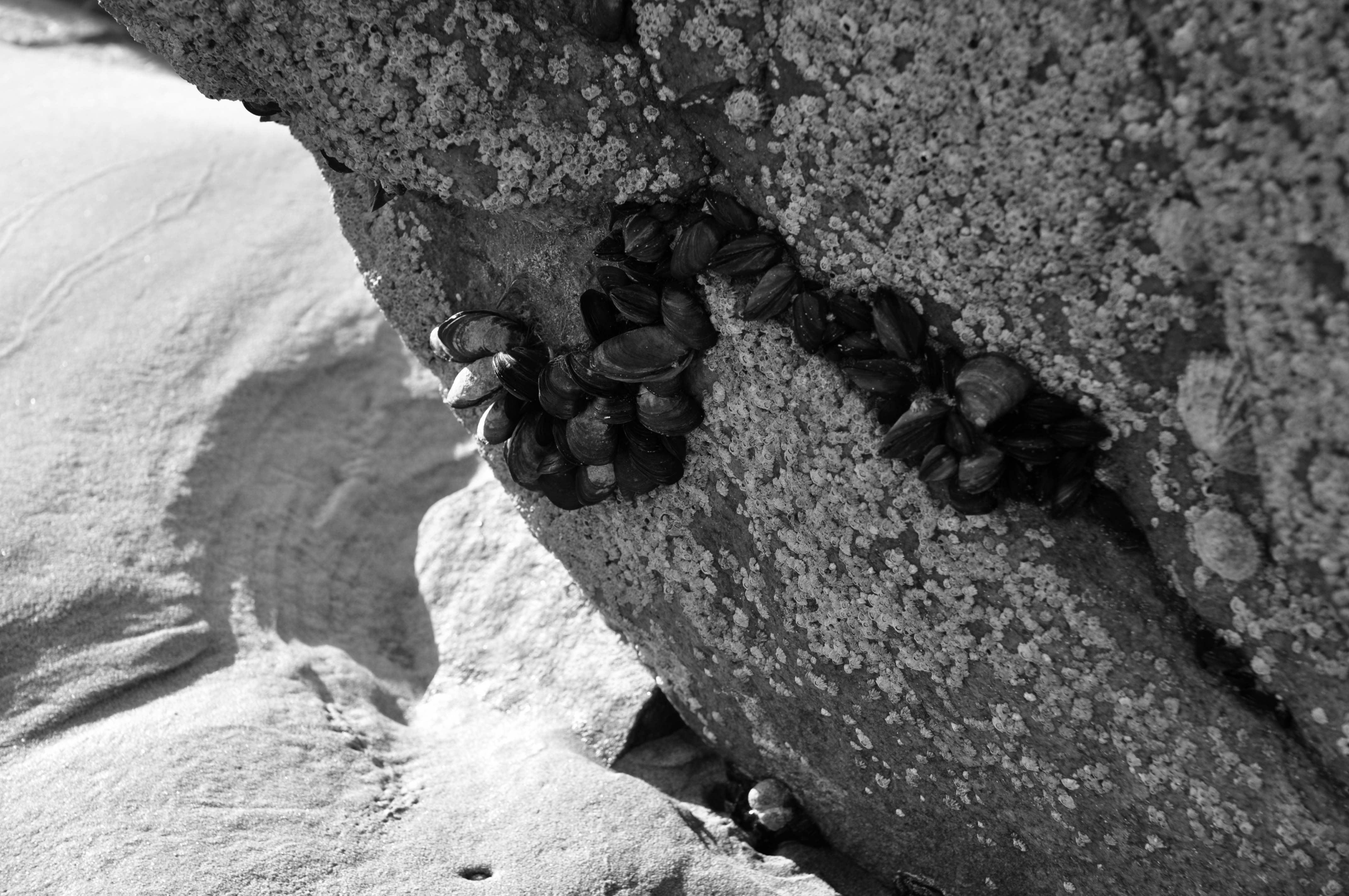
I forget how easy it is to cook mussels so I don’t make them often in New York, but here mussels are not only on every market but also on the beach, and on all of our minds. This is one of the most basic traditional French preparation: moules marinières, or sailor’s mussels, with shallots and wine wine. Add cream (as I do here) and they become ‘moules à la crème.’
Serves 4 as a main dish (count 1 lb of mussels per person)

4 lbs (2 kg) mussels*

4-5 shallots

2 cloves garlic

3 Tbsps butter

Olive oil

3-4 sprigs fresh thyme

2/3 cup (200 ml) crisp white wine such as muscadet

2-3 Tbsps crème fraîche

Freshly ground black pepper

Large bunch flat-leaved parsley

*

Thoroughly scrub the mussels clean, wash them under clear water, and drain.

Peel and thinly dice the shallots. Peel and thinly slice the garlic. Wash and finely chop the parsley and reserve for later.

In a large cooking pot, melt the butter with a dash of olive oil. Add the shallots, and cook until they become translucent. Add the garlic, stir, and cook for another minute. Throw in the sprigs of parsley and stir again to combine the flavors.

The shallots shouldn’t turn brown. As soon as they start to turn golden, pour in the white wine and bring to a boil. Simmer for 4-5 minutes.

Add the mussels, cover with a lid, and turn up the heat. As soon as the lid starts to let off some steam, take the pot off the fire and, firmly, with both hands, shake it with a few gentle jerks in order to turn the mussels inside the pot.

Place the mussels back onto the stove for a few minutes more. Most of the mussels should be open. If not, jerk the mussels again and return to the stove.

Once the mussels are open, transfer them carefully with a straining ladle to a warm pot or bowl for serving.

Place the coking pot with the shallot/wine sauce back onto the fire. Stir in the crème fraîche (I prefer the sauce to become milky and not creamy, but add according to taste), and some pepper.

Pour the very hot sauce over the mussels, sprinkle with lots of parsley, and serve immediately.

*At home, poke breathing holes into the bag of mussels and store in the refrigerator.

*

Related posts

In Brittany | Home baked potato fries

At the market in Brittany | Artichokes

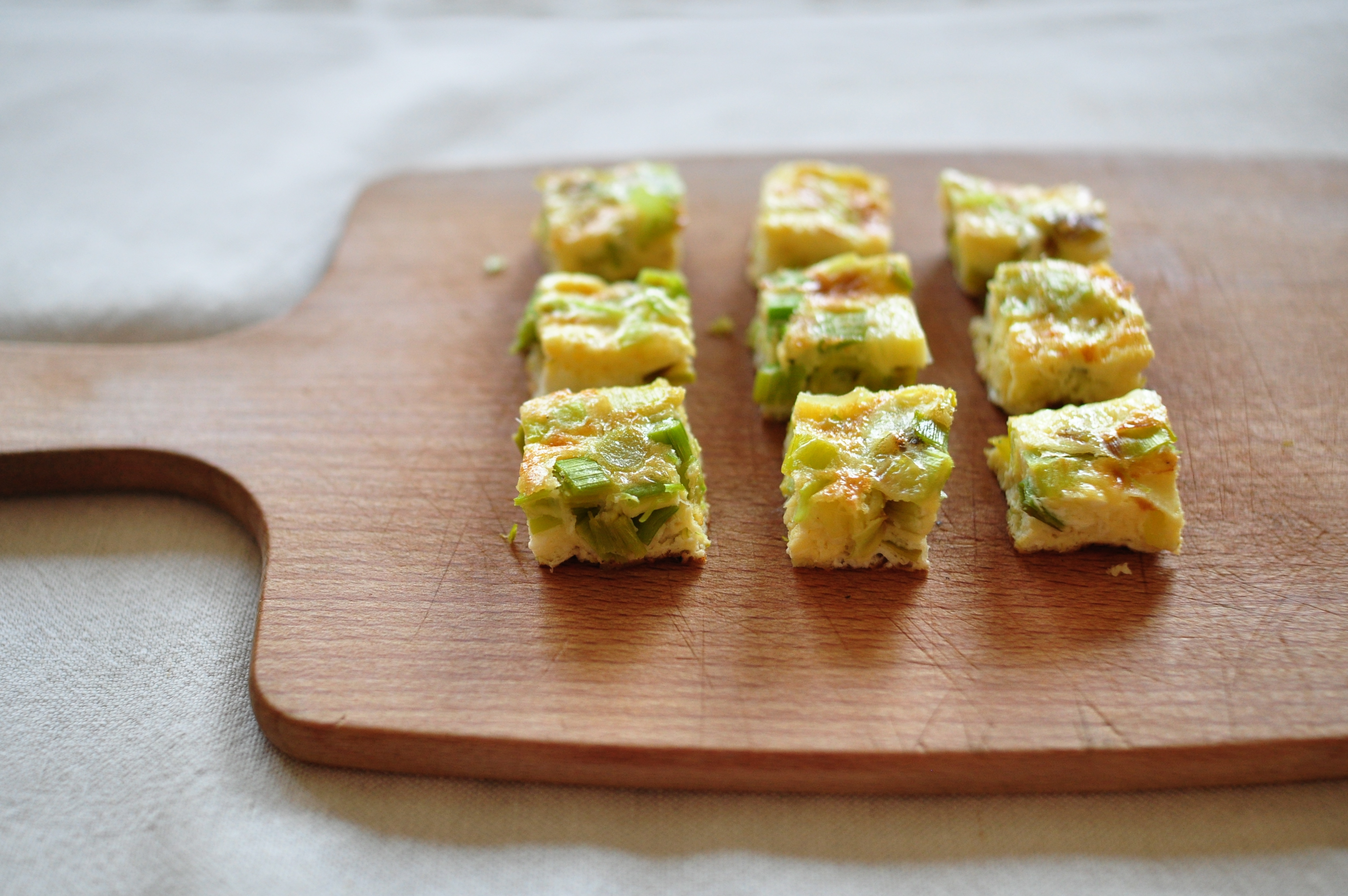
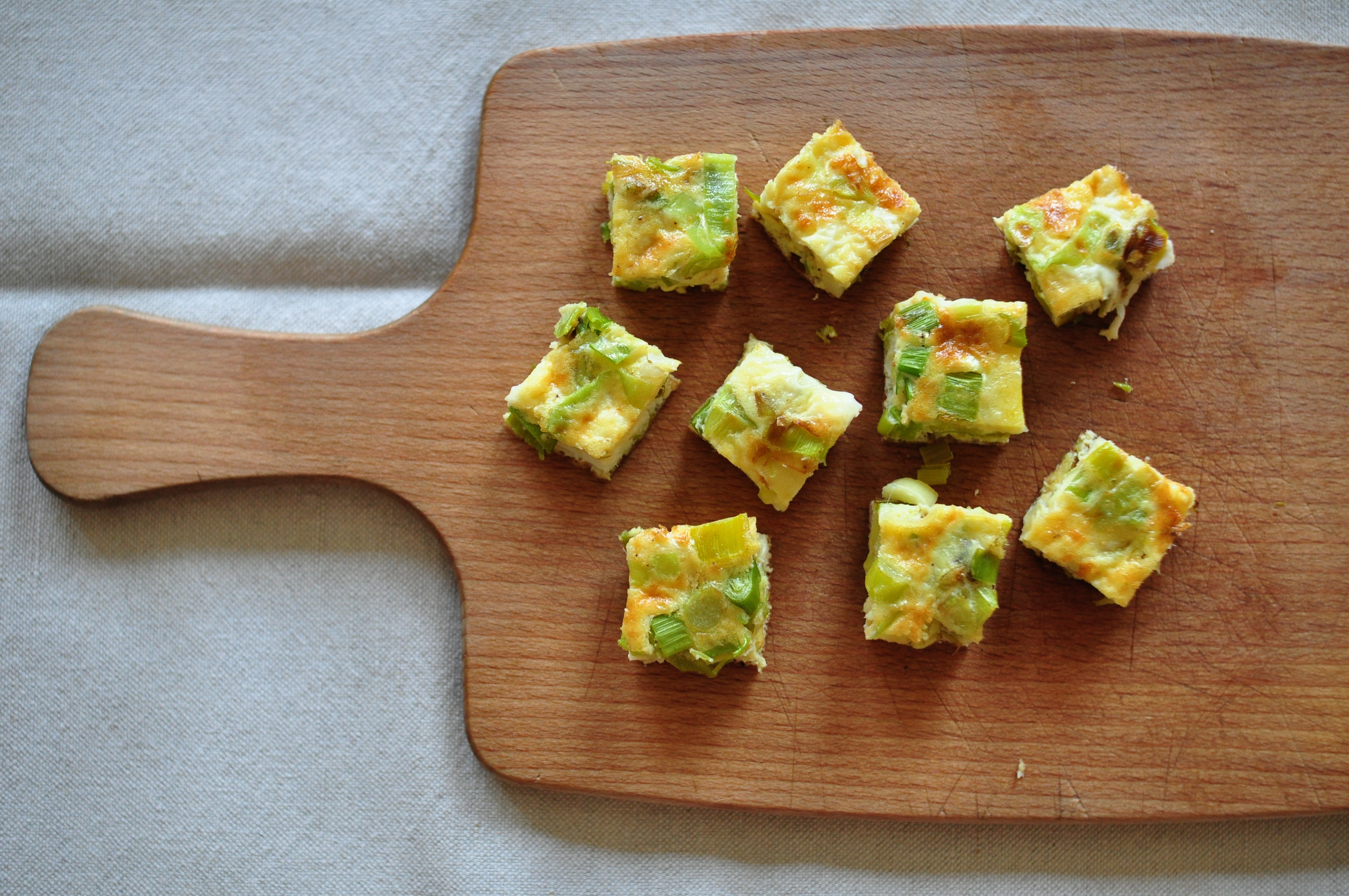
Finger food | Leek and manchego frittata

16 June 2011

Louise is now 15 months, she walks around like an independent little person, and she eats what her older brothers eat. The days of puréeing are already over, and as such my days of “baby food” posts. But since the children usually eat separately, especially during the week, this will be the transition into the world of children’s dinners.

As much as I oppose the concept of children’s food, in particular as it implies anything yellow and battered, I do believe in adult meals. This means that our children have dinner together, earlier, and go to bed at eight. It’s not about a different kind of food, it’s about timing. Ideally, children’s dinners should be easily prepared on a weeknight with homework and soccer and a toddler who really should be in bed by seven puttering about resignedly.

So as a bridge away from baby food here is the ultimate anytime any-age family meal – frittata.

It is ideal because it basically consists of staples and anything else that happens to be in the kitchen: eggs; an onion or leftover leek, garlic; cheese (gruyère, manchego, parmesan, ricotta, mozzarella); perhaps diced ham, pancetta, or some smoked salmon; peas, cherry tomatoes, asparagus, spinach, potatoes; herbs…

The possibilities are endless, and the result not only very tasty but a full meal in one dish that the children always like.

***

This quantity makes a lunch frittata perfect for one adult and one toddler. Adjust the quantities as desired. I usually count 2 eggs per adult, 1 per (young) child, plus an extra one overall “for the pan.”

2 leeks

Olive oil

A small knob of butter

1 clove garlic

3 eggs

Manchego cheese, a piece approximately 1 inch (2.5 cm) cube

Pepper

***

Preheat broiler (grill), or oven to 425°F (220°C).

Trim leeks on either side and remove one or two layers of the tougher dark green outer leaves. Wash off excess grit under running water. Slice the leeks into slices 1/2 or 1/4 inch (1 or 1/2 cm) thick. Wash well in cold water to remove any persistent dirt, and strain.

Thinly slice the garlic clove. Thinly grate the manchego.

In an ovenproof skillet, heat a little olive oil and small knob of butter, enough to comfortably coat the pan once the butter has melted. Add the leek and cook over medium heat for 3 to 4 minutes, until it softens and becomes translucent but before it gets brown. Add the thinly sliced garlic and cook for just another minute.

Meanwhile, break the eggs into a bowl and beat lightly with a fork. Add the cheese and a little pepper if desired (manchego is very salty so no additional salt is required).

Stir the cooked leeks and garlic into the eggs, just enough to combine, then return the egg/vegetable mixture to the pan (there should be enough oil left but if not, add a dash).

Cook on the stove over low heat, loosening the eggs at the sides with a spatula from time to time (don’t go anywhere, this will just take a few minutes).

When you can see the eggs starting to set underneath, but the top is still quite runny, place the pan in the hot oven. Leave it for barely a minute, just enough for the top of the frittata to set but no longer.

Cut into wedges (or cubes) and serve with a large green salad.

*

Related posts

Finger food | Carrots

Children’s dinner | Cowboy food

*

Follow @nettleandquince on twitter

Trout in a paper package (“en papillote”)

3 June 2011

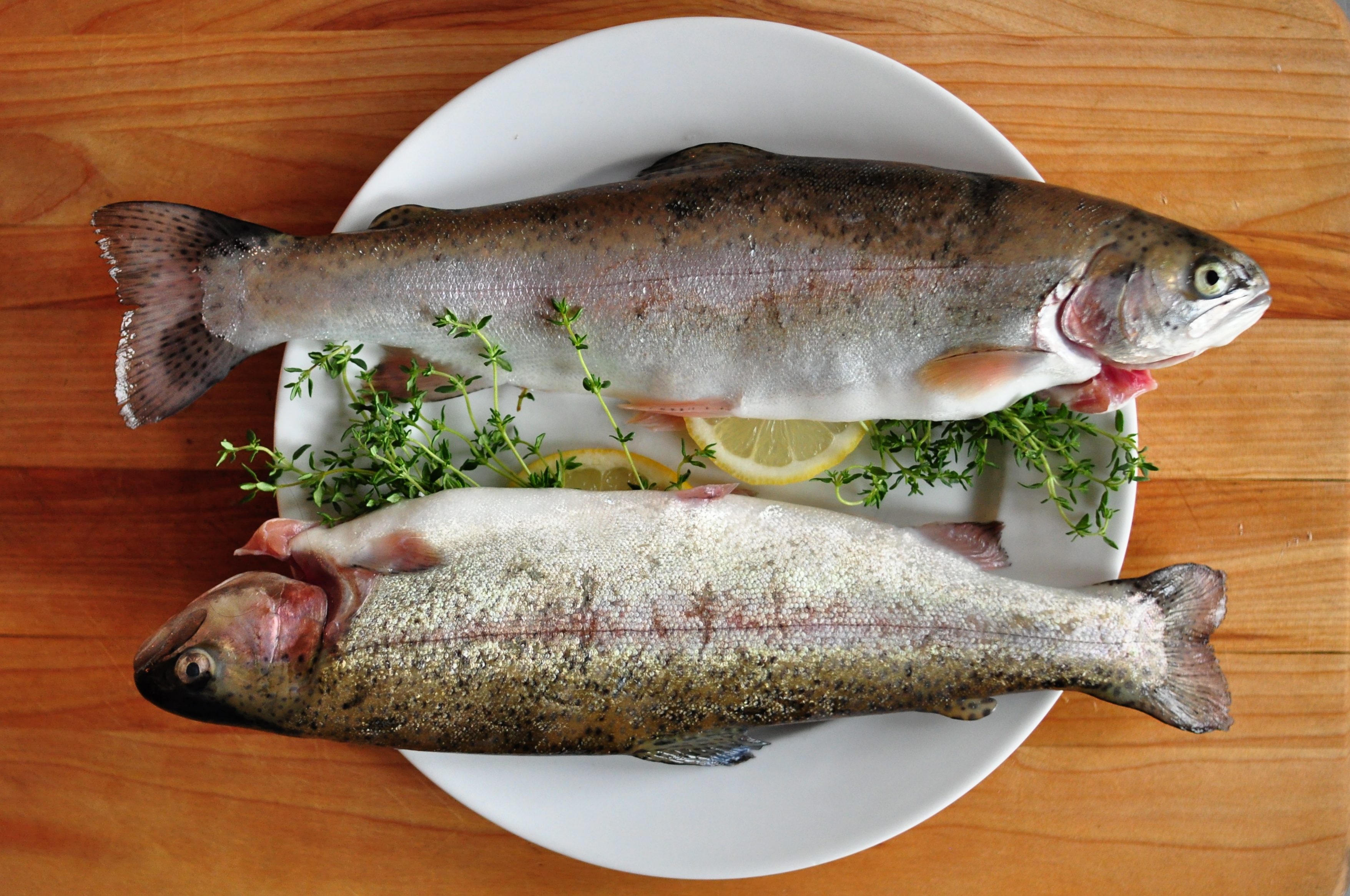
A trout so fresh* it is practically still winking at you when you cook it /
Courteously seasoned with salt and pepper, lemon and thyme /
Wrapped tightly in a parchment paper package /
Cooked gently, not a minute too long /
With small boiled potatoes tossed in very good butter.

***

Quantities per trout, one small trout per person

Trout, scaled and gutted

Maldon or other flaky sea salt

Freshly ground black pepper

2 slices untreated lemon

2 sprigs fresh thyme

Parchment paper

*

Preheat oven to 375°F (190°C).

Season the trout cavity with salt and pepper. Place in it two slices of lemon and two sprigs of fresh thyme.

Place the trout at the center of a piece of parchment paper large enough to be wrapped comfortably around the fish, i.e about 8 inches larger than the fish on either side, and about 4 inches longer than the fish at each end. Pull up the sides of the parchment paper around the trout and fold it over itself tightly three times, then fold the ends over under the fish. This should create small airtight packages.

Place in an ovenproof dish and slide into the oven. The cooking time depends on the size of the trout, but it will be fast, probably about 12 to 15 minutes. The best measure is to open one package and check the trout – sooner rather than later.

*Available on Wednesdays at Union Square Greenmarket in New York, from Beaverkill Trout Hatchery, a little stall close to 16th Street


Basic | Sweet pie crust

10 May 2011

This pie crust is ideally light and flaky. It works very well for practically any fruit tarte, except — mildly ironically in this context — the walnut tarte for which I made it on Saturday. For that singular tarte, unlike others I usually make in that it is fairly rich, this pie crust is a bit too sweet and buttery. For every other tarte (or even pumpkin pie), it is excellent. It is the galette dough recipe from Chez Panisse Café Cookbook.

There are endless minute variations on pie crust recipes, some of which involve the size of the pieces of butter or the temperature of the ingredients. These do make a difference, and I think another crucial aspect is how the dough is treated. It should always be barely handled – delicately with the fingertips and never the palm of the hand. I think of it as the opposite of kneading.

***

From Chez Panisse Café Cookbook

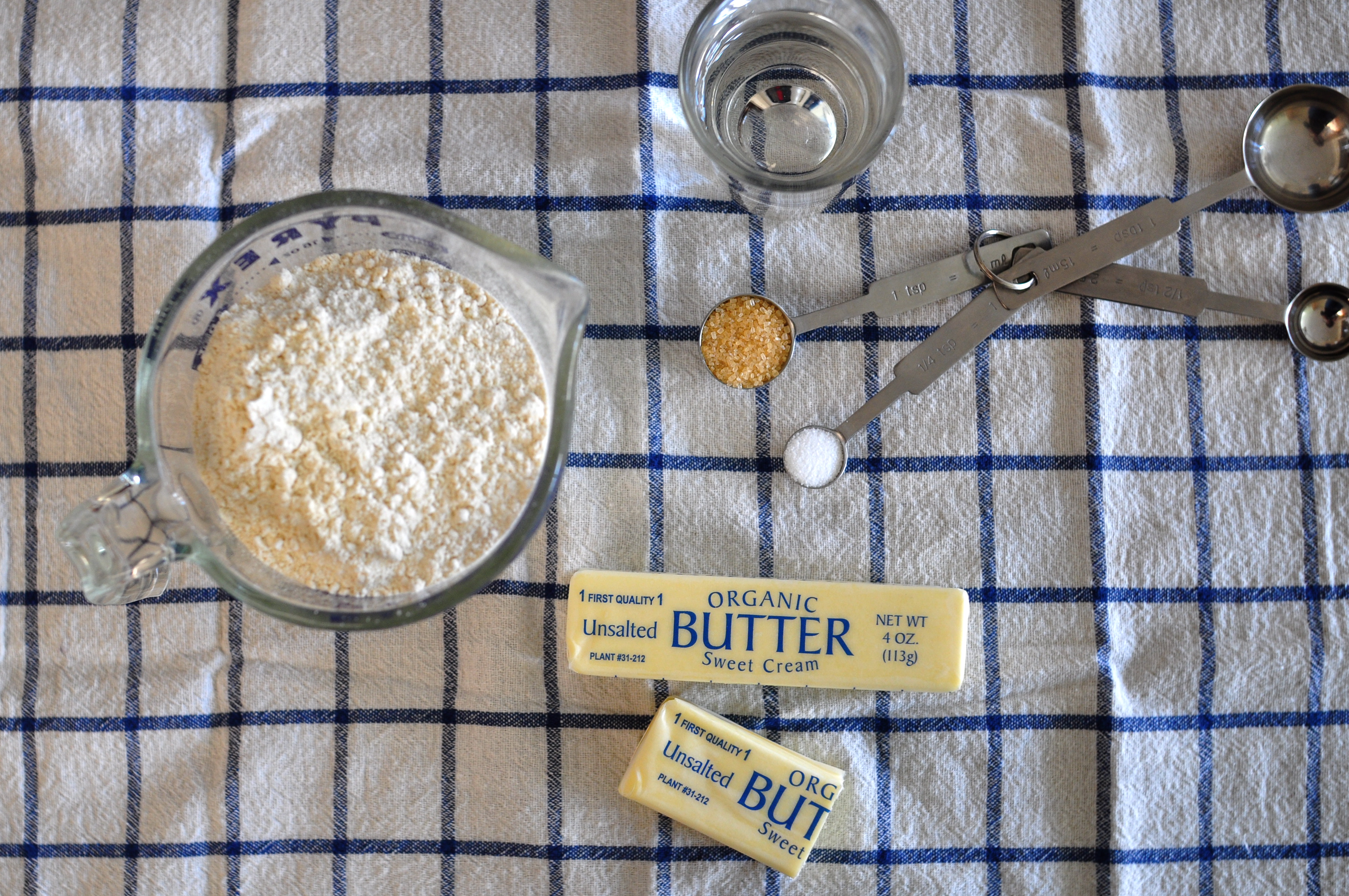
3/4 cups (170g) unsalted butter

2 cups (200g) flour

1 tsp sugar

1/4 tsp salt

Place a small glass of water in the freezer.

Cut the butter into 1/2-inch (1 cm) pieces.

In a large bowl mix the flour, sugar, and salt.

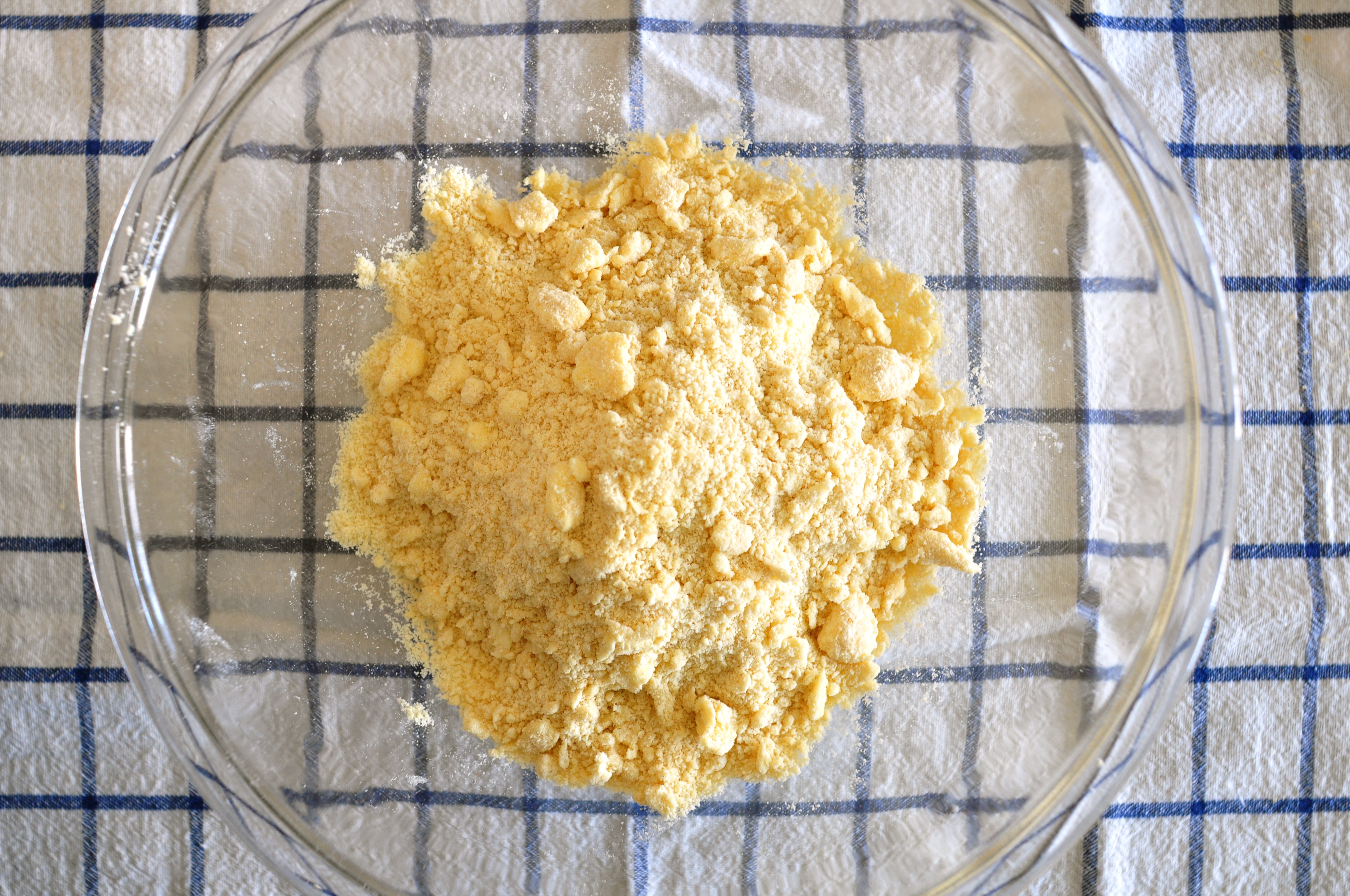
Gently work half of the butter into the flour mixture with fingertips until dough has the texture of coarse oatmeal. Add the rest of the butter and work it into the dough quickly, stopping as soon as the largest pieces of butter are the size of lima beans.

Add the ice cold water, a few drops at a time, carefully bringing the dough together into a ball. Stop adding water as soon as the dough adheres, but some flour is left in the ball (the dough should not be sticky).

Flatten the ball of dough, cover in plastic wrap, and refrigerate for at least an hour and up to 1 day.

Remove dough from refrigerator and allow about 15 minutes for it to soften with the ambient heat and become easy to handle.

Generously butter the pie pan.

Lightly dust a clean, flat surface with flour and roll out the dough into a circle until it is 1/8 inch (1/3 cm) thin.**This dough is very buttery, so to prevent it from sticking to the the floured surface I turn it at the beginning then regularly lift it, all the while adding a little flour on either side and on the rolling pin.**

To transfer the dough to the pie pan, gently fold it in half once, then fold it in half again, and carefully place the folded dough in the pie pan, positioning the angle in the center. Unfold, press gently onto the pan and sides, and cut off excess dough from the edges. Slip the pie crust in the refrigerator for at least 1/2 hour before using.

Roast chicken with lemon and fennel seeds

6 January 2011

Some years ago I discovered that a chicken could be seasoned under the skin with salt, pepper, butter, and herbs. It makes for excellent roast chicken, and I decided it would be the only way to go in the future. But it is also a bit finicky, and somehow roasting a chicken became an unwieldy affair in my mind.

Until recently, when I came across good chickens from Epicurean Farms. They are fairly small, very tasty, and usually sold whole. So I started roasting again and rediscovered that it is actually probably the easiest way to cook these animals, especially if you are not chopping herbs and delicately stuffing them under the skin. Now roasting a chicken seems effortless like an afterthought; it can be done for lunch or dinner, or after dinner – at anytime, really, since it is excellent cold, especially with green tomato chutney.

Chickens can be stuffed with any combination of herbs, garlic, or onion on hand and I usually add a lemon, slashed so it releases its juices. This version with fennel seeds was a staple in our house when I was growing up.

***

1 whole chicken

Sea salt

Freshly ground black pepper

2 Tbsp fennel seeds

1 small lemon

2 small garlic cloves

Butter

***

Preheat oven to 425°F (220°C).

Pat the chicken dry with a paper towel. If you remember to do it in advance, let the chicken sit uncovered in the refrigerator for a few hours so the skin dries out before roasting.

Season the cavity of the chicken with salt, pepper, and fennel seeds.

Poke the lemon with a fork multiple times on all sides and stuff it into the chicken with the whole, skin-on garlic cloves. Truss or just bind the legs together with kitchen string. Massage the chicken all over with softened butter and season the outside again with salt and pepper.

Place the chicken on a roasting pan and into the oven for 10 minutes at 425°F (220°C) then lower to 375° (190°C) and roast for 40-50 minutes, depending on the size of the bird (large chickens may need to cook even longer — pull away one thigh and if the flesh at the joint is still translucent pink, cook a little longer).

Let rest 10-15 minutes before carving. Squeeze the lemon over the pieces of chicken before serving.

***

Related posts

Braised chicken legs with cherry tomatoes