Archive for the ‘Children’ Category

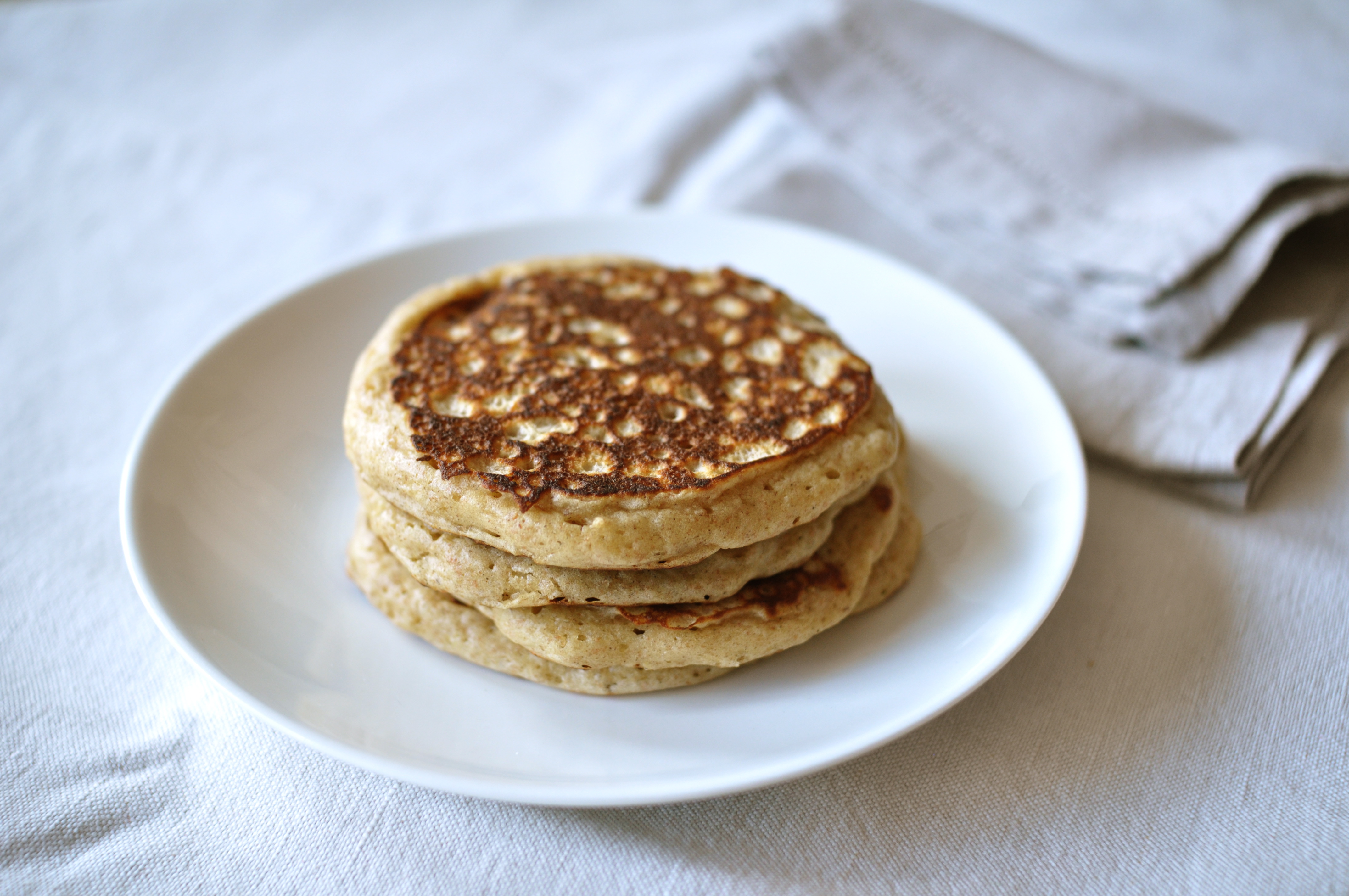
Spelt buckwheat buttermilk pancakes

5 June 2012

I expect everyone has an opinion about pancakes.

Pancakes must be light and fluffy, of course, but they must have character. I don’t make plain white flour/milk pancakes, if I can help it. Every Sunday (right, every Sunday *on which I make pancakes*), I experiment. Spelt, oat, whole wheat, buckwheat; buttermilk, yogurt, kefir, ricotta; orange and thyme; fruit, nuts, coconut; … . Some improvisations are better than others.

This recipe strikes just the right balance. There isn’t much buckwheat and that’s how it should be. Just a little heft, tempered by the tang of cultured milk.

***

I used white and whole spelt flours though regular wheat flours would also work. The key here is a small proportion of whole grain and a little buckwheat.

4 Tbsps butter

1 1/2 cups (175 g) white spelt flour

1/2 cup (75 g) whole spelt flour

2 heap Tbsps buckwheat flour

2 Tbsps sugar

1 tsp salt

2 tsps baking powder

1 tsp baking soda

2 eggs

2 1/2 cups (600 ml) cultured buttermilk

Coconut oil for the pan (I use coconut oil to cook pancakes. It works perfectly because it doesn’t burn.)

*

Melt the butter and let cool to room temperature.

Into a large bowl, sift the flours together with the sugar, salt, baking powder, and baking soda.

In another, smaller bowl, beat the eggs well with the fork before adding just 2 cups (500ml) of the buttermilk and finally the melted butter. (Add the rest of the buttermilk only if the batter is too thick.)

Pour the wet ingredients into the flour mixture, and mix swiftly, just enough to combine completely (a few bumps are nothing to worry about, it is important not to overstir the batter).

Grease griddle (non-stick pan) and place over high heat. Once the griddle is hot, pour little puddles of batter (the size is entirely up to you, but keep in mind that they will expand quite a bit), reduce heat to medium, and stay close, checking constantly until you start noticing bubbles popping up. Turn over the pancakes with a wide spatula and, within barely a minute, the pancake is ready. To make more pancakes, repeat process, adding a little oil every time to make sure they don’t stick.

The pancakes can be kept in a covered pan in a 250°F (120°C) oven for a little while if you want to make all the pancakes first and serve them at once.

*

Related posts

Orange thyme pancakes

Crepes

Banana cake

Cuban bread

Children’s dinner | Fake rabbit in the vegetable garden

8 November 2011

or “How the Flopsy Bunnies tricked Mr. McGregor.”

I think the name initially devised was even more convoluted, but Leo and Balthasar helped me distill it down to this. This is what happens when Thomas isn’t around.

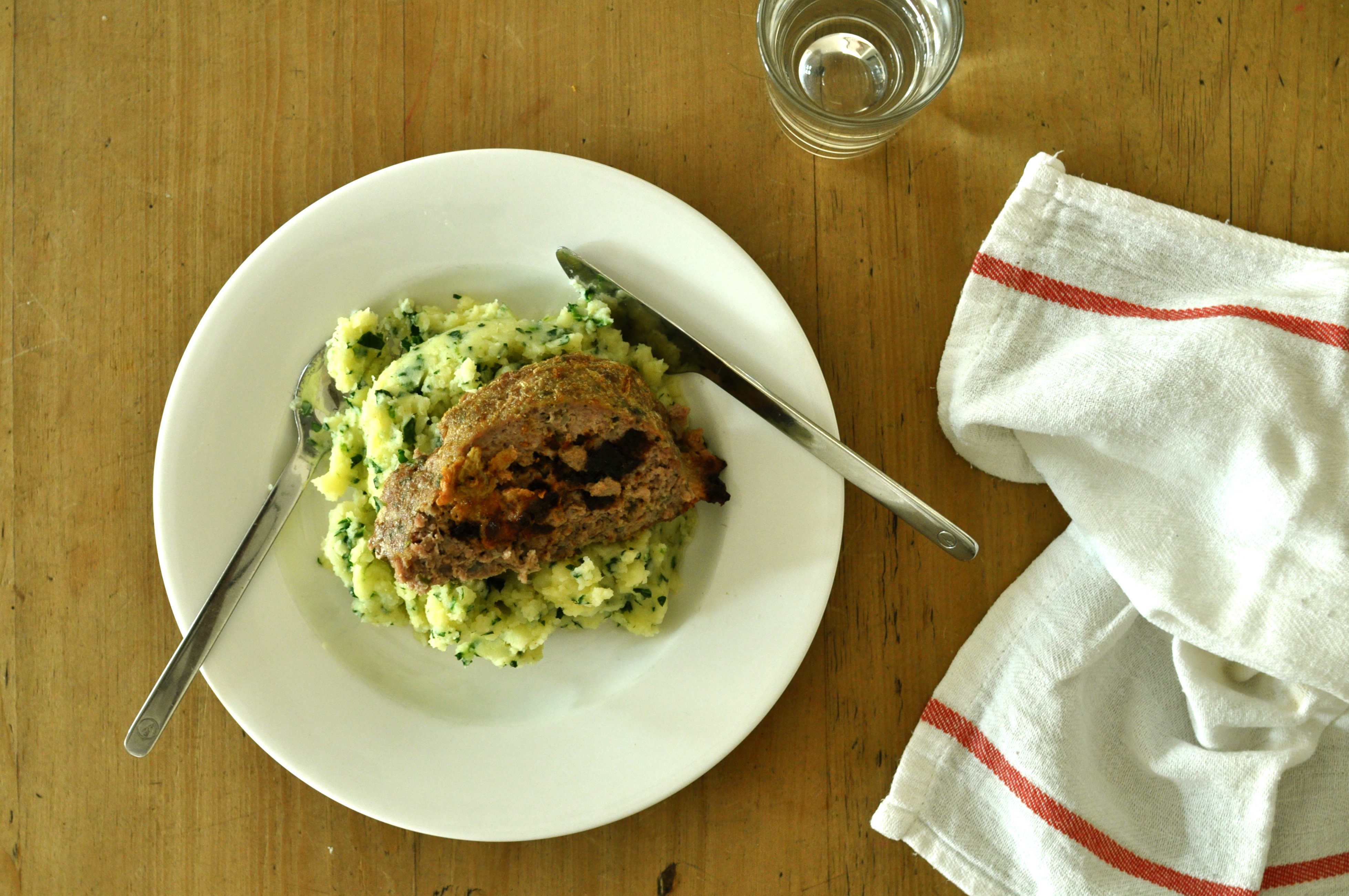
It’s really meatloaf with spinach mashed potatoes, so let me explain.

Fake rabbit (falscher Hase) is what the Germans call meatloaf, which, as flawed as it may be, is better than “meatloaf” — I imagine pretty much anything is better than “meatloaf.” So as I was looking for a name for this dinner – which isn’t exactly a speedy 20-minute meal, but much easier than it seems and always a great success — I erred into a world of bunnies, vegetable patches, and Beatrix Potter.

For anyone who didn’t grow up with stories of Peter Rabbit and Benjamin Bunny, Thomasina Tittlemouse and Jemima Puddle-Duck, the tale of the Flopsy Bunnies goes something like this: seven hungry bunnies venture onto Mr. McGregor’s rubbish (it’s an English story) heap, where they find a quantity of discarded overgrown lettuces. Victims to the soporific effect of lettuce, the bunnies all fall into a deep sleep, from which they are plucked by Mr. McGregor, and dumped into a sac for his dinner. Luckily the parents come by, find the sac, and, with the help of a friendly field mouse, free the bunnies from the sac then replace them with rotten vegetables. Unaware of the swap, Mr. McGregor proudly presents the sac to his wife, who doesn’t find the joke very funny.

Somehow, thinking of fake rabbits and children’s dinners reminded me of this story. And you know what? The name has caught on (not that the meal really needed selling, but still).

***

The fake rabbit

This fake rabbit is very moist, flavorful, and incidentally, bread-free. It takes a while to cook, but just a few minutes to prepare. The meat can be seasoned and prepared in advance and kept in the refrigerator for a few hours. 

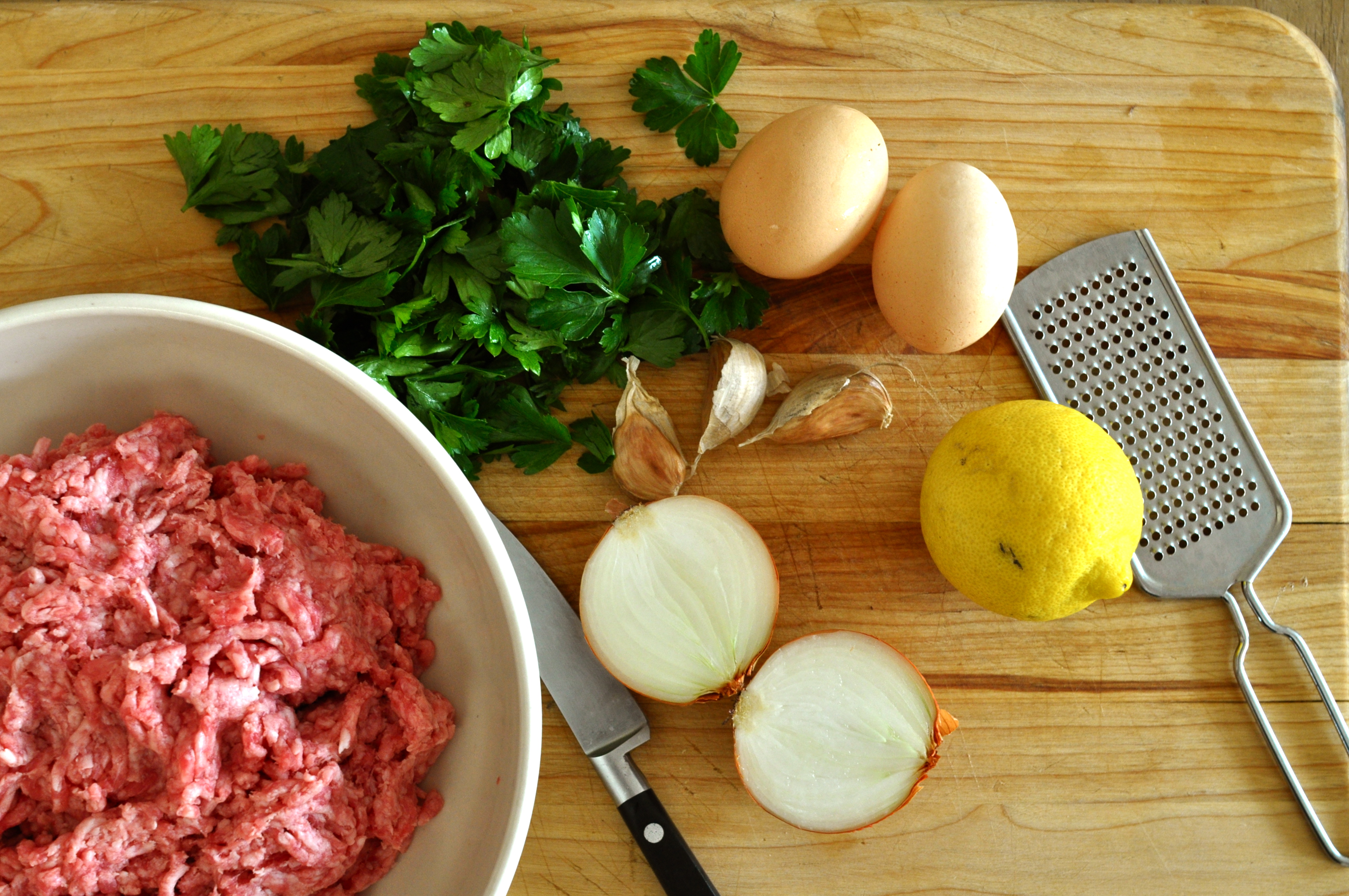
2 lbs ground lamb or beef

1 small onion

1 garlic clove

Small bunch parsley

2 eggs

Zest from 1/2 lemon

1 Tbsp Dijon mustard

2 Tbsps good olive oil

1/2 Tbsp coarse grey sea salt

Freshly ground black pepper

*

Preheat oven to 425°F (220°C).

Place the meat in a large bowl.

Peel and finely chop the onion. Peel and finely chop the garlic. Wash, remove the stems, and finely chop the parsley.

In a small bowl, whisk the eggs briefly with a fork.

Add all the ingredients to the meat and mix thoroughly.

Pat the meat into an oblong shape and transfer to an ovenproof dish. Drizzle a little olive oil and rub over the meat.

Slide the meat into the oven and bake at 425°F for 10 minutes. Reduce the heat to 375°F and bake for another 30 minutes.

Remove from the oven and let rest for 5 minutes before cutting into 1 inch slices to serve.

*

The vegetable garden

Or quick mashed potatoes with spinach

5 or 6 medium potatoes

1 bunch spinach

3 Tbsps butter

Good olive oil

Freshly grated nutmeg

Sea salt

Freshly ground black pepper

*

Fill a pot with water, salt generously, cover, place over high heat, and bring to a boil.

Peel and cut the potatoes into halves (or quarters if the potatoes are very big). Carefully drop the potatoes into the boiling water, leaving the lid ajar so the water doesn’t overflow, and cook. (They will cook for about 20 minutes.)

Meanwhile prepare the spinach. Remove the damaged leaves, cut off the stems, wash the spinach leaves in cold water, and set aside.

Start checking the potatoes after about 15 minutes; As soon as a sharp knife slides easily into the flesh, the potatoes are done. Immediately add the spinach, blanch for 1 minute, and quickly drain the potatoes and spinach into a colander.

Place the potatoes into a large shallow bowl and the spinach on a cutting board. With a masher or fork, mash the potatoes with the butter, and good glug of olive oil. Season with nutmeg, salt, and pepper.

Now the spinach should be cool enough to handle. Chop it finely, add to the potatoes, and mix well.

Done.

*

Related posts

Children’s dinner | Cowboy food

Apple sauce with lemon, cinnamon, and ginger

25 October 2011

Fall has come with crisp air and deepening sunshine, piles of fallen leaves to jump into and carpets of prickly chestnuts to tread onto, scarves without gloves and short skirts with leather boots, and apples, and apple sauce.

Apple sauce should be made with the newest, crispest apples of early fall as a celebratory leap away from summer; but also with the last, gnarly, bruised, and slightly soft apples of spring in patient anticipation of the summer’s first strawberries; and all winter long through grey skies and rainy days, snow storms and frigid winds.

Because making apple sauce is as easy as cutting apples into pieces and letting them cook for a little while, with a film of water at the bottom to prevent burning. But there are countless possible variations. Sugar or no sugar. Chunky or smooth. Spices? Even butter, for some. This is how I often make apple sauce, though by no means the only way.

***

This makes an intensely fragrant, chunky apple sauce. For a smoother texture the cooked apples can be run through a food mill. The spices and amount of sugar can also be adapted according to taste. I prefer fresh ginger and whole cinnamon because it imparts a more subtle taste, but ground spices would be fine, too.

About 10 small apples

Rind and juice of 1 lemon

1-inch (2.5 cm) piece ginger

1 thin cinnamon stick (or a half)

2 or 3 Tbsps brown sugar

***

Peel, core, and cut the apples into quarters and place in a heavy-bottomed saucepan.

Peel the rind of the lemon into a long ribbon, carefully avoiding too much pith, juice the lemon, and add both the rind and the juice to the apples.

Peel the ginger, cut it into thin slices, and add to the apples. Also add the cinnamon stick and the sugar.

Toss the apples. Pour in 2 or three tablespoons of water, just enough to coat the bottom of the pot.

Cook, covered, over medium to low heat for 20 to 30 minutes, until the apples have softened.

*

Related posts

At the market | Quinces

Oatmeal raisin walnut cookies

Banana cake


At the market in Brittany | Artichokes

21 August 2011

I don’t know how better to describe a field of artichokes than as a shimmering sea of silver green plants growing dinosaur eggs – they are at once beautiful and funny.

Because somehow it’s hard to take an artichoke entirely seriously. The legendary French comedian Coluche famously derided artichokes as “the only dish that, when you finish eating it, there’s more on your plate than when you started.”

When we eat an artichoke, we eat the bud of a domesticated thistle, cynara scolymus, which comes from the Mediterranean and dislikes frost. It is therefore ideally suited to the mild maritime climate of Brittany, where it is never terribly cold and – have I mentioned this before? – rarely particularly hot.

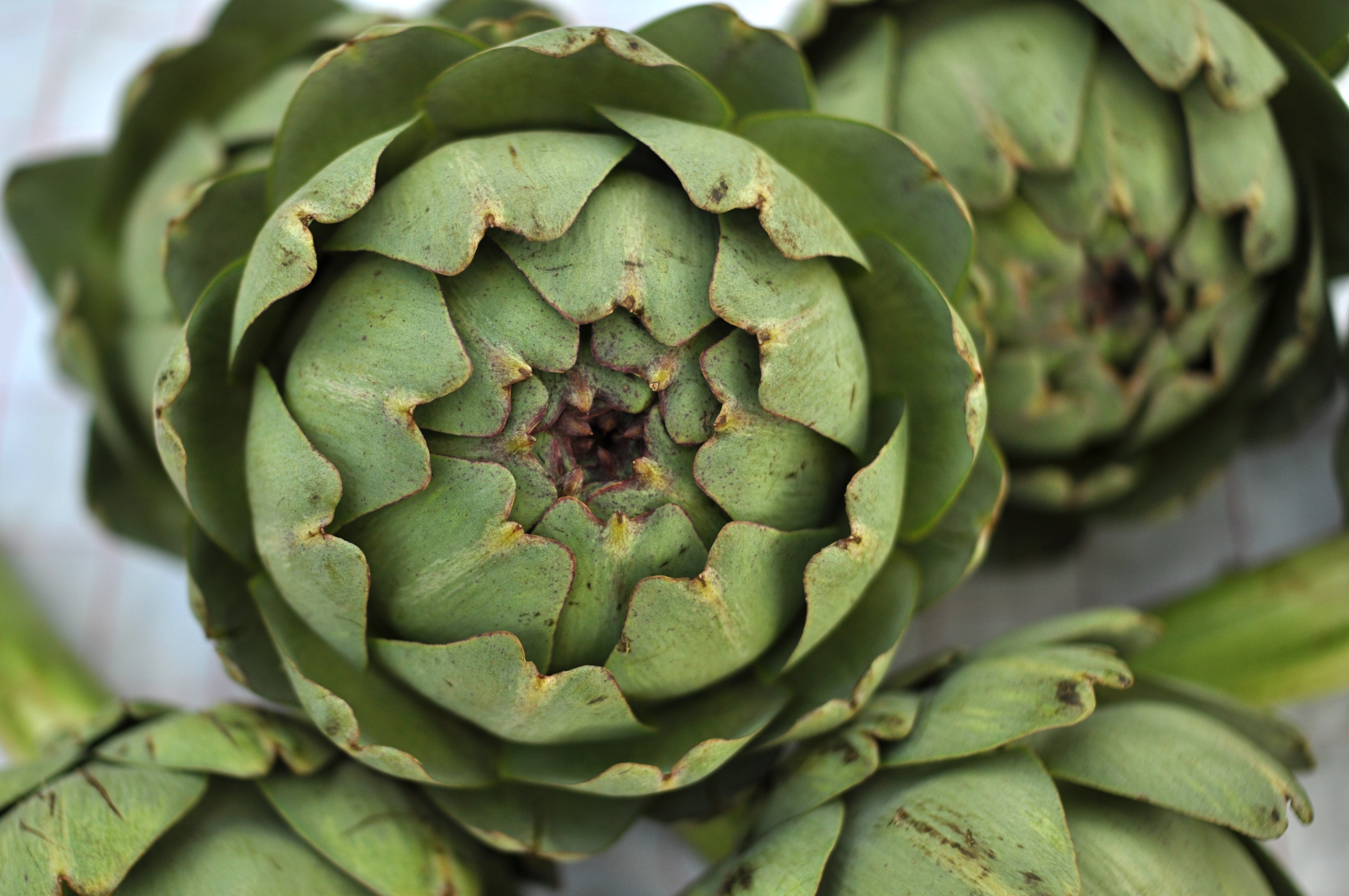
While the artichoke bud is still very small, the whole head is edible. Later, as pictured above and described below, it is still a bud but only the fleshy part of the leaves and the heart can be eaten.

To eat a globe artichoke you pluck a leaf, scrape the flesh gently but firmly with the bottom front teeth, discard the leaf, and repeat, working your way toward the tender heart. The very soft central leaves can practically be eaten whole, then onto the choke – the inedible part called “hay” in French, to describe its prickly quality. The choke must be removed carefully to reveal the heart, which most consider the prized part of the artichoke, though most children find eating the leaves much more fun.

***

Steamed globe artichokes with butter lemon sauce

Traditionally artichoke leaves are often dipped in a simple vinaigrette or a hollandaise sauce, but in my opinion this simple butter lemon sauce far surpasses both.

1 artichoke per person

2 Tbsps butter per artichoke

1/2 lemon per artichoke

Sea salt and freshly ground black pepper

***

In a pot large enough to hold all the artichokes, bring 1 to 2 inches (3 to 5 cm) of water to boil.

Just before using, cut the stems flush off the artichoke. **If this is done in advance, rub some lemon on the bottom so the artichoke doesn’t oxidize.**

Place the artichokes in the pot. **It is also possible to use a steamer, but not necessary. The bottom artichokes will touch the water slightly but the result is the same.**

Steam the artichokes for about 40-45 minutes. The artichokes are cooked when an outer leaf peels off easily and a knife slides into the heart (bottom part) of the artichoke.

For the sauce, melt the butter in a small saucepan, squeeze in the lemon juice, season with salt and pepper, and stir well. Taste and adjust with more lemon juice if desired.

To serve, place one artichoke on each plate with the sauce in a little pot on the side, and a large bowl on the table for the discarded leaves.

*

Related posts

Mussels with shallots and white wine

In Brittany | Kouign Amann from Au Four St Melaine bakery in Morlaix

At the market | Rhubarb [Compote recipe]

At the market | Quinces


In Brittany | Home baked potato fries

8 August 2011

Although we are in Brittany and I don’t believe fries are the traditional Breton accompaniment for mussels, it seems this famous Belgian pairing has anchored itself so steadfastly in our subconscious that anytime I (we) think of mussels, I (we) think fries. So when we prepared mussels the other day, the other half of the meal seemed obvious.

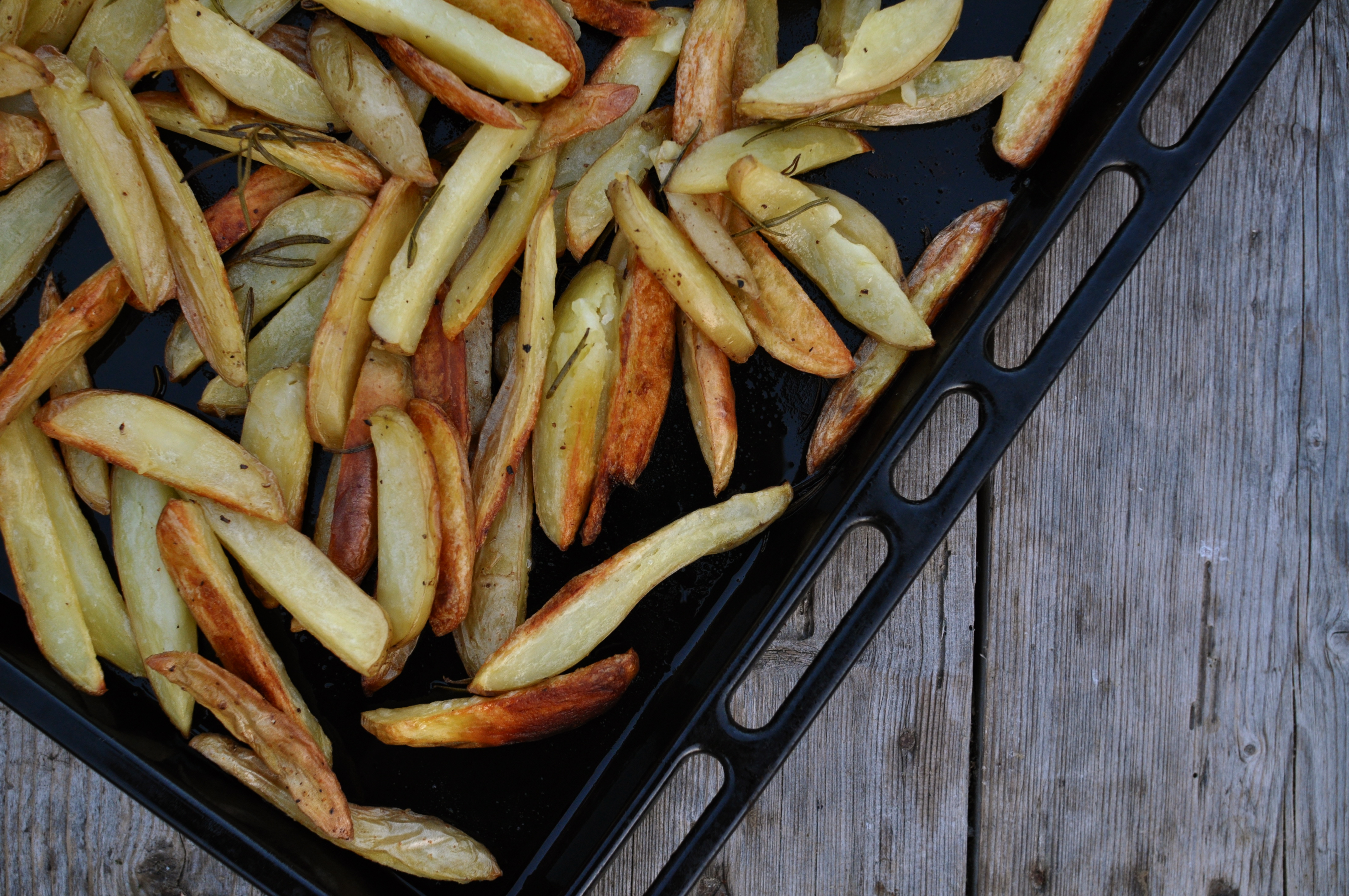
It was the first time I made really good home-baked fries and I think it was thanks to a tip from my sister who suggested starting them low and slow so they would cook through without burning or drying out.

They were great.

***

Potatoes

Good olive oil

Flaky sea salt

Freshly ground black pepper

Rosemary

*

Preheat oven to 300F (150C).

Cut the potatoes in half lengthways, place each half cut side down, and slice into 1/2 inch (1 cm) pieces. Wash the potato pieces in cold water and pat thoroughly dry with a (clean) kitchen towel.

Place the potatoes on a large shallow oven pan. Drizzle generously with olive oil, season with salt, pepper, and sprigs of rosemary. Toss so all the pieces of potato are dressed with the olive oil.

Put in the low oven and cook for about 20 to 25 minutes. When the potatoes seem cooked through, increase the oven temperature to 425F (220C) and bake for another 10 to 15 minutes until gold and crisp.

Check for salt seasoning, adjust, and serve hot.

*

Related posts

In Brittany | Mussels with shallots and white wine

At the market in Brittany | Artichokes