Archive for the ‘Easy’ Category

Cuban bread

20 March 2012

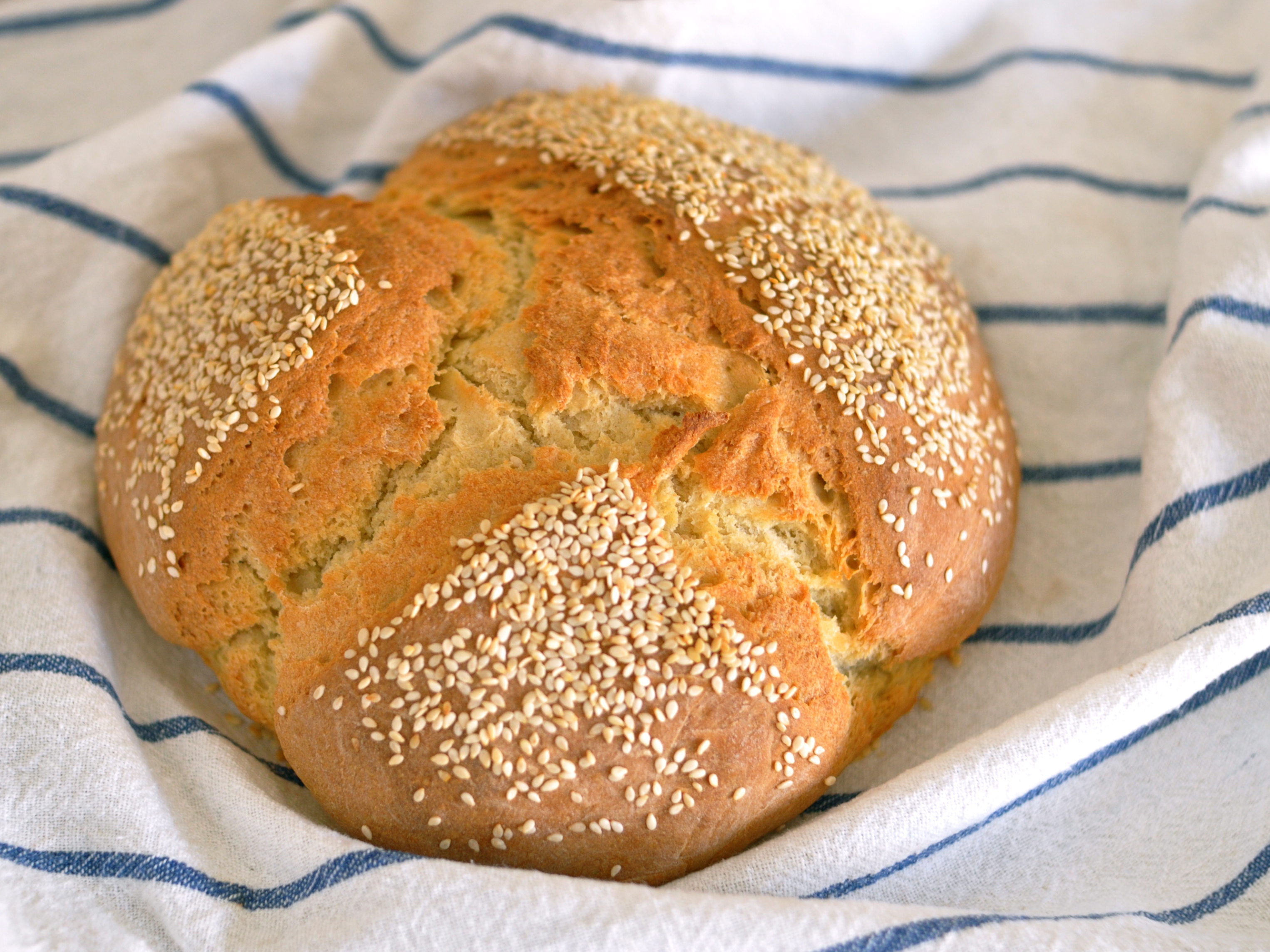
In his New Complete Book of Breads, Bernard Clayton doesn’t elaborate on this bread’s name; he does, however, call it “… a beginner’s dream.” And adds “Often I have used it in baking classes to demonstrate the ease with which good bread can be made.”

He might also have pointed out that this handsome bread is just the right measure of dense and chewy on the inside, with a soft but assertive crust on the outside, and that the rising time is only 15 minutes, which means the bread can be made from start to finish within an hour and a half, which is pretty great if — like me — you leave bread making to the last minute.

I first made it last September, realizing there was no bread in the house a bare ninety minutes before guests were to arrive for brunch. The name had also caught my eye and indeed it complemented well the baked eggs with cherry tomatoes, basil, and dash of balsamic vinegar I was serving that day.

Back then I hoped this sudden baking impulse would set the tone of a home-baked-bread–filled year, and perhaps even lead to realizing the sourdough fantasy I’ve been chasing.

Well, there hasn’t been much bread baking in the interim, let alone a sourdough adventure. Not a single loaf, in fact, until I baked this same Cuban bread for brunch again recently. It was well complemented, this time, by fried eggs with sautéed leeks and mushrooms atop grilled polenta (or that was the intention — the reality wasn’t quite so neat, but delicious nonetheless).

Happy spring!
***

From Bernard Clayton’s New Complete Book of Breads

5 to 6 cups white flour

2 packages yeast

1 Tbsp salt

2 Tbsps sugar

2 cups hot water (120°-130°F or 50°-55°C)

Sesame or poppy seeds (optional)

*

Prepare a baking sheet lined with parchment paper.

Place 4 cups of flour in a large bowl, add the yeast, salt, and sugar, and stir until they are well blended.

Pour in the hot water (using a thermometer is best here because if the water is too hot the yeast won’t work its magic, but, in the absence of such a device, a very unscientific gauge for right temperature is to place the little finger into the water and slowly count to ten. The water should feel quite hot at the end but below burning).

Beat with 100 strong strokes, or for 3 minutes with the flat beater of a hand mixer.

Gradually work in the remaining flour, half a cup at a time, until the dough is no longer too sticky and can be shaped into a ball. Kneed the dough for 8 minutes by hand on a floured work surface or in a hand mixer with a dough hook until it feels smooth, elastic, and “alive.”

Shape into a ball in a greased bowl and let the dough rise in a warm place until it has doubled in size, about 15 minutes.

Punch down the dough, separate it into two equal parts, and shape each into a smooth round. Place onto the parchmented baking sheet and cut an X on each loaf using a sharp knife. Brush with water and sprinkle with sesame or poppy seeds if desired.

Place the baking sheet with the loaves in the middle of a cold oven and place a large pan with hot water on a grate below, and heat oven to 400°F (200°C). **The bread will continue to rise in the oven as it is heating.**

Bake for about 50 minutes, until the bread is a deep golden brown. To check for doneness, knock on the bottom crusts; the loaves should sound hollow.

Let cool before slicing.

*

Related posts

Basic | Sweet pie crust

Banana cake

Stollen

Figs, walnuts, and chocolate

9 March 2012

Always an arm’s reach and no cooking away from an excellent dessert, and most delicious when the figs are broken open and stuffed with walnut halves.

It’s what we had at home most nights when I was a teenager. Every evening dinner included a main course, a salad, perhaps cheese, and, invariably, yogurt — plain, with a generous spoonful (or two) of jam or honey. And when one (or two) yogurt(s) left us with a feeling of not enough, we grabbed the nutcracker, the figs, and procrastinated with dessert before getting back to our homework.

*

Related posts

Figs with mascarpone

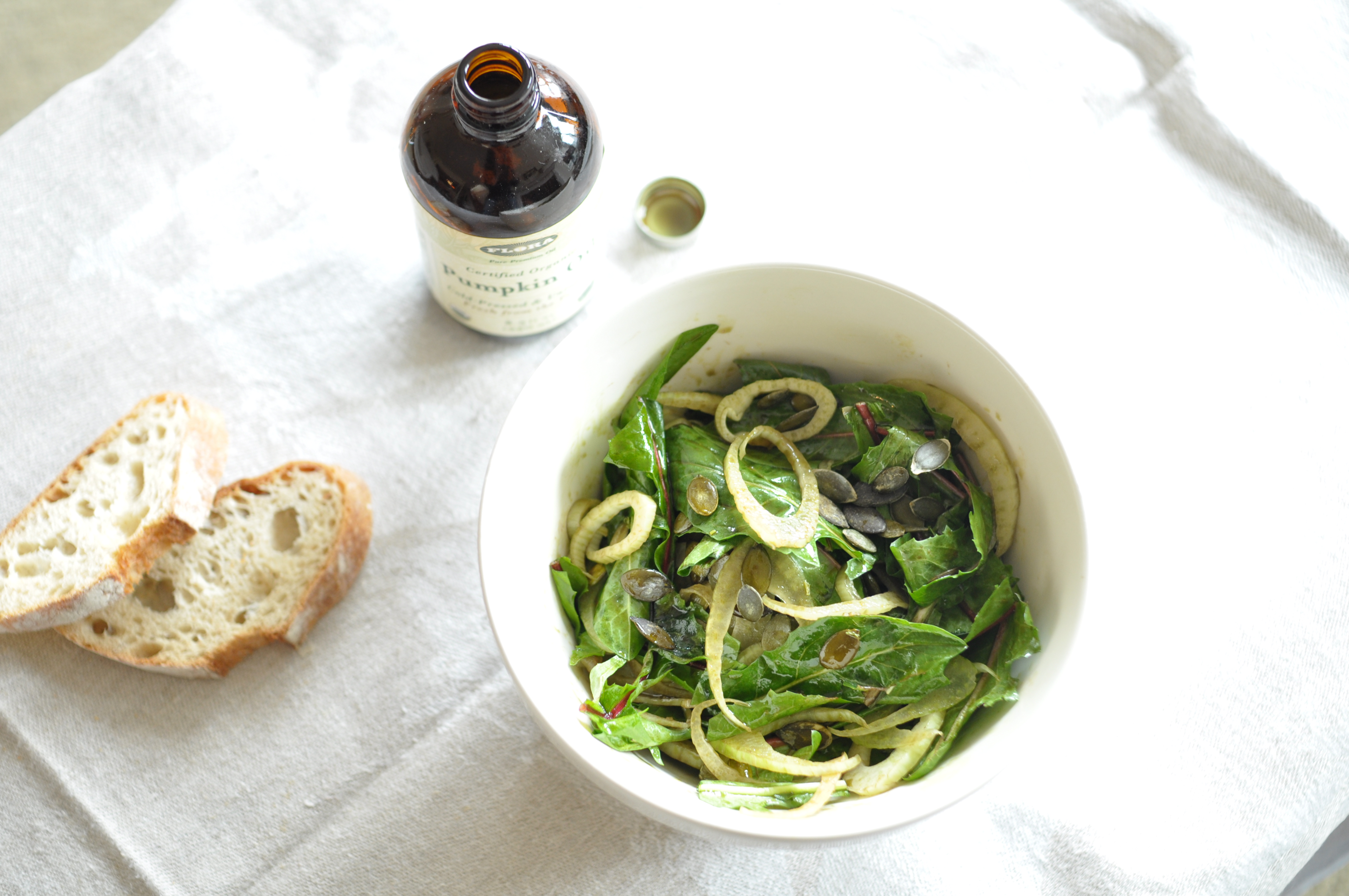
Dandelion, fennel, and pumpkin seed salad with pumpkin seed oil

18 February 2012

I was craving something green.

***

Pumpkin seed oil is quite common in Germany and Austria. Here in New York I have found it in health food stores, in the refrigerated section.

I rarely prepare salad dressing on the side; I usually just sprinkle the oil and lemon juice or vinegar directly onto the greens. It’s faster. The traditional ratio for salad dressing is three parts oil for one part vinegar but I prefer a little more pep.

1 bunch dandelion leaves

1 fennel bulb

1 Tbsp pumpkin seed oil

2 Tbsps olive oil

1 Tbsp Balsamic vinegar

1 Tbsp Lemon juice

Flaky sea salt

Freshly ground black pepper

A small handful of raw pumpkin seeds

*

Cut off the lower part of the dandelion stems, wash the leaves and spin or pat dry with a clean kitchen towel. Tear or chop the larger leaves in half.

Cut off the stems and remove the coarse outer layer of the fennel bulb. Thinly slice it crosswise to obtain rings.

Place the dandelion leaves and fennel rings in a bowl. Sprinkle with the pumpkin seed and olive oils, the vinegar, the lemon juice, and toss well to dress the greens. Season with salt and pepper, and the pumpkin seeds, and toss one last time.

*

Related posts

Endive salad with apples, walnuts, and comté

Lentil and fennel salad with lemon and parsley

Parsnip and butternut squash soup with sage

Cream of cauliflower soup with salmon roe

17 November 2011

The problem was, I couldn’t remember exactly how I had made this soup. I knew there was no milk or cream and no broth — no adulterating ingredient to distract from the delicate taste of the cauliflower. I looked in a dozen cookbooks most likely to have given me inspiration, but every recipe I found had milk, or cream. I was hesitant about the base: just onions and cauliflower, was that really it?

Then fortuitously, on 27 October, Mary Gorman-McAdams wrote her weekly column on TheKitchn about pairing wine with soup. In her column she mentions this very cauliflower soup, and solved my conundrum — the base is leeks, not onions.

This is a very simple soup; the salmon roe makes it sing. We served it with Chablis. Thanks, Mary.

***

Serves 6

4 leeks

8 Tbsps butter

2 small heads cauliflower

Sea salt

Freshly ground white pepper

A pinch of freshly grated nutmeg

6 small spoonfuls of salmon roe

***

Remove and discard the leeks’ tough outer leaves, then cut the leeks into thin slices. Wash well in cold water to remove any grit, and drain.

In a soup pot, melt 4 tablespoons of butter. Add the sliced leeks. Season with sea salt. Cook the leeks until soft being careful that they don’t begin to brown.

Meanwhile, cut the cauliflower into florets and wash in cold water. Add to leeks. Add 4 tablespoons of butter cut into small pieces. Let the butter fall through cauliflower and melt. Add just enough water to cover the cauliflower, and cook until the cauliflower is soft. About 20-25 minutes. **Overcooking gives the  cauliflower a strong cabbagy smell, so it is essential not to overcook it, but the cauliflower has to be soft enough to blend into a smooth soup without any hard gritty bits. As soon as a knife cuts through the stem of the cauliflower florets easily, it is ready.**

As soon as the cauliflower is cooked, remove from heat. Blend in batches (it is important not to fill the blender or food processor — it shouldn’t be filled more than up to about a third). Blend thoroughly until the soup is silky smooth. Leave out some of the liquid to be able to adjust the density of the soup.

Taste and adjust the seasoning with salt, pepper, and a restrained pinch of nutmeg.

Garnish with a spoonful of salmon roe added at the very last minute.

*

Related posts

Pumpkin leek soup

Lentil soup with cumin

Children’s dinner | Fake rabbit in the vegetable garden

8 November 2011

or “How the Flopsy Bunnies tricked Mr. McGregor.”

I think the name initially devised was even more convoluted, but Leo and Balthasar helped me distill it down to this. This is what happens when Thomas isn’t around.

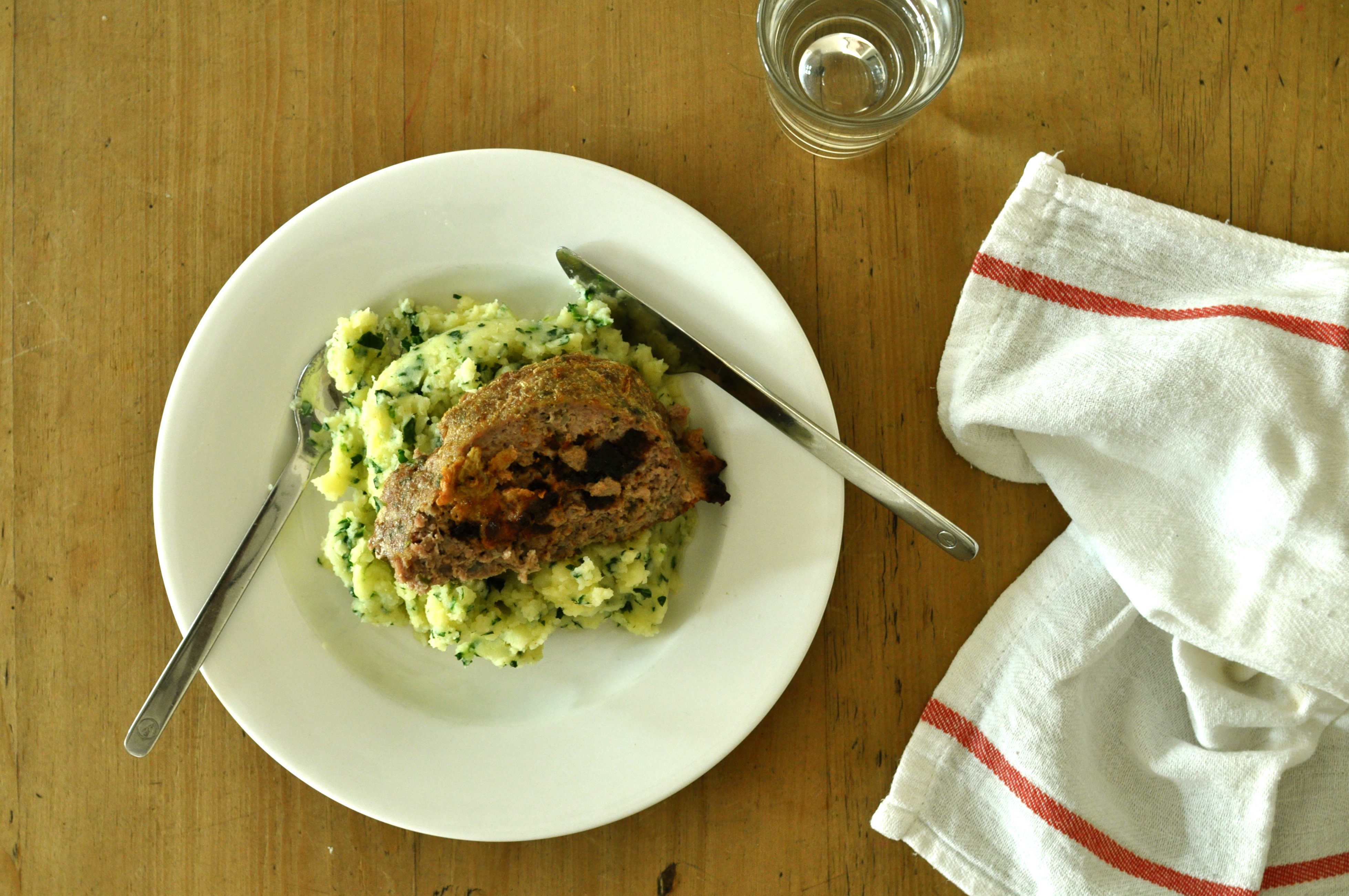
It’s really meatloaf with spinach mashed potatoes, so let me explain.

Fake rabbit (falscher Hase) is what the Germans call meatloaf, which, as flawed as it may be, is better than “meatloaf” — I imagine pretty much anything is better than “meatloaf.” So as I was looking for a name for this dinner – which isn’t exactly a speedy 20-minute meal, but much easier than it seems and always a great success — I erred into a world of bunnies, vegetable patches, and Beatrix Potter.

For anyone who didn’t grow up with stories of Peter Rabbit and Benjamin Bunny, Thomasina Tittlemouse and Jemima Puddle-Duck, the tale of the Flopsy Bunnies goes something like this: seven hungry bunnies venture onto Mr. McGregor’s rubbish (it’s an English story) heap, where they find a quantity of discarded overgrown lettuces. Victims to the soporific effect of lettuce, the bunnies all fall into a deep sleep, from which they are plucked by Mr. McGregor, and dumped into a sac for his dinner. Luckily the parents come by, find the sac, and, with the help of a friendly field mouse, free the bunnies from the sac then replace them with rotten vegetables. Unaware of the swap, Mr. McGregor proudly presents the sac to his wife, who doesn’t find the joke very funny.

Somehow, thinking of fake rabbits and children’s dinners reminded me of this story. And you know what? The name has caught on (not that the meal really needed selling, but still).

***

The fake rabbit

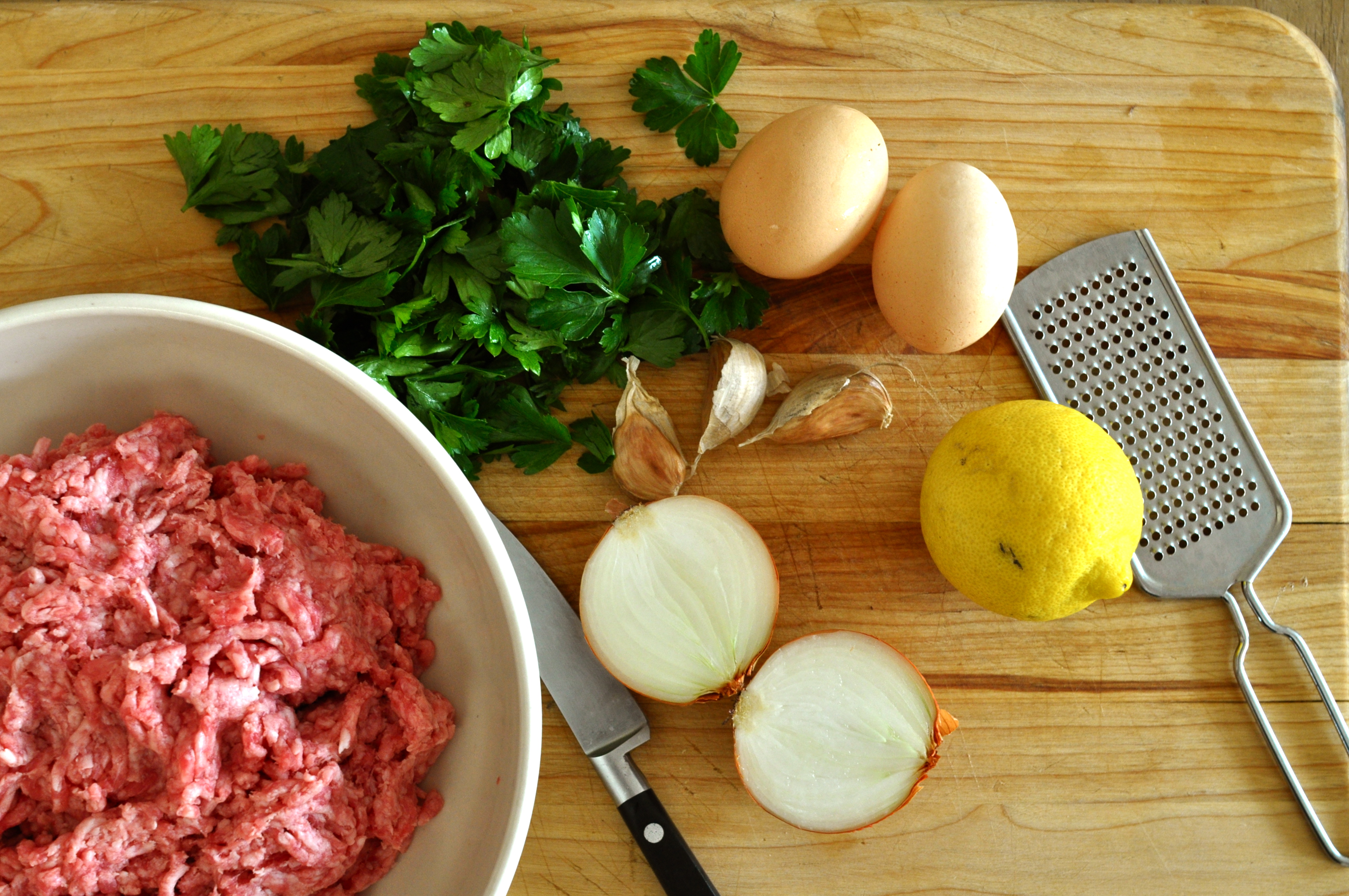
This fake rabbit is very moist, flavorful, and incidentally, bread-free. It takes a while to cook, but just a few minutes to prepare. The meat can be seasoned and prepared in advance and kept in the refrigerator for a few hours. 

2 lbs ground lamb or beef

1 small onion

1 garlic clove

Small bunch parsley

2 eggs

Zest from 1/2 lemon

1 Tbsp Dijon mustard

2 Tbsps good olive oil

1/2 Tbsp coarse grey sea salt

Freshly ground black pepper

*

Preheat oven to 425°F (220°C).

Place the meat in a large bowl.

Peel and finely chop the onion. Peel and finely chop the garlic. Wash, remove the stems, and finely chop the parsley.

In a small bowl, whisk the eggs briefly with a fork.

Add all the ingredients to the meat and mix thoroughly.

Pat the meat into an oblong shape and transfer to an ovenproof dish. Drizzle a little olive oil and rub over the meat.

Slide the meat into the oven and bake at 425°F for 10 minutes. Reduce the heat to 375°F and bake for another 30 minutes.

Remove from the oven and let rest for 5 minutes before cutting into 1 inch slices to serve.

*

The vegetable garden

Or quick mashed potatoes with spinach

5 or 6 medium potatoes

1 bunch spinach

3 Tbsps butter

Good olive oil

Freshly grated nutmeg

Sea salt

Freshly ground black pepper

*

Fill a pot with water, salt generously, cover, place over high heat, and bring to a boil.

Peel and cut the potatoes into halves (or quarters if the potatoes are very big). Carefully drop the potatoes into the boiling water, leaving the lid ajar so the water doesn’t overflow, and cook. (They will cook for about 20 minutes.)

Meanwhile prepare the spinach. Remove the damaged leaves, cut off the stems, wash the spinach leaves in cold water, and set aside.

Start checking the potatoes after about 15 minutes; As soon as a sharp knife slides easily into the flesh, the potatoes are done. Immediately add the spinach, blanch for 1 minute, and quickly drain the potatoes and spinach into a colander.

Place the potatoes into a large shallow bowl and the spinach on a cutting board. With a masher or fork, mash the potatoes with the butter, and good glug of olive oil. Season with nutmeg, salt, and pepper.

Now the spinach should be cool enough to handle. Chop it finely, add to the potatoes, and mix well.

Done.

*

Related posts

Children’s dinner | Cowboy food