Archive for the ‘Easy’ Category

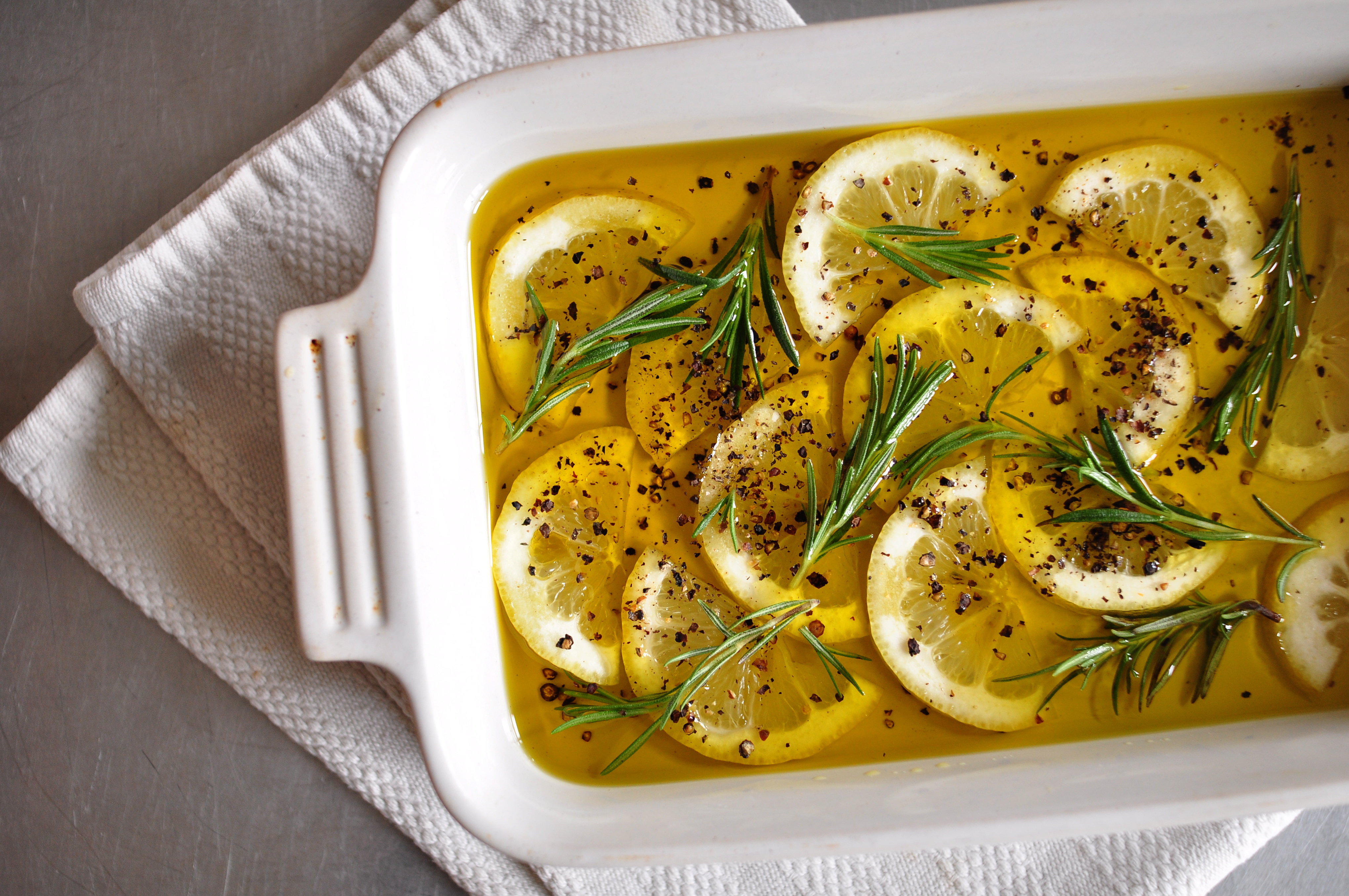
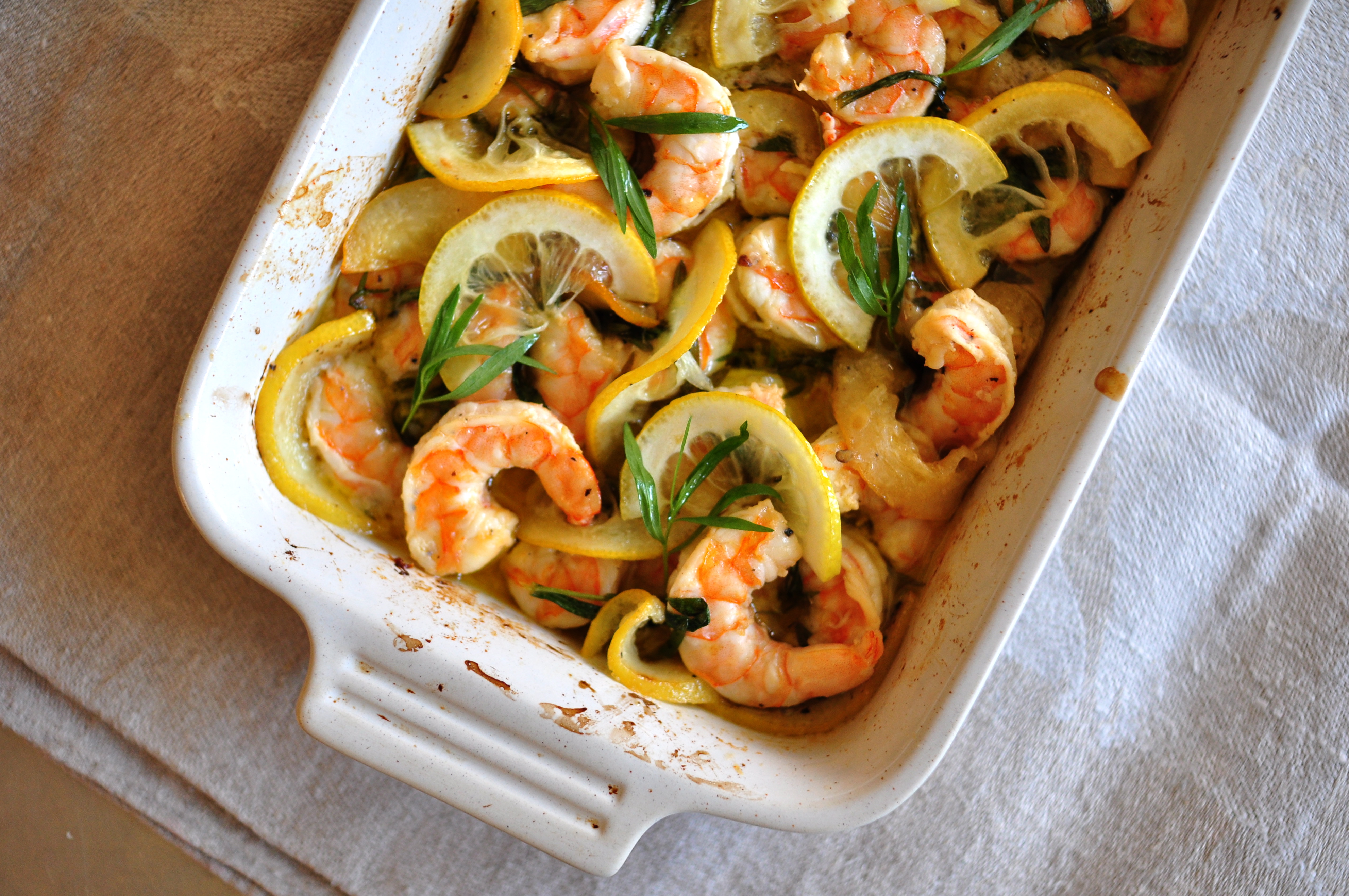
Baked shrimp with lemon, rosemary, and tarragon

12 May 2011

It’s surprisingly easy to grow tarragon.

I had always thought of tarragon as a fragile herb because it is often wilted and usually bland when bought, but I discovered it is actually a low-maintenance hardy perennial that survives the New York winter. Alongside chives, tarragon is the first herb to come up in spring, year after year, and I think it’s worth growing, if only for that optimistic quality.

A classic French use for tarragon is with chicken, it also goes nicely with fish, and gives an acidulated kick to salads. This oven-baked shrimp, though, is itself almost reason enough to grow tarragon. I was inspired by a recipe found on Oui, Chef (which uses different herbs and spices, but the idea and cooking method are the same).

It’s absurdly delicious, and ridiculously easy.

***

Adapted from Herb and Lemon Baked Shrimp by Oui, Chef.

If you don’t happen to grow tarragon on your balcony, fresh thyme and 1/2 tsp cracked coriander seeds would go well, as shown in the original recipe (added early with the lemon, rosemary, and cracked pepper to flavor the oil).

1 lemon

1/2 tsp peppercorns

Good olive oil

Few sprigs fresh rosemary

1 lb (450 g) shrimp*

Few sprigs fresh tarragon

Coarse grey sea salt

*

Preheat oven to 400°F (200°C).

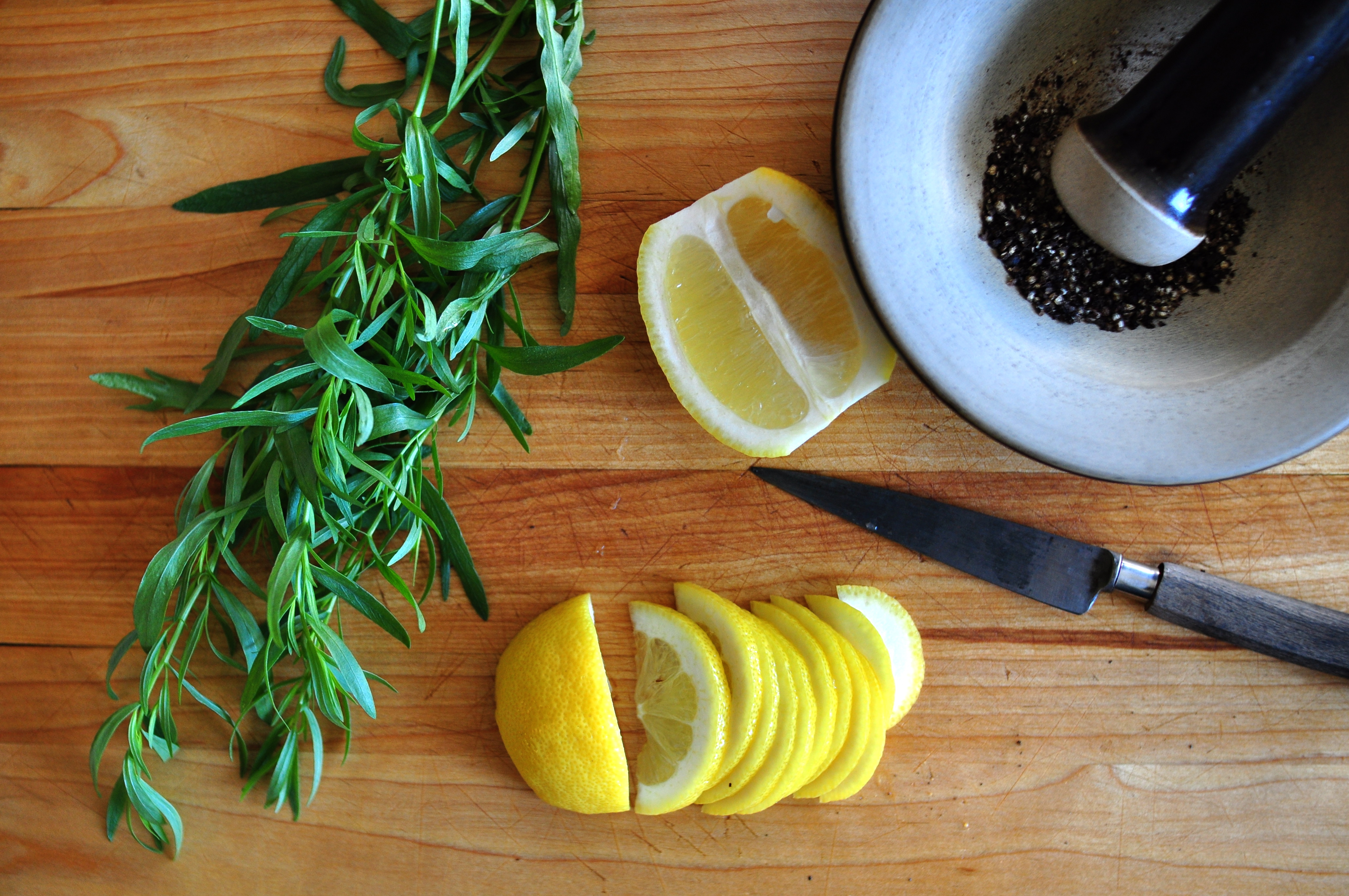
Trim the ends of the lemon, cut it in half lengthwise, place the halves cut side down on the board and cut into thin half moons. In a mortar, crack the peppercorns.

Pour enough olive oil to cover an ovenproof dish a generous 1/8 inch (1/4 cm) deep. Put the lemon slices in the oil reserving 4-5 very thin ones for later. Add the cracked pepper and the sprigs of rosemary. Put into the hot oven for about 15 minutes, until the oil is sizzling and fragrant.

Remove the dish from the oven, add the shrimp and tarragon, tossing them quickly in the fragrant oil, then sprinkle some coarse sea salt and place the few reserved slices of lemon on top and slide back into the oven.

Bake for about 7 to 10 minutes, depending on the size of the shrimp. **Small shrimp are cooked practically as soon as they lose their translucence on the outside. Larger shrimp may take a couple minutes longer. (They will continue to cook when out of the oven.)**

Serve immediately, with a spoonful of the juices.

*Here in New York, nearly all shrimp has at some point been frozen. Usually, shrimp that is sold unfrozen is actually thawed. If the shrimp has been caught wild and never been frozen, it is specified. Therefore, unless very fresh wild shrimp is available, it is best to buy frozen shrimp and defreeze it at home just before cooking.
Red beet salad with parsley and chives

24 March 2011

A few days ago “Spring has sprung!” was on everyone’s lips. It was irresistible, I even caught myself humming it. And I should know better. As long as I have lived in New York, spring has never sprung here. It fumbles, stumbles, advances two balmy afternoons, retreats five frigid days, and, just as winter finally seems to capitulate, spring gets bullied away by summer.

It was 20 degrees (Celsius, which is about 70°F) last Friday and we had our first picnic. Now it is raining, snowing, and hailing intermittently. It’s treacherous because the warm days are just enough to conjure visions of light dresses, and coax out the daffodils in the park and the chives on my balcony.

So as winter meets spring, and no one is quite sure which one it really is, I imagined a hybrid salad. The chives, shivering in the snow, were a nice way to springify the enormous beet salad I made to finish the last vegetables in the fridge before going off on holiday. Two weeks of skiing in the Haute Savoie, plenty of cheeses to eat and Abymes to drink. I will report back.

***

Whole raw beets

Flat-leaved parsley

Good olive oil

Juice from 1 lemon

Maldon sea salt

Freshly ground black pepper

Chives

***

Peel and grate the beets with the fine setting of a hand-held grater or food processor. Wash and finely chop the parsley.

Mix the beets with a generous douse of olive oil, freshly pressed lemon juice, salt, and pepper, checking the seasoning as you go and adjusting to taste. Mix in the parsley.

Roughly cut the chives into 1/2 inch (1 cm) pieces and toss into the salad.

Spiced tomato soup

16 February 2011

Traditionally for Valentine’s we invite friends over for dinner. This year I decided to make a monochrome meal. It’s frivolous – precisely. And since I was in a kitsch mood, the meal might as well be red. So on Monday I made a red meal for Valentine’s day: tomato soup, steak tartare, roasted red potatoes with pimentón, radicchio salad, mimolette and Red Leicester Sparkenhoe (orange being the closest thing we found to red cheese), and blood orange sorbet with blood orange slices.

(I first made a chromatic meal 10 years ago, a memorably fun black and white dinner that started with Sophie Calle and ended in the early morning hours with a drive out to see the sunrise on Fire Island. But that’s another story.)

Back to the soup. It was my first tomato soup. And I thought it turned out quite well. I hadn’t made tomato soup before because I don’t buy tomatoes in winter. I checked my most trusted cookbooks but all required the use of the “best, ripest” tomatoes. So I had to improvise, and find a way to make the most of the canned variety – i.e. use lots of other good flavors.

I was quite happy with the result. Thomas – less so. “The flavor of the broth is too strong.” Hmmm, this might be the opportune moment to mention that, in addition to being, in my opinion, quite good, this soup requires no broth. Granted it may have been the celery, or the cumin; Thomas wanted a tomato soup that tastes like tomatoes. For that he will have to wait until next summer.

***

Serves 6

2 x 28 oz. (1 lb) cans good whole peeled tomatoes

2 large onions

Olive oil

3 stalks celery

3 cloves garlic

1/2 tsp ground cumin

1/4 tsp ground coriander

1/4 tsp ground turmeric

2 bay leaves

Maldon sea salt

Cayenne pepper to taste

Crème fraîche or sour cream (optional)

***

Drain the tomatoes (reserve the juice), cut them lengthwise into strips, and set aside.

Peel, cut in half, and thinly slice the onions. Heat enough olive oil to cover the base of a large heavy saucepan. Brown onions in the oil, stirring regularly.

Thinly slice the celery stalks. Add to the onions when they start to turn golden. Continue browning, stirring regularly.

Thinly slice the garlic. When the onions and celery are deep golden (after about 10-15 minutes), add the garlic, cumin, coriander, turmeric, bay leaves, and stir well. Add the tomatoes. Cook for a few minutes over high heat. Add the tomato juice, reduce the heat, and cook at a low simmer for about 35-40 minutes. Remove bay leaves, season to taste with salt and cayenne pepper, and blend until very smooth.

Serve with a spoonful of crème fraîche or sour cream.

Banana cake

10 February 2011

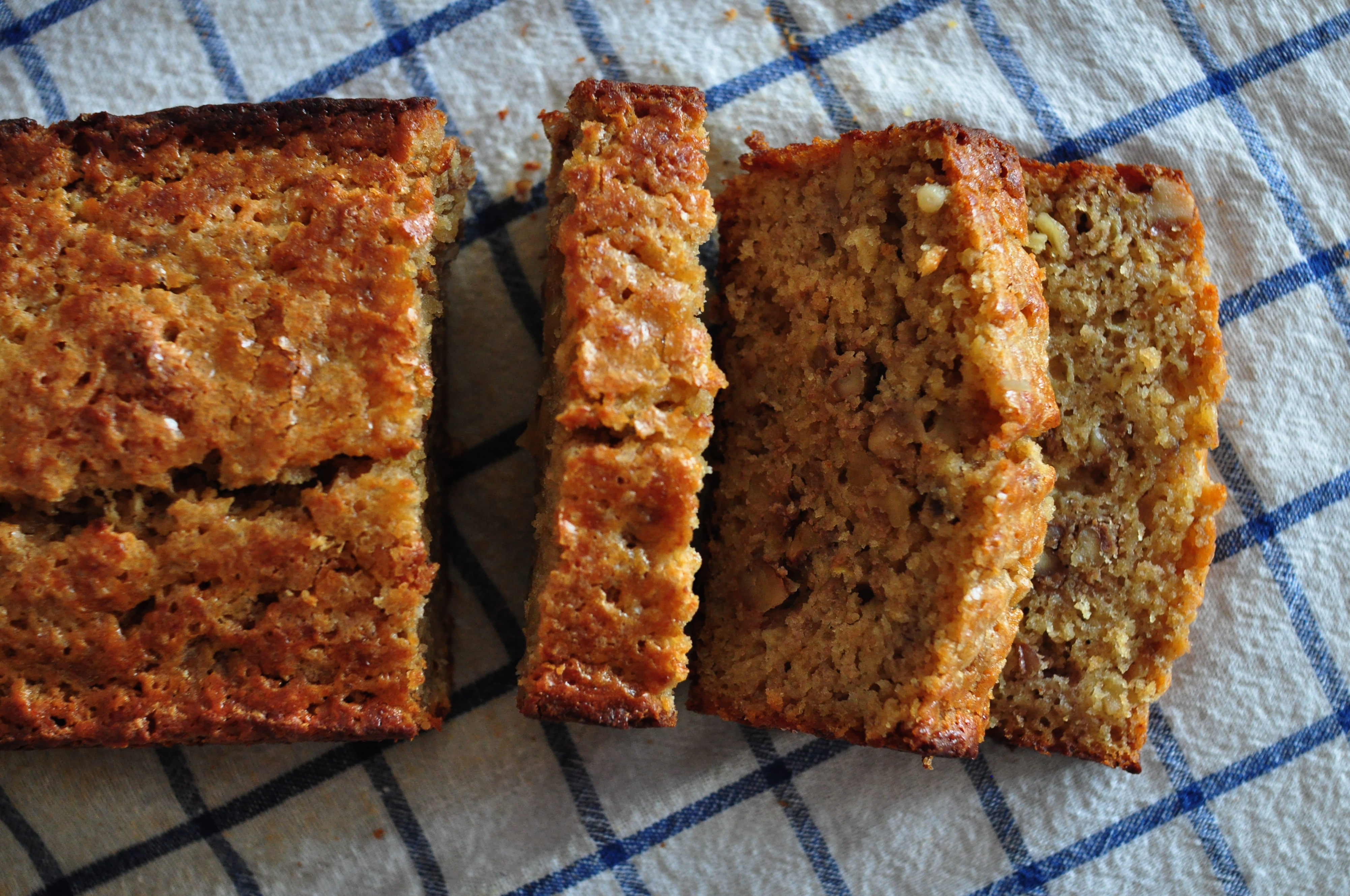
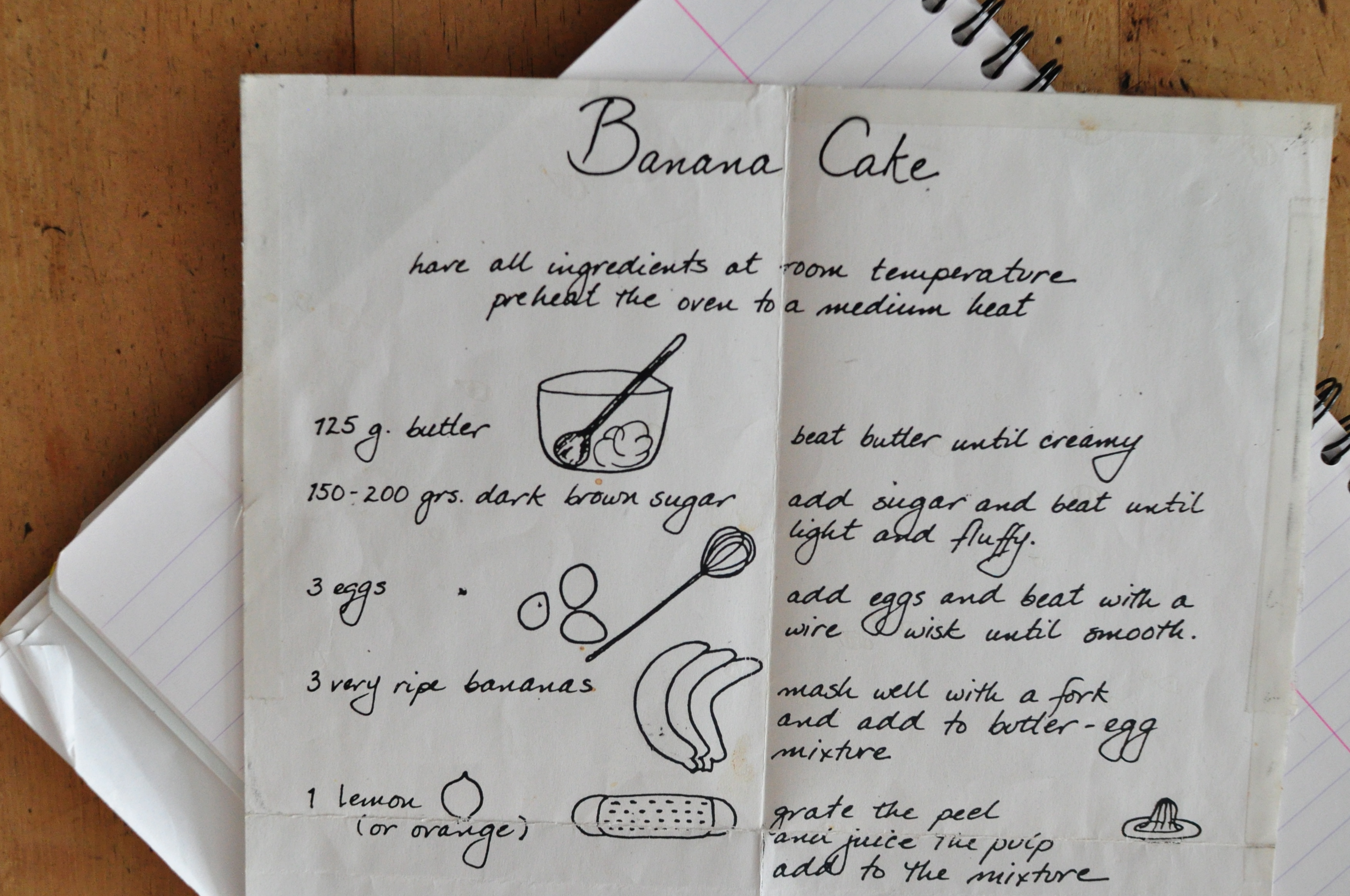
I have had this recipe since I was 7 or 8 years old. I must have been in second or third grade; a friend in my class brought a banana cake to school to celebrate his birthday and offered photocopies of the recipe. I kept the photocopy, and it appears that I have collected recipes ever since. Not obsessively or excessively, but, every once in a while, I wrote down a recipe I liked.

Some years ago I copied these recipes into an orange, cloth-bound dummy book (a sample with blank pages) on the architect R.M. Schindler that I was editing at the time. The recipes compiled in the “Schindler book” (as I now very personally refer to it) are not anonymous, they are not newspaper clippings I fell across and found enticing – they are all linked to memories, and people.

This banana cake reminds me of my first school in France, of Jacob (my school friend) and his family with whom we have not completely lost touch; it evokes their music and a lemon tree in their San Francisco garden that I have seen only in photographs.

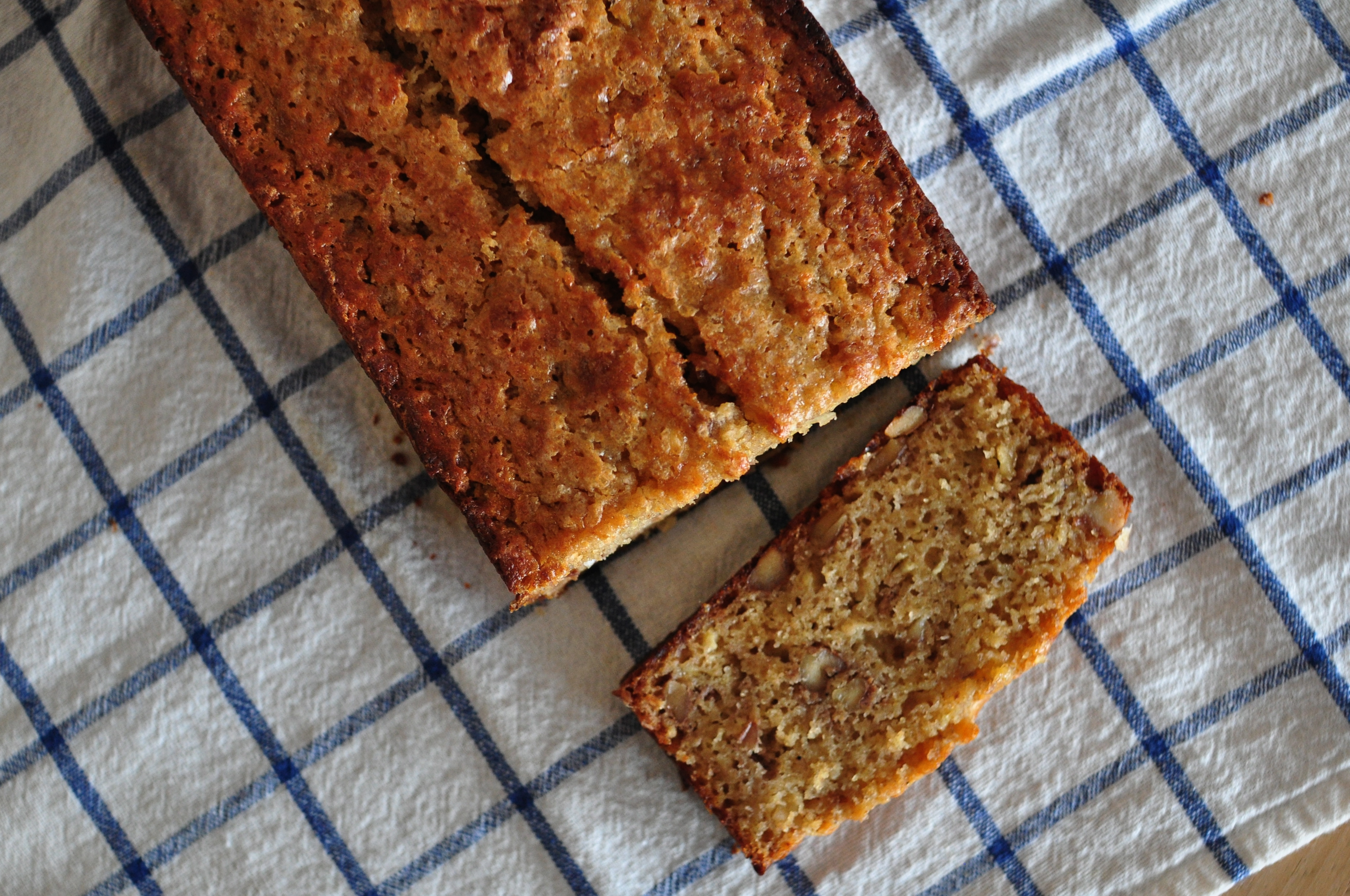
Also, it is a very good banana cake. I resisted tweaking the recipe except for the walnuts, as I seem unable to refrain from putting nuts in a cake.

***

10 Tbsps (125 g) butter

3/4 cup (150 g) brown sugar

3 eggs

3 very ripe bananas

1 lemon or orange

1 tsp vanilla extract

1 3/4 cups (200 g) flour (half whole wheat)

2 tsps baking powder

1 tsp sea salt

1 cup (100 g) shelled walnuts (optional)

***

Preheat oven to 350°F (175°C).

In a large bowl, beat the butter until creamy. Add the sugar and beat until light and fluffy. Add the eggs one at a time, beating with a wire whisk to incorporate until smooth.

Mash the bananas well with a fork and add to the butter/sugar/egg mixture.

Grate the zest and juice the lemon (or orange) and add to the batter with the vanilla extract. Mix well.

In a smaller bowl, mix together the flour, baking powder, and salt and add to batter. Stir just enough to blend everything together. Gently stir in the walnuts, if using.

Line a baking pan with parchment paper, butter the paper, and pour in the batter.

Slide into the oven for 45 to 55 minutes, until a knife inserted in the middle of the cake comes out dry. (If, like me, you like the cake to be very moist, take it out of the oven a little sooner, when the tip of the knife is still wet.)

Roast chicken with lemon and fennel seeds

6 January 2011

Some years ago I discovered that a chicken could be seasoned under the skin with salt, pepper, butter, and herbs. It makes for excellent roast chicken, and I decided it would be the only way to go in the future. But it is also a bit finicky, and somehow roasting a chicken became an unwieldy affair in my mind.

Until recently, when I came across good chickens from Epicurean Farms. They are fairly small, very tasty, and usually sold whole. So I started roasting again and rediscovered that it is actually probably the easiest way to cook these animals, especially if you are not chopping herbs and delicately stuffing them under the skin. Now roasting a chicken seems effortless like an afterthought; it can be done for lunch or dinner, or after dinner – at anytime, really, since it is excellent cold, especially with green tomato chutney.

Chickens can be stuffed with any combination of herbs, garlic, or onion on hand and I usually add a lemon, slashed so it releases its juices. This version with fennel seeds was a staple in our house when I was growing up.

***

1 whole chicken

Sea salt

Freshly ground black pepper

2 Tbsp fennel seeds

1 small lemon

2 small garlic cloves

Butter

***

Preheat oven to 425°F (220°C).

Pat the chicken dry with a paper towel. If you remember to do it in advance, let the chicken sit uncovered in the refrigerator for a few hours so the skin dries out before roasting.

Season the cavity of the chicken with salt, pepper, and fennel seeds.

Poke the lemon with a fork multiple times on all sides and stuff it into the chicken with the whole, skin-on garlic cloves. Truss or just bind the legs together with kitchen string. Massage the chicken all over with softened butter and season the outside again with salt and pepper.

Place the chicken on a roasting pan and into the oven for 10 minutes at 425°F (220°C) then lower to 375° (190°C) and roast for 40-50 minutes, depending on the size of the bird (large chickens may need to cook even longer — pull away one thigh and if the flesh at the joint is still translucent pink, cook a little longer).

Let rest 10-15 minutes before carving. Squeeze the lemon over the pieces of chicken before serving.

***

Related posts

Braised chicken legs with cherry tomatoes