Archive for the ‘Fall’ Category

Cuban bread

20 March 2012

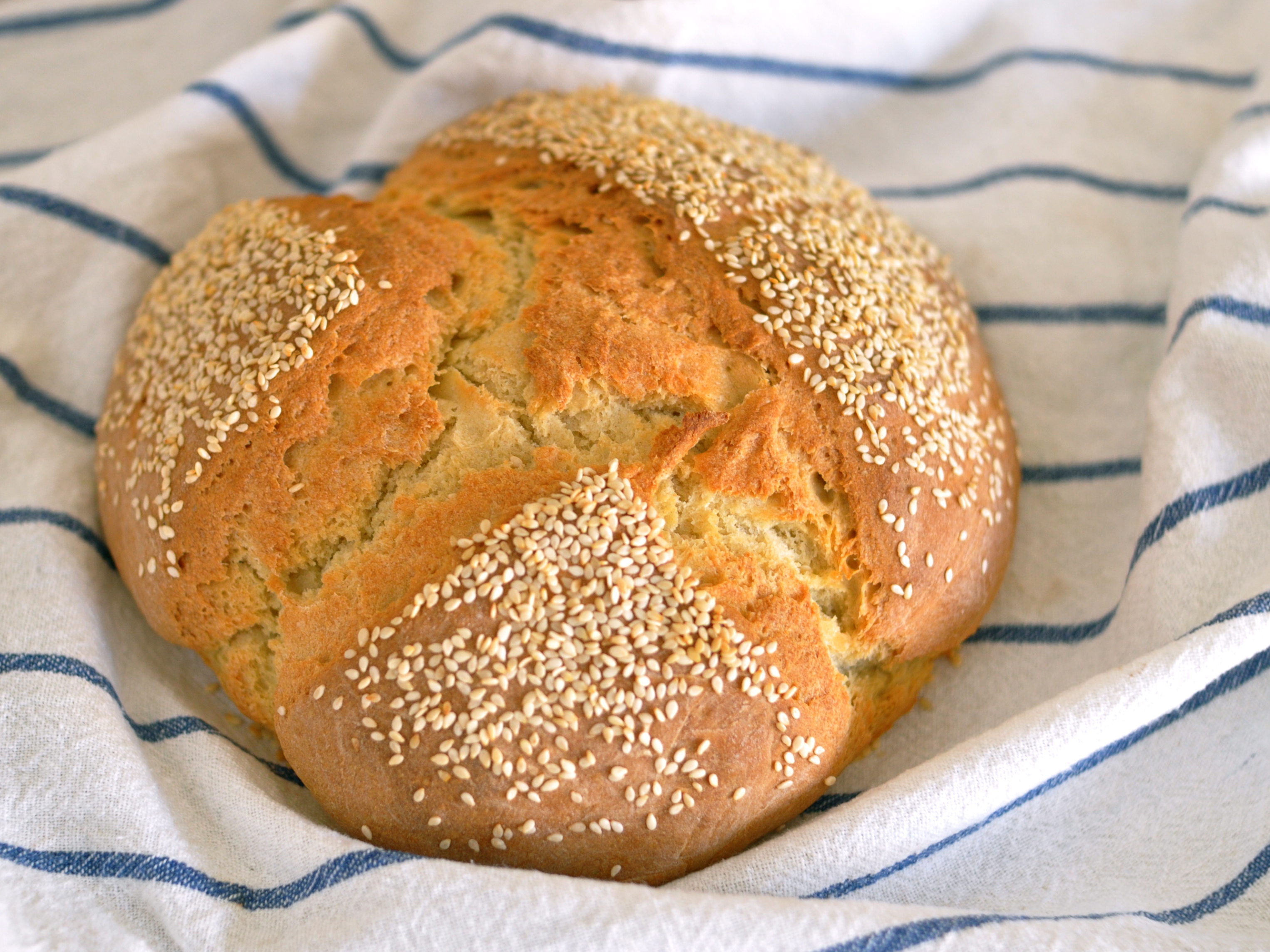
In his New Complete Book of Breads, Bernard Clayton doesn’t elaborate on this bread’s name; he does, however, call it “… a beginner’s dream.” And adds “Often I have used it in baking classes to demonstrate the ease with which good bread can be made.”

He might also have pointed out that this handsome bread is just the right measure of dense and chewy on the inside, with a soft but assertive crust on the outside, and that the rising time is only 15 minutes, which means the bread can be made from start to finish within an hour and a half, which is pretty great if — like me — you leave bread making to the last minute.

I first made it last September, realizing there was no bread in the house a bare ninety minutes before guests were to arrive for brunch. The name had also caught my eye and indeed it complemented well the baked eggs with cherry tomatoes, basil, and dash of balsamic vinegar I was serving that day.

Back then I hoped this sudden baking impulse would set the tone of a home-baked-bread–filled year, and perhaps even lead to realizing the sourdough fantasy I’ve been chasing.

Well, there hasn’t been much bread baking in the interim, let alone a sourdough adventure. Not a single loaf, in fact, until I baked this same Cuban bread for brunch again recently. It was well complemented, this time, by fried eggs with sautéed leeks and mushrooms atop grilled polenta (or that was the intention — the reality wasn’t quite so neat, but delicious nonetheless).

Happy spring!
***

From Bernard Clayton’s New Complete Book of Breads

5 to 6 cups white flour

2 packages yeast

1 Tbsp salt

2 Tbsps sugar

2 cups hot water (120°-130°F or 50°-55°C)

Sesame or poppy seeds (optional)

*

Prepare a baking sheet lined with parchment paper.

Place 4 cups of flour in a large bowl, add the yeast, salt, and sugar, and stir until they are well blended.

Pour in the hot water (using a thermometer is best here because if the water is too hot the yeast won’t work its magic, but, in the absence of such a device, a very unscientific gauge for right temperature is to place the little finger into the water and slowly count to ten. The water should feel quite hot at the end but below burning).

Beat with 100 strong strokes, or for 3 minutes with the flat beater of a hand mixer.

Gradually work in the remaining flour, half a cup at a time, until the dough is no longer too sticky and can be shaped into a ball. Kneed the dough for 8 minutes by hand on a floured work surface or in a hand mixer with a dough hook until it feels smooth, elastic, and “alive.”

Shape into a ball in a greased bowl and let the dough rise in a warm place until it has doubled in size, about 15 minutes.

Punch down the dough, separate it into two equal parts, and shape each into a smooth round. Place onto the parchmented baking sheet and cut an X on each loaf using a sharp knife. Brush with water and sprinkle with sesame or poppy seeds if desired.

Place the baking sheet with the loaves in the middle of a cold oven and place a large pan with hot water on a grate below, and heat oven to 400°F (200°C). **The bread will continue to rise in the oven as it is heating.**

Bake for about 50 minutes, until the bread is a deep golden brown. To check for doneness, knock on the bottom crusts; the loaves should sound hollow.

Let cool before slicing.

*

Related posts

Basic | Sweet pie crust

Banana cake

Stollen

Figs, walnuts, and chocolate

9 March 2012

Always an arm’s reach and no cooking away from an excellent dessert, and most delicious when the figs are broken open and stuffed with walnut halves.

It’s what we had at home most nights when I was a teenager. Every evening dinner included a main course, a salad, perhaps cheese, and, invariably, yogurt — plain, with a generous spoonful (or two) of jam or honey. And when one (or two) yogurt(s) left us with a feeling of not enough, we grabbed the nutcracker, the figs, and procrastinated with dessert before getting back to our homework.

*

Related posts

Figs with mascarpone

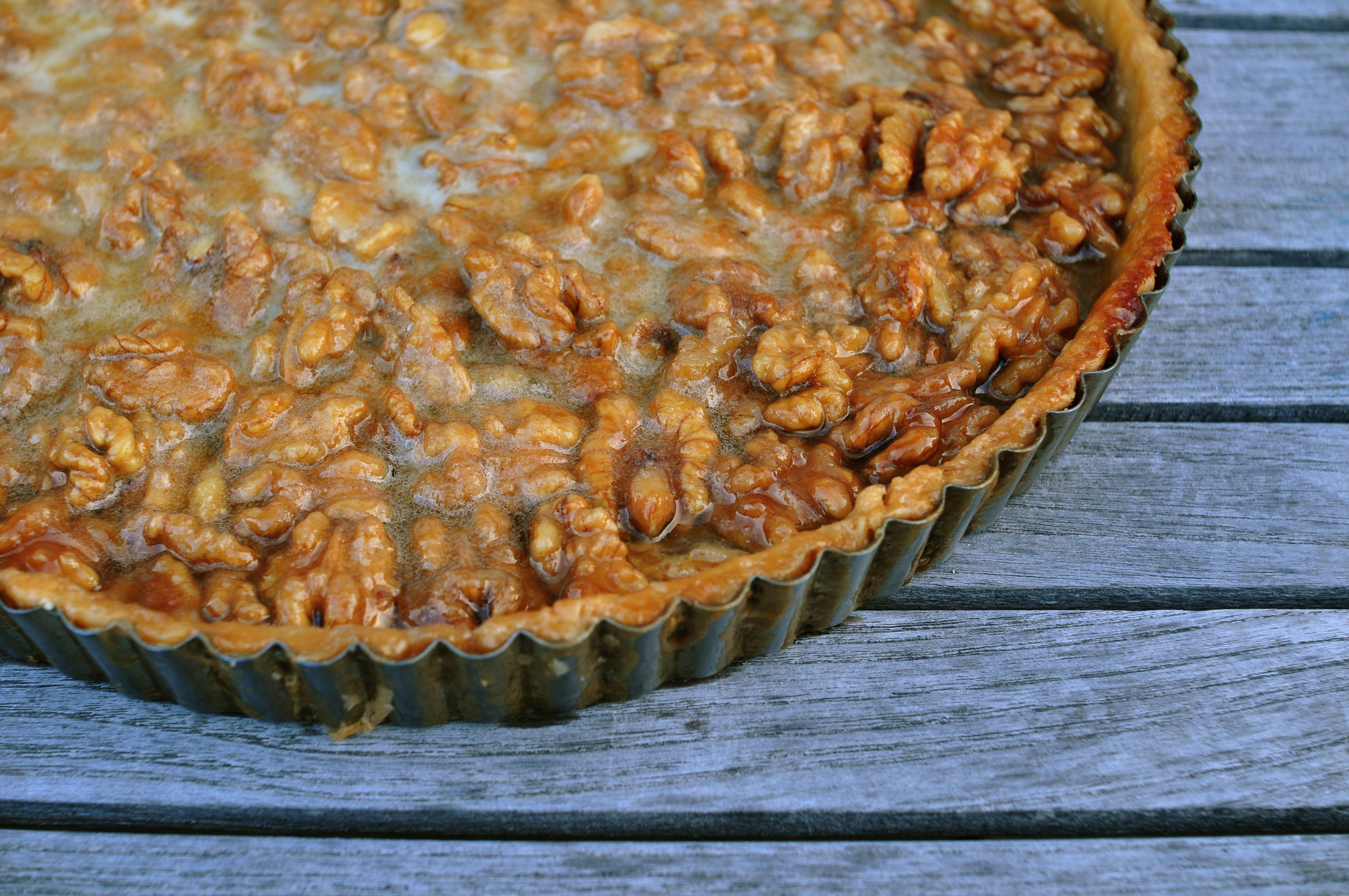
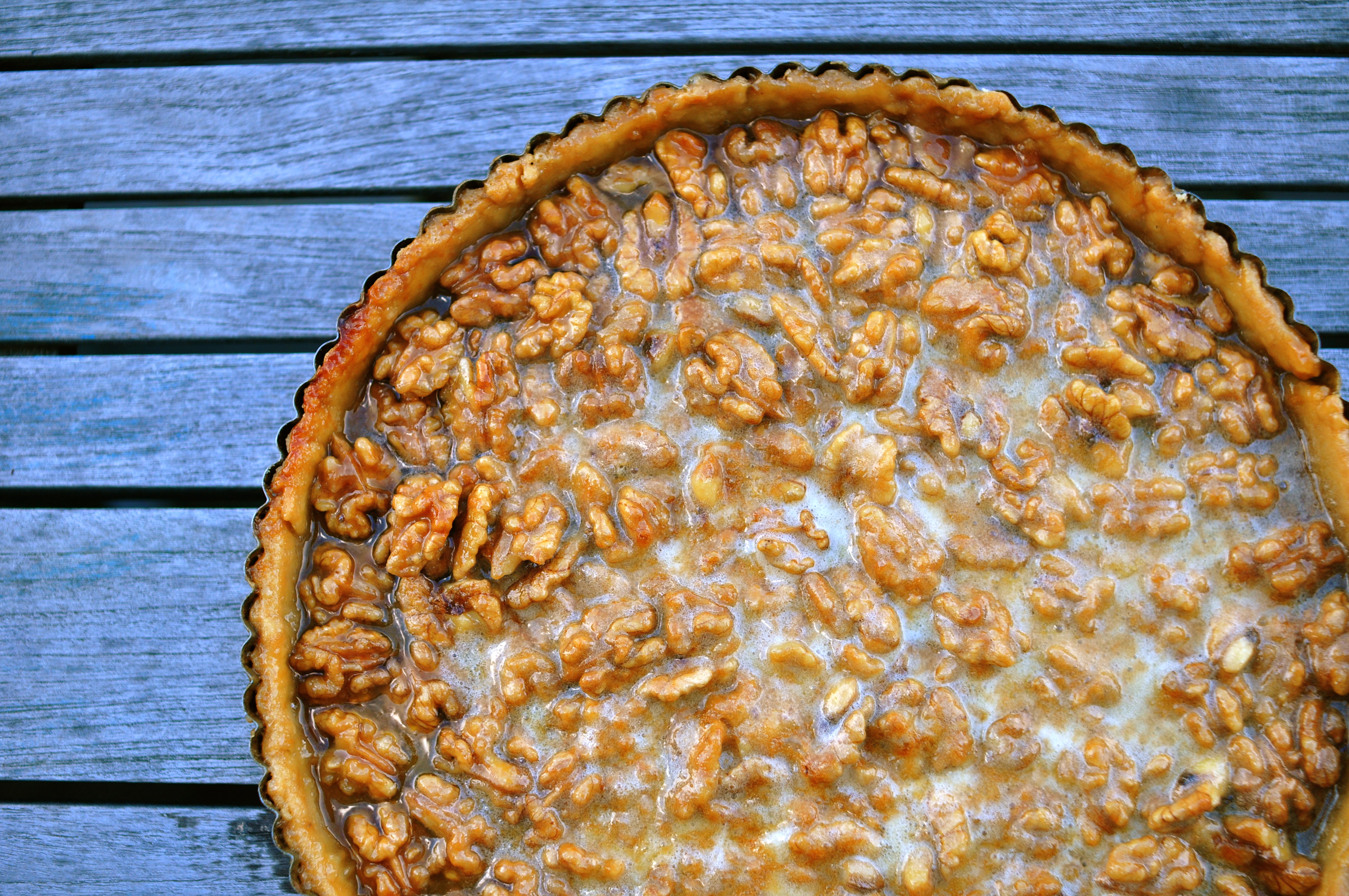
Walnut tarte with Chartreuse

24 February 2012

Some years ago I developed an interest in cocktails. It was triggered by an arcane email correspondence about absinth and Sazeracs leading up to our yearly skiing vacation in Haute Savoie, and quite quickly developed into a somewhat obsessive search for the perfect Sazerac in New York, at a time when few bartenders here knew what a Sazerac is, let alone how to make a good one.

My interest in Sazeracs grew into a more general curiosity for all things cocktail — mixer’s alcohols, bitters, techniques for making larger ice cubes — which happily coincided with the beginning of the cocktail trend in the city. Had I been writing then, cocktails would have featured prominently.

These days I drink mostly wine, except when my cocktail-fiend friend and then fellow-bar-stalker comes over for dinner, a bottle of gin or good rye in tow; I don’t have cocktail recipes jotted down on every second page of my little black notebook; and my cocktail bar recommendations would probably have a taste of five years ago. But I do still own a ludicrous number of partially full liquor bottles.

I will have to find creative ways of using Luxardo and Lillet, in the meantime, this tarte is a good excuse to tackle the Chartreuse.

***

This recipe is part of my “Schindler book” collection. Judging by its position in the book, which I copied in chronological order, I found it when I was about twenty. Unfortunately I can’t remember its exact origin, though I’m pretty sure I wrote it down after a vacation in France in the Vercors close to Grenoble, the region of walnuts and Chartreuse.

Unsweetened pie crust

250 g flour

125 g butter plus a little more to butter the pan

The filling

3/4 cup (200 g) crème fraîche

1 cup (200 g) sugar

2 generous cups (200 g) shelled walnuts

1 1/2 liquid ounces Chartreuse

*

The pie crust

Prepare the pie crust at least 1 hour in advance, as it needs to rest.

Place the flour in a large bowl, cut the cold butter into 1-inch pieces and work it with the fingertips into the flour, to obtain the consistency of coarse breadcrumbs. Add drops of cold water, little by little, until the dough sticks and can be shaped into a ball.

Cover the ball of dough with a damp cloth and place in the refrigerator for at least an hour, and up to one day.

Take the dough out of the refrigerator 10 to 15 minutes beforehand so it has time to soften at room temperature.

Preheat oven to 375°F (190°C) and generously butter a 12 inch (30 cm) pie pan.

To roll out the dough, lightly dust a clean, flat surface with flour and roll out the dough into a circle until it is 1/4 inch (1/2 cm) thin.**To prevent the dough from sticking to the the floured surface, turn it at the beginning then lift it regularly, all the while adding a little flour on either side and on the rolling pin.**

To transfer the dough to the pie pan, gently fold it in half once, then fold it in half again, and carefully place the folded dough in the buttered pie pan, positioning the angle in the center. Unfold, pressing gently onto the pan and sides, and cut off excess dough from the edges.

Bake the pie crust blind for 15 minutes. **When baking blind either poke a bunch of small wholes into the crust with a fork, or use dried beans or ceramic baking weights on the crust to prevent it from rising.**

*

The tarte

Increase the oven temperature to 400°F (200°C).

In a large bowl mix the crème fraîche and sugar, add the walnuts and the Chartreuse. Pour the mixture into the blind-baked crust.

Place the tarte in the oven on a larger baking sheet or aluminum foil, as the filling is likely to bubble over. Bake for 20 minutes.

Let the pie cool before eating. It becomes sticky and brittle, reminiscent of baklava. Mmmm!

*

Related posts

Quince and apple tarte

Best award-winning pumpkin pie

Basic | Sweet pie crust


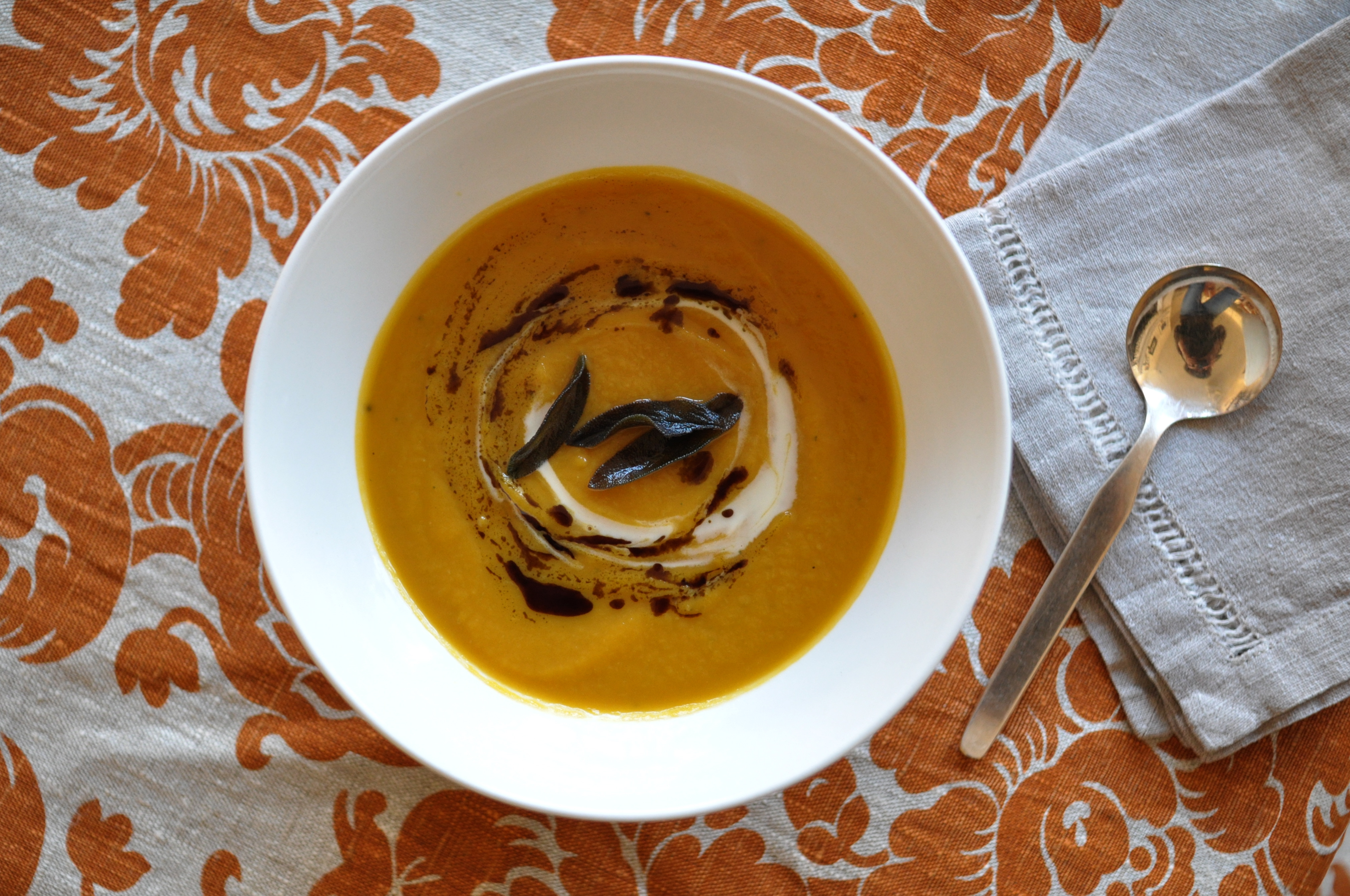
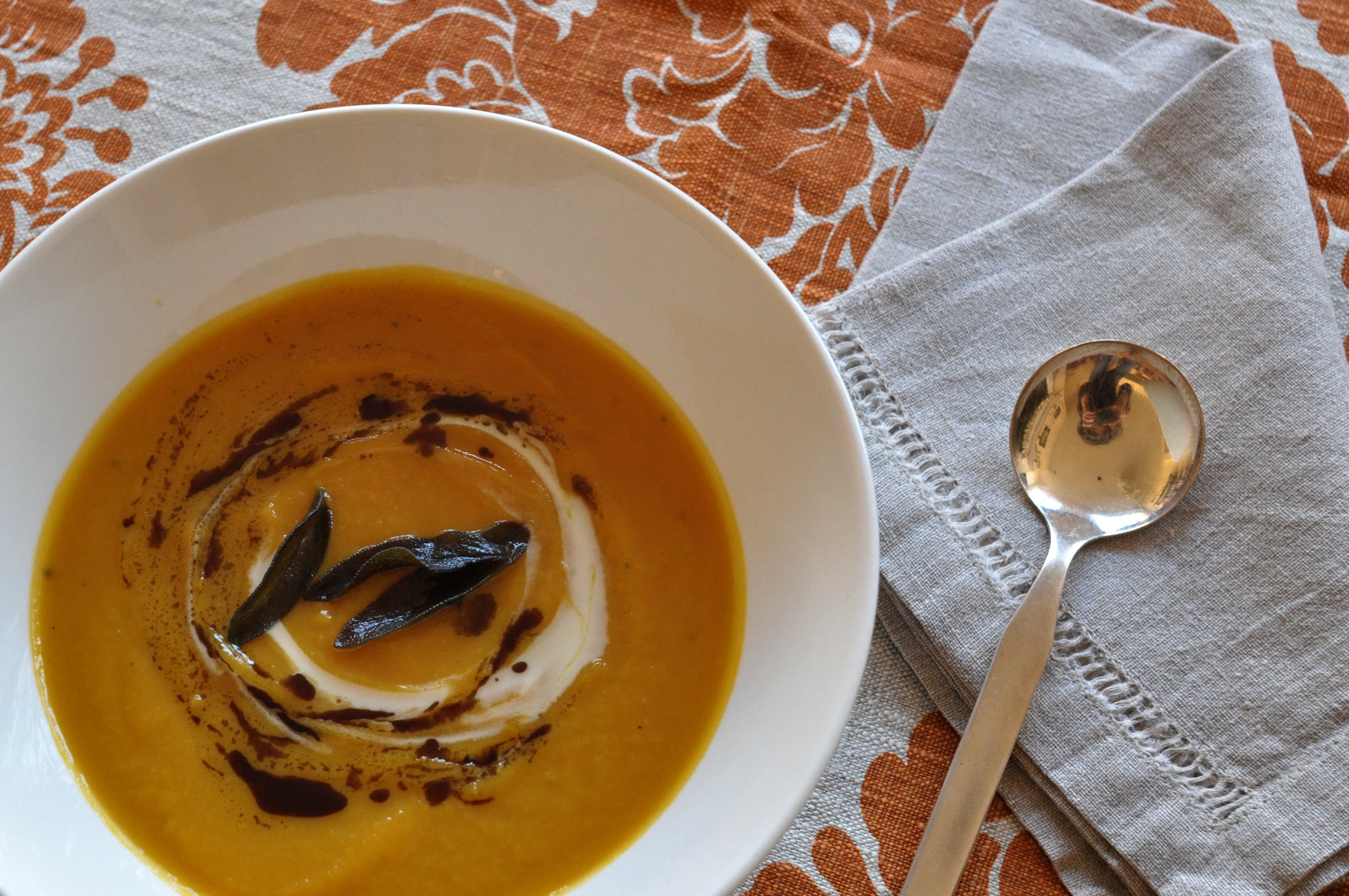
Parsnip and butternut squash soup with sage

14 December 2011

It’s about how easy it is to make soup, or rather — and I may be the one here most surprised at reading this — how easy it is to make soup with broth, when no broth is around.

I’ve mentioned before how I like soups that don’t require the use of broth, and I have already surreptitiously written about at least four soups that don’t require any broth because — at the risk of repeating myself — I’d rather not use store-bought broth if I can help it, and chicken broth doesn’t usually last long in this house. But somehow I had disregarded vegetable broth.

This soup has taught me that I can make great vegetable broth at a moment’s notice, pretty much simultaneously to making the soup.

All the broth requires is a few vegetables roughly chopped into chunks, thrown into a large pot, and generously covered with water. This takes no time at all. Then as the broth simmers away happily on its own, there is plenty of time to to pour a glass of wine, peel and chop the vegetables destined for the soup, and sweat them in some oil for a little while. By the time the broth needs to be poured in, it is ready.

***

The broth

The vegetables and quantities below are indications. I used rutabaga for the first time in this broth and loved the depth of flavor, but it’s by no need obligatory.

4 celery ribs

2 medium carrots

2 medium onions

1 medium rutabaga

Olive oil

Few sprigs parsley

2 bay leaves

3 quarts (3 liters) water

Trim the celery stalks and wash off the dirt; trim and wash the carrots. Cut the vegetables roughly into 1/2 inch (1 cm) pieces. Wash and trim the rutabaga and cut into pieces approximately the same size. Peel the onions and cut each half in three.

In a large saucepan, heat the oil, add the vegetables, and cook over medium heat until they begin to soften, about 5 to 10 minutes.

Add the parsley and bay leaves, cover with 3 quarts (3 liters) water, and bring to a boil. Reduce the heat and simmer for about 40 minutes, skimming off the foam as it rises.

Drain the broth through a fine mesh sieve before using.

*

The soup

The soup should be very creamy, though it contains no cream (in fact it’s vegan unless using crème fraîche as garnish). The key is to blend it thoroughly (a good 4 to 5 minutes) until it becomes perfectly smooth and velvety.

It is liberally adapted from the pumpkin, butternut squash, and parsnip soup in The New Low-Country Cooking by Marvin Woods.

2 medium onions

2 carrots

3 leeks

6 parsnips

1/2 butternut squash

Olive oil

2 quarts (2 liters) vegetable broth (recipe above)

Small handful fresh sage leaves

Sea salt, freshly ground black pepper

Freshly grated nutmeg

Crème fraîche, pumpkin seed oil, and more sage leaves to garnish (either one of these or all three – optional)

*

Peel, wash, and coarsely chop the onions, carrots, leeks, parsnips, and the butternut squash.

In a large soup pot, heat enough olive oil to cover the bottom of the pot. Add the onions and cook until they softens, stirring occasionally – about 10 minutes. Then add the leeks and the carrots. Cook, stirring occasionally, about 10 minutes longer. Add the parsnips for another 5 minutes, then the butternut squash.

Add enough hot vegetable broth to cover the vegetables by a good inch. Once the soup simmers, cook for about 30 to 40 minutes, until all the vegetables are soft.

Finely chop the sage leaves.

In batches, scoop the vegetables and most of the broth as well as the sage into a food processor or blender (fill it up to only about 2/3 and hold the lid down tightly, or the steam released will make it pop up). **Do not pour in all the broth with the vegetables, keep some to adjust the consistency of the soup once everything is blended.**

Season with salt, pepper, and a little freshly grated nutmeg.

Serve garnished with crème fraîche and pumpkin seed oil, and a few sage leaves fried for 1 or 2 minutes in a little olive oil.

*

Related posts

Pumpkin leek soup

Cream of cauliflower soup with salmon roe

Happy New Year (Lentil soup with cumin)

The many dessert of Thanksgiving (Best award-winning pumpkin pie)

Best award-winning pumpkin pie and the many desserts of Thanksgiving

2 December 2011

I’ve come to realize that I am not a person of habit, I seem incapable of a routine (though I have tried). I am, however, stubborn about traditions.

Every year, on December 1st, I hang an advent calendar over the fireplace for my children — twenty-four hand-sewn little bags filled with chocolates and small toys; it’s just the beginning of the Christmas celebration. On the eve of December 6th, I lay out cookies and milk, salt and a carrot for St Nicholas and his donkey; on the 24th, we feast on foie gras and unwrap presents while nibbling cookies and clementines. In February, I make crêpes for La Chandeleur. In spring, I dye eggs for Easter. I cherish these rituals; they shaped my childhood and I wish to perpetuate these memories. And of course, traditions are always good excuse for a party.

And so every year, on the fourth Thursday in November, we invite friends for Thanksgiving, and there is turkey and cranberry sauce.

This year we were twelve adults and at least as many children, seated around a single long table. I made the same meal as last year, with a different soup to start. And, like last year, each guest brought a dessert. In the past, the timid offering of one pumpkin pie, one pecan pie, and perhaps an apple crumble were usually picked at somewhat wearily, but pulling out a huge spread of desserts (after a small digestive pause) has the unfailing ability to revive the party.

My deepest thanks to everyone for the apple pie, the pecan pies, Mamyvonne’s chocolate cake, tiramisus, profiteroles, pavlovas and more sweet bites, as well as Thomas’s (as he won’t tire of telling anyone willing to listen) “award-winning” pumpkin pie (the award in question being a company bake off — but still).

It was a merry dinner, which, rekindled by an unreasonable amount of desserts, extended with dancing late into the evening.

Two days after Thanksgiving we drove out to Montauk for the day. It brought back memories of another Thanksgiving trip to the beach, some ten years ago. Back then there was leftover pumpkin pie eaten from the hood of the car in a deserted gas station on the way to Cape Cod; an unusual bed and breakfast in Provincetown, memorable in unexpected ways; long walks on the deep yellow sand where seals lolled in the low November sunlight; silly shortcuts through the icy water and tears of pain from thawing feet; two days of glorious weather and the drive back to New York in the pouring rain.

This year in Montauk, the children found smooth stones and carried huge glistening rocks for hours. A fisherman teetered on a rock swept over by rippling waves. We followed a path through the thorny brush that withered away into damp reeds. It was so warm we might have jumped into the sea.

Different years, new friends, interwoven memories.

(photo added November 2020)

Best Award-winning Pumpkin Pie

The story behind this overemphatically named pumpkin pie goes like this: my mother used to make it for Thanksgiving. When she handed me the recipe, she titled it “Best Pumpkin Pie,” and I’d be hard-pressed to disagree. Some years ago the pumpkin pie became Thomas’ Thanksgiving prerogative. One year, he entered it in his company’s bake-off and won first prize — unanimously, he claims. It is the best pumpkin pie I’ve ever tasted. It isn’t cloyingly sweet or overspiced. It has a clear crisp lemony taste that is completely delicious.

1 unbaked sweet pie crust

A little over 1 lb (500 g) of dense, flavorful pumpkin or squash such as hubbard, kabocha, butternut or a mixture of two different kinds, which must yield a little under 1 lb (425 g) of pumpkin purée

3 eggs, lightly beaten

1 cup (200 g) sugar

1/2 tsp salt

1 heap tsp ground cinnamon

1/4 tsp ground cloves

1/2 tsp nutmeg

1/2 tsp ground ginger

Juice and rind of 1 lemon

1 cup (250 ml) heavy cream

***

Prepare the pie crust, roll it out into the pan, and keep it in the refrigerator while making the batter.

To make the pumpkin purée: remove the skin and seeds from the pumpkin (or squash), cut the flesh into large wedges, and steam for about 20 minutes until soft. Blend or press through a food mill to obtain a thick, smooth purée.

Preheat the oven to 425°F (220°C).

Combine the eggs, sugar, salt, spices, lemon zest and juice and beat well. Stir in the pumpkin purée. Add the cream and beat well.

Pour the batter into the pie crust and slip into the hot oven. Bake for 10 minutes, then reduce the heat to 350°F (175°C) and bake for 40 to 45 minutes. The pie is ready when a knife inserted in its center comes out clean.

*

Related recipes

Thanksgiving (Cranberry sauce)

Pumpkin leek soup

Quince and apple tarte