Archive for the ‘Fall’ Category

Celeriac mash with parsley

21 November 2011

Mashed celeriac is the ultimate Thanksgiving side dish because it is so perfect with turkey and cranberry sauce and marries well with many other flavors.

It is also an excellent complement to fish, game, or duck, and works well with lamb tagine or calf’s liver. It is brilliant because it’s so similar to mashed potatoes but more subtle. It’s comforting but also fresh and vibrant. I have to restrain myself from making it too often.

***

The quantity can easily be adapted, with proportions of about 60% – 40% celeriac to potatoes in favor of the celeriac (a lot of celeriac needs to be removed in the peeling process, so it’s always a good idea to buy a bit more than you think you need).

4 Tbsps Coarse sea salt

4 small heads celeriac (about the size of an orange)

3 medium Yukon Gold potatoes

2 large bunches flat-leaved parsley

Good olive oil

4 Tbsps good butter

Sea salt and freshly ground black pepper

Freshly grated nutmeg

***

Bring two large pots of water to a boil each with 2 Tbsps of coarse sea salt.

Peel the celeriac and the potatoes and cut them into large chunks, all about the same size so they take the same amount of time to cook.

Place each vegetable in a separate pot of boiling water and cook until soft. **The celeriac and potatoes must be cooked separately because they don’t take the same amount of time to cook through (the celeriac takes longer) and it’s important not to overcook the potatoes; if they start falling apart the consistency of the mash will be watery.** The cooking time depends on the size of the pieces of vegetable and how crowded they are in the boiling water, but I usually start checking the potatoes by poking them with a sharp knife after about 12 minutes, the celeriac after about 20 minutes. They are ready when the knife goes in with no resistance.

Meanwhile, wash the parsley and trim off the thickest part of the stems.

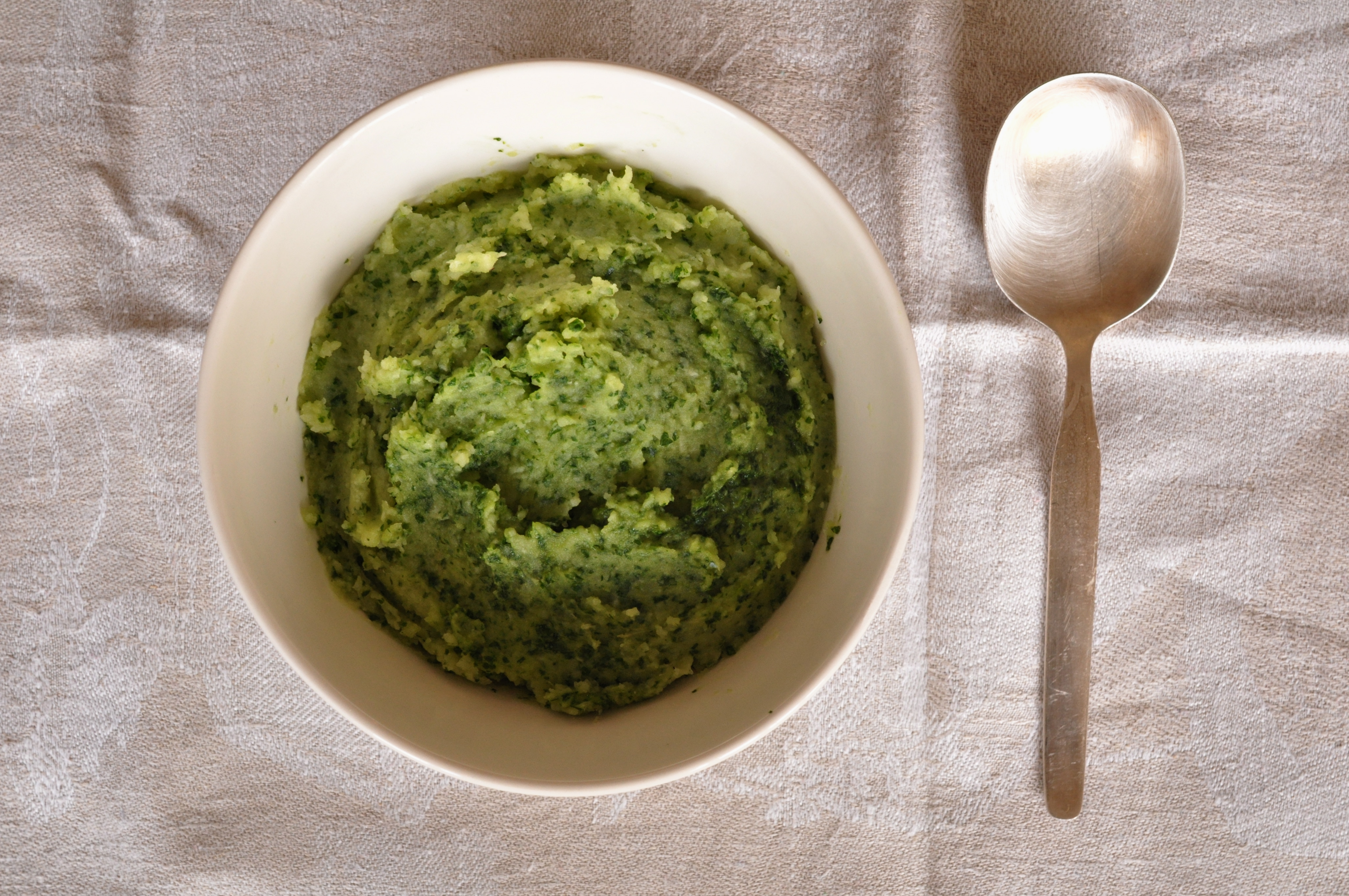
In a blender, purée the parsley with 4 tablespoons of olive oil and 2 tablespoons of water.

Once the roots are cooked, mash them with a potato masher or through a food mill (never in a food processor as the blade cutting through the potato starch makes the potatoes gummy). Mix in the butter, a good slosh of olive oil, and season with salt, pepper, and freshly grated nutmeg. Taste and adjust.

Reheat the mash over very low heat and at the very last minute just before serving add the parsley purée. Stir well until it is uniformly green. **The parsley must be added at the very last minute;  if heated the parsley will turn brown and loose its vibrant flavor.**

*

Related posts

Sautéed hen of the woods and king trumpet mushrooms

Simply kale salad

At the market | Celeriac aka celery root (Rémoulade salad)

Cream of cauliflower soup with salmon roe

17 November 2011

The problem was, I couldn’t remember exactly how I had made this soup. I knew there was no milk or cream and no broth — no adulterating ingredient to distract from the delicate taste of the cauliflower. I looked in a dozen cookbooks most likely to have given me inspiration, but every recipe I found had milk, or cream. I was hesitant about the base: just onions and cauliflower, was that really it?

Then fortuitously, on 27 October, Mary Gorman-McAdams wrote her weekly column on TheKitchn about pairing wine with soup. In her column she mentions this very cauliflower soup, and solved my conundrum — the base is leeks, not onions.

This is a very simple soup; the salmon roe makes it sing. We served it with Chablis. Thanks, Mary.

***

Serves 6

4 leeks

8 Tbsps butter

2 small heads cauliflower

Sea salt

Freshly ground white pepper

A pinch of freshly grated nutmeg

6 small spoonfuls of salmon roe

***

Remove and discard the leeks’ tough outer leaves, then cut the leeks into thin slices. Wash well in cold water to remove any grit, and drain.

In a soup pot, melt 4 tablespoons of butter. Add the sliced leeks. Season with sea salt. Cook the leeks until soft being careful that they don’t begin to brown.

Meanwhile, cut the cauliflower into florets and wash in cold water. Add to leeks. Add 4 tablespoons of butter cut into small pieces. Let the butter fall through cauliflower and melt. Add just enough water to cover the cauliflower, and cook until the cauliflower is soft. About 20-25 minutes. **Overcooking gives the  cauliflower a strong cabbagy smell, so it is essential not to overcook it, but the cauliflower has to be soft enough to blend into a smooth soup without any hard gritty bits. As soon as a knife cuts through the stem of the cauliflower florets easily, it is ready.**

As soon as the cauliflower is cooked, remove from heat. Blend in batches (it is important not to fill the blender or food processor — it shouldn’t be filled more than up to about a third). Blend thoroughly until the soup is silky smooth. Leave out some of the liquid to be able to adjust the density of the soup.

Taste and adjust the seasoning with salt, pepper, and a restrained pinch of nutmeg.

Garnish with a spoonful of salmon roe added at the very last minute.

*

Related posts

Pumpkin leek soup

Lentil soup with cumin

Children’s dinner | Fake rabbit in the vegetable garden

8 November 2011

or “How the Flopsy Bunnies tricked Mr. McGregor.”

I think the name initially devised was even more convoluted, but Leo and Balthasar helped me distill it down to this. This is what happens when Thomas isn’t around.

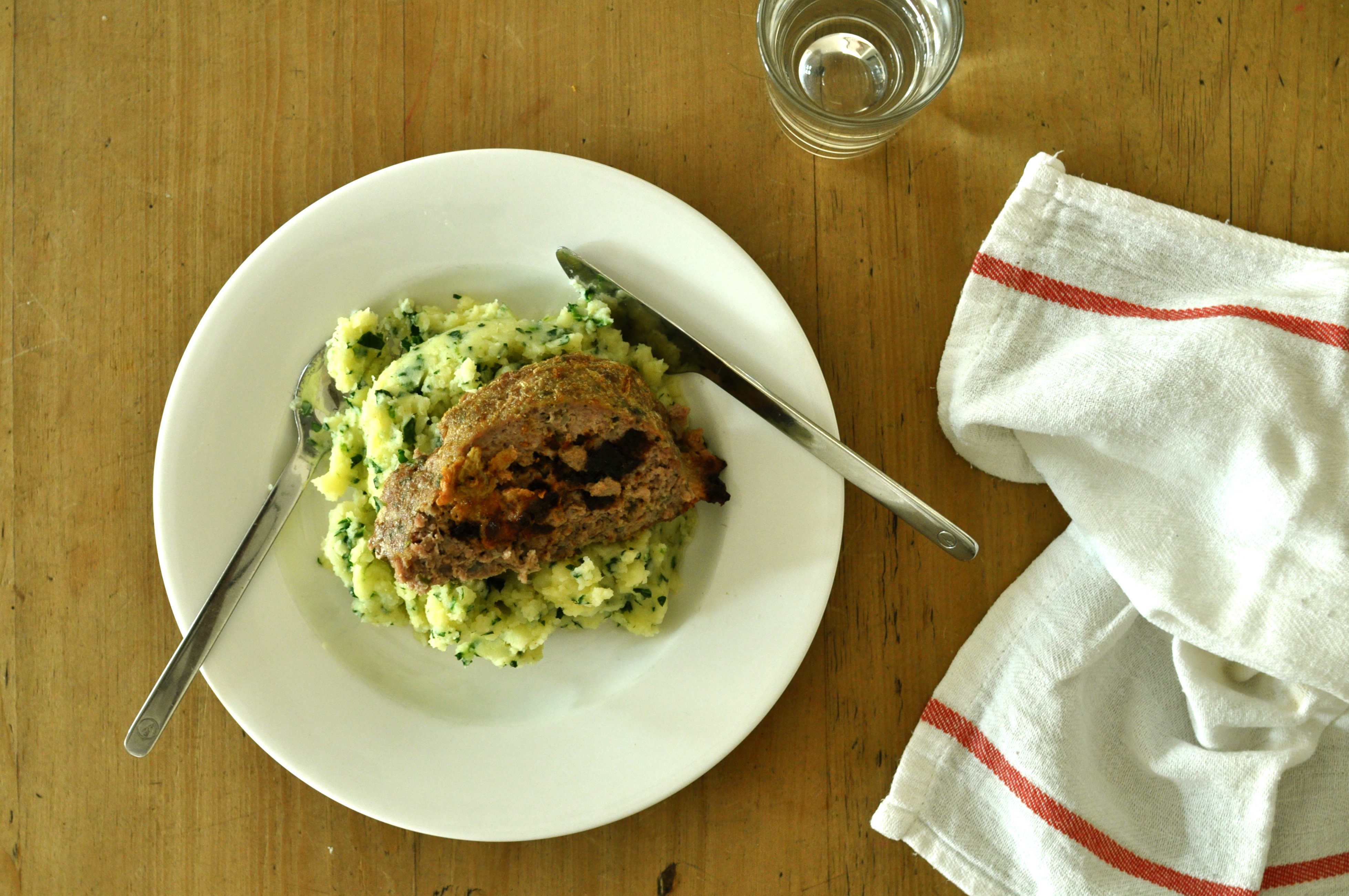
It’s really meatloaf with spinach mashed potatoes, so let me explain.

Fake rabbit (falscher Hase) is what the Germans call meatloaf, which, as flawed as it may be, is better than “meatloaf” — I imagine pretty much anything is better than “meatloaf.” So as I was looking for a name for this dinner – which isn’t exactly a speedy 20-minute meal, but much easier than it seems and always a great success — I erred into a world of bunnies, vegetable patches, and Beatrix Potter.

For anyone who didn’t grow up with stories of Peter Rabbit and Benjamin Bunny, Thomasina Tittlemouse and Jemima Puddle-Duck, the tale of the Flopsy Bunnies goes something like this: seven hungry bunnies venture onto Mr. McGregor’s rubbish (it’s an English story) heap, where they find a quantity of discarded overgrown lettuces. Victims to the soporific effect of lettuce, the bunnies all fall into a deep sleep, from which they are plucked by Mr. McGregor, and dumped into a sac for his dinner. Luckily the parents come by, find the sac, and, with the help of a friendly field mouse, free the bunnies from the sac then replace them with rotten vegetables. Unaware of the swap, Mr. McGregor proudly presents the sac to his wife, who doesn’t find the joke very funny.

Somehow, thinking of fake rabbits and children’s dinners reminded me of this story. And you know what? The name has caught on (not that the meal really needed selling, but still).

***

The fake rabbit

This fake rabbit is very moist, flavorful, and incidentally, bread-free. It takes a while to cook, but just a few minutes to prepare. The meat can be seasoned and prepared in advance and kept in the refrigerator for a few hours. 

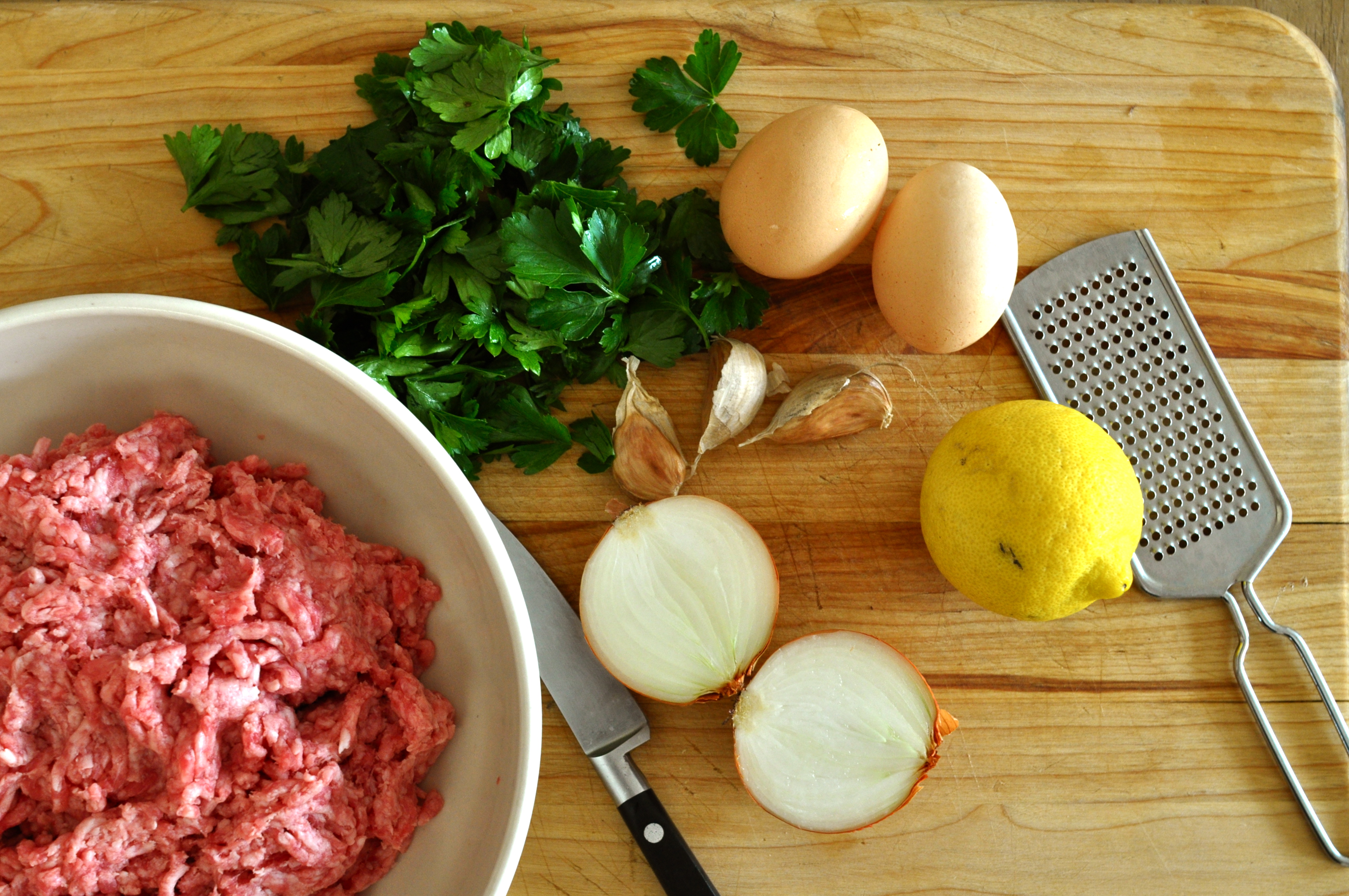
2 lbs ground lamb or beef

1 small onion

1 garlic clove

Small bunch parsley

2 eggs

Zest from 1/2 lemon

1 Tbsp Dijon mustard

2 Tbsps good olive oil

1/2 Tbsp coarse grey sea salt

Freshly ground black pepper

*

Preheat oven to 425°F (220°C).

Place the meat in a large bowl.

Peel and finely chop the onion. Peel and finely chop the garlic. Wash, remove the stems, and finely chop the parsley.

In a small bowl, whisk the eggs briefly with a fork.

Add all the ingredients to the meat and mix thoroughly.

Pat the meat into an oblong shape and transfer to an ovenproof dish. Drizzle a little olive oil and rub over the meat.

Slide the meat into the oven and bake at 425°F for 10 minutes. Reduce the heat to 375°F and bake for another 30 minutes.

Remove from the oven and let rest for 5 minutes before cutting into 1 inch slices to serve.

*

The vegetable garden

Or quick mashed potatoes with spinach

5 or 6 medium potatoes

1 bunch spinach

3 Tbsps butter

Good olive oil

Freshly grated nutmeg

Sea salt

Freshly ground black pepper

*

Fill a pot with water, salt generously, cover, place over high heat, and bring to a boil.

Peel and cut the potatoes into halves (or quarters if the potatoes are very big). Carefully drop the potatoes into the boiling water, leaving the lid ajar so the water doesn’t overflow, and cook. (They will cook for about 20 minutes.)

Meanwhile prepare the spinach. Remove the damaged leaves, cut off the stems, wash the spinach leaves in cold water, and set aside.

Start checking the potatoes after about 15 minutes; As soon as a sharp knife slides easily into the flesh, the potatoes are done. Immediately add the spinach, blanch for 1 minute, and quickly drain the potatoes and spinach into a colander.

Place the potatoes into a large shallow bowl and the spinach on a cutting board. With a masher or fork, mash the potatoes with the butter, and good glug of olive oil. Season with nutmeg, salt, and pepper.

Now the spinach should be cool enough to handle. Chop it finely, add to the potatoes, and mix well.

Done.

*

Related posts

Children’s dinner | Cowboy food

Apple sauce with lemon, cinnamon, and ginger

25 October 2011

Fall has come with crisp air and deepening sunshine, piles of fallen leaves to jump into and carpets of prickly chestnuts to tread onto, scarves without gloves and short skirts with leather boots, and apples, and apple sauce.

Apple sauce should be made with the newest, crispest apples of early fall as a celebratory leap away from summer; but also with the last, gnarly, bruised, and slightly soft apples of spring in patient anticipation of the summer’s first strawberries; and all winter long through grey skies and rainy days, snow storms and frigid winds.

Because making apple sauce is as easy as cutting apples into pieces and letting them cook for a little while, with a film of water at the bottom to prevent burning. But there are countless possible variations. Sugar or no sugar. Chunky or smooth. Spices? Even butter, for some. This is how I often make apple sauce, though by no means the only way.

***

This makes an intensely fragrant, chunky apple sauce. For a smoother texture the cooked apples can be run through a food mill. The spices and amount of sugar can also be adapted according to taste. I prefer fresh ginger and whole cinnamon because it imparts a more subtle taste, but ground spices would be fine, too.

About 10 small apples

Rind and juice of 1 lemon

1-inch (2.5 cm) piece ginger

1 thin cinnamon stick (or a half)

2 or 3 Tbsps brown sugar

***

Peel, core, and cut the apples into quarters and place in a heavy-bottomed saucepan.

Peel the rind of the lemon into a long ribbon, carefully avoiding too much pith, juice the lemon, and add both the rind and the juice to the apples.

Peel the ginger, cut it into thin slices, and add to the apples. Also add the cinnamon stick and the sugar.

Toss the apples. Pour in 2 or three tablespoons of water, just enough to coat the bottom of the pot.

Cook, covered, over medium to low heat for 20 to 30 minutes, until the apples have softened.

*

Related posts

At the market | Quinces

Oatmeal raisin walnut cookies

Banana cake


Pork rillettes

20 October 2011

I’ve been in the mood recently to serve a somewhat more elaborate apéritif, tapas style, when we invite friends over for dinner. It’s convivial and frees up last minute cooking time since I then usually skip the first course.

A typical apéritif includes marinated olives. Cherry tomatoes, radishes, or daikon radish depending on the season. Cashews or almonds, which I’ve just learned to dress up by roasting them with some spice. For something more substantial, I’ve often made salmon rillettes or chicken liver terrine. But as I was delving into Moro The Cookbook, I found this Spanish pork rillettes recipe.

French rillettes don’t usually include overt aromatics. They taste like pure, unadulterated pork, in fat. They are delicious. This recipe uses pimentón (Spanish paprika), fennel, and sherry alongside garlic and bay. It’s different from the rillettes I knew; it certainly is no worse.

***

I reduced the amount of pimentón for a more subtle flavor and added a note about the leftover pork fat, but otherwise the recipe is that of Moro the Cookbook.

2 lbs (1 kg) boneless pork belly

1/2 lb (225 g) pork back fat

6 garlic cloves

1 heaped tsp fennel seeds

1/2 tsp whole black peppercorns

3 bay leaves

1 tsp sweet smoked Spanish paprika (pimentón)

2/3 cup (150 ml) fino sherry

Sea salt and black pepper

***

Preheat oven the 275°F (140°C).

First trim the rind from the pork belly, then cut the meat and fat into roughly 2 x 1 1/2 inch (5 x 3 cm).

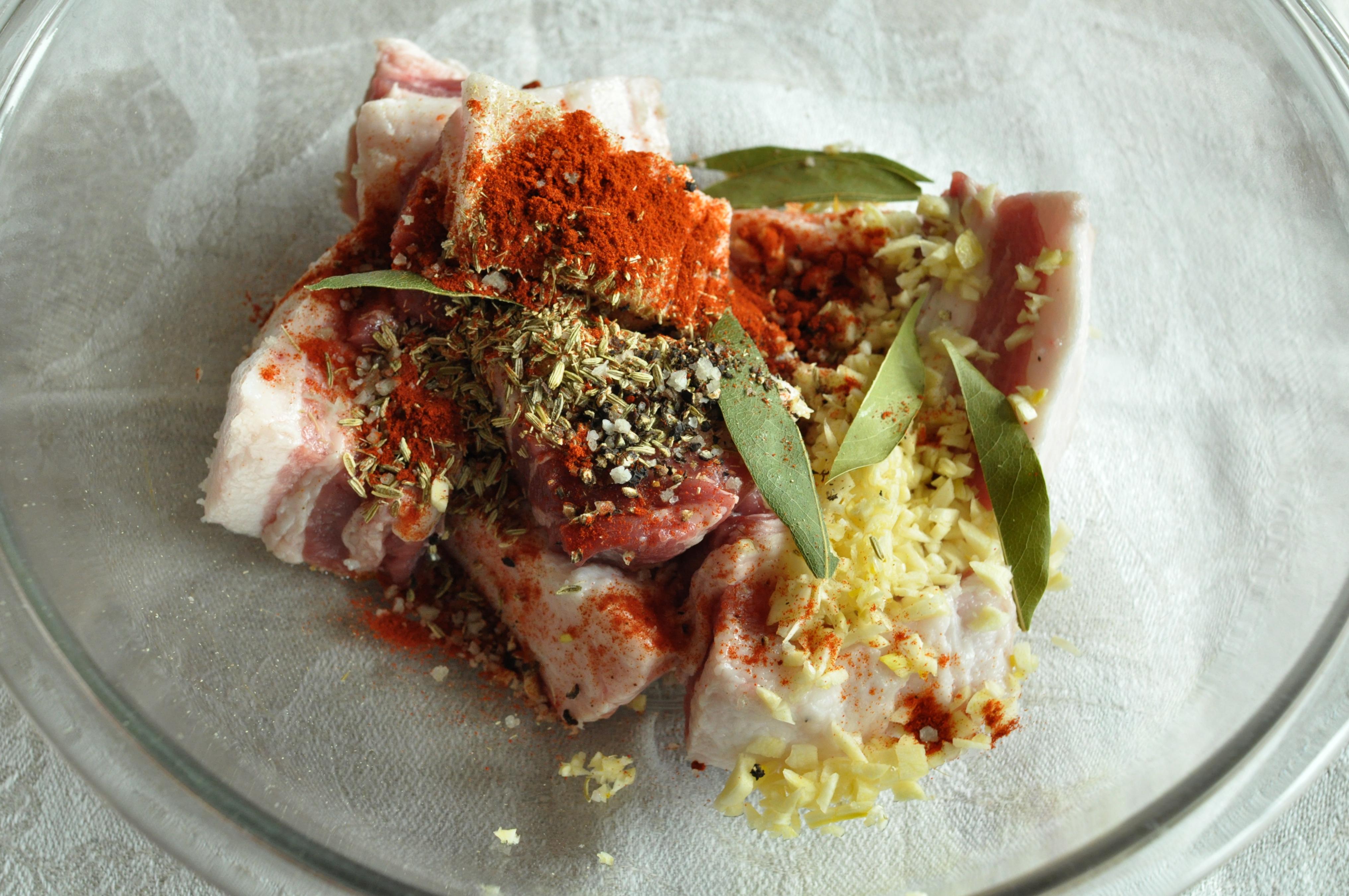
Prepare the aromatics by roughly chopping the garlic cloves; in a mortar, lightly crush the fennel seeds and peppercorns; halve the bay leaves.

Place the pork and fat in a large mixing bowl and add the garlic, fennel seeds, peppercorns, bay leaves, paprika, sherry, and a good pinch of salt, and toss well with your hands to combine. Transfer to a 2 quart  (2 liter) earthenware terrine or heavy cast-iron pot, seal tightly with foil so no steam can escape, and place in the oven for at least 4 hours, until the meat is very soft and can be shredded easily.

Remove from the oven and strain the meat in a sieve, pressing with a spatula or spoon to release the juice.

Put the liquid aside to cool, then in the refrigerator until the fat rises to the top and solidifies.

Once the meat has cooled enough to handle, shred between your fingers. **This is best done when the meat is warm rather than cold, as it will become more difficult to shred.** Set aside any pieces of fat that have not melted away (see note).

When the fat on top of the juice had somewhat solidified, spoon it off and set aside. Add all the juice and 2 tablespoons of fat to the shredded meat. Mix well, season with salt and pepper, and put the meat back into the terrine or other earthenware or glass jar. Pack the meat gently and seal with a layer of fat about 1/4 inch (1/2 cm) thick.

Keep in the refrigerator for at least a couple of hours before serving, and up to 2 weeks if well sealed with fat.

Note: You could discard the leftover fat, but it seemed a shame to do so, so I placed it in a small skillet over very low heat, letting it melt further. I then strained the fat and kept it in the refrigerator, to be used on bread instead of butter. The pieces of fat that remained solid, brown and caramelized, we ate — just like that.

*

Related posts

Cookbooks | Moro The Cookbook (Roasted almonds with Spanish paprika)

Chicken liver terrine