Archive for the ‘Seasonal’ Category

At the market in Brittany | Artichokes

21 August 2011

I don’t know how better to describe a field of artichokes than as a shimmering sea of silver green plants growing dinosaur eggs – they are at once beautiful and funny.

Because somehow it’s hard to take an artichoke entirely seriously. The legendary French comedian Coluche famously derided artichokes as “the only dish that, when you finish eating it, there’s more on your plate than when you started.”

When we eat an artichoke, we eat the bud of a domesticated thistle, cynara scolymus, which comes from the Mediterranean and dislikes frost. It is therefore ideally suited to the mild maritime climate of Brittany, where it is never terribly cold and – have I mentioned this before? – rarely particularly hot.

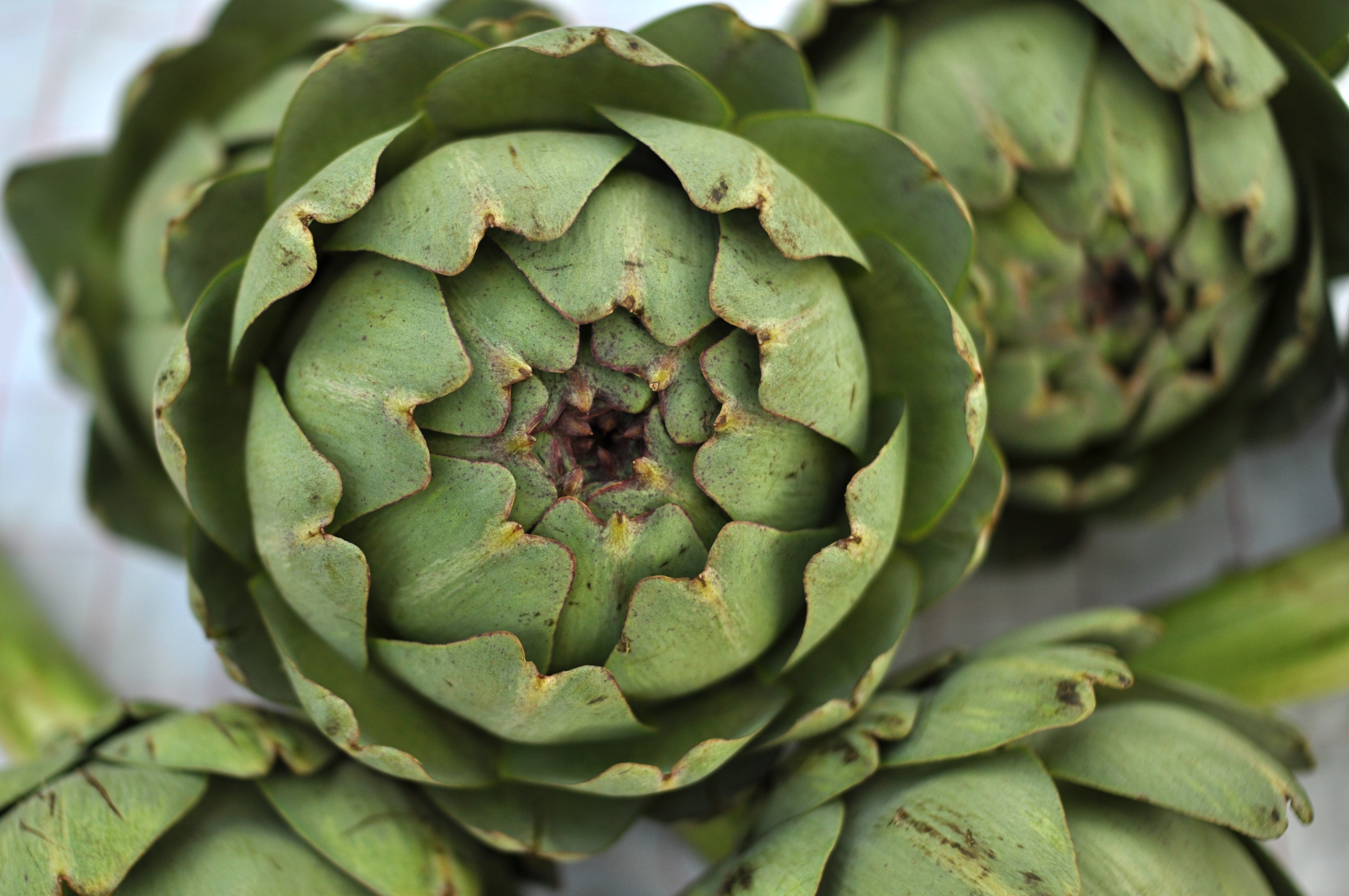
While the artichoke bud is still very small, the whole head is edible. Later, as pictured above and described below, it is still a bud but only the fleshy part of the leaves and the heart can be eaten.

To eat a globe artichoke you pluck a leaf, scrape the flesh gently but firmly with the bottom front teeth, discard the leaf, and repeat, working your way toward the tender heart. The very soft central leaves can practically be eaten whole, then onto the choke – the inedible part called “hay” in French, to describe its prickly quality. The choke must be removed carefully to reveal the heart, which most consider the prized part of the artichoke, though most children find eating the leaves much more fun.

***

Steamed globe artichokes with butter lemon sauce

Traditionally artichoke leaves are often dipped in a simple vinaigrette or a hollandaise sauce, but in my opinion this simple butter lemon sauce far surpasses both.

1 artichoke per person

2 Tbsps butter per artichoke

1/2 lemon per artichoke

Sea salt and freshly ground black pepper

***

In a pot large enough to hold all the artichokes, bring 1 to 2 inches (3 to 5 cm) of water to boil.

Just before using, cut the stems flush off the artichoke. **If this is done in advance, rub some lemon on the bottom so the artichoke doesn’t oxidize.**

Place the artichokes in the pot. **It is also possible to use a steamer, but not necessary. The bottom artichokes will touch the water slightly but the result is the same.**

Steam the artichokes for about 40-45 minutes. The artichokes are cooked when an outer leaf peels off easily and a knife slides into the heart (bottom part) of the artichoke.

For the sauce, melt the butter in a small saucepan, squeeze in the lemon juice, season with salt and pepper, and stir well. Taste and adjust with more lemon juice if desired.

To serve, place one artichoke on each plate with the sauce in a little pot on the side, and a large bowl on the table for the discarded leaves.

*

Related posts

Mussels with shallots and white wine

In Brittany | Kouign Amann from Au Four St Melaine bakery in Morlaix

At the market | Rhubarb [Compote recipe]

At the market | Quinces


In Brittany | Home baked potato fries

8 August 2011

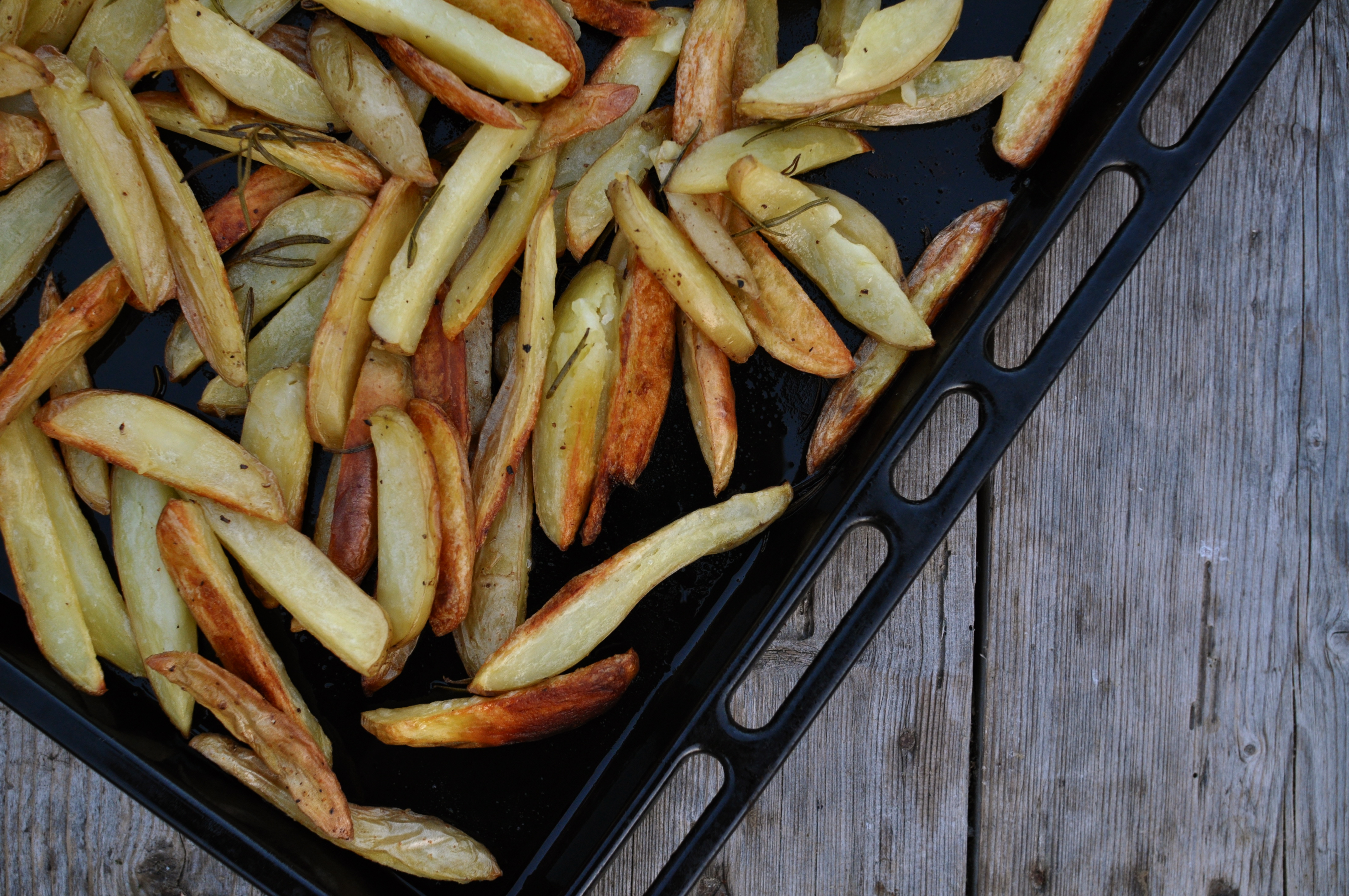
Although we are in Brittany and I don’t believe fries are the traditional Breton accompaniment for mussels, it seems this famous Belgian pairing has anchored itself so steadfastly in our subconscious that anytime I (we) think of mussels, I (we) think fries. So when we prepared mussels the other day, the other half of the meal seemed obvious.

It was the first time I made really good home-baked fries and I think it was thanks to a tip from my sister who suggested starting them low and slow so they would cook through without burning or drying out.

They were great.

***

Potatoes

Good olive oil

Flaky sea salt

Freshly ground black pepper

Rosemary

*

Preheat oven to 300F (150C).

Cut the potatoes in half lengthways, place each half cut side down, and slice into 1/2 inch (1 cm) pieces. Wash the potato pieces in cold water and pat thoroughly dry with a (clean) kitchen towel.

Place the potatoes on a large shallow oven pan. Drizzle generously with olive oil, season with salt, pepper, and sprigs of rosemary. Toss so all the pieces of potato are dressed with the olive oil.

Put in the low oven and cook for about 20 to 25 minutes. When the potatoes seem cooked through, increase the oven temperature to 425F (220C) and bake for another 10 to 15 minutes until gold and crisp.

Check for salt seasoning, adjust, and serve hot.

*

Related posts

In Brittany | Mussels with shallots and white wine

At the market in Brittany | Artichokes

Rhubarb ice cream

28 June 2011

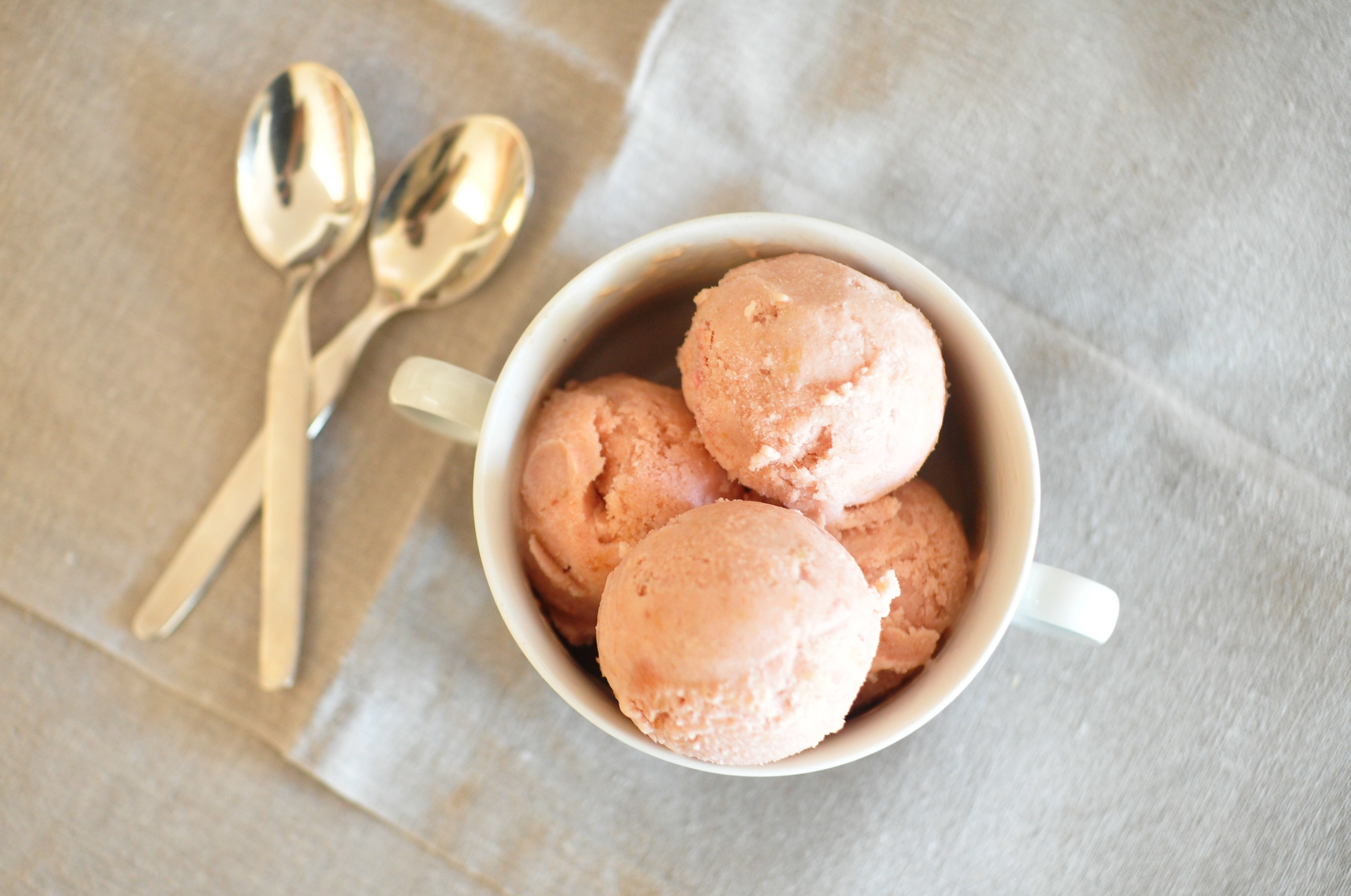
In the midst of baking my third or fourth batch of busy-day cupcakes I became fixated with the idea of rhubarb ice cream. It must have been triggered by a surfeit of sugar and vanilla – I craved something cool and tart.

I made this ice cream in the easiest possible way. It is simply rhubarb compote mixed with heavy cream, churned into ice cream.

It is (was) incredibly good.

***

This recipe requires an ice cream maker of some kind. It makes a little over a pint of ice cream.

3 1/2 cups (400 g) rhubarb measured once cut into 1 inch (2.5 cm) pieces

1/2 cup (100 g sugar) for the compote plus 1 or 2 Tbsps

1/2 cup (150 ml) heavy cream

1 Tbsp rosé wine

***

Make a rhubarb compote with the rhubarb and sugar.

Let the compote cool down then chill in the refrigerator for at least 3 to 4 hours or overnight.

Mix the compote with the heavy cream, rosé, and add one or two tablespoons of sugar to taste.

Churn in an ice cream maker and keep in the freezer until ready to eat.

*

Related posts

At the market | Rhubarb [Rhubarb compote]

*

Follow @nettleandquince on twitter

At the market | Rhubarb (Rhubarb compote recipe)

27 June 2011

I could have spoken about rhubarb two months ago, when it first appeared at the market as the very welcome distraction from the last winter apples and pears; rhubarb makes those last few weeks before the first berries of summer bearable.

But it’s already the first week of summer, berries abound everywhere, and while I’ve eaten pounds of strawberries — plain, in tartes, or churned into ice cream — as well as raspberries and blueberries even, I am still craving — and eating — rhubarb.

Rhubarb is one of those vegetable that I cannot resist buying so it often ends up as compote (recipe below) because I’ve usually purchased it without a plan and compote only takes a few minutes to prepare. However the other day I felt an irresistible urge to make rhubarb ice cream. It was good beyond all expectations, and barely more work than a simple compote.

Rhubarb is technically a vegetable, though in our part of the world it is often used as a fruit, in crumbles and tarts. Wild rhubarb originated in Asia and its root has been used medicinally in China, Asia, and eventually Europe for thousands of years. But it was not until the nineteenth century that the stalks of rheum rhabarbarum were cultivated and used as a food, particularly in England and the United States, where rhubarb became known as “pie-plant.”

Rhubarb can be any shade of red or green, and while the red variety looks pretty, apparently there is no significant difference in taste. The stalks should be neither too big nor too small, always firm and crisp, not soft and flabby. Rhubarb is available from mid-spring through the summer. It thrives in cooler climates where the soil freezes in winter, which is another reason to love it — a delicious vegetable/fruit that grows best in my part of the world!

Rhubarb compote recipe

The quantities are an indication. The weight ratio of 1 part sugar for 4 parts rhubarb makes a compote that is not too sweet with a clear tart rhubarb taste. It can be adapted as desired. Serve with yogurt or crème fraîche, or with busy-day cupcakes.

3 1/2 cups (400 g) rhubarb cut into 1 inch (2.5 cm) pieces

1/2 cup (100 g) sugar

*

Cut off the ends of the rhubarb stalks as well as any parts that are bruised or blemished. Wash the stalks before cutting them into 1-inch (2.5 cm) pieces. (Now is a good time to measure the amount of rhubarb to calculate the amount of sugar needed.)

Place the cut rhubarb into a medium saucepan. Add 3 tablespoons of water, then the sugar. Bring to a boil and cook until all the pieces of rhubarb have become soft, about 12 to 15 minutes.

That’s it.

*

Related posts

Rhubarb ice cream

At the market | Quinces

At the market | Celeriac aka celery root [Remoulade salad]

Finger food | Leek and manchego frittata

16 June 2011

Louise is now 15 months, she walks around like an independent little person, and she eats what her older brothers eat. The days of puréeing are already over, and as such my days of “baby food” posts. But since the children usually eat separately, especially during the week, this will be the transition into the world of children’s dinners.

As much as I oppose the concept of children’s food, in particular as it implies anything yellow and battered, I do believe in adult meals. This means that our children have dinner together, earlier, and go to bed at eight. It’s not about a different kind of food, it’s about timing. Ideally, children’s dinners should be easily prepared on a weeknight with homework and soccer and a toddler who really should be in bed by seven puttering about resignedly.

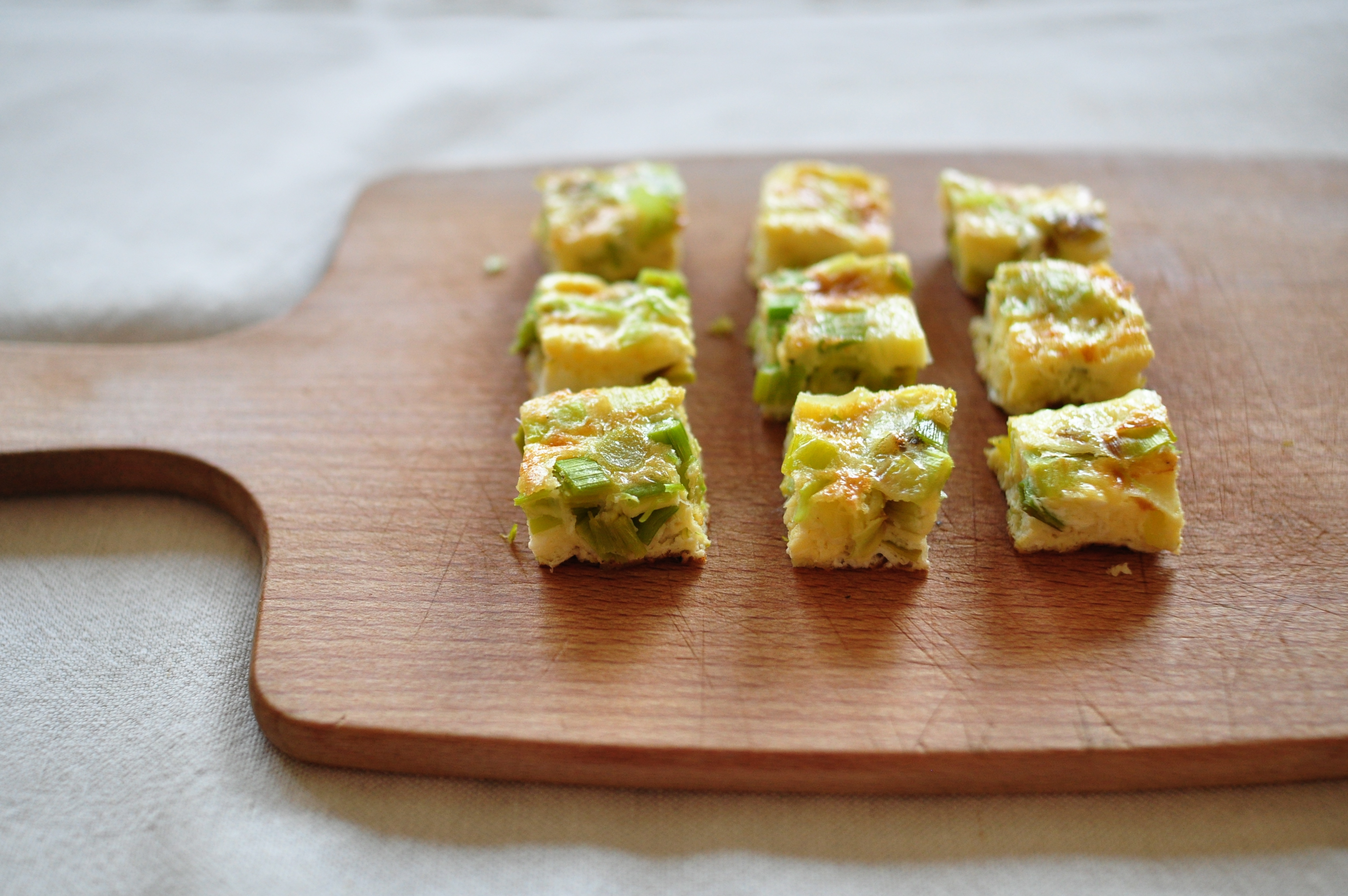
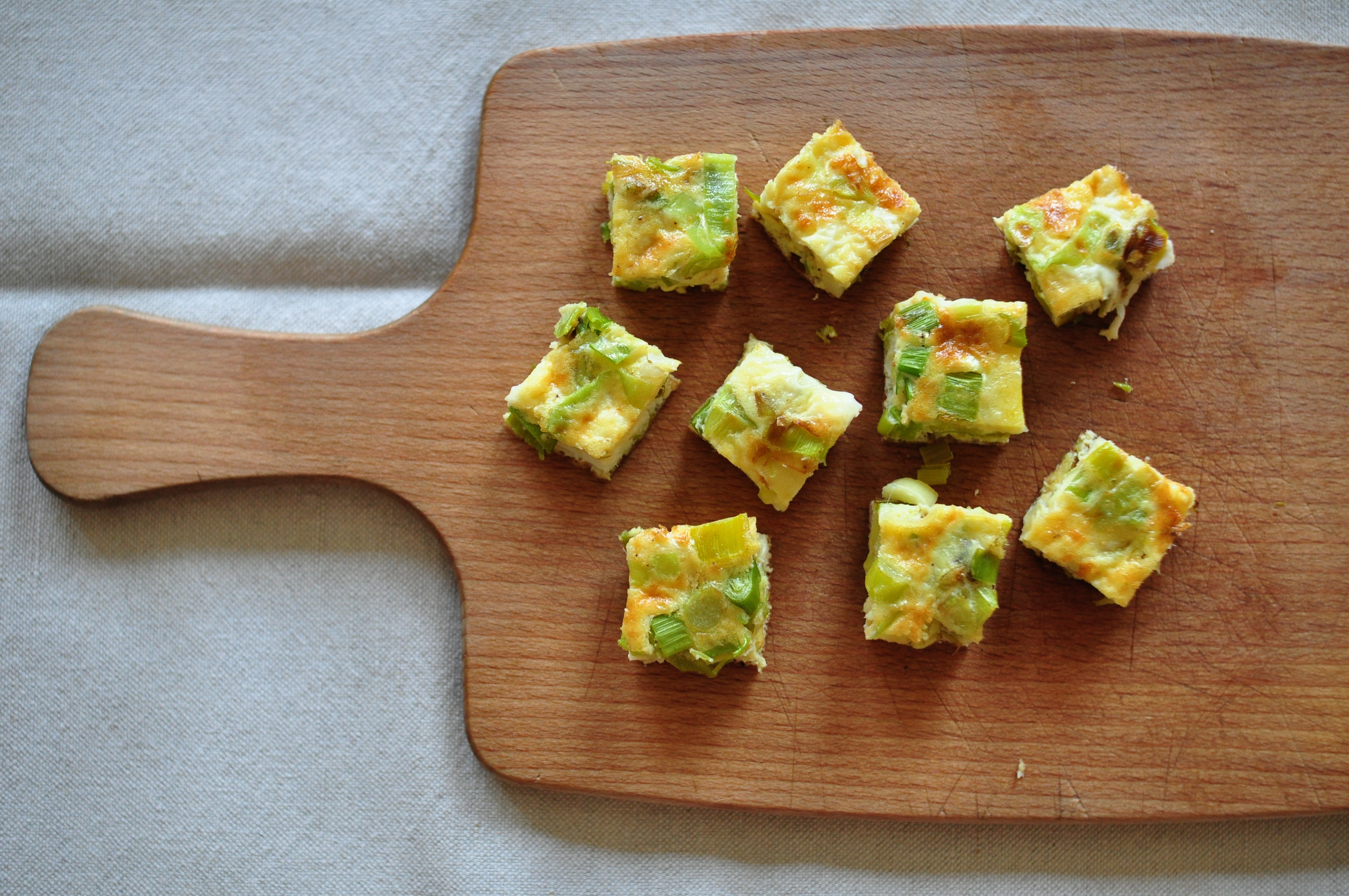
So as a bridge away from baby food here is the ultimate anytime any-age family meal – frittata.

It is ideal because it basically consists of staples and anything else that happens to be in the kitchen: eggs; an onion or leftover leek, garlic; cheese (gruyère, manchego, parmesan, ricotta, mozzarella); perhaps diced ham, pancetta, or some smoked salmon; peas, cherry tomatoes, asparagus, spinach, potatoes; herbs…

The possibilities are endless, and the result not only very tasty but a full meal in one dish that the children always like.

***

This quantity makes a lunch frittata perfect for one adult and one toddler. Adjust the quantities as desired. I usually count 2 eggs per adult, 1 per (young) child, plus an extra one overall “for the pan.”

2 leeks

Olive oil

A small knob of butter

1 clove garlic

3 eggs

Manchego cheese, a piece approximately 1 inch (2.5 cm) cube

Pepper

***

Preheat broiler (grill), or oven to 425°F (220°C).

Trim leeks on either side and remove one or two layers of the tougher dark green outer leaves. Wash off excess grit under running water. Slice the leeks into slices 1/2 or 1/4 inch (1 or 1/2 cm) thick. Wash well in cold water to remove any persistent dirt, and strain.

Thinly slice the garlic clove. Thinly grate the manchego.

In an ovenproof skillet, heat a little olive oil and small knob of butter, enough to comfortably coat the pan once the butter has melted. Add the leek and cook over medium heat for 3 to 4 minutes, until it softens and becomes translucent but before it gets brown. Add the thinly sliced garlic and cook for just another minute.

Meanwhile, break the eggs into a bowl and beat lightly with a fork. Add the cheese and a little pepper if desired (manchego is very salty so no additional salt is required).

Stir the cooked leeks and garlic into the eggs, just enough to combine, then return the egg/vegetable mixture to the pan (there should be enough oil left but if not, add a dash).

Cook on the stove over low heat, loosening the eggs at the sides with a spatula from time to time (don’t go anywhere, this will just take a few minutes).

When you can see the eggs starting to set underneath, but the top is still quite runny, place the pan in the hot oven. Leave it for barely a minute, just enough for the top of the frittata to set but no longer.

Cut into wedges (or cubes) and serve with a large green salad.

*

Related posts

Finger food | Carrots

Children’s dinner | Cowboy food

*

Follow @nettleandquince on twitter