Archive for the ‘Seasonal’ Category

Trout in a paper package (“en papillote”)

3 June 2011

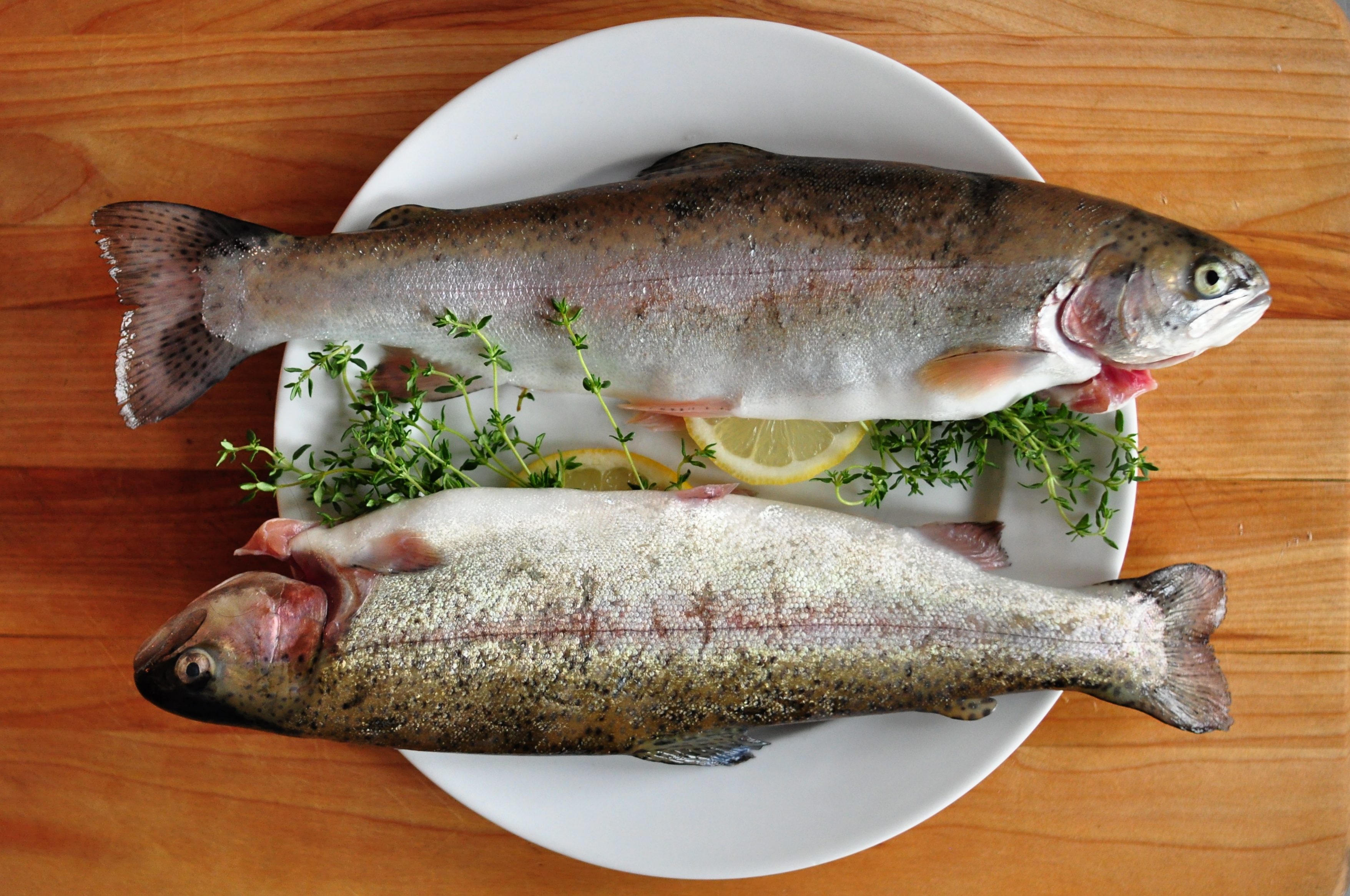
A trout so fresh* it is practically still winking at you when you cook it /
Courteously seasoned with salt and pepper, lemon and thyme /
Wrapped tightly in a parchment paper package /
Cooked gently, not a minute too long /
With small boiled potatoes tossed in very good butter.

***

Quantities per trout, one small trout per person

Trout, scaled and gutted

Maldon or other flaky sea salt

Freshly ground black pepper

2 slices untreated lemon

2 sprigs fresh thyme

Parchment paper

*

Preheat oven to 375°F (190°C).

Season the trout cavity with salt and pepper. Place in it two slices of lemon and two sprigs of fresh thyme.

Place the trout at the center of a piece of parchment paper large enough to be wrapped comfortably around the fish, i.e about 8 inches larger than the fish on either side, and about 4 inches longer than the fish at each end. Pull up the sides of the parchment paper around the trout and fold it over itself tightly three times, then fold the ends over under the fish. This should create small airtight packages.

Place in an ovenproof dish and slide into the oven. The cooking time depends on the size of the trout, but it will be fast, probably about 12 to 15 minutes. The best measure is to open one package and check the trout – sooner rather than later.

*Available on Wednesdays at Union Square Greenmarket in New York, from Beaverkill Trout Hatchery, a little stall close to 16th Street


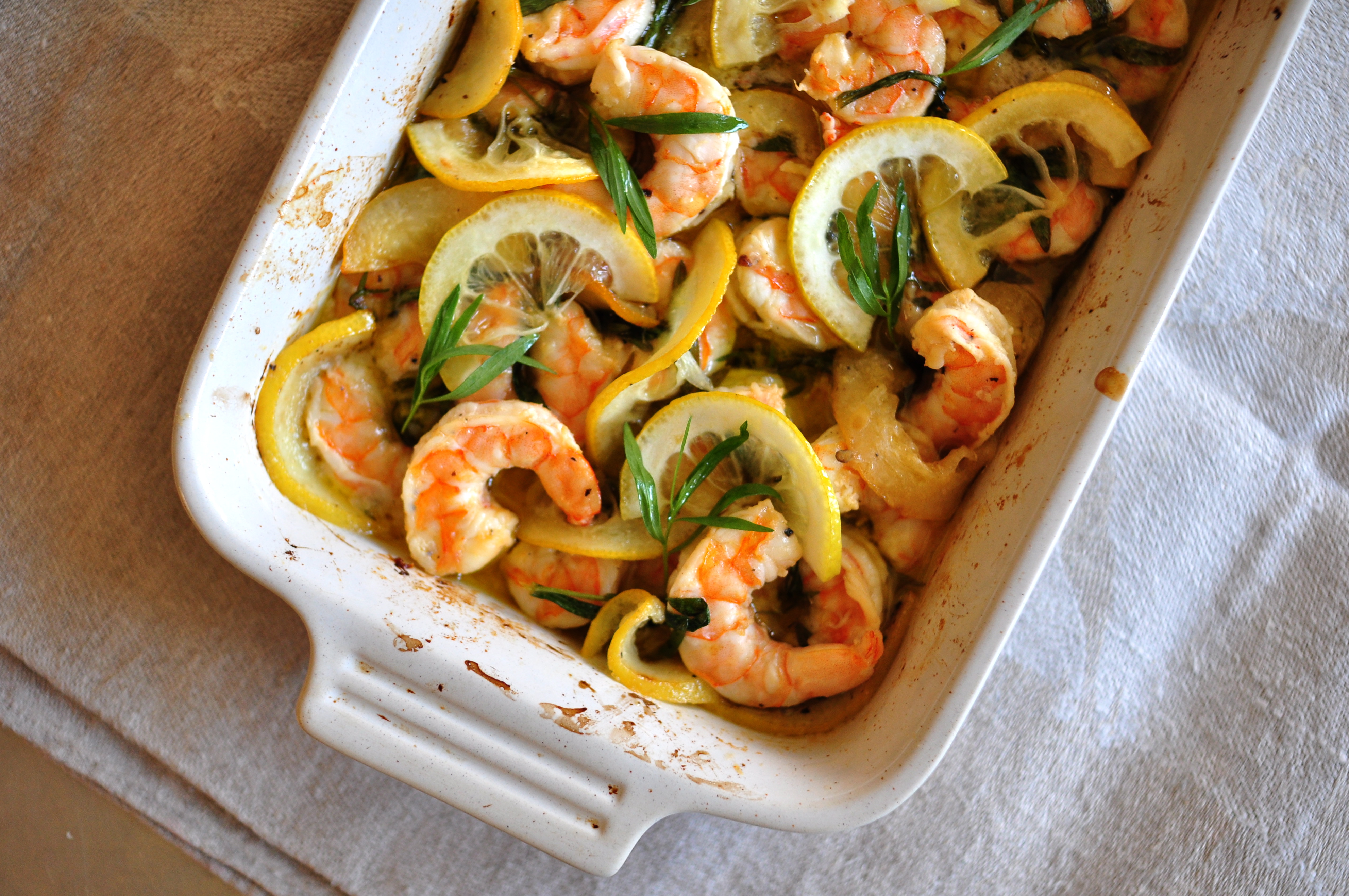
Baked shrimp with lemon, rosemary, and tarragon

12 May 2011

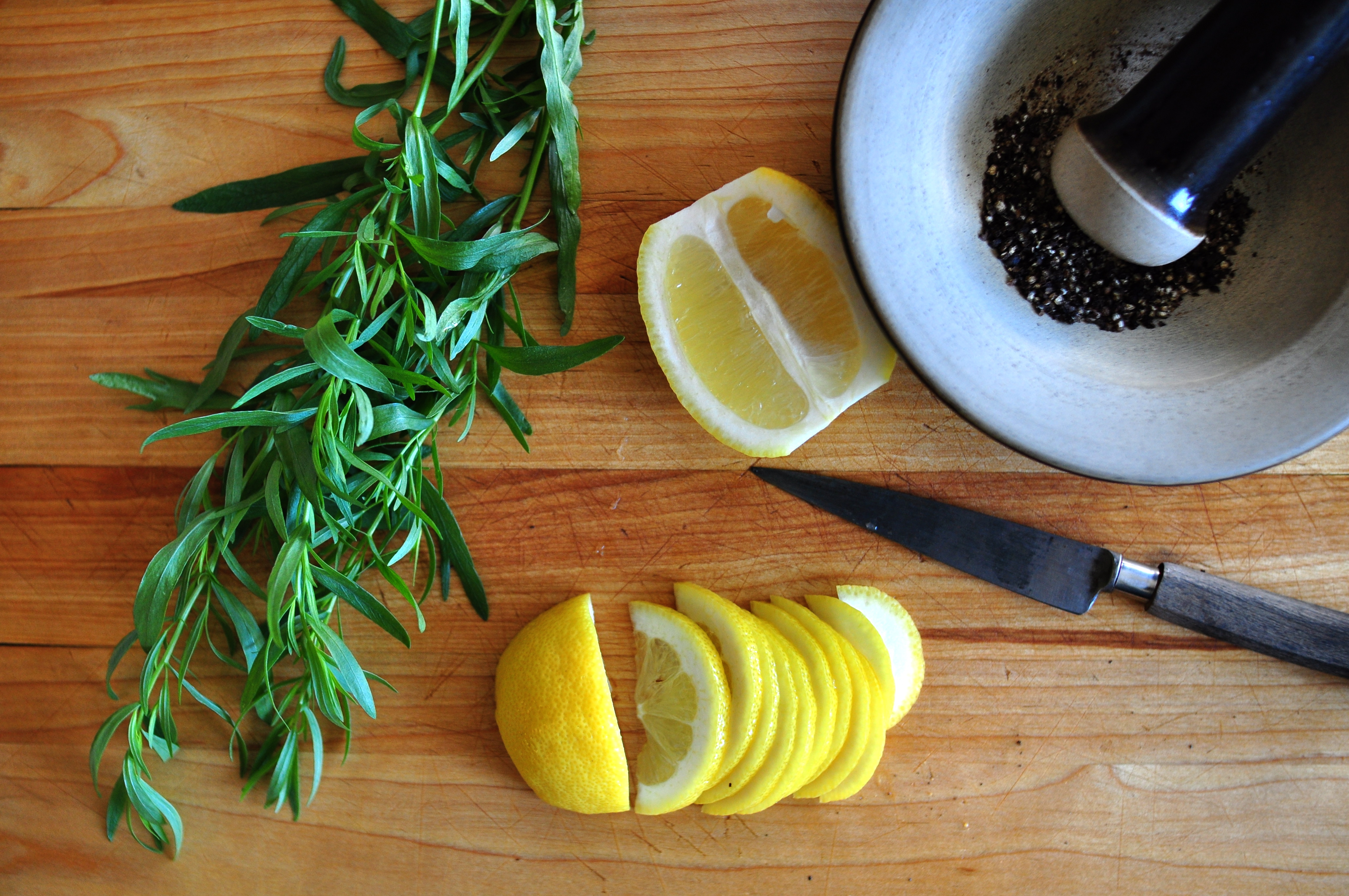
It’s surprisingly easy to grow tarragon.

I had always thought of tarragon as a fragile herb because it is often wilted and usually bland when bought, but I discovered it is actually a low-maintenance hardy perennial that survives the New York winter. Alongside chives, tarragon is the first herb to come up in spring, year after year, and I think it’s worth growing, if only for that optimistic quality.

A classic French use for tarragon is with chicken, it also goes nicely with fish, and gives an acidulated kick to salads. This oven-baked shrimp, though, is itself almost reason enough to grow tarragon. I was inspired by a recipe found on Oui, Chef (which uses different herbs and spices, but the idea and cooking method are the same).

It’s absurdly delicious, and ridiculously easy.

***

Adapted from Herb and Lemon Baked Shrimp by Oui, Chef.

If you don’t happen to grow tarragon on your balcony, fresh thyme and 1/2 tsp cracked coriander seeds would go well, as shown in the original recipe (added early with the lemon, rosemary, and cracked pepper to flavor the oil).

1 lemon

1/2 tsp peppercorns

Good olive oil

Few sprigs fresh rosemary

1 lb (450 g) shrimp*

Few sprigs fresh tarragon

Coarse grey sea salt

*

Preheat oven to 400°F (200°C).

Trim the ends of the lemon, cut it in half lengthwise, place the halves cut side down on the board and cut into thin half moons. In a mortar, crack the peppercorns.

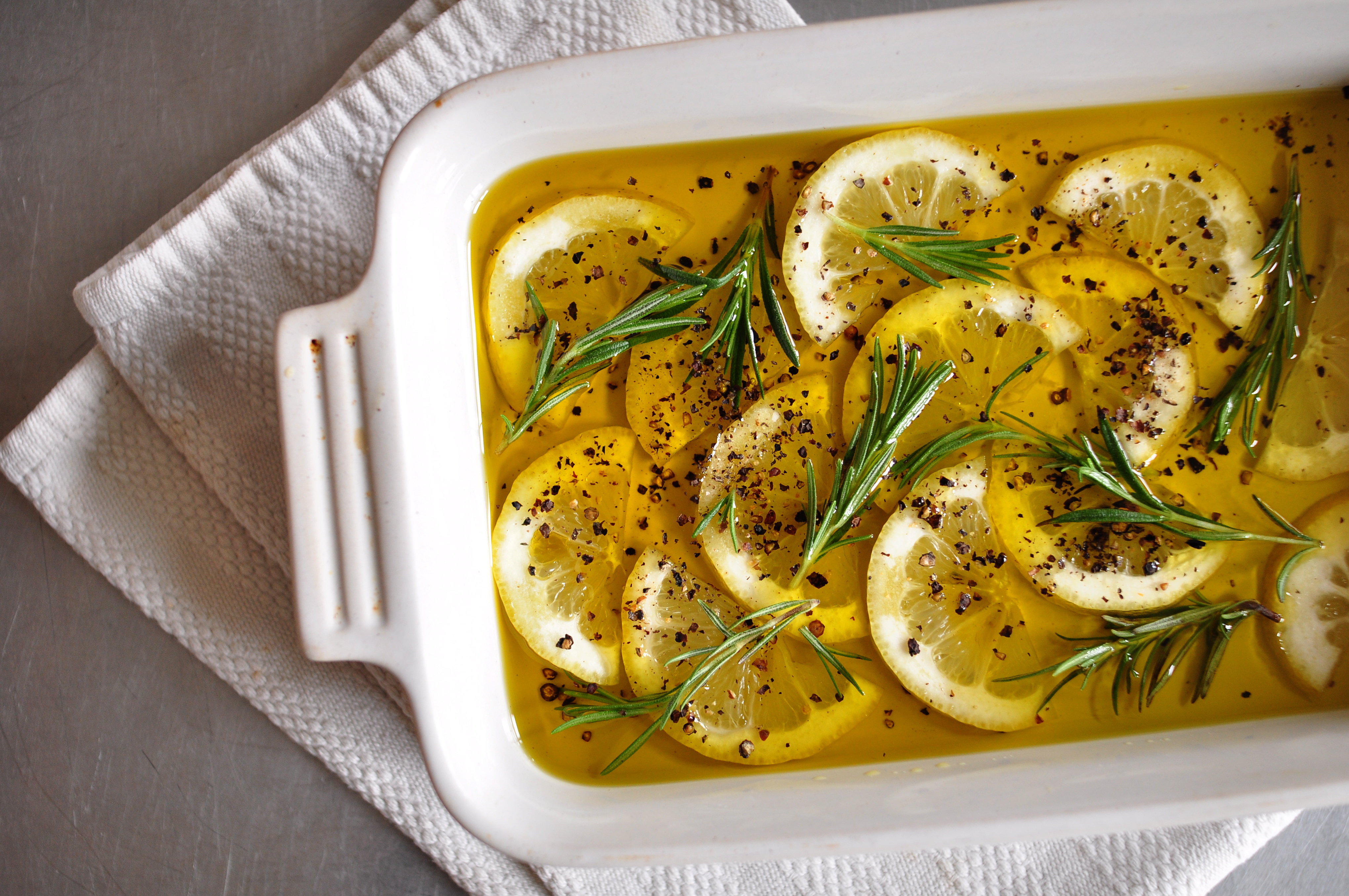
Pour enough olive oil to cover an ovenproof dish a generous 1/8 inch (1/4 cm) deep. Put the lemon slices in the oil reserving 4-5 very thin ones for later. Add the cracked pepper and the sprigs of rosemary. Put into the hot oven for about 15 minutes, until the oil is sizzling and fragrant.

Remove the dish from the oven, add the shrimp and tarragon, tossing them quickly in the fragrant oil, then sprinkle some coarse sea salt and place the few reserved slices of lemon on top and slide back into the oven.

Bake for about 7 to 10 minutes, depending on the size of the shrimp. **Small shrimp are cooked practically as soon as they lose their translucence on the outside. Larger shrimp may take a couple minutes longer. (They will continue to cook when out of the oven.)**

Serve immediately, with a spoonful of the juices.

*Here in New York, nearly all shrimp has at some point been frozen. Usually, shrimp that is sold unfrozen is actually thawed. If the shrimp has been caught wild and never been frozen, it is specified. Therefore, unless very fresh wild shrimp is available, it is best to buy frozen shrimp and defreeze it at home just before cooking.

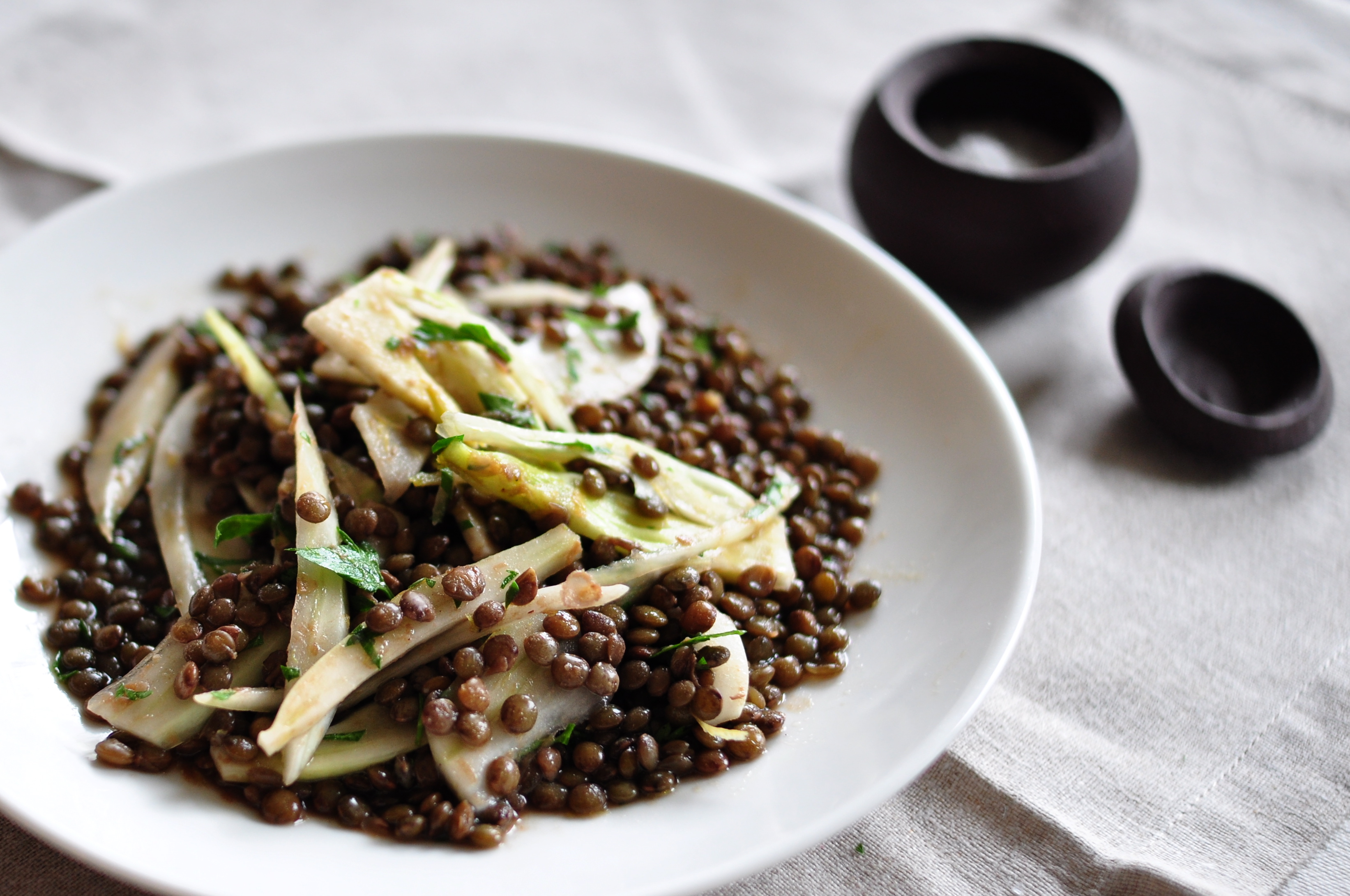
Lentil and fennel salad with lemon and parsley

28 April 2011

I made this salad for Easter lunch on Sunday. I imagined it as I went. Or so I thought.

Many people liked it a lot, and one friend in particular complimented me on the originality of the pairing. I graciously accepted the comment, but all the while something in the back of my mind was nagging. Surely I had not really come up with the idea. I must have seen it somewhere. Speaking to my mother on the phone the next day I asked her about this salad. Had she not previously made something similar that might have half-consciously inspired me?

My mother is an incredible cook, and a nutritionist. Not a steamed-carrots-and-brown-rice kind of nutritionist. She loves good food, really good food. Meat, fish, vegetables, salads, desserts, and – yes – butter. She has written a few books about nutrition, one of which is a book of recipes. Sure enough, one of those recipes is a lentil salad with fennel, parsley, and coriander.

This lentil and fennel salad is different, but the inspiration – as it turns out and like so many other things in my life without my realizing it at first – is my mother’s.

***

1 cup green lentils (preferably Castelluccio or du Puy)

1 small red onion

2 bulbs fennel

A generous handful flat-leaved parsley

1 bay leaf

3 Tbsps good olive oil

2 Tbsps balsamic vinegar

Juice and zest from 1 lemon (more lemon juice may be required depending on how juicy it is)

Flaky sea salt and freshly ground black pepper

*

The lentils are cooked the same way as for this basic lentils recipe

Pick through the lentils to look for small stone intruders that must be discarded.

To wash lentils, cover with cold water and drain in a fine mesh sieve.

Peel and cut into large chunks the onion and half a fennel, reserving the rest of the fennel for later.

Place lentils into a medium-sized saucepan with 2 cups (double the volume) water. Add vegetable chunks, a few sprigs of parsley, and the bay leaf. Bring to a boil and let simmer, covered, for about 20-25 minutes. Remove from heat when the lentils are cooked to your liking – I like them to retain a nice bite. Discard sprigs of parsley and vegetable chunks, pour lentils into a large bowl, and place in the refrigerator for a few hours or overnight.

*

Wash and finely chop the rest of the parsley.

Cut the fennel in half. Place it face side down onto the cutting board, and cut into thin strips, height-wise.

Season the lentils with the olive oil, balsamic vinegar, lemon juice and zest, salt, and pepper. **The measurements given above are suggestions. I find that lentils hold up to a bold amount of acidity. It is best to season gradually, and adjust according to taste.**

Toss the lentils with the fennel and parsley. Check one last time for seasoning, adjust if necessary, and serve.

*

Related posts

Lentils

Dandelion, fennel, and pumpkin seed salad with pumpkin seed oil

In Haute Savoie | Reblochon and tartiflette

14 April 2011

I’ve been going skiing in Haute Savoie since I was twelve. Initially with my family, later with friends, and this year – somewhat greedily – first with friends, and then with family.

Spending a (fairly boisterous) week together has been a lucky and indulgent way for us to keep in touch with friends who don’t live around the corner anymore. This year the children very nearly outnumbered the adults and there was no late night dancing, but it was, as always, a culinary treat.

Before going I was pretty sure I would want to write about raclette, which in these mountains is not prepared 1980s-suburban-dinner-party-style on little individual pans, but, rather, an entire half raclette cheese is mounted onto a simple heating device, melted, and scraped directly onto boiled potatoes, to be eaten, delectably, with cornichons, cured meat, and frisée or escarole salad.

But I am not going to write about raclette. We did eat raclette – no skiing holiday would be quite right without it – but by the time friends left and I had time to take a few pictures, spring had attacked with such full force that the idea of raclette receded too far back into winter to be summoned up again. Until next year.

Not so with reblochon, and tartiflette.

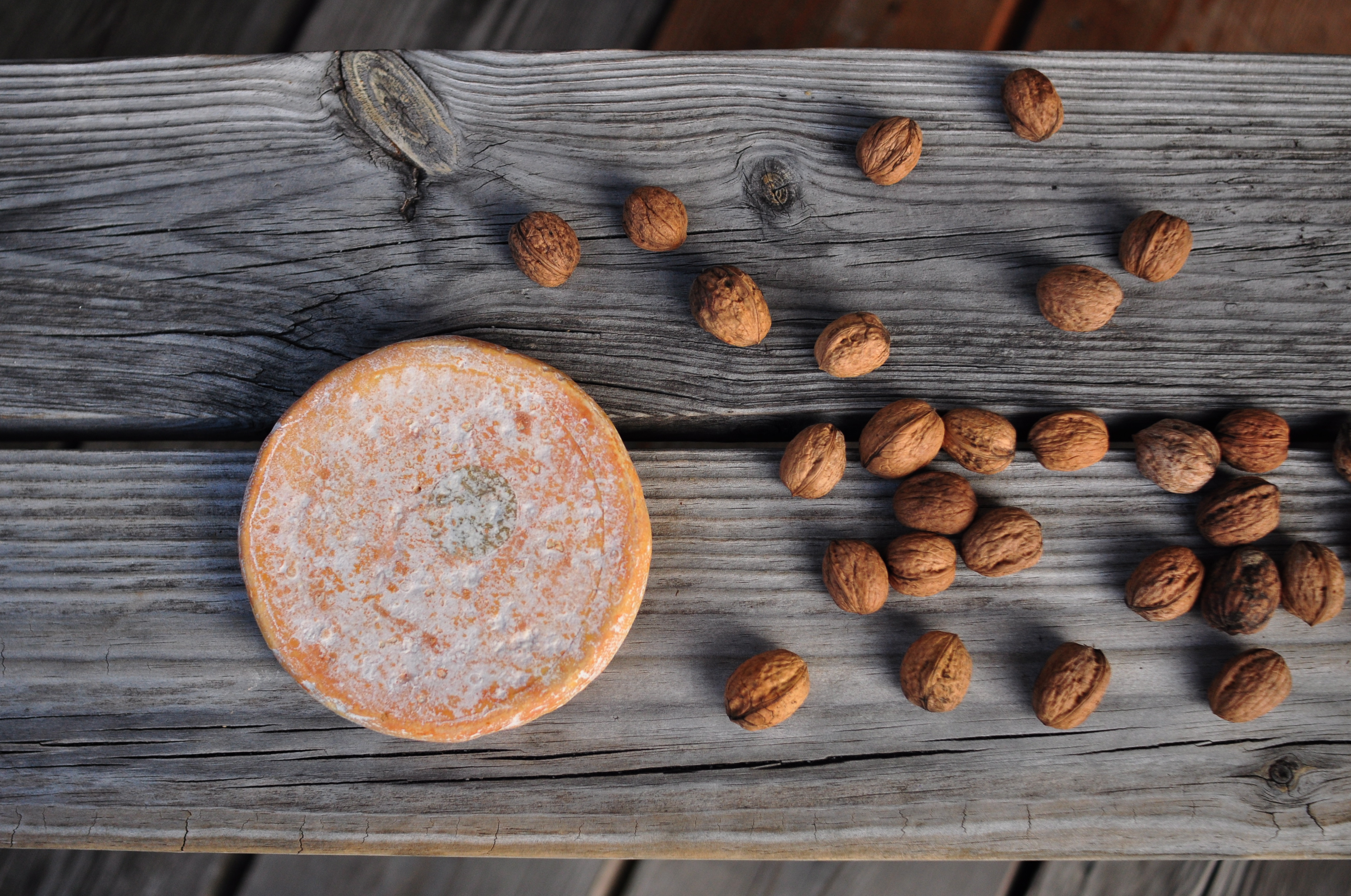
Reblochon is a typical round, creamy, raw-milk cheese from Haute Savoie protected by an AOC.* As the story goes, reblochon dates back to the 13th century. At the time, peasant dues to land owners were calculated according to the amount of milk produced in one day, so ingeniously, on inspection days, cows were not fully milked. A fraudulent second milking produced less abundant but creamier milk ideally suited to the production of cheese. The name reblochon apparently comes from the local dialect “re-blocher,” which means “to pinch a cow’s teats a second time.”**

Reblochon is delicious as is, a cheese plate in itself, but it is also decadent as tartiflette, another variation on cheese and potatoes, Savoie-style. Thomas and Valerie H are the masters of tartiflette. Every year they prepare the dish – or rather dishes, to accommodate 13 adults and 13 children, dietary needs, and picky eaters. I defer the recipe to them.

*Appellation d’origine contrôlée : A French certification that strictly regulates the geographic origin and production methods of certain foods
**Story loosely translated from www.reblochon.fr

***

Tartiflette

Recipe edited and approved by Thomas and Valerie H

Potatoes

Bacon

Shallots

Reblochon(s)

***

Bring a large pot of salted water to boil. Peel the potatoes, add them to the boiling water (whole or cut in half depending on the size – ideally all the pieces should have approximately the same size so that they cook evenly). Cook until just soft but still al dente. Drain and let the potatoes rest until cool enough to handle.

Cut the bacon into small strips about 1 inch (2.5 cm) long and 1/4 inch (1/2 cm) wide. Fry the bacon over medium to high heat in a large skillet. Remove, set aside, and drain excess fat, leaving some in the skillet.

Finely cut the shallots, add to the skillet, and cook in bacon fat until golden. Line an ovenproof dish (large enough to hold two reblochon halves) with a layer of half of the shallots.

Cut the potatoes into slices about 1/4 inch (1/2 cm) thick. Place them on top of the bed of shallots. Add the other half of the shallots, the bacon, and spread evenly over the potatoes.

Slice the reblochon(s) in two horizontally and place it, rind side up, on the potatoes. Cut the sliced reblochon in further pieces to fill in the corners and sides of the skillet, so that the potatoes are completely covered with reblochen. No additional seasoning is required, the bacon, shallots, and the reblochon provide for everything.

Slip into the oven and bake until the cheese is golden and bubbling on the sides. Take out and let rest for about 10 minutes until the melted cheese cools down and begins to solidify slightly (If served too early, the tartiflette will be too liquid).

Serve with a large winter salad such as frisée or escarole. And white wine from Haute Savoie.

Bacon
Red beet salad with parsley and chives

24 March 2011

A few days ago “Spring has sprung!” was on everyone’s lips. It was irresistible, I even caught myself humming it. And I should know better. As long as I have lived in New York, spring has never sprung here. It fumbles, stumbles, advances two balmy afternoons, retreats five frigid days, and, just as winter finally seems to capitulate, spring gets bullied away by summer.

It was 20 degrees (Celsius, which is about 70°F) last Friday and we had our first picnic. Now it is raining, snowing, and hailing intermittently. It’s treacherous because the warm days are just enough to conjure visions of light dresses, and coax out the daffodils in the park and the chives on my balcony.

So as winter meets spring, and no one is quite sure which one it really is, I imagined a hybrid salad. The chives, shivering in the snow, were a nice way to springify the enormous beet salad I made to finish the last vegetables in the fridge before going off on holiday. Two weeks of skiing in the Haute Savoie, plenty of cheeses to eat and Abymes to drink. I will report back.

***

Whole raw beets

Flat-leaved parsley

Good olive oil

Juice from 1 lemon

Maldon sea salt

Freshly ground black pepper

Chives

***

Peel and grate the beets with the fine setting of a hand-held grater or food processor. Wash and finely chop the parsley.

Mix the beets with a generous douse of olive oil, freshly pressed lemon juice, salt, and pepper, checking the seasoning as you go and adjusting to taste. Mix in the parsley.

Roughly cut the chives into 1/2 inch (1 cm) pieces and toss into the salad.