Archive for the ‘Spring’ Category

Grilled pork chops with fennel, sage, and pimentón

13 September 2012

I have a dilemma, and it involves pork.

As I may have mentioned, a few years ago I discovered Flying Pigs Farm at Union Square market. Before then I never bought pork (ham and bacon excepted), but since I’ve become more than a little fond of the animal, largely encouraged by a pretty remarkable recipe for slow roasted shoulder.

As I may also have mentioned, last November a real local butcher, Harlem Shambles, opened in our neighborhood.

So I have a problem of fealty: where should I buy pork now?

Rather than resolve this question just yet I’ve embraced this sudden begging supply of excellent pork and expanded my pork-cooking horizon further; I’ve been making pork chops. We’ve grilled them and, due to uncooperative weather gods, have seared them in a pan. Both work very well; key are the quality of the pork, and seasoning that respectfully complements the flavor of the meat.

They were amazing, I thought. Whether here or there, another great reason to buy pork.

***

Serves 4, one pork chop per person

4 (1 inch-thick) all natural and preferably heritage breed pork chops
1  1/2 tsps fennel seeds
1 tsp coarse sea salt
8 sage leaves
Smoked Spanish paprika (pimentón)

*
Take the pork chops out of the refrigerator and prepare the rub at least 45 minutes before cooking.

In a mortar, crush the fennel seeds with the sea salt.

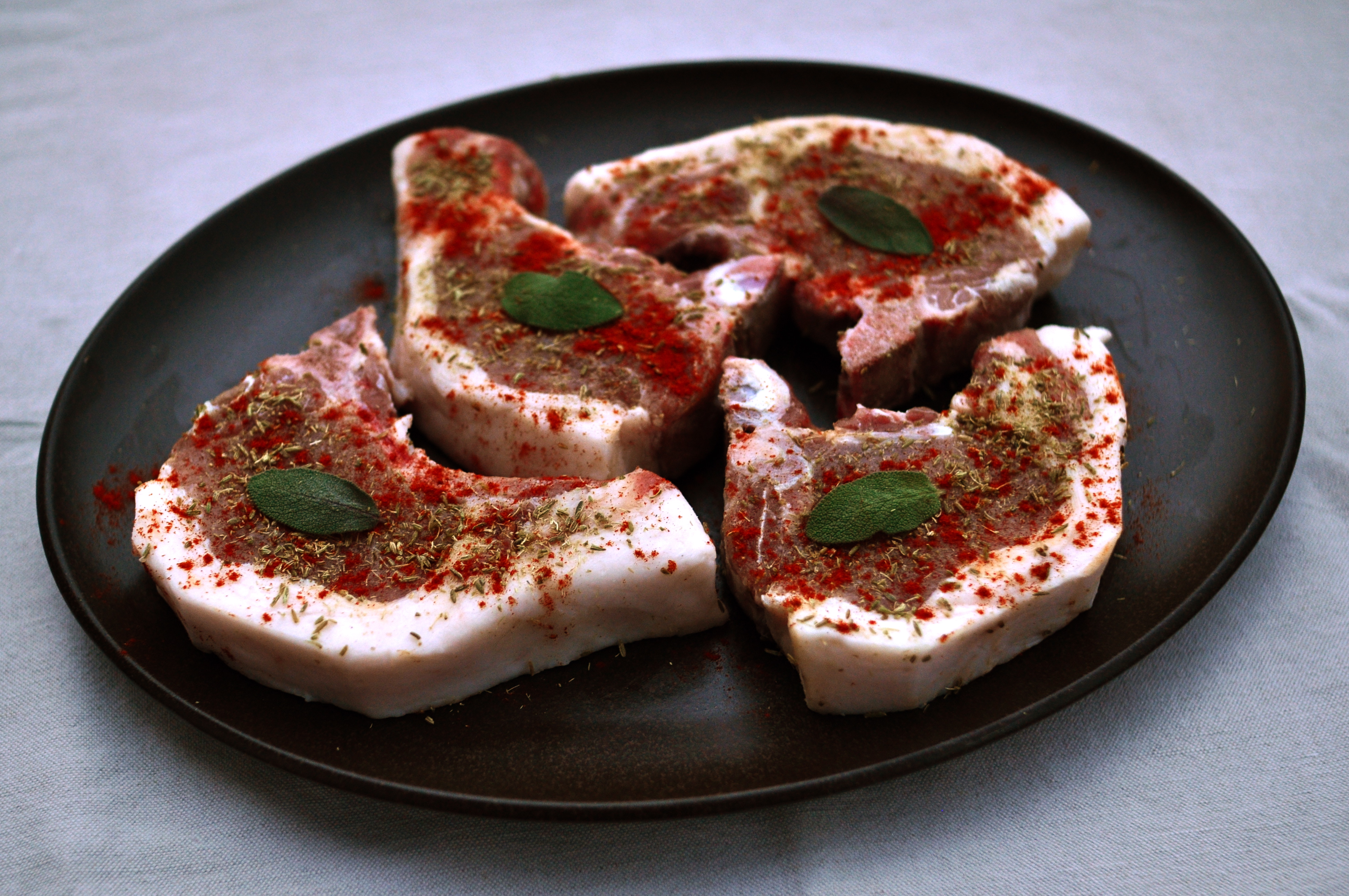
Rub the chops on each side with the spices and add a sage leaf in the middle. Let sit at room temperature. *Meat cooks more evenly if allowed to come to room temperature.*

Just before cooking — on a grill or in a pan faintly coated with olive oil — sprinkle some smoked Spanish paprika on each side of the chops.

Cook the chops over very high heat so they become beautifully brown on the outside without having time to dry up inside. It’s difficult to give an exact cooking time but it should be approximately 4 minutes on one side and 3 to 4 on the other.

As always, let the meat rest in a warmish place 5 to 7 minutes before serving. The chops should be faintly pink inside and very juicy.

*

Related posts

Slow-roasted pork shoulder

Pork rillettes

Ratatouille

Baked mackerel with mustard and thyme

26 July 2012

During the first couple of weeks the persistent Breton drizzle rarely abated, the rolling clouds swept from deep coal to lighter greys, with barely a glint of blue. We went on foggy walks through swampy fields, tore out weeds under the rain, wore thick sweaters, spent evenings by the fireplace. There wasn’t much outdoor cooking.

And when it is too wet to grill mackerel on an open fire, the next best thing is to slather the fish with mustard on both sides and bake it in the oven. This is how we always prepared mackerel in the family. Short of outdoor grilling, it is the best.

Fish is pretty easy going and doesn’t need much in terms of preparation; the tricky and single most important thing is the cooking time. It is very easy to overcook and that ruins everything. This is particularly acute with mackerel: well cooked it is succulent, overdone it becomes heartlessly dry.

I usually count one mackerel per person, but here we’ve found very small line-caught mackerel that were barely enough for one, and occasionally I’ve seen mackerel large enough to be shared. When I’m not sure I seek advice from the fishmonger.

One medium mackerel per person, whole but gutted
Sea salt
Freshly ground black pepper
Fresh thyme
Olive oil
Hot Dijon mustard

Preheat the oven to 375°F (190°C).

Season the gutted belly cavity of the mackerel with a pinch of salt and freshly ground pepper; stuff with a sprig of thyme.

Drizzle a little olive oil onto a baking dish large enough to hold all the mackerel.

Slather a thin layer of mustard on both sides of each fish, place into the baking dish and slide into the oven.

Bake for 10 to 12 minutes; this depends on the size of the fish, naturally, and larger ones could take a few minutes longer. **As it is absolutely essential not to overcook fish, rather risk having to pop it back into the oven for a minute if it is still raw inside (the flesh would still be slightly translucent).**

Serve immediately, preferably with mashed potatoes.

Rhubarb rosemary syrup and a gin drink

21 June 2012

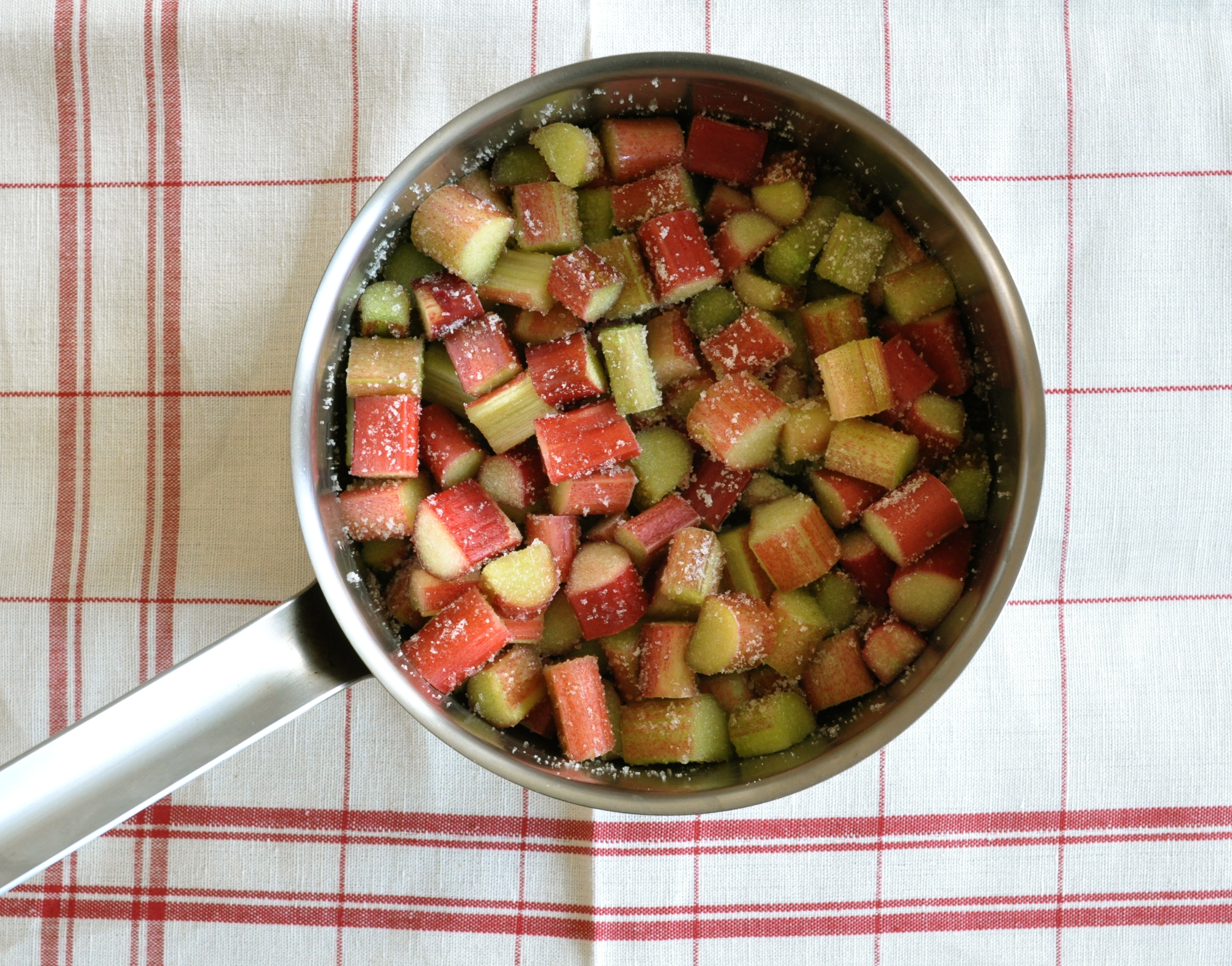
The rhubarb rosemary syrup is barely an adaptation of 101 Cookbooks‘ rhubarb rosewater syrup. It is the same recipe, but instead of adding rosewater once the syrup had cooled, I added a sprig of rosemary while it was still warm. I am entirely pleased with the result. I had seen the pairing of rhubarb and rosemary mentioned in a few places, and I love how it brings out rhubarb’s herbaceous edge.

Typically I’ve simply been using a tablespoon of this syrup with sparkling water, a good squeeze of lime, and a few ice cubes. But somewhat uncharacteristically the other day I made a drink. It was a warm evening and I wanted something light and refreshing. Here’s how I made it, on a whim.

2 tsps rhubarb rosemary syrup (recipe from 101 Cookbooks, I just substituted rosewater with a sprig of rosemary)

2 ounces gin

1 ounce rosé

A dash of sparkling water

A squeeze of lime (to taste) and one slice

A sprig of rosemary

The slice of lime and sprig of rosemary ‘garnish’ are important to add a little more edge against the sweetness of the syrup and wine. I added a few ice cubes but took them out fairly quickly as they were melting too fast and I didn’t want them to water down the drink too much (using one larger ice cube would do the trick).

Cheers!

*

Related posts

At the market | Rhubarb

Rhubarb ice cream

Spelt buckwheat buttermilk pancakes

5 June 2012

I expect everyone has an opinion about pancakes.

Pancakes must be light and fluffy, of course, but they must have character. I don’t make plain white flour/milk pancakes, if I can help it. Every Sunday (right, every Sunday *on which I make pancakes*), I experiment. Spelt, oat, whole wheat, buckwheat; buttermilk, yogurt, kefir, ricotta; orange and thyme; fruit, nuts, coconut; … . Some improvisations are better than others.

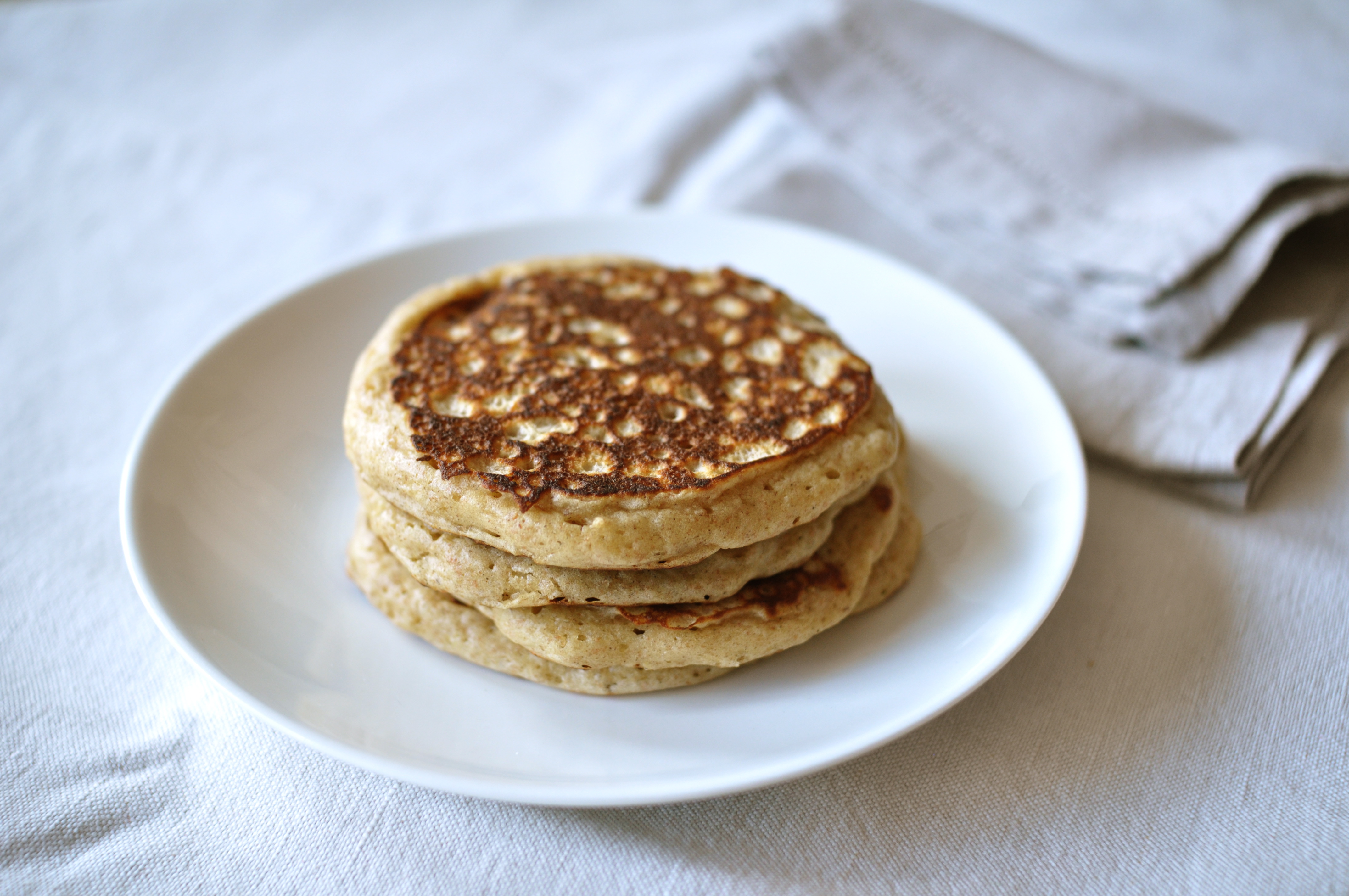
This recipe strikes just the right balance. There isn’t much buckwheat and that’s how it should be. Just a little heft, tempered by the tang of cultured milk.

***

I used white and whole spelt flours though regular wheat flours would also work. The key here is a small proportion of whole grain and a little buckwheat.

4 Tbsps butter

1 1/2 cups (175 g) white spelt flour

1/2 cup (75 g) whole spelt flour

2 heap Tbsps buckwheat flour

2 Tbsps sugar

1 tsp salt

2 tsps baking powder

1 tsp baking soda

2 eggs

2 1/2 cups (600 ml) cultured buttermilk

Coconut oil for the pan (I use coconut oil to cook pancakes. It works perfectly because it doesn’t burn.)

*

Melt the butter and let cool to room temperature.

Into a large bowl, sift the flours together with the sugar, salt, baking powder, and baking soda.

In another, smaller bowl, beat the eggs well with the fork before adding just 2 cups (500ml) of the buttermilk and finally the melted butter. (Add the rest of the buttermilk only if the batter is too thick.)

Pour the wet ingredients into the flour mixture, and mix swiftly, just enough to combine completely (a few bumps are nothing to worry about, it is important not to overstir the batter).

Grease griddle (non-stick pan) and place over high heat. Once the griddle is hot, pour little puddles of batter (the size is entirely up to you, but keep in mind that they will expand quite a bit), reduce heat to medium, and stay close, checking constantly until you start noticing bubbles popping up. Turn over the pancakes with a wide spatula and, within barely a minute, the pancake is ready. To make more pancakes, repeat process, adding a little oil every time to make sure they don’t stick.

The pancakes can be kept in a covered pan in a 250°F (120°C) oven for a little while if you want to make all the pancakes first and serve them at once.

*

Related posts

Orange thyme pancakes

Crepes

Banana cake

Cuban bread

Spaghetti with ramp pesto, walnuts, and parmigiano

29 May 2012

Coming home from a few lovely days in the country /
The heavy air washes away the weekend breeze /
There’s not much in the kitchen /
Some ramp pesto squirreled away in the freezer /
A few walnuts cracked /
Spaghetti and parmigiano always in the house /
Rosé /
Home. It doesn’t take much.

***

I was lucky enough to have ramp pesto left in the freezer, but this works perfectly well with traditional basil or any other pesto. I always buy fresh pesto (in the refrigerated section) rather than the jarred long-conservation kind, and store it in the freezer so there is always pesto in the house.

Spaghetti, 100g per person

Ramp pesto, one generous tablespoon per person

Walnuts

Wedge of parmigiano (not grated)

*

Bring a large pot of well salted water to boil. Coarse sea salt works well for this; the water should be as salty as sea water.

In a small saucepan, gently heat the ramp pesto until it is warm but not hot.

Crack the walnuts.

Using a vegetable peeler, cut the parmigiano into thin shavings .

Once the water boils, carefully slide in the spaghetti. Cook in a heavy boil. Start checking the pasta regularly after about 8 minutes (by carefully taking one out and eating it). Drain quickly in a colander as soon as the pasta is just al dente (or to desired consistency) and return immediately to the pot used for boiling the pasta (one could use another pot but it’s much simpler this way). **It is important not to overdrain the pasta. If it is too dry it will become sticky.** Quickly drizzle generously with good olive oil so the pasta doesn’t stick.

Stir in the pesto and combine well. Plate the pasta, add the walnuts and parmigiano on each plate individually. Eat.

*

Related posts

At the market | Ramps (ramp pesto)

Spaghetti with cherry tomatoes, mozarella, and basil