Archive for the ‘Spring’ Category

Rhubarb ice cream

28 June 2011

In the midst of baking my third or fourth batch of busy-day cupcakes I became fixated with the idea of rhubarb ice cream. It must have been triggered by a surfeit of sugar and vanilla – I craved something cool and tart.

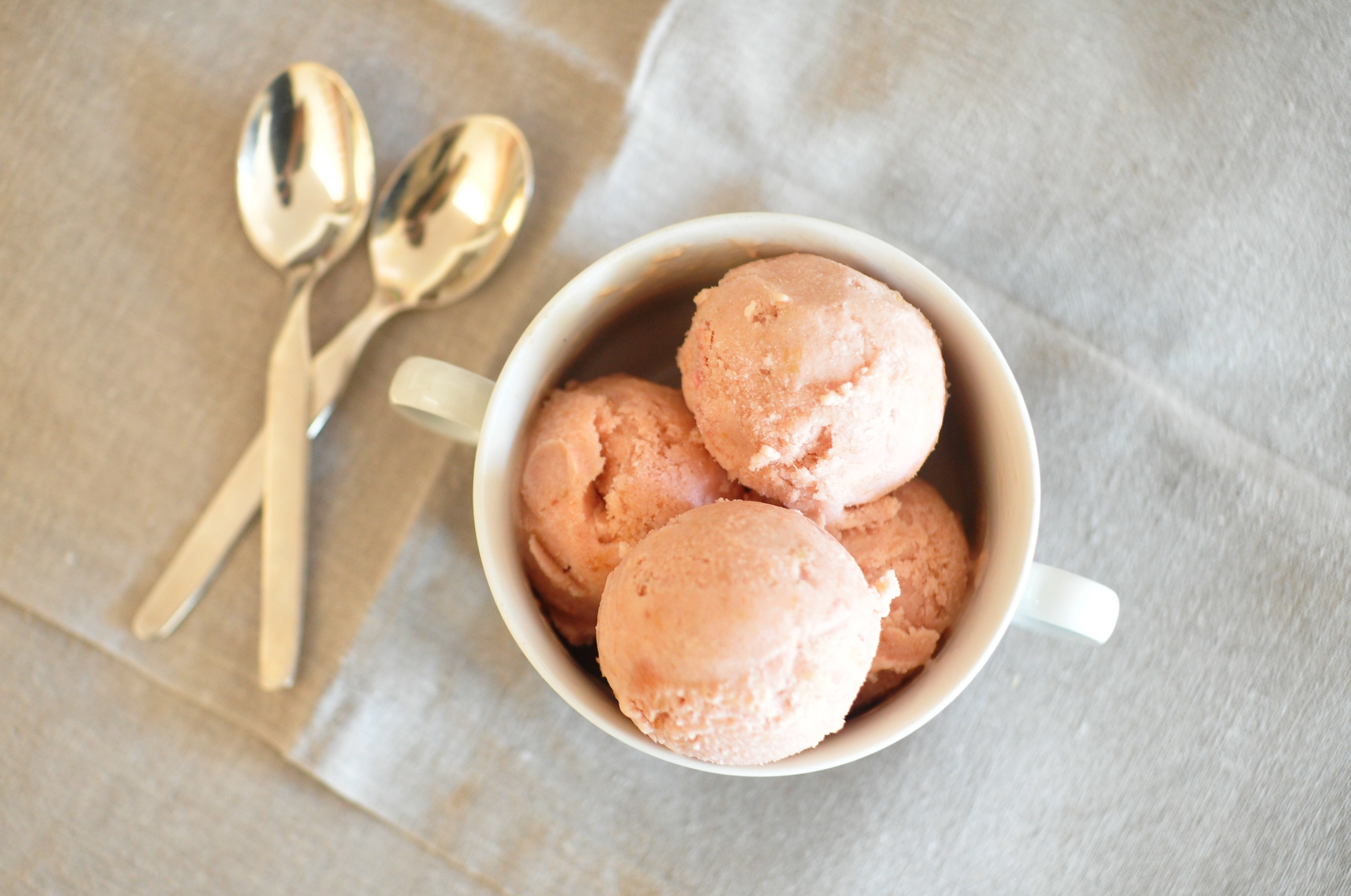
I made this ice cream in the easiest possible way. It is simply rhubarb compote mixed with heavy cream, churned into ice cream.

It is (was) incredibly good.

***

This recipe requires an ice cream maker of some kind. It makes a little over a pint of ice cream.

3 1/2 cups (400 g) rhubarb measured once cut into 1 inch (2.5 cm) pieces

1/2 cup (100 g sugar) for the compote plus 1 or 2 Tbsps

1/2 cup (150 ml) heavy cream

1 Tbsp rosé wine

***

Make a rhubarb compote with the rhubarb and sugar.

Let the compote cool down then chill in the refrigerator for at least 3 to 4 hours or overnight.

Mix the compote with the heavy cream, rosé, and add one or two tablespoons of sugar to taste.

Churn in an ice cream maker and keep in the freezer until ready to eat.

*

Related posts

At the market | Rhubarb [Rhubarb compote]

*

Follow @nettleandquince on twitter

At the market | Rhubarb (Rhubarb compote recipe)

27 June 2011

I could have spoken about rhubarb two months ago, when it first appeared at the market as the very welcome distraction from the last winter apples and pears; rhubarb makes those last few weeks before the first berries of summer bearable.

But it’s already the first week of summer, berries abound everywhere, and while I’ve eaten pounds of strawberries — plain, in tartes, or churned into ice cream — as well as raspberries and blueberries even, I am still craving — and eating — rhubarb.

Rhubarb is one of those vegetable that I cannot resist buying so it often ends up as compote (recipe below) because I’ve usually purchased it without a plan and compote only takes a few minutes to prepare. However the other day I felt an irresistible urge to make rhubarb ice cream. It was good beyond all expectations, and barely more work than a simple compote.

Rhubarb is technically a vegetable, though in our part of the world it is often used as a fruit, in crumbles and tarts. Wild rhubarb originated in Asia and its root has been used medicinally in China, Asia, and eventually Europe for thousands of years. But it was not until the nineteenth century that the stalks of rheum rhabarbarum were cultivated and used as a food, particularly in England and the United States, where rhubarb became known as “pie-plant.”

Rhubarb can be any shade of red or green, and while the red variety looks pretty, apparently there is no significant difference in taste. The stalks should be neither too big nor too small, always firm and crisp, not soft and flabby. Rhubarb is available from mid-spring through the summer. It thrives in cooler climates where the soil freezes in winter, which is another reason to love it — a delicious vegetable/fruit that grows best in my part of the world!

Rhubarb compote recipe

The quantities are an indication. The weight ratio of 1 part sugar for 4 parts rhubarb makes a compote that is not too sweet with a clear tart rhubarb taste. It can be adapted as desired. Serve with yogurt or crème fraîche, or with busy-day cupcakes.

3 1/2 cups (400 g) rhubarb cut into 1 inch (2.5 cm) pieces

1/2 cup (100 g) sugar

*

Cut off the ends of the rhubarb stalks as well as any parts that are bruised or blemished. Wash the stalks before cutting them into 1-inch (2.5 cm) pieces. (Now is a good time to measure the amount of rhubarb to calculate the amount of sugar needed.)

Place the cut rhubarb into a medium saucepan. Add 3 tablespoons of water, then the sugar. Bring to a boil and cook until all the pieces of rhubarb have become soft, about 12 to 15 minutes.

That’s it.

*

Related posts

Rhubarb ice cream

At the market | Quinces

At the market | Celeriac aka celery root [Remoulade salad]

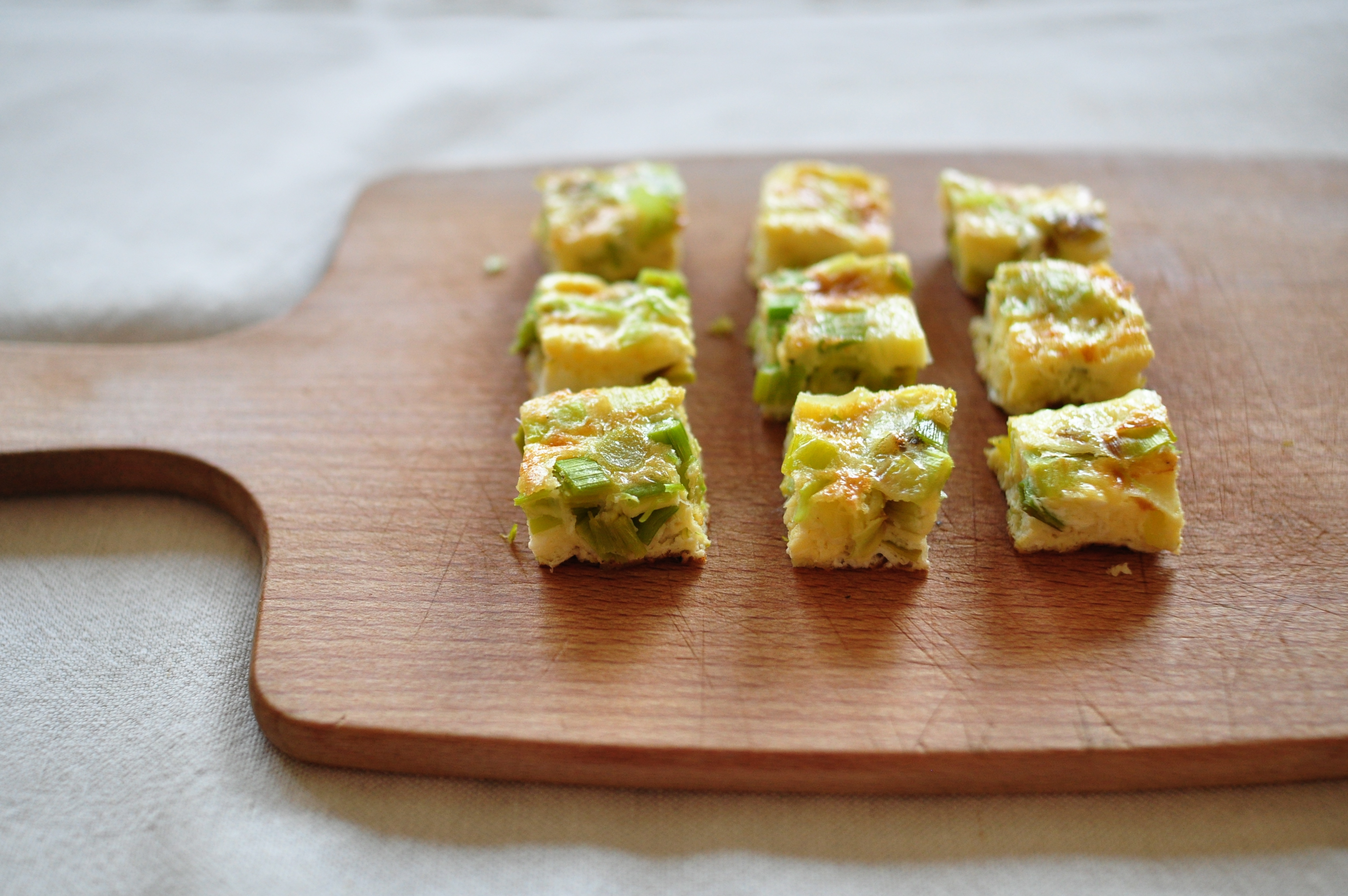
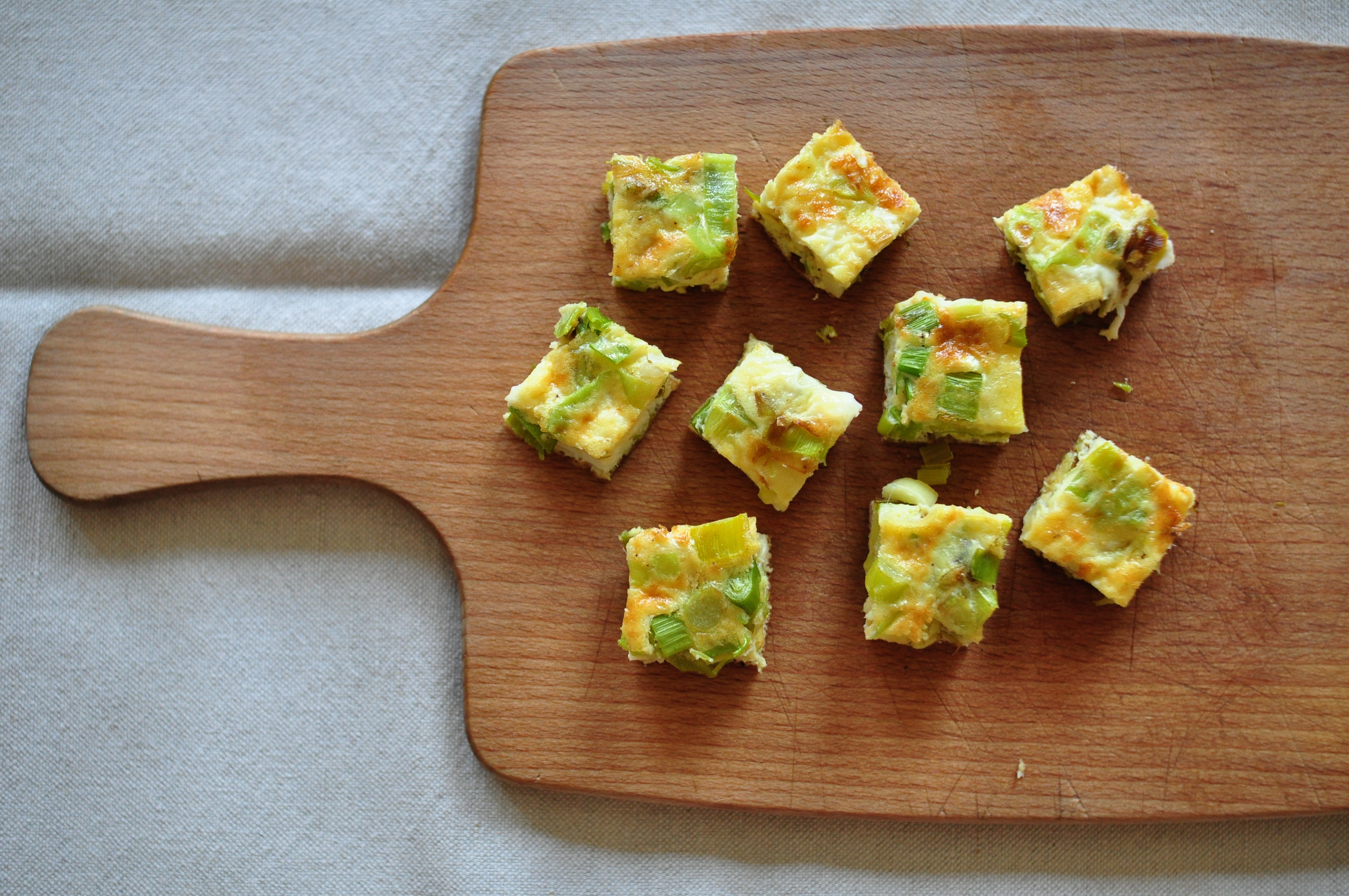
Finger food | Leek and manchego frittata

16 June 2011

Louise is now 15 months, she walks around like an independent little person, and she eats what her older brothers eat. The days of puréeing are already over, and as such my days of “baby food” posts. But since the children usually eat separately, especially during the week, this will be the transition into the world of children’s dinners.

As much as I oppose the concept of children’s food, in particular as it implies anything yellow and battered, I do believe in adult meals. This means that our children have dinner together, earlier, and go to bed at eight. It’s not about a different kind of food, it’s about timing. Ideally, children’s dinners should be easily prepared on a weeknight with homework and soccer and a toddler who really should be in bed by seven puttering about resignedly.

So as a bridge away from baby food here is the ultimate anytime any-age family meal – frittata.

It is ideal because it basically consists of staples and anything else that happens to be in the kitchen: eggs; an onion or leftover leek, garlic; cheese (gruyère, manchego, parmesan, ricotta, mozzarella); perhaps diced ham, pancetta, or some smoked salmon; peas, cherry tomatoes, asparagus, spinach, potatoes; herbs…

The possibilities are endless, and the result not only very tasty but a full meal in one dish that the children always like.

***

This quantity makes a lunch frittata perfect for one adult and one toddler. Adjust the quantities as desired. I usually count 2 eggs per adult, 1 per (young) child, plus an extra one overall “for the pan.”

2 leeks

Olive oil

A small knob of butter

1 clove garlic

3 eggs

Manchego cheese, a piece approximately 1 inch (2.5 cm) cube

Pepper

***

Preheat broiler (grill), or oven to 425°F (220°C).

Trim leeks on either side and remove one or two layers of the tougher dark green outer leaves. Wash off excess grit under running water. Slice the leeks into slices 1/2 or 1/4 inch (1 or 1/2 cm) thick. Wash well in cold water to remove any persistent dirt, and strain.

Thinly slice the garlic clove. Thinly grate the manchego.

In an ovenproof skillet, heat a little olive oil and small knob of butter, enough to comfortably coat the pan once the butter has melted. Add the leek and cook over medium heat for 3 to 4 minutes, until it softens and becomes translucent but before it gets brown. Add the thinly sliced garlic and cook for just another minute.

Meanwhile, break the eggs into a bowl and beat lightly with a fork. Add the cheese and a little pepper if desired (manchego is very salty so no additional salt is required).

Stir the cooked leeks and garlic into the eggs, just enough to combine, then return the egg/vegetable mixture to the pan (there should be enough oil left but if not, add a dash).

Cook on the stove over low heat, loosening the eggs at the sides with a spatula from time to time (don’t go anywhere, this will just take a few minutes).

When you can see the eggs starting to set underneath, but the top is still quite runny, place the pan in the hot oven. Leave it for barely a minute, just enough for the top of the frittata to set but no longer.

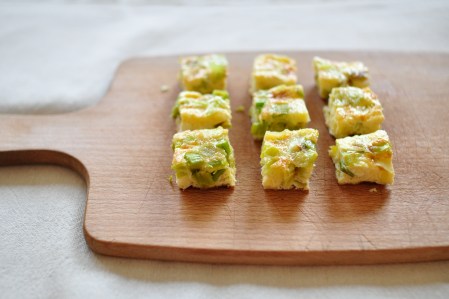
Cut into wedges (or cubes) and serve with a large green salad.

*

Related posts

Finger food | Carrots

Children’s dinner | Cowboy food

*

Follow @nettleandquince on twitter
Trout in a paper package (“en papillote”)

3 June 2011

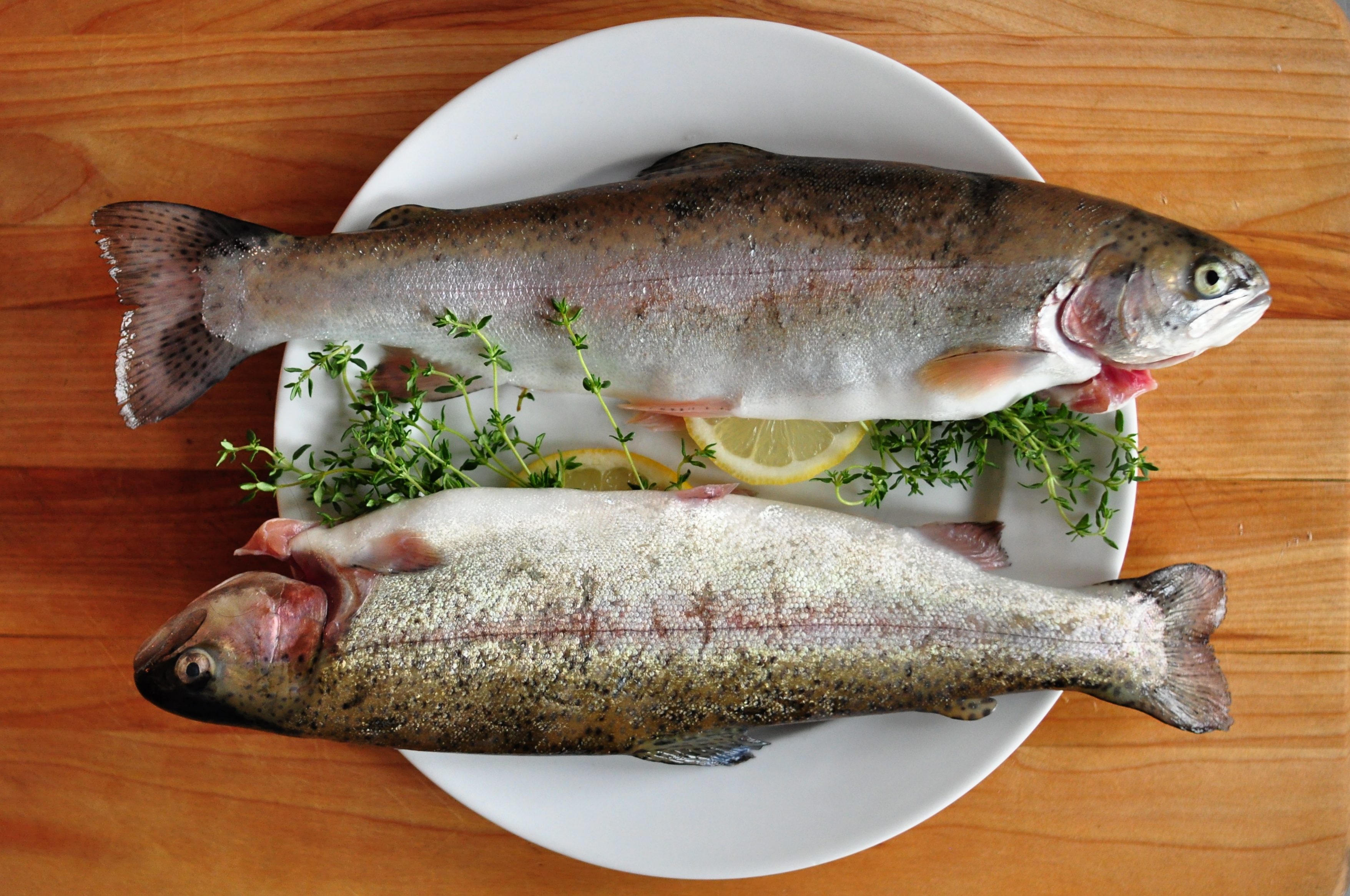
A trout so fresh* it is practically still winking at you when you cook it /
Courteously seasoned with salt and pepper, lemon and thyme /
Wrapped tightly in a parchment paper package /
Cooked gently, not a minute too long /
With small boiled potatoes tossed in very good butter.

***

Quantities per trout, one small trout per person

Trout, scaled and gutted

Maldon or other flaky sea salt

Freshly ground black pepper

2 slices untreated lemon

2 sprigs fresh thyme

Parchment paper

*

Preheat oven to 375°F (190°C).

Season the trout cavity with salt and pepper. Place in it two slices of lemon and two sprigs of fresh thyme.

Place the trout at the center of a piece of parchment paper large enough to be wrapped comfortably around the fish, i.e about 8 inches larger than the fish on either side, and about 4 inches longer than the fish at each end. Pull up the sides of the parchment paper around the trout and fold it over itself tightly three times, then fold the ends over under the fish. This should create small airtight packages.

Place in an ovenproof dish and slide into the oven. The cooking time depends on the size of the trout, but it will be fast, probably about 12 to 15 minutes. The best measure is to open one package and check the trout – sooner rather than later.

*Available on Wednesdays at Union Square Greenmarket in New York, from Beaverkill Trout Hatchery, a little stall close to 16th Street


Baked shrimp with lemon, rosemary, and tarragon

12 May 2011

It’s surprisingly easy to grow tarragon.

I had always thought of tarragon as a fragile herb because it is often wilted and usually bland when bought, but I discovered it is actually a low-maintenance hardy perennial that survives the New York winter. Alongside chives, tarragon is the first herb to come up in spring, year after year, and I think it’s worth growing, if only for that optimistic quality.

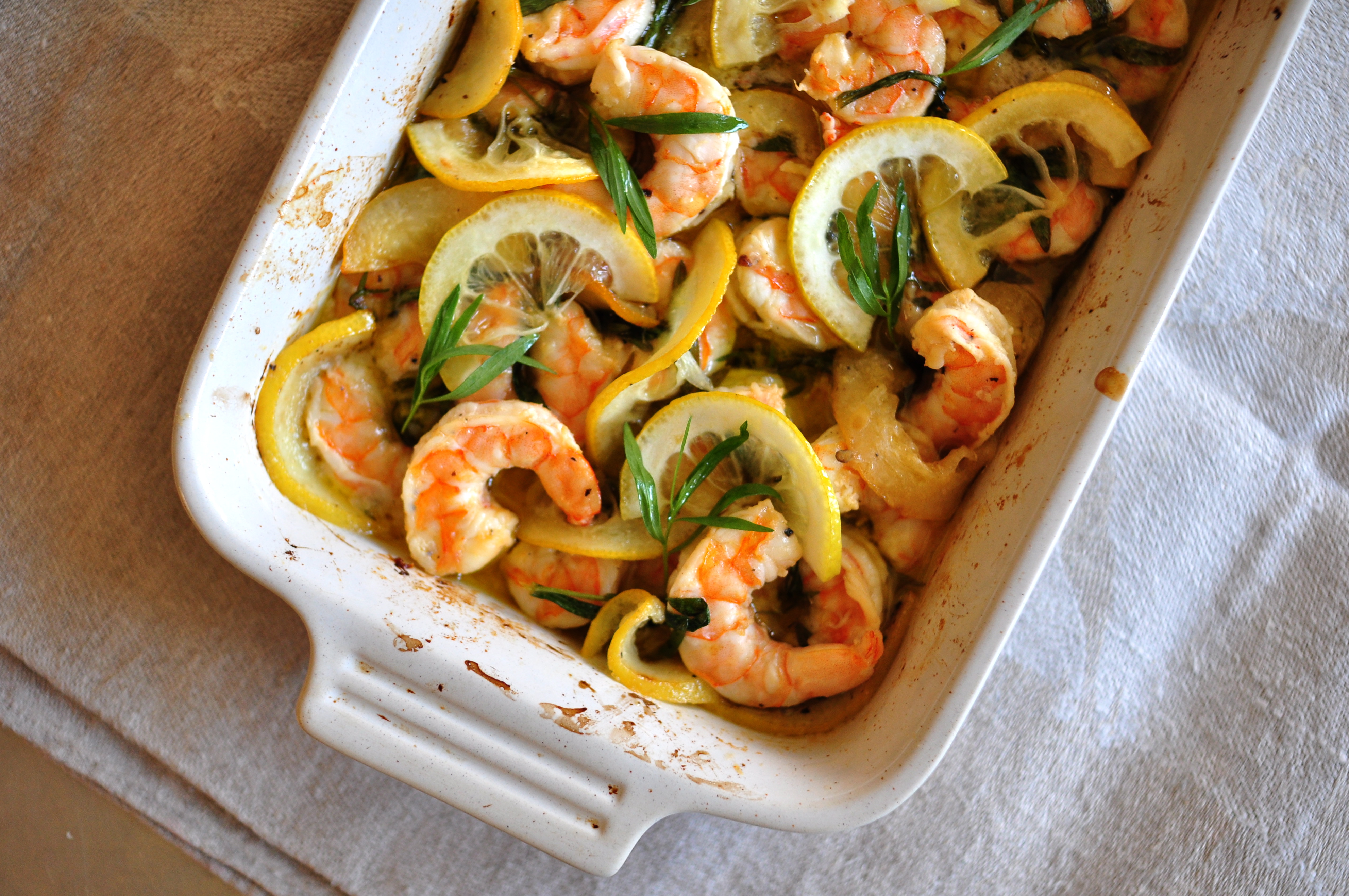
A classic French use for tarragon is with chicken, it also goes nicely with fish, and gives an acidulated kick to salads. This oven-baked shrimp, though, is itself almost reason enough to grow tarragon. I was inspired by a recipe found on Oui, Chef (which uses different herbs and spices, but the idea and cooking method are the same).

It’s absurdly delicious, and ridiculously easy.

***

Adapted from Herb and Lemon Baked Shrimp by Oui, Chef.

If you don’t happen to grow tarragon on your balcony, fresh thyme and 1/2 tsp cracked coriander seeds would go well, as shown in the original recipe (added early with the lemon, rosemary, and cracked pepper to flavor the oil).

1 lemon

1/2 tsp peppercorns

Good olive oil

Few sprigs fresh rosemary

1 lb (450 g) shrimp*

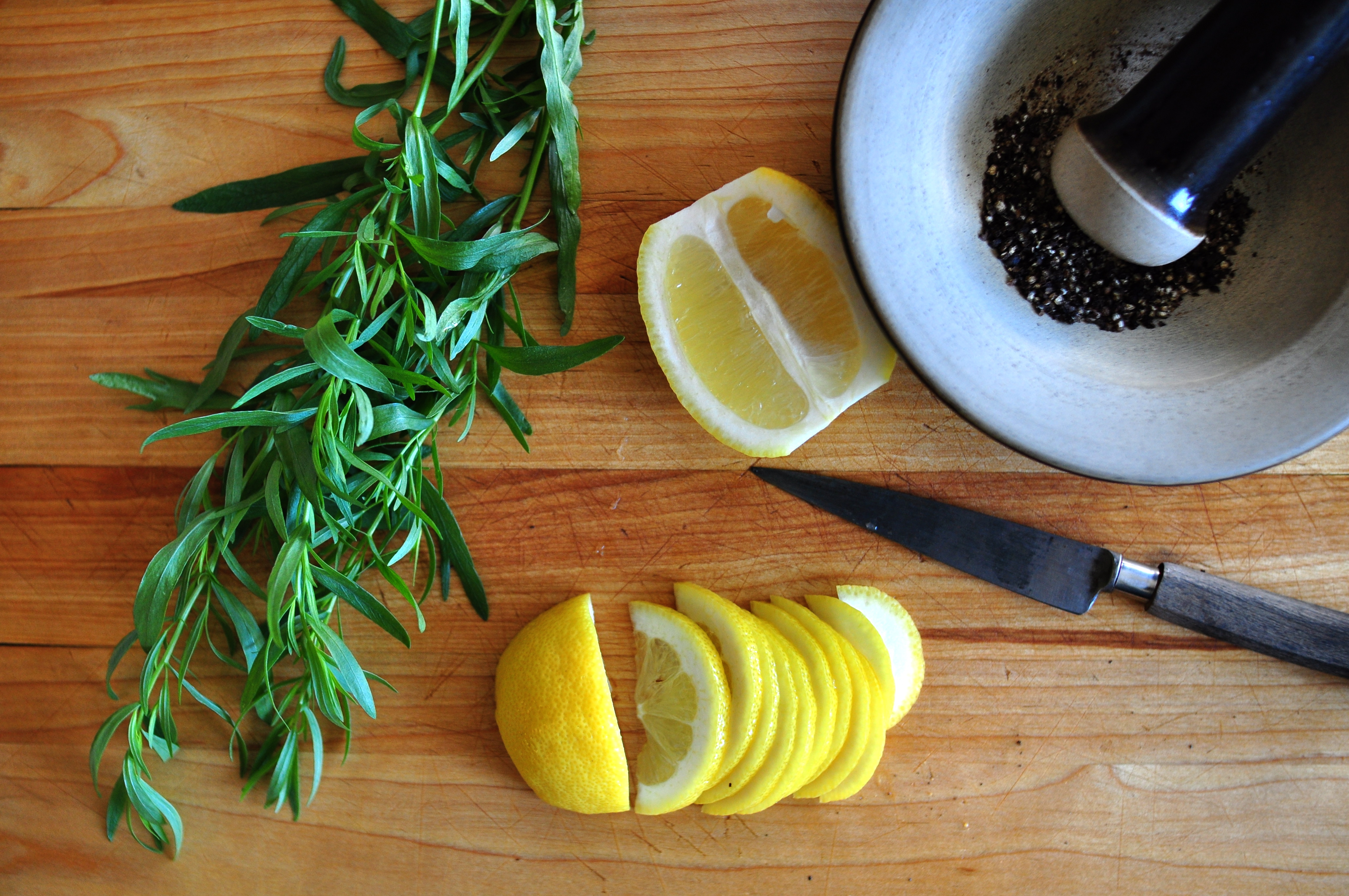
Few sprigs fresh tarragon

Coarse grey sea salt

*

Preheat oven to 400°F (200°C).

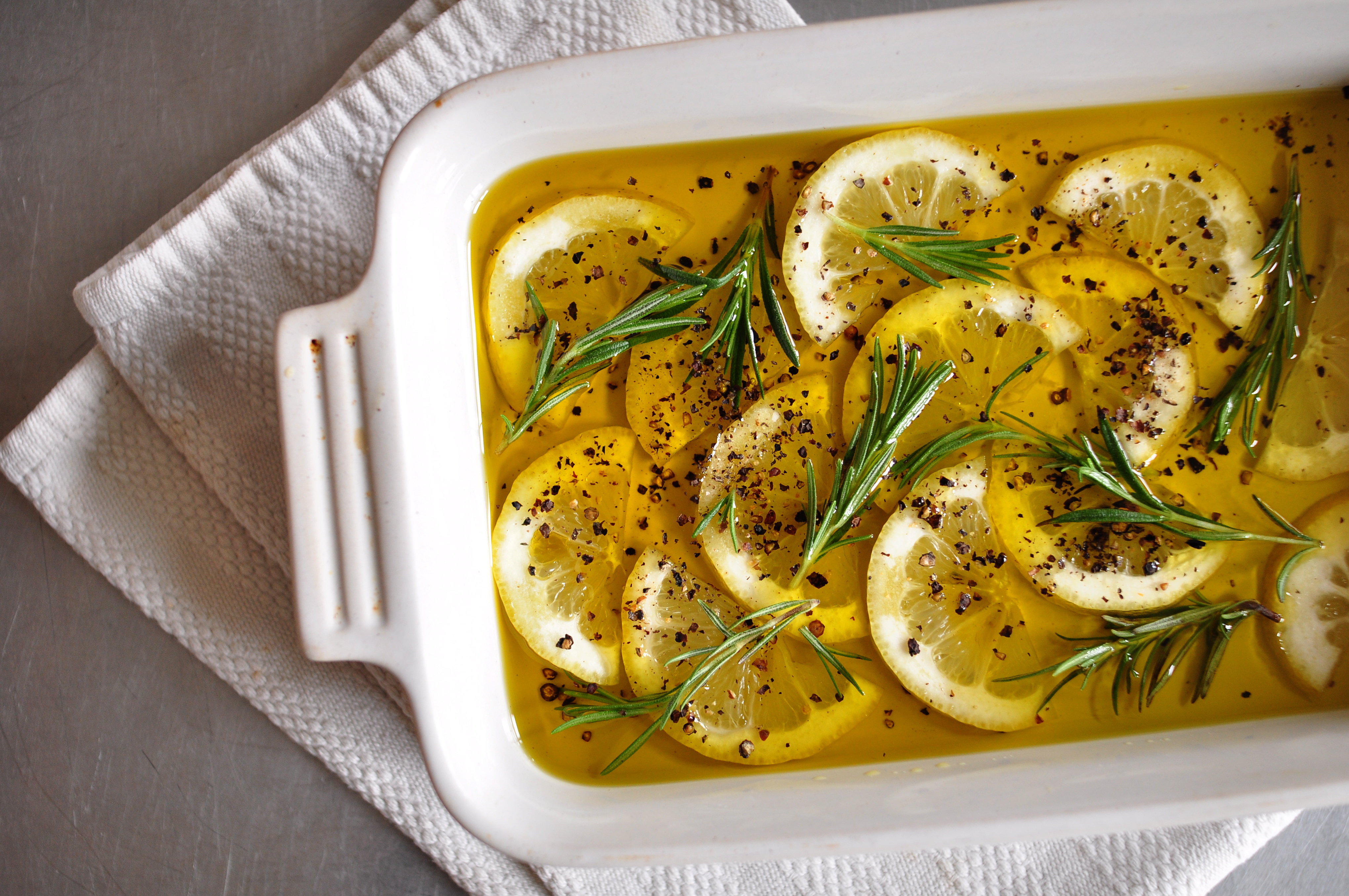
Trim the ends of the lemon, cut it in half lengthwise, place the halves cut side down on the board and cut into thin half moons. In a mortar, crack the peppercorns.

Pour enough olive oil to cover an ovenproof dish a generous 1/8 inch (1/4 cm) deep. Put the lemon slices in the oil reserving 4-5 very thin ones for later. Add the cracked pepper and the sprigs of rosemary. Put into the hot oven for about 15 minutes, until the oil is sizzling and fragrant.

Remove the dish from the oven, add the shrimp and tarragon, tossing them quickly in the fragrant oil, then sprinkle some coarse sea salt and place the few reserved slices of lemon on top and slide back into the oven.

Bake for about 7 to 10 minutes, depending on the size of the shrimp. **Small shrimp are cooked practically as soon as they lose their translucence on the outside. Larger shrimp may take a couple minutes longer. (They will continue to cook when out of the oven.)**

Serve immediately, with a spoonful of the juices.

*Here in New York, nearly all shrimp has at some point been frozen. Usually, shrimp that is sold unfrozen is actually thawed. If the shrimp has been caught wild and never been frozen, it is specified. Therefore, unless very fresh wild shrimp is available, it is best to buy frozen shrimp and defreeze it at home just before cooking.