Archive for the ‘Year-round’ Category

Orange thyme pancakes

26 September 2010

It’s the first day of fall. Officially fall arrived earlier this week, but until yesterday the temperatures still hovered close to 30°C (mid-80°s F) and it felt like midsummer. It’s much cooler today, it’s Sunday, and I woke up thinking of pancakes. A few years ago Thomas started a tradition of making pancakes on Sunday morning, and my sons have grown to depend upon it. (It would barely be an exaggeration to say that they bring out the “pancake cookbook,” as Joy of Cooking is referred to in our house, before we even come down for breakfast.) But with the summer – the heat, the traveling, the days at the beach – we had not made pancakes in months.

Today was a good day to reinstate Sunday pancakes, though I didn’t pull out Joy of Cooking. We happened to have orange juice in the fridge (which does not happen very often as we are a grapefruit-juice family), and every time there is orange juice, I think of orange thyme pancakes. We ate them in a bed and breakfast in Wyoming ten years ago on a skiing vacation.

***

Makes 12 four-inch (10 cm) pancakes

1/4 cup (55 g) butter

2 cups (250 g) flour

1 tsp salt

2 tsp baking powder

2 Tbsp sugar

1/2 tsp ground thyme (fresh or dried)

2 eggs

1 3/4 cup (450 ml) orange juice

Coconut oil to grease griddle (or non-stick skillet)

***

Melt butter over low heat and let cool.

Mix dry ingredients in a large bowl.

In a separate bowl, beat eggs well with a fork, then add orange juice and melted butter. Add egg/juice mixture to the dry ingredients carefully, mixing just enough to combine until the flour disappears. **Lumps are fine; the important thing is not to beat too much or the pancakes won’t be fluffy.** If batter seems stiff, add a little orange juice.

Grease griddle (non-stick skillet) and place over high heat. (I use coconut oil to cook pancakes. It works perfectly because it doesn’t burn.) Once the griddle is hot, pour little puddles of batter (the size is entirely up to you), reduce heat to medium, and stay close, checking constantly until you start noticing bubbles popping up. Turn over the pancakes with a wide spatula and, within barely a minute, the pancake is ready. To make more pancakes, repeat process, adding a little oil every time to make sure they don’t stick.

The pancakes can be kept in a covered pan in a 250°F (120°C) oven for a little while if you want to make all the pancakes first and serve them at once.

Slow-roasted lamb shoulder

19 September 2010

Every summer I spend a few weeks at my sister’s house in Brittany, and I come back every time with a new culinary obsession inspired by countless hours spent around the kitchen with my family cooking, eating, and talking about food. One year my preoccupation was yogurt, another time marinated olives, and this year it is slow-roasted lamb. There simply is no better way to cook – or eat – lamb. It’s completely stress-free and utterly delicious.

This is an approximate recreation of my sister’s succulent lamb shoulder. The gist of the recipe is to rub the lamb with herbs and garlic and let it cook for hours in a very low oven.

***

The quantities below are for a piece of meat of approximately 6 lbs (3 kg). The seasoning should be adjusted according to size, but the cooking time remains the same.

2 generous sprigs each of sage, rosemary, thyme, summer savory

1 Tbsp coriander seeds

2 Tbsps coarse gray sea salt

6 garlic cloves

Black pepper

Olive oil

1 bone-in lamb shoulder

***

Preheat oven to 425°F (220°C).

Finely chop the herbs. In a mortar, coarsely grind the coriander seeds and set aside. Next grind together the salt and garlic cloves. Mix in the herbs, coriander, and a generous amount of black pepper. Finally, drizzle 3-4 tablespoons olive oil to make a coarse paste.

Trim the fat from the lamb and rub with the herb paste on all sides. Place the lamb shoulder in a large cast-iron pot.* Put the lamb in the oven and let roast at a high temperature for 15 minutes.

Reduce heat to 300°F (150°C), seal the pot with a tight-fitting lid (or with aluminum foil if using a roasting tray), and forget the lamb in the oven for 3 or 4 hours.

The meat will fall off the bone, and it will be even more delicious reheated the next day.

*Another option is to use a roasting pan tightly sealed with aluminum foil, though the result is not quite as satisfying as the meat does not seem to brown in the same way.

Marinated olives

17 September 2010

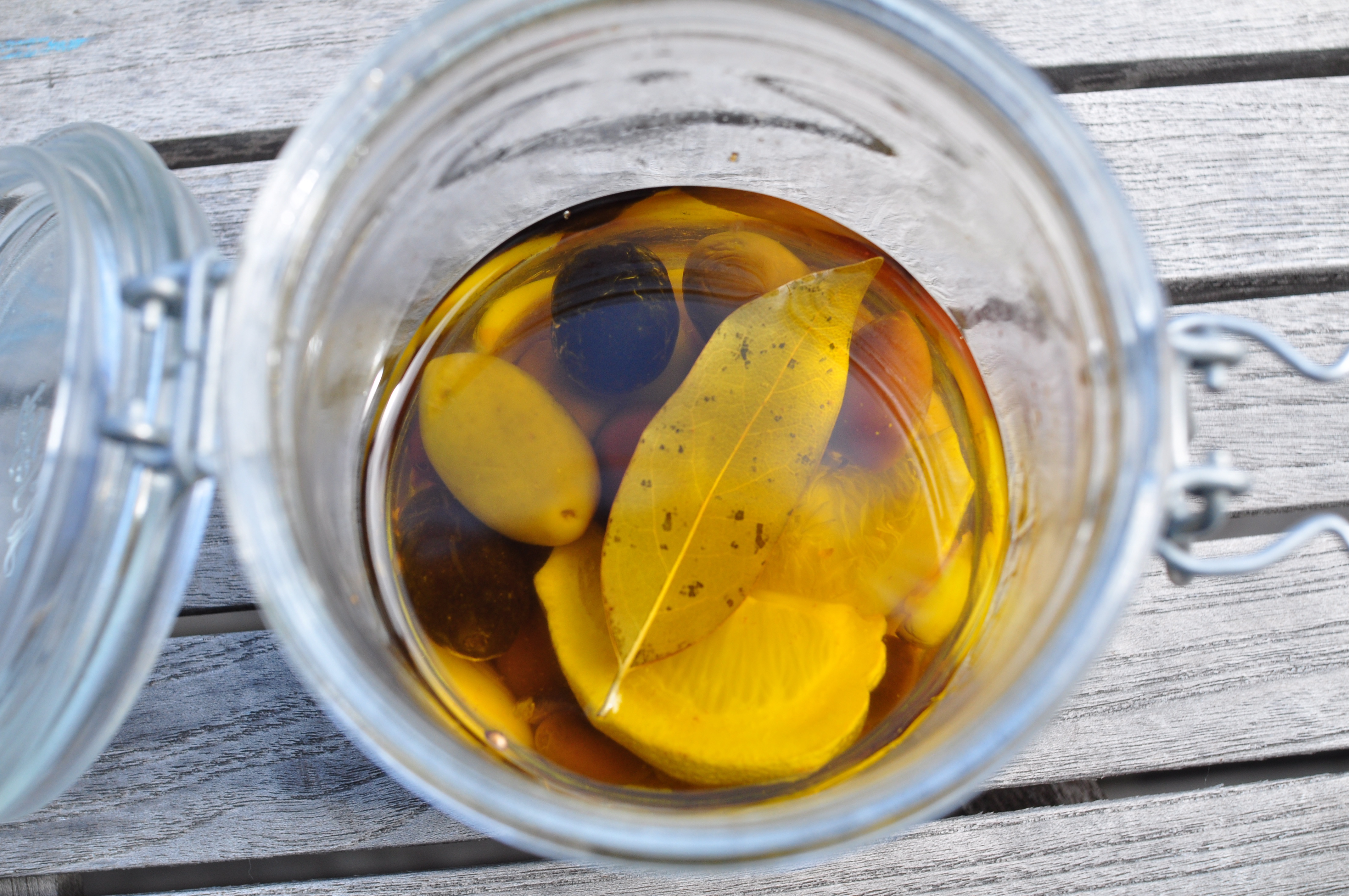
We usually serve olives as part of an aperitif, but between dinner invitations, they often end up forgotten at the back of the fridge. To avoid throwing olives away, and to ensure a ready supply for any unexpected visitor, I started keeping a large jar of marinated olives on hand on my kitchen counter. It’s practical, avoids waste, and the olives are very good.

***

Olives, any mix of green, black, Picholine, Kalamata, Cerignola, Niçoise, etc – or just one kind

Coriander seeds, coarsely ground in a mortar

Black peppercorns

Garlic cloves

Bay leaves

Dried red chillies

Lemon wedges

Olive oil

***

Mix the olives with the coriander, peppercorns, whole garlic cloves, bay leaves, lemon wedges, and chillies. Put in a jar and cover generously with olive oil. **Anything that is not submerged will become moldy.** Place a lid on the jar but do not close it hermetically, as the olives need to breathe.