Food news | October

30 October 2018

Possibly the biggest news among the food besotted this month was the release on Netflix of Samin Nosrat’s four-part series Salt Fat Acid Heat, and it has become something of phenomenon in our house as well. We began watching casually one rainy Sunday, initially just a taste, to bridge a moment until the last family members gathered to see a film. Mesmerized, we were still hooked two and a half episodes later, when we finally did pause to watch the aforementioned film. We’ve since seen all the episodes and now, every time I cook, Balthasar checks that I’ve considered and included each of the four cardinal components for the perfect dish.

Equally momentous, the legendary Tokyo Tsukiji fish market has closed in order to relocate to a new modern, sanitised facility. Historic, legendary for its tuna auctions, the market was known as possibly the biggest and certainly the best marketplace for seafoood in the world, and had in recent years become a popular tourist destination. Its relocation is mourned and decried by many. In a happy coincidental twist, Tsukiji features briefly in Nosrat’s second episode Salt, set in Japan.

To afford the larger picture and keep historic change in perspective, the NY Times also recently published an article about the changes currently affecting Rungis, the world’s biggest food market, which in 1969 famously and controversially replaced the ‘Belly of Paris‘  — Le Halles in central Paris.

And as we approach the season of vanillekipferl, this thought-provoking insight into the socio-economic implications of vanilla production.

For those of us often irritated but perpetually fascinated by the definitiveness of stars, awards, and ratings, this month saw the publication of the Observer Food Monthly Awards as well as the new Michelin Guide for Great Britain and Ireland.

Finally, when there is barely enough time to read — let alone watch tv — but endless hours walking, this is the best food podcast I have encountered. I came to it by way of Diana Henry’s conversation with Olia Hercules, and every other episode I’ve since listened to has been remarkable.

IN BRIEF

READ:
Tsukiji market in Tokyo closes for relocation
Changes at Rungis food market in France
The socio-economic impact of vanilla production
Observer Food Monthly Awards 2018
Michelin Guide GB and Ireland 2019

LISTEN:
Prince Street podcast

WATCH:
Salt Fat Acid Heat

Illustrious plum torte

6 October 2018

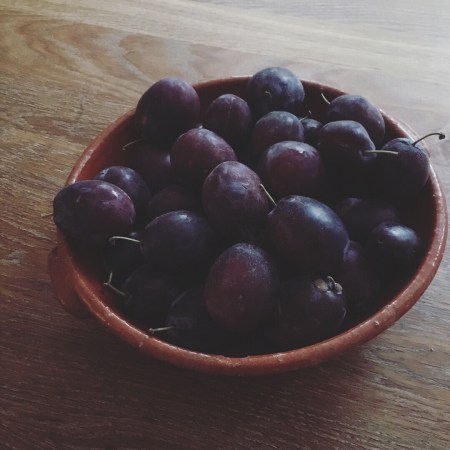
I buy plums because how can I not, in the momentary season that will soon give way to an endless monotonous expanse of apples and pears?

Five days later they are still on the kitchen counter and, miraculously, apparently intact, without the dispiriting tinge of fermentation that has all too often come to taunt me with an accusatory waft of neglect.

It is high time to use them up, and I am hesitating between jams and quick compotes, just as a friend writes to say she is coming to London and can she stay with us. Of course, as always. And so it will be cake.

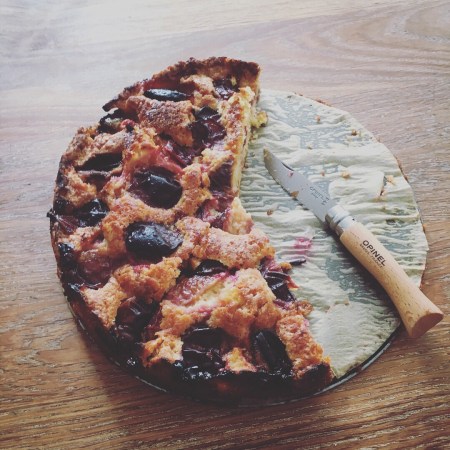
I could have made either of the ones already on these pages (here and here), but my attention is turned elsewhere. I want to bake Marian Burros’ illustrious plum torte, which I’ve heard about and read about for years and decades, but, just as those impulsively purchased plums, neglected too often, too long.

The recipe* was first published in the New York Times in 1983, and every fall thereafter, during peak plum season, for the next twelve years. When they decided to stop publishing it, with the last printing in extra large type ‘with a broken line border to encourage clipping,’ the paper was nonetheless assailed by angry letters. It is said to be the most requested and most often published recipe in the newspaper’s archives, and is usually described as famous, iconic, one of the newspaper’s most popular recipes.

It could seem difficult to come on the trail of so much lore, but astoundingly, after all those years, the cake lives up to its reputation. I won’t regret that I hadn’t made it before, I’m just glad it has become part of my dream plum life.

*The recipe was allegedly given to Burros by Lois Levine, her co-author on the 1960 Elegant But Easy Cookbook.

Marian Burros’ plum torte (<— click link to the original recipe)
I have doubled the recipe and substituted ground almonds for some of the flour. I preferred to omit the cinnamon.

250g (1 1/2 cups) sugar
225g (1 cup) unsalted butter
210g (1 1/2 cups) flour
75g (1/2 cup) ground almonds
2 tsps baking powder
Pinch of salt
4 eggs
15 to 20 plums
Brown sugar and juice from 1/2 a lemon for topping (and 1 tsp ground cinnamon or cardamon, why not?)

Heat oven to 175°C (350°F). Line with parchment paper and butter a springform pan about 25cm (10″) in diameter.

Leave the butter to soften at room temperatire until easy to mix.

Wash and cut the plums in half lengthwise, removing the stones.

Beat the butter and sugar with a wooden spoon until creamy. Add the flour, ground almonds, paking powder, salt, and eggs and stir well.

Spoon the batter into the dish. Place the plum halves skin side up all over the batter so they fit snugly. Sprinkle with a little brown sugar and a good squeeze of lemon juice (and a spice if using).

Bake for about an hour until a knife inserted in the centre of the cake comes out fairly clean (the cake will remain moist from the plum juices). Cool before eating. As with most cakes, it will taste even better the next day, covered and left at room temperature.

Classic French tomato tarte with mustard

20 September 2018

img_5142

From memory, it was in Elle magazine; one of a sweeping collection of recipe cards, cut out along the dotted line, neatly organized, in a couple of bright orange bakelite boxes, color-coded and arranged by dish — starter, meat, dessert, etc. — most probably from the nineteen eighties. My mom’s.

This, at least, is how I remember it. Neither my mother nor my sister can recall where the recipe for this tarte — the clever combination of tomatoes with sharp mustard which mellows as it cooks — really comes from. In fact, it seems to be part of the French subconscious. As I was trying to corroborate the recipe’s origin I realized that according to the usual web search engines, in France ‘tarte à la tomate’ automatically defaults to ‘et à la moutarde.’

Regardless of whether it actually did once appear in Elle, there is no doubt that it is a French classic, and in my view firmly anchored in the 1980s. There are tomatoes, Emmental, mustard, a sprinkling of dried thyme at most. No fancy flours in the crust, no fresh herb flourishes.

I break these rules sometimes and add a few cut herbs, or substitute Comté for Emmental. But at heart the combination of tomatoes, mustard, and cheese remains. Its simplicity is testament to a recipe classic.

We make versions of it every summer, often on days when there isn’t a plan but always an enormous stash of tomatoes at different levels of tenderness that need rapid eating.

Tomato tarte with mustard

One uncooked savory pie pastry (see the basic recipe below or this unsweetened shortcrust)
Strong Dijon mustard
Hard cheese such as Emmental (or Comté), grated
Tomatoes, sliced
Sea salt and freshly ground black pepper
Dried or fresh thyme (also oregano, basil)

Preheat the oven to 400°F (200°C).

Roll out the pie crust and carefully transfer to a well-buttered pie dish. Poke the crust all over with a fork (so it won’t puff up as it bakes).

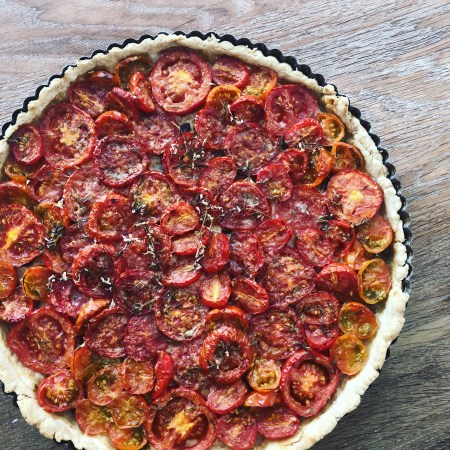
Spread a generous amount of mustard over the crust (like a shmear of cream cheese, the sharpness will mellow as it cooks). Sprinkle the grated cheese all over the crust. Arrange the tomato slices on top. Season with salt and pepper and thyme (or other herb).

Slide into the oven and bake for 20 to 30 minutes, or until the crust is golden, the tomatoes cooked, and the juices bubbling.

Serve immediately.

***

Quick savory pie pastry

100g cold butter
200g flour
A pinch of salt
A little ice-cold water

Cut the butter into 1/2 inch (1 cm) chunks.

Prepare the flour and salt in a large bowl. Mix in the butter with your fingertips, crumbling the butter and flour together until most of the butter chunks have become grains, but other larger bits remain. Add a little ice water, just enough to gather the crust into a smooth ball. (It’s important not to overhandle the dough, which will ensure that it remains flaky when cooked.)

Let the rest dough rest, covered, in the refrigerator, for at least one and up to 24 hours.

If the dough has been in the refrigerator for a few hours, allow a little time for it to soften before rolling it out.

Nettle soup aka ‘Stone Soup’

14 September 2018

I think of it as stone soup.

During our summer holidays in Brittany, nettle soup is always top of the list of meals we look forward to making. Still, the intent usually lies dormant until a fateful evening when we are caught off-guard with no dinner plan. There are always nettles about: in the bits of garden that haven’t been mowed, in the field at the bottom of the drive where a solitary horse used to live. The horse is long gone, the field remains ‘le champ du cheval.’ Armed with wellies, gloves, scissors, and a basket, it won’t take longer than ten minutes to gather dinner.

According to the folk tale Stone Soup, with just a soup kettle, water, a stone as decoy, and some craft, a clever traveller fools one mean farmer (or, depending on the version of the story, the inhabitants of a whole village) into relinquishing vegetables, one at a time, little by little, in order to make that initial ‘stone soup’ — a stone in a pot of water — taste better and better.

In my fairy-tale summer, the nettles are the stone, the nothing. Like that stone, they’ll need a bit of a boost in terms of depth and unctuousness. An allium of some sort, a couple of potatoes, a zucchini — all of which weren’t donated by villagers but are the neglected, long-term squatters of the vegetable crates in the cellar.

And in reality, nettle soup is the very opposite of stone soup. It has, it is true, sprung from nothing. But unlike the stone — ultimately discarded — the nettles are the very essence and raison d’être of the meal.

Nettle soup
Since the main idea of the soup is its fortuity, the ingredients and quantities are just indications. But the nettles must remain the focus, they should not be overpowered by the other vegetables.

A big bag of young nettle leaves
Butter
1 or 2 small onions or shallots, finely chopped
A few garlic cloves
2 medium potatoes, peeled and cut into chunks
Some chicken stock if available
Depending on season and availability, a few of the following:
Leeks, zucchini (courgettes), carrots, fennel, etc (all of which need to be washed well or peeled and cut into slices)
Crème fraîche to serve

With a pair of gloves to avoid getting stung, pick fresh young nettle stems (in season in spring and summer) especially the most tender part close to the tip.

(Still protected by gloves) pick the leaves off the stems and wash thoroughly in a large bowl of cold water. Drain and set aside.

In a large soup pot, melt a few tablespoons of butter. Add the chopped onions (or shallots). Sweat for a few minutes until translucent but not yet turning in color. Add a couple of garlic cloves and cook for a minute longer.

If using leeks, add to the onions and garlic now. Cook for about 3 to 5 minutes.

Add the potatoes and any other vegetables and immediately cover well with water or/and chicken stock (there should be enough liquid to account for the nettle leaves later). Bring to a slow simmer and cook for about 15 minutes until the vegetables are tender.

Add the nettle leaves and cook for just a few minutes, until they are wilted and soft but still bright green! (Add a little boiling water or stock to cover the leaves if necessary.)

Remove from the heat and purée the soup until unctuous using a hand mixer or, in batches, in a food processor.

Finally, a game-changing tip from my peripatetic sister — inspired by the Egyptian soup molokhia: Just before serving, smash or finely chop a couple cloves of garlic and cook in a puddle of butter in a corner of a skillet. Remove just as it turns golden and stir into the soup immediately before serving.

Garnish with crème fraîche if desired.

Fig leaf wine apéritif

1 September 2018

Some people will consider this the first weekend of autumn, but, succomb as I may to those plums and first apples, I am holding on firmly to summer for a few more weeks if I can.

I prepared this fig leaf apéritif about a week ago. As it only takes a few days to infuse, now is still the time to make a bottle for those last late summer evenings. There won’t be much of a thematic clash, September is fig season after all.

This recipe is particularly exciting for those of us who live in the North, as it just uses fig leaves. For all optimistic boreal gardeners and green city dwellers (many London gardens have a fig tree stretching its branches above the fence within reach of the sidewalk…), who monitor those trees with anxiety and trepidation, monitoring the evolution of each fruit, this is the solution.

Even if the figs never ripen there is a path straight to Provence with this apéritif.

The recipe comes from Thom Eagle via Diana Henry about two years ago. It bears repeating every year.

Fig leaf wine

10 fig leaves
One bottle (75 cl) dry white wine
160 g sugar
One giant glug of vodka

Crumple the fig leaves and place them in a clean jar with the white wine, sugar, and vodka. Stir or shake well, and leave to infuse for 3 to 5 days.

Strain out the leaves and pour into a bottle with a tight lid.

Serve over ice.