Exciting times. Part I.

15 October 2013

Much has happened since June, the last time I published something here, and it was all good. A whirlwind. Busy, very busy. Fun too, sometimes stressful, exciting, beautiful, a little unnerving at times, but all good.

We packed up our life

IMG_9639

How do you say goodbye to the place where you’ve lived for 14 years? Not really.

IMG_9513

We spent time with friends

IMG_9687

We went out

IMG_9733

We may have revisited a coffee shop bench

IMG_9742

We had lunch!

IMG_9760

Oh, New York, you’re not making this any easier…

IMG_9782

One last glimpse and it’s time to go

IMG_9791

Hello London!

IMG_9830

We found a park

IMG_0716

And decided to build our life around it.

Buying local | Butter

24 June 2013

DSC_0400

For a while I practically gave up on butter. I wasn’t aware of it immediately, it was a few years later that I realized, with some puzzlement, how indifferent I’d become.

When I moved to New York 14 years ago, though I was already very keen on cooking as a means to gather friends around the table, I wasn’t yet too obsessed about daily ingredients. I was busy working and loving it and finding a life in this somewhat intimidating city.

I didn’t go out of my way to seek just the right product, except for friends when I would gladly trek to all corners of the city to find the elusive squid ink and fish bones for that black risotto. Day to day, without really noticing it, I just stopped eating certain foods, mistaking and too quickly dismissing industrial blandness for ‘different to what I was used to at home.’ In any case, we went out practically every night.

DSC_0386

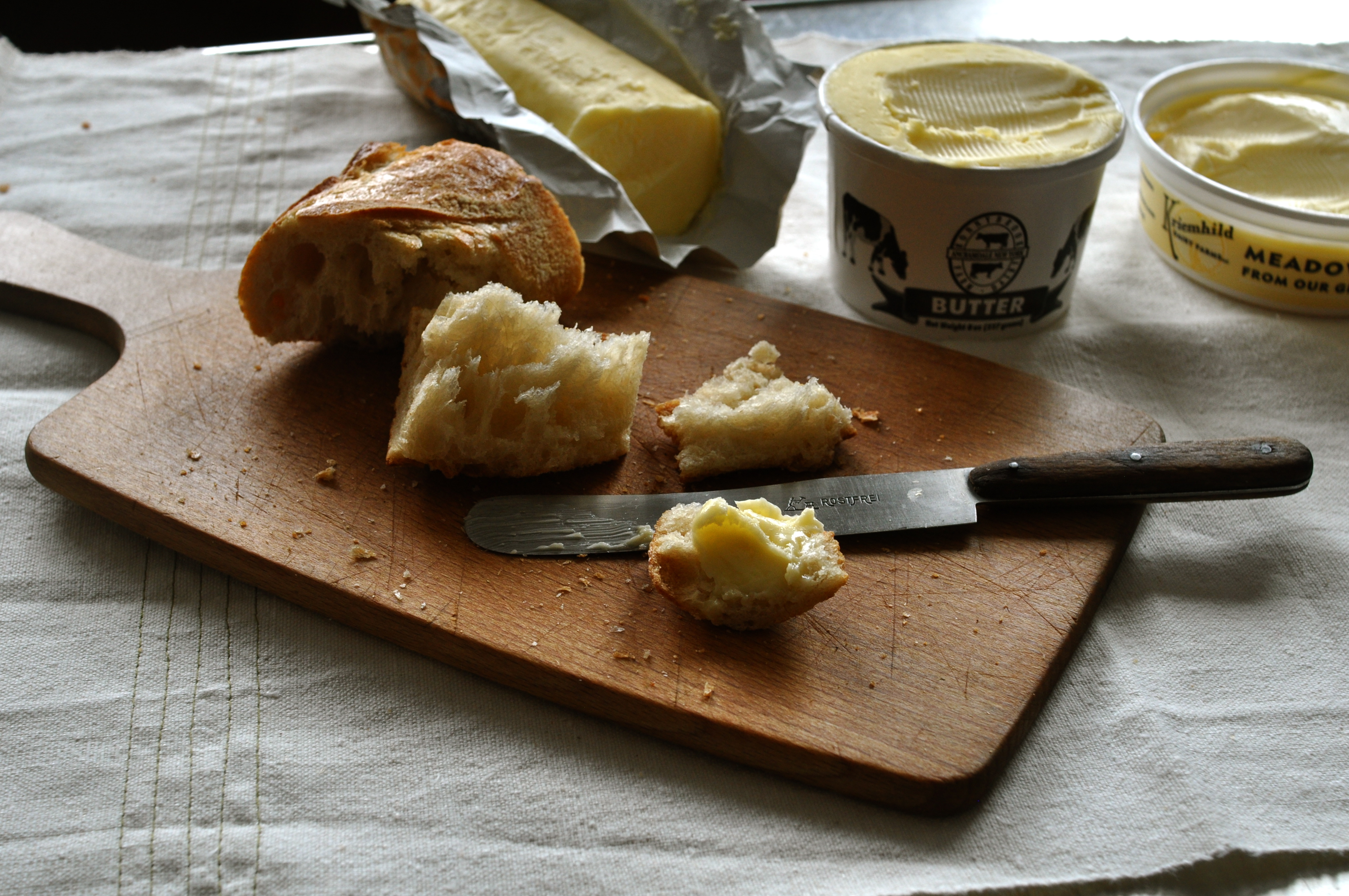
So, among other things, I never bought chicken, and I stopped liking butter. When one day — I don’t remember who or when — someone commented on the transcendent quality of bread and butter, I realized I had stopped caring. How could this have happened?

I decided I must right the many years of neglect; I started buying butter from France. This didn’t strike me as terribly sensible, practical, or environmentally responsible, but it was tasty. Until I became attuned to real butter, good butter, made relatively close by in upstate New York, or the Northeast at the very least.

DSC_0420

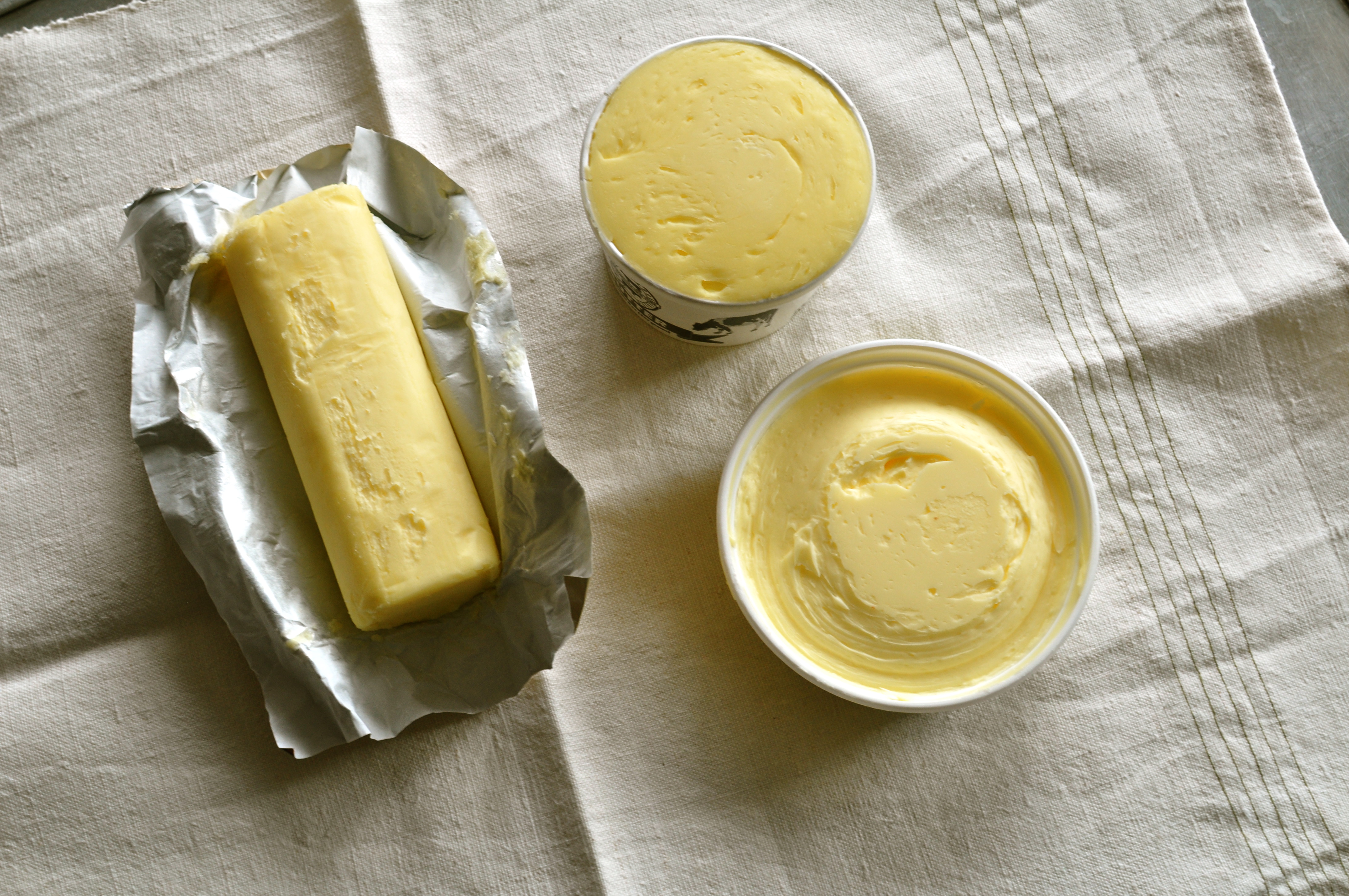
At first there was essentially Ronnybrook. Now a number of other butters have become quite readily available, and more seem to appear at the market and in stores every day. Here is a small sampling of butters that are most easily found at markets and supermarkets in New York.

Kriemhield Meadow Butter — the best — is from grass-fed cows, with a high fat content (crucial). It is very tasty and assertively salty.

Ronnybrook — old habits die hard — is always in the fridge (we often have three, four, sometimes five different kinds of butter at a time. Ahem.). This one is mild in taste, even the salty version. Good for everyday.

Vermont European Style Cultured Butter from Vermont Creamery and Kate’s Homemade Butter are local-ish and definitely better than the average mega-brand, but not all that tasty.

Despite all its local-ish, organic, and grass-feddedness, I didn’t much like Natural by Nature’s Salted Whipped Sweet Cream Butter. It has much lower fat content than the other butters, and therein lies the rub.

Mackerel rillettes

15 May 2013

DSC_0016

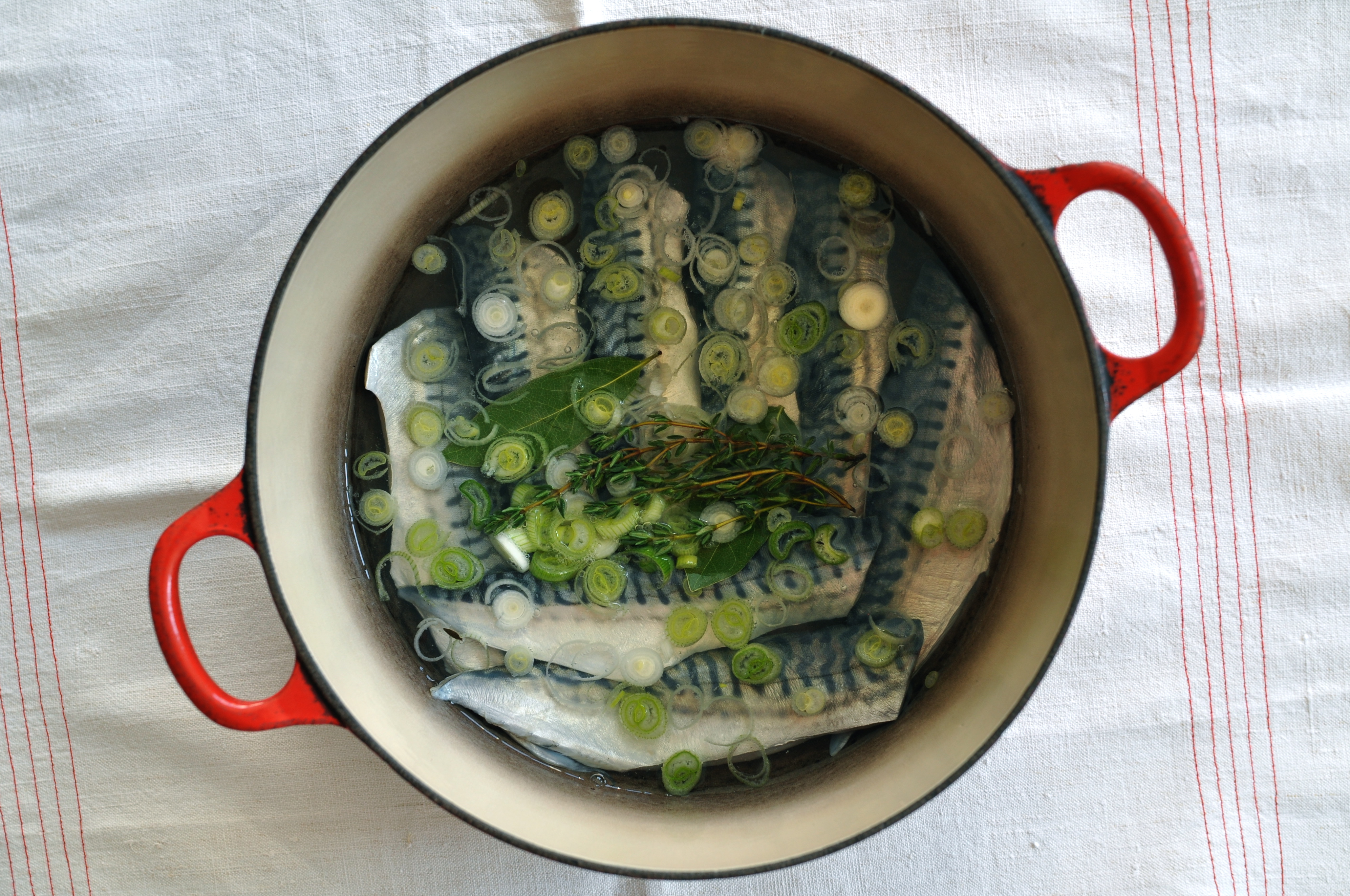
Sometimes food happens without much forethought or planning. I could have pondered it for weeks, in fact I’ve been wanting to make these for years, but when I bought mackerel fillets at the market last week I had no plan; a quick weeknight dinner at best. Rillettes were far from my thoughts, lurking behind the distant corner of a hazy summer memory. But as I contemplated dinner for friends and something that could easily be made ahead, I found myself searching for mackerel rillettes recipes.

So this is adapted from one by Annie Bell, modified to suit what I had on hand. It was delicious.

*

Recipe adapted from Mackerel Rillettes by Annie Bell

8 small mackerel fillets

2 bay leaves

2 stems fresh garlic (or 3 garlic cloves)

Few sprigs fresh thyme

100 ml dry white wine

100 ml water

1 lemon

3 Tbsps very good olive oil

Fleur de sel or sea salt and freshly ground black pepper

Place the mackerel fillets flat at the bottom of a pan, add the bay leaves, garlic, thyme, wine, and water. Bring to a gentle boil, simmer for 1 minute and remove from heat. As soon as the liquid is cool enough, take out the fillets and flake the fish, taking care to remove any remaining bones.

Place the cooking liquid back onto the stove, cook for a few minutes until ireduced to a couple of tablespoons.

In a medium bowl, combine the mackerel gently with the reduced liquid, the juice from 1/2 lemon (the other half for serving), and 3 Tbsps very good olive oil. Season with fleur de sel or sea salt and fresh ground pepper.

Transfer to a serving bowl or jar and place in the refrigerator for at least an hour and up to 2 days.

Serve with bread and butter, and a generous squeeze of lemon.

DSC_0014

Related posts

Cheat’s potted crab

Baked mackerel with mustard and thyme

Pork rillettes

Stewed dried fruit

13 April 2013

DSC_0299

My intention was to make Louisa’s cake, which I’ve craved since I first saw it two years ago. And since I had no ricotta at home I thought making my own, as I’ve also been wanting to do for a long time, would be the perfect, lazy Saturday morning, we’ve-been-away-and-I-haven’t-cooked-in-a-week sort of project. So I set forth, resolutely and with a tinge of excitement, salting and boiling cream and milk, when I realized there was no cheesecloth at home, either.

Perhaps it was the slow pace induced by a gorgeously sunny, cold week by the sea, cycling, walking, eating, and generally just being, but I was completely stumped. Not for a moment; for many minutes, an hour maybe. Just standing there in the kitchen, wondering what in the world I might do with two liters of salty milk, and what dessert might be on a post-vacation weekend. The invitation was a last minute thing, too.

I thought about the stewed fruits, something I used to make often, in winter especially, but rarely do anymore, for no particular reason. We usually have dried fruit around the house, and though a bit short on prunes to my taste, there was a good enough mix for my purpose.

A few hours had gone by, the morning behind us, and the milk still on the stovetop, so I decided to make a very dense, creamy yogurt to go with the fruit, as I’d done before.

All went quite well from then on. I added bay leaf to my usual recipe, and was very pleased with the result. Of course, the yogurt was nowhere near being set in time for dinner, but I had some commercial greek yogurt handy, too.

My salty yogurt is still sitting in the fridge. I’ve been thinking of making cheese, but for that I’d need some cloth.

*

This dessert is very good and extremely easy. Adapted from Jüdische Küche by Elizabeth Wolf-Cohen.

200-250 g (1 1/2 cups) dried figs

200-250 g (1 1/2 cups) dried apricots, preferably unsulphured

200-250 g (1 1/2 cups) prunes

100-150 g raisins

(Also dried apples, pears, unsweetened dried pineapples, as desired, adjusting the quantities to have enough syrup to cover all the fruit)

2 lemons

4 Tbsps honey

6 or 7 cloves

1 or 2 cinnamon sticks (depending on their size)

About 20 peppercorns

1 bay leaf
*

Make a syrup with 2 l (8 cups) water, the rind and juice from the lemons, the honey, cloves, cinnamon, peppercorns, and bay leaf. Bring to a boil and simmer for 5 minutes.

Add the figs (and pears if using) and simmer for 10 minutes.

Add the apricots (and apples and pineapple if using) and simmer for another 10 minutes.

Finally, add the prunes and raisins and simmer for a final 10 minutes (total stewing time 30 minutes).

Let the fruit cool in the liquid then refrigerate for a few hours at least before serving with thick yogurt or crème fraîche. (Remove peppercorns, cloves, and bay leaf before serving, or warn your guests.)

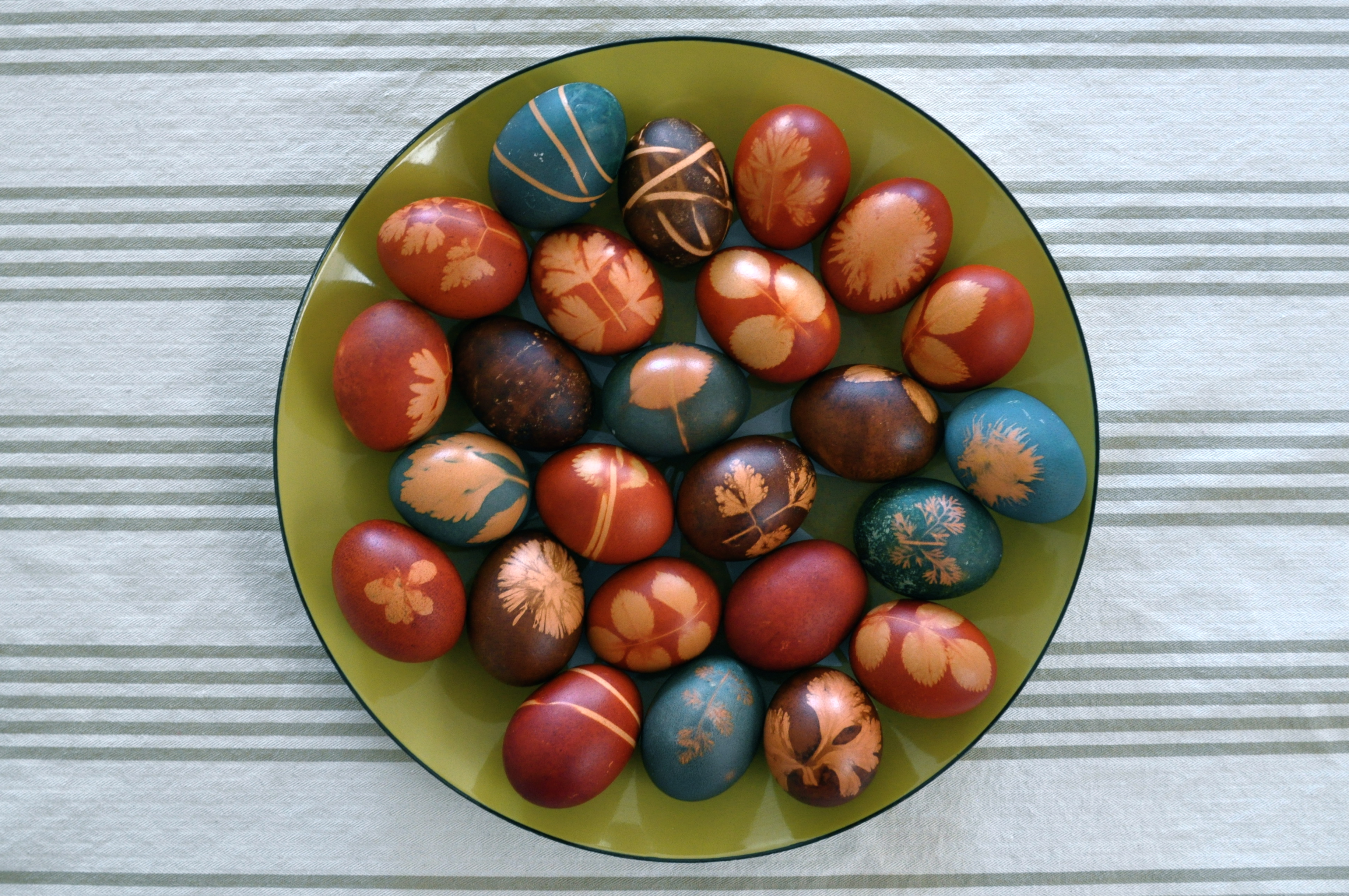
Dyed Easter eggs with leaf or flower motif

28 March 2013

DSC_1386

We have dyed eggs this way for as long as I can remember.

My grandparents lived in Switzerland, a place straight out of a storybook, and I have many Heidi memories, running up mountains and down meadows with cows in the field nearby, an isolated chalet in the distance, and the Alps all around. Summer smells of sunshine and succulents can conjure up those memories unexpectedly, but I sometimes invoke them willfully, through rituals like these: every year for Easter I dye eggs with leaf patterns, as we used to do.

In Switzerland we easily found natural dyes at the pharmacy (they are still readily available): walnut husks for deep brown, dried mallow petals for blues, and all sorts of bark for variations of yellow, orange, and red. But here in New York I’ve been compelled to use everyday ingredients, fruits and vegetables — even better?! If only they’d worked. For years I was woefully unsuccessful with all vegetable dyes except onion skins, which are brilliantly reliable and produce a stunning deep brick red.

DSC_1379

I was on the verge of writing off homemade colors, had I not recently been taunted by blogs and photos posting deep-hued eggs tinted with spinach, turmeric, red cabbage… Why not me? I’d been using the wrong method. During all those years of stubbornly prepared and pitifully useless homemade dyes I had followed the instructions remembered from the little Swiss packets: hard-boil the eggs for 12 to 15 minutes directly in the colored liquid. This did work with onion skins but other vegetables left no trace on the shells whatsoever. Determined to get something out of my cabbage after all (and wised-up by some online reading) this time I waited for the liquid to cool, plunged the already hard-boiled eggs into the dye, and left them in the refrigerator overnight. Magic!

This time I’ve made the experiment with red cabbage only, but I know it is the way to success, and I see a bright multi-colored Easter-egg future ahead.

DSC_1172

Red eggs = onion skins, blue eggs = red cabbage, brown eggs = walnut husks brought back from Switzerland

Approximately 2 cups packed onion skins

Approximately 3 cups shredded red cabbage

18 to 24 eggs

White vinegar

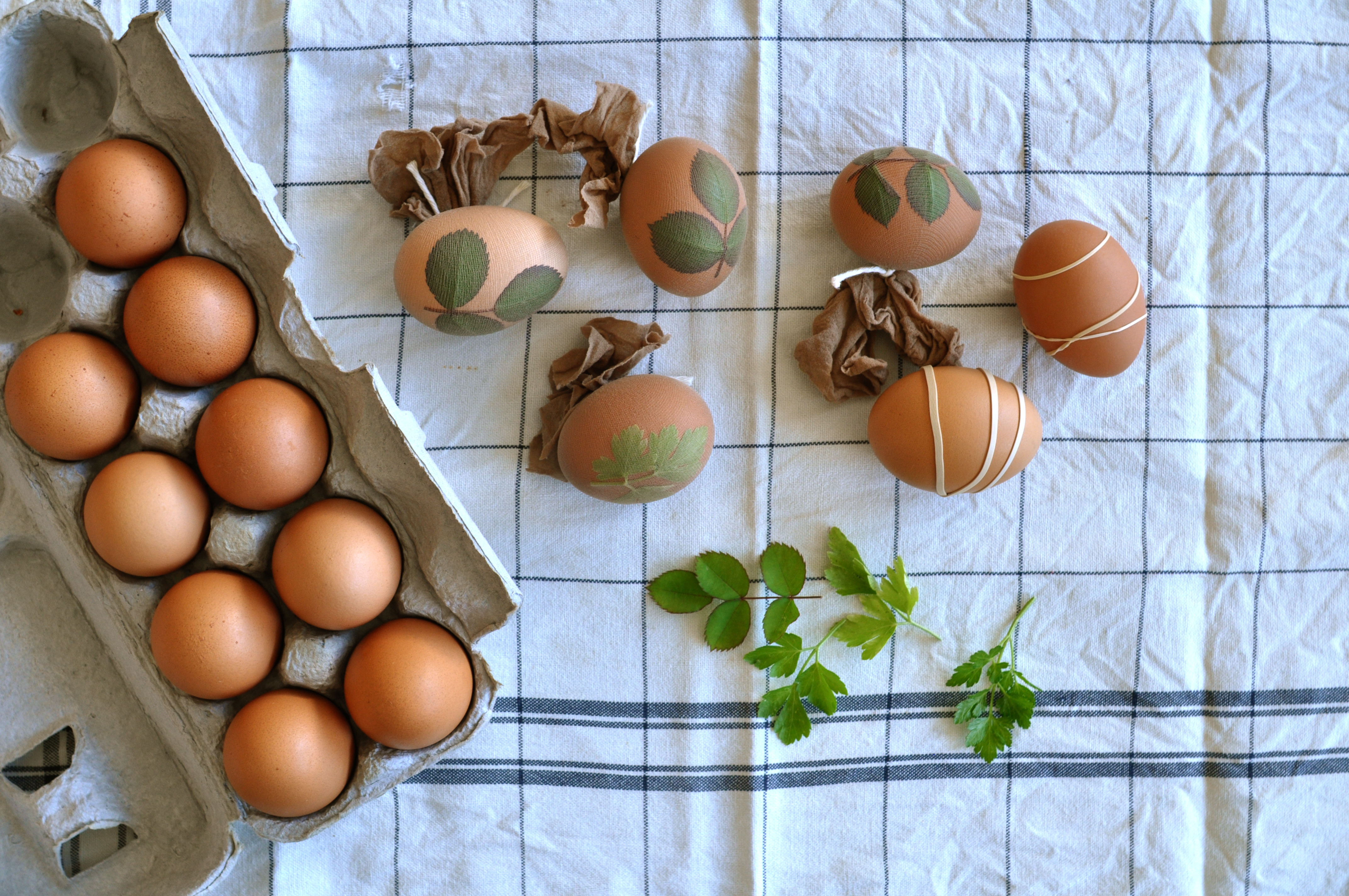
Freshly picked leaves and flowers

Old/cheap tan stockings

Kitchen string

*

Prepare the dyes in two medium saucepans: about 8 cups of cold water for 2 cups of onion skins and about 6 cups of cold water for 3 cups of shredded red cabbage. Bring to a boil and simmer gently for about 30 minutes. Let cool.

Meanwhile hard-boil the eggs: bring a large saucepan of water to boil, gently place the eggs inside, and simmer gently for 12 minutes. Run immediately under cold water. Let dry and gently rub the eggs with a little white vinegar.

Cut the stockings into 3-inch (8-cm) squares approximately.

Place a leaf or flower onto the egg; carefully place the stocking over the leaf and tighten the stocking over the egg by gathering it at the back, thereby gluing the leaf to the egg. Twist the stocking to tighten as much as possible then bind it with a piece of string. **Alternatively, we also just tie rubber bands over the bare egg to create line motifs.**

Place the eggs in large jars, pour the cold dye over the eggs, and leave in the refrigerator until the egg acquires the desired hue (this can take anywhere from a few hours to a day, as desired).

Cut the stocking at the string and carefully remove it and the leaf (or flower) to reveal the design. **Be mindful not to scratch the egg as the dye can rub off while it is still wet.**

Once the eggs are dry, rub with a little oil for shine.

 DSC_1178

*

Related posts

Happy Easter!