Posts Tagged ‘food’

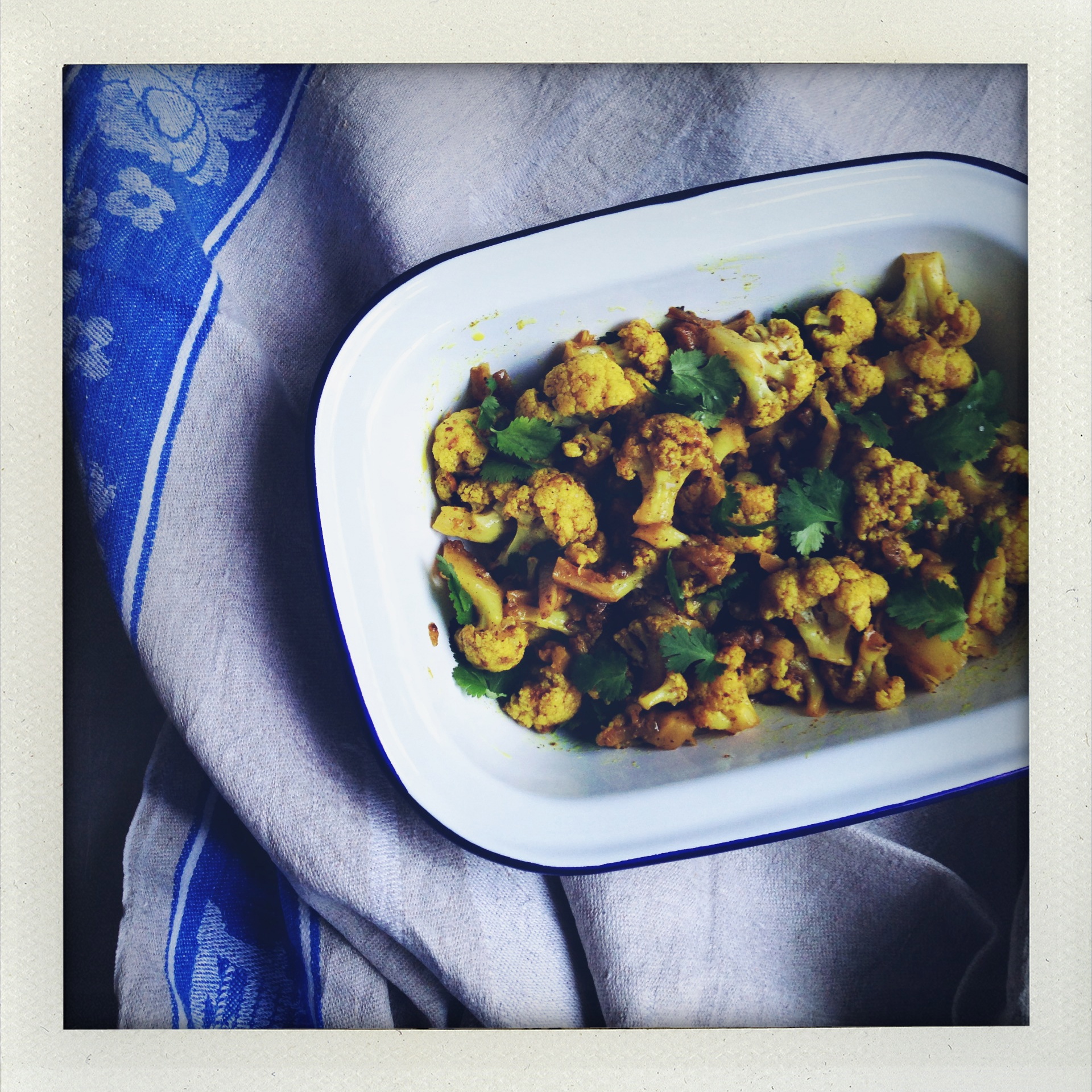
Brilliant spiced cauliflower

11 December 2014

IMG_6706

A recipe to arouse the taste buds amid the cloying seasonal onslaught of cookies and chocolate, Glühwein and Christmas punch. Cauliflower is a demure vegetable, and this method teases it from fading bystander to zesty leading lady.

I first tasted this elegantly spiced cauliflower at Newman Street Tavern a few weeks ago. It was so good, so unexpectedly addictive, that we asked for the recipe. More precisely, my friend asked, I didn’t exactly dare. What’s more, it wasn’t the first time that evening — the server had just brought from the kitchen the handwritten instructions for an incredible fennel and watercress soup. Asking for another recipe from that delicious meal was pushing it a bit far, surely? Or perhaps not. It was of course, evidence of our appreciation.

Brilliant spiced cauliflower, adapted from Newman Street Tavern, with thanks
I had to extrapolate a little, especially for the spice mix, as there were no measurements. I’ve tested the recipe a couple of times and I believe this version comes close.

1 tsp cumin

1 tsp coriander seeds

1 tsp fennel seeds

1 star anise

2 tsps sweet paprika

1 1/2 tsp turmeric

1 pinch saffron threads

3 cloves garlic

3-inch piece of fresh ginger

Sea salt

Olive oil

1 medium onion

3 small tender celery stalks

1 cauliflower

Freshly ground black pepper

Sherry vinegar

Freshly squeezed lemon juice

Fresh dill and/or cilantro leaves

In a small skillet, gently toast the cumin, anise, coriander, fennel. Just enough to coax out the aroma (be careful not to burn the spices!). In a small blender, grind to a fine powder together with the turmeric, paprika, and saffron.

Crush the garlic and grate the ginger and mix into a paste with one teaspoon salt.

Peel and finely dice the onion. Cut the celery stalks into paper thin slices.

Wash and cut the cauliflower into small florets.

In a skillet large enough to fit all the cauliflower florets in one layer, heat enough olive oil to generously coat the pan. Throw in the spice mix and stir for a few seconds, then very quickly add the garlic/ginger paste. Cook for barely a minute then add the onion and celery. Add a little oil if necessary. **Again, be very careful not to burn the spices!**

Fry the onion and celery until translucent then add the cauliflower florets with a splash of water.

Cook for just a few minutes, until al dente.

To finish the dish, season with salt and pepper, a splash of sherry vinegar and squeeze of lemon juice. Garnish with plenty of dill and/or cilantro leaves.

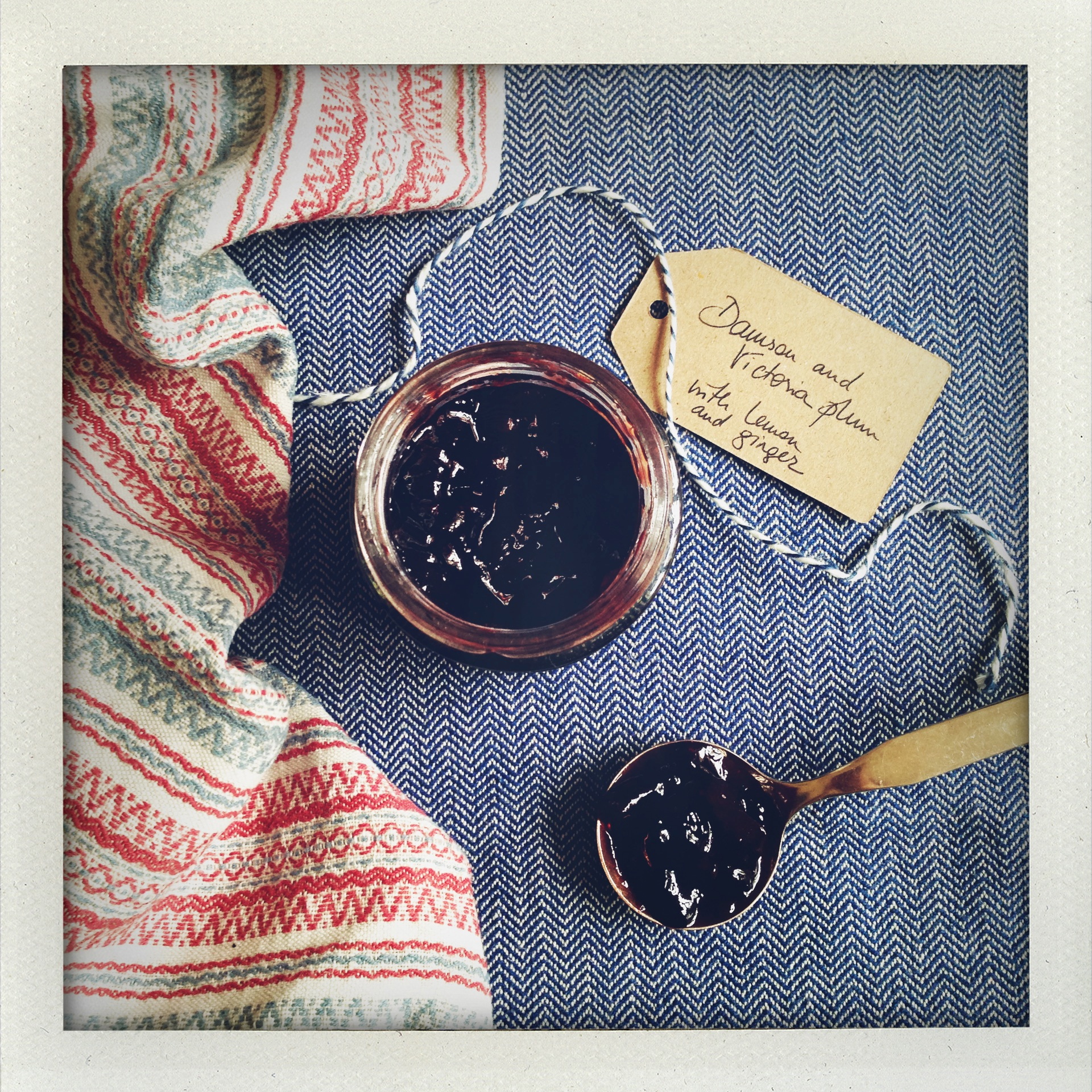
Damson and Victoria plum jam with lemon and ginger

4 October 2014

IMG_6265

Because, since I discovered how conveniently jam can be coaxed to fit into a schedule not wholly devoted to making jam, I am unstoppable. And plums are irresistible, come fall.

For this jam I used two varieties common in England: sweet, plump Victorias and austere Damsons. The Damson’s astringency smoothed by the honeyed Victorias, together they dance in perfect plum harmony, with a zing.

Damson plums are a bit finicky to pit, until you realize that using a cherry pitter — which I do own but, until now, used only very rarely, since I don’t usually pit the cherries for my clafoutis — a cherry pitter works a charm. And as a bonus I was happy to discover a second use for that woefully underutilized kitchen gadget.

IMG_6511

900 g Damson plums (to yield 700g once pitted)

800 g Victoria plums (to yield 700g once pitted)

1 kg sugar

Juice and rind from 1 lemon

1-inch piece of fresh ginger

Wash and pit the plums. Put them in a bowl with the sugar and lemon juice and leave to marinate for a few hours or overnight.

When ready to cook the jam, transfer to a heavy bottomed saucepan. Add a ribbon of lemon rind and the ginger, peeled and cut into coin-size pieces.

Bring the fruit to a boil and simmer for 20 to 30 minutes. After about 20 minutes, check regularly whether the jam begins to jell. A good way to do this is to scoop a spoonful of jam into a small bowl or ramekin, place it in the refrigerator so it cools quickly, and check whether it solidifies.

Meanwhile, sterilize the jars in boiling water for 5 minutes.

As soon as the jam is ready, remove it from the stove, take out the lemon rind and pieces of ginger, and transfer the hot jam into the jars. Seal tightly, and, as usual, store for a few weeks at least before opening.

The best (roasted) leeks

23 September 2014

IMG_4132

Leeks are in season again. After a long bountiful summer of tomatoes, zucchini, artichoke, beans and tomatoes, more tomatoes — fall vegetables are back at the markets and it’s the time to start roasting.

This is not only my favorite way to prepare leeks, it’s one of my favorite ways to prepare vegetables, period, and leeks are incredibly versatile and always a hit.

They are a stellar companion alongside simply grilled fish and lentils. Or together with braised carrots and a roast chicken. I make them with a good steak and very crispy roasted potatoes. The possibilities are endless.

Roasted leeks
This method is inspired by the wood-roasted vegetables from The River Cafe Cookbook Two (yellow). It is not exactly a recipe, and can be adapted to other vegetables and modified using different vinegars (apple cider, sherry) or perhaps lemon juice, and an array of herbs (rosemary, sage, marjoram, chillies…) depending on the mood. It is especially important to use very good quality ingredients.

Leeks

Balsamic vinegar

Red wine vinegar

Garlic cloves

Olive oil

Fresh thyme

Salt and freshly ground black pepper

Preheat the oven to 375ºF (190ºC).

To clean the leeks, trim the roots at one end and darker leaves at the other, peel off the tough outer leaves, keeping only the tender green and white hearts, and thoroughly wash of any grit. Cut the stalks into 2-inch (5cm) pieces, then halve each of these lengthwise.

In a large bowl, create a dressing of sorts with the vinegars, crushed garlic, olive oil, and picked thyme leaves. As in a vinaigrette, the proportions should be approximately two thirds olive oil, one third vinegar(s). In this case I would do half balsamic/half red wine.

Toss the leeks in the dressing until well coated. Season generously with salt and pepper. Place the leeks in an oven-proof dish large enough to fit them in one layer. Slide the dish into the oven and roast for a good hour. Every 20 minutes approximately, gently toss the leeks. The leeks should be well caramelized and meltingly tender. Don’t hesitate to leave them in the oven a little longer than you think.

Super simple summer salads | Green beans and tomato salad with a mustard dressing

16 August 2014

photo(31)

Most of our summer lunches are leftovers complemented by pâtés, cheeses, bread, and salads. This French classic is one of my favorite. It is also a particularly good companion for grilled pork chops or slow roasted lamb shoulders.

Green beans

Very good tomatoes (preferably heirloom)

Small red onions (fresh if possible)

Fresh mint

Fresh basil

1 Tbsp strong mustard

2 Tbsps red wine vinegar

Pinch sea salt and freshly ground black pepper

6 Tbsps olive oil

Dash balsamic vinegar

Trim and wash the green beans.

In a large saucepan, bring salted water to boil and cook the beans for 5 to 10 minutes depending on how al dente and crunchy you like them. Plunge the beans in ice water so they stop cooking and retain their color. Let cool completely (they can be kept for a few hours before using).

Wash and cut the tomatoes into wedges of approximately the same size.

Peel and slice the onions crosswise as thinly as possible.

Wash and chop the mint and basil.

Prepare the dressing in a jam jar: first mix the mustard, vinegar, salt and pepper. Shake well. Add the olive oil, shake well again. Add the balsamic vinegar, shake again. **This makes a generous quantity of dressing. Use only just enough to coat the beans – they shouldn’t be drenched in the sauce. Keep the rest of the dressing for another salad.**

Dress the beans lightly, toss, and arrange on a plate. Add the tomatoes, onions, and herbs. Toss again gently, and serve.

Related posts

Avocado, cherry tomato, and cucumber salad with red pepper and parsley

Apricots roasted in verbena honey syrup

9 July 2014

I am completely in love with this dessert.

For years I have in vain chased the apricots of my childhood; intensely ripe, cooked by the provençal sun to a sweet compote in every bite. Nothing comes close, and so year after year I have spurned apricots on every shelf, sighed in resignation.

While I don’t expect to resuscitate these childhood memories here in London, I have found a recipe to reconcile my love of apricots.

The original is one for apricots with vanilla and chamomile. I was excited, when I received it from a friend through the unlikely channel of an email recipe exchange, as I had just planted lots of chamomile seeds. But not one of the seeds has grown; a few months later and I don’t have the slightest shadow of a chamomile flower. However I do own a small lemon verbena plant.

photo(27)

Apricots roasted in verbena honey syrup, adapted from a recipe by Allison Parker

12 apricots
1 cup (200 g) sugar
1 cup water
3 small twigs fresh lemon verbena
3 Tbsps mild liquid honey (borage honey worked beautifully)

Preheat oven to 350°F (175°C)

Wash the apricots, slice them in half, remove the pits.

In a small saucepan, bring the sugar and water to a boil, stirring occasionally to dissolve the sugar. Reduce the heat, add the verbena and honey, and simmer gently for about 10 minutes.

Pour the syrup into a pan which will fit all the apricots in one layer. Place the apricots in the syrup, cut side down, and spoon a little syrup over each hump of fruit.

Roast in the oven (rack in the upper third, so the apricots get blushed from the heat) for about 10 minutes. Turn the apricots over, baste with syrup, and roast for another 5 to 10 minutes, until soft.

Let cool and serve at room temperature, with a big dollop of clotted cream, crème fraîche, or thick yogurt.

DSC_0106