Archive for the ‘Holidays’ Category

Basic | Sweet pie crust

10 May 2011

This pie crust is ideally light and flaky. It works very well for practically any fruit tarte, except — mildly ironically in this context — the walnut tarte for which I made it on Saturday. For that singular tarte, unlike others I usually make in that it is fairly rich, this pie crust is a bit too sweet and buttery. For every other tarte (or even pumpkin pie), it is excellent. It is the galette dough recipe from Chez Panisse Café Cookbook.

There are endless minute variations on pie crust recipes, some of which involve the size of the pieces of butter or the temperature of the ingredients. These do make a difference, and I think another crucial aspect is how the dough is treated. It should always be barely handled – delicately with the fingertips and never the palm of the hand. I think of it as the opposite of kneading.

***

From Chez Panisse Café Cookbook

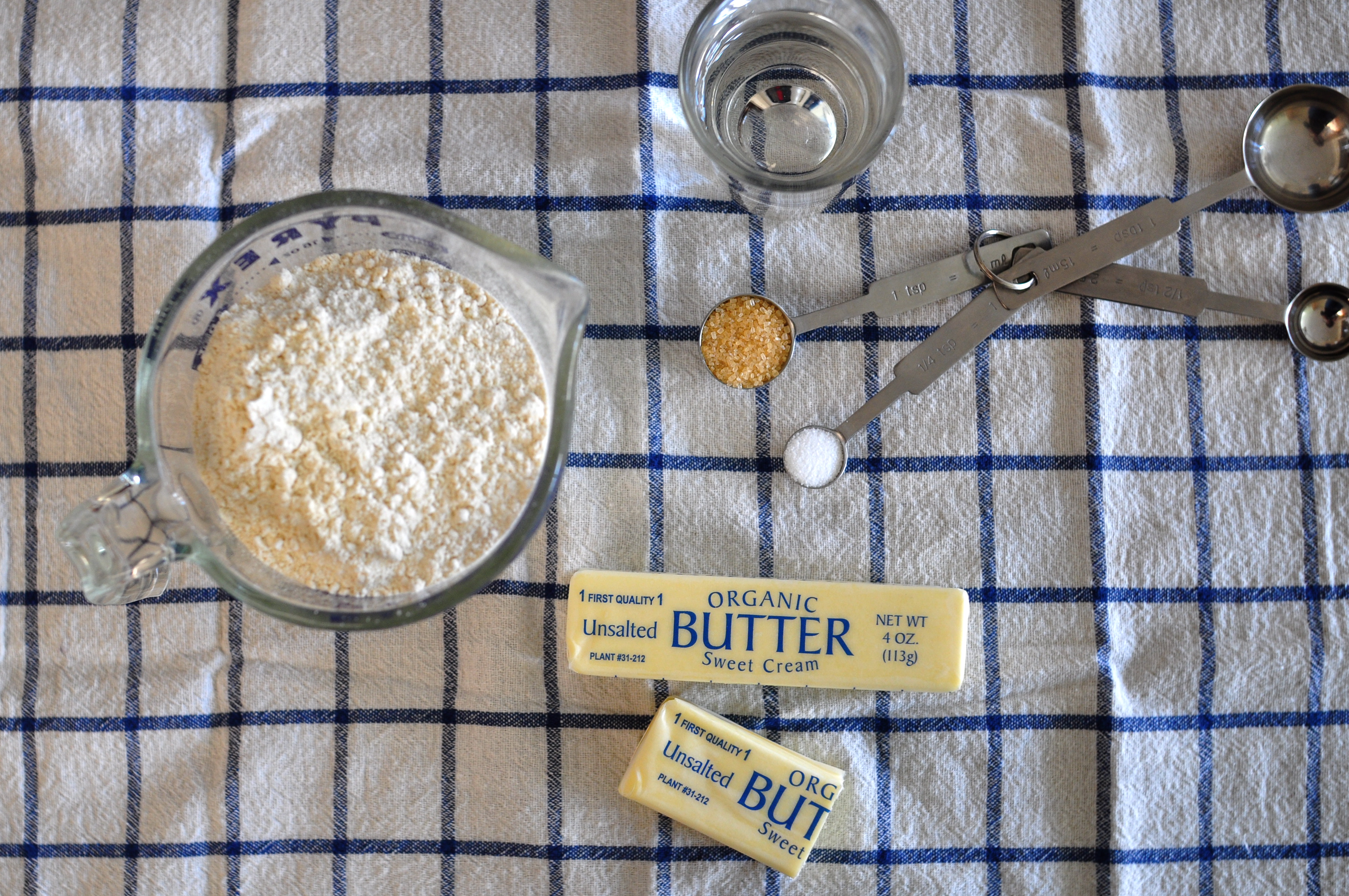
3/4 cups (170g) unsalted butter

2 cups (200g) flour

1 tsp sugar

1/4 tsp salt
Place a small glass of water in the freezer.

Cut the butter into 1/2-inch (1 cm) pieces.

In a large bowl mix the flour, sugar, and salt.

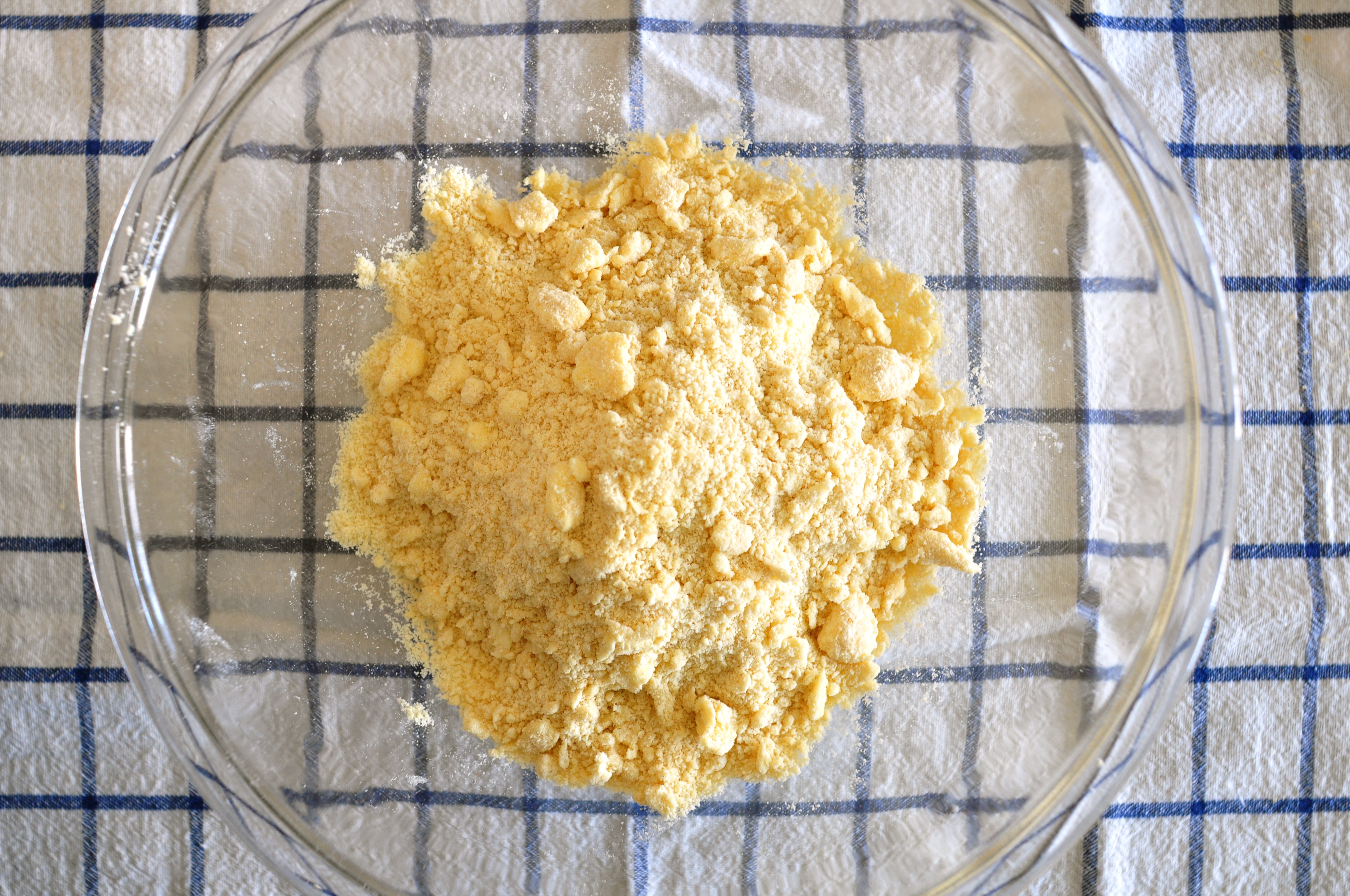
Gently work half of the butter into the flour mixture with fingertips until dough has the texture of coarse oatmeal. Add the rest of the butter and work it into the dough quickly, stopping as soon as the largest pieces of butter are the size of lima beans.

Add the ice cold water, a few drops at a time, carefully bringing the dough together into a ball. Stop adding water as soon as the dough adheres, but some flour is left in the ball (the dough should not be sticky).

Flatten the ball of dough, cover in plastic wrap, and refrigerate for at least an hour and up to 1 day.

Remove dough from refrigerator and allow about 15 minutes for it to soften with the ambient heat and become easy to handle.

Generously butter the pie pan.

Lightly dust a clean, flat surface with flour and roll out the dough into a circle until it is 1/8 inch (1/3 cm) thin.**This dough is very buttery, so to prevent it from sticking to the the floured surface I turn it at the beginning then regularly lift it, all the while adding a little flour on either side and on the rolling pin.**

To transfer the dough to the pie pan, gently fold it in half once, then fold it in half again, and carefully place the folded dough in the pie pan, positioning the angle in the center. Unfold, press gently onto the pan and sides, and cut off excess dough from the edges. Slip the pie crust in the refrigerator for at least 1/2 hour before using.

Lentil and fennel salad with lemon and parsley

28 April 2011

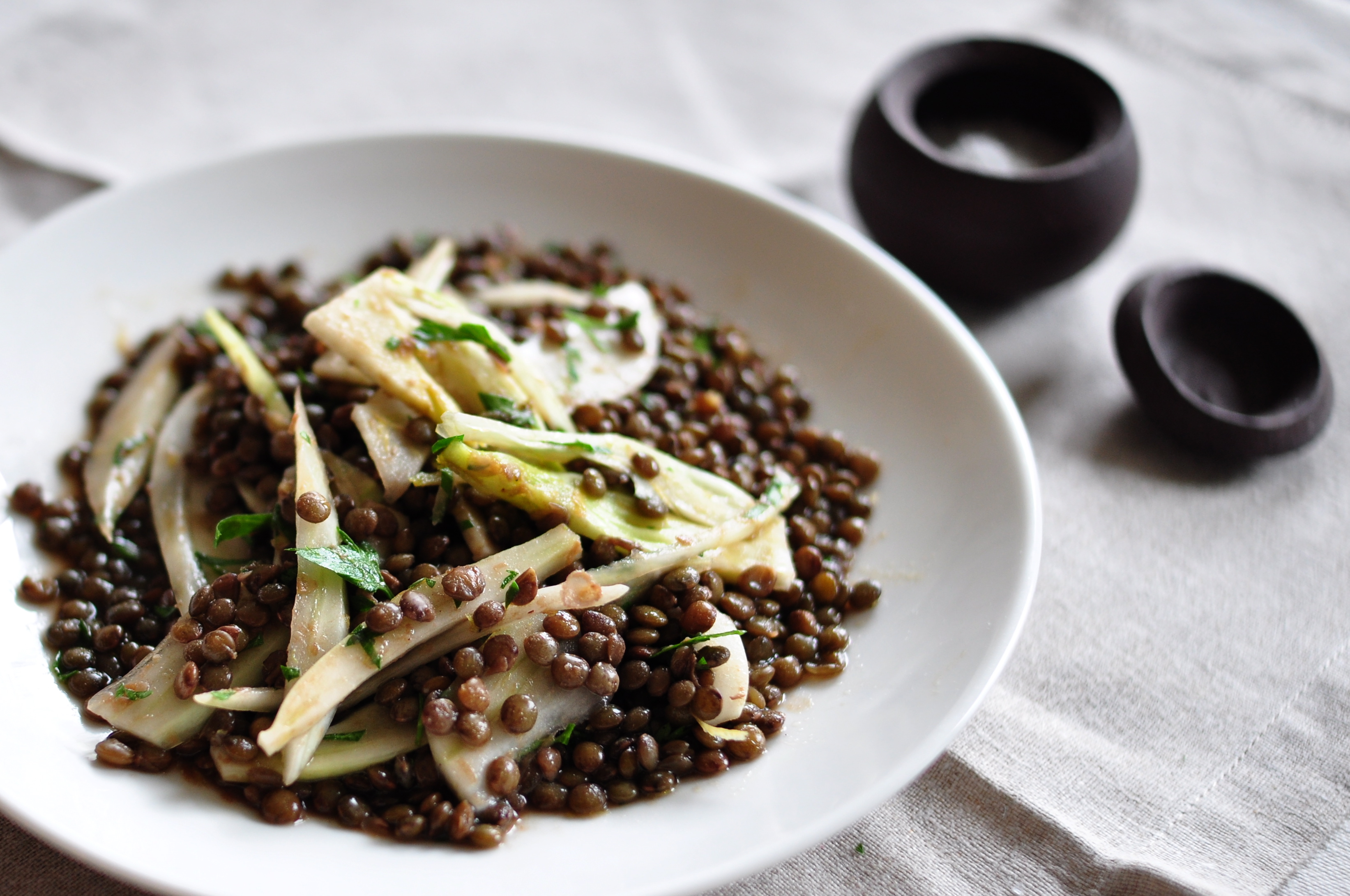
I made this salad for Easter lunch on Sunday. I imagined it as I went. Or so I thought.

Many people liked it a lot, and one friend in particular complimented me on the originality of the pairing. I graciously accepted the comment, but all the while something in the back of my mind was nagging. Surely I had not really come up with the idea. I must have seen it somewhere. Speaking to my mother on the phone the next day I asked her about this salad. Had she not previously made something similar that might have half-consciously inspired me?

My mother is an incredible cook, and a nutritionist. Not a steamed-carrots-and-brown-rice kind of nutritionist. She loves good food, really good food. Meat, fish, vegetables, salads, desserts, and – yes – butter. She has written a few books about nutrition, one of which is a book of recipes. Sure enough, one of those recipes is a lentil salad with fennel, parsley, and coriander.

This lentil and fennel salad is different, but the inspiration – as it turns out and like so many other things in my life without my realizing it at first – is my mother’s.

***

1 cup green lentils (preferably Castelluccio or du Puy)

1 small red onion

2 bulbs fennel

A generous handful flat-leaved parsley

1 bay leaf

3 Tbsps good olive oil

2 Tbsps balsamic vinegar

Juice and zest from 1 lemon (more lemon juice may be required depending on how juicy it is)

Flaky sea salt and freshly ground black pepper

*

The lentils are cooked the same way as for this basic lentils recipe

Pick through the lentils to look for small stone intruders that must be discarded.

To wash lentils, cover with cold water and drain in a fine mesh sieve.

Peel and cut into large chunks the onion and half a fennel, reserving the rest of the fennel for later.

Place lentils into a medium-sized saucepan with 2 cups (double the volume) water. Add vegetable chunks, a few sprigs of parsley, and the bay leaf. Bring to a boil and let simmer, covered, for about 20-25 minutes. Remove from heat when the lentils are cooked to your liking – I like them to retain a nice bite. Discard sprigs of parsley and vegetable chunks, pour lentils into a large bowl, and place in the refrigerator for a few hours or overnight.

*

Wash and finely chop the rest of the parsley.

Cut the fennel in half. Place it face side down onto the cutting board, and cut into thin strips, height-wise.

Season the lentils with the olive oil, balsamic vinegar, lemon juice and zest, salt, and pepper. **The measurements given above are suggestions. I find that lentils hold up to a bold amount of acidity. It is best to season gradually, and adjust according to taste.**

Toss the lentils with the fennel and parsley. Check one last time for seasoning, adjust if necessary, and serve.

*

Related posts

Lentils

Dandelion, fennel, and pumpkin seed salad with pumpkin seed oil

Happy Easter!

25 April 2011

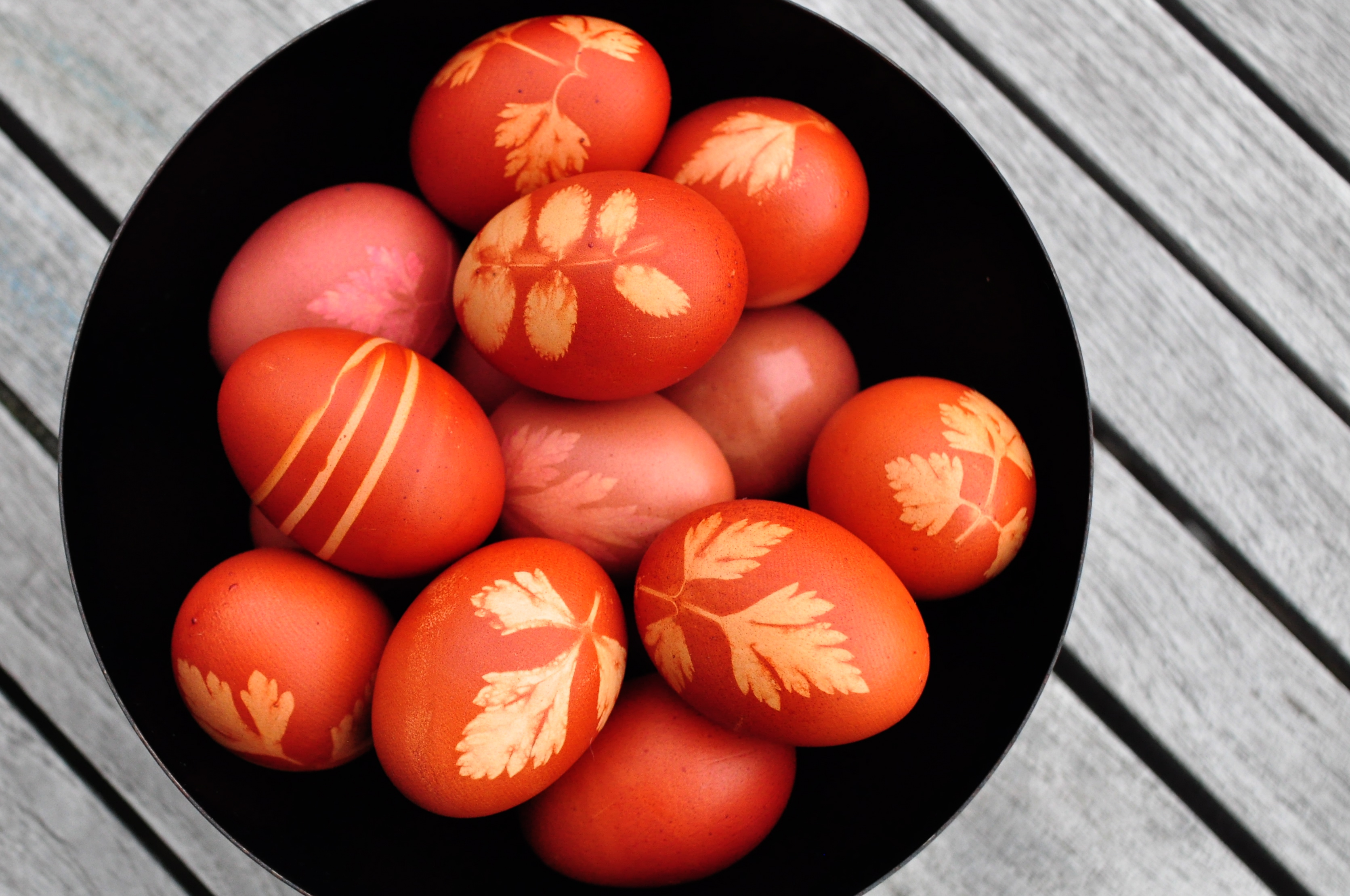
My grandmother taught me how to eat Easter eggs. You have to be two. Each person holds one hard-boiled egg gently but tightly in their fist, with only the tip of the egg exposed. Then the eggs are crashed one against the other. The egg that doesn’t break is the winner and can continue the egg-crashing contest with other contenders.

The consolation for losing at this game is that you can eat your egg immediately.

To eat a hard-boiled Easter egg:

1) peel the egg

2) slice it in half crosswise

3) remove the yolk from each half carefully, without it crumbling

4) pour a little olive oil and a few drops of red wine vinegar in the cavity left by the yolk

5) place the yolk back on top and sprinkle with a pinch of sea salt and freshly ground black pepper

6) eat the whole seasoned half egg in one bite

Happy Easter!

Endive salad with apples, walnuts, and comté

27 January 2011

Salads are one of the reasons I look forward to winter. Endive salads in particular, because they are from my childhood, but all the other crisp, bitter, cold-weather greens, reds, and yellows: dandelion, escarole, frisée, radicchio…

In a month or so I may be looking forward to fresh peas and longing for tomatoes, but right now I am excited by the falling snow and this crunchy endive salad. It’s ready in 5 minutes and made a perfect lunch yesterday.

***

4 endives (should be tightly compact, white and pale yellow, without a hint of green)

1 red apple

1/2 lemon

About 8 walnuts

Comté (also Guyère or a hard sheep-milk cheese from the Pyrénées)

5 Tbsps good olive oil

1 1/2 Tbsps apple cider vinegar

Maldon sea salt

Freshly ground black pepper

***

Cut off endive stub and remove one outer layer of leaves. Rinse quickly under running water, shake dry, and slice crosswise into 1/2 inch (1 cm) pieces. Wash apple, cut into quarters, core, and slice quarters thinly crosswise. Immediately toss the endive and apple with the juice from 1/2 a lemon, as they oxidize quickly.

Shell the walnuts and break them into pieces. Cut the cheese into strips about 1 in (2.5 cm) long and 1/3 inch (1 cm) wide. There should be about as much cheese as there are walnuts.

Mix the walnuts and cheese with the endive and apple. Season with the olive oil, vinegar, salt, and pepper and toss well.

Cake with pear and toasted hazelnuts

21 January 2011

Or how a simple cake became slightly more complicated but also much tastier.

It all started last Friday when I decided to bake a simple cake, a classic french Quatre Quart (Four Quarters) which goes something like this: 1) weigh eggs: 2, 3, 4, or more, depending on the desired size of the cake; 2) prepare the same weight in butter, sugar, and flour; 3) mix; 4) bake. It is a practical cake, easy to make anywhere (with a scale). Some recipes call for baking powder, but to me Quatre Quart is a dense cake; when I want something lighter, more akin to Pound Cake, I make Gâteau au Yaourt (Yogurt Cake), another simple formula cake that will find its way into these pages soon enough.

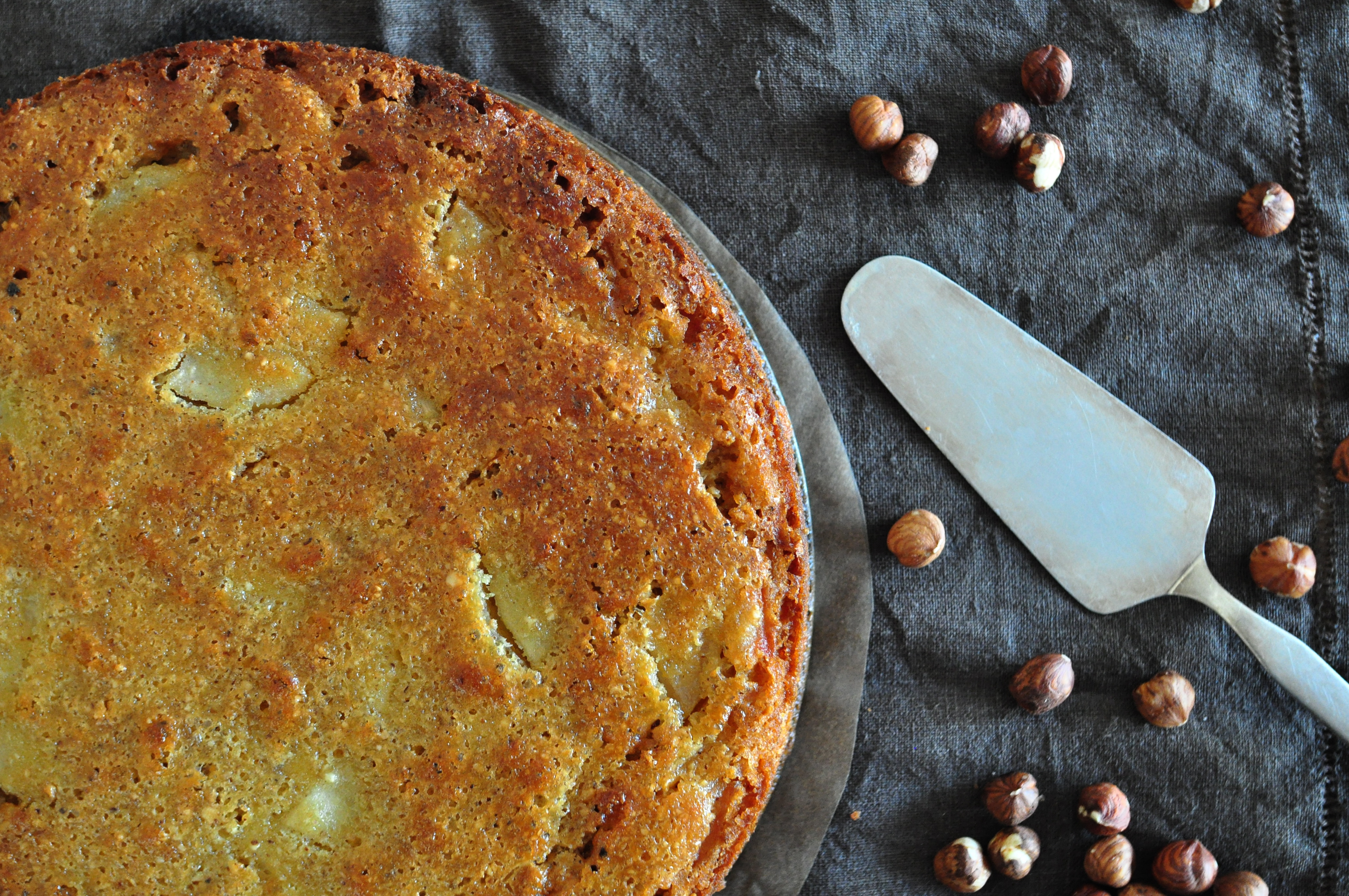
Truthfully, I never just make Quatre Quart – it’s not that exciting as is. But it is a good base for baking improvisation. So I lower the amount of sugar, as a matter of habit; I always add fruit; and I often substitute ground nuts for part of the flour. Last Friday I used pears and hazelnuts and went a bit hard on the sugar. That Very Simple Pear and Hazelnut Cake was easily improved with a hint more sugar and some lemon zest, a second version that I made on Tuesday. It was much better though slightly undercooked (a mere technicality) and I was starting to write down the recipe when I thought “toasted hazelnuts.” The added step makes the cake a bit less simple, but well worth it, and no one here complained about having to eat the same cake three times in one week.

So here it is, Simple Cake with Pear and Hazelnuts – Take 3.

***

1 cup (125 g) hazelnuts

1 1/4 cups (250 g) butter

1 cup (200 g) sugar

4 eggs

1 lemon

1 1/4 cup (125 g) flour

1 tsp salt

5 pears*

*

Preheat oven to 425°F (220°C).

In a roasting tray, toast hazelnuts for about 12 minutes until they begin to darken. As soon as they are cool enough to handle, roughly remove the skins by rubbing the hazelnuts between your hands. Place in a food processor and pulse-chop into a fine flour.

Lower oven temperature to 350°F (180°C).

Cut butter into small pieces and place in a large bowl to soften at room temperature.

Using a wooden spoon, cream the butter with the sugar until smooth. Thoroughly beat in the eggs, one at a time (the dough will be lumpy at this stage), add lemon zest, flour, salt, hazelnuts, and mix well.

Peel, core, and cut pears, first into quarters and then into thin slices about 1/8 inch (3 mm). Squeeze lemon juice over the pieces of pear, toss, and gently combine into the batter.

Generously butter a 10 inch (25 cm) springform pan. Pour batter inside and smooth surface with a large spoon or spatula.

Place pan over a large piece of aluminum foil in the oven for 1 good hour (10 to 15 minutes longer if the pears are very juicy). **Most springform pans leak, the aluminum prevents drops to fall in the oven and burn.** Test with a knife that should come out clean.

As soon as the cake is out of the oven, use a knife to release the cake from the sides of the pan.

*I wanted the cake to have lots of pear, but someone pointed out that 5 pears could create too much juice and make the cake soggy. So if the pears are large, or if they are very ripe and juicy, you may want to use fewer. Another option is to toss the pear pieces very lightly with flour before folding into the cake, this will help absorb some of the juice.