Posts Tagged ‘vegetarian’

Brilliant spiced cauliflower

11 December 2014

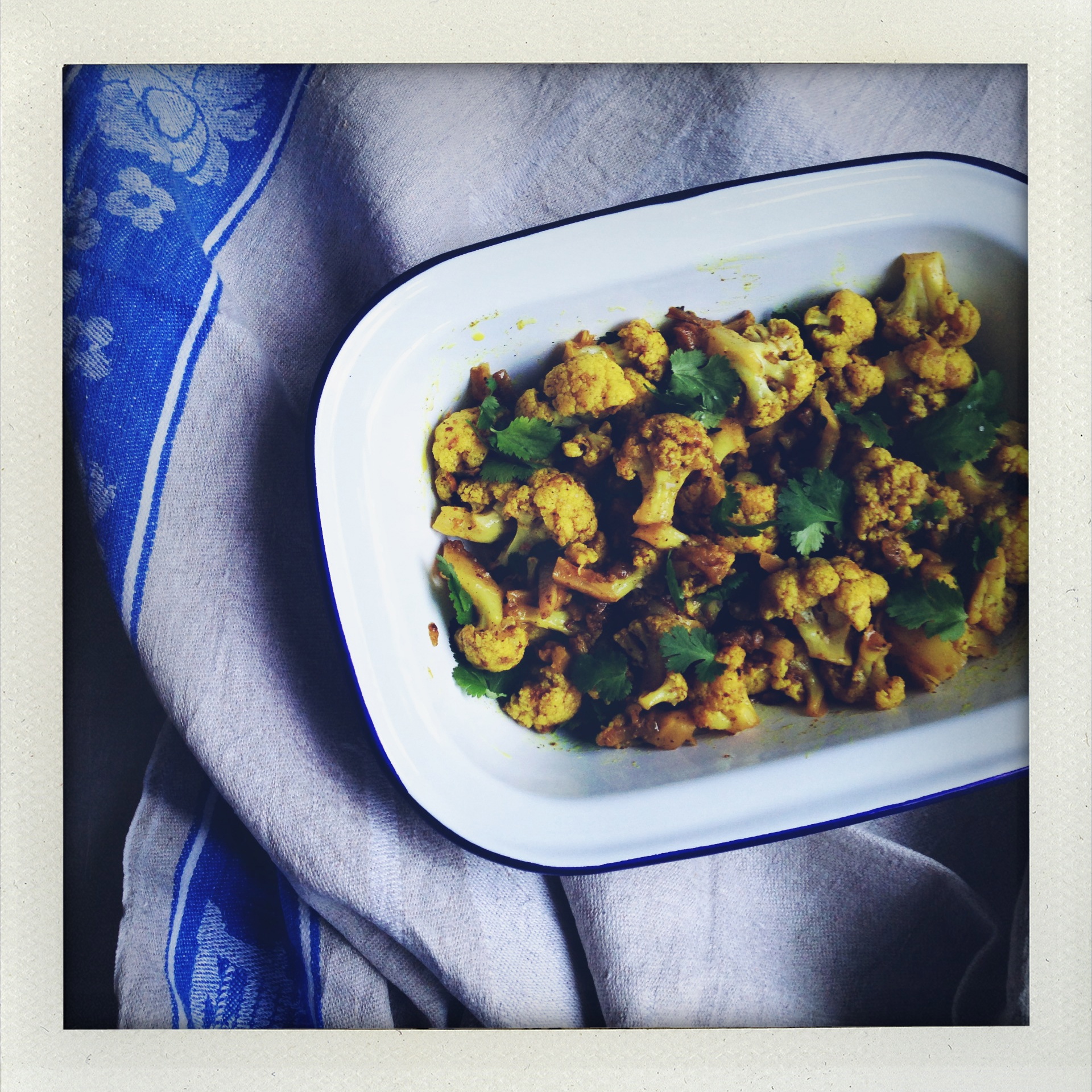
IMG_6706

A recipe to arouse the taste buds amid the cloying seasonal onslaught of cookies and chocolate, Glühwein and Christmas punch. Cauliflower is a demure vegetable, and this method teases it from fading bystander to zesty leading lady.

I first tasted this elegantly spiced cauliflower at Newman Street Tavern a few weeks ago. It was so good, so unexpectedly addictive, that we asked for the recipe. More precisely, my friend asked, I didn’t exactly dare. What’s more, it wasn’t the first time that evening — the server had just brought from the kitchen the handwritten instructions for an incredible fennel and watercress soup. Asking for another recipe from that delicious meal was pushing it a bit far, surely? Or perhaps not. It was of course, evidence of our appreciation.

Brilliant spiced cauliflower, adapted from Newman Street Tavern, with thanks
I had to extrapolate a little, especially for the spice mix, as there were no measurements. I’ve tested the recipe a couple of times and I believe this version comes close.

1 tsp cumin

1 tsp coriander seeds

1 tsp fennel seeds

1 star anise

2 tsps sweet paprika

1 1/2 tsp turmeric

1 pinch saffron threads

3 cloves garlic

3-inch piece of fresh ginger

Sea salt

Olive oil

1 medium onion

3 small tender celery stalks

1 cauliflower

Freshly ground black pepper

Sherry vinegar

Freshly squeezed lemon juice

Fresh dill and/or cilantro leaves

In a small skillet, gently toast the cumin, anise, coriander, fennel. Just enough to coax out the aroma (be careful not to burn the spices!). In a small blender, grind to a fine powder together with the turmeric, paprika, and saffron.

Crush the garlic and grate the ginger and mix into a paste with one teaspoon salt.

Peel and finely dice the onion. Cut the celery stalks into paper thin slices.

Wash and cut the cauliflower into small florets.

In a skillet large enough to fit all the cauliflower florets in one layer, heat enough olive oil to generously coat the pan. Throw in the spice mix and stir for a few seconds, then very quickly add the garlic/ginger paste. Cook for barely a minute then add the onion and celery. Add a little oil if necessary. **Again, be very careful not to burn the spices!**

Fry the onion and celery until translucent then add the cauliflower florets with a splash of water.

Cook for just a few minutes, until al dente.

To finish the dish, season with salt and pepper, a splash of sherry vinegar and squeeze of lemon juice. Garnish with plenty of dill and/or cilantro leaves.

The best (roasted) leeks

23 September 2014

IMG_4132

Leeks are in season again. After a long bountiful summer of tomatoes, zucchini, artichoke, beans and tomatoes, more tomatoes — fall vegetables are back at the markets and it’s the time to start roasting.

This is not only my favorite way to prepare leeks, it’s one of my favorite ways to prepare vegetables, period, and leeks are incredibly versatile and always a hit.

They are a stellar companion alongside simply grilled fish and lentils. Or together with braised carrots and a roast chicken. I make them with a good steak and very crispy roasted potatoes. The possibilities are endless.

Roasted leeks
This method is inspired by the wood-roasted vegetables from The River Cafe Cookbook Two (yellow). It is not exactly a recipe, and can be adapted to other vegetables and modified using different vinegars (apple cider, sherry) or perhaps lemon juice, and an array of herbs (rosemary, sage, marjoram, chillies…) depending on the mood. It is especially important to use very good quality ingredients.

Leeks

Balsamic vinegar

Red wine vinegar

Garlic cloves

Olive oil

Fresh thyme

Salt and freshly ground black pepper

Preheat the oven to 375ºF (190ºC).

To clean the leeks, trim the roots at one end and darker leaves at the other, peel off the tough outer leaves, keeping only the tender green and white hearts, and thoroughly wash of any grit. Cut the stalks into 2-inch (5cm) pieces, then halve each of these lengthwise.

In a large bowl, create a dressing of sorts with the vinegars, crushed garlic, olive oil, and picked thyme leaves. As in a vinaigrette, the proportions should be approximately two thirds olive oil, one third vinegar(s). In this case I would do half balsamic/half red wine.

Toss the leeks in the dressing until well coated. Season generously with salt and pepper. Place the leeks in an oven-proof dish large enough to fit them in one layer. Slide the dish into the oven and roast for a good hour. Every 20 minutes approximately, gently toss the leeks. The leeks should be well caramelized and meltingly tender. Don’t hesitate to leave them in the oven a little longer than you think.

Green asparagus salad with parmesan shavings

30 April 2014

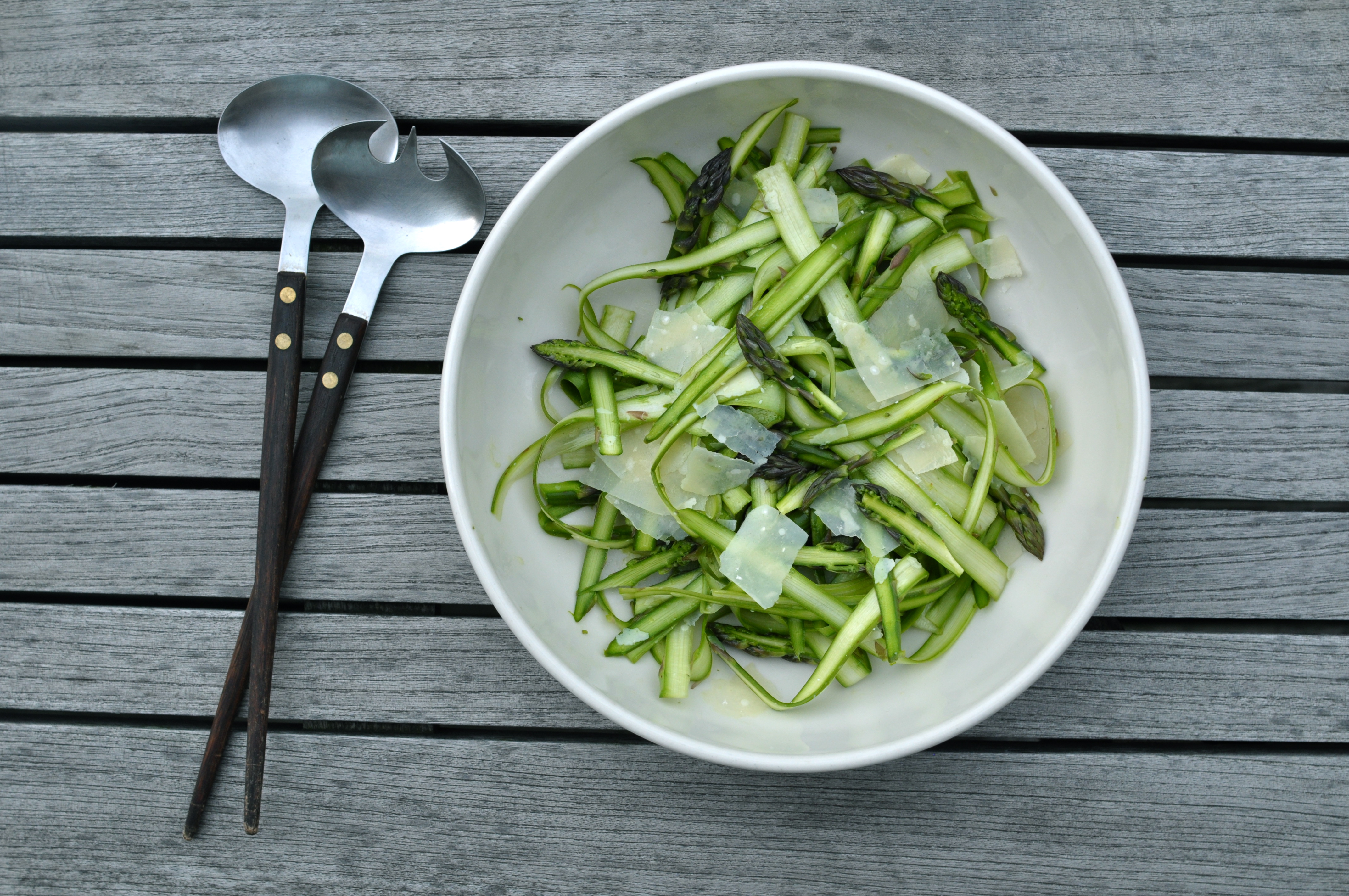
DSC_1286

When you grow up in France or Germany, asparagus is invariably white, steamed or gently boiled, and served with some variant of Hollandaise sauce. When you move elsewhere, say to New York, your view of the world will likely deepen, expand, diversify; you will notice that asparagus can also be green.

You will learn that asparagus is, in fact, always green, that white asparagus is manually ‘blanched,’ hidden in little mounds of earth as it grows to prevent the sun from wielding its photosynthetic magic. You will discover that green asparagus absolutely should be grilled on a barbecue as soon the weather permits, or braised with a little acidity in the oven on a wintry spring evening. And, indispensably, green asparagus must also be eaten raw, in a simple salad, just like this.

DSC_1348

The tricky aspect is slicing the asparagus very thinly, lengthwise, so a good vegetable peeler is a must. My personal favorite is this kind.

Green asparagus, it should be very fresh and taut

Extra virgin olive oil

Freshly squeezed lemon juice

Good quality balsamic vinegar

Sea salt

Freshly ground black pepper

Chunk of parmiggiano reggiano cheese

Wash the asparagus. With a knife, cut off the tough end of the stalks (about 1 inch) and discard.

Cut off the asparagus heads and slice these lengthwise in halves or thirds (depending how thick they are). For the stalks, use the vegetable peeler to shave them into long strands, beginning at the thicker end.

In a serving bowl, toss the asparagus with some olive oil, lemon juice, a few drops balsamic vinegar, and salt and pepper.

Add coarse shavings of parmiggiano reggiano, and serve.

Brussels sprouts and pecorino salad

6 December 2013

DSC_0042

I nearly didn’t make this salad for Thanksgiving.

With Sam Sifton’s peremptory Thanksgiving book still ringing in my ears, I did, in fact, briefly debate the pros and cons of his strict no-salad rule. Might it diminish the lusciousness of the meal? Is it the last thing anyone wants to see on a festive table? On the other hand, this barely counts as salad. Surely by salad, Sifton means lettuce?

As it turned out, this deceptively simple dish of raw Brussels sprouts and fresh pecorino, both finely shaved and tossed with a simple dressing, was — again — undoubtedly one of the favorites of the table. On the contrary, what a welcome bounce on the palate between forkfuls of turkey and chestnut stuffing.

This dish wasn’t born as a Thanksgiving side, and shouldn’t die as one. It is a salad for any occasion. I first encountered something similar quite some years ago in the lunch bar up the block from our office in Soho. That version had walnuts, and though adding nuts would be overkill on Thanksgiving, they marry perfectly.

This is barely a recipe, just a few very good ingredients tossed together. It must be made a few hours ahead, so the dressing has time to soften the Brussels sprouts. There should be enough pecorino for a shaving or two in each mouthful.

Very fresh Brussels sprouts, preferably still on the stem because snapping them off is a fun occupation for children on Thanksgiving morning

Pecorino, not too aged

Freshly squeezed lemon juice

Sherry or good wine vinegar

Best olive oil

Sea salt

Freshly ground black pepper

Freshly hulled walnuts (optional)

Trim and remove one or two outer leaves of each Brussels sprout, then shave them finely with a mandolin or a sharp knife and lots of patience.

Cut the pecorino into paper thin shavings.

The salad is very thirsty and will soak up the dressing, so plan generously, but the proportions are roughly: 5 lemon juice plus 1 vinegar to 8 olive oil.

Season with salt and pepper. Taste the salad and adjust dressing/seasoning as necessary.

Spicy lentil and red kuri squash soup

17 November 2012

This is the soup you want to come home to if you’ve spent the afternoon outside and let dusk fall around you, the chill creeping until your cheeks are flushed and your fingertips frozen. If by any chance you’ve already cut the squash and prepared the cubes (undoubtedly the lengthier proposition in this recipe), the rest can be assembled fairly quickly.

The warmly spiced lentils and faintly sweet squash spring to life with a jolt of lemon, but what really makes the soup sing is the gremolata of parsley, lemon rind, and chili flakes. It is inspired by another incredible lentil soup I had at ABC Kitchen a couple of years ago. I kept note.

***

The soup

1 red kuri squash

1 cup French or Italian green lentils

3 small yellow onions

3 garlic cloves

A 2 x 1-inch piece of fresh ginger

Olive oil

Sea salt

Juice from 1 lemon

Peel and cut the squash into 1-inch (2.5 cm) pieces. Check lentils for small stones and wash in cold water. Peel and thinly slice the onions lengthwise (into half moons). Peel and finely chop the garlic and ginger.

In a heavy-bottomed soup pot, heat a couple tablespoons of olive oil. Add the onions and cook over medium heat, stirring regularly, until they become golden, about 7 to 10 minutes. Add the garlic, ginger, and a good pinch of salt, and cook for another 3 to 4 minutes, stirring often.

Now add the squash and cook for another few minutes, stirring often all the way to the bottom of the pan to mix everything well. Season with more salt.

Pour in the lentils, cover generously (by at least 1 inch or 2.5 cm) with water, and cook at a gentle simmer until the both the squash and lentils are just soft, approximately 25 minutes.

Pour in the lemon juice, starting with 1/2 lemon, testing for acidity, and add salt if needed.

Serve with a large spoonful of gremolata.

The gremolata

Handful parsley

Zest from 1 lemon

1/2 tsp Chili flakes

Excellent olive oil

Finely chop the parsley. Mix with the lemon zest, chili flakes, and just enough olive oil to coat.

Related posts

Lentil soup with cumin

Parsnip and butternut squash soup with sage

Pumpkin leek soup