Archive for the ‘Fall’ Category

Trout in a paper package (“en papillote”)

3 June 2011

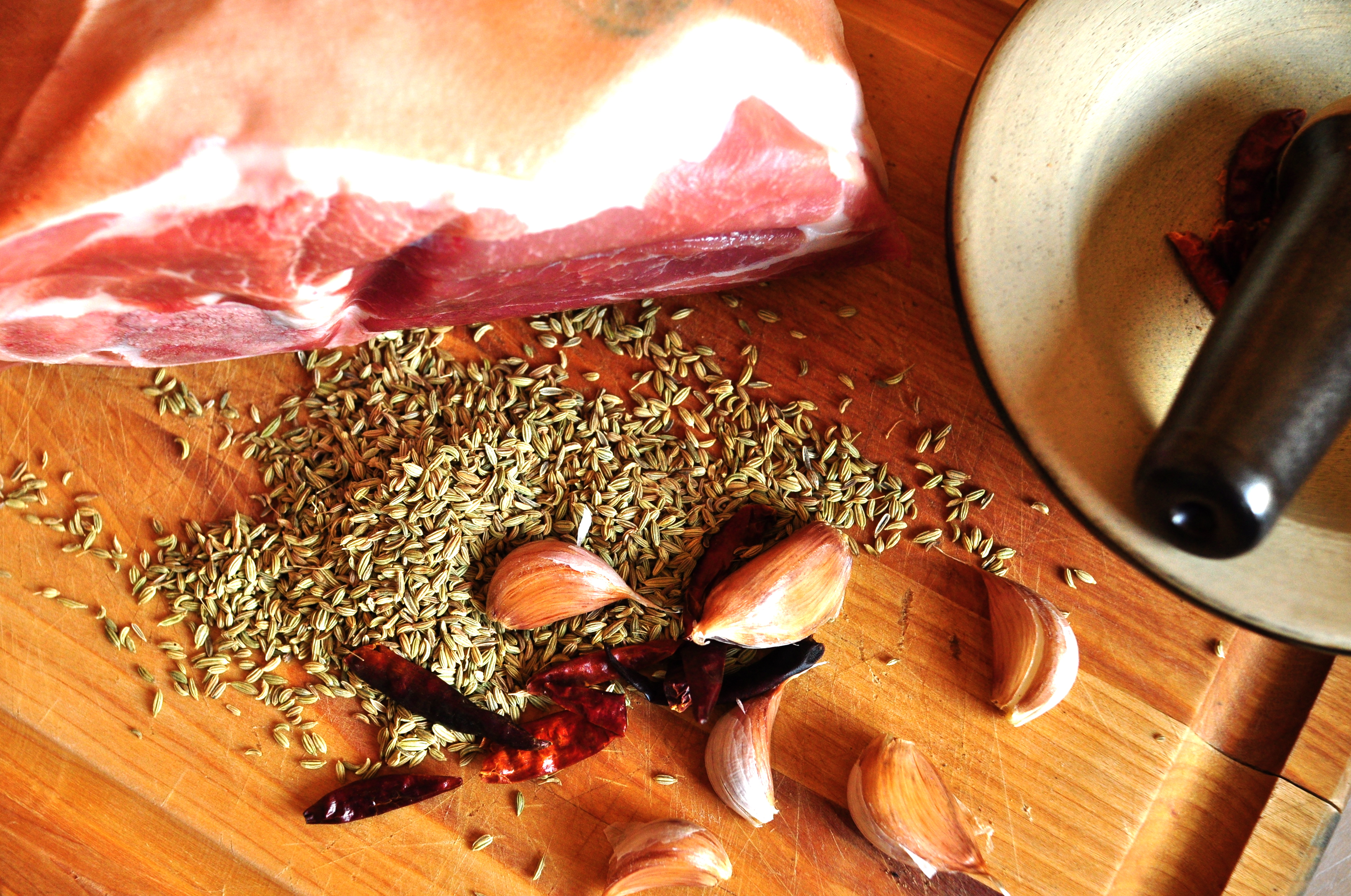
A trout so fresh* it is practically still winking at you when you cook it /
Courteously seasoned with salt and pepper, lemon and thyme /
Wrapped tightly in a parchment paper package /
Cooked gently, not a minute too long /
With small boiled potatoes tossed in very good butter.

***

Quantities per trout, one small trout per person

Trout, scaled and gutted

Maldon or other flaky sea salt

Freshly ground black pepper

2 slices untreated lemon

2 sprigs fresh thyme

Parchment paper

*

Preheat oven to 375°F (190°C).

Season the trout cavity with salt and pepper. Place in it two slices of lemon and two sprigs of fresh thyme.

Place the trout at the center of a piece of parchment paper large enough to be wrapped comfortably around the fish, i.e about 8 inches larger than the fish on either side, and about 4 inches longer than the fish at each end. Pull up the sides of the parchment paper around the trout and fold it over itself tightly three times, then fold the ends over under the fish. This should create small airtight packages.

Place in an ovenproof dish and slide into the oven. The cooking time depends on the size of the trout, but it will be fast, probably about 12 to 15 minutes. The best measure is to open one package and check the trout – sooner rather than later.

*Available on Wednesdays at Union Square Greenmarket in New York, from Beaverkill Trout Hatchery, a little stall close to 16th Street


Baked shrimp with lemon, rosemary, and tarragon

12 May 2011

It’s surprisingly easy to grow tarragon.

I had always thought of tarragon as a fragile herb because it is often wilted and usually bland when bought, but I discovered it is actually a low-maintenance hardy perennial that survives the New York winter. Alongside chives, tarragon is the first herb to come up in spring, year after year, and I think it’s worth growing, if only for that optimistic quality.

A classic French use for tarragon is with chicken, it also goes nicely with fish, and gives an acidulated kick to salads. This oven-baked shrimp, though, is itself almost reason enough to grow tarragon. I was inspired by a recipe found on Oui, Chef (which uses different herbs and spices, but the idea and cooking method are the same).

It’s absurdly delicious, and ridiculously easy.

***

Adapted from Herb and Lemon Baked Shrimp by Oui, Chef.

If you don’t happen to grow tarragon on your balcony, fresh thyme and 1/2 tsp cracked coriander seeds would go well, as shown in the original recipe (added early with the lemon, rosemary, and cracked pepper to flavor the oil).

1 lemon

1/2 tsp peppercorns

Good olive oil

Few sprigs fresh rosemary

1 lb (450 g) shrimp*

Few sprigs fresh tarragon

Coarse grey sea salt

*

Preheat oven to 400°F (200°C).

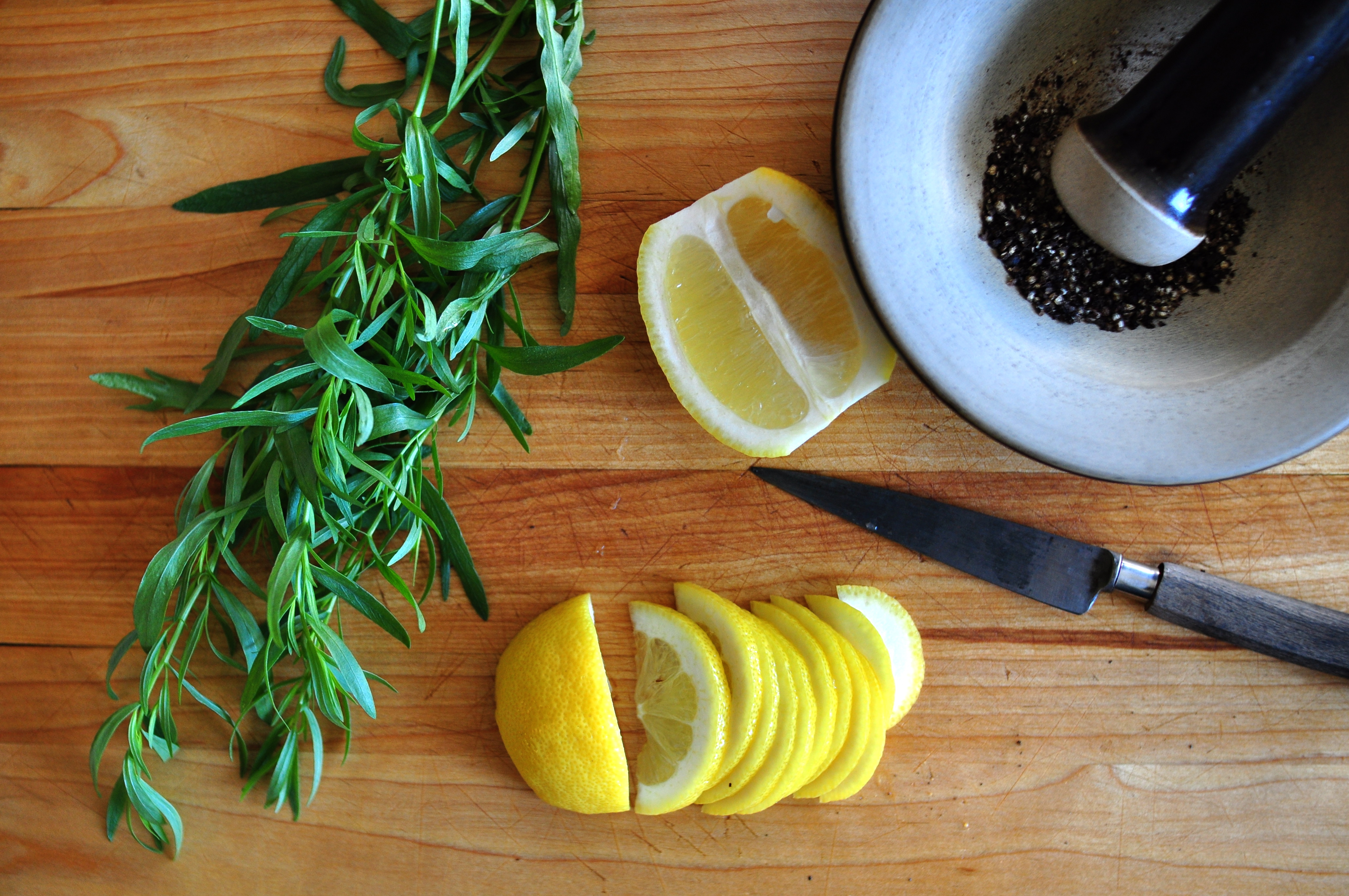
Trim the ends of the lemon, cut it in half lengthwise, place the halves cut side down on the board and cut into thin half moons. In a mortar, crack the peppercorns.

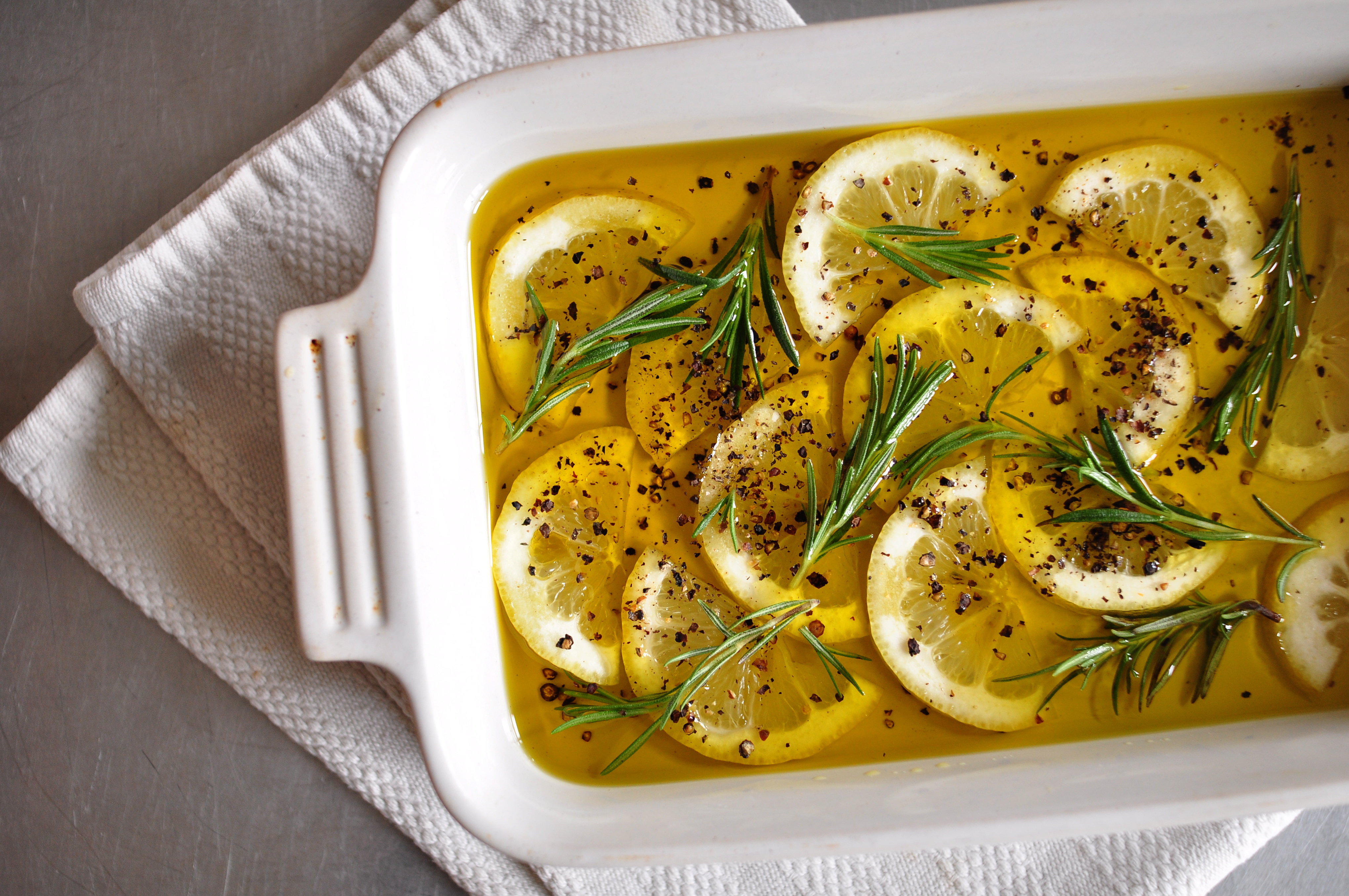
Pour enough olive oil to cover an ovenproof dish a generous 1/8 inch (1/4 cm) deep. Put the lemon slices in the oil reserving 4-5 very thin ones for later. Add the cracked pepper and the sprigs of rosemary. Put into the hot oven for about 15 minutes, until the oil is sizzling and fragrant.

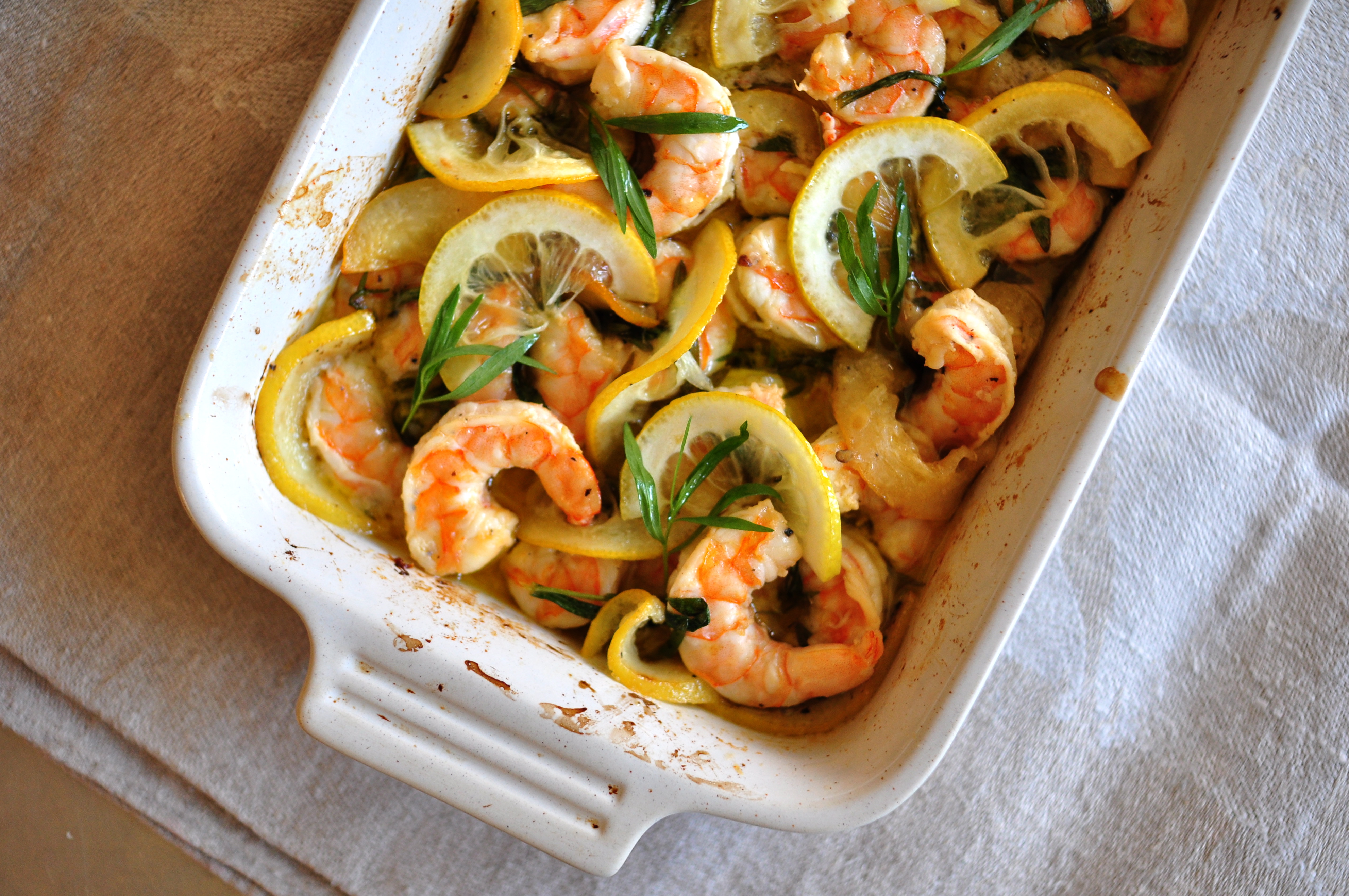
Remove the dish from the oven, add the shrimp and tarragon, tossing them quickly in the fragrant oil, then sprinkle some coarse sea salt and place the few reserved slices of lemon on top and slide back into the oven.

Bake for about 7 to 10 minutes, depending on the size of the shrimp. **Small shrimp are cooked practically as soon as they lose their translucence on the outside. Larger shrimp may take a couple minutes longer. (They will continue to cook when out of the oven.)**

Serve immediately, with a spoonful of the juices.

*Here in New York, nearly all shrimp has at some point been frozen. Usually, shrimp that is sold unfrozen is actually thawed. If the shrimp has been caught wild and never been frozen, it is specified. Therefore, unless very fresh wild shrimp is available, it is best to buy frozen shrimp and defreeze it at home just before cooking.

Lentils

4 March 2011

In our house lentils are known as “cowboy food.” I still haven’t understood exactly why, but Thomas peddles his lentils-with-a-fried-egg dinner as such. And it works very well. The children might even call it their favorite dinner – it’s all about marketing, really.

Or it’s inherited, because we all love lentils, and I make them often as a side, especially in winter. Lentils were great with slow-roasted pork shoulder and sautéed baby bok choy, but they are also delicious with grilled salmon and braised fennel. Or with a fried egg. Seriously. Surely you can already hear the crackling embers of the campfire, the gurgle of whiskey poured into tin cups, horses neighing nearby…

I like this technique for cooking lentils, which breaks up the process into two basic steps: First cook the lentils in lots of water with aromatics and vegetables cut into large chunks until barely al dente. Remove from heat and discard the pieces of vegetables and herbs. Then brown more of the same vegetables, finely diced, return the lentils to the pan with the vegetable mirepoix (the finely diced vegetables browned in olive oil), and reheat until the lentils are cooked to desired consistency.

***

This recipe uses red onions and fennel, but yellow onions work just as well, and carrots and/or celery replace the fennel perfectly. I change it according to my mood, the rest of the meal, or what happens to be in the house.

2 cups green lentils (preferably Castelluccio or du Puy)

2 medium red onions

2 bulbs fennel

A good handful of sprigs of flat-leaved parsley

2 bay leaves

[Pancetta, optional]

Olive oil

Sea salt and freshly ground black pepper

Very good olive oil

Balsamic and red wine vinegar

***

Pick through the lentils to look for small stone intruders that must be discarded. To wash lentils, cover with cold water and drain in a fine mesh sieve.

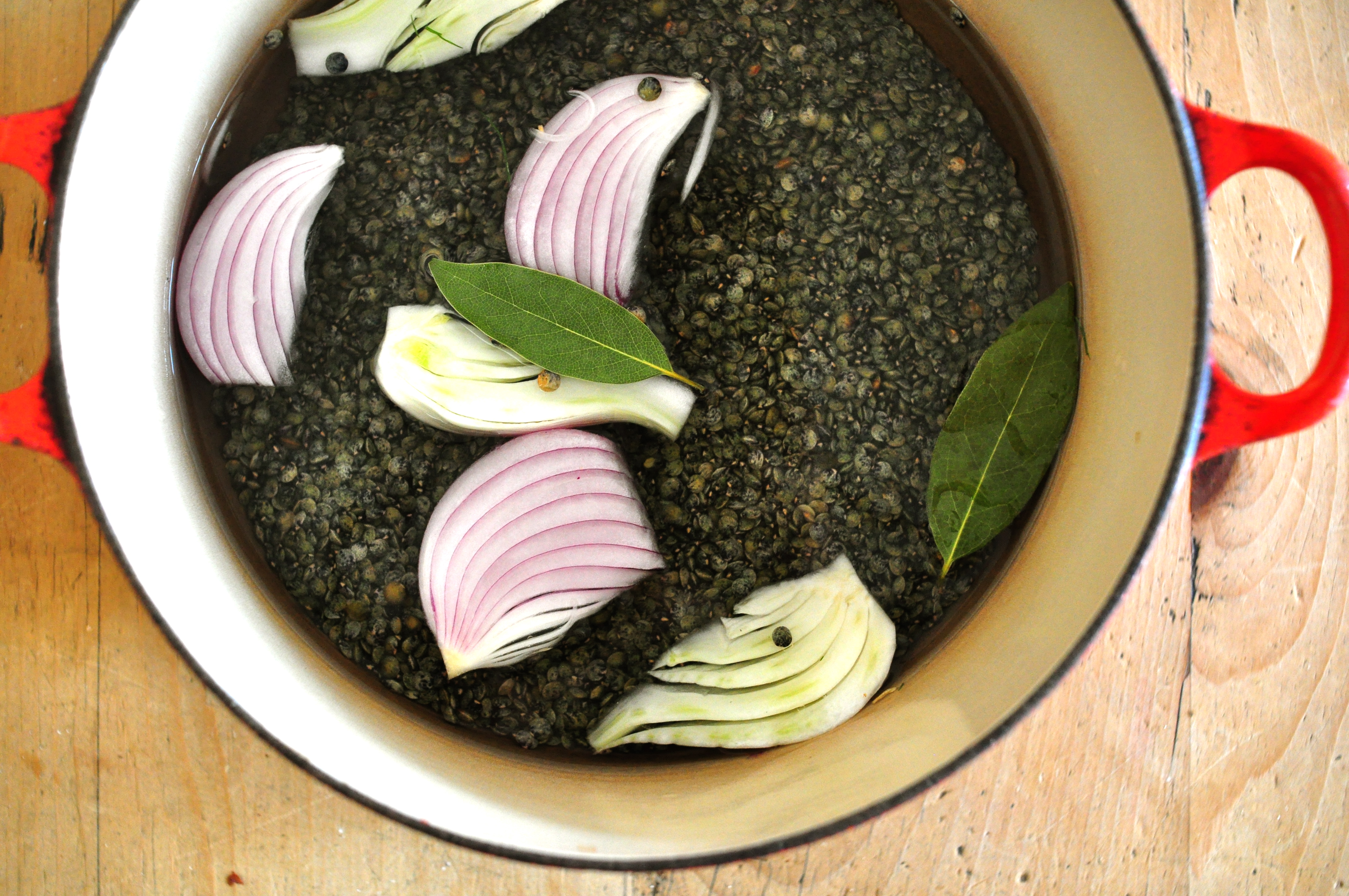
Peel and cut into large chunks half an onion and half a fennel, reserving the rest for later.

Place lentils into a large saucepan with 4 cups (double the volume) water. Add the vegetable chunks, a few sprigs of parsley, and the bay leaves, bring to a boil and let simmer, covered, for about 20 minutes. Remove from heat when the lentils are just starting to soften but still retain a nice bite (they will cook a bit more later). Discard the sprigs of parsley, bay leaves, and vegetable chunks, pour the lentils into a large bowl, and set aside. Quickly rinse and dry the saucepan for reuse.

Finely dice the rest of the vegetables, and wash and finely chop the rest of the parsley.

[If using, cook the pancetta until crispy, remove from pan, and cut into small strips]

Heat enough olive oil to cover the base of the saucepan. Add the onion and cook until nicely brown, stirring occasionally. Add the fennel and sweat for a few minutes until it becomes translucent. Add the lentils with some of the excess liquid. **The lentils should remain moist and shiny but not swimming in liquid. If necessary add of dash of plain water to prevent the lentils from drying out.** Season generously with salt and pepper and heat gently. The lentils will continue to cook, so test and remove from the stove when they have reached the desired consistency (I personally like lentils to retain some bite).

Check the salt and pepper seasoning, adjust, add 2 tablespoons of the best olive oil and 1 tablespoon each of balsamic and red wine vinegars [and the pancetta], stir in the chopped parsley, and serve warm.

Related recipes

Chidren’s dinner | Cowboy food

Spicy lentil and red kuri squash soup

Lentil and fennel salad with lemon and parsley

Slow-roasted pork shoulder (or butt)

2 March 2011

The long story of the slow-roasted pork shoulder starts in 1998, when I acquired my first cookbook: the River Cafe Cookbook Two (Yellow). The word at the time was that this wonderful cookbook not only had delicious recipes, but that they all worked. Indeed, this and the other River Cafe Cookbooks have been my number one go-to cookbooks over the years. I love the recipes and they always worked out very well.

For these past twelve years, the recipe for a slow-roasted shoulder of pork has smiled up at me, enticingly, from page 248, but I never tried it. One of the reasons was that I rarely ate pork, and never cooked pork, mainly because I could not find good pork. Until I discovered it at Union Square market; Flying Pigs Farm has single-handedly transformed me into a cooker of pork.

But I still didn’t make the slow-roasted pork shoulder. After so many years, the recipe seemed frozen in the forbidding aura of “I will make this one special day” dishes.

As I recently became somewhat fixated on slow-roasted lamb shoulders, and slow-cooked things in general, I gathered the necessary momentum to try the promising, melt-in-your-mouth, delicious slow pork. And it didn’t work. The recipe calls for “dry roasting” on an open rack in the oven. The flavor was amazing and the crackling skin predictably perfect, but the meat wasn’t falling off the bone. It was tasty and not forbiddingly dry, but not what I had expected. Since I had only been able to cook it the minimum suggested amount of time (8 hours), I decided that must be the problem. So I tried again. I cooked the second pork shoulder some 18 hours. Same result.

Rather than try to cook it even longer (the recipe says 8-24 hours), I decided to look elsewhere. Surely Hugh Fearnley-Whittingstall must have a failproof slow-cooked pork in his River Cottage Meat Book. Alas, the recipe basically starts: “Actually, versions of this dish have already been enthusiastically championed by both the River Cafe and Nigella Lawson” and proceeds to give the same cooking method. Not helpful.

Now I really did acknowledge that the problem must be me, but I just wasn’t convinced that cooking the pork even longer would have done the trick, and how many pork shoulders need I bungle before the winter is over?

So I perused my cookbook shelves for a different recipe, one that cooked pork in a closed dish. And, not surprisingly, found it with David Chang. His cookbook Momofuku‘s pork shoulder for ramen has a simple salt/sugar rub, but I was looking for cooking time and temperature.

The answer is 6 hours at 250°F (120°C). It was perfect.
***

The quantities below are for a piece of meat of approximately 6 lbs (3 kg). The seasoning should be adjusted according to size, but the cooking time remains the same.

Note from March 2012: I have revised the cooking method. I believe starting the pork on low is a better guarantee to completely and deliciously tender meat, and finishing on high assures a crisp outside.

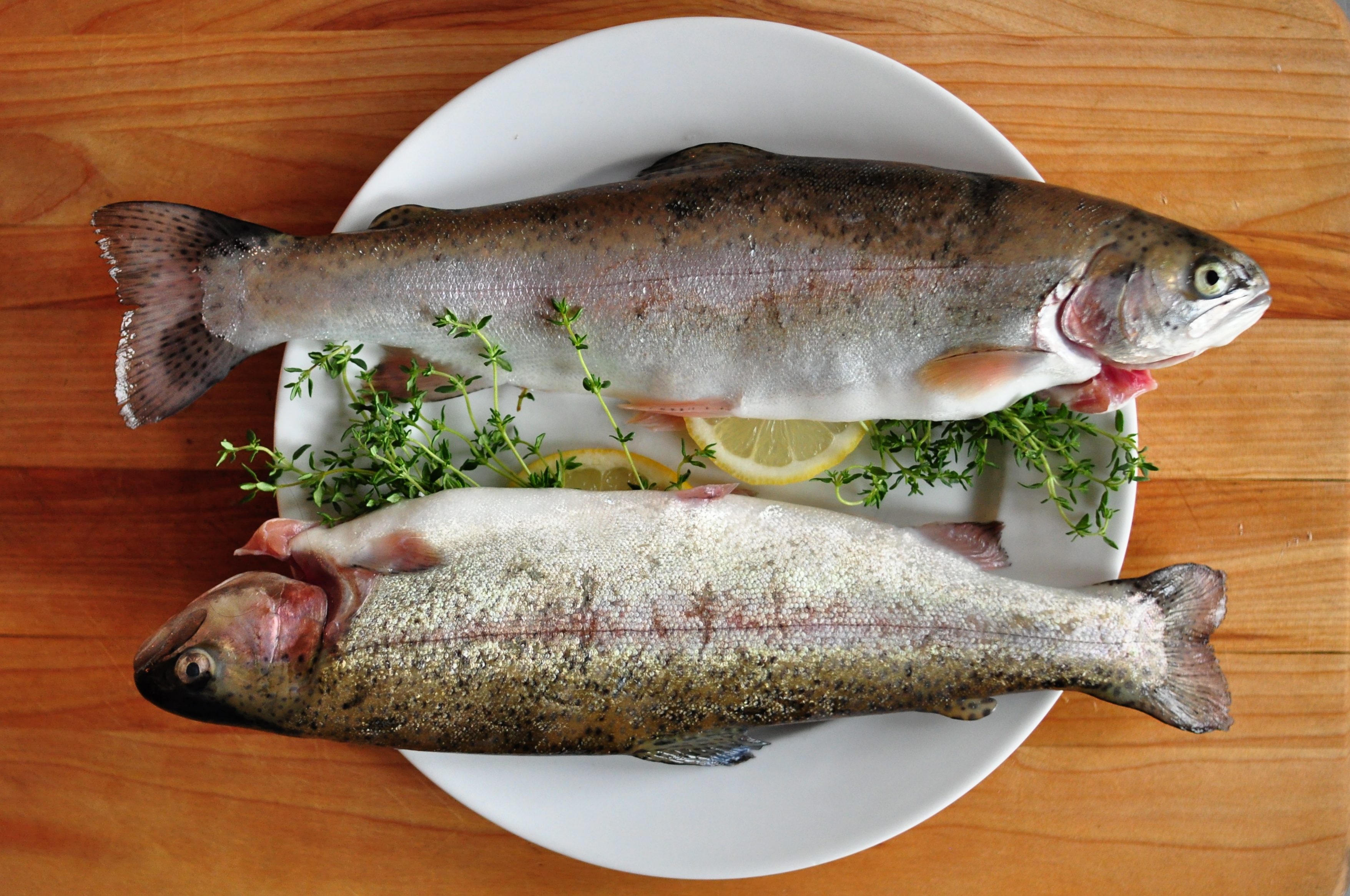
1 bone-in pork shoulder or butt

8 garlic cloves

2 Tbsps Maldon sea salt (1 Tbsp if using regular salt)

6 Tbsps fennel seeds

Freshly ground black pepper

3 small dried red chilies

2-3 Tbsps olive oil

Juice from 3 lemons

***

Preheat the oven to 250°F (120°C).

In a mortar, crush the garlic together with the salt, add the fennel seeds, a generous amount of back pepper, the crumbled chilies, and mix with the olive oil to create a thick paste.

Remove the skin and trim some of the fat. Cut deep, long gashes into the pork on all sides. Fill the gashes with the herb/spice mixture and rub all over the pork and place in an ovenproof dish with a lid (such as a Le Creuset dutch oven), then pour the lemon juice over the pork.

Cover with a tight fitting lid (or seal with aluminum foil) and cook in the low oven for 5 to 6 hours, basting occasionally.

(Optional: Finish by increasing the oven to 450°F (230°C), take off the lid, and brown on high heat for 20 to 25 minutes.)

Remove from the oven and let the meat rest for about 30 minutes before serving.

Note: Like most slow-cooked dishes, this pork will taste even better reheated. So if planning ahead, cook the pork on low the day before for about 4 1/2 hours to 5 hours. Let it cool slowly and once cold place it in the refrigerator. On the day you plan to serve the dish, reheat the meat at 250-300°F (120-150°C) for about 45 minutes, then turn up the heat to crisp up the outside as shown above — 450°F (230°C) for 20 to 25 minutes, as needed.

*

Related post:

Lentils

Slow-roasted lamb shoulder
Soba noodle soup with meatballs and baby bok choy

25 February 2011

This is one of those magical recipes that just happened. I had made chicken broth and felt compelled to use it right away. (I have mentioned before that I like soups that don’t require the use of broth. It’s not because I don’t like making broth, it’s because when I do make it, I want to use it immediately, in a dish that will duly appreciate its full worth.)

That day I happened to have all the right ingredients in my kitchen – perfect cooking serendipity: broth, ground beef, baby bok choy, soba noodles. I wanted a soup that tasted zingy, comforting, fresh, far-eastern…ish. (Sadly, this is the closest I come to making anything remotely Asian. And that is one thing I hope to change.) Miraculously, the soup I hoped for was exactly what I got.

Because I liked this soup very much and had nothing else on hand I was once tempted to make it with store-bought broth – it just wasn’t the same.

***

The chicken broth

I don’t make a science out of cooking chicken broth. Whenever I roast a chicken, I throw the bones into a saucepan, cover them generously with (filtered) water, add whatever happens to be in the fridge – chunks of carrot or celery, a wedge of onion, a sprig of parsley, or just a few peppercorns, a bay leaf, and a squeeze of lemon juice (or vinegar) if that’s all there is. It boils for a couple of hours, it’s drained, and it’s done. I usually add salt to the broth just before using it – it seems to be a better way of controlling the seasoning.

*

The meatballs

1 tsp fennel seeds

2 garlic cloves

1 tsp coarse grey sea salt

1/2 onion

One handful flat-leaved parsley

1 egg

Zest from 1/2 lemon

1 lb (450 g) ground beef (or a half/half mix of beef and veal)

In a mortar, grind the fennel seeds finely and set aside, then crush the garlic together with the salt to form a paste, and combine with the ground fennel. Finely chop the onion and the parsley.

In a bowl, thoroughly mix the meat with all the other ingredients: fennel/garlic/salt mix, onion, parsley, egg, and lemon zest.

Shape the meat into small balls, no larger than 1 inch (2.5 cm) in diameter (will make approximately 24).

*

The soup

2 heads baby bok choy

1 small piece fresh ginger (about 1 inch – 2.5 cm)

8 cups (2 l) homemade chicken broth

About 2 dozen meatballs

200 g soba noodles

3 Tbsps garum (or other Asian fermented fish sauce)

2 Tbsps soy sauce

***

To prepare the baby bok choy, remove any damaged outer leaves, cut into 1/2 inch (1 cm) strips crosswise, and wash in cold water to remove any grit. Cut the ginger into matchstick-thin strips.

Bring broth to a lively simmer. Add ginger and cook for 1 minute. Add meatballs and cook for another minute.  Add soba noodles and cook for another 2 minutes. Add bok choy and cook for 1 final minute. **Adjust the heat throughout to make sure the broth continues to boil. The timing is important since all the ingredients overcook very quickly.**

Season with garum and soy sauce and serve immediately.